

REVIEW · BRIGHTON AND THE SOUTH DOWNS
An Historical Walking Tour of Brighton and its Hidden Gems
Brighton has layers, and this walk shows them fast. In about 1 hour 30 minutes, a story-led Brighton walking tour threads together the seafront and the lanes so you can spot why this seaside town became famous, rebellious, and wildly eclectic.
What I love most is the guide, Sam Sylvester. He is local, friendly, and good at turning landmarks into clear, human stories. I also like that the big stops are structured with free admission at each scheduled point, so your money stays focused on the tour, not extra tickets. One possible drawback is that this is mostly on your feet for the full 90 minutes, so plan for a steady walking pace.
In This Review
- Key highlights you should know before you go
- Starting at Old Steine Gardens, where Brighton’s story begins
- What to watch for at the start
- A small practical note
- Old Steine Gardens stop: medieval beginnings, not just scenery
- The tradeoff
- Brighton Palace Pier: how a backwater became a prime holiday draw
- Why this stop is a good use of time
- Royal Pavilion stop: India-inspired design meets pop culture and royalty
- How to get more out of this moment
- Consideration
- Brighton i360: asking whether this town shaped modern beach holidays
- What you get from this kind of question
- Practical tip
- Quadrophenia Alleyway: Mods vs Rockers, culture in the narrow lanes
- Why I think this stop is a standout
- A possible drawback
- North Laine: what Brighton offers today, from LGBT to culture events
- How to make the most of the finish
- The guide, Sam Sylvester, and why his approach works
- Languages matter if you are not traveling in English
- Price and time value: is $21 worth 90 minutes?
- Who the price works best for
- Logistics that affect your comfort
- What I would pack
- Who should book this Brighton walking tour
- Should you book it? My take
- FAQ
- What is the duration of the Brighton historical walking tour?
- How much does the tour cost?
- Where does the tour start and end?
- Is a mobile ticket used?
- What is included in the price?
- Are food or drinks included?
- Do I need to buy entry tickets for the stops?
- How many people are in the group?
- Can I cancel for a full refund?
Key highlights you should know before you go

- Sam Sylvester, local historian guide who shares Brighton-raised anecdotes in plain language
- Mobile ticket for easy entry and a smoother start at Old Steine Gardens
- Six focused stops from Old Steine Gardens to North Laine, covering medieval to modern
- Free admission noted at the planned stops, so you can budget without surprises
- Small group size up to 30 people, which helps the stories land at street level
Seafront and chalk cliffs, more days out
- SEA LIFE Brighton Admission Ticket★ 4.0 · 468 reviews
- Brighton Bar Crawl★ 5.0 · 377 reviews
- Fun, Flexible Treasure Hunt Around Brighton with Cryptic Clues & Hidden Gems★ 5.0 · 154 reviews
- City Sightseeing Brighton Hop-On Hop-Off Bus Tour★ 4.5 · 152 reviews
Starting at Old Steine Gardens, where Brighton’s story begins
Most people think of Brighton as a beach town, but you start in Old Steine Gardens, right by 55 Old Steine. It’s a good opening choice because the ground beneath you has deeper roots than the postcard view. The tour frames this area as a first settlement site, with medieval context that helps the rest of the walk make sense.
Even if you are short on time, I like that you get orientation early. You are not just walking, you are learning how Brighton grew, why certain places mattered, and what you should look for as you move.
What to watch for at the start
Look around and notice how the city layout points you toward later landmarks. The point is not to memorize dates. It is to understand the logic of growth, from settlement area to leisure destination.
A small practical note
Because you begin at street level and then keep moving, wear shoes you would actually choose for a long walk. Brighton sidewalks can be a little stop and start, and you will want comfortable footing.
Old Steine Gardens stop: medieval beginnings, not just scenery
This stop is brief, around 15 minutes, but it is timed well. You get a foundation in the idea that Brighton did not start as a holiday hotspot. It started as a place that developed over time, and that long timeline is what makes later “sudden turns” believable.
If you are the kind of visitor who likes connecting eras, this is where the tour earns its value. Later stops include dramatic stories, like rapid tourism growth and cultural collisions. Without this opening, those moments can feel random. With it, they feel like steps on the same staircase.
More on foot, at a pace you can hear the guide


The tradeoff
The stop is short. If you were hoping for a long sit-down history lecture, you will have to pace yourself and keep moving. The payoff is that every next stop builds directly on what you just learned.
Brighton Palace Pier: how a backwater became a prime holiday draw
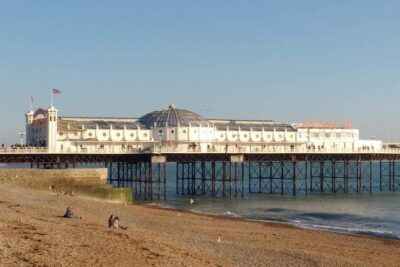
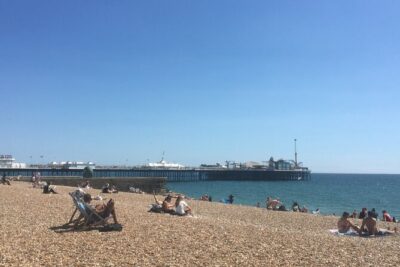
Next you head to Brighton Palace Pier, another 15 minute stop. This is where the tour turns from early roots to rapid change. The story here is about a sudden development, how Brighton shifted from a less prominent position into a major seaside holiday destination.
If you visit the pier area on your own, it can feel like a handful of classic attractions. On this walk, you get the “why” behind the draw. That matters because it changes how you experience what is in front of you. You stop seeing it as a place that only exists for fun, and you start recognizing it as part of a larger growth pattern.
Why this stop is a good use of time
Piers are built for leisure, but they also reflect investment and ambition. The tour uses that as a lens to explain Brighton’s transformation into the kind of city that attracts crowds year after year.
Royal Pavilion stop: India-inspired design meets pop culture and royalty
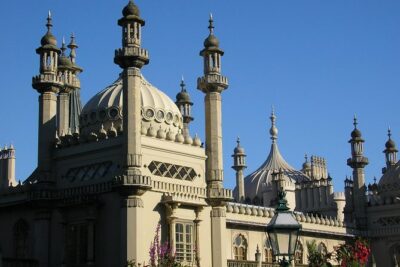
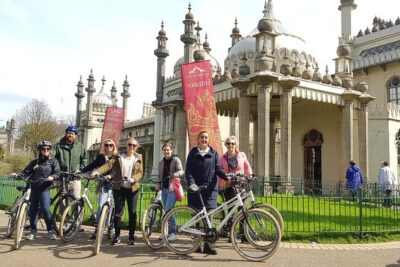
One of the most interesting parts of the walk is the Royal Pavilion stop, again about 15 minutes. Here you get a fun, slightly surprising framing: how Brighton ended up linking an Indian style palace look with connections to Abba and the British royal family.
That mix is exactly why this tour works. It refuses to treat the Royal Pavilion as a single-theme museum. Instead, it treats the Pavilion as a living reference point, the kind of landmark that keeps generating new associations over time.
How to get more out of this moment
Spend a minute looking at architectural clues rather than just snapping photos. The tour encourages you to connect style to story, so you are not only noticing a building, you are understanding why it looks the way it does and what it says about the era that created it.
Consideration
This stop is short. If you want deep interior access, you would need to plan separate time. The walk focuses on context and relationships between ideas, not a full building visit.
Brighton i360: asking whether this town shaped modern beach holidays
Next comes Brighton i360, a 15 minute stop. The tour asks a big question: was Brighton the first location of the modern beach holiday? That might sound like a debate topic, but it is a smart way to bring you from landmark to lifestyle.
You are essentially learning how leisure can evolve. Brighton is not just a place people happen to vacation. It is a place that helped invent the rhythm of visiting the seaside for pleasure, view seeking, and the spectacle of being there.
What you get from this kind of question
Instead of listing facts, the tour uses the “was it first” prompt to make you think historically. You leave with a better sense of why seaside tourism took the shape it did, and why Brighton became a repeat destination.
Practical tip
This stop is quick. If the weather is nasty, be ready for a brief pause and then move on. Bring a light layer you can handle while walking between stops.
Quadrophenia Alleyway: Mods vs Rockers, culture in the narrow lanes
Then you get to Quadrophenia Alleyway, another 15 minute stop with a strong 1960s angle. This is where the tour explains how Brighton became a center of the Mods vs Rockers riots, using the 1960s as a shortcut to understanding modern youth culture and conflict.
The location matters. In a narrow lane, you can feel how tight space amplifies tension. You are not only hearing about history, you are seeing the kind of street environment where stories like this can take hold.
Why I think this stop is a standout
It gives you a cultural lens. Brighton is often described with soft words like artsy or quirky, but the tour reminds you it also has edge. You come away understanding that rebellious energy has long been part of the city’s identity.
A possible drawback
If you are expecting a dramatic reenactment style story, you might find it more guided and explanatory than cinematic. Still, it is a memorable way to connect music, attitude, and place.
North Laine: what Brighton offers today, from LGBT to culture events
Finally, you end up in North Laine, a 15 minute stop that brings you into the present day. The tour frames this area as today’s Brighton, including references to LGBT community presence and ongoing cultural events.
This is a good way to close the loop. Early stops set up how Brighton transformed into a holiday destination. Midway stops show big cultural swings, from royal spectacle to youth unrest. North Laine ties it together by showing how the city continues to attract people who want to live loudly and create.
How to make the most of the finish
Use the last minutes to get your bearings for exploring on your own after the tour ends back at the meeting point. If you have time later, consider wandering nearby lanes with your new “what to look for” mindset.
The guide, Sam Sylvester, and why his approach works
Sam Sylvester leads this Brighton walking tour, and his style seems designed for real visitors, not just history buffs. He arrives on time, is considerate and friendly, and has that kind of local knowledge that adds color without getting tangled in trivia.
One of the best signs is how he ties big topics to street-level moments. The tour is built around turning curiosity into clarity, whether you are hearing about medieval beginnings, royal architecture with unexpected influences, or 1960s youth conflict.
Languages matter if you are not traveling in English
The tour information notes that Sam speaks German, English, Russian, and Spanish. That is not a small detail. When a guide can speak your language, you usually understand more than just vocabulary. You get better nuance and fewer “wait, what did they mean?” moments.
Price and time value: is $21 worth 90 minutes?
For $21, you are paying for a focused, guided route with an expert historian and all fees and taxes included. You are also getting a schedule built around six stops, each about 15 minutes, plus time to walk between them.
Is that good value? In my view, yes, if you like structure. Without a guide, it is easy to see Brighton as a string of separate attractions. With the tour, you get connections. That connection is what makes the sightseeing feel earned.
A second value point is that the stops are marked with free admission. You are not constantly checking whether you need to pay extra just to stand in the right place.
Who the price works best for
This is especially good if:
- you have limited time in Brighton,
- you want context that you cannot easily “Google in the moment,”
- you like walking routes that end near where you started.
Logistics that affect your comfort
This is an active walking tour, roughly 1 hour 30 minutes, and it includes a mobile ticket. The group has a maximum of 30, which generally helps you stay oriented and hear the guide without constant shuffling.
The meeting point is Old Steine Gardens, 55 Old Steine, Brighton BN1 1EH, and the tour ends back at the meeting point. It is also noted as near public transportation, so you can fit it into a day without needing a car.
What I would pack
The tour does not include bottled water, snacks, or meals. That means if you are sensitive to dry air or you get hungry during walks, bring what you need. Even if you plan a later lunch, having water can help you enjoy the full loop.
Who should book this Brighton walking tour
This walk is a strong match for people who want a quick, coherent story of Brighton. It works well for:
- history and culture lovers who like their facts tied to streets,
- visitors who enjoy street-level observations, like lanes and public spaces,
- anyone who wants a small-group guided introduction to multiple eras.
It may be less ideal if you want museum time, indoor exhibits, or long stop-and-stare viewing. The structure is built for momentum, not extended sitting.
Should you book it? My take
If your goal is to understand Brighton instead of just passing through it, I think this tour is a smart buy. The price is low, the route is tight, and the guide, Sam Sylvester, brings local context that makes the city feel connected rather than random. Add the multilingual capability and the free admission noted for the stops, and the value picture looks even better.
I would book it if you like walking, want clear explanations at each landmark, and enjoy finishing with a present-day neighborhood feeling in North Laine. If you prefer a slower pace with lots of break time, choose accordingly and plan rest into your day.
FAQ
What is the duration of the Brighton historical walking tour?
It lasts about 1 hour 30 minutes.
How much does the tour cost?
The price is $21.
Where does the tour start and end?
It starts at Old Steine Gardens, 55 Old Steine, Brighton BN1 1EH, UK, and ends back at the meeting point.
Is a mobile ticket used?
Yes, the tour uses a mobile ticket.
What is included in the price?
The tour includes a specialised history and culture walking experience with Sam, a local historian and tour guide, plus all fees and taxes.
Are food or drinks included?
No. Bottled water, snacks, dinner, lunch, soda or pop, breakfast, and coffee or tea are not included.
Do I need to buy entry tickets for the stops?
The tour notes free admission ticket for the scheduled stops.
How many people are in the group?
The tour has a maximum of 30 travelers.
Can I cancel for a full refund?
Yes. You can cancel up to 24 hours in advance for a full refund. If you cancel less than 24 hours before the experience start time, the amount paid is not refunded.
More History Led Walks
More Of Brighton On Foot



Seafront And South Downs





Fresh off the notebook in Brighton
- Candle Making Workshop and Bubbly in UK
★ 5.0 · 7 reviews - Vineyard & Cheesemaker Bus Tour of Sussex
★ 5.0 · 8 reviews - Brighton to Heathrow Airport private taxi transfers
★ 5.0 · 8 reviews - The Brighton Food and Beer Walking Tour Min 8 people
★ 5.0 · 8 reviews - Seven Sisters Tour
★ 5.0 · 8 reviews - An Historical Walking Tour of Brighton and its Hidden Gems
★ 5.0 · 9 reviews
Brighton and the South Downs, compared.
 ★ 5.0Seven Sisters & South Downs Tour with Train Tickets IncludedFrom $117672 reviews
 ★ 4.0SEA LIFE Brighton Admission TicketFrom $21468 reviews
 ★ 5.0Brighton Bar CrawlFrom $20377 reviews
 ★ 5.0Fun, Flexible Treasure Hunt Around Brighton with Cryptic Clues & Hidden GemsFrom $20154 reviews
 ★ 4.5City Sightseeing Brighton Hop-On Hop-Off Bus TourFrom $20152 reviews
 ★ 5.0The Hunt: Team Activity in Brighton, SussexFrom $104149 reviews
 ★ 5.0Handcrafted Donuts & Tea: Brighton’s Artisan Sweet Treat TourFrom $70127 reviews
 ★ 5.0Brighton Coastal TourFrom $50121 reviews
Browse the lists this tour appears in