
REVIEW · BRIGHTON AND THE SOUTH DOWNS
Seven Sisters Tour
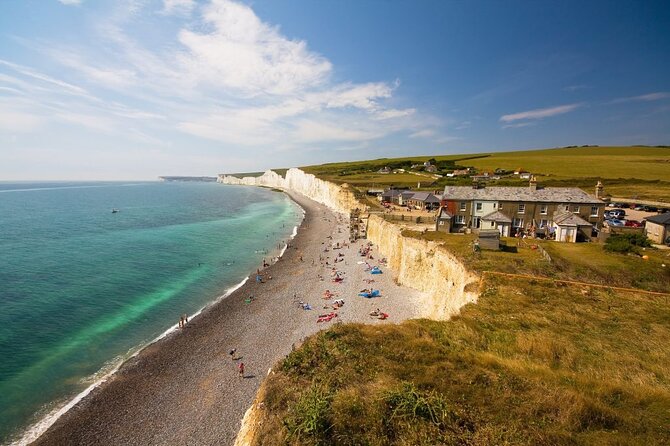
Foggy cliffs, then crisp history. This is a guided Sussex loop built around the Seven Sisters coastline, with smart stops that mix big views, geology, and small villages. I like how the tour uses the drive to give you context, not just scenery, and then hands you short windows to take photos and stretch your legs.
Two things I really like: first, you get a proper explanation of the coast at Devil’s Dyke and how the land was shaped over thousands of years. Second, you keep rolling through classic South Downs villages, with real places to pause, including churches, bookshops, and pubs.
One consideration: it is a lot of stops in one half-day, so you will feel the pace. Also, parts of the best viewpoints involve optional walking, and you should expect it to be weather-driven.
In This Review
- Key highlights if you want the best of Seven Sisters
- Brighton pick-up and a 4 to 6 hour Sussex loop
- Devil’s Dyke: big views plus Ice Age backstory
- Seaford Beach and Seaford Head: shingle, erosion, and the Cuckmere Estuary
- Cable House 14 and Belle Tout Lighthouse: telegraph lines to wartime stops
- Seven Sisters from sea-level: Birling Gap, East Dean, and optional food breaks
- Wilmington, Lullington, and the Long Man: churches, ancient yews, and one giant question mark
- St Andrew in Cuckmere and Alfriston’s book and pub stops
- Price, value, and who this tour suits best
- Should you book the Seven Sisters Tour from Brighton?
- FAQ
- How long is the Seven Sisters tour?
- What is included in the tour price?
- Is lunch included?
- Do I need to do a lot of walking?
- Where do you pick up from?
- What happens if the weather is poor or I need to cancel?
Key highlights if you want the best of Seven Sisters
- Seven Sisters viewpoints without a long hike: optional short walks help you see the cliffs, but the tour stays flexible.
- Devil’s Dyke geology lesson: you get the story of solifluction, permafrost, and river erosion in plain language.
- Cable House 14 and its undersea cable origins: built in 1900, later adapted for wartime defense.
- Belle Tout Lighthouse design logic: a light planned for distance, then adjusted when cloud and conditions changed.
- Village time that feels local: Alfriston stops include a bookshop and historic inn options.
- Guide with a storytelling style: in the best runs, you will get confident pacing and comfort checks from the guide, often named Colin.
Seafront and chalk cliffs, more days out
- SEA LIFE Brighton Admission Ticket★ 4.0 · 468 reviews
- Brighton Bar Crawl★ 5.0 · 377 reviews
- Fun, Flexible Treasure Hunt Around Brighton with Cryptic Clues & Hidden Gems★ 5.0 · 154 reviews
- City Sightseeing Brighton Hop-On Hop-Off Bus Tour★ 4.5 · 152 reviews
Brighton pick-up and a 4 to 6 hour Sussex loop
This tour starts at 9:30 am and runs about 4 to 6 hours, depending on pace and conditions. It is private, so it is just your group in the vehicle. That matters because it makes the day feel less like a bus shuffle and more like a guided outing with time to breathe between stops.
You can get pickup and drop-off within Brighton, including from your hotel or Airbnb, or meet at the Brighton Train Station entrance. For people coming in from London by train, the pickup can be tied to the station as well. The vehicle has air-conditioning, WiFi, and bottled water, and you get light refreshments while traveling.
Value-wise, the price of $205.67 per person makes more sense when you think beyond the view. You are paying for transportation, a guide, and a schedule that strings together geology, coastal engineering, and village history with minimal effort on your part. It is a good choice if you do not want to drive yourself or figure out parking along the coast.
Devil’s Dyke: big views plus Ice Age backstory
The first meaningful stop is Devil’s Dyke, a V-shaped dry valley about 100 metres deep. You park and walk around the top, keeping it manageable while still getting the payoff: open sightlines and a chance to understand why this coastline looks the way it does.
What I like here is that the explanation is grounded in real processes. The dry valley is linked to solifluction and river erosion. The key idea is that during intensely cold periods long ago, the chalk would have been frozen at depth (permafrost), while the top layer could become waterlogged and slide during warmer seasons. When ice conditions ended and rivers formed across Sussex, one such river helped complete the valley shape.
Practical note: Devil’s Dyke is a viewpoint. You are not required to do a long trek, but you should dress for wind and bring grippy shoes if the top feels slick after rain. On clear days, this is also where the tour gives you momentum, because the views help you understand what comes next along the coast.
Seaford Beach and Seaford Head: shingle, erosion, and the Cuckmere Estuary
After the inland start, the tour heads toward the coast, beginning with Seaford Beach in East Sussex. The focus here is the coast as an ongoing engineering problem. The shoreline has a long history of challenges because shingle naturally moves along the shore, so the beach has required constant intervention to protect the town from erosion and flooding.
The tour explains how, in modern times, heavy machinery can redistribute pebbles around key areas like the Terminal Groyne to counter longshore drift. Even if you are not a coastal-nerd, this part clicks because you start seeing the coast as something managed and alive, not static postcard wallpaper.
Next comes Seaford Head Nature Reserve with the Seven Sisters best viewpoint described as a short 10 minute walk from where you park. The walk is optional, which is a smart way to handle wind, energy levels, and shoe choices. From here, you get views of the Seven Sisters cliffs and the Cuckmere Estuary, described as one of the last remaining undeveloped river mouths on the South Coast.
This stop is also where conservation shows up in a tangible way. Seaford Head is part of the Sussex Wildlife Trust area, and the tour frames it as a place for nationally rare and significant plant, bird, and insect species. If you enjoy nature with a bit of structure, this is a nice balance between scenic and informative.
Cable House 14 and Belle Tout Lighthouse: telegraph lines to wartime stops
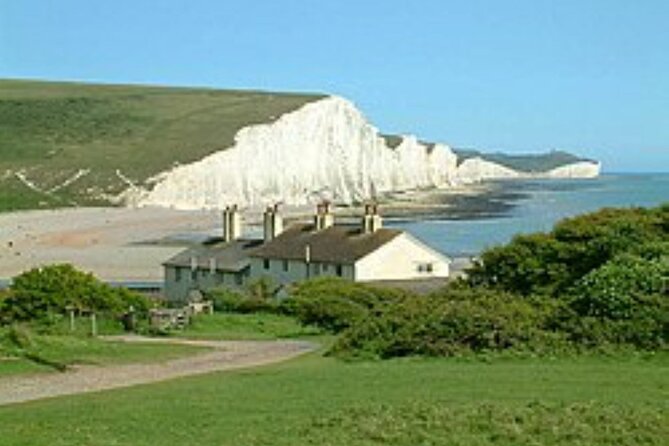
One of the most distinctive stops is Cable House 14, with about 45 minutes on site and free admission noted. This small hut has an outsized story: it is tied to the birthplace of an undersea cable network connecting the world.
The tour notes it was built in 1900 as a relay station for carrying telegraph messages under the sea to France. Then, during World War II, it was converted to a gun emplacement to help defend against a landing invasion at Cuckmere Haven. That jump, from quiet communications infrastructure to wartime defense, is exactly the kind of local history that makes a coastal tour feel more human.
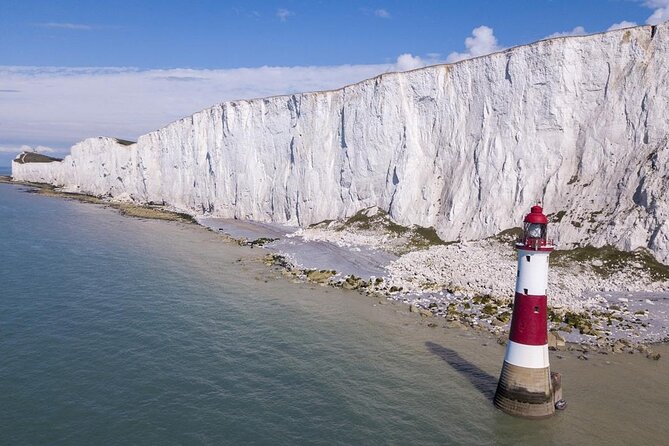
Then you move along the coast road toward Birling Gap, using it as a launch point for the Belle Tout Lighthouse Lookout. You get about 25 minutes, and the stop is listed as free admission. The lighthouse itself came into operation on 11 October 1834, with two keepers manning it around the clock.
Here is the design detail I found especially useful: the lighthouse position was planned so the light was visible 20 miles out but would be obscured by the cliff edge if sailors came too close. Later, operating conditions proved tricky because being on top of cliffs meant it could be prone to cloud. The lighthouse ceased operation in 1900, and Beachy Head lighthouse took over.
Optional tip built into the day: you can walk from the lighthouse down toward Birling Gap, about 20 minutes. It is optional, but it is where you trade a vehicle viewpoint for sea-level angles and a more immersive feel.

Seven Sisters from sea-level: Birling Gap, East Dean, and optional food breaks
Now you reach the part most people came for, the Seven Sisters cliffs from cliffline and sea-level viewpoints.
At Birling Gap, the tour gives about 30 minutes. The description is straightforward: view the cliffs from down by the water, walk along the beach area, and get photos. There is also time for a snack or drink at the visitors centre.
What I like about doing Birling Gap on this circuit is timing. You have already had the geology lesson and the conservation viewpoints. So when you get to the coast at sea level, you are not just taking pictures, you understand what you are looking at. You are also likely to notice how exposed the coastline can be, which makes the optional walking part feel like a choice, not a requirement.
If you want a lunch break, the tour includes a longer stop in East Dean (about 50 minutes) with an optional lunch at the Tiger Inn in East Dean Village. The Tiger is described as a pub where smugglers used to meet, and it is framed as serving food and ales for centuries, associated with walkers and locals alike. Since lunch is not included in the tour price, this is your moment to decide how much you want to spend.
There is also an optional stop at Long Man Brewery for about 25 minutes. If you like beer with a view, this is an easy add-on. If you do not, you still get the chance to move on without feeling like you are stuck in a queue.
Wilmington, Lullington, and the Long Man: churches, ancient yews, and one giant question mark

As the tour transitions inland again, it leans hard into small historic stops that feel like you are driving through real England, not just collecting landmarks.
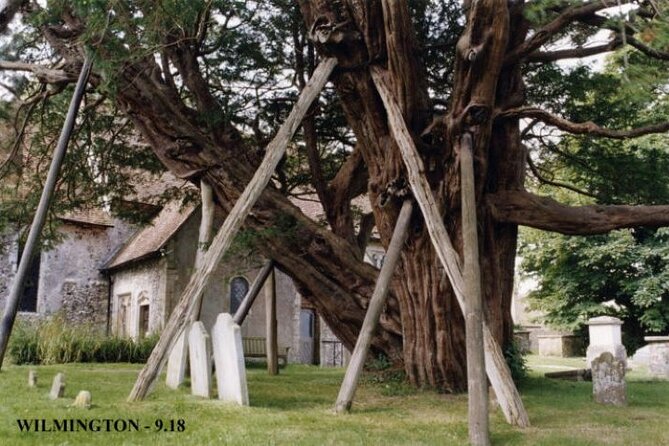
In Wilmington, you get around 15 minutes and a standout feature: the ancient yew tree in the churchyard, estimated at 1600 years old. The tour also notes a girth of 23 feet and that the red berries are poison. It adds a practical warning you will actually remember, you can eat the berry but not the pip.
Wilmington also ties into local history with the church described as a Saxon-origin downland village, with the present church built around 1200 as a chapel connected to an adjacent priory.
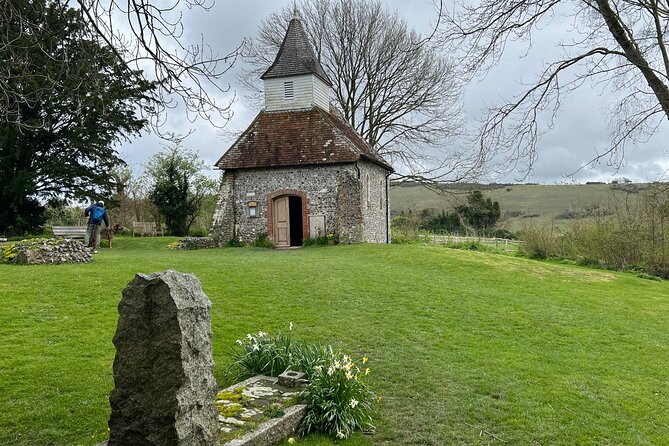
Next is Lullington, about 15 minutes, centered on a tiny church with history dating back to the 13th century. The tour describes the church as one of the smallest in England and the smallest in Sussex. It also notes there is no on-site parking, and reaching it from Alfriston can take about 15 to 20 minutes on foot, which is something to keep in mind if you are managing energy or mobility.
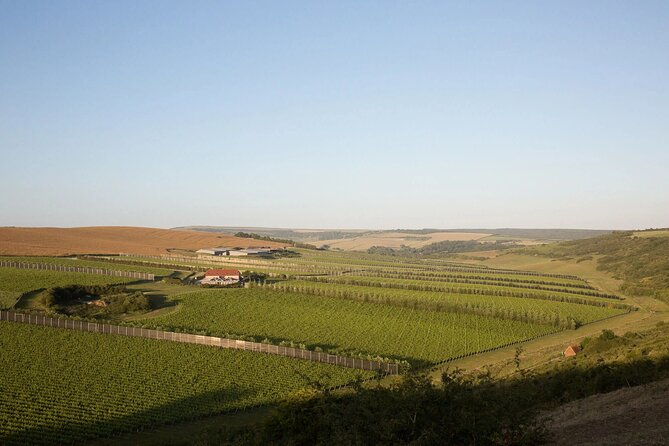
After Lullington, there is an optional stop for complimentary tasting at a cellar door shop producing Sussex sparkling wine from a single-site vineyard on a south-facing slope with chalk soil. If you enjoy tasting, this is one of the few moments where you get a break that is not just photos and walking.
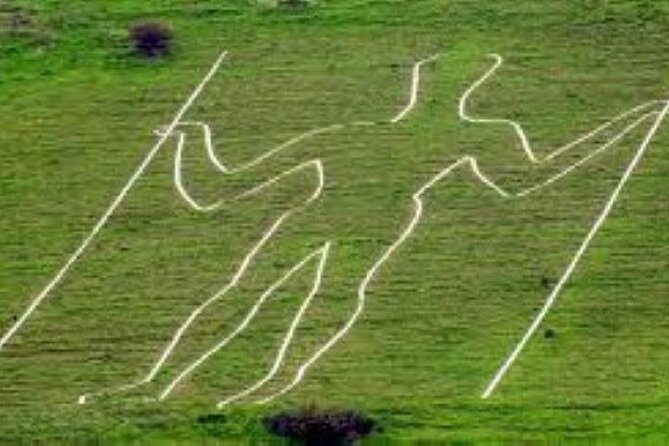
Then you reach the quirky star: the Long Man of Wilmington. You get about 5 minutes here and it is described as a hillside figure on Windover Hill above Wilmington. The meaning and origin have been debated for centuries, with theories including prehistoric, Roman-era influence (linked to coins), Anglo-Saxon parallels, and a later artistic origin tied to monks sometime between the 11th and 15th centuries.
Even with short time, the stop is worth it because you get a rare thing in tourism, uncertainty that is explained rather than dismissed. It makes you look harder, not just snap a picture.
St Andrew in Cuckmere and Alfriston’s book and pub stops
The tour then brings you to the Church of St Andrew, about 15 minutes. It is described as a fine 14th century parish church founded in the 1360s, located close to the winding Cuckmere River. It is also beside the Old Clergy House, noted as the first National Trust property.
The church is framed as special because it was built all at one time, with no major later additions, and it has soaring arches and a spacious open feeling. The tour also notes it is often called the Cathedral of the South Downs. If you like architecture, this is the calm, indoor reset that makes the day feel balanced.
There is a practical detail for anyone who enjoys bells: six bells are placed below the spire, and it is one of fewer than twenty churches in the country where bell ringers regularly ring from the centre of the church.
After that, you head to Alfriston for sightseeing around the village, about 30 minutes. This is a good time to wander slowly, grab a final photo, and see the stone, the lanes, and the feel of a place that still works as a village.
Two focused stops round out the Alfriston portion. First is Much Ado Books, about 15 minutes. It is described as a two-floor shop with new books plus vintage, antiquarian, and secondhand volumes. It has personality, including a shepherd hut filled with books and a bower with bargain paperbacks. Even if you do not buy, it is a fun place to pause and browse.
Finally, there is The George Inn for about 15 minutes. This is a historic inn with a first licensing date in 1397 and foundations described as dating back to 1250. It is built of flint stone and half-timbering, and the cellar is described as having smugglers tunnels. Inside, the bar has an impressive inglenook fireplace with a huge copper hood, and Sussex hop bines decorate the walls. The garden and a heated terrace are noted for cooler evenings, and the tour says good quality food is served.
If you want to end the day with a proper Sussex pub atmosphere, this stop sets you up well.
Price, value, and who this tour suits best
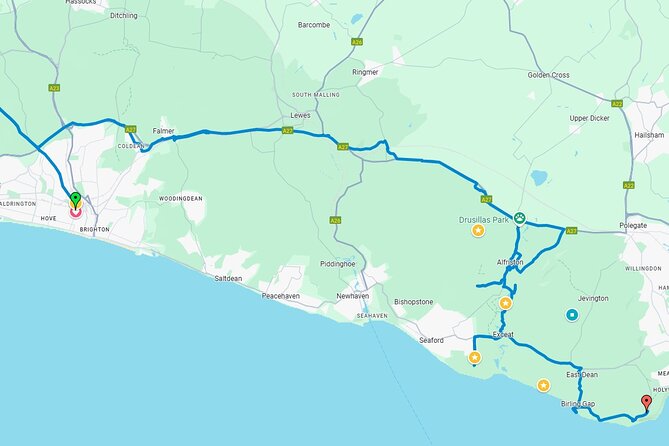
Let’s talk value in real terms. This is $205.67 per person for a guided, private half-day circuit with hotel or Airbnb pickup in Brighton, air-conditioned transportation, WiFi on board, bottled water, and light refreshments. You also get a guide for the full route, which is a big deal on a day like this when you want the “why” behind what you see.
You are not paying just for coastline views. You are paying for:
- Transport to multiple villages and viewpoint points
- Quick interpretation at each stop, from geology to coastal engineering
- Time management, so you are not wasting your day figuring out access and parking
What you get is a day plan that works well if you want to see the Seven Sisters area but you do not want to plan it yourself. It is also a good fit if your group has mixed interests, because you can get cliffs, nature, churches, and a pub, all in one outing.
Who might not love it: if you crave long hikes, you might feel shorted because some walks are optional and the schedule is stop-based. Also, if you dislike being in a car for multiple segments, this route will still feel like a tour, not a slow stroll.
Should you book the Seven Sisters Tour from Brighton?
Book it if you want the coast plus context. This tour is built for people who like to understand what they are seeing, from Devil’s Dyke geology to why shingle shifts at Seaford Beach. It also works if you are staying in Brighton and want someone else to handle the driving while you focus on viewpoints and village time.
Skip it or consider a more hiking-focused option if you want long time outdoors in one place. The day is designed as a circuit, with many short stops, so you will not get hours at only one viewpoint.
If you do book, my practical advice is to dress for wind, keep your walking shoes ready for the optional viewpoints, and plan on using the village stops strategically, especially if you want lunch at the Tiger Inn or to try the optional sparkling wine tasting.
FAQ
How long is the Seven Sisters tour?
It runs about 4 to 6 hours, starting at 9:30 am.
What is included in the tour price?
The price includes drop-off and pick-up within Brighton (including Brighton hotels or Airbnb), light refreshments during the ride, a tour guide, an air-conditioned vehicle, bottled water, private transportation, and WiFi on board.
Is lunch included?
No. Lunch is not included. There is an optional lunch stop in East Dean at the Tiger Inn.
Do I need to do a lot of walking?
Not necessarily. There are optional walks, including a short walk at Seaford Head Nature Reserve and an optional walk from Belle Tout Lighthouse down toward Birling Gap.
Where do you pick up from?
Pickup is offered from your hotel or Airbnb within Brighton. You can also meet at the Brighton Train Station entrance. For people traveling from London by train, pickup can be arranged from the station.
What happens if the weather is poor or I need to cancel?
The experience requires good weather. If it is canceled due to poor weather, you are offered a different date or a full refund. Cancellation is free up to 24 hours in advance for a full refund.
Seafront And South Downs




Fresh off the notebook in Brighton
- Candle Making Workshop and Bubbly in UK
★ 5.0 · 7 reviews - Vineyard & Cheesemaker Bus Tour of Sussex
★ 5.0 · 8 reviews - Brighton to Heathrow Airport private taxi transfers
★ 5.0 · 8 reviews - The Brighton Food and Beer Walking Tour Min 8 people
★ 5.0 · 8 reviews - Seven Sisters Tour
★ 5.0 · 8 reviews - An Historical Walking Tour of Brighton and its Hidden Gems
★ 5.0 · 9 reviews
Brighton and the South Downs, compared.
 ★ 5.0Seven Sisters & South Downs Tour with Train Tickets IncludedFrom $117672 reviews
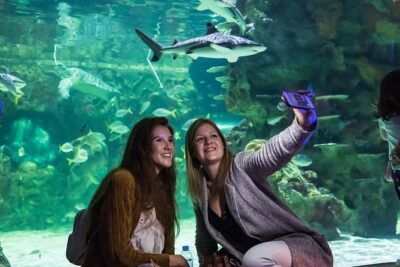 ★ 4.0SEA LIFE Brighton Admission TicketFrom $21468 reviews
 ★ 5.0Brighton Bar CrawlFrom $20377 reviews
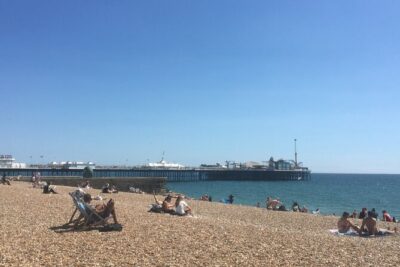 ★ 5.0Fun, Flexible Treasure Hunt Around Brighton with Cryptic Clues & Hidden GemsFrom $20154 reviews
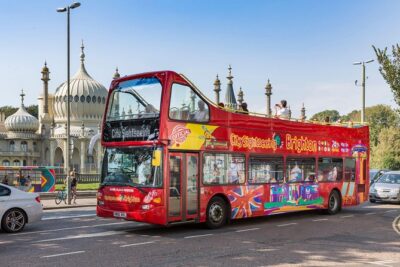 ★ 4.5City Sightseeing Brighton Hop-On Hop-Off Bus TourFrom $20152 reviews
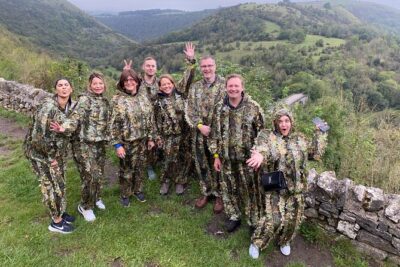 ★ 5.0The Hunt: Team Activity in Brighton, SussexFrom $104149 reviews
 ★ 5.0Handcrafted Donuts & Tea: Brighton’s Artisan Sweet Treat TourFrom $70127 reviews
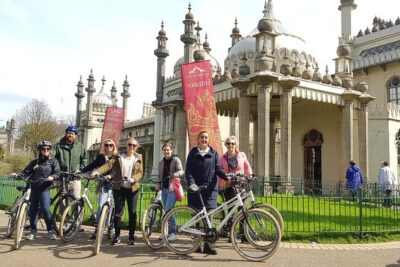 ★ 5.0Brighton Coastal TourFrom $50121 reviews
Browse the lists this tour appears in