
REVIEW · CANTERBURY DOVER AND KENT
Small-Group City Running Tour in Canterbury
Canterbury moves fast. This tour makes it move at your pace. In about 1 to 1.5 hours, you get a guided run that links famous landmarks with the stories that explain why they matter. You also get that rare combo of sweat plus specifics, not just wandering.
What I like most is the small group size (max five people). It keeps things personal, so the guide can judge your comfort and keep you together. I also love how the route is built around “stop, look, run” moments, so sightseeing happens without the usual slog of a long walking day.
One thing to consider is that this is still a running tour. Even if the pace is adjustable, you are moving through cobbled streets and uneven bits, so good running shoes and a realistic pace help you enjoy it.
In This Review
- Key things to know before you run Canterbury
- Why a Canterbury running tour feels different than sightseeing
- The pace and the guide: what makes it work with a small group
- Meeting point and first moments outside Canterbury Cathedral
- The city walls run: 2,000 years of defense, from Roman to stone
- Dane John Gardens: the highest point and quick “big picture” views
- Franciscan Gardens and Westgate Gardens: monasteries and river crossings
- Westgate Towers Museum and viewpoint: the medieval gate at 18 metres
- Marlowe Theatre: statues, sculptures, and Christopher Marlowe
- What it feels like to run Canterbury in a way that sticks
- Practical tips so the run feels good, not stressful
- Price and value: is $28.78 worth it?
- Who should book this Canterbury small-group run?
- Should you book it?
- FAQ
- How long is the Small-Group City Running Tour in Canterbury?
- How many people are in the group?
- Where does the tour start and end?
- What language is the tour offered in?
- Do I need admission tickets for the stops?
- Are service animals allowed?
- Is there free cancellation?
Key things to know before you run Canterbury
- Max five people means you get real attention, not a crowd shuffle
- Adjustable pace for beginners and experienced runners keeps the group together
- City walls and gates are a highlight, with 2,000 years of changes explained as you run
- Multiple quick garden stops (Dane John, Franciscan, Westgate) break up the route and add great viewpoints
- Westgate Towers viewpoint gives you the medieval gateway perspective many visitors miss
- Photos and a short video at the end add a nice take-home memory
More of Kent: cathedral city and white cliffs
- Official Canterbury Guided Walking Tour – 11.00 Tour★ 5.0 · 422 reviews
- Official Canterbury Guided Walking Tour – 14.00 Tour★ 5.0 · 214 reviews
- Silver Ring Workshop in Kent, England★ 5.0 · 102 reviews
- The Canterbury Classic Tour★ 5.0 · 100 reviews
Why a Canterbury running tour feels different than sightseeing
Canterbury is the kind of city where you can walk for hours and still miss the “why.” A running format helps because the route naturally strings landmarks together into a story you can feel in your legs. You’re not just hearing about medieval defenses, you’re running along the line where those defenses literally stood.
Also, it’s built for real life. You’re not locked into one speed. The tour is described as pace-friendly for different abilities, and that matters more than people think. When a city tour is too intense, you spend the whole time thinking about your body. When it’s paced right, you can actually absorb the details.
Finally, it’s efficient value. If you have limited time in Canterbury, this gives you a condensed “greatest hits” route in roughly an hour to an hour and a half, with breaks for photos and key viewpoints.
The pace and the guide: what makes it work with a small group
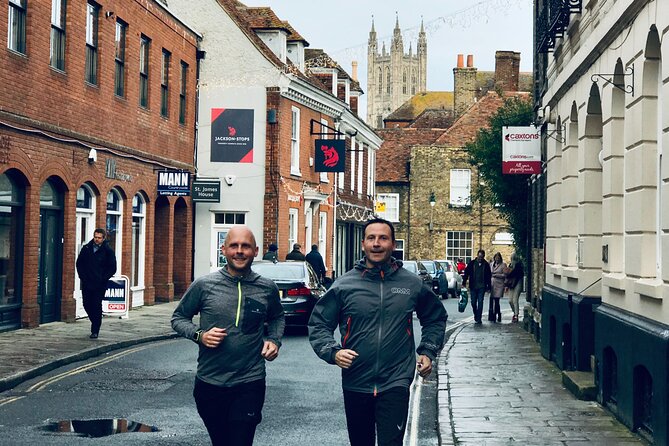
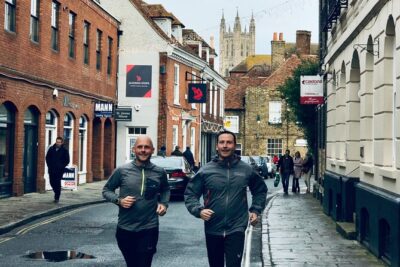
The best part of this experience is that it doesn’t feel like a guided lecture with jogging. The guide (Andy, in the most detailed firsthand accounts I saw) runs with the group and checks in to make sure everyone is comfortable. That means you can ease into the rhythm if you are rusty, and you can keep your pace if you are more confident.
Because the group is capped at five, you’re more likely to get practical guidance, like when to adjust effort or how to handle slower cobbled sections. One runner-story detail I really like: at least some groups get a short video after the tour, plus photos from stops. That turns the run into a souvenir you can share right away, not just memories you have to reconstruct later.
If you’re the kind of traveler who likes chatting but also wants facts, this format is a good fit. The tour is described as fun, friendly, and story-driven, with plenty of moments to ask questions while you’re moving.
Meeting point and first moments outside Canterbury Cathedral
The tour starts outside the cathedral area and meets at the Canterbury War Memorial, at 12-13 Sun St, Canterbury CT1 2HX. That’s a smart setup. You’re positioned at a central landmark, so you’re not spending your first five minutes hunting for the guide.
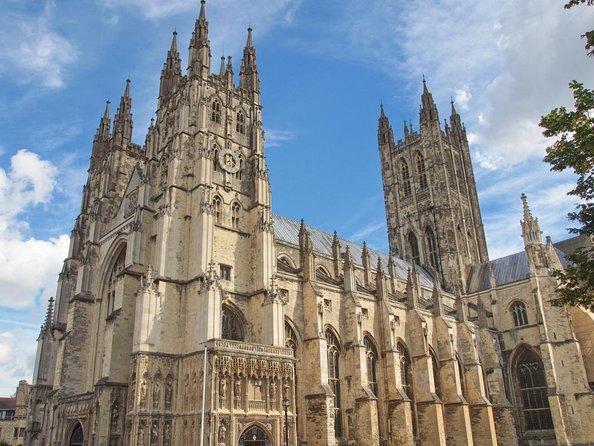
From the start, the emphasis is on context. The guide talks about the cathedral’s role and importance in the city’s history, including its dramatic past and what it does today. This matters because Canterbury Cathedral can look like a single big monument if you only see it briefly. Early context helps the rest of the route click into place.
Practical tip: if you’re sensitive to cold mornings, plan layers. Even a short run can feel chill at the start. You’ll likely be running through daylight and shadowy streets, so a hat or gloves can turn discomfort into an annoyance-free morning.
The city walls run: 2,000 years of defense, from Roman to stone
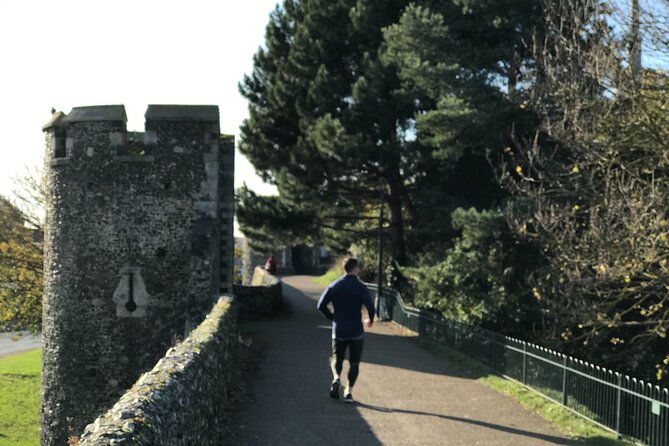
One of the strongest reasons to choose this tour is that it puts you on the path where Canterbury’s layers of history overlap. When you’re up on the walls, the guide explains how they evolved from primitive Roman defenses into the fortified stone work you can see now.
This is more than a history fact. Running the walls gives you a sense of scale and direction. Even if you’ve never visited before, you start to understand where the city’s protective boundary sat, how it guided movement, and why certain approaches mattered.
Possible drawback: walls and viewpoints mean stairs or uneven edges may appear along the route. The tour is paced for different abilities, but you should still expect some physical variety. If you prefer smooth, flat ground only, you might find the walking-to-running transitions a bit challenging.

Dane John Gardens: the highest point and quick “big picture” views
The tour’s highest point is Dane John Mound, inside Dane John Gardens. Expect a short stop, around five minutes, designed for a breath and a look around. From this spot, you get a view over much of the city, which helps you put Canterbury into perspective fast.
This is one of those moments that makes the rest of the route easier to understand. When you can see where things sit relative to each other, the history stops feel less random and more connected. It also helps you photograph without spending your entire morning trying to find angles.
If you don’t like long stops, this one is brief. That’s part of the tour’s smart pacing. You get the view and then get moving again.
Franciscan Gardens and Westgate Gardens: monasteries and river crossings
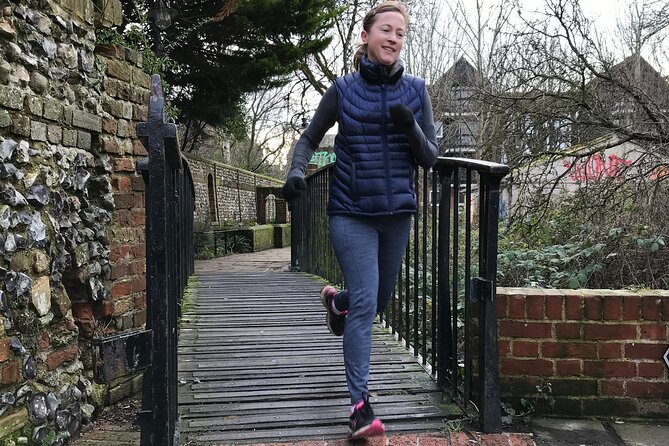
After the walls, the route shifts into garden and green-space pauses that make the run feel varied rather than repetitive.
At Franciscan Gardens, you’ll see monastery buildings associated with 1267. The stop is short (about five minutes), but it gives you a sense of medieval religious life in a compact space. I like this stop because it shifts from defense to daily life, so the story doesn’t stay stuck on war and fortification.
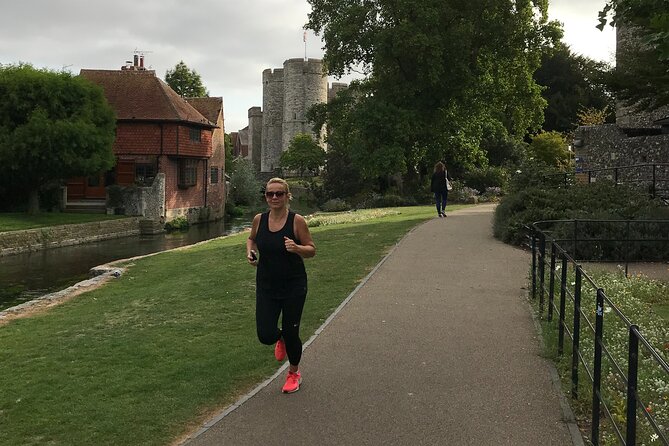
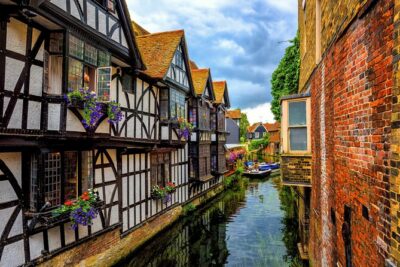
Then you’re near Westgate Gardens, just outside the city walls. Here you cross the River Stour and pause by a giant Baobab plane tree, noted as about 200 years old. The tour description says the tree is hiding a remarkable secret, which is exactly the kind of detail that’s hard to spot on your own. This is where a guided run shines, because your eyes are moving, and the guide points out what you might overlook on a normal walk.
One consideration: garden paths can be softer underfoot than cobbles, but they can also be uneven. Wear shoes that handle mixed surfaces, especially if you’re running on cobbled streets earlier.
Westgate Towers Museum and viewpoint: the medieval gate at 18 metres
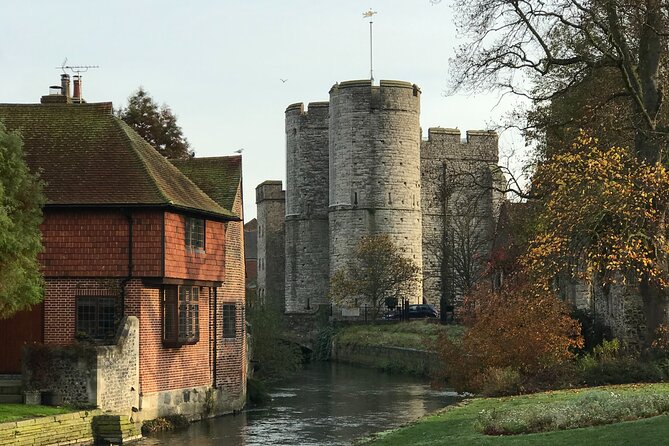
Next is Westgate Towers Museum and viewpoint, described as the main entrance into the city. This is one of Canterbury’s signature gatehouse landmarks, with an imposing 18-metre tower. It’s also identified as the oldest surviving tower in Britain and was built in 1378.
Why this stop is so valuable: gates tell you how cities managed arrivals. If you imagine Canterbury as something you step into, Westgate helps you visualize that moment, the first sight visitors would have recognized. In a running tour, you get a physical sense of arrival and movement, not just an exterior photo.
The guide also points out secrets, which is the real win here. An 18-metre tower is impressive on its own, but the story behind it is what makes you remember it.
Photos help at this stage because the viewpoint is designed for looking. If you enjoy architecture details, you’re likely to slow down and take in the shapes.
Marlowe Theatre: statues, sculptures, and Christopher Marlowe
The final major stop heads to The Marlowe Theatre, where you learn about statues and sculptures around it, and how they connect to one of Canterbury’s famous sons, Christopher Marlowe.
This is a nice change of pace after the medieval sections. Instead of stone defenses and gardens, you shift into cultural history, public art, and modern connections to a historical figure. Even if you’re not a theater person, this stop helps you understand that Canterbury’s story didn’t stop in the 1500s.
It’s also a good way to end because the tour maintains variety. You’re not repeating “another wall, another garden.” You’re closing with a landmark that feels distinctly Canterbury today.
What it feels like to run Canterbury in a way that sticks
Here’s the practical reality: you finish this tour with a mental map. You remember the cathedral context early on. You remember the walls as a line you ran along. You remember viewpoints like Dane John Mound. Then you connect the dots with the river crossing, the gatehouse tower, and the Marlowe Theatre.
That is what I’d want from any short city tour: not just a checklist of stops, but a clearer sense of the city’s structure and themes.
It also helps that the pacing is handled. If you are an experienced runner, you still get a workout feeling. If you’re returning after time away from running, you get a manageable rhythm and reminders that the goal is enjoyment, not speed. One guide-led run detail that stands out is how the leader checks pace throughout, so the group doesn’t fracture into a fast pack and a struggling pack.
Practical tips so the run feels good, not stressful
You don’t need to train for a marathon for this. But you do need to prepare like you’ll be moving on real city surfaces.
- Wear grippy running shoes. Canterbury’s streets include cobbles, and that can feel rough underfoot at running speed.
- Dress for a short, moving start. Layers help because you can warm up quickly once you’re underway, then cool down at pauses.
- Bring a phone for quick photos. If the guide sends a short video after, you’ll enjoy having your own shots too.
- Keep your ego in check. With max five people and an adjustable pace, you’ll get more out of the tour by matching the group rhythm instead of sprinting to the finish.
If you are worried about stamina, aim for a conservative effort. The tour length is short enough that a comfortable pace still gives you a full Canterbury experience.
Price and value: is $28.78 worth it?
At $28.78 per person, this isn’t a cheap add-on, but it also isn’t priced like a big-bus day or a full-day guided package. The value comes from three things:
1) Guide time in a small group (max five). You’re getting personal pacing and attention.
2) A route you’d struggle to assemble on your own quickly, especially if you want the “why” behind sites like the city walls and Westgate Towers.
3) Time efficiency. In roughly 1 to 1.5 hours, you hit several different parts of the city: cathedral context, wall running, viewpoints, gardens, the gatehouse, and Marlowe Theatre.
Also, it’s built around free-looking stops, with several segments listed as free admission for the short visits. Even if you’re only getting brief looks, the guide’s explanation is the heart of the experience.
If you’re the kind of traveler who loves walking tours but gets restless when they last too long, this often lands in the sweet spot. You still get the storytelling, but the movement keeps it lively.
Who should book this Canterbury small-group run?
This tour suits you if you want a different way to see Canterbury. You’ll especially like it if:
- You enjoy city history but prefer moving through it
- You want a small-group feel with real interaction
- You like viewpoints and outdoor stops, not just indoor attractions
- You’re comfortable with running at an adjustable pace
It also works for many first-time runners, as long as you bring a sensible mindset. The tour description says most travelers can participate, and the pace guidance suggests the guide actively manages comfort.
If you have a serious injury, limited mobility, or you hate running entirely, you might find it stressful. In that case, Canterbury’s history rewards slow walking tours too. But if you can handle a short run plus brief stops, this is a fun way to start your day.
Should you book it?
Yes, if you want a Canterbury morning that blends exercise with storytelling and gives you a clearer picture of the city’s layout in a short time. The small group size and the guide’s habit of keeping the pace right are the big selling points, and they show up again and again in how people describe the experience.
Before you book, be honest about one thing: you are choosing a run. Bring appropriate shoes, expect uneven city surfaces, and plan for a relaxed effort rather than a workout goal. Do that, and you’ll end with photos, fresh context, and a city map that actually sticks.
FAQ
How long is the Small-Group City Running Tour in Canterbury?
The tour runs for about 1 hour to 1 hour 30 minutes.
How many people are in the group?
The tour has a maximum of five travelers.
Where does the tour start and end?
It starts at the Canterbury War Memorial at 12-13 Sun St, Canterbury CT1 2HX, UK. It ends back at the same meeting point.
What language is the tour offered in?
The tour is offered in English.
Do I need admission tickets for the stops?
The stops listed on the tour are marked as admission ticket free for the time you’re there.
Are service animals allowed?
Yes, service animals are allowed.
Is there free cancellation?
Yes. You can cancel for a full refund up to 24 hours in advance of the experience start time. If you cancel less than 24 hours before, the amount paid is not refunded.
Kent, Cathedral To Coast






Fresh off the notebook in Canterbury
- Private Guided Walking Tour of Canterbury
★ 5.0 · 23 reviews - Small-Group City Running Tour in Canterbury
★ 5.0 · 33 reviews - Howletts Day Ticket
★ 4.5 · 42 reviews - Cultural Homestay Exploring London, Oxford and National Parks
★ 5.0 · 100 reviews - The Canterbury Classic Tour
★ 5.0 · 100 reviews - Silver Ring Workshop in Kent, England
★ 5.0 · 102 reviews
Canterbury Dover and Kent, compared.
 ★ 4.5Leeds Castle, Cliffs of Dover and Canterbury Day Trip from London with Guided Cathedral TourFrom $1452,820 reviews
 ★ 4.5Canterbury Cathedral, Dover Castle & White Cliffs Guided Day Tour from LondonFrom $152837 reviews
 ★ 4.5Leeds Castle, Canterbury, Dover & Greenwich Boat rideFrom $147604 reviews
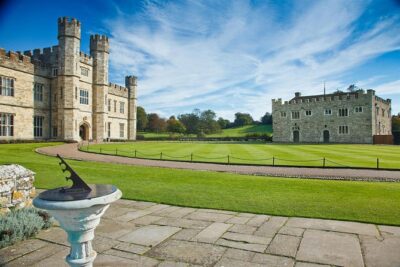 ★ 4.5Leeds Castle, Canterbury Cathedral and Cliffs of Dover Day TripFrom $145487 reviews
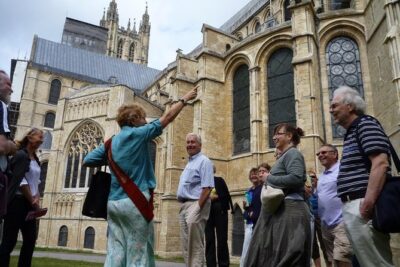 ★ 5.0Official Canterbury Guided Walking Tour – 11.00 TourFrom $20422 reviews
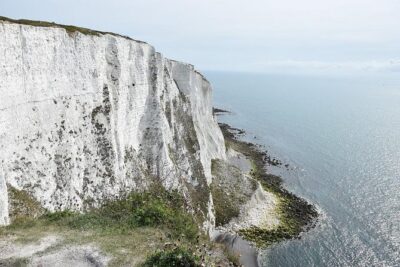 ★ 4.5White Cliffs of Dover & Historic Canterbury Day Tour from LondonFrom $109373 reviews
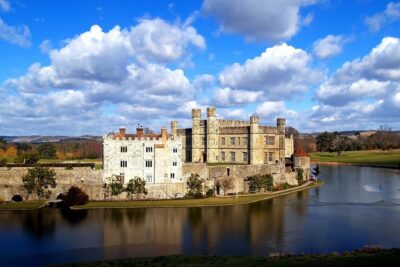 ★ 4.0Leeds Castle, Canterbury, Dover & Greenwich Cruise from LondonFrom $143369 reviews
 ★ 3.5Leeds Castle Admission – Ultimate Explorer TicketsFrom $59344 reviews
Browse the lists this tour appears in