
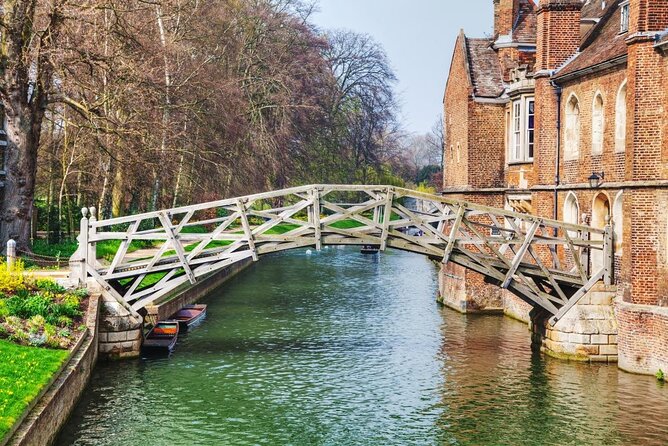
REVIEW · CAMBRIDGE TOURS
The Original Uncomfortable Cambridge™ Tour
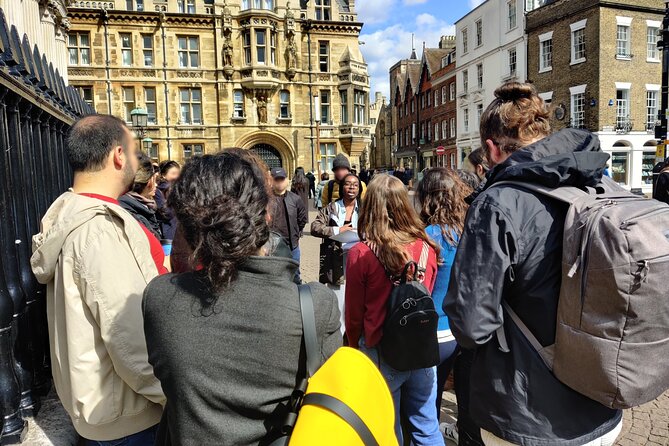
Cambridge, but not as you expect. This 90-minute tour is interesting because it uses student-led commentary to look at Cambridge University through uneasy topics, not glossy postcards. I like that the group stays small, capped at 15 people, so questions feel welcome and the stops actually connect.
What really sells it for me is the way the guide talks. You’ll get history in short bursts, with prompts that push you to think, not just listen. In particular, guides like Shubham and Malak have a knack for making the walk feel social and a bit playful, while still landing on serious themes.
One consideration: this is not a great fit if you have trouble walking. It also depends on good weather, since the tour is outdoors between sites and runs in multiple college areas.
In This Review
- Key things to know before you go
- A Cambridge University tour built around real student commentary
- Cost check: what $27.56 buys you (and what costs extra)
- Small group energy, plus weather and walking reality
- Stop-by-stop at Cambridge’s big sites, with uncomfortable context
- Stop 1: King’s College, opening the story at the front gates
- Stop 2: Great St Mary’s Church, the city versus university tension
- Stop 3: Trinity Hall and the idea of problematic donations
- Stop 4: The Backs, Civil War history and Oliver Cromwell’s legacy
- Stop 5: Darwin College, women’s fight for full membership
- Stop 6: Queens’ College and the history of Black students
- Stop 7: St Catharine’s College, enslavement histories and repatriation controversies
- Stop 8: Back at King’s College, LGBTQIA+ histories and memory
- How the stops connect: the themes you’ll notice on your own after
- Cambridge is an institution of membership
- Money and power shape memory
- Politics is not separate from campus life
- Who should book this tour, and who should skip it
- Should you book the Uncomfortable Cambridge™ Tour?
- FAQ
- How long is the tour?
- What is the group size?
- What language is the tour offered in?
- What admission tickets are included?
- Where does the tour start?
- Where does the tour end?
- What is the cancellation policy?
- Does the tour run in bad weather?
Key things to know before you go
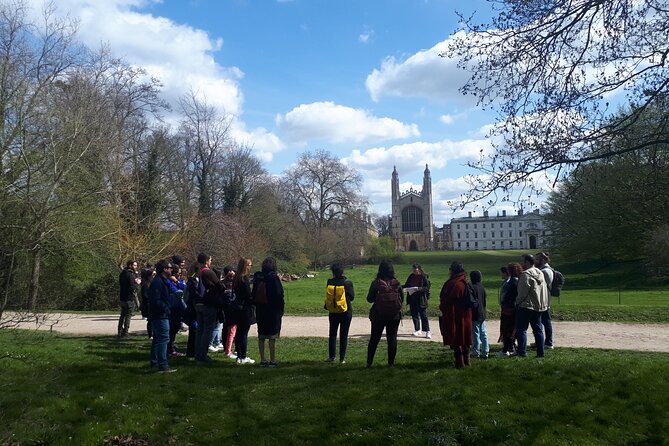
- A student guide drives the pace with short, question-friendly explanations instead of scripted monologues.
- Small group size (15 max) helps you hear the guide and actually ask things.
- You’ll cover major Cambridge landmarks like King’s College, Great St. Mary’s Church, the Backs, and Darwin College.
- Admissions are mostly extra, with only Great St. Mary’s Church listed as free.
- The themes are intentionally uncomfortable, including women’s access, Black students, LGBTQIA+ history, and controversies around enslavement and repatriation.
More Cambridge colleges and courtyards
- Cambridge University Walking Tour by Alumni™ Kings College Option★ 5.0 · 2,336 reviews
- Cambridge University With Alumni: Optional Kings College Entrance★ 5.0 · 1,987 reviews
- Punting Tour in Cambridge★ 4.5 · 1,690 reviews
- Cambridge Walking & Punting Tour by Alumni™ King’s College Option★ 4.5 · 698 reviews
A Cambridge University tour built around real student commentary
If you’ve only seen Cambridge from the usual angles, this tour changes your mental picture fast. It doesn’t treat the colleges like museum backdrops. Instead, it frames them as institutions with power, money, and policies that shaped who could belong.
The student guide format matters. A guide who’s part of the Cambridge student world tends to speak with a different rhythm than a formal lecture. You can expect explanations that feel like a conversation with a smart local, and not like someone racing through facts to hit every bullet point.
You’ll also notice the tour’s tone right away. The focus is not just “what happened,” but “why it mattered,” and who benefited or got excluded. That’s why topics like women becoming full members, the history of Black students, and LGBTQIA+ histories are not tacked on at the end. They show up as key storylines as you walk.
Cost check: what $27.56 buys you (and what costs extra)
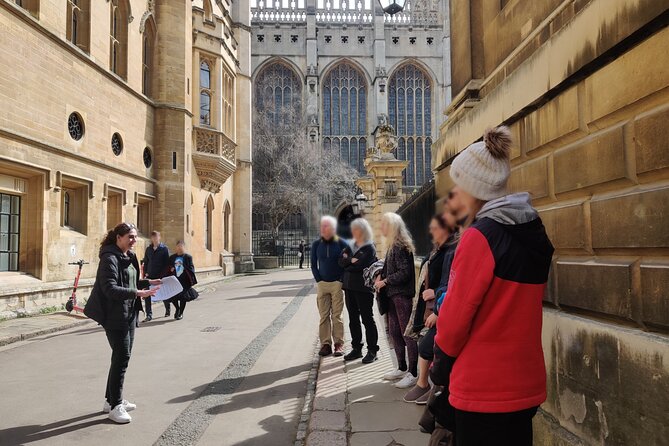
At $27.56 per person for about 1.5 hours, you’re paying for a guided route plus a student guide. That’s a fair structure for Cambridge, where self-guided walking is easy but interpretation takes work.
Here’s the practical part: several college stops do not include admissions. King’s College (your first stop), Trinity Hall, Darwin College, Queens’ College, St Catharine’s College, and the final King’s College wrap-up all list admission tickets as not included. Great St. Mary’s Church is the exception in this itinerary, and it’s free.
So value comes down to your plan:
- If you’re happy seeing buildings from outside and staying oriented, you may find the admission lineups less painful.
- If you want to go inside during the college stops, budget extra for entrances where required.
The good news is that you’re not paying a premium “for admissions.” You’re paying for the guide’s perspective and the route that stitches it together.
Small group energy, plus weather and walking reality
This tour is capped at 15 people, which is the difference between “standing in a crowd” and “actually hearing the story.” It also tends to make the Q and A feel more natural. If you like tours where you can ask small follow-ups, this structure gives you room.
The meeting points also keep things straightforward. You start at the Cambridge Tourist Information Centre at The Guildhall, 11 Peas Hill (CB2 3PP). You finish at King’s Parade. The route stays within the Cambridge core, and it’s near public transportation, so you should be able to arrive without stress.
Still, there’s a downside to be honest about: the tour is not recommended if you have difficulty walking. Multiple outdoor stops plus shifting between college areas means you should show up ready to walk at a steady pace.
Stop-by-stop at Cambridge’s big sites, with uncomfortable context
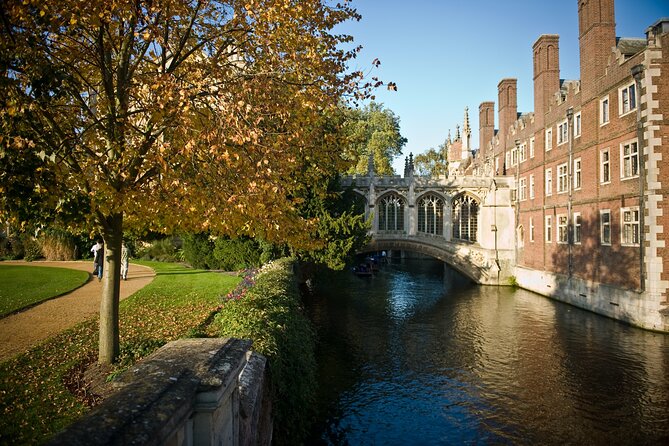
This tour moves through a set of anchor sites that most people recognize, then gives you the less-comfortable background behind them. That makes the landmarks feel more human and less like postcard scenery.
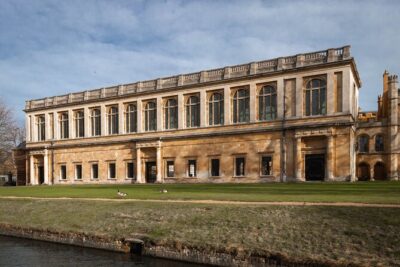
Stop 1: King’s College, opening the story at the front gates
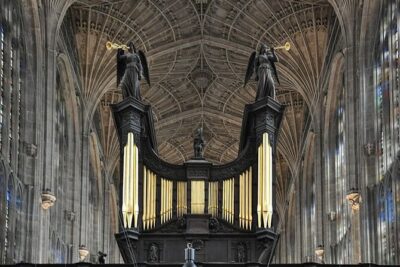
You meet your student guide at the front of King’s College. This is a smart opening. King’s College is the kind of place most visitors immediately photograph, but it also represents the university’s public face.
What makes the start useful is that it sets up the tour’s approach: you’ll see the celebrated architecture and then learn how Cambridge shaped membership, access, and belonging over time. Admission is not included here, so plan to either view from outside during the stop or pay if you want entry on the day.
Stop 2: Great St Mary’s Church, the city versus university tension
Next comes Great St. Mary’s Church, where you learn about medieval tensions between the city and the university. That might sound like a side note, but it’s actually a big theme for Cambridge: the university didn’t just sit beside the city. It influenced it, sometimes clashing with local life.
This stop runs about 15 minutes, giving you time to connect the story to the buildings around you without feeling rushed. Admission is free, which makes it a solid anchor even if other colleges later require an extra ticket.
Stop 3: Trinity Hall and the idea of problematic donations
Trinity Hall is up next, with the guide positioned in front of the Old Schools building. Here you’re not just hearing “who founded what.” You’re looking at the idea of problematic donations to the university.
That topic can be uncomfortable in a productive way. It asks you to consider how institutions build legitimacy using money, and how later generations decide what to keep, what to question, and what to remove. Even if you’re not a deep policy person, the stop is short enough that you leave with a clear takeaway rather than a lecture.
Stop 4: The Backs, Civil War history and Oliver Cromwell’s legacy
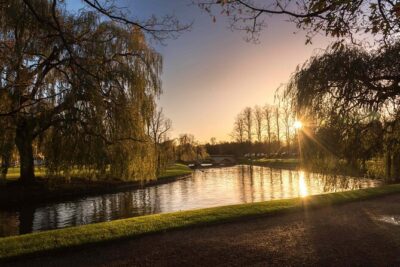
The Backs is where Cambridge often looks most scenic, with the river and college backs creating that famous view. This tour uses that beauty as a contrast.
About 20 minutes here is focused on the English Civil War and the legacy of Oliver Cromwell. You get the sense that Cambridge’s history isn’t only academic and formal. It’s tied to national power struggles and to real people who fought for control.
If you’re thinking, okay, but what does that have to do with me today, the guide’s framing is usually the answer. It connects past political conflict to who had influence, and why certain reputations stuck.
Stop 5: Darwin College, women’s fight for full membership
Darwin College is a key stop, and it includes a very specific local detail: you’ll review a map of colleges opposite the site of former New Hall College, now Darwin College.
That kind of orientation is worth it. It helps you see Cambridge as an evolving space, not a frozen tableau. The theme here is the journey of women as they fought to become full members of the university. You get a window into how “progress” was not automatic, and how inclusion took organized effort, not just good intentions.
Admission is not included, so treat this stop as both storytelling and orientation. If you want to go further, you can always build in extra time later on your own.
Stop 6: Queens’ College and the history of Black students
Queens’ College is where the tour shifts again, this time to the history of Black students at Cambridge University.
This isn’t presented as a generic diversity line. It’s handled as a serious historical thread, which changes how you walk past the college grounds. Instead of seeing a uniform academic landscape, you start tracking the question of who had access, who got recognized, and who was left out.
About 15 minutes is enough time to connect the story to the college setting without dragging. If you like tours that keep moving but still make the ideas stick, this pace works.
Stop 7: St Catharine’s College, enslavement histories and repatriation controversies
At St Catharine’s College, the conversation turns to controversies over histories of enslavement and object repatriation.
That’s heavy material, but it fits the tour’s overall method. The guide doesn’t treat these topics as add-ons. They’re part of the university’s moral footprint, and the stop is timed to give you a chance to absorb the implications.
Again, admission is not included. Still, you’re likely to walk away thinking about Cambridge’s collections, commemorations, and the question of who gets to decide what remains part of public memory.
Stop 8: Back at King’s College, LGBTQIA+ histories and memory
You finish where you started, at King’s College, with a discussion of LGBTQIA+ histories and memory. This final stop matters because it loops the tour into a broader question: how does the university remember, record, and label its own people?
It’s also a satisfying way to close. You end at a familiar site, and you carry the tour’s themes into your last look around. Admission is not included here either, but the wrap-up is built to land even if you stayed outside.
How the stops connect: the themes you’ll notice on your own after
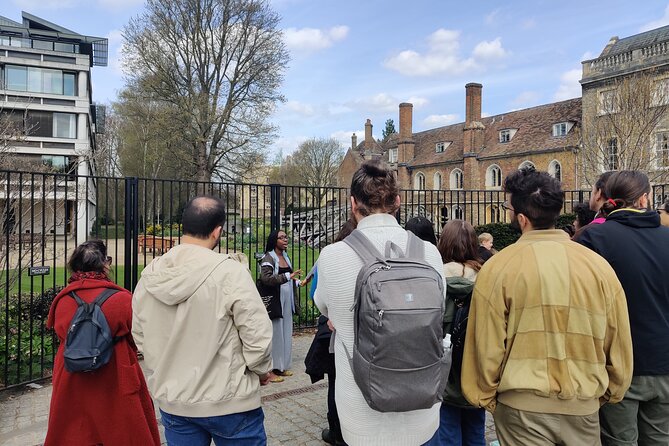
The tour’s structure is doing more than covering famous places. It’s building a set of recurring ideas you can keep using after the guide moves on.
Cambridge is an institution of membership
Across women’s access, Black students’ history, and LGBTQIA+ narratives, the story is about who was allowed to belong and on what terms. Once you see that theme, you’ll start noticing it even when you’re not on the tour.
Money and power shape memory
The problematic donations conversation and the enslavement and repatriation controversy stop both point at the same core logic: institutions are built with resources, and later generations decide what to do with the moral baggage.
Politics is not separate from campus life
The Civil War and Cromwell legacy stop ties Cambridge to national upheaval. That helps you avoid the mistake of treating the university as a separate bubble from society.
Who should book this tour, and who should skip it
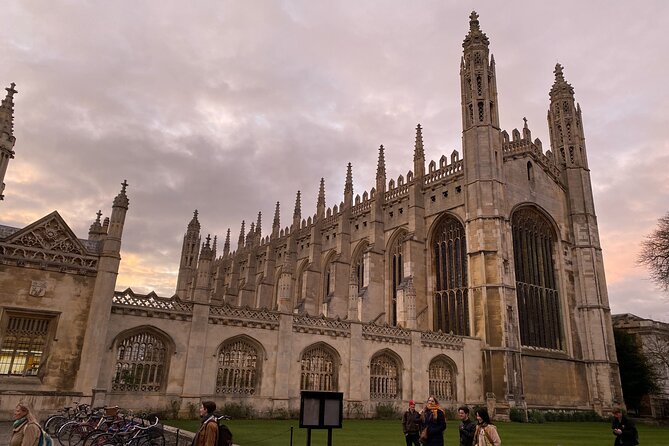
This is a great fit if you:
- Like tours that ask questions and you want history with an edge.
- Prefer a small group where you can interact, not just listen.
- Want a way to see major Cambridge sites while still learning a side that doesn’t get top billing on standard sightseeing routes.
You might skip it if:
- You have difficulty walking and need a more accessible format.
- You’re hoping for an only surface-level “greatest hits” tour with mostly upbeat anecdotes.
- You want admissions included everywhere. Several college entries are not included in the tour price.
Should you book the Uncomfortable Cambridge™ Tour?
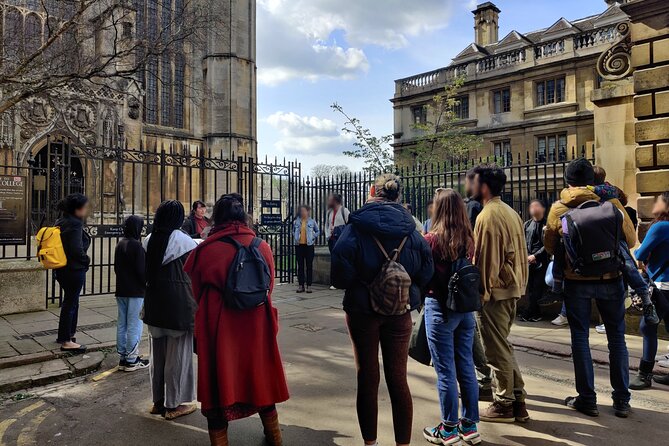
If your goal is Cambridge with honest context, I think this is a strong booking. The price buys you a student guide, a compact route, and a way to connect big landmarks to themes like women’s inclusion, Black student history, LGBTQIA+ memory, and controversies around enslavement and donations.
The biggest reason to book is the approach. A small group plus question-friendly, thought-provoking commentary makes the time feel earned. You’re not just touring buildings. You’re learning how the university’s story was shaped, contested, and recorded.
The only real caution is logistical: it’s outdoors and not recommended for people who struggle with walking, and it depends on good weather. If you’re good on your feet and you’re okay with serious topics, book it.
FAQ
How long is the tour?
It runs about 1 hour 30 minutes.
What is the group size?
The tour is capped at a maximum of 15 travelers.
What language is the tour offered in?
It is offered in English.
What admission tickets are included?
Admission to Great St Mary’s Church is free. Admission tickets for King’s College, Trinity Hall, Darwin College, Queens’ College, and St Catharine’s College are not included.
Where does the tour start?
Meet at the Cambridge Tourist Information Centre at The Guildhall, 11 Peas Hill, Cambridge CB2 3PP.
Where does the tour end?
It ends on King’s Parade, Cambridge CB2.
What is the cancellation policy?
You can cancel for a full refund up to 24 hours before the experience starts. If you cancel less than 24 hours before, you will not receive a refund.
Does the tour run in bad weather?
It requires good weather. If it is canceled due to poor weather, you’ll be offered a different date or a full refund.
More Cambridge On Foot




Fresh off the notebook in Cambridge
- Cambridge’s History & Secrets with Self-Guided Walking Tours
★ 4.5 · 9 reviews - Private | Cambridge University Colleges Guided Punting Tour
★ 4.5 · 13 reviews - Tangential Cambridge: Private Walking Tour of Cambridge
★ 5.0 · 14 reviews - Cambridge Famous Alumni Quest Experience
★ 4.5 · 18 reviews - Explore Cambridge Student Life & Top Colleges Walking Tour
★ 3.5 · 18 reviews - Scholars & Secrets of Cambridge: Self-Guided Puzzle Adventure
★ 3.5 · 19 reviews
Cambridge Tours, compared.
 ★ 5.0Cambridge University Walking Tour by Alumni™ Kings College OptionFrom $332,336 reviews
 ★ 5.0Cambridge University With Alumni: Optional Kings College EntranceFrom $341,987 reviews
 ★ 4.5Punting Tour in CambridgeFrom $1121,690 reviews
 ★ 5.0Shared Guided Punting Tour of CambridgeFrom $22787 reviews
 ★ 4.5Cambridge Walking & Punting Tour by Alumni™ King’s College OptionFrom $76698 reviews
 ★ 5.0Shared Punt Tour – CambridgeFrom $34540 reviews
 ★ 5.0Creepy Cambridge – Cambridge’s Most Entertaining Ghost WalkFrom $27366 reviews
 ★ 5.0Private Cambridge Punting TourFrom $137339 reviews
Browse the lists this tour appears in