
REVIEW · YORK TOURS
Welcome to York – The River Route
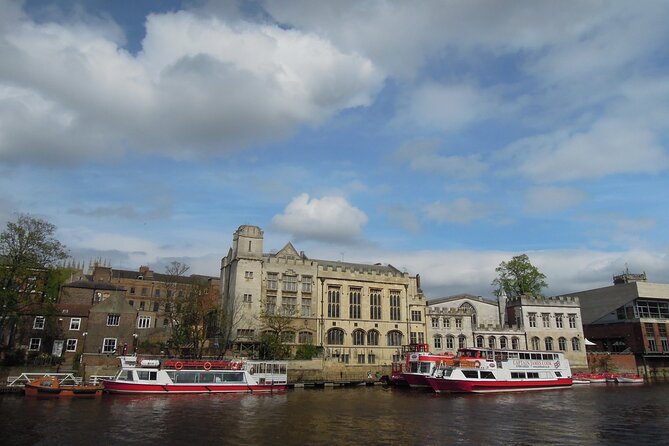
York’s river route tells a clear medieval story. This guided walk connects the River Ouse to the city’s growth, with stop-by-stop stories that explain why York looked the way it did. You’ll even get context for Henry VIII’s dissolution of the monasteries as you stand in view of the abbey ruins.
I especially like two things about this experience. First, the first stop at St Mary’s Abbey gives you big visual impact fast, even if you only have limited time. Second, many stops are built around short, easy viewing moments with admission free along the way, so you can spend your time on the streets and river edges instead of ticket booths.
One consideration: this experience requires good weather. If conditions are poor, the operator may cancel, and you’ll need to plan around rescheduling or a refund.
In This Review
- Key things to know before you go
- Why the River Ouse shapes York
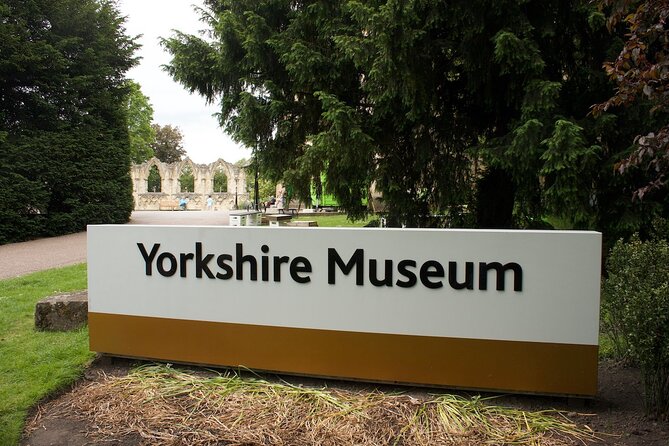
- Meeting at Yorkshire Museum Gardens, then walking into the story
- Stop 1: St. Mary’s Abbey ruins and Henry VIII’s impact
- Stop 2: Hamlet of St Marygate, the river-to-road connector
- Stop 3: Ouse Bridge, how long a crossing can last
- Stop 4: King’s Staith, York’s main quay and royal quirks
- Stop 5: Clifford’s Tower finish, what to do next
- Price and value: how $16.45 works in your favor
- The guide effect: why Ian’s facts land
- Who this walk suits best
- Practical tips so your 2 hours feel easy
- Should you book York’s River Route walk?
- FAQ
- How long is York – The River Route?
- How much does it cost?
- Where does the tour start and where does it end?
- What language is the tour in?
- Is this a mobile ticket experience?
- Are admissions included for all stops?
- What is the cancellation policy?
- What happens if the weather is poor?
- Is the group size limited?
Key things to know before you go
- River Ouse first, town second: every stop ties back to how York used the river for movement and power.
- St Mary’s Abbey ruins with Henry VIII context: you see what remains and understand what changed.
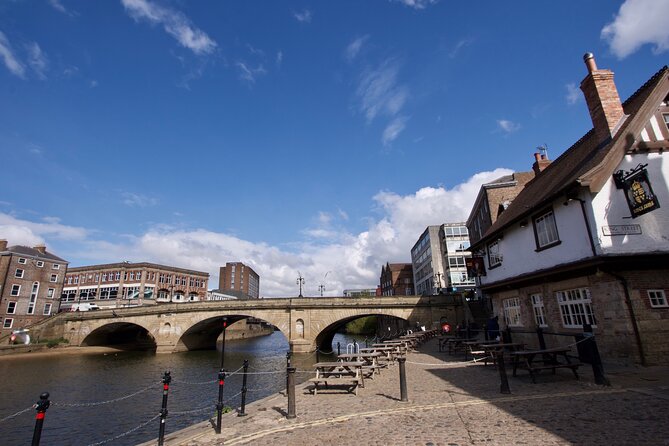
- Short viewing segments: quick stops at the bridge and quay keep the pace smooth.
- King’s Staith stories: you’ll hear why royal landings here were rare.
- Clifford’s Tower payoff at the end: your walk finishes at the foot of the keep, with optional add-on entry.
Other York walks inside the old walls
- Mad Alice’s The Bloody Tour of York -Best Tour Award Europe★ 5.0 · 2,749 reviews
- Ghost Bus Tour of York★ 4.5 · 2,404 reviews
- Shadows of York: Ghost Walk and Horrible History.★ 5.0 · 1,403 reviews
- Private Historical Walking Tour of York★ 5.0 · 1,324 reviews
Why the River Ouse shapes York
The River Ouse is not just scenery in York. It’s the reason trade, travel, and influence clustered where they did, from medieval lanes that funneled goods and people to the bridges and quays that made river access possible.
What I like about this route is that it teaches you to look. Instead of treating the river as a backdrop, you learn how the city used it as a working system. That makes later sightseeing around York feel less like random wandering and more like following a logic you can see with your own eyes.
If you enjoy history that you can point to, not just read about, this works well. You connect names like Marygate and King’s Staith to real river-side structures, and the story clicks quickly.
Meeting at Yorkshire Museum Gardens, then walking into the story
Your start point is at Yorkshire Museum Museum Gardens, Museum Street, York. The walk begins at 2:00 pm, and it runs about 1 hour 30 minutes to 2 hours depending on the pace and how many questions people have.
The meeting location is handy because Museum Gardens sits in the right area to start thinking about the city center and then head toward the river. You’re not walking from the far reaches of the outskirts, so the time stays focused on the “why is this here” parts of York.
Group size is capped at 25 travelers, so you should expect a guided, real conversation feel rather than a massive herd. In at least one reported experience, the group was so small that the guide could offer extra time for a couple of extras along the way.
Stop 1: St. Mary’s Abbey ruins and Henry VIII’s impact
You begin at St. Mary’s Abbey, where you can see dramatic ruins and learn what happened when King Henry VIII reshaped religious power. This stop is short, around 5 minutes, but it’s dense with context because you’re looking at the physical evidence of the monastery era.
This is one of the best-value moments on the route, because the admission is free for this stop. Even if you’re not a deep medieval architecture person, you still get the key idea: York’s spiritual institutions were enormous landholders and players, and the dissolution changed that power.
Pay attention to how the ruins sit in the urban plan. The point here is not to memorize details, but to build a mental map: this was once a center of influence, and the city’s later street layout and river connections grew around the changed landscape.
Quick practical tip: because it’s a ruined site, wear shoes with decent grip. The walk is generally manageable for most people, but you’ll be on uneven ground.
Stop 2: Hamlet of St Marygate, the river-to-road connector
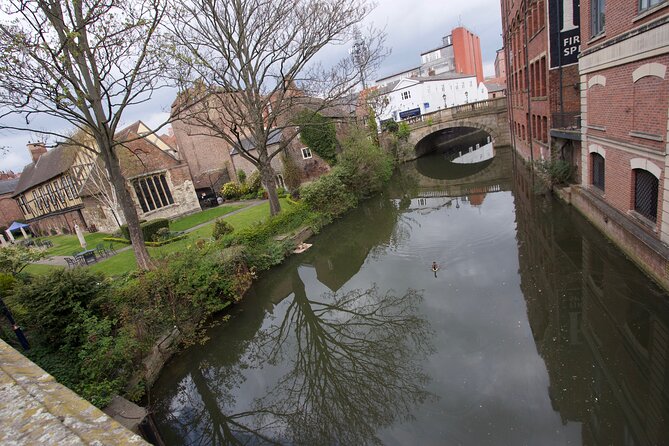
Next you head to Hamlet of St Marygate from Museum Gardens down onto Marygate. This portion runs about 10 minutes, and the key theme is how an ancient street connected the River Ouse to the main road north.
Marygate is a name you’ll keep hearing around York, and this stop helps it make sense. You’ll see things like the old abbey walls and Marygate Tower, and you’ll get the idea that York’s abbey influence didn’t stay inside one site. It shaped lots of space around it.
The value here is in the explanation, not just the view. You start to see medieval York as a set of connections: river access on one side, movement routes inland on the other, and big institutions controlling land and routes in between.
If you like “explain it like I’m standing here” guides, this is where you’ll feel it most. The guide’s job at this stop is to point out how you can read the city’s past from the streets in front of you.

Stop 3: Ouse Bridge, how long a crossing can last
Then it’s a quick hop to Ouse Bridge. You get about 5 minutes here, and the big fact is that a bridge has crossed the Ouse at this spot for over a thousand years.
That kind of time scale can feel abstract until you stand in the exact place and realize how stubborn geography is. Rivers need crossings, and York kept choosing this crossing point again and again because it worked.
This stop is also great for resetting your eyes. After abbey walls and tower views, you shift back to the practical idea of movement, commerce, and the daily problem of crossing water.
Even with the short stop time, you’ll leave with a better sense of how the river infrastructure shaped neighborhoods. When you later walk around York Castle or explore on your own, you’ll recognize how the city channels people toward the river and onward.
Stop 4: King’s Staith, York’s main quay and royal quirks
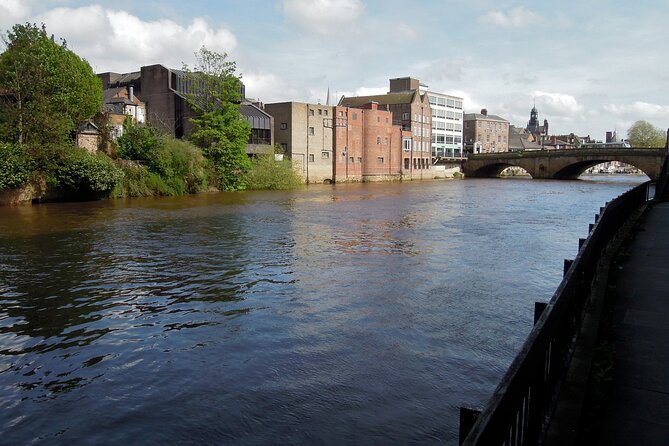
At King’s Staith, the route leans into river work and medieval water access. You’ll have about 10 minutes here, with free admission, and you’ll look out toward the river as you hear stories about York’s water lanes.
King’s Staith is described as York’s main quay for more than 500 years, which matters because it tells you this spot was not a temporary convenience. It was part of how York functioned for generations.
The most memorable detail from the tour theme is the idea that very few kings ever landed at King’s Staith. That’s the kind of strange, specific fact that makes the story stick. It’s also a nudge to question assumptions, because popular history often simplifies royal behavior, while local geography can be the real deciding factor.
If you enjoy odd facts you can share over dinner later, this is a strong stop. It turns the quay from a name into a place with a personality.
Stop 5: Clifford’s Tower finish, what to do next
The walk ends at Clifford’s Tower, near York Castle Museum, at the foot of the keep. You’ll have about 10 minutes at the finish, and the view here is the grand finale: a dramatic medieval keep with a strong presence over York’s historic center.
Important detail: Clifford’s Tower admission is not included. That means you can still get the viewpoint during the walk, but if you want to go inside, you’ll need to plan for the separate ticket.
I like finishing here because you get a natural next step. You start with the river system, you follow the city’s influence from religious institutions to street connections to river trade, and then you arrive at a castle landmark that signals power in a different form.
Also, because the walk ends near the castle museum area, you can easily choose what fits your day next. If you’re museum-paced, you can keep going. If you’re just after views, you’ve already had the best viewpoint moment.
Price and value: how $16.45 works in your favor
At $16.45 per person, this is priced as a short, focused walking tour with good built-in value. The big reason: several stops come with free admission included, so you’re paying mainly for the guide time and the storytelling, not a lineup of paid entries.
You’ll spend most of your time outside, which keeps the cost down and helps you see York in motion rather than only through museum walls. That works especially well if you have limited time but want to understand what you’re seeing.
The one budget catch is Clifford’s Tower entry not included. If you definitely want to go up and do the paid part, set aside extra money so the end of the walk does not surprise you.
Booked on average about 24 days in advance, it’s smart to lock in your slot early, especially if you care about the 2:00 pm start time and want your preferred day.
The guide effect: why Ian’s facts land
The tour experiences are described as highly rated, and one consistent praise point is the guide’s ability to connect details to the places you’re standing in. In the feedback, Ian is singled out as an excellent, knowledgeable guide who explains things clearly.
That matters because York has plenty of plaques and ruins, but without a framework, it’s easy to miss the story thread. Ian’s style, based on the reported comments, seems to keep the information grounded in what you can see right now.
One review mentioned a favorite moment: the John Snow plaque. Another notes an added bonus on a small day: extra time to look at Dick Turpin’s grave. I can’t promise those will always be in the exact spotlight on every departure, but the pattern is clear: when the group is small, the guide can add useful extras without throwing off the main route.
So if you want a walk where the facts feel pointed, not dumped, this has the right formula.
Who this walk suits best
This is a great fit if you like walking tours that teach you how a city evolved, not just where to take photos. The route is built around short stops with clear themes: monastery power, street connections, a long-running river crossing, quay life, and castle dominance.
It also makes sense for travelers who want a mid-afternoon activity that does not eat an entire day. The total time is roughly 1.5 to 2 hours, and it starts at a convenient sightseeing zone.
If you’re traveling with service animals, note that service animals are allowed. And because it’s described as near public transportation, it’s easier to stitch into a broader York plan.
Most people can participate, but do plan for outdoor walking segments and short stops that may involve uneven surfaces.
Practical tips so your 2 hours feel easy
Here’s how I’d set yourself up for a smoother walk.
- Wear comfortable walking shoes. Even if you’re only out for about two hours, York’s old streets and the abbey ruin areas can be uneven.
- Bring a light layer. The tour is weather dependent, and river areas can feel cooler than you expect.
- Have your mobile ticket ready. This keeps check-in quick and avoids paper scrambling.
- If you’re hoping for extra time at the end, keep your schedule flexible. The walk ends at Clifford’s Tower, near York Castle Museum, so you can naturally continue.
If you’re sensitive to crowds, consider that group size is capped at 25. Still, York can feel busy, so arriving a few minutes early helps you settle in before the walk starts.
Also, if you’re the type who likes asking questions, this is a good day for it. Smaller stops like Ouse Bridge and King’s Staith are perfect for clarifying points as you look at the water and structures.
Should you book York’s River Route walk?
Book it if you want a short guided walk that ties York’s main river features to how the city grew. The free admission stops help your budget, and the Clifford’s Tower finish gives you a satisfying visual end point even if you do not buy additional tickets.
I’d skip it or think twice if you’re traveling on a day when weather is shaky and you hate outdoor plans. Since the experience requires good conditions, you may face changes if rain or poor weather hits.
One more tipping point: if you’re excited by specific local details, like the John Snow plaque mentioned in feedback or the kind of extra moments the guide can add when the group is small, this tour has the right vibe. You’re paying for a guide who turns York’s river names into a story you can walk through.
FAQ
How long is York – The River Route?
It runs about 1 hour 30 minutes to 2 hours.
How much does it cost?
The price is $16.45 per person.
Where does the tour start and where does it end?
It starts at Yorkshire Museum Museum Gardens, Museum Street, York YO1 7FR, UK, and ends at the foot of Clifford’s Tower, Tower St, York YO1 9SA, near York Castle Museum.
What language is the tour in?
The tour is offered in English.
Is this a mobile ticket experience?
Yes, you’ll use a mobile ticket.
Are admissions included for all stops?
St. Mary’s Abbey, Hamlet of St Marygate, Ouse Bridge, and King’s Staith are free. Clifford’s Tower admission is not included.
What is the cancellation policy?
Free cancellation is available. You can cancel up to 24 hours in advance for a full refund.
What happens if the weather is poor?
This experience requires good weather. If it’s canceled due to poor weather, you’ll be offered a different date or a full refund.
Is the group size limited?
Yes. This tour has a maximum of 25 travelers, and most travelers can participate. Service animals are allowed, and it is near public transportation.
Inside The Walls Of York






Fresh off the notebook in York
- Welcome to York – The River Route
★ 5.0 · 7 reviews - Private Walking Tour: York City Highlights and York Minster
★ 5.0 · 8 reviews - York 3-Hour Photography Walking Tour
★ 5.0 · 9 reviews - Guided Historic Pub Tour (York)
★ 4.5 · 11 reviews - Full-Day Heartbeat Locations Tour from York
★ 3.5 · 11 reviews - Private Roman Tour of York
★ 5.0 · 14 reviews
York Tours, compared.
 ★ 5.0Mad Alice’s The Bloody Tour of York -Best Tour Award EuropeFrom $202,749 reviews
 ★ 4.5Ghost Bus Tour of YorkFrom $272,404 reviews
 ★ 5.0Shadows of York: Ghost Walk and Horrible History.From $181,403 reviews
 ★ 5.0Private Historical Walking Tour of YorkFrom $1951,324 reviews
 ★ 4.5Daytime Sightseeing Boat Cruise in YorkFrom $201,256 reviews
 ★ 4.5York Dungeon Entry TicketFrom $261,108 reviews
 ★ 5.0Wizard Walk of York – WINNER Best Tour & Best of York AwardFrom $16918 reviews
 ★ 5.0The Best of York on Foot in a Small GroupFrom $27783 reviews
Browse the lists this tour appears in