
REVIEW · NEWCASTLE AND THE NORTHEAST
3 Hour Walking Tour through Newcastle upon Tyne
Newcastle in three hours feels like cheating, in a good way. You get a tight route, a smart local guide, and enough stops to see the city’s layers without wandering for half a day. I especially like the small-group pace and the Town Wall to Quayside finish, where the story keeps moving as the views change. The one thing to weigh is that there are steep steps near the castle area, plus cobbled bits on the route.
You’ll walk with Martin Stait, and the tour style shows. People praise the way he keeps things well-timed, answers questions, and turns ordinary streets into something you can picture in your mind. I also love how the tour doesn’t just point at landmarks, it explains why they matter to Newcastle’s identity, from Roman-era threads to modern bridges and buildings.
Plan for practical walking conditions. This is a 3-hour walk with moderate fitness suggested, and you’ll be on your feet through busy, uneven streets. Bring a layer for wind off the Tyne, and pack water or a light snack since snacks are not included.
In This Review
- Key points at a glance
- Getting your bearings at 1:00 pm, then walking it all off
- Town Wall to Chinese Garden: a quick route to “old Newcastle”
- Eldon Square to St Andrews churchyard: squares, streets, and street names
- Grey’s Monument and Grainger Town: set pieces and the look of confidence
- Theatre Royal, High Bridge cobbles, and Bigg Market corners
- Newcastle Castle area: history on top, then the steep walk down
- Bessie Surtees House, the old Guildhall, and ending at the Tyne
- What makes Martin Stait’s guiding style work
- Who this tour fits best, and who might want a different plan
- Should you book this Newcastle walking tour?
- FAQ
- How long is the Newcastle upon Tyne walking tour?
- How much does the tour cost?
- Where does the tour start and end?
- Is the tour offered in English?
- Is the walking tour suitable for me if I have moderate fitness?
- Are there steep or uneven parts on the route?
Key points at a glance
- Up to 10 people keeps it conversational, not lecture-y
- Town Wall plus Chinese Garden gives you an early hit of old Newcastle
- Grey’s Monument, Grainger Town, and Grey Street area architecture show how the city shaped itself
- Castle views with the Quayside drop are the big photo payoff, but it’s steep
- Bridge walk to Blacksmiths Needle ties the old town to modern Gateshead energy
- English-speaking guide Martin Stait with real Q and A time, not just quick facts
Further north: Tyne, Durham and the wall
- Guided City Walking Tour of Newcastle★ 5.0 · 548 reviews
- Annual Admission Newcastle Castle Ticket★ 4.5 · 114 reviews
- 1-Hour and a Half Walking Guided Tour in Medieval Newcastle★ 5.0 · 87 reviews
- Fun, Flexible Treasure Hunt Around Newcastle with Cryptic Clues & Hidden Gems★ 4.5 · 78 reviews
Getting your bearings at 1:00 pm, then walking it all off
The tour starts at 106 Westgate Rd at 1:00 pm and ends at Blacksmiths Needle on the River Tyne quayside. That matters more than you might think. Newcastle can be deceptively compact, but the charm is spread across hills, streets that feel separate, and a riverfront that changes character block to block. This route lines things up so you see the “before” and “after” of the city as you move toward the water.
You get about 3 hours of walking with a steady rhythm. Each segment is short enough that you’re never stuck in one place for too long, but you still get meaningful time at major points, including the Town Wall route, the city-centre squares and monuments, the historic castle area, and finally the bridge to the Quayside.
Price is $41.43 per person, which is a fair ask for a guided walking tour when you look at what you actually cover in that time. You’re not paying for museum tickets or a bus ride. You’re paying for a route with direction, a local guide with a real command of the city’s story, and a group size capped at 10 travelers, which keeps the experience personal.
One more detail I like: this uses a mobile ticket and the tour is in English. That helps on a day when you’re also trying to sort out transit and food.
Town Wall to Chinese Garden: a quick route to “old Newcastle”
The walk kicks off at the Newcastle Town Wall, going from the Ever Changing sculpture toward Blackfriars, with a section of the wall and the Chinese Garden along the way. This is a smart opener because it sets the theme for the day: Newcastle grew around defenses, paths, and the way people moved through tight, strategic spaces.
On a map, the Town Wall can look like just another historic strip. On foot, you start to understand what a wall does. It creates a boundary, shapes neighborhoods, and forces movement through certain routes. Even if you don’t know the dates, the guide’s job is to connect the visual clues to the city’s long-term decisions about safety, trade, and settlement.
The Chinese Garden adds contrast. It’s not a random detour. It gives you a moment of calm and a reminder that cities are always changing, even when they keep their old bones.
Tip from the ground: if you want photos without racing, this is a good section to slow down. The walking pace is friendly, but you’ll be in motion, so keep your phone ready and your shoes tied tight.
Eldon Square to St Andrews churchyard: squares, streets, and street names
Next you head to Eldon Square, walking from Blackfriars along Stowell Street into the Chinatown area and toward St Andrews churchyard. This stop is useful because it trains your eye on how Newcastle’s modern centre sits on top of older routes.
Squares like Eldon Square are the city’s social crossroads. They’re where people naturally gather, where shops and services cluster, and where the city feels most legible. Walking in helps more than staring from the sidewalk because the guide can point out how the street grid directs you.
Stowell Street and Chinatown are also a good reminder that a city’s culture is not only in big monuments. Food streets, language, and the way storefronts cluster tell you a lot about immigration patterns and shifting neighbourhood identities. Even if you only have one afternoon, this is the kind of context that makes Newcastle feel like a real place, not a postcard.
If you’re the type who likes to understand place names, you’ll probably get a kick out of how the guide ties the area to Newcastle’s evolution in daily life, not only royal or military stories.
Grey’s Monument and Grainger Town: set pieces and the look of confidence
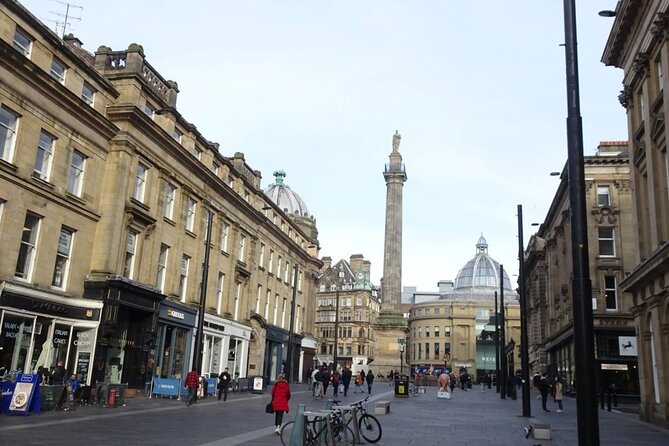
From the city-centre streets you move toward Grey’s Monument, then on through Grainger Town. These parts are the visual payoff for anyone who enjoys architecture and planning. Newcastle has a confident city-centre style in parts, and the guide helps you notice why.
Grey’s Monument anchors the view: it’s a focal point that organizes nearby streets and signals civic identity. It’s the kind of landmark you can photograph from multiple angles, and it works because it’s positioned at a meaningful junction.
Then there’s Grainger Town, where you get a sense of how Newcastle built itself up, not just how it survived. The city centre’s character comes through in the way the streets open and close, how buildings relate to each other, and how the space feels designed rather than accidental.
Practical note: This is a good time to decide what kind of explorer you are. If you love grand views and monuments, keep your camera up. If you prefer street-level details, focus on doorways, facades, and the rhythms of shops and theatres around you.
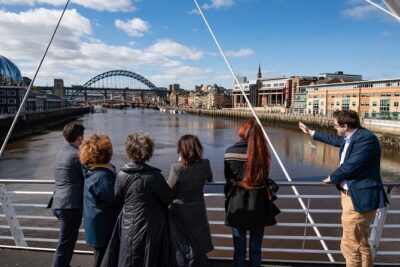
More on foot, at a pace you can hear the guide


Theatre Royal, High Bridge cobbles, and Bigg Market corners

You then pass by Theatre Royal and High Bridge, followed by a walk through Bigg Market to the George Stephenson Monument. This stretch is where Newcastle’s personality gets sharper.
Theatre Royal isn’t just about a building. It’s a clue to the city’s public life: entertainment, civic pride, and the long-running role of the arts in how a city markets itself to residents and visitors.
High Bridge is a special warning and a special treat. The route includes cobbled streets, and it can feel uneven underfoot. I don’t say that to scare you off. I say it because you’ll enjoy the walk more if you’re not thinking about your footing. Good shoes make the difference between relaxed walking and constant attention to the ground.
Bigg Market is the mood shift. You get an energetic, historic-feeling public space with a ton happening around you. The guide’s discussion helps you see the area as a working town centre, not only a nightlife stop.
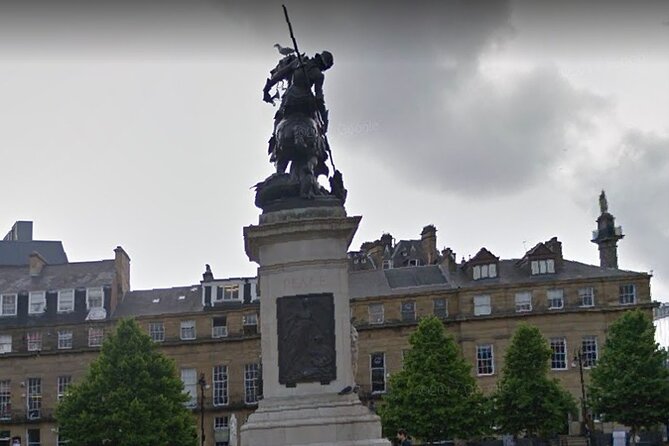
Then you reach the George Stephenson Monument, and this is where the guide can connect Newcastle to industrial identity in a way that feels concrete. Even if you’re not a rail history person, Stephenson is a doorway into how this city built its reputation through engineering and industry.
Newcastle Castle area: history on top, then the steep walk down
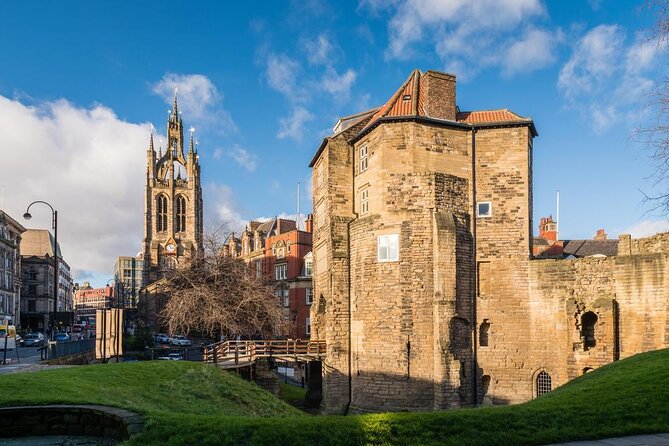
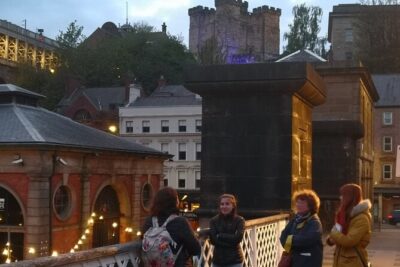
After Bigg Market, the tour passes by St Nicholas Cathedral, Black Gate, and the castle keep area at Newcastle Castle. This is one of the most important sections of the whole route because you’re literally looking at a defensive past perched above the modern city.
Castle keep areas are hard to understand from street distance alone. Walking by with a guide helps you interpret what you’re seeing: where people would have had control, how the city defended itself, and why this part of town became a symbol.
Then the route continues toward the riverfront, and here’s the real practical consideration: the tour includes steep steps from the Castle down to the Quayside. If you have knee issues or you hate stairs, this is the part to plan for. Go slowly. Use the handrails where available. Treat it like a workout you chose, not like a surprise.
But if you’re comfortable on your feet, the payoff is worth it. The Tyne and the Quayside viewpoints make the climb and descent feel like a story arc rather than just walking from stop to stop.
Bessie Surtees House, the old Guildhall, and ending at the Tyne
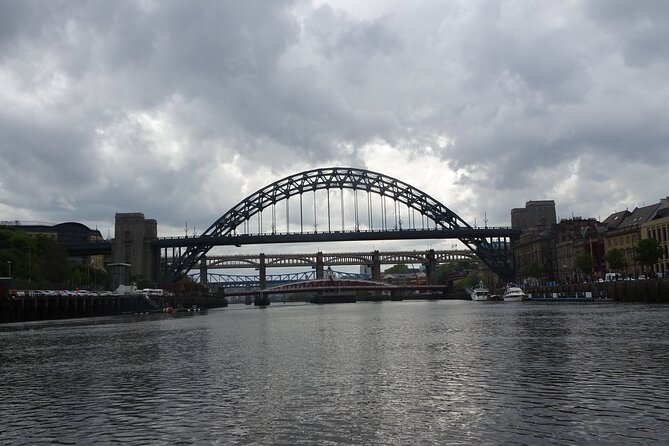
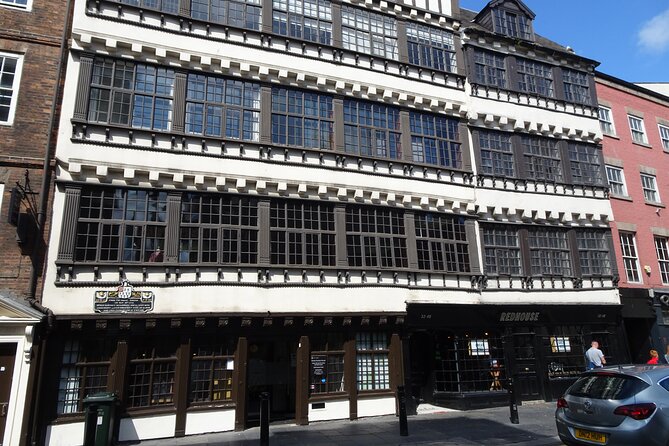
Later you pass by Bessie Surtees House and the old Guildhall, then head to NewcastleGateshead on the river crossing route from the Swing Bridge to Blacksmiths Needle.
This is a strong closing stretch because it links heritage to modern city planning. Bessie Surtees House and the old Guildhall are the kind of buildings that make you realize a city runs on rules, institutions, and the people behind them. The guide’s explanations help you connect architecture to how Newcastle functioned and governed itself over time.
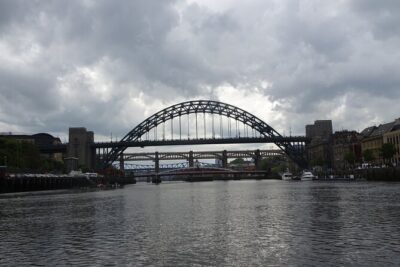
Then comes the river finale. Ending at Blacksmiths Needle means you finish right where the city breathes. You’re at the Tyne quayside, with modern visuals around you and the water acting like the natural divider between Newcastle’s layers and the broader Gateshead area.
The bridge-to-quayside ending is also a smart travel convenience. After 3 hours, you’re placed near the area where it’s easier to keep going, grab food, or hop on transport.
What makes Martin Stait’s guiding style work
A huge part of the success here is the guide. Martin Stait’s approach gets mentioned again and again: well-paced explanations, patience with questions, and a tone that makes the city feel like it has personalities.
From what I can tell about the guiding style, he doesn’t just recite dates. He connects places to daily life: how markets, churches, civic buildings, theatres, and bridges shaped movement and work. People also note that he answers questions on the spot and gives practical tips, including restaurant and shopping pointers. That kind of help matters on a short visit, because it saves you guesswork later.
Another practical plus is how he handles late arrivals. If someone runs late, the tour still functions, with a calm, flexible approach that keeps the group moving.
And because the group max is 10, you actually get some personal attention. This is the kind of tour where you can ask why a street name matters or how one area changed without feeling like you’re interrupting a slideshow.
Who this tour fits best, and who might want a different plan
This tour fits best if you want a structured way to see a lot in a short visit. If you only have one afternoon in Newcastle, it’s a strong way to get oriented fast.
It also suits you if you like a guided walk that feels like a conversation. The small group size and the time for questions make it easier to stay engaged when something catches your curiosity.
You might want to think twice if any of these are dealbreakers for you:
- You strongly dislike stairs, because of the steep steps from the castle area down to the Quayside
- You don’t do well on cobbled streets, including the High Bridge section
- You need a lot of frequent breaks, since it’s still a walking tour with short stops rather than a stop-and-sit format
Should you book this Newcastle walking tour?
Book it if you want an efficient, guided route through Newcastle’s major highlights, with enough time and structure to help you understand what you’re seeing. The mix of Town Wall, city-centre landmarks like Grey’s Monument and Grainger Town, and the dramatic castle-to-Quayside finish is a great way to feel the city as a whole.
I’d skip it only if stairs and uneven ground are a problem for you. Otherwise, this is good value for the time you spend, especially with the small group size and a guide like Martin Stait who clearly cares about helping you make sense of the places you walk through.
FAQ
How long is the Newcastle upon Tyne walking tour?
The tour lasts about 3 hours.
How much does the tour cost?
The price is $41.43 per person.
Where does the tour start and end?
It starts at 106 Westgate Rd, Newcastle upon Tyne NE1 4AF, UK, and ends at Blacksmiths Needle, 112 Quayside, Newcastle upon Tyne NE1 3DX, UK.
Is the tour offered in English?
Yes, it is offered in English.
Is the walking tour suitable for me if I have moderate fitness?
The tour is best for travelers with a moderate physical fitness level.
Are there steep or uneven parts on the route?
Yes. There are steep steps from the castle down to the Quayside, and there are cobbled streets through High Bridge.
More Of Newcastle upon Tyne On Foot




Further North Along The Tyne



Fresh off the notebook in Newcastle upon Tyne
- Newcastle Roman Fort Tour
★ 5.0 · 3 reviews - Private Newcastle Pub Tour
★ 5.0 · 3 reviews - Private Tour – Anglo-Saxon Northumberland
★ 4.5 · 3 reviews - Newcastle Upon Tyne Private Historic Pub Tour With Free Drinks!
★ 5.0 · 4 reviews - Newcastle Cycling Tour
★ 5.0 · 4 reviews - Private Half-day Coastal Tour from Newcastle to Vera’s World
★ 5.0 · 4 reviews
Newcastle and the Northeast, compared.
 ★ 5.0Guided City Walking Tour of NewcastleFrom $41548 reviews
 ★ 5.0Guided Walking Tour of Durham & its Infamous CharactersFrom $13248 reviews
 ★ 5.0Durham Food TourFrom $111137 reviews
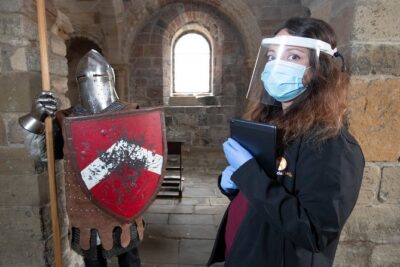 ★ 4.5Annual Admission Newcastle Castle TicketFrom $17114 reviews
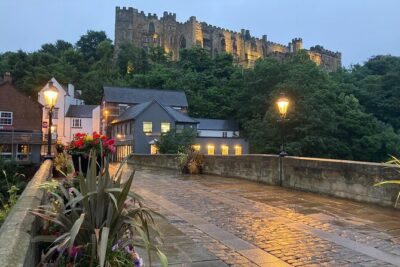 ★ 5.0Walkabout Durham History TourFrom $2289 reviews
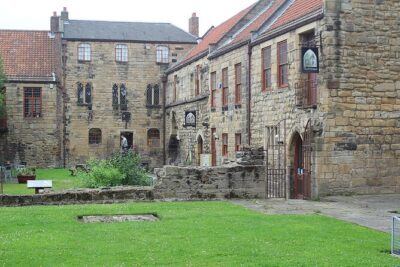 ★ 5.01-Hour and a Half Walking Guided Tour in Medieval NewcastleFrom $087 reviews
 ★ 4.5Fun, Flexible Treasure Hunt Around Newcastle with Cryptic Clues & Hidden GemsFrom $2078 reviews
 ★ 5.0Newcastle True Crime Walking TourFrom $2777 reviews
Browse the lists this tour appears in