
REVIEW · BATH AND THE ROMAN BATHS
Best of Bath Walking Tours – Georgian Tour
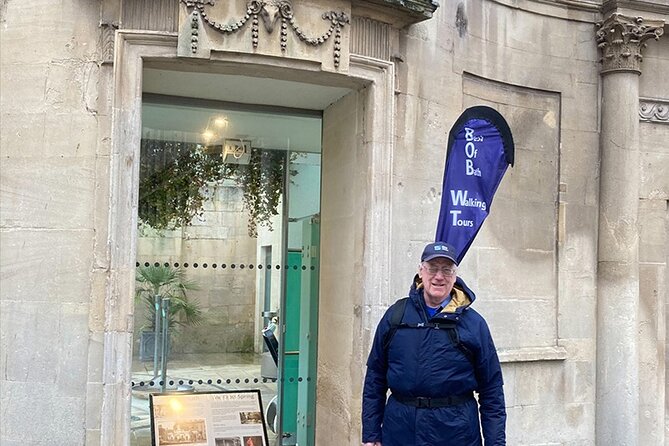
Bath’s Georgian streets can feel like a puzzle. This guided walk turns it into a story, with Bob bringing the architecture to life as you walk. In just 2 to 3 hours, you cover the big names and also the smaller clues that help it all make sense.
I especially like two things: first, the small group size (max 15) keeps it personal and makes it easy to ask questions. Second, Bob’s style is fun and practical, with a wry sense of humor and clear explanations of why buildings look the way they do.
One thing to think about before you go: it is a walking tour with a moderate fitness level requirement, so wear comfy shoes and plan for a steady pace outdoors.
In This Review
- Key highlights to watch for
- Why this Georgian Bath walk is such a smart time investment
- Starting in Abbey Churchyard, getting your bearings before the parade of façades
- Roman Baths to Hot Springs: understanding Bath’s spa DNA on foot
- Bath’s Georgian social stage: Queen Square, Assembly Rooms, and who wanted to be seen
- The Circus and Royal Crescent: Georgian design as a real-life viewing experience
- Royal Mineral Water Hospital: faith, science, and the spa promise in stone
- Pulteney Bridge and Guildhall Market: when Bath feels lived in
- Ending back at Abbey Churchyard, with time for your questions
- Practical value check: tickets, timing, and what you should plan for
- Who should book this Georgian Bath walking tour
- Should you book Best of Bath Walking Tours, Georgian Tour?
- FAQ
- How long is the Georgian Bath walking tour?
- Where do I meet, and where does the tour end?
- Is the tour in English, and what is the group size?
- Do I need to buy tickets for the Roman Baths and other stops?
- What if the weather is bad?
- Can I cancel for a full refund?
Key highlights to watch for
- Bath Abbey Churchyard start and finish, right in front of St Peter and St Paul, so you can orient yourself fast
- A concentrated Georgian route, including Queen Square, the Circus, and the Royal Crescent in a logical flow
- Story points you can see on the street, like how the spa town shaped Royal Mineral Water Hospital and social life at the Assembly Rooms
- Most stops have free entry, while a few major attractions may require separate tickets
- A guide who keeps the talk moving and answers questions without turning it into a lecture
Bath again, done a few different ways
- Walking Tour of Bath with Blue Badge Tourist Guide★ 5.0 · 1,877 reviews
- Stonehenge, Avebury & the Cotswolds from Bath (Small group)★ 5.0 · 798 reviews
- Roman Baths and Bath City Walking Tour★ 4.5 · 762 reviews
- Fully Guided Bath Ghost Tours★ 5.0 · 539 reviews
Why this Georgian Bath walk is such a smart time investment
This tour hits Bath’s Georgian highlights in a tight window. You’re looking at 2 to 3 hours, which is perfect if you have limited time, or if you want a solid “orientation tour” before you explore on your own.
At about $27.73 per person, the value comes from what you get for your time. You are paying for a guide who connects buildings, time periods, and the people who lived there, not just a list of landmarks. Also, the group stays small, which tends to matter in Bath, because the streets are narrow and the stops are close together.
One practical note: it is offered in English, and it is set up with a mobile ticket. You’ll want to keep your phone handy and arrive near the start point so you can start clean and relaxed.
Starting in Abbey Churchyard, getting your bearings before the parade of façades
You meet in Bath Abbey Churchyard, right in front of Bath Abbey (St Peter and St Paul). That matters more than you might think. Bath can look like one long stream of elegant stone from a distance, but starting at the Abbey gives you a real anchor, and your guide can explain what you are seeing and why it rose where it did.
From there, Bob leads you through the Georgian core and ties in older layers of Bath along the way. The tour works well because it doesn’t treat the city like a museum. You move through the streets, and the guide helps you notice details you would otherwise miss, like how layouts and sightlines shaped what the residents wanted the world to see.
If you like to ask questions, this is also a friendly setup. The tone you’ll experience is informal and conversational, and Bob clearly wants you to engage rather than just listen.
Roman Baths to Hot Springs: understanding Bath’s spa DNA on foot
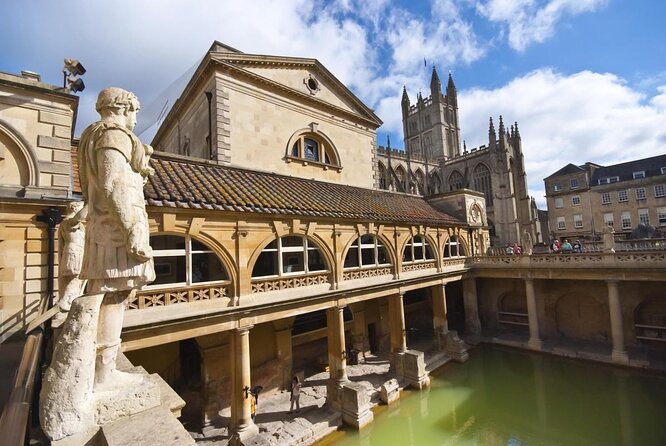
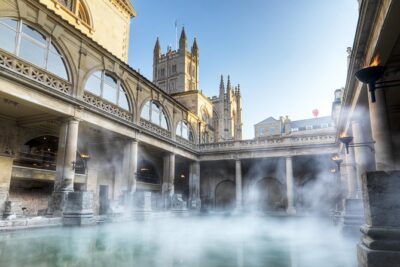
The walk includes the Roman Baths area early in the route, and that’s a big win. The Roman thermae on this site are well preserved, and the tour context helps you understand why Bath became a place people kept returning to. The Roman story starts around 60 to 70 AD, and later ruins and redevelopments kept reshaping what was there.
A key detail for planning: Roman Baths admission is not included. So you can still get the historical background and see the site from the route, but if you want to step inside, you will need a separate ticket decision. I like tours like this because you can make that call in the moment based on your energy and time.
Bath also ties Roman use of the springs to the later spa era, and Bob connects those dots as you walk. You’ll hear how the springs influenced redevelopment over the early and late Middle Ages and how later Bath leaned into healing and fashionable visitors.
If you’re the type who likes “why this place, why here,” this is one of the strongest parts of the tour.
Bath’s Georgian social stage: Queen Square, Assembly Rooms, and who wanted to be seen
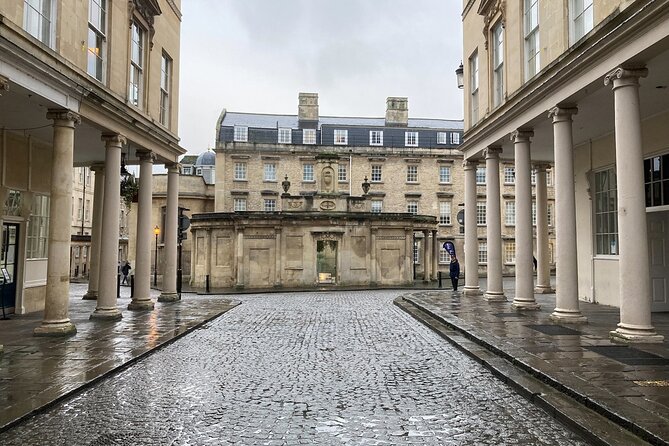
Next, you move into the Georgian layout that made Bath famous. Queen Square is the first big architectural beat, and it is all Grade I listed buildings that belong to the same planned sequence. Even without going inside, it gives you a sense of the order and ambition behind the façades.
From there, the tour heads toward the Assembly Rooms, a social hub built for balls, concerts, and gambling during the Georgian era. The tour context adds meaning to what you see. It wasn’t just about pretty buildings. It was about Bath becoming fashionable, with major architects shaping the city so it could host high society.
Assembly Rooms entry is not included, so you’ll get the outside story and the historical framework. If you want interior access, plan separately. Still, even a street-level visit helps you picture what the rooms were for and why the placement mattered between Queen Square, the Circus, and the Royal Crescent.
A small detail I really value here: Bob’s explanations tend to focus on people, not just stone. When you understand who used these places and what they were trying to signal, the Georgian style becomes easier to read.
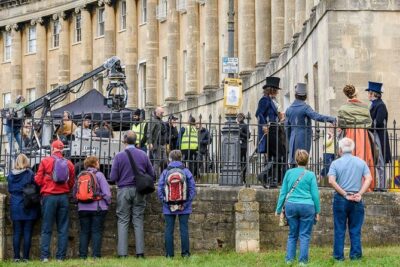
More on foot, at a pace you can hear the guide

The Circus and Royal Crescent: Georgian design as a real-life viewing experience
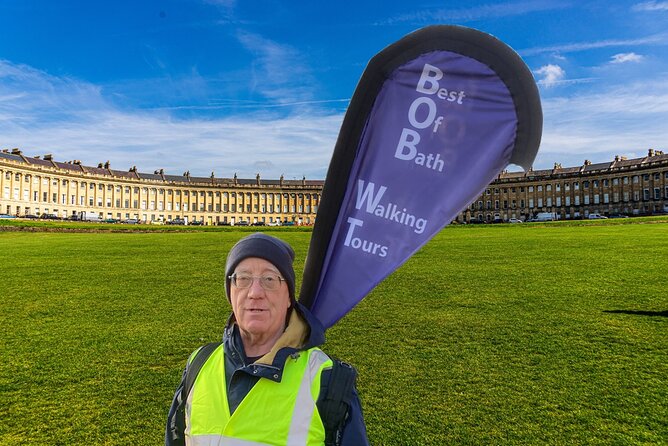
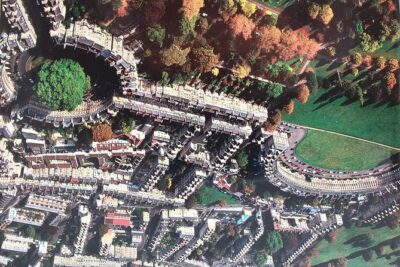
Then comes the dramatic Georgian spectacle: the Circus. It is a ring of townhouses designed by John Wood, the Elder, built between 1754 and 1768. The layout is smart, because each segment faces one of the three entrances, which creates a straight-on classical façade when you stand in the right place.
You do not have to be an architecture nerd to appreciate it. You’ll likely get that moment where Bath stops being random and becomes intentional. The buildings look beautiful, but more importantly, they are designed to control views.
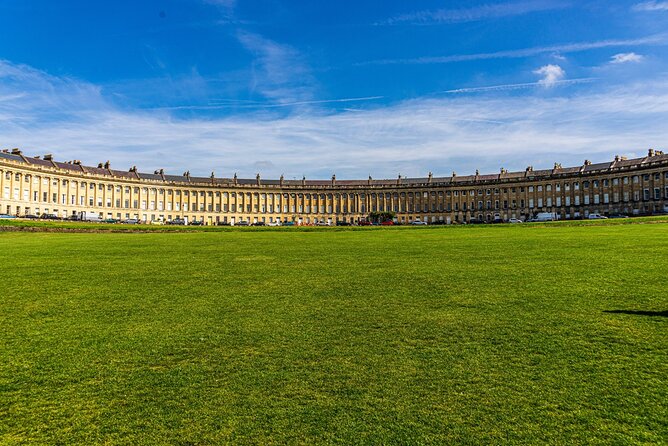
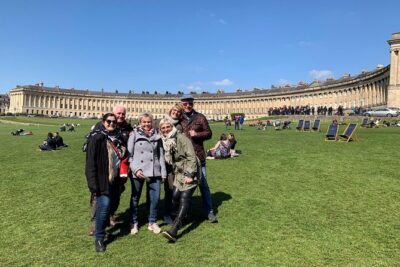
After the Circus, you’ll reach the Royal Crescent, designed by John Wood, the Younger, built between 1767 and 1774. This is one of the standout Georgian scenes in the UK, and the tour gives you the context that makes it more than a postcard. You’ll understand the sweep of the houses and why this crescent style fits Bath’s identity as a spa and a social stage.
Again, No. 1 Royal Crescent admission is not included. You can still enjoy the Crescent views and the story, but if you want to go inside No. 1, bring that decision into your own planning. For many people, the exterior focus is enough, because the Crescent is at its most powerful from the street and viewpoints along the walk.
Royal Mineral Water Hospital: faith, science, and the spa promise in stone
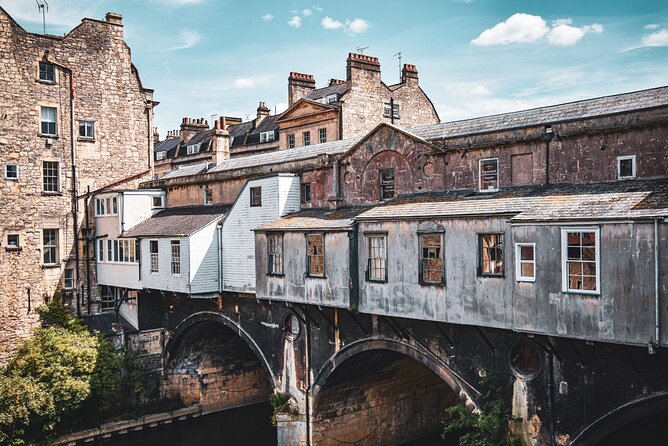
One of the more interesting stops on the route is the Royal Mineral Water Hospital. Construction began in 1737, and Bob uses that to explain how Bath shifted into a period where healing claims mixed with the era’s belief in science.
This is a great stop for anyone who thinks Georgian Bath is only about parties and façades. The hospital shows a different side: Bath selling an idea of health, then backing it with buildings and organization.
Just like a few other major sights, admission is not included. You’ll get the historical meaning tied to what you see from the outside, which is still worth it, especially because the tour is paced so you are not just sprinting from one paid entry to the next.
Pulteney Bridge and Guildhall Market: when Bath feels lived in
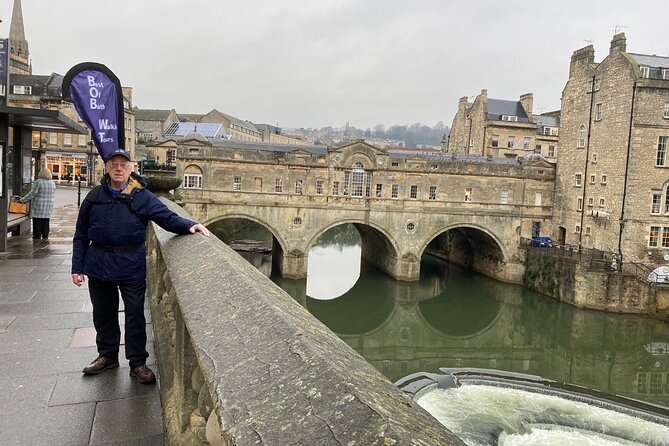
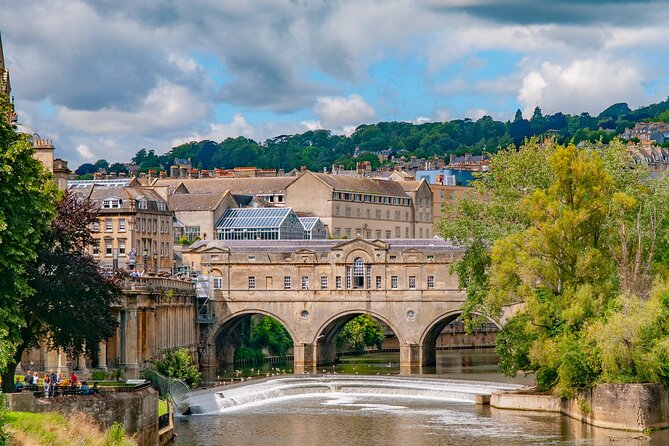
After the grand streets and crescents, you get a welcome change of mood. Pulteney Bridge is completed by 1774 and designed in a Palladian style by Robert Adam. What makes it unusual is the shops across the full span on both sides, turning the bridge into more than a crossing.
This is one of those places where you can slow down without the tour falling apart. The guide can point out the design logic and the development history, and you get a clear sense of how Bath kept mixing commerce and elegance.
Then you end near Guildhall Market. The Guildhall building has market history going back to 1284, which adds a real sense of continuity. You can wander among stalls if they are open during your visit, and it’s a nice way to end the walk with something practical and current, not just architecture.
Ending back at Abbey Churchyard, with time for your questions
At the end, you return to Abbey Churchyard. You get extra time to talk with Bob about points of interest around Bath, and it is genuinely useful. Once you’ve walked the route, questions make more sense. You stop seeing single buildings and start spotting patterns: why that street bends, why that façade faces a certain way, why a certain type of building shows up where it does.
Bob’s approach is relaxed, so if you want help building a mini plan for the rest of your day, this is a good moment to ask.
Practical value check: tickets, timing, and what you should plan for
Here is the straightforward way to think about it.
What’s included in the tour experience: guided walking time, explanations, and access to free-view or free-entry stops marked free on the route. Many of the sights are covered as part of the walk.
What may cost extra: key interiors or ticketed attractions are marked not included, including the Roman Baths, Royal Mineral Water Hospital, Assembly Rooms, and No. 1 Royal Crescent. You can still enjoy the area and learn a lot without buying those tickets, but if those interiors matter to you, set aside time and budget.
How hard is it: you should have moderate physical fitness. The pace tends to stay active, and the best move is to wear shoes you trust on stone sidewalks and plan for a steady walk between stops.
Best use of the tour: I love doing this earlier in a Bath trip. It gives you an instant map of where things are, and it helps you read the city later without feeling lost or overwhelmed.
Who should book this Georgian Bath walking tour
This tour is a great fit if you want:
- a focused Georgian architecture experience without spending your whole day in lines
- a guide who talks in a clear, story-driven way, with questions welcome
- a small-group setting where you are not competing for attention
- a “make Bath make sense” walk that gives you confidence to explore after
It might not be the best fit if you want lots of indoor time at ticketed attractions. The walk is strong on explanation and exterior context, with ticketed interiors optional rather than built in as guaranteed long stops.
Should you book Best of Bath Walking Tours, Georgian Tour?
If your goal is to understand Bath’s Georgian design and social life in a short, walkable chunk of time, I’d book it. The value feels strong because you get a structured route, small group attention, and a guide who clearly cares about turning the city into something you can actually picture.
Just make one plan up front: decide whether you want to add tickets for the Roman Baths, Assembly Rooms, Royal Mineral Water Hospital, or No. 1 Royal Crescent. If you like interiors, you can budget for them. If not, you can still enjoy the walk and leave feeling like Bath clicked.
FAQ
How long is the Georgian Bath walking tour?
The tour runs about 2 to 3 hours.
Where do I meet, and where does the tour end?
You meet in Abbey Churchyard, Bath BA1, UK. The tour ends back at the same meeting point.
Is the tour in English, and what is the group size?
It is offered in English and has a maximum group size of 15 travelers.
Do I need to buy tickets for the Roman Baths and other stops?
Some stops have admission ticket free, while others are listed as admission ticket not included. The Roman Baths, Royal Mineral Water Hospital, Assembly Rooms, and No. 1 Royal Crescent are marked as not included, so you may need separate tickets if you want entry.
What if the weather is bad?
This experience requires good weather. If it is canceled due to poor weather, you’ll be offered a different date or a full refund.
Can I cancel for a full refund?
Yes. You can cancel up to 24 hours in advance for a full refund. If you cancel less than 24 hours before the start time, the amount paid will not be refunded.
More Of Bath On Foot




Bath, Done Differently



Fresh off the notebook in Bath
- Private Guided Tour of Jane Austen’s Bath
★ 5.0 · 7 reviews - Bridgerton’s Filming Locations in Bath Audio Guide
★ 5.0 · 7 reviews - Private Day Tour from Bath to Stonehenge and Salisbury with Pickup
★ 5.0 · 9 reviews - Bath Private Guided Walking Tour
★ 5.0 · 10 reviews - The Beatles in Bath June 10th 1963
★ 4.5 · 10 reviews - Wells, Cheddar Cheese and Cheddar Gorge – Private Day Trip from Bath
★ 5.0 · 10 reviews
Bath and the Roman Baths, compared.
 ★ 4.5Stonehenge, Windsor Castle, and Bath from LondonFrom $11118,662 reviews
 ★ 4.5Stonehenge, Windsor Castle and Bath with Pub Lunch in LacockFrom $1237,402 reviews
 ★ 4.5Stonehenge, Windsor Castle and Bath Full Day Guided TourFrom $1235,346 reviews
 ★ 4.5Stonehenge and Bath Tour from LondonFrom $994,295 reviews
 ★ 5.0Windsor, Stonehenge and Bath Day Trip from London SpanishFrom $1232,656 reviews
 ★ 5.0Stonehenge and Bath Day Trip from London with Optional Roman Baths VisitFrom $1372,028 reviews
 ★ 5.0Stonehenge Inner Circle Private Tour from London with Bath VisitFrom $1881,909 reviews
 ★ 5.0Walking Tour of Bath with Blue Badge Tourist GuideFrom $301,877 reviews
Browse the lists this tour appears in