

REVIEW · BLACK CAB TOURS
Black Taxi Tour Of London
London makes more sense from a black cab. This private custom tour lets you shape the stops around your interests, with a guide-driver who keeps the day flowing through key sights. I also really like the glass-roof, big-window viewing, which makes even quick photo stops feel like you’re getting the full picture.
The one drawback to keep in mind is time. In a 4-hour plan, you’re mostly there for smart viewing and short pauses, not slow museum-style wandering.
If you’re traveling as a family or a small group, this format is a strong value. One flat fare covers up to six people, so you can see a lot of Westminster and the Thames without splitting up or waiting on anyone else.
In This Review
- Key takeaways before you book
- Why a black cab beats most big-bus London tours
- Apsley House and Wellington Arch: power, portraits, and stone logistics
- Westminster by cab: Parliament, the Elizabeth Tower, and Downing Street
- Westminster Abbey: coronations, royal weddings, and the Henry the Builder clue
- The Thames bridges circuit: London Bridge, Tower Bridge, and Albert Bridge
- Victoria Embankment to St Paul’s: memorials, engineers, and that dome
- Price and value for groups up to six
- Getting the most out of your 4-hour custom route
- Should you book this black taxi tour?
- FAQ
- How many people can be in a group for this Black Taxi Tour of London?
- How long is the tour?
- Where does the tour start and end?
- Is pickup available?
- What time does the tour typically start?
- Is the tour conducted in English?
- Do I receive a mobile ticket?
- Are service animals allowed?
- Is this tour suitable for travelers with mobility needs?
- Is there free cancellation?
- Can the tour pick up from airports or ports?
Key takeaways before you book
- Private black cab, group up to six, so you don’t get stuck in a crowd shuffle
- Custom stop requests, from major landmarks to more personal interests
- Big windows and a glazed roof, great for photos and for rainy-day sightseeing
- A tight 4-hour circuit, ideal when you want highlights without long logistics
- Pickup and drop-off offered near Trafalgar Square, plus pickup from hotels and Airbnbs
- Guides like Morris, Bryan, Dave, Tony, Brian, and Boris have stood out for flexibility and pacing
Back seat, meter off, guide talking. More of those
- Private Tour: Black Taxi Tour of London★ 5.0 · 1,153 reviews
- London Sightseeing Private Black Cab Tour with Hotel Pick Up★ 5.0 · 917 reviews
- Rock Cab Tours presents Music Legends Private Taxi Tour of London★ 5.0 · 637 reviews
- The Ultimate 6-hour Private Tour of London in an Iconic Black Cab★ 5.0 · 533 reviews
Why a black cab beats most big-bus London tours
London is a city of angles. From the right seat in a black cab, you get moving views instead of standing in one place waiting for the next vehicle to catch up.
The cab itself matters more than you might think. Big windows help you read the streets and buildings as you pass, and the glazed roof is a big win when you want sky-and-façade photos without craning your neck. You can also hear your guide clearly, which makes a short stop feel more meaningful.
This is private, not a shared ride. Up to six people means you can actually talk as a group, ask questions, and adjust the plan mid-day. In the real world, that flexibility is the difference between a checklist tour and something that feels like your London.
There’s also a practical advantage: the driver knows how to thread the city. One classic downside of London sightseeing is traffic plus time lost to boarding and disembarking. Here, you’re in and out by taxi, with no lineup choreography.
Apsley House and Wellington Arch: power, portraits, and stone logistics
You start your day with Apsley House, the long-time home of the Duke of Wellington. The mansion dates back to 1825, and it sits at what’s often treated like London’s high-status address zone, including the sense of ceremony around the surrounding landmarks.
Right across from it is Wellington Arch, which you’ll want to look at closely. The story here is part architecture, part urban engineering. The arch was moved to become an outer gate linked with Buckingham Palace, and now it faces Constitution Hill in a new position, not the original one.
What really hooks me is the symbolism loaded into the sculpted details. After Wellington fell out of favor in a very specific political and historical way, the big statue was removed. A smaller figure remains where the arch once originally stood, and the current quadriga you see on top was placed later, with Nike the Goddess of Victory riding the chariot.
The drawback is that this area can shift quickly from “majestic” to “busy traffic.” You may not have minutes to circle for every angle. Still, a quick taxi pause works, because your guide can point out exactly what you’re looking at, including the statues and why the arch ended up where it is today.
Westminster by cab: Parliament, the Elizabeth Tower, and Downing Street
From Apsley House, the tour naturally leans into the Westminster core. This part of London is where buildings do double duty as government offices and history books written in stone.
You’ll get a feel for the layered timeline behind the Houses of Parliament. The site’s story goes far back, including an 11th-century royal palace under William the Conqueror, a major fire in the early 1500s, and later rebuilding that preserved only key elements such as the Crypt, the Jewel Tower, and Westminster Hall, which dates to 1097.
When the conversation turns to the parliamentary buildings you see now, it gets even clearer why this stop is worth doing with a guide. The Houses of Parliament were rebuilt from 1834 to 1870 by architects Augustus Pugin and Charles Barry. Even if you never read a single guidebook, you can understand what you’re seeing because the guide frames it in the timeline of destruction and rebuilding.
Then comes the clock tower. Big Ben is the nickname, but the tower’s official name is the Elizabeth Tower, renamed in 2012 for Queen Elizabeth II’s Diamond Jubilee. It opened in 1859 and uses a Gothic Revival style associated with Augustus Pugin, so the look isn’t random. It is very much a designed message about style and authority.
Downing Street is the final piece of this Westminster triangle. You’re looking at the official residences for the Prime Minister (number 10) and the Chancellor of the Exchequer (number 11). The street itself was built in 1680 by Sir George Downing, so it is not just a modern address. It has been this power center for centuries in different forms.
Here’s the real value of this segment: you’re not just staring at famous façades. You’re understanding the function behind the fame, which makes a quick exterior view feel like a deeper stop.
Westminster Abbey: coronations, royal weddings, and the Henry the Builder clue
Next up is Westminster Abbey, one of those places where the building’s reputation arrives before you do. It’s formally the Collegiate Church of Saint Peter and is mainly Gothic in design.
What makes Westminster Abbey a standout stop is how many eras it contains. The abbey is linked to coronations, with every coronation since William the Conqueror. It has also hosted sixteen royal weddings, and it serves as the burial place for many English and later British monarchs.
I like this stop because it gives you context in plain language. Even when you only have a short look, the guide can explain the significance without turning it into a lecture.
You’ll also notice why the abbey’s design reads like a living project rather than one completed moment. It started in 960 AD, then saw major alterations and rebuilding. Henry III got the nickname Henry the builder because of the work in the 13th century. Later rebuilding happened in 1517 during King Henry VIII’s reign, and the towers you see today were added in the 18th century by Nicholas Hawksmoor, with the Wren design family in the background.
If you’re deciding whether to prioritize this stop, I’d say yes for most first-timers. Even if you’ve seen photos, seeing the towers and hearing the coronation and wedding history makes the place land differently.

The Thames bridges circuit: London Bridge, Tower Bridge, and Albert Bridge
The tour then pivots to Thames views and bridge history. This is where you get a different London rhythm, less palace and parliament, more engineering, water, and street-to-street perspective.
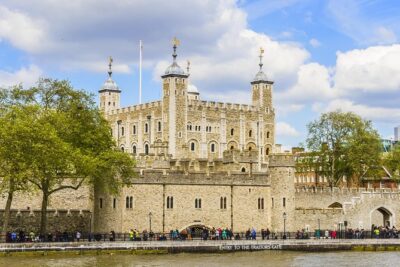
The bridges section is packed with timeline details, and the guide can make it click. London Bridge’s story includes Roman-era wooden crossings, then the big stone London Bridge built between 1176 and 1209, described as the first stone bridge across the Thames. It used to be lined with shops, houses, restaurants, and even a chapel, which is wild because it was a bridge that also functioned as a destination.
Tower Bridge gets its own attention for the right reason. It was built between 1886 and 1894 and is a combined bascule and suspension bridge. People often call it the Wonder Bridge, and seeing it from a moving perspective in a taxi helps you read its structure and placement instead of treating it like a postcard you pass once.
Then there’s Albert Bridge, linking Chelsea and Battersea. The lighting is often treated like the star attraction, and it has shown up in films. You might also notice the story behind its nickname, The Trembling Lady, tied to earlier instability. There’s even a sign at the north foot instructing troops to break step, which is the kind of practical detail that makes the stop feel real.
One consideration: bridge views depend on the day’s traffic and sightline angles. With the cab, you’re not stuck in one position, but you’ll want to be ready to shoot when your guide finds the best angle quickly.
Victoria Embankment to St Paul’s: memorials, engineers, and that dome

After the bridge photos, the tour goes along the river toward Victoria Embankment. This stretch runs along the north bank of the Thames from Westminster down to Blackfriars Bridge area, and it’s built as part of a wider 19th-century river makeover.
Here you get a strong sense of how London changed its relationship with the Thames. Construction ran from 1865 to 1870 under Joseph Bazalgette, and the work narrowed the river, which influenced how water and the city function together. You’ll also see memorial elements, including the Battle of Britain memorial and retired vessels like H.M.S President, plus public gardens including Victoria Embankment Gardens.
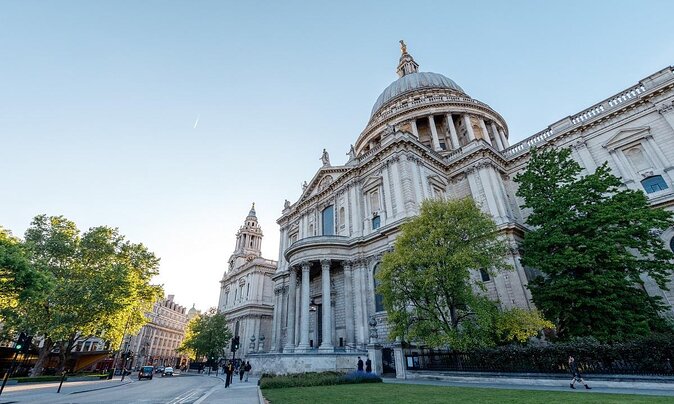
Then the day lands at St Paul’s Cathedral, and this is often the moment that makes people slow down. The site has had multiple cathedrals, with the first record going back to 604 AD under Bishop Mellitus. Today’s cathedral is tied to Christopher Wren, and Wren is buried under the dome.
St Paul’s Cathedral reads like a design problem solved at extreme scale. The dome reaches 365 feet high and weighs about 65,000 tons. Its height also mattered globally, as it remained among the highest structures in the world between 1710 and 1967.
If you’re wondering how to experience it during a short cab tour, my advice is simple. Don’t spend your entire stop staring at the nearest detail. Instead, grab one clean view of the dome and then use your guide’s pointer to understand what you’re seeing. A good driver can help you align your photos with the key angles, so your pictures actually tell the story.
Price and value for groups up to six
At $603.08 per group for up to six people, this works out in a way that surprises people. If you max out six, you’re around $100 per person for about four hours of private guiding and taxi time. Even if you’re fewer than six, the “cost per person” logic still usually beats paying for multiple separate taxis or multiple tickets plus time wasted.
What you’re paying for is not just transportation. You’re paying for a driver who can shape the route, and a guide who can explain what you’re seeing while you’re moving. That matters in a city where the biggest killer of sightseeing days is wasted time.
The price also includes pickup and drop-off within 5 miles of Trafalgar Square, plus pickup from your hotel or Airbnb. That makes the day feel like a true door-to-door experience, not a trek to a meeting point and then a half-day of travel.
Also, check your timing. This tour is often booked about 68 days in advance on average. If you’re traveling in peak periods, I’d treat it like a must-book early.
Getting the most out of your 4-hour custom route
This is the part I’d plan hardest, because the best tours feel like they’re built around you, not around a rigid script.
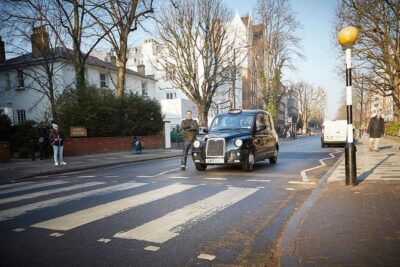
Start by telling your guide what kind of London you want. If you love big-state landmarks, lean into Westminster and the river bridges. If you’re more into cultural stories, ask for specific interests like the Beatles angle near Abbey Road, which guides including Morris have helped work into a custom day.
If you’re traveling with kids, ask for short, story-driven explanations that keep attention moving. In past tours, guides like Morris have handled children smoothly, with patience and approachable answers while still covering the key sights.
If mobility is an issue, I’d be very direct. The vehicles described here include wheelchair compatibility and ramps, and one group with a mobility scooter found getting in and out stress-free during the ride. Dave also supported a group where a family member had back arthritis and needed breaks from long walking stretches, with a practical plan to walk some areas and then return for the next pickup.
One more tip: decide your “must hits” before you get in the cab. You can still be flexible, but you’ll get better results if you say, for example, Westminster Abbey plus St Paul’s, plus one or two bridge views. Your guide can then fill the rest with smart stops that fit your interests.
Should you book this black taxi tour?
I’d book it if you want maximum clarity fast. It’s ideal for first-timers who want Westminster and the Thames in one day, and for families that need a small-group setup with less waiting and less walking.
I’d also book it if you care about comfort and visibility. The big-window and glazed roof setup makes a difference when you’re trying to understand a city from the street.
I might skip it if you’re hoping for lots of long inside museum time. This tour format is built for moving, viewing, and learning on the go, so it pairs best with either pre-booked time at specific interiors or a follow-up day of deeper exploring.
FAQ
How many people can be in a group for this Black Taxi Tour of London?
The tour is priced per group and can accommodate up to six people.
How long is the tour?
The duration is approximately 4 hours.
Where does the tour start and end?
The meeting point is Embankment Place, Embankment Pl, London WC2N, UK. The activity ends back at the meeting point.
Is pickup available?
Yes. Pickup and drop-off are offered within a 5-mile radius of Trafalgar Square for free, and pickup/drop-off can also be arranged from your hotel or Airbnb.
What time does the tour typically start?
The general starting time is 10:00 AM, with opening hours listed as Monday through Sunday from 9:00 AM to 11:00 AM.
Is the tour conducted in English?
Yes, the tour is offered in English.
Do I receive a mobile ticket?
Yes, a mobile ticket is included.
Are service animals allowed?
Yes, service animals are allowed.
Is this tour suitable for travelers with mobility needs?
Most travelers can participate, and the tour vehicles are described as wheelchair compatible in the provided experience information.
Is there free cancellation?
Yes. You can cancel up to 24 hours in advance for a full refund.
Can the tour pick up from airports or ports?
Airport and port collections can be arranged subject to availability, but surcharges and parking charges may apply.
More Tours From The Back Of A Cab




Fresh off the notebook in London
- Private Rock ‘n’ Roll Music Tour of Central London
★ 5.0 · 7 reviews - London Walking Tour: Camden Town Photography Walkabout
★ 5.0 · 7 reviews - Private Transfer from London accommodation to Cruise terminal
★ 5.0 · 7 reviews - Amazing Nightlife in London East Tour
★ 4.5 · 7 reviews - The British Museum: a highlights tour with a TV historian
★ 5.0 · 7 reviews - Heathrow Airport to Cambridge private taxi transfers
★ 5.0 · 7 reviews
Black Cab Tours, compared.
 ★ 5.0The Premier Classic London: Private 4-Hour Tour in a Black CabFrom $5532,737 reviews
 ★ 5.0Private Tour: Black Taxi Tour of LondonFrom $3061,153 reviews
 ★ 5.0London Sightseeing Private Black Cab Tour with Hotel Pick UpFrom $441917 reviews
 ★ 5.0Rock Cab Tours presents Music Legends Private Taxi Tour of LondonFrom $276637 reviews
 ★ 5.0The Ultimate 6-hour Private Tour of London in an Iconic Black CabFrom $830533 reviews
 ★ 5.0Black Taxi Tour of London: Classic Sightseeing Bespoke & FunFrom $637371 reviews
 ★ 4.5Harry Potter Black Taxi Private Tour of London with Hotel PickupFrom $482287 reviews
 ★ 5.0Private London Highlights Tour in a Black Cab: 2, 4, or 6 HoursFrom $415203 reviews
Browse the lists this tour appears in