
REVIEW · ENGLAND
Witchcraft, Ancient Cults & MI15 Spy Secrets
London hides cult temples in plain sight. This time-traveling walk strings together witchcraft-flavored lore with real, on-the-ground places, from Roman faith to medieval streets. I love the private guide attention, because you can ask questions and actually hear the why, not just the what.
I also like the stop mix, where London’s layers are right under your feet. St. Mary Woolnoth is tied to worship going back around 2,000 years, with traces of Roman and pagan religious buildings beneath. Smithfield Market then shifts the mood to public stories, including executions and the Bloody Mary angle.
The main drawback to consider is that admission is not included for every stop, so you may want to budget a bit extra, and the whole thing is about 3 hours, meaning brief visits at each location.
In This Review
- Key highlights worth your attention
- A compact 3-hour time-travel route that changes how you see London
- London Mithraeum Bloomberg SPACE and the Roman cult of Mithras
- St. Mary Woolnoth Church: how 2,000 years of worship leaves traces
- Cornhill House and the devilish terracotta figures
- St. Bartholomew the Great and surviving the Great Fire of 1666
- Smithfield Market: executions, Bloody Mary, and the grim side of London
- MI15 spy secrets and witchcraft lore: how the title matches the experience
- Price and value: is $371.59 for 3 hours worth it?
- Who should book this private walk?
- Practical tips to get the most out of the walk
- Should you book this tour?
- FAQ
- How long is the tour?
- Is this a private tour?
- Where does the tour start and end?
- What time does the tour begin?
- Are admission tickets included?
- Do I get a mobile ticket?
- What is the cancellation policy?
- Is it suitable for most travelers, and are service animals allowed?
Key highlights worth your attention
- Private guide, you ask and you get answers on a compact 3-hour route
- Mithras at London Mithraeum Bloomberg SPACE, a standout Roman cult site with underground vibes
- Church foundations layered for centuries, including Roman and pagan traces beneath St. Mary Woolnoth
- Terracotta devils at Cornhill House, a strange little tale of mocking and old street-level history
- St. Bartholomew the Great after 1666, one of the medieval churches to survive the Great Fire
- Smithfield Market executions and Bloody Mary, where London turns theatrical and grim fast
Undecided so far? Here are further London tours we have written up.
- Stonehenge, Windsor Castle, and Bath from London★ 4.5 · 18,662 reviews
- London Big Bus Hop-On Hop-Off Tour with Optional River Cruise★ 3.5 · 10,803 reviews
- London Small Group Tour of Historical Pubs★ 5.0 · 10,422 reviews
- Stonehenge, Windsor Castle and Bath with Pub Lunch in Lacock★ 4.5 · 7,402 reviews
A compact 3-hour time-travel route that changes how you see London
This is the kind of walk you take when you feel you have already checked off the main sights, but you still want London to feel weird and specific. You are on foot, so you slow down enough to notice details most big sightseeing days skip. And because it is private, your guide can keep the pace right for your group instead of herding everyone like a school trip.
The theme of witchcraft, ancient cults, and spy-style secrets might sound like a gimmick. In practice, the story engine works because the stops are real places with physical evidence you can point at, like temple space, church foundations, and famous London street corners. You leave with a sharper sense of how power, belief, and rumor moved through the city.
Duration matters here. With about 3 hours, you get a focused sampling of multiple eras, not a single deep dig that forces you to rush anyway. The tradeoff is that each stop is short, so if you want extra time inside a building, you might want to plan a follow-up visit on your own.
London Mithraeum Bloomberg SPACE and the Roman cult of Mithras

Your walk starts with the Roman layer that many visitors never see. London Mithraeum Bloomberg SPACE is tied to a temple complex from around two thousand years ago, built in the Roman tradition of cult spaces that were often private and tucked away. It is the kind of site that makes you understand why people imagined the supernatural with such confidence.
What you will learn here is the cult of Mithras, which first showed up in Rome in the 1st century AD and then spread across the empire over the next 300 years. Mithras worship is strongly associated with men connected to the world of merchants, soldiers, and imperial administrators, and the setting often mattered as much as the story. Your guide will explain how these temples were frequently dark and windowless, which turns the whole experience into something closer to a ritual space than a museum display.
At the center of the mythology is the tauroctony, the scene of Mithras killing a bull in a cave. You might hear why this image still sparks debate. People still argue about what it meant and how to interpret the symbolism, and that uncertainty is part of the fun. You do not need to be an academic to enjoy it, because your guide’s job is to connect the symbols to what you are seeing right there.
One practical point: admission is not included at this stop. If you like to plan ahead, check how much time you might need for entry and choose a pace that keeps the rest of the walk smooth.
St. Mary Woolnoth Church: how 2,000 years of worship leaves traces
St. Mary Woolnoth Church gives you a different kind of atmosphere. Instead of the underground secrecy of a Roman temple, you get a place where worship kept going long after the original builders were gone.
The church site has been used for worship for at least 2,000 years. More importantly, traces of Roman and pagan religious buildings have been discovered under the foundations of the present church. That is a big deal. It means you are not just looking at one religious era, you are looking at a site that kept absorbing older layers and repurposing them as the city changed.
This stop also works well if you like small, human scale history. Churches like this often feel steady, and that steadiness helps you hold onto the bigger picture of London’s long timeline. Your guide can point out how to read the place like a document, where the foundations hint at earlier belief systems without needing fancy explanation.
Admission is free here, so you can focus on the storytelling and atmosphere without worrying about ticket logistics for this specific stop. It is also a quick one, so if you want photos or extra time to look around, be mindful of the overall walking schedule.
Cornhill House and the devilish terracotta figures
Then comes a stop that feels like London humor written in stone. At Cornhill House you will see three terracotta devilish figures. They are an unusual example of long-lasting revenge.
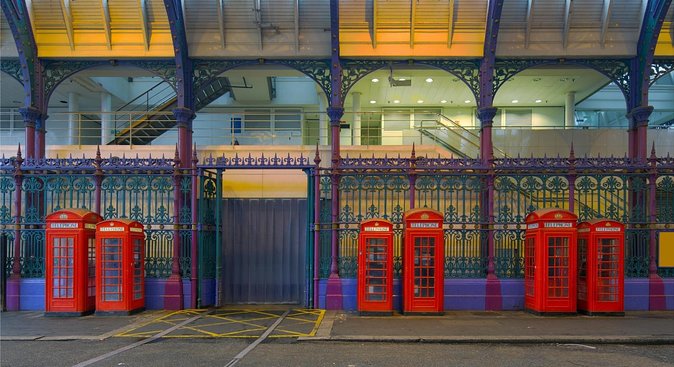
The story is that these figures were intended to mock worshippers next door at St Peter upon Cornhill. That church is now virtually submerged at street level because office blocks pushed the cityscape around it. What you get from this stop is a reminder that religion, community, and conflict played out in the public street, not just in private.
I like this stop because it helps you understand how London can hide a punchline in plain sight. The terracotta figures are physically small, but the idea behind them is big. Your guide connects the visual detail to the social setting, and you start noticing similar “ongoing arguments” in other corners of the city, even when you cannot see them clearly at first.
Admission is not included at Cornhill House, so if your group wants extra time to linger at the figures and the surrounding architecture, factor in that you might be paying separately or entering on a guided basis.

St. Bartholomew the Great and surviving the Great Fire of 1666
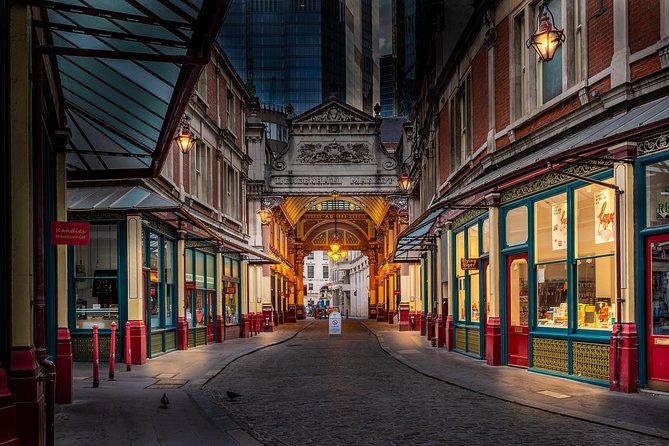
Next up is St. Bartholomew the Great, one of the medieval churches that survived the Great fire of 1666. That single fact gives this stop weight. London’s fire history is famous, but standing near a surviving medieval building is a different experience than reading about it.
This church helps you bridge the earlier layers of the city with the era when London’s urban growth accelerated. Your guide can frame why survival is meaningful. Many structures did not make it, so what remained became a kind of anchor point, and that makes it easier to imagine the city as people experienced it day by day.
In a tour that also includes Roman cult spaces and odd street-level symbolism, St. Bartholomew the Great acts like a stabilizer. It feels grounded. It reminds you that belief and ritual did not disappear. They transformed, and they kept finding ways to stay in the city even when the city burned.
Admission is free here, which makes it a good stop to treat with extra care. Use the free time to look at details you might otherwise skip. Even with a short visit window, you can still get value by focusing on a couple of elements rather than trying to photograph everything.
Smithfield Market: executions, Bloody Mary, and the grim side of London
Smithfield Market changes the tone. You will see places tied to execution and learn a story connected to Bloody Mary. Even if you already know the broad outline of her reign, this kind of setting can make the stories land differently, because you are looking at a public stage where power showed itself.
This is also one of the best stops for people who like the less polished London. Markets, streets, and public squares are where history got loud. Your guide will help you connect the violence to the city’s rhythm, which is what makes it feel more real than a textbook page.
The value here is in how the guide places the moment in context. Instead of treating it as only tragedy, you get the sense of why stories like Bloody Mary endured. They became symbols, and symbols have a way of sticking around even as buildings change and crowds move on.
Smithfield Market includes admission on this tour, so you will not face extra ticket costs for this particular piece. That helps the experience feel more balanced at the end of the route.
MI15 spy secrets and witchcraft lore: how the title matches the experience
The tour’s full title leans into witchcraft, ancient cults, and MI15 spy secrets. The route you experience on the ground focuses on Roman cult practice, long-lived church sites, and street-level stories that survived into today. That matters, because you get to enjoy the spooky theme while still grounding it in places you can stand in.
I like that balance. London has a habit of encouraging dramatic stories, but the best walks pair atmosphere with concrete detail. When your guide talks about myths like Mithras and the bull scene, or the way older beliefs can leave traces under later buildings, the “secrets” part stops being pure fantasy. It becomes about what gets hidden, what gets preserved, and what gets repackaged as the city evolves.
If your group wants a straightforward history lecture, this might feel a bit playful. If your group wants to understand why people in the past built cults, interpreted signs, and spread rumors, the tone should click.
Price and value: is $371.59 for 3 hours worth it?
At $371.59 per person for about 3 hours, this is not a budget group stroll. The value comes from the private format and the specific kind of content. You are not just visiting famous monuments. You are getting a guide who can point out why each site mattered, and you are walking between multiple eras without the chaos of a big bus group.
Also, group discounts exist, and that can make a big difference if you are traveling with friends or family who want the same pace. The mobile ticket is handy, too, because it reduces friction on the day.
The other value factor is that admission varies by stop. Some parts cost extra, some do not. When I think about value with tours like this, I weigh whether the guide’s interpretation makes it feel worth paying for. With a Mithras cult temple tied to London Mithraeum Bloomberg SPACE plus layers beneath churches, I think the “guide factor” is what justifies the price, especially if you already know the main sights.
If you are traveling solo and want the lowest price per attraction, you might feel the cost is steep. If you want a tight, story-driven route built around unusual places, it is easier to see the value.
Who should book this private walk?
This works best for you if:
- You have already done the classic big-ticket London sights and want something more off the map
- You like history that includes superstition, symbolism, and the way beliefs shaped real spaces
- You enjoy walking, and you want to notice details instead of only taking wide views
- You value a private guide who can tailor the pacing and answer questions
It may not be ideal if you want long time inside museums or churches. Visits are short at each stop, and at least one site requires separate admission. It is a sampler, not a marathon.
One extra note from the experience side: the guide quality seems to matter a lot. In one account, the guide was thanked as Elvira, described as very nice and with strong know-how in the subject area. That kind of guide energy is exactly what makes a themed walk like this work.
Practical tips to get the most out of the walk
Wear shoes you can walk in for the full route. Even if the stops are short, the in-between time adds up in a dense area like central London.
Decide in advance how you want to handle photos. If you try to photograph everything at every stop, you will feel rushed. Instead, pick one or two elements that match your interests, like the underground feel at Mithras, foundation traces at St. Mary Woolnoth, or the terracotta figures at Cornhill House.
If you are the kind of person who likes to ask follow-up questions, this is a good tour format for that. Private means you can steer the conversation toward what you care about, like symbolism, Roman religion, or why certain churches survived.
Also, because admission is not included everywhere, it helps to go in ready for that. You will have a smoother experience if you do not assume every location is free.
Should you book this tour?
I think you should book this if you want a focused 3-hour experience that turns London into a story you can walk through. The private guide format and the mix of places tied to Roman cult practice, layered church foundations, and grim public history give you a side of London that most standard itineraries do not touch.
Skip it if you are on a tight budget and cannot handle extra admission for stops that are not included, or if you want long interior time at just one attraction. This is built for variety and pacing, not deep museum immersion.
If you match that style, it is a smart choice, especially after you have seen the top sights and want the city’s odd corners explained in plain language.
FAQ
How long is the tour?
The tour lasts about 3 hours.
Is this a private tour?
Yes. It is a private tour/activity, and only your group participates.
Where does the tour start and end?
It starts at Bleeding Heart Yard, London EC1N, and ends next to Monument Station at King William Street, London EC4R 9AA.
What time does the tour begin?
The start time is 12:00 pm.
Are admission tickets included?
Admission is included for Smithfield Market, and not included for the London Mithraeum Bloomberg SPACE and Cornhill House. St. Mary Woolnoth Church and Church of St. Bartholomew the Great are free.
Do I get a mobile ticket?
Yes, the tour includes a mobile ticket.
What is the cancellation policy?
You can cancel for free up to 24 hours in advance of the experience. If you cancel less than 24 hours before the start time, the amount paid is not refunded. The tour may also be canceled if the minimum number of travelers is not met, with an alternate date or a full refund offered.
Is it suitable for most travelers, and are service animals allowed?
Most travelers can participate, and service animals are allowed. The tour is near public transportation.
Fresh off the notebook in London
- Witchcraft, Ancient Cults & MI15 Spy Secrets
★ 4.0 · 3 reviews - Arrival Transfer: London Train Stations to London Hotels
★ 5.0 · 3 reviews - Royal Afternoon Tea & Walk at Kensington Palace
★ 4.5 · 3 reviews - Bridgerton Tour in London
★ 5.0 · 3 reviews - Private Transfer from central London to Southampton Cruise Terminal
★ 5.0 · 3 reviews - Photographer, Professional Photo Shoot – London
★ 5.0 · 3 reviews