
REVIEW · WALKING TOURS
Booze, Brothels & The Bard: A Walking Tour of London’s Bawdy Borough
Southwark gets a bit naughty on foot. This walking tour threads together literary London with the area’s rougher edges, from old prison remnants to Shakespeare’s Globe. You get a tight, story-led walk that makes a neighborhood feel like a living book.
Two things I really like: the small group size (maximum 15), which keeps the pace friendly and questions welcome, and the guide energy. In the best moments, you can tell the guide loves the material, like Tom, who was described as passionate and engaging. You’ll also appreciate the practical setup, since the stops include free admission tickets where offered.
One drawback to know upfront: it is a quick “walk-by with context” format. Each stop is brief, so if you want to linger long at Borough Market or stare longer at Shakespeare’s Globe, plan to return after.
In This Review
- Key Points Before You Go
- How This Southwark Walk Really Feels
- Meeting at Borough High Street, Then Moving Smart
- Stop 1: St George the Martyr and the Marshalsea Connection
- Stop 2: Crossbones Graveyard, a Quiet Place for Outcast Stories
- Stop 3: The Hop Exchange and Southwark’s Beer Trade
- Stop 4: George Inn, a Last Surviving Coaching Inn
- Stop 5: Old Operating Theatre and Herb Garret, Europe’s Oldest Surviving Operating Theatre
- Stop 6: London Bridge, the Big Icon Still Worth Seeing Up Close
- Stop 7: Southwark Cathedral, London’s Oldest Surviving Gothic Church
- Stop 8: Borough Market, a One Thousand Year Old Food Market
- Stop 9: Winchester Palace Remains, Medieval Prestige Without the Pretend
- Stop 10: The Clink Prison Museum, Notorious Clink Prison Site
- Stop 11: Shakespeare’s Globe Theatre Reconstruction, The Bard’s Big Finish
- Price and Time Value, Is $27.78 Fair?
- What You’ll Learn From the Themes, Not Just the Addresses
- Who Should Book This Tour (and Who Should Skip It)
- Should You Book Booze, Brothels & The Bard?
- FAQ
- How long is the walking tour?
- How much does it cost per person?
- Where does the tour start and end?
- Is the tour offered in English?
- How big is the group?
- What is included in the ticket price?
- Are there admission fees at the stops?
- Can I cancel for free?
- Do I need to bring a paper ticket?
Key Points Before You Go
- Southwark’s backstreets, prisons, and medicine in a single 2-hour loop
- Maximum 15 people so the guide can actually work the group
- Shakespeare’s Globe reconstruction closes the walk in a big, satisfying way
- Borough Market and the Hop Exchange add food and beer-trade flavor
- Free admission tickets at the listed sights help keep the total cost sensible
More on foot, at a pace you can hear the guide
- Tour for Muggles The Ultimate Harry Potter Walking Tour in London★ 5.0 · 4,684 reviews
- London Jack The Ripper Guided Walking Tour★ 5.0 · 3,131 reviews
- Changing of the Guard Guided Walking Tour in London★ 5.0 · 1,793 reviews
- The Great British Rock and Roll Walking Tour★ 5.0 · 1,371 reviews
How This Southwark Walk Really Feels
This tour is for people who think London is more than postcards. You start in Southwark, the part of town that has always been close to the river and close to the action, and you stay grounded in real places. The theme is right there in the title: Booze, Brothels, and The Bard. Even if you focus more on the literary side than the bawdy side, you still get the point, Southwark has always been a place where stories happen, including the less polite ones.
What makes this experience work is that the guide does not just rattle facts. The walk is built around locations tied to writers like Shakespeare and Dickens and other literary figures, so you feel how literature grows from a real streets-and-buildings city. You also get to connect a run of famous landmarks with smaller, stranger sites that most first-time visitors skip.
The duration is about 2 hours, which is perfect for a morning or an afternoon slot when you want history without burning your whole day. And since it is a walking tour, you get movement between stops, not just a sitting lecture. That matters, because Southwark is the kind of neighborhood where the best learning happens while you’re looking around.
Meeting at Borough High Street, Then Moving Smart
You meet at Borough High St, London SE1 1JX, and the tour ends at Shakespeare’s Globe, 21 New Globe Walk, London SE1 9DT. That end point is useful. You are finishing right where you can keep going on your own, whether that means grabbing a snack nearby or looking more closely at the Globe area after the tour wraps.
Because it is described as near public transportation, you should be able to slot it into a broader day plan. If you are juggling multiple stops, having a start and end that are both easy to reach helps. It also means you likely will not have to add extra time just to get positioned.
One other practical plus is that you get a mobile ticket, and you receive confirmation at booking. That reduces last-minute stress. And with a maximum of 15 travelers, the walk stays manageable. I like that, because smaller groups tend to feel less rushed, and you are more likely to get a real back-and-forth with the guide.
Finally, keep your expectations aligned with the format. Most stops are short, around five minutes each. You’ll get key ideas, not a long museum immersion at every site.
Stop 1: St George the Martyr and the Marshalsea Connection
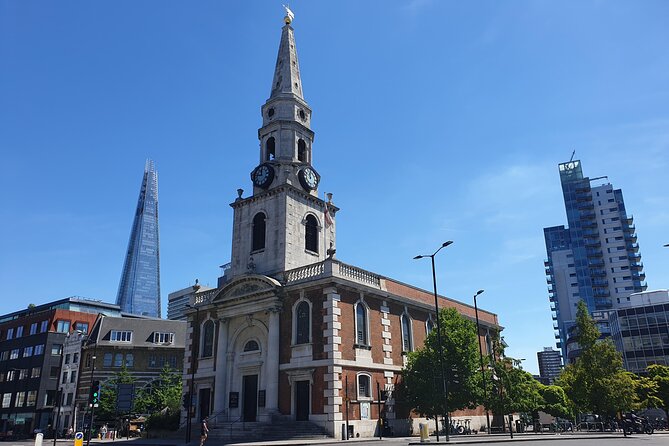
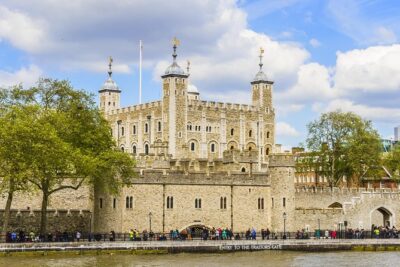
The first stop is St George the Martyr. The standout detail is that it is the only remaining part of the Marshalsea Prison. Even without going deep into prison history, that detail makes the place feel specific and real. It is not a vague “old building.” You are looking at what’s left, so the story has edges.
What I like about starting here is the immediate tone shift. You go from the modern street to a physical remnant of confinement. That sets up everything else you will see on the walk, because the tour’s other sites also tie into people on the margins, people who did not live the easiest lives.
The practical catch is also obvious. With such a short stop, you cannot expect a long read of the setting or a deep museum-style visit. If you’re the type who wants to thoroughly examine every wall or take lots of photos without moving, you may feel the time squeeze early.
Still, this is a strong opening because it gives you a framework for the rest of Southwark. You start understanding the area as a place where power and punishment left visible marks.
Stop 2: Crossbones Graveyard, a Quiet Place for Outcast Stories
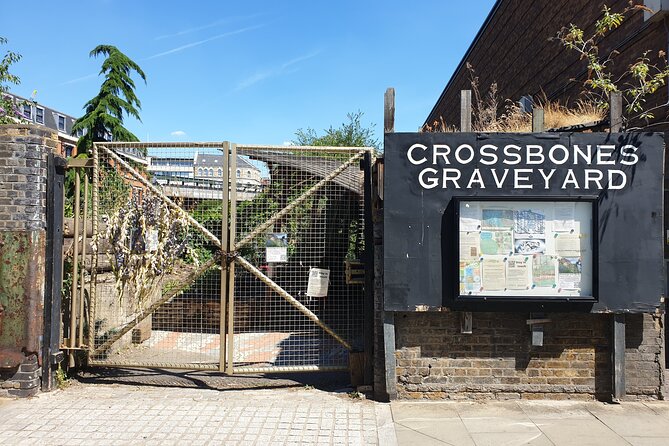
Next you visit Crossbones Graveyard and the Garden of Remembrance. Here, the emphasis is on the final resting place for thousands of Southwark’s outcast dead. That wording matters. This is not presented as a decorative stop. It’s more reflective, and it gives the tour an emotional center.
This is the part of the walk where the “bawdy” side of the title is handled in a thoughtful way. Instead of making it sensational, the focus becomes how society treated people at the margins. A graveyard can do that better than almost anything else, because it forces a pause.
You also get a bit of variety in the walk. After you’ve started with the prison remnant, you move to a burial site. That keeps the stories from feeling like one long, repetitive lecture.
Drawback? Again, the time is brief. Five minutes is enough to catch the main idea and look around, but not enough for a slow, personal moment. If you want more time, you can always return later on your own, but during the tour you’re likely to keep moving.

Stop 3: The Hop Exchange and Southwark’s Beer Trade
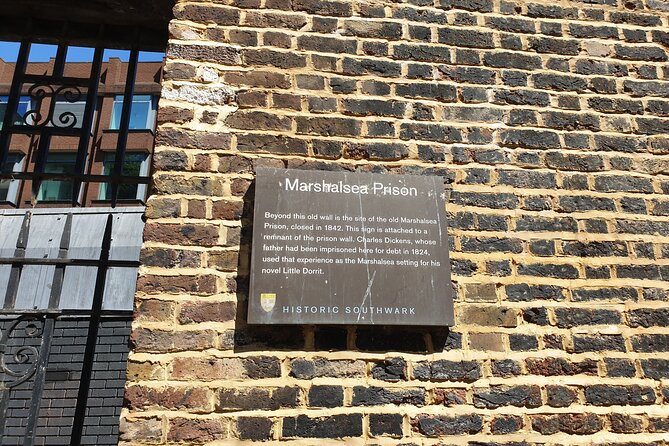
Then the walk turns to commerce and craft at the Hop Exchange. The key detail here is that it is the largest extant reminder of Southwark’s beer trade. That means you are looking at a surviving piece of how the beer economy physically shaped the neighborhood.
I like this stop because it balances the darker themes with something very human and everyday. Beer trade is not abstract. It points to work, trade routes, and local culture. For visitors who only associate Southwark with history in a stern, museum-like way, this is a welcome adjustment.
It also fits the tour title. Even if you’re not chasing a pub crawl vibe, you get a sense of how booze was part of life here, tied to buildings that still stand. That adds texture to the stories the guide shares, especially if they connect literary references to places where people gathered and talked.
The main consideration is simple: it is still a short stop. You’ll likely get the significance and some context, but you won’t have hours to explore the building in depth. If you want to learn more after, this is one of those sights where a return visit would make sense.
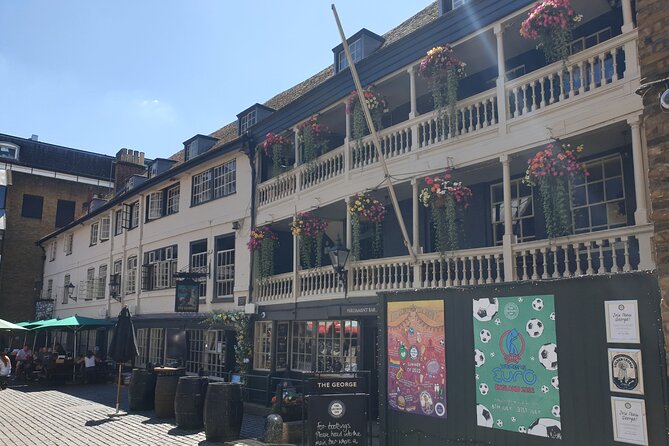
Stop 4: George Inn, a Last Surviving Coaching Inn
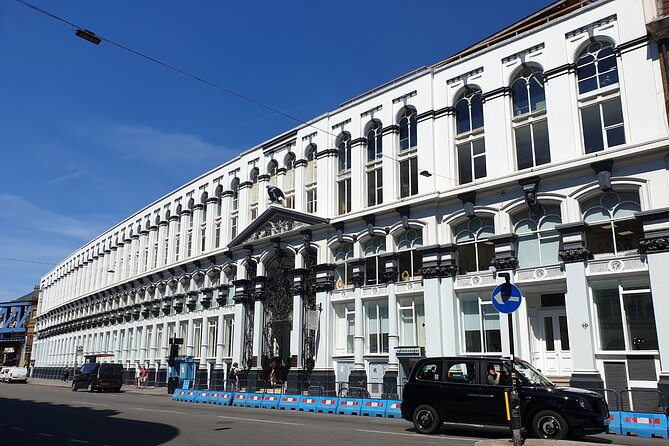
Next up is George, described as London’s last surviving galleried coaching inn. That detail brings a different kind of history into the picture: travel and hospitality. Coaching inns were tied to movement, lodging, and the flow of travelers through a city.
This stop is a nice pivot because it connects the literary side to street-level life. Writers did not invent their worlds in a vacuum. They watched people, listened to stories, and noticed what stayed the same and what changed.
You also get a visual contrast. A prison remnant and a graveyard are heavy. An old coaching inn is still historic, but it feels more like a stage set for everyday stories: arrivals, departures, chatter, and rumors.
The drawback stays the same: time. With only a few minutes, you’ll skim the surface of what a coaching inn can tell you. Still, it’s one of those stops where the building itself does a lot of talking if you take a second to look up and notice the layout.
Stop 5: Old Operating Theatre and Herb Garret, Europe’s Oldest Surviving Operating Theatre
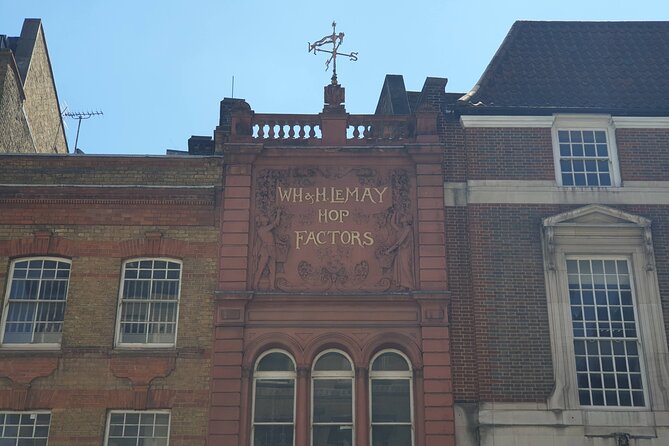
Now you go from hospitality history to medical history at the Old Operating Theatre Museum and Herb Garret. The tour frames it as Europe’s oldest surviving operating theatre. Even if you’re not a museum person, that superlative makes it hard to ignore.
For me, this is one of the most striking stops on the route because it is so specific. You’re not just seeing an old church or a general landmark. You’re seeing a site where surgery once happened, paired with the idea of herbs in the Herb Garret. That connection helps explain why medicine and everyday life were linked more closely than we tend to imagine today.
The tour also keeps things respectful by giving you the essentials and moving on. That matters because a topic like this can easily go too far into shock value. Here, the goal is context, not spectacle.
Still, the stop is brief. Five minutes is a strong overview window, but if you are the kind of person who reads every label and wants to take in the whole museum feel, you’ll want to schedule more time another day.
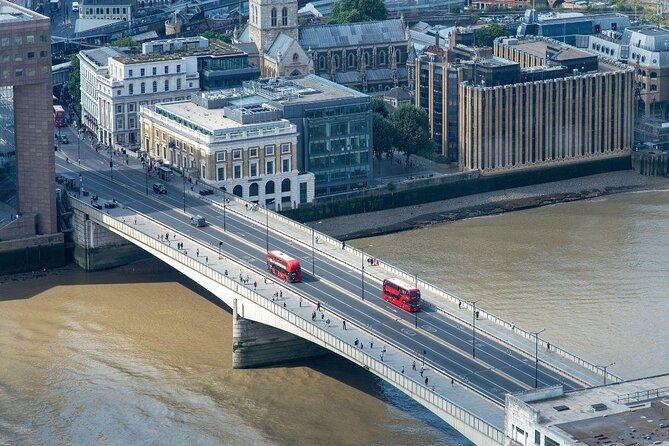
Stop 6: London Bridge, the Big Icon Still Worth Seeing Up Close
The walk then reaches London Bridge, described as world famous and iconic. This is the kind of stop that can be either satisfying or redundant, depending on your mindset.
It’s satisfying if you treat it as a visual anchor. You’ve been moving through Southwark’s history, and then you hit a landmark that everyone recognizes. It helps you map the neighborhood, and it gives you a quick moment to confirm you are in the right place in the city.
It might feel less compelling if you expected another hidden-world kind of stop. But as a breather between heavier sites, London Bridge makes sense. It also helps connect the story to the real geography of London, since Southwark and the river are inseparable in practice.
With such a short stop, you won’t get a long viewpoint lecture. But you can still use the moment to look around and orient yourself before heading to the next part of the route.
Stop 7: Southwark Cathedral, London’s Oldest Surviving Gothic Church
After the iconic bridge moment, you visit Southwark Cathedral. The tour notes it as London’s oldest surviving gothic church. That phrasing gives you a clear reason to care. You are seeing a church that represents continuity, the kind of thing that makes a neighborhood feel rooted.
I like that the tour places the cathedral here, after you have already seen both dark and gritty sites. A cathedral gives the stories room to breathe. It’s also a big visual shift from prisons and trade buildings.
If you’re into architecture, this is where you might slow down slightly and look at details. Even on a short stop, you can enjoy the scale and the overall vibe. If you’re not an architecture nerd, you can still appreciate the fact that the tour is pointing you to a landmark with a precise claim, oldest surviving, not just old.
The main consideration is, again, time. You will get the highlight and the story connection, but you are unlikely to do a full cathedral visit during the tour.
Stop 8: Borough Market, a One Thousand Year Old Food Market
Then you arrive at Borough Market, described as a one thousand year old food market. This is one of the smartest parts of the route for most people, because it’s not only history. It is still active, and it smells like food in a way no photo can copy.
I like Borough Market here because it breaks the pattern. After prisons, medicine, and cathedrals, you get something grounded in daily life: eating, buying, and sampling. Even if you do not stop to purchase anything, the market atmosphere gives you a quick reset.
If you plan it right, you can turn the end of the tour into a treat. Since the walk ends near Shakespeare’s Globe, you can grab something at Borough Market either before you start or after the tour, depending on how hungry you are.
The only drawback is that the tour stop is brief, about five minutes. If you want to browse stalls slowly, treat this as a taste of the market, not the whole experience. You’ll probably want a separate visit to really explore.
Stop 9: Winchester Palace Remains, Medieval Prestige Without the Pretend
Next is Winchester Palace. The description is clear: the remains of one of the most prestigious homes in medieval England. That tells you what to look for, remnants rather than a fully intact building.
This stop works best if you enjoy the kind of history that doesn’t try to look like it did yesterday. Remains can be more honest. They show the passage of time in a way a perfectly restored site can sometimes hide.
It also gives the tour another angle on power and class. Earlier you saw confinement and burial sites. Now you see prestige, at least in what’s left behind.
Because the stop is short, you will mostly come away with the big idea. If you want to trace what was where, plan to come back. But for a two-hour overview, it fits neatly.
Stop 10: The Clink Prison Museum, Notorious Clink Prison Site
Now comes the Clink Prison Museum and the site of the notorious Clink Prison. If you’ve been enjoying the tour’s darker threads, this is likely the stop where you feel the theme most directly.
I like that the tour does not treat these locations like shock machines. It presents them as places with a specific identity. The Clink is not just “old jail.” It’s described as notorious, and your guide should be able to connect that notoriety to why these kinds of stories get written and repeated.
This stop also adds variety in setting. Museums feel different from outdoor graveyards and partially standing remnants. Even if your time is brief, it gives you a sense of how the story is preserved and told.
The practical consideration is simple: you are moving. If you end up wanting to read every display panel, you might wish you had scheduled extra time, because the walking tour format keeps you on a schedule.
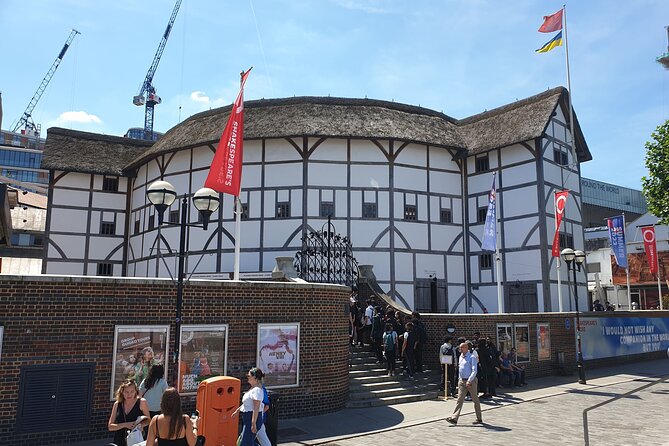
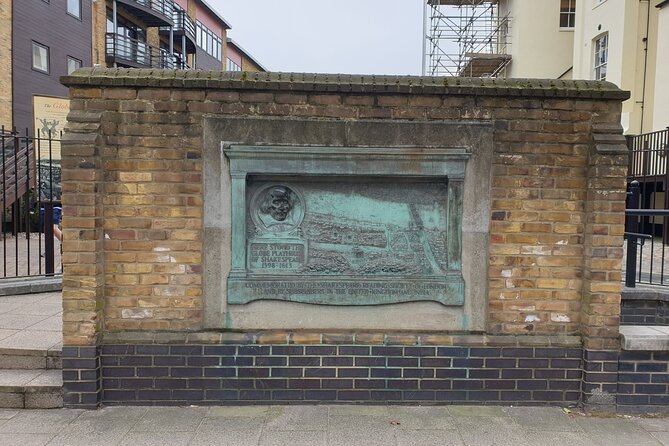
Stop 11: Shakespeare’s Globe Theatre Reconstruction, The Bard’s Big Finish
The tour ends at Shakespeare’s Globe Theatre, described as the reconstruction of Shakespeare’s Globe Theatre. Finishing here feels right, especially if the guide has been drawing connections to Shakespeare across the walk. You go from London’s rougher edges to a place built for performance and language.
I like this ending because it gives you a choice right after the tour. You can keep exploring the area on your own, or you can simply use the Globe as a landmark to continue your day. Since the official finish point is at the Globe walking route, you are not left scrambling to find where to go next.
Also, a reconstruction can still be powerful. The tour’s approach makes sense if your goal is to understand how Shakespeare fits into the city you just walked through. You do not need a long lecture. You need the right place, and then your curiosity can take over.
Just remember the earlier drawback. You might not get enough time to fully soak in the Globe complex during the tour itself. If you care a lot about Shakespeare, plan extra time on your schedule.
Price and Time Value, Is $27.78 Fair?
At $27.78 per person for about two hours, this tour is priced for what you actually get: a focused walk plus a guide. The real value comes from the blend of stops and the fact that the listed sights have admission ticket free noted for each stop.
That does not automatically mean all internal experiences will be free, but the provided stop notes do suggest the tour is structured to minimize extra entry costs. Even better, the pacing is efficient. You are not spending half the day traveling between far-flung neighborhoods. You are also seeing a wide spread of place types, from prisons and trade sites to cathedrals and a major theater reconstruction.
The small-group limit of 15 travelers is another value factor. It can mean fewer delays at each stop and more chances to ask the guide something specific.
Where I think you should be realistic is how quickly the tour moves. If you are the type who wants to do deep reading at every location, you may feel like two hours is too short. If you want an organized, story-led overview and then the freedom to return later to the places you like most, the price makes a lot of sense.
What You’ll Learn From the Themes, Not Just the Addresses
The tour is built around a literary lens. You are meant to connect the neighborhood to names like Shakespeare and Dickens and other literary figures. That can sound vague until you realize how physical places do the work. When you stand by a prison remnant, a graveyard, and a coaching inn, you are not just learning dates. You are seeing how settings shape stories.
The guide approach seems to hit the right tone. The strong feedback you can take from the experience is that Tom and other guides deliver colorful stories in a way that makes you feel like you’re traveling back in time with the people who lived around these places.
That is also why the tour fits “different side of London” travelers. If your London list is currently all museums and royal buildings, this adds a layer that is more gritty, more human, and more tied to how stories were born from real streets.
Who Should Book This Tour (and Who Should Skip It)
Book it if you like walking tours that actually stay focused. You want a clear route, multiple stop highlights, and a guide who can keep you moving while still making the stories stick.
You’ll also probably enjoy it if you care about the connection between literature and the city. The tour’s focus on Shakespeare and Dickens makes it a strong match for readers, theater fans, and anyone who likes their history with personality.
Skip it if you have a very slow sightseeing style. With stops averaging about five minutes, it is not the best fit for people who need long visits, long photo sessions, or lots of quiet time at each site. Also, if you are only interested in one type of attraction, like only churches or only markets, the variety might feel like too much variety in too little time.
If you’re not sure, I think you can treat it as a perfect primer. Then you return on your own to the one or two places you want to see longer.
Should You Book Booze, Brothels & The Bard?
I think this is an easy yes for people who want an organized, story-led walk through Southwark’s less polite side. The value looks solid for the price, especially with the free admission note at each listed stop and a tight two-hour format. And the strongest signal is the guide experience, with Tom specifically called out as punctual, passionate, and engaging.
You should book it if you want to get your bearings in Southwark fast and you like the idea of seeing major literary connections, plus markets, trade remnants, and prison sites in one route.
You might skip or at least adjust expectations if you want long museum time. This tour is more about seeing and understanding quickly, then choosing your follow-up visits later.
FAQ
How long is the walking tour?
It runs for about 2 hours.
How much does it cost per person?
The price is $27.78 per person.
Where does the tour start and end?
It starts at Borough High St, London SE1 1JX, UK, and ends at Shakespeare’s Globe, 21 New Globe Walk, London SE1 9DT, UK.
Is the tour offered in English?
Yes, it is offered in English.
How big is the group?
The tour has a maximum of 15 travelers.
What is included in the ticket price?
A walking tour guide is included.
Are there admission fees at the stops?
The listed stops show admission ticket free.
Can I cancel for free?
Yes. You can cancel for a full refund if you cancel at least 24 hours before the experience’s start time, and free cancellation is available.
Do I need to bring a paper ticket?
You will have a mobile ticket, and you get confirmation at the time of booking.
More Of London On Foot



Fresh off the notebook in London
- Private Rock ‘n’ Roll Music Tour of Central London
★ 5.0 · 7 reviews - London Walking Tour: Camden Town Photography Walkabout
★ 5.0 · 7 reviews - Private Transfer from London accommodation to Cruise terminal
★ 5.0 · 7 reviews - Amazing Nightlife in London East Tour
★ 4.5 · 7 reviews - The British Museum: a highlights tour with a TV historian
★ 5.0 · 7 reviews - Heathrow Airport to Cambridge private taxi transfers
★ 5.0 · 7 reviews
Walking Tours, compared.
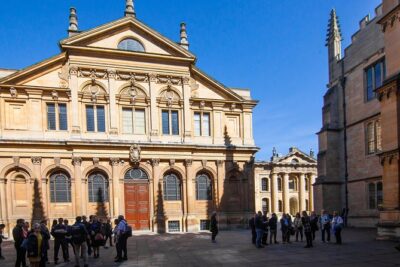 ★ 5.0Oxford University Walking Tour With University Alumni GuideFrom $416,905 reviews
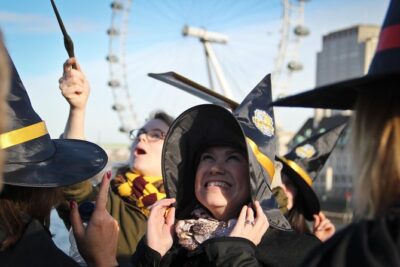 ★ 5.0Tour for Muggles The Ultimate Harry Potter Walking Tour in LondonFrom $234,684 reviews
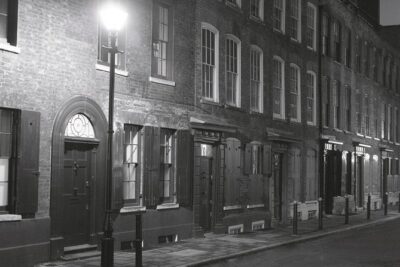 ★ 5.0London Jack The Ripper Guided Walking TourFrom $03,131 reviews
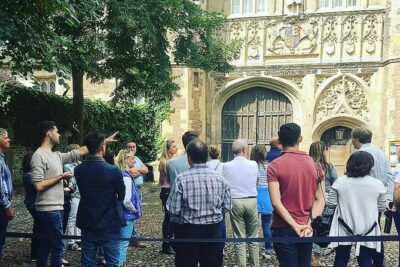 ★ 5.0Cambridge University Walking Tour by Alumni™ Kings College OptionFrom $332,336 reviews
 ★ 5.0Blackbeard to Banksy – The Ultimate Walking Tour of BristolFrom $181,961 reviews
 ★ 5.0Air Raid Shelter + St. Nicholas Market Walking TourFrom $171,950 reviews
 ★ 5.0Walking Tour of Bath with Blue Badge Tourist GuideFrom $301,877 reviews
 ★ 5.0Changing of the Guard Guided Walking Tour in LondonFrom $251,793 reviews