
REVIEW · WALKING TOURS
Burnings, Butchery & Black Death: A Walking Tour of London’s Bloody Past
London gets grim fast, and this walk covers a thousand years of hard stories. I love the small groups (limited to 15) and the 1,000-year sweep from medieval plague to Victorian London. It is not a theme park version of the past, it is London on foot, with stops you would otherwise walk right past.
One catch: this is an outdoor walk, so it runs best in good weather, and you will be on your feet for about two hours. If you hate gloomy themes, the tour’s premise will probably feel too intense.
In This Review
- Key Things I’d Mark on Your Map
- A 2-Hour Walk Through London’s Bloody Timeline
- Start at Aldersgate, End Near Farringdon
- Charterhouse: A Plague Pit Waiting in Plain Sight
- Smithfield Market: Where Butchery Became City History
- St John’s Gate: The Knights Hospitallers and the Power of Thresholds
- Cloth Fair: A Quiet Alley With Loud History
- William Wallace Memorial: Braveheart Meets Real Location
- St Bartholomew the Great: London’s Oldest Surviving Parish Church
- Pye Corner: The Golden Boy and the Ghost-Fever Side of History
- Holborn Viaduct: The River Fleet and a Victorian Sewer Big Enough to Change Everything
- Ye Olde Mitre: A Real Pub Stop for a Much-Needed Pause
- Saint Bartholomew’s Hospital Museum: Medicine After the Mayhem
- Price and Value: Why $27.73 Can Be Fair for This Kind of Walk
- What You’ll Likely Enjoy Most (And What Might Not Hit)
- Should You Book Burnings, Butchery & Black Death?
- FAQ
- How long is the walking tour?
- What is the tour price?
- Where does the tour start and end?
- Are tickets included for the stops?
- What language is the tour offered in?
- How big are the groups?
- Is the tour dependent on weather?
- What is the cancellation policy?
Key Things I’d Mark on Your Map
- Max 15 people keeps the pace calm and the stories easy to hear.
- Ten focused stops cover medieval, Tudor, Victorian, and 17th century London in just about two hours.
- Charterhouse plague pit kicks off the Black Death chapter in a very real setting.
- Smithfield Market puts London’s meat trade front and center, where history has long legs.
- Pye Corner and Holborn Viaduct link major events to street-level myths and infrastructure.
- Ye Olde Mitre finishes on a human scale, with a chance to grab food nearby.
More on foot, at a pace you can hear the guide
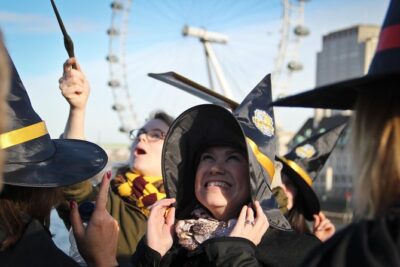
- Tour for Muggles The Ultimate Harry Potter Walking Tour in London★ 5.0 · 4,684 reviews
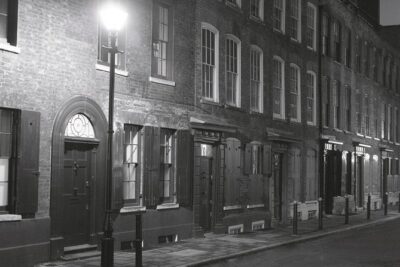
- London Jack The Ripper Guided Walking Tour★ 5.0 · 3,131 reviews
- Changing of the Guard Guided Walking Tour in London★ 5.0 · 1,793 reviews
- The Great British Rock and Roll Walking Tour★ 5.0 · 1,371 reviews
A 2-Hour Walk Through London’s Bloody Timeline
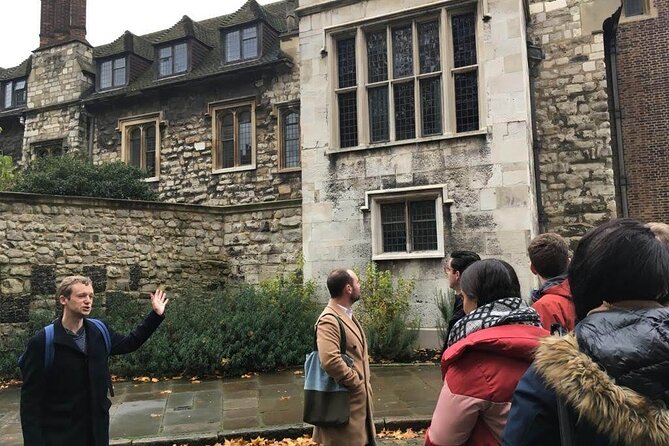
This tour works because it is short enough to stay sharp, but packed enough to feel like you leveled up. You are moving through the City of London area, with frequent stops and quick context so the scenes make sense fast.
The big value is that the stories cover more than one era. You get medieval institutions, city markets, and later surprises like the Great Fire connection at Pye Corner and the Victorian River Fleet sewer story at Holborn Viaduct.
Also, the pacing matters. You are not stuck in one spot listening for ages, you walk, stop, look, and then keep going. That makes the whole thing easier to handle, even when the topics get heavy.
Start at Aldersgate, End Near Farringdon
You begin at Underground Ltd on Aldersgate Street, in the Barbican area. If you use transit, you should feel comfortable getting there, since the route is designed for people who can connect by tube or nearby stations.
The walk ends on Ely Place, around the corner from Farringdon Station. That is a practical detail, because you do not have to reverse your steps to get back to the rail and tube lines that bring you home.
I also like that the tour gives you a mobile ticket. It removes one little hassle in the middle of a city walk, especially when you are trying to keep track of timing.
Charterhouse: A Plague Pit Waiting in Plain Sight
Your first stop is the Charterhouse, a fourteenth century monastery tied to plague history. This is the kind of place where you see how institutions shaped daily life, even when disease turned life upside down.
The tour frames the Charterhouse as more than a spooky story. You get a sense of how London managed crises and how burial and infection fears shaped real spaces in the city.
What I like here is the grounding. You are not just hearing about the Black Death in the abstract, you are standing at a site that holds that history in its physical footprint.
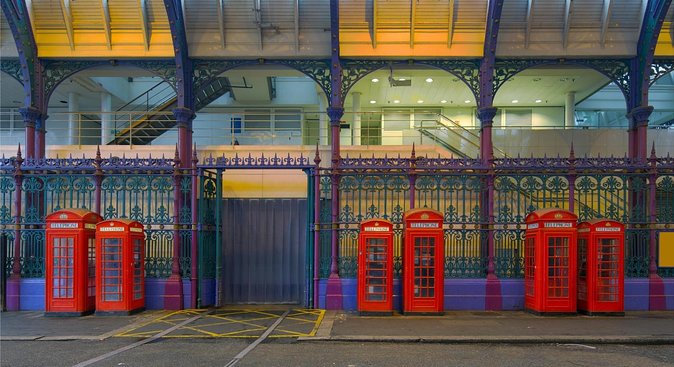
Smithfield Market: Where Butchery Became City History
From plague to meat markets, Smithfield Market is the stop that shifts the lens. It is described as a meat market with a history reaching back around a thousand years, and that long timeline changes how you see the area.
This is where the tour starts to explain London as a working machine. People ate, traded, worked, and argued over space, sanitation, and commerce. When you understand that, the later grim chapters feel less random.
The practical upside is that Smithfield is easy to understand visually. Even if you are not a history buff, you can picture how a market like this pulled people and activity into a dense part of the city.

St John’s Gate: The Knights Hospitallers and the Power of Thresholds
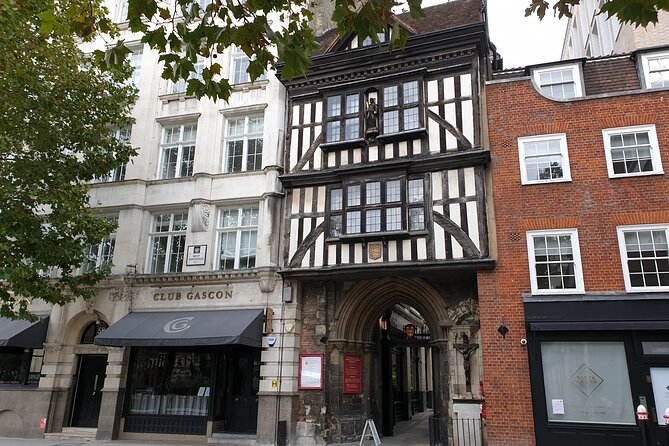
Next comes St John’s Gate, linked to the medieval Knights Hospitallers. This stop gives you that strong London contrast, where serious power sat inside architectural boundaries and gatehouses.
I like the way this part connects roles and institutions. The Hospitallers were not just figures in books, they were part of the city’s systems, and the gate helps you feel the difference between outside and inside, public and protected.
If you enjoy sites with a strong sense of place, you will probably enjoy this. Gates, walls, and entrances often carry more story than the obvious landmarks.
Cloth Fair: A Quiet Alley With Loud History
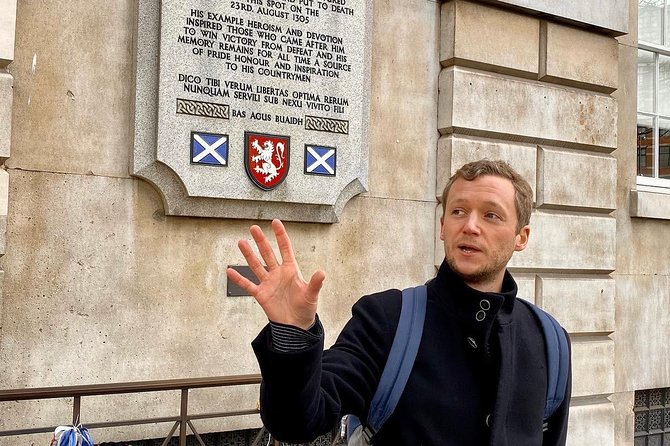
Cloth Fair is one of the most interesting stops because it sounds small, and then it turns out to matter. It is a quiet alleyway, but the tour uses it to show how everyday lanes could hold major chapters.
This is the kind of location that makes the walking tour worth it. If you were wandering on your own, you might notice the alley and move on. With a guide, the lane becomes a clue to how London operated.
A possible downside here is timing. Because stops are short, you want to stay focused and listen as you walk, not stop to take long photo breaks.
William Wallace Memorial: Braveheart Meets Real Location
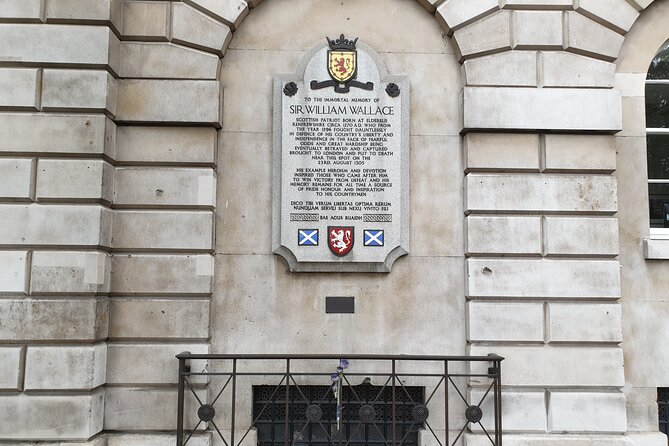
At the William Wallace Memorial, the tour lands on a familiar name, but anchors it in real stone. Even if you know the pop-culture version, the point here is how London absorbs and reuses symbols over time.
This stop works well as a breather from plague and infrastructure. It keeps the stories varied, and it gives you something memorable that is not another church facade.
You might not expect this name in the City of London, so the surprise factor is part of the fun.
St Bartholomew the Great: London’s Oldest Surviving Parish Church
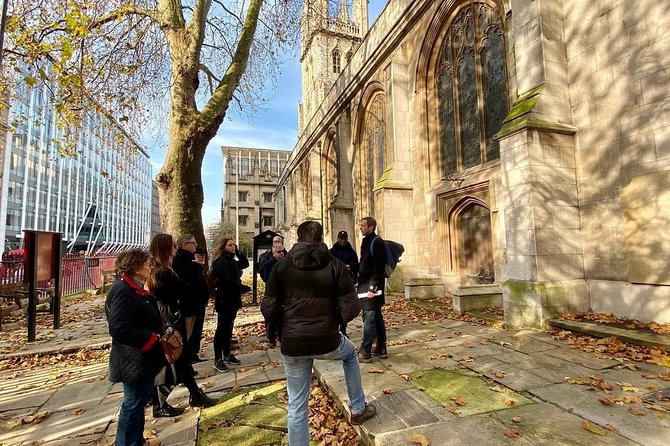
Next is the Church of St. Bartholomew the Great, described as London’s oldest surviving parish church. This is where the walk turns from grim episodes to continuity, survival, and the long thread of parish life.
Admission is included for this stop, which is a nice touch for value and convenience. It means you are not juggling extra ticket steps in the middle of a two-hour outing.
If you enjoy architecture, look closely at what has remained. The tour gives context for why that kind of survival matters in a city that keeps rebuilding.
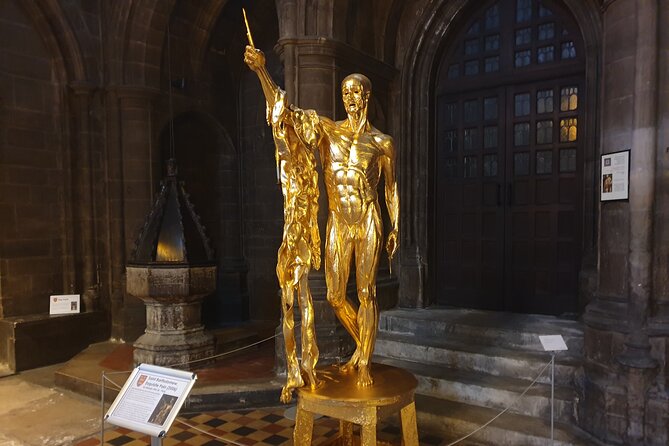
Pye Corner: The Golden Boy and the Ghost-Fever Side of History
The Golden Boy at Pye Corner is one of the most story-rich stops. It is tied to the idea of the Great Fire of 1666 dying out, and it also connects to eighteenth century ghost hysteria.
This is where London’s darker imagination shows up. You are not just dealing with events that happened, you are dealing with how people interpreted those events afterward, including fear that turned into folklore.
I like this stop because it keeps the tour human. People panic, interpret signs, and pass stories along, and that is still easy to understand.
Holborn Viaduct: The River Fleet and a Victorian Sewer Big Enough to Change Everything
At Holborn Viaduct, you get the River Fleet setting and the story of Victorian London’s largest open-air sewer. It sounds grim on purpose, but the point is practical: cities have to handle waste, disease, and public health.
The tour helps you connect infrastructure to human suffering. Once you see how sanitation shaped living conditions, the city’s later reforms feel less like random progress and more like survival.
This stop also changes the tone. It is less ghost story, more real-world city engineering, which balances the earlier centuries.
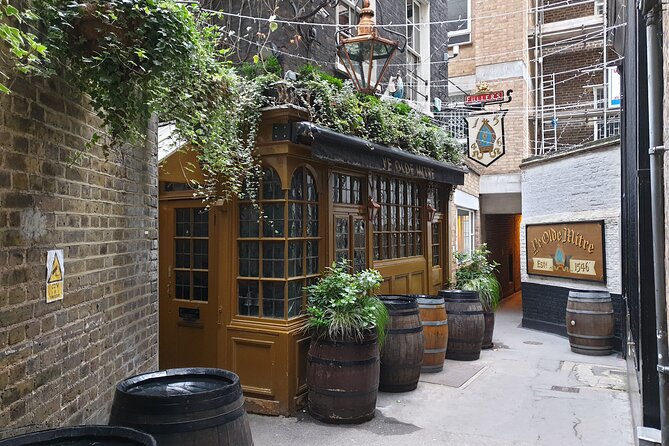
Ye Olde Mitre: A Real Pub Stop for a Much-Needed Pause
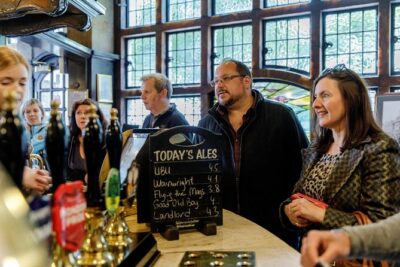
Then you reach Ye Olde Mitre, down an alleyway. Reviews often mention making this the payoff moment, with people grabbing lunch and talking shop about what they just learned.
I like that the tour does not treat history as all doom and no comfort. A pub stop helps you reset your brain, and it gives you an easy place to ask the guide questions about where to eat nearby.
If you want to continue the theme, you can, but you can also just enjoy the atmosphere and move on with your day.
Saint Bartholomew’s Hospital Museum: Medicine After the Mayhem
Your final stop is Saint Bartholomew’s Hospital Museum, described as the oldest surviving hospital in the country. After plague, slaughter, and disease-related fear, you end on institutions tied to care and treatment.
This ending shift is smart. It gives you a sense of how London responded over time, not just how it suffered. When the tour finishes here, it feels like the stories have a direction.
Even if you only spend a short amount of time here, the stop helps the entire walk land with a little more meaning.
Price and Value: Why $27.73 Can Be Fair for This Kind of Walk
At about $27.73 per person for roughly two hours, the value comes from three things. First, it is a short walk with ten tight stops, so you are not spending your time in transit with nothing to show for it.
Second, it is limited to a small group size. That matters for a history walk, because you can actually hear your guide and ask questions without crowd noise taking over.
Third, the guide experience seems to be a major part of the draw. Many people highlight Tom specifically, praising his clear speaking and humor, plus the way he connects darker London stories to modern life. One review even called out that the tour avoids the usual Jack the Ripper storyline and stays focused on this area’s grimmer, stranger threads.
If you’re comparing tours, think about what you want from your money. If you want a straightforward checklist of famous landmarks, you might choose something else. If you want dense context and local corners you would miss, this price starts to make sense.
What You’ll Likely Enjoy Most (And What Might Not Hit)
This tour is a good match if you like city history tied to real locations, not just museum walls. I also think it suits people who enjoy dark storytelling that stays grounded in context, because the stops keep pulling you back to physical sites.
I also like that the route stays varied. You move from plague to markets, then gates and alleys, then churches and fire-related lore, and finally infrastructure and a hospital museum.
The only real mismatch is tone and weather. The tour is built around a bloody past, so if you want light and cheerful, choose a different theme. And if you go on a day with poor weather, you might need to reschedule since the tour requires good weather.
Should You Book Burnings, Butchery & Black Death?
I’d book this if you want a London walk that feels specific to the City of London, with a guide who can make unusual connections between eras. It is also ideal if you like small groups and hate when tours turn into a noisy sprint from one big name to another.
I would skip it if you want a relaxing sightseeing stroll, because the subject matter is deliberately grim and the time is tight. I would also double-check the weather the day of, since it is set up for outdoor walking.
If you do book it, bring a good attitude, comfortable shoes, and a readiness to learn street-level history that most people would never notice.
FAQ
How long is the walking tour?
It lasts about two hours.
What is the tour price?
The price is listed as $27.73 per person.
Where does the tour start and end?
It starts at Underground Ltd, Aldersgate St, Barbican, London EC1A 4JA, UK, and ends at Ely Place, around the corner from Farringdon Station.
Are tickets included for the stops?
Most stops are listed as free, and the Church of St. Bartholomew the Great has an admission ticket included.
What language is the tour offered in?
The tour is offered in English.
How big are the groups?
The tour is limited to a maximum of 15 travelers.
Is the tour dependent on weather?
Yes. It requires good weather, and if it is canceled due to poor weather, you are offered a different date or a full refund.
What is the cancellation policy?
You can cancel for a full refund up to 24 hours before the experience starts. If you cancel less than 24 hours before, the amount paid is not refunded.
More Of London On Foot




Fresh off the notebook in London
- Private Rock ‘n’ Roll Music Tour of Central London
★ 5.0 · 7 reviews - London Walking Tour: Camden Town Photography Walkabout
★ 5.0 · 7 reviews - Private Transfer from London accommodation to Cruise terminal
★ 5.0 · 7 reviews - Amazing Nightlife in London East Tour
★ 4.5 · 7 reviews - The British Museum: a highlights tour with a TV historian
★ 5.0 · 7 reviews - Heathrow Airport to Cambridge private taxi transfers
★ 5.0 · 7 reviews
Walking Tours, compared.
 ★ 5.0Oxford University Walking Tour With University Alumni GuideFrom $416,905 reviews
 ★ 5.0Tour for Muggles The Ultimate Harry Potter Walking Tour in LondonFrom $234,684 reviews
 ★ 5.0London Jack The Ripper Guided Walking TourFrom $03,131 reviews
 ★ 5.0Cambridge University Walking Tour by Alumni™ Kings College OptionFrom $332,336 reviews
 ★ 5.0Blackbeard to Banksy – The Ultimate Walking Tour of BristolFrom $181,961 reviews
 ★ 5.0Air Raid Shelter + St. Nicholas Market Walking TourFrom $171,950 reviews
 ★ 5.0Walking Tour of Bath with Blue Badge Tourist GuideFrom $301,877 reviews
 ★ 5.0Changing of the Guard Guided Walking Tour in LondonFrom $251,793 reviews