
REVIEW · CAMBRIDGE TOURS
Cambridge University Walking Tour
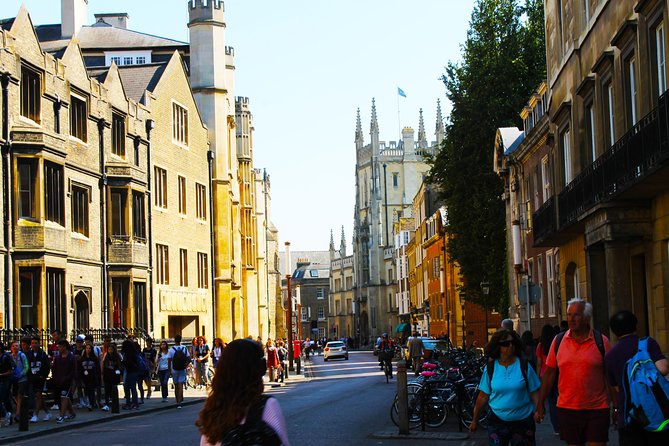
Cambridge feels personal on this college walk. I love starting at the Round Church and getting the included exhibition and 20-minute film, and I love the small group size that leaves room for questions. One watch-out: the commentary can lean into Christian and theological foundations, so science fans who want only labs and geniuses may feel less satisfied.
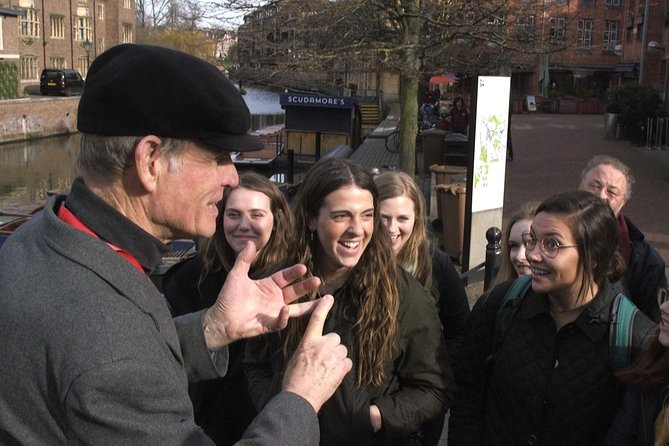
Plan on about 1.5 to 2 hours at a moderate to fast walking pace, and the route can flex day to day. The best part is how guides turn street corners into stories, and names like Dave, Martin, Jon, Bobby, Ian, and John show up again and again in the guide lineup.
You will pass famous Cambridge exteriors and also peer into college life, but college entry is not guaranteed and can be limited during exam season. Still, the mix of churches, river views, and central University buildings gives you a map for the rest of your time in town.
In This Review
- Key points that make this Cambridge University walk worth your time
- Starting at the Round Church Visitor Centre and its included film
- River Cam origins and the college structure you can actually picture
- What to expect at specific college stops
- The central University core: Great St Mary’s, Senate House, and King’s Parade
- Trinity, Newton’s apple tree, and the icons you can spot fast
- Churches with big claims: St Edward’s, St Bene’t’s, and the Eagle
- Science landmarks without the museum ticket: Old Cavendish Laboratory
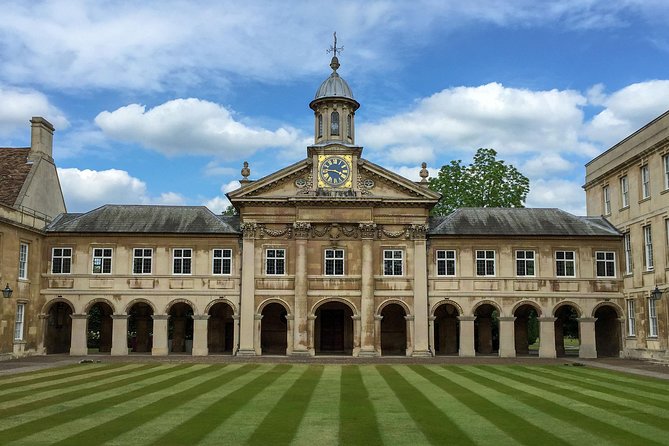
- More colleges on the schedule: Christ’s, Emmanuel, and Sidney Sussex
- Price and value for a $20.80 Cambridge University walk
- Pace, questions, and what to pack for a two-hour Cambridge afternoon
- Should you book this Cambridge University walking tour?
- FAQ
- How long is the Cambridge University walking tour?
- Where does the tour start?
- What’s included at the Round Church Visitor Centre?
- Will we be able to enter the colleges?
- Is the tour suitable for limited mobility or slow walkers?
- Are dogs or service animals allowed?
- Can I cancel and get a full refund?
Key points that make this Cambridge University walk worth your time
- The Round Church start sets the story: exhibition and a 20-minute film are included.
- You often see about two colleges up close: you may enter, but access depends on the day.
- Newton is in the mix: stop outside Trinity for Isaac Newton’s apple tree.
- Small-group pacing helps: up to 15 people means more room to ask questions.
- It covers the whole “Cambridge system”: from University core buildings to college gates and courtyards.
More Cambridge colleges and courtyards
- Cambridge University Walking Tour by Alumni™ Kings College Option★ 5.0 · 2,336 reviews
- Cambridge University With Alumni: Optional Kings College Entrance★ 5.0 · 1,987 reviews
- Punting Tour in Cambridge★ 4.5 · 1,690 reviews
- Cambridge Walking & Punting Tour by Alumni™ King’s College Option★ 4.5 · 698 reviews
Starting at the Round Church Visitor Centre and its included film
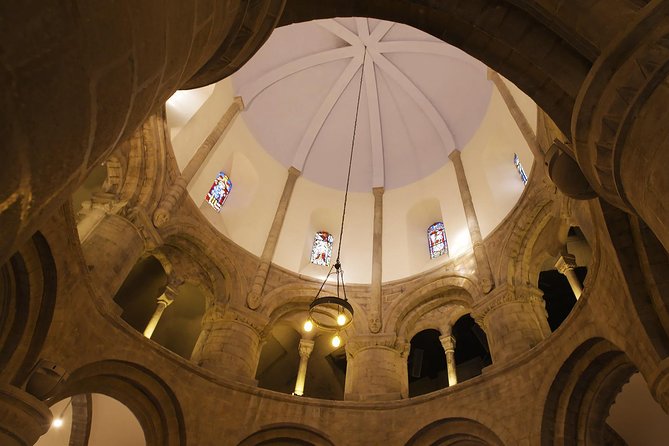
You begin at the Round Church Vestry, 9a Bridge St, right where Cambridge’s older layers start to make sense. The Round Church is the quirky centerpiece of the walk, and it predates the earliest colleges by about 150 years, which helps you see Cambridge as a place that grew over time, not something that appeared fully formed.
This first stop comes with an exhibition and a 20-minute film inside the visitor centre. For many first-time visitors, that kind of quick orientation is the difference between seeing buildings and actually understanding why they matter. I also like that you are not rushing past the church, because the tour’s later stops make more sense when you have a framework in your head.
If you care about how institutions get built, this start is efficient. You get the big picture up front, then the walk becomes a series of proof points: churches, courts, gates, and the University’s administrative core.
River Cam origins and the college structure you can actually picture
Right after the Round Church context, you head toward the River Cam for a feel of Cambridge’s origins. The first river viewpoint is at Magdalene Bridge, and it’s a smart choice because Cambridge’s waterways are not just scenery, they shaped movement, settlement, and how the town and colleges relate.
Next comes the college world, and this is where the tour’s focus shows. You may admire Magdalene College and then another college later in the route, depending on what’s open and what the guide can access that day. The tour is honest about this, and that’s good for your expectations: you are not paying for a promise to enter private spaces every time.
Even when college entry is limited, the guide can still give you useful context. College courts and chapels are more than pretty architecture. They are the visible footprint of a system where teaching and community life historically sit inside these colleges, not just in one central campus.
What to expect at specific college stops
The route commonly includes stops outside or around several colleges, and these are the ones you should look for:
- Magdalene College: typically another chance to see courts and chapels, and a chance to understand how Cambridge’s college-based structure works.
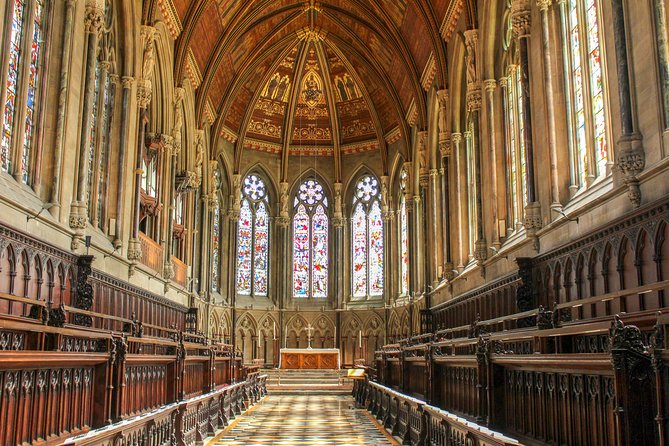
- St John’s College: you may see it outside or, in some cases, enter. When the tour enters St John’s outside University exam term, the admission fee is included.
- Trinity College: you mostly view the gatehouse and an iconic landmark associated with Isaac Newton.
- Christ’s College, Emmanuel College, and Sidney Sussex College: these tend to appear as part of the later college sequence, again with entry depending on restrictions.
There’s a practical takeaway here. If your goal is photos and street-level beauty, you’ll be happy. If your goal is guaranteed entry into multiple colleges, you should be flexible and ready for a day where you mainly view from outside.
The central University core: Great St Mary’s, Senate House, and King’s Parade
From there, the walk tightens around the University’s heart. You spend time around Great St Mary’s Church, including views and context for central University buildings like the University church, the Senate House, Cambridge University Press bookshop, and Gonville and Caius College. It’s a lot of names in a short distance, so a good guide matters, and the consistent praise you’ll see around this tour is about exactly that: clear explanations and stories that connect the dots.
Opposite Great St Mary’s is Senate House, where students graduate. This stop helps you connect Cambridge’s medieval feel to modern academic life. The building is not just a symbol, it is part of how the University runs day to day.
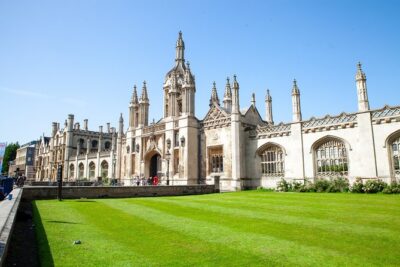
Then you move into the high-visibility zone of King’s Parade. Here, you view King’s College from the outside, including its magnificent chapel. Even without entry, the scale and design hit hard, because you are seeing how King’s College sits visually as a centerpiece along one of Cambridge’s most important approaches.
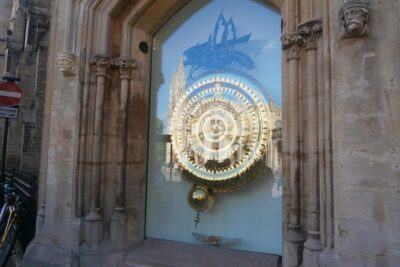
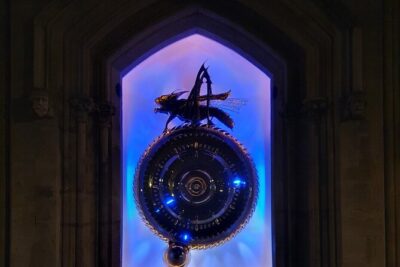
A small but fun stop follows: Corpus Clock. It’s described as one of the newer additions to King’s Parade, and the guide’s job is to make you notice what’s special about it in that historic setting. It’s a reminder that Cambridge keeps layering new ideas onto older streets.
More on foot, at a pace you can hear the guide
Trinity, Newton’s apple tree, and the icons you can spot fast
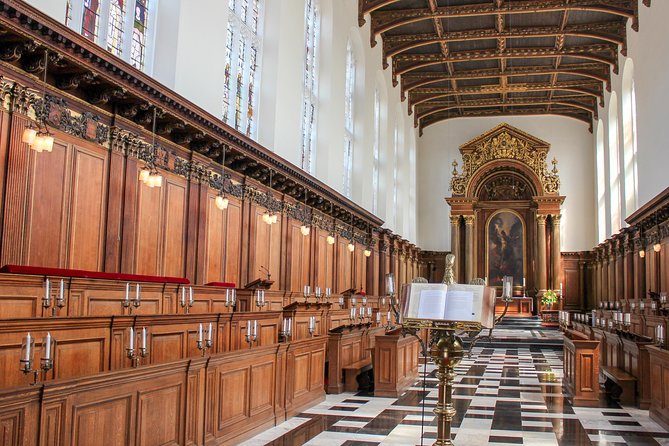
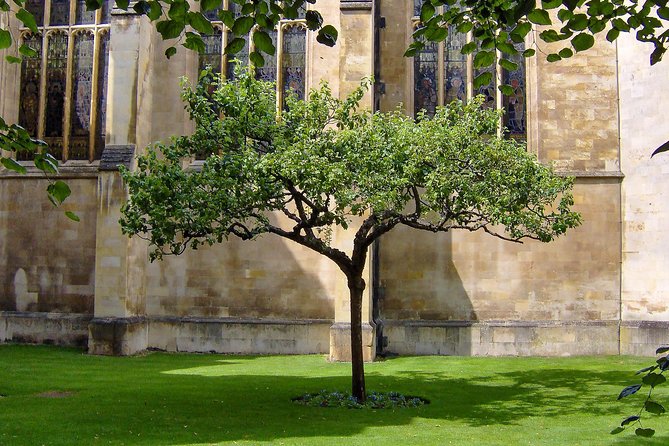
Trinity College is often where people get that sudden wow moment. You stand outside Trinity to admire the gatehouse, and you get the detail that Isaac Newton’s apple tree is connected with this area. Even if you are not a science superfan, it’s a satisfying stop because it ties a big name to a specific spot you can point to later.
This is also a good example of the tour’s overall approach. Instead of scattering random sights, it builds a line of meaning: from religion and early foundations to how an institution grew, and then to how famous intellectual work got woven into the story.
Churches with big claims: St Edward’s, St Bene’t’s, and the Eagle
Cambridge is full of churches, so the smart question is: which ones change how you understand the city? This tour chooses places that do more than look old.
At St Edward’s Church (Church of England), you get context around the claim that the first Protestant sermon was preached in England there. Whether you approach that claim as history or as tradition, it gives you a lens for understanding why religion mattered so much in shaping institutions and education in the centuries that formed Cambridge’s identity.
Then you go to St Bene’t’s Church (Church of England), and the tower is the star here. It dates to around c.1020, which makes it one of the oldest buildings in Cambridge. When you see that kind of age in person, the rest of the walk clicks: colleges may be the headline, but the older parish and church fabric is part of why the town and University relationship developed the way it did.
Across the street is The Eagle pub, a quick but useful stop for atmosphere. It’s the kind of moment that helps you picture where students and locals mingle, not just where visitors take pictures.
Science landmarks without the museum ticket: Old Cavendish Laboratory
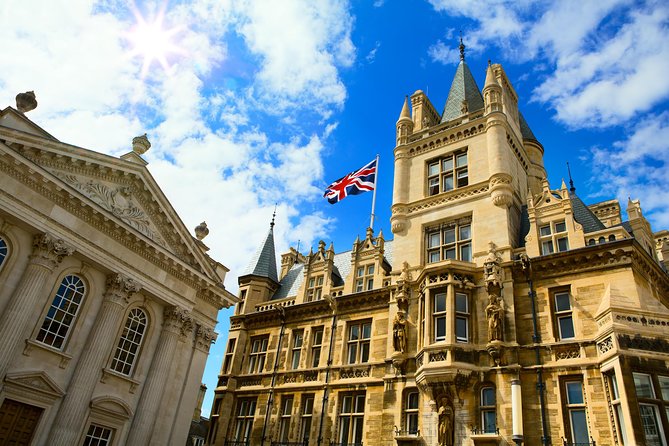
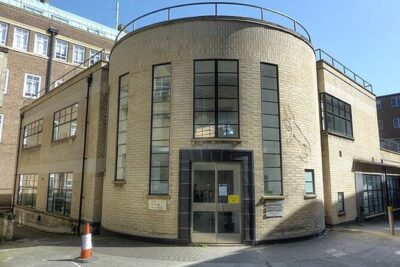
The walk includes Old Cavendish Laboratory, tied to significant scientific work and discoveries. This stop gives you a reality check that Cambridge’s fame is not only architectural. There’s an actual scientific legacy here tied to specific spaces.
That said, the tour’s narrative emphasis can skew more toward foundations and ideas than toward a pure lab-tour style of storytelling. One important consideration before you book: if your must-see list is strictly scientific, plan for a portion of the tour where the focus will be on how belief and education shaped Cambridge’s early structure, not just what famous scientists did.
If you are happy with context around how a place generates thinkers, you’ll probably enjoy this stop as part of a bigger story.
More colleges on the schedule: Christ’s, Emmanuel, and Sidney Sussex
The later portion of the walk continues with the college circuit. You may see Christ’s College, Emmanuel College, and Sidney Sussex College as part of the typical route. These stops reinforce the core point that Cambridge functions as a network of colleges, not one open campus.
As you move from stop to stop, you start to notice how each college feels different. Some read as more formal and ceremonial, others feel more community-like in the way courts and chapels sit. Even when you do not enter, the guide’s job is to point out the cues that tell you how each place fits into the University machine.
There is one more timing factor. The tour notes that college entry is not possible during University exam term, which runs roughly from late April to the end of June. If you travel during that window, treat college entrances as a bonus, not the baseline expectation.
Price and value for a $20.80 Cambridge University walk
At $20.80 per person for about 1.5 to 2 hours, the value comes from what’s included and how the route is built. The biggest built-in win is access at the Round Church Visitor Centre, where the exhibition and 20-minute film are included in the guided walk ticket.
A lot of the other locations are free to view from the outside, which keeps your money focused on expert guidance rather than stacking paid entries back to back. The college admission piece is also selectively included. If the tour enters St John’s outside exam term, that admission fee is included, which can quietly make the price feel better on days when you actually get inside.
Finally, you get a small group with a maximum of 15 people. That matters because Cambridge is easy to get lost in, and the guide is there to give you a mental map as you go, not just recite names.
Pace, questions, and what to pack for a two-hour Cambridge afternoon
This walk moves at a moderate to fast pace. You will have stops, but you should expect some standing, and the best way to enjoy it is to wear shoes that handle city walking and being on your feet.
If you plan to ask a lot of questions, the small group size is your friend. The guide format in the feedback you were given emphasizes clarity, storytelling, and frequent opportunities to interact, so this is a good pick if you like to learn by conversation.
Weather can shift fast in Cambridge, and the tour experience seems designed to keep going in rain. I would still pack a light rain layer and a small umbrella or hooded jacket so you stay comfortable.
If you need a slower pace, contact the provider about a private tour option. It is specifically mentioned as something you can arrange, which is a strong hint that they can tailor the walking tempo to you.
Should you book this Cambridge University walking tour?
I’d book it if you want a guided orientation to Cambridge University that connects churches, colleges, and the University’s core buildings into one understandable story. It’s especially good for first-timers, history-minded travelers, and families who enjoy learning through real streets and real architecture.
I would hesitate if your top priority is purely scientific highlights and you do not want the tour to spend time on the Christian and theological foundations behind Cambridge’s development. The tour’s perspective is part of its identity, and for some people that’s exactly what they came for.
One last practical note: the best experience comes when you come in with flexible expectations about college entry. You will learn more if you treat college gates as part of the reveal, not as a guarantee that you will always walk through the front door.
If that sounds like you, this is a strong value afternoon in Cambridge.
FAQ
How long is the Cambridge University walking tour?
It runs for about 1 hour 30 minutes to 2 hours.
Where does the tour start?
The tour starts at the Round Church Vestry, 9a Bridge St, Cambridge CB2 1UB, UK.
What’s included at the Round Church Visitor Centre?
Entry to the exhibition and a 20-minute film at the Round Church Visitor Centre are included with the guided walk tickets.
Will we be able to enter the colleges?
College entrance is not guaranteed. Most walks enter approximately two colleges, but restrictions can apply, including during University exam term (late April to end of June).
Is the tour suitable for limited mobility or slow walkers?
The tour is not recommended for those with limited mobility, and it involves walking at a moderate to fast pace. If you need a slower pace, you can contact the provider to arrange a private tour.
Are dogs or service animals allowed?
Service animals are allowed. Dogs must remain outside any colleges visited.
Can I cancel and get a full refund?
Yes. You can cancel up to 24 hours in advance for a full refund.
More Of Cambridge On Foot



More Cambridge On Foot


Fresh off the notebook in Cambridge
- Cambridge’s History & Secrets with Self-Guided Walking Tours
★ 4.5 · 9 reviews - Private | Cambridge University Colleges Guided Punting Tour
★ 4.5 · 13 reviews - Tangential Cambridge: Private Walking Tour of Cambridge
★ 5.0 · 14 reviews - Cambridge Famous Alumni Quest Experience
★ 4.5 · 18 reviews - Explore Cambridge Student Life & Top Colleges Walking Tour
★ 3.5 · 18 reviews - Scholars & Secrets of Cambridge: Self-Guided Puzzle Adventure
★ 3.5 · 19 reviews
Cambridge Tours, compared.
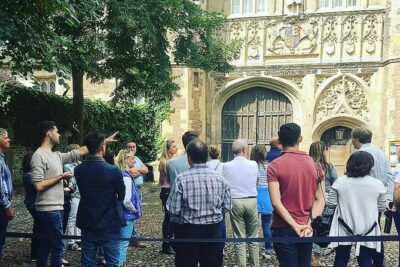 ★ 5.0Cambridge University Walking Tour by Alumni™ Kings College OptionFrom $332,336 reviews
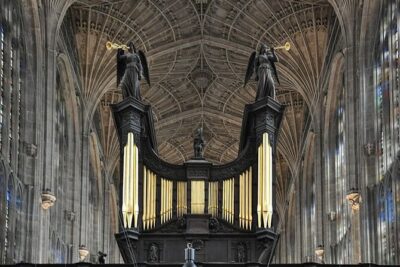 ★ 5.0Cambridge University With Alumni: Optional Kings College EntranceFrom $341,987 reviews
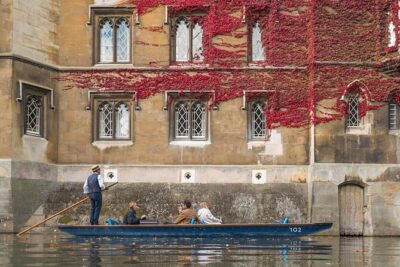 ★ 4.5Punting Tour in CambridgeFrom $1121,690 reviews
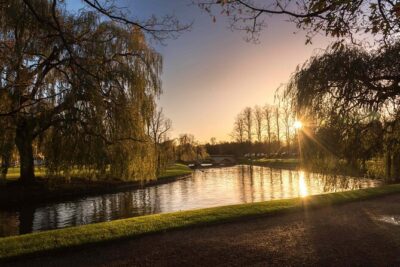 ★ 5.0Shared Guided Punting Tour of CambridgeFrom $22787 reviews
 ★ 4.5Cambridge Walking & Punting Tour by Alumni™ King’s College OptionFrom $76698 reviews
 ★ 5.0Shared Punt Tour – CambridgeFrom $34540 reviews
 ★ 5.0Creepy Cambridge – Cambridge’s Most Entertaining Ghost WalkFrom $27366 reviews
 ★ 5.0Private Cambridge Punting TourFrom $137339 reviews
Browse the lists this tour appears in