
REVIEW · AUDIO TOURS
Discovering Cheltenham: A Self-Guided Audio Tour
Cheltenham rewards slow walking. This self-guided audio tour makes the town’s sights click into place, and the offline audio keeps you moving even without signal. I also like the steady pace, because it covers the center without dragging. The one thing to watch is the app setup, especially if location access or downloads do not go smoothly.
You’ll start in front of The Wilson and follow a GPS-style narration from landmark to landmark. It’s designed to let you choose your own stops, but still keep the story timed to where you are. Plan on about 1.5 to 2 hours, depending on how often you pause for photos or questions.
Before you go, make sure you have what the tour needs on your end. You bring your own smartphone and headphones, and you’ll want to download the tour content while you have good WiFi so you are not stuck mid-walk.
In This Review
- Key things to know before you walk
- Why a self-guided Cheltenham walk works so well
- Price and value: what you actually get for $11.99
- Getting set up: VoiceMap, offline audio, and location permissions
- The Wilson start: where the story begins and how the app behaves
- Cheltenham Minster and St Mary: church, graveyard, and pause-worthy details
- Royal Crescent and the Georgian terrace moment
- Sophie Ryder’s Hare and Minotaur, plus Edward Wilson’s legacy
- Neptune Fountain: water source, designer, and why it matters
- Cheltenham Town Hall: entertainment past, civic present
- Imperial Gardens and the Sherborne connection
- Gustav Holst statue to Montpellier Gardens: music and an end-of-walk glow
- Queens Hotel, Montpellier Walk, and Cheltenham College Chapel
- Timing, pacing, and what to expect during the walk
- Should you book this Cheltenham audio walk?
- FAQ
- How long is the Cheltenham self-guided audio tour?
- Where does the tour start and end?
- Is the tour fully self-guided?
- Can I use the tour offline?
- What do I need to bring?
- Is the tour available in English?
Key things to know before you walk
- GPS-timed narration helps the audio feel like it meets you at the right moment
- Offline access means audio, maps, and geodata can work without constant connectivity
- A tight route hits major sights in the center, usually in about 90 minutes to 2 hours
- VoiceMap app guidance explains the system right at the start, so you know what to do
- Your phone settings matter, especially location access for the app to follow you
Rather go alone? More self led routes here
- Harry Potter PUBLIC Tour + Self Guided Christ church Daily 12.45★ 5.0 · 82 reviews
- Harry Potter PRIVATE Tour + Self Guided Christ church Daily 12.45★ 5.0 · 32 reviews
Why a self-guided Cheltenham walk works so well
Cheltenham has a way of looking best when you are moving at human speed. The streets are elegant, the landmarks are close enough that you can bounce between them, and the details reward attention. A guided bus tour can miss that. A self-guided audio walk fixes it by turning your walk into a sequence of “oh, that’s why it looks like that.”
What I like most is that the tour is built around your pace. You are not forced to stand in a crowd while someone else reads a plaque. If you want to linger near a church graveyard or circle a fountain for photos, you can. The audio is there for the moment, not after you already passed it.
The second big win is the storytelling structure. The route doesn’t feel random. You get a town history thread, then you see it show up in architecture, public art, and famous locals. By the time you reach Montpellier Gardens, you get a cleaner sense of how Cheltenham’s Regency-era identity shaped the streets you walked.
My one caution is practical: the experience depends on the app running correctly. If your phone is stingy about location permissions or you try to download on poor WiFi, you can lose momentum. That is fixable, but it is worth handling before you start.
Price and value: what you actually get for $11.99
At $11.99 per person, this is priced like a small add-on to your day rather than a major paid tour. The value comes from two things: the route is focused on major central sights, and the app includes lifetime access to the tour.
Lifetime access matters more than it sounds. If you come back to Cheltenham later, you can reuse it without paying again. Also, a self-guided format means you are not tied to a start time, so it fits into real travel days where plans change.
One more value point: the tour includes offline access to audio, maps, and geodata. That can save you from buying local data or chasing WiFi just to keep your route working. Food, tickets, and transport are not included, so you still plan those yourself, but you are not paying extra just to get the narration.
Getting set up: VoiceMap, offline audio, and location permissions
This walk runs on the VoiceMap app for Android and iOS. Before you head out, download the tour content when you have a reliable connection. Doing that at a cafe is a smart move if your hotel WiFi is unreliable or if you want to avoid surprises.
Also, check location settings. For the audio to trigger with GPS guidance, the app needs permission to use your location. If you keep location access limited to only while you are actively using the app, the tracking can act inconsistent. Setting location access more permanently for the app usually helps it follow you cleanly.
Finally, bring your basics. You’ll want a smartphone and headphones. The tour itself does not include them, and having headphones makes the whole experience feel like a private documentary while you walk.
The Wilson start: where the story begins and how the app behaves

The route starts in front of The Wilson, an art gallery and museum, at 51 Clarence St, Cheltenham. Expect an opening section that does two jobs. First, it orients you to the gallery and museum you are standing in front of. Second, it teaches you how VoiceMap works, so you are not guessing once the narration starts.
That matters because the rest of the walk is built on “listen as you go.” The audio is timed to your location, so you benefit from understanding the basic controls early. You should also get a taste of Cheltenham’s background before the tour officially swings into the main landmarks.
If you are the type who likes to know where you are headed, this start helps. You are not just walking from one random sight to another. You are walking through a chosen theme.

Cheltenham Minster and St Mary: church, graveyard, and pause-worthy details
Next you pass Cheltenham Minster, St Mary’s. As you walk by, the narration focuses on the church while you circle around and move through the nearby graveyard area. This stop is one of those places where sound bites are helpful because the setting invites slower looking.
A church graveyard is not usually a “quick glance” stop. Even without entering any buildings, you can take in the scale of the Minster and the atmosphere of memorial stones. The audio guide approach nudges you to notice elements you might otherwise miss.
Practical tip: if you stop to read a few markers, you may want to let the audio finish a section before moving on. This walk is designed so the narration and your movement sync up as you go.
Royal Crescent and the Georgian terrace moment
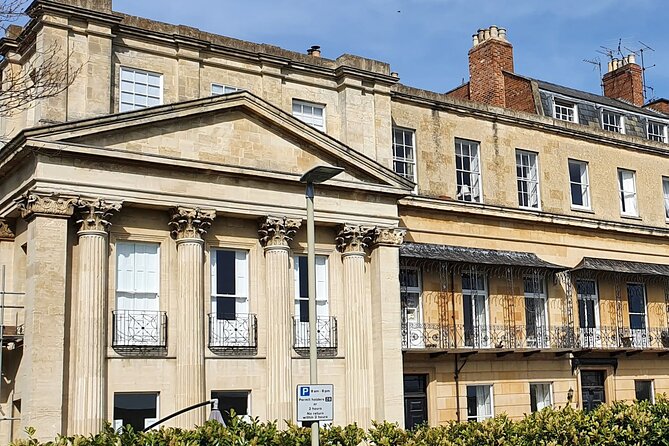
From the Minster area, the tour moves you toward Royal Crescent, an early important Georgian terrace in Cheltenham. Here, the audio shifts from religious architecture to the feel of a planned streetscape, where elegance is built into the urban design.
Georgian terraces can look similar at first glance, but the story makes you look twice. You start noticing how terraces set the tone for a whole neighborhood, not just a single building. It also helps to understand why Cheltenham’s town planning leaned into this style.
You do not need to be an architecture expert to enjoy it. The audio gives enough context to appreciate what you are seeing without making you memorize dates.
Sophie Ryder’s Hare and Minotaur, plus Edward Wilson’s legacy
As you continue, you encounter The Hare and the Minotaur by local sculptor Sophie Ryder. This is a great mid-walk break because it adds something different from pure stone and brick. Sculpture gives you a more human, interpretive angle to the town’s character.
Right after, you pass the statue of Edward Wilson, one of Cheltenham’s most famous sons. This is where the town-history thread turns personal. Instead of only describing buildings, the narration connects the place to a person, which makes the whole route feel less like a checklist.
If you like learning how famous locals shaped their hometowns or carried Cheltenham’s name outward, these two stops pair nicely. They keep the pace lively while still adding meaning.
Neptune Fountain: water source, designer, and why it matters
One of the most memorable landmarks on the route is the Neptune Fountain. The narration covers key practical and historical questions while you walk by: who designed it, where its water comes from, and who made it.
That combination is what makes this stop work in an audio format. Fountains are easy to photograph, but the “how it works” details are often buried in small explanations on-site, if they exist at all. Here, the story meets you at the fountain itself.
If you are the type who likes to know how things operate, you will appreciate this stop. It turns a decorative object into something engineered and planned.
Cheltenham Town Hall: entertainment past, civic present
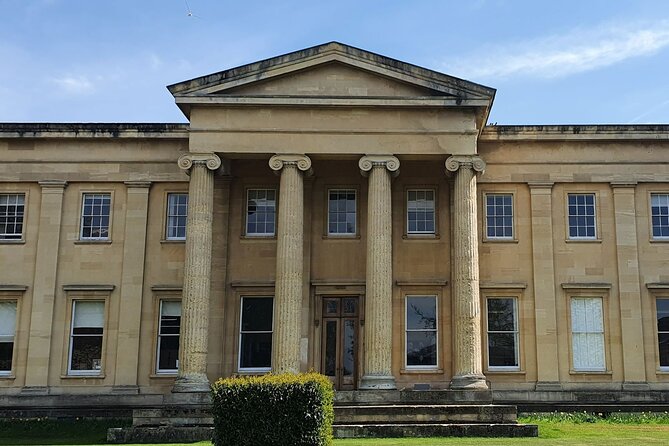
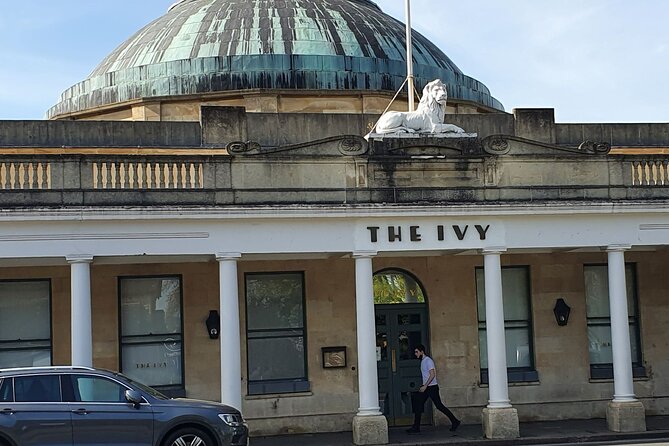
As you pass Cheltenham Town Hall, the narration explains how the building was once used for concerts, banquets, dances, and balls. That historical use adds personality. You start seeing the building not only as government space, but as a community center in an earlier era.
Even if you do not go inside, this kind of context changes your perception. A town hall is often described in terms of function. Hearing about social events makes you picture what the rooms must have felt like during major nights out.
This stop also helps break the walk into chapters. After fountains and sculptures, you get something ceremonial, which keeps your attention from drifting.
Imperial Gardens and the Sherborne connection
The route continues through Imperial Gardens, which were once reserved for visitors to the Sherborne, later known as the Imperial Spa. This is the sort of stop that can feel quiet at first, but the audio gives it backstory.
The value here is how it links gardens to class and routine. A garden is never just greenery when you understand who had access. Once you hear that it was tied to a specific spa experience, the space starts to feel like part of Cheltenham’s social machinery.
If you like spaces that are calmer than the main streets, this is one of the best places to slow down. It also sets you up nicely for the music-related stop later on.
Gustav Holst statue to Montpellier Gardens: music and an end-of-walk glow
Next you pass the Gustav Holst statue, and the narration connects Holst and his music to Cheltenham. Music stops are helpful in a walking audio tour because they give the mind a different channel. You are no longer staring at architecture alone.
Then you reach the end at Montpellier Gardens (24 Montpellier Spa Rd). The narration wraps with concluding remarks about Regency-era Cheltenham. This ending matters because it ties your walk together. You finish with a sense of how the town’s look, institutions, and people fit into a larger identity.
At this point, you can decide what to do next. If you still have energy, Montpellier is a natural place to keep strolling. If you are done, you have at least seen the central story without exhausting yourself.
Queens Hotel, Montpellier Walk, and Cheltenham College Chapel
This stretch adds variety in building types and street scenes, which keeps the walk from feeling too samey.
You pass Queens Hotel Cheltenham, described by the tour as one of the first purpose-built hotels in Europe. The audio points out interesting architectural features and gives you the hotel angle on Cheltenham’s growth.
Then comes Montpellier Walk, a retail strip designed by Cheltenham architect William Hill Knight. A retail street can be a snooze on foot, but the audio context turns it into urban design you can actually read while you walk.
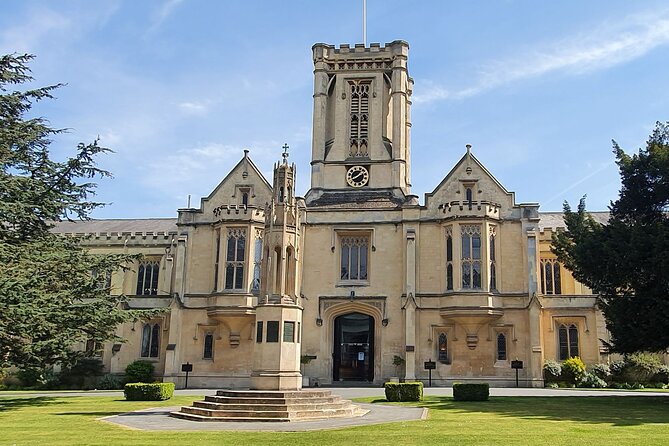
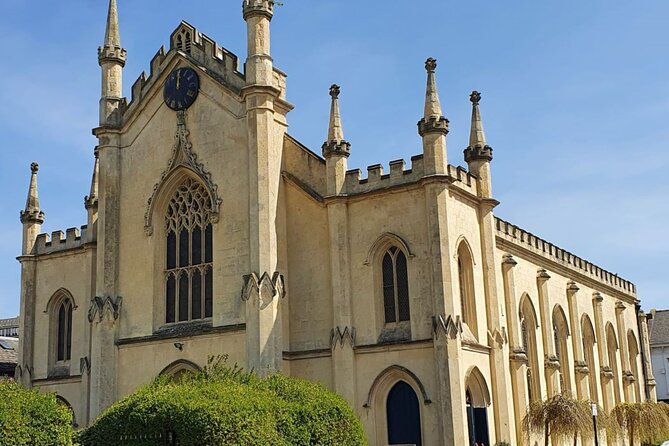
Finally, you pass Cheltenham College Chapel, designed by Henry Prothero. The narration includes a detail about a famous day pupil of the college, though the name is not included in the tour information you have here. Still, this stop gives you a sense that Cheltenham’s identity is not only Regency façades, it is also institutions that shaped education and culture.
Timing, pacing, and what to expect during the walk
Expect to be moving most of the time. This route is designed for about 1 hour 30 minutes to 2 hours, which is a sweet spot for a walking tour in a compact town center.
Because it is GPS-guided, you will get the audio at the right moment rather than only after you stop at a landmark. That is a big reason people find it easy to follow. The app essentially becomes a quiet guide that knows where you are.
If you run into any confusing moment, the solution is usually simple. Pause, check that the map is tracking you, and then walk forward slowly. You do not need to rush through the audio sections. Let it catch up.
Should you book this Cheltenham audio walk?
I think this tour is a smart buy if you want a self-paced way to see central Cheltenham with context. The route covers the kind of landmarks most visitors aim for, and the storytelling is clearly timed to your location. If you like walking with explanations that cover both architecture and people, you will enjoy the flow from The Wilson to Montpellier Gardens.
Skip it or prepare carefully if you know your phone setup can be fussy. This experience depends on downloading ahead and keeping location permissions available for the app to function well. If you are traveling with a group and multiple devices are involved, download the tour on each phone before you start, so nobody gets stranded at the starting point.
Overall, if you want value, offline convenience, and a well-planned central route, this is an easy yes for a Cheltenham day.
FAQ
How long is the Cheltenham self-guided audio tour?
It takes about 1 hour 30 minutes to 2 hours, depending on your pace.
Where does the tour start and end?
It starts in front of The Wilson at 51 Clarence St, Cheltenham GL50 3JT, UK. It ends at Montpellier Gardens, 24 Montpellier Spa Rd, Cheltenham GL50 1UL, UK.
Is the tour fully self-guided?
Yes. It is a private self-guided activity, so only your group participates.
Can I use the tour offline?
Yes. The app includes offline access to audio, maps, and geodata.
What do I need to bring?
You need your own smartphone and headphones.
Is the tour available in English?
Yes, it is offered in English.
Other Departures With A Guide Attached






Routes You Can Walk Unaccompanied
Fresh off the notebook in Oxford
- Cotswolds One Day Guided Cycle Tour – Private Groups
★ 5.0 · 7 reviews - Follow the Money Tour – by Uncomfortable Oxford™
★ 5.0 · 7 reviews - History of Medicine Tour – by Uncomfortable Oxford™
★ 4.5 · 8 reviews - Oxford: to Cotswolds (Half Day)
★ 5.0 · 8 reviews - CS Lewis & Tolkien Tour with Magdalen Entry Public tour 13.45
★ 5.0 · 8 reviews - Oxford Private Guided Walking Tour
★ 4.5 · 8 reviews
Audio Tours, compared.
 ★ 4.0Westminster Abbey Entrance Ticket Including Audio GuideFrom $41661 reviews
 ★ 3.5Windsor Castle Tour from London with Transportation & Audio GuideFrom $94222 reviews
 ★ 4.0London Panoramic Open Top Bus Tour with Audio GuideFrom $48209 reviews
 ★ 4.5Romans, Vikings and Medieval York: An Audio TourFrom $11118 reviews
 ★ 4.5Emirates Stadium and Arsenal Museum Entrance Ticket Including Audio GuideFrom $48113 reviews
 ★ 5.0Buckingham Palace: Walking Tour with Entry & Audio GuideFrom $9291 reviews
 ★ 3.5London: British Museum Audio Guide & Small Group EntryFrom $1281 reviews
 ★ 4.0Former Student’s Cambridge Colleges: An Outdoor Audio TourFrom $854 reviews