
REVIEW · OXFORD TOURS
Extended: Oxford University & City Tour With Christ Church
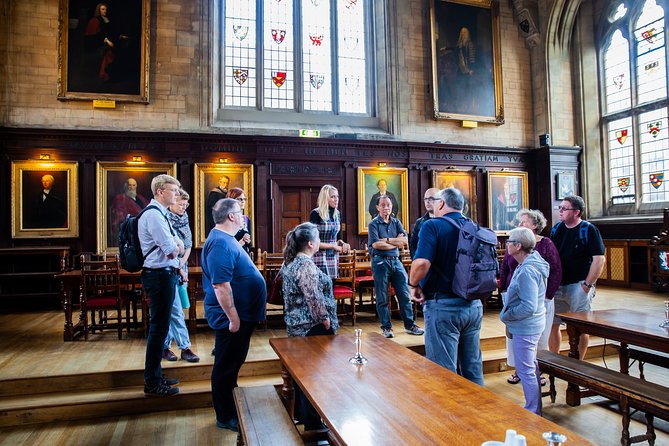
Oxford can feel like a movie set you can actually walk through. This tour is built for just that, with a smart circuit of historic colleges plus time near the city’s most famous sights, led by an Oxford student.
I especially like the small-group format and the student-led storytelling, which turns big names into real people and real student life. I also like the Christ Church option at the end, where you get an external overview first, then explore on your own with a multimedia headset. One thing to consider: Oxford sites can close without notice, and summertime access to the Divinity School can be limited.
In This Review
- Quick take: what makes this Oxford tour work
- The best way to see Oxford colleges in 3 hours
- Stop-by-stop: how each highlight earns its place
- Balliol College: old roots, quick introduction
- Trinity College: beauty with history
- Exeter College: Tolkien’s student footsteps
- Hertford College: progressive reputation and a good “breather”
- Magdalen College: the biggest grounds and the deer park
- A quick photo stop at a 1427 college with rivalries
- History of Science Museum: Einstein’s chalkboard markings
- Weston Library: Brutalism meets book history
- Martyrs’ Memorial: the heavy side of Oxford
- Sheldonian Theatre: where Oxford ceremonies happen
- New College and Bodleian area sights: two kinds of “power”
- Bridge of Sighs and Radcliffe Camera: postcards, with real context
- All Souls College: the serious, exclusive side
- University Church of St. Mary the Virgin: religious roots, street level
- Merton College: academic reputation and student life
- Christ Church Meadow: Wonderland in the middle
- Christ Church: the big ending, plus how to use your hour well
- Divinity School: medieval lecture room and film fame
- Guides, headsets, and the student-life angle that makes it memorable
- Value check: is $110.90 for 3 hours a good deal?
- Who this tour is best for
- Should you book this Oxford University and City Tour with Christ Church?
- FAQ
- How long is the Oxford University and City Tour with Christ Church?
- Does the tour include admission tickets?
- Is Christ Church included automatically?
- What if a major site like the Bodleian or Divinity School is closed?
- Is pickup offered, and where would we meet?
- How big is the group?
- Can I cancel for a full refund?
Quick take: what makes this Oxford tour work
- Oxford student guides who can explain why traditions matter, not just dates and stonework
- A tight 3-hour route that hits major college exteriors plus key city landmarks
- Optional Christ Church access with a headset so you can hear every detail without craning your neck
- Headphone-friendly pacing that helps in busy Oxford where groups often squeeze past each other
- Einstein, medieval lectures, and book history show up in quick stops, so the tour feels varied
- Practical timing at Christ Church, with guidance on how to spend your hour effectively
Other Oxford walks, colleges included
- Oxford University Walking Tour With University Alumni Guide★ 5.0 · 6,905 reviews
- 1.5-hour Oxford City and University Walking Tour★ 4.5 · 1,383 reviews
- Oxford Official University & City Tour★ 5.0 · 1,134 reviews
- City Sightseeing Oxford Hop-On Hop-Off Bus Tour★ 4.5 · 1,042 reviews
The best way to see Oxford colleges in 3 hours
Oxford’s colleges are not just pretty buildings. They are living institutions, packed with rituals, student routines, and old-world rules that shape how the place feels. This tour is designed to give you the high-value orientation you need, fast, without trying to cram in too much.
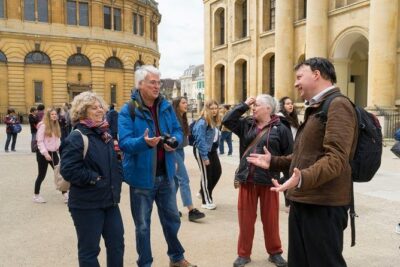
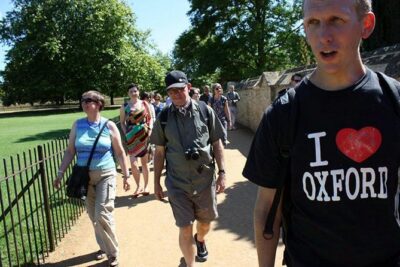
You will do a lot of walking, so wear comfy shoes. Plan for changeable weather too, because one guide tip from past guests was simple: bring a rain jacket. The group size is capped at 19, which helps keep the experience relaxed enough to actually hear your guide and take photos without constant traffic-jams.
Also, this tour gives you a working-institution reality check. Some buildings may close on short notice, and the tour may swap to the best available alternatives and offer a refund if access changes meaningfully.
Stop-by-stop: how each highlight earns its place
The route is built like a collage. You bounce from oldest college vibe to book-and-science Oxford to the postcard views, then finish with the big Christ Church moment.
Balliol College: old roots, quick introduction
Balliol is a classic starting point because it anchors the story of Oxford early on. You’ll get an easy entry into the idea that the university grew through colleges, not just lecture halls.
This is a short stop, so treat it like orientation. Look around and notice the mood: stone, courtyards, and that quiet Oxford rhythm even when people are moving.
Trinity College: beauty with history
Trinity College dates back to the mid-1500s and it shows. Expect one of the prettier college exteriors on the route, with details that reward a slow glance even if your time here is brief.
This is also one of the stops where the admission ticket is included, so you get more than a look-from-the-outside feel.
More city runs, half day and full
Exeter College: Tolkien’s student footsteps
Exeter is where you start getting the Oxford-to-literature connection more strongly. You’ll hear about Tolkien as a student, which is a fun bridge for English-language visitors who know Oxford partly from books and films.
Again, it’s not a long visit, so if you care about architecture, take a minute to look for patterns and symmetry. These places were designed to feel orderly and deliberate.
Hertford College: progressive reputation and a good “breather”
Hertford College is known as one of the more progressive Oxford colleges, and that reputation can change the way you interpret what you see. You also get a small pause in the route, which helps when the walking adds up.
If you’re trying to avoid a checklist tour, this stop is a nice reminder that Oxford isn’t frozen in time. Students and ideas still shape what happens inside.
Magdalen College: the biggest grounds and the deer park
Magdalen is the largest college on the tour and the grounds are the point. The deer park gives it a different feel from the tighter courtyards you see elsewhere, like a green pause tucked inside the university.
This is one of the places where you can actually slow down. Even if your stop is 20 minutes, you can use it to step back from the crowd and absorb the scale.
Magdalen is also linked to famous names like C.S. Lewis and Oscar Wilde, which makes the college feel more than just scenery.
A quick photo stop at a 1427 college with rivalries
Between major stops, the tour includes a quick look at a college founded in 1427 that’s noted for a historic rivalry with nearby colleges. It’s short, but it’s useful because it adds human tension to the Oxford story.
Rivalries are part of how Oxford traditions evolved. It helps you understand why some buildings feel competitive in their layout and reputation.
History of Science Museum: Einstein’s chalkboard markings
Oxford isn’t only medieval architecture and prayer spires. The History of Science Museum stop brings it into science, and fast.
You’ll see Albert Einstein’s chalkboard with his markings preserved from the Oxford lectures. This is a small stop in time, but it’s high impact if you like the idea that the university has shaped modern thinking too.
Weston Library: Brutalism meets book history
Then you switch gears with Weston Library. It’s a dramatic example of Brutalist architecture, which is a fun contrast against Oxford’s common Victorian neo-Gothic look.
Inside, you get the book-scale story: it houses over 5 million books. After you see the modern renovation and its interior, it’s easier to picture the library as a living machine, not a museum display.
Martyrs’ Memorial: the heavy side of Oxford
Martyrs’ Memorial is easy to overlook on your own, but it belongs on this kind of highlights route. It points to the dark conflict between Protestants and Catholics in England that led to gruesome deaths.
If the rest of the tour is marble, arches, and gorgeous courtyards, this stop is the correction that makes the Oxford story honest.
Sheldonian Theatre: where Oxford ceremonies happen
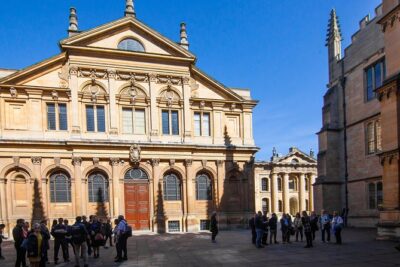
Sheldonian Theatre, finished in 1669 by Sir Christopher Wren, is a standout for anyone who likes performance spaces and grand interiors. This stop is short, but you get the idea that Oxford has formal public rituals, not just academic ones.
It’s also one of those buildings that helps you connect Oxford to national history, since Wren is a name you’ll hear across England.
New College and Bodleian area sights: two kinds of “power”
You’ll pass New College, founded in 1379, often mistaken as “new” just by name. It’s a reminder that Oxford labels are sometimes misleading and you should ignore your assumptions.
Then you reach the Bodleian Library, one of England’s most important libraries. It was built in 1602 and is responsible for over 12 million books, with documents dating back to the Pharaohs. That scale can hit you like a wave, even with a short time inside.
Bridge of Sighs and Radcliffe Camera: postcards, with real context
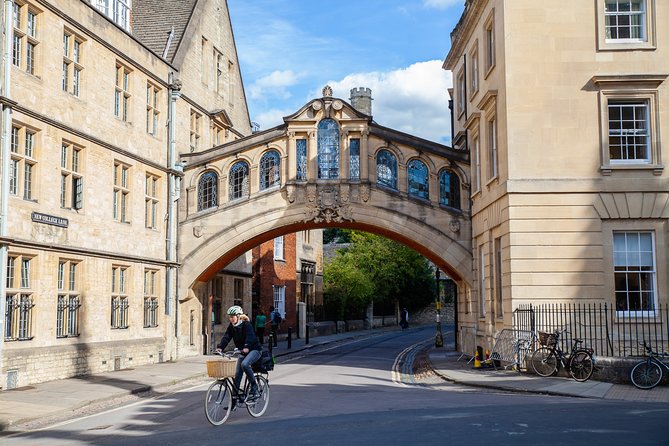
Bridge of Sighs is the most photographed spot in Oxford. If you have seen it before, you’ll still feel that quick “oh right, this is the one” moment in person.
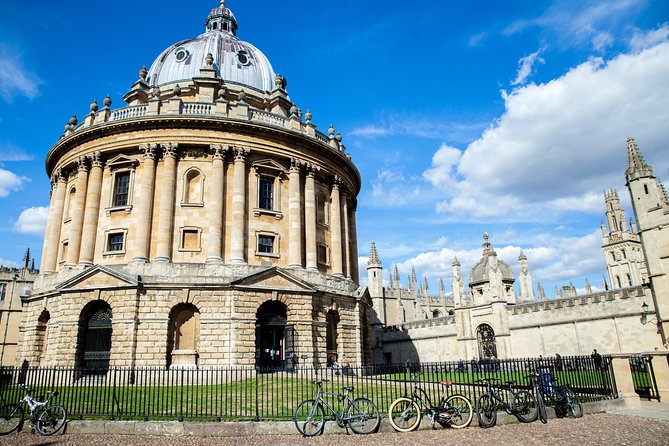
Radcliffe Camera is the postcard icon. It’s worth seeing, but the tour also helps you understand it is used for a different function than many people assume. That kind of correction makes the stop more satisfying, because you stop thinking of it as wallpaper for photos and start seeing it as a real working element of the university.
All Souls College: the serious, exclusive side
All Souls College is often described as one of the world’s most exclusive academic institutions, with famous connections like Laurence of Arabia. Even if you only see it briefly, it has that “heavy tradition” feel.
This stop helps balance the tour. It reminds you that Oxford’s beauty comes with strict rules and old-world gates.
University Church of St. Mary the Virgin: religious roots, street level
St. Mary the Virgin is the epicentre of Oxford University in a symbolic sense. You’ll also notice detailed grotesques, which is a quirky Oxford feature: grim faces and ornamentation tucked into major sacred spaces.
If you’re used to churches being purely reverent, this is a fun reminder that medieval builders loved to mix meaning with mischief.
Merton College: academic reputation and student life
Merton College is known for starting in 1264 and for its academic reputation. This stop is quick, but it gives you a sense of how long scholarly routines have been organized here.
It also lands one of those small but memorable human details: Merton is renowned for exceptional student food.
That matters because Oxford can feel like it’s only about power and prestige. Student comfort details are how you remember it’s still a campus.
Christ Church Meadow: Wonderland in the middle
Christ Church Meadow gives you an open space in the centre of Oxford, linked to Alice’s Adventures in Wonderland. Even if you are not a literature superfan, it helps you reset your eyes after all the buildings.
This is a good place to slow your pace for a minute and watch how people move through Oxford without barriers.
Christ Church: the big ending, plus how to use your hour well
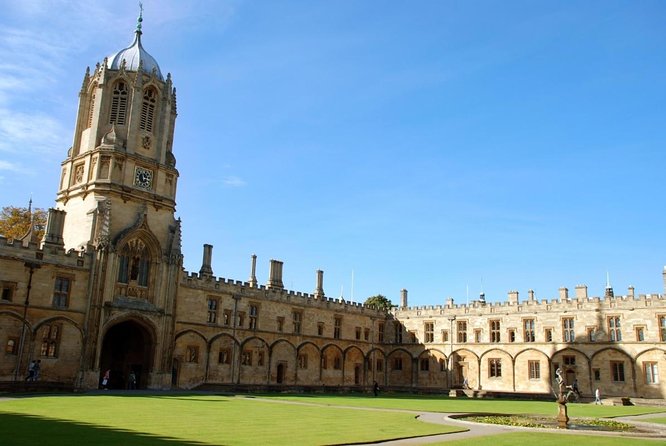
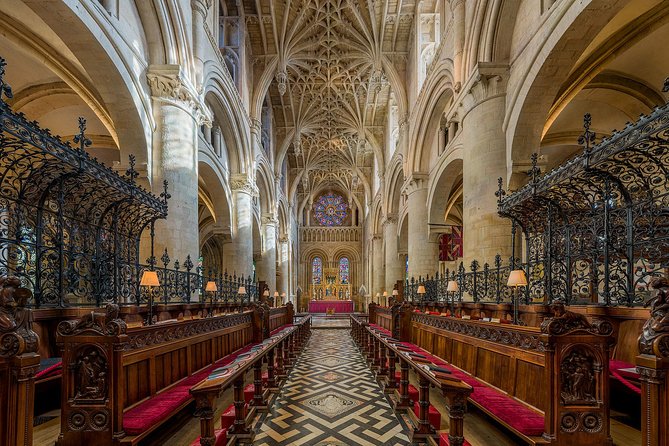
Christ Church is nearly 500 years old and it has the kind of building collection that makes you understand why people come back to Oxford. It has strong connections to Harry Potter and Alice, so it’s a crowd favorite.
In the optional upgrade version, your guide provides a thorough external overview first. Then you enter on your own with a multimedia headset made by Christ Church’s team.
You should plan on an hour here, and honestly, that hour is what makes this tour feel worth it. A practical tip from past guests: give yourself enough time at the end, because sections can close. If you follow the order your guide suggests, you’ll usually have a quieter visit too, since you’ll be in later than many public crowds.
There is one possible drawback to flag honestly. One guest felt the Christ Church timing was tight because they arrived late in the afternoon and sections were shutting down. That can happen when Oxford access schedules change. The fix is simple: arrive to the Christ Church portion on time, and don’t try to “detour” once you’re inside.
Divinity School: medieval lecture room and film fame
The Divinity School is the first purpose-built lecture room and a major example of medieval architecture. It’s also famous for film connections, used in Harry Potter and other Hollywood productions.
Here is the key planning reality. During June to August, access can be extremely limited due to frequent closures and high demand, and it may not be included on your day. If that happens, the tour substitutes it with entrance to another University College.
Guides, headsets, and the student-life angle that makes it memorable
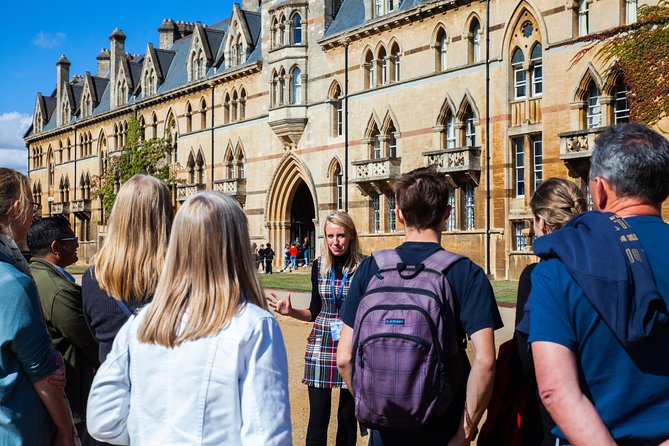
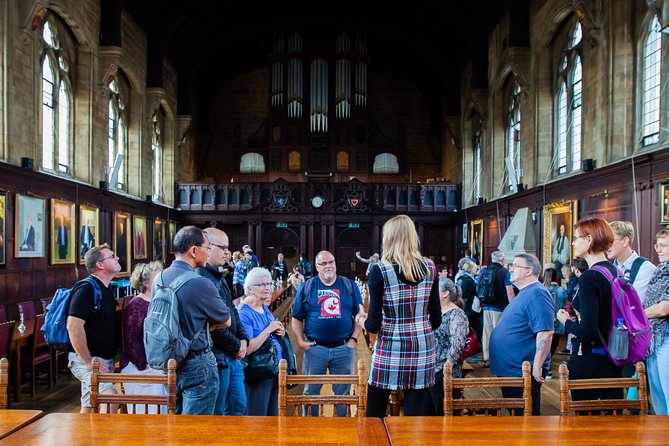
The most consistent praise is the guide. You might meet people like Luke, Antonia, Rose, Ben, Mahir, Sam Day, Nick, Olli, Martin, or Holly. What connects them is the ability to tell stories with a student perspective, not just a textbook one.
A big plus is the audio setup. Several guests highlighted that the headsets make the guide easier to hear, even when other visitors cut between you for photos. That helps you keep moving without losing the thread of the talk.
You’ll also feel the humor and pace. Even in freezing cold or stormy weather, guides kept it friendly and kept the group on track. That matters in Oxford, because if a tour loses momentum, you spend more time waiting around than seeing the sites.
Value check: is $110.90 for 3 hours a good deal?
This price is not just for a walk. It’s paying for an Oxford student guide, a small-group cap, and multiple ticketed moments, including places like Trinity College and the Bodleian Library, plus Christ Church access when you choose the Christ Church option.
When you compare it to buying individual entries and trying to build a logical route yourself, the value often makes sense. You get order, context, and time-saving guidance, plus you avoid the common problem of missing the right entrances or not understanding what you’re looking at.
Still, it’s fair to say the price is worth most if you care about both history and interpretation. If you only want photos, you might prefer a do-it-yourself plan. But if you want Oxford to make sense quickly, a guided highlights route like this is a smart use of a half day.
Who this tour is best for
This fits best if you:
- want a focused “greatest hits” intro to Oxford colleges in limited time
- like student perspective and stories that explain traditions
- want Christ Church included with a headset experience
- are comfortable walking and taking multiple short stops
It’s also a good choice for first-timers, including families, as long as everyone can handle steady walking and short stops.
Should you book this Oxford University and City Tour with Christ Church?
I’d book it if you want a structured Oxford orientation with an Oxford student guide, and especially if Christ Church is on your must-see list. The headset format makes the experience easier to follow, and the route covers a lot of the main visuals plus a few thoughtful curveballs like Einstein’s chalkboard and Martyrs’ Memorial.
Hold off or think twice if you are mainly chasing photos, or if your schedule makes it risky that you’ll reach Christ Church late. This is an Oxford working campus, so flexibility matters. But if you show up ready to walk and listen, you’ll come away feeling you understand the place, not just that you passed it.
FAQ
How long is the Oxford University and City Tour with Christ Church?
It runs for about 3 hours.
Does the tour include admission tickets?
Some stops include admission tickets (for example, Trinity College, the Bodleian Library, and Christ Church when you choose the Christ Church access). Other stops are free entry.
Is Christ Church included automatically?
Christ Church access is an optional upgrade. The experience includes an external overview and then independent exploration with a multimedia audio guide.
What if a major site like the Bodleian or Divinity School is closed?
As a working institution, Oxford sites can close without notice. If access is restricted, the tour will show the best available alternative and inform you of major changes in advance, and it can offer a refund if needed. Divinity School access can be extremely limited in June to August, and the tour may substitute another University College entrance.
Is pickup offered, and where would we meet?
Pickup is offered for the option that is more expensive. If you select pickup, the meeting point is the London address at Gloucester Road Tube Station. Otherwise, the meeting point in Oxford is 15 Broad Street. The tour ends back at the meeting point.
How big is the group?
The tour has a maximum of 19 travelers.
Can I cancel for a full refund?
Yes. You can cancel up to 24 hours in advance for a full refund. If you cancel less than 24 hours before the start time, the amount paid is not refunded.
More City Runs In Oxford





More Oxford, College By College


Fresh off the notebook in Oxford
- Cotswolds One Day Guided Cycle Tour – Private Groups
★ 5.0 · 7 reviews - Follow the Money Tour – by Uncomfortable Oxford™
★ 5.0 · 7 reviews - History of Medicine Tour – by Uncomfortable Oxford™
★ 4.5 · 8 reviews - Oxford: to Cotswolds (Half Day)
★ 5.0 · 8 reviews - CS Lewis & Tolkien Tour with Magdalen Entry Public tour 13.45
★ 5.0 · 8 reviews - Oxford Private Guided Walking Tour
★ 4.5 · 8 reviews
Oxford Tours, compared.
 ★ 5.0Oxford University Walking Tour With University Alumni GuideFrom $416,905 reviews
 ★ 4.5Windsor Castle, Stonehenge, and Oxford Day Trip from LondonFrom $1235,292 reviews
 ★ 4.5Oxford, Stratford-upon-Avon, Cotswolds & Warwick Castle Day TripFrom $1092,943 reviews
★ 4.5Windsor Castle, Stonehenge, and Oxford Day Trip from LondonFrom $1232,474 reviews
★ 4.5Oxford, Stratford-upon-Avon, Cotswolds & Warwick Castle Day TripFrom $1092,943 reviews
★ 4.5Windsor Castle, Stonehenge, and Oxford Day Trip from LondonFrom $1232,474 reviews
 ★ 4.5Windsor Castle, Stonehenge and Oxford Day Guided Tour from LondonFrom $1111,486 reviews
 ★ 4.51.5-hour Oxford City and University Walking TourFrom $381,383 reviews
 ★ 4.5Oxford and Traditional Cotswolds Villages Small-Group Day Tour from LondonFrom $1001,196 reviews
 ★ 5.0Oxford Official University & City TourFrom $411,134 reviews
Browse the lists this tour appears in