
REVIEW · OXFORD TOURS
Follow the Money Tour – by Uncomfortable Oxford™
Oxford has a money trail you can walk. This 1.5-hour route with Uncomfortable Oxford tracks funding controversies tied to Saïd, Sackler, and Blavatnik, then lands near the soon-to-be Stephen A. Schwarzman Centre. It also stops at places like gardens and workhouse grounds, so the politics show up in everyday Oxford space.
I love the way the guide shares well-researched context and then invites the group to think out loud, not just listen. I also like that every stop is admission ticket free, which keeps you focused on ideas instead of entry hassles. One watch-out: if you hate discussion and moral questions, this style may feel a bit too chatty.
In This Review
- Key things to know before you go
- Following the Money in Oxford: Why This Tour Feels Different
- The 90-minute route: where you start, where you end
- Stop 1 at Saïd Business School: Wafiq Said and the price of big donations
- Stop 2 at Middle Fisher Row Gardens: Oxford’s housing pressure in a green pause
- Stop 3 at Nuffield College: Lord Nuffield and the tug-of-war over memory
- Stop 4 at the Bodleian library: Romanesque beauty and the Sackler naming
- Stop 5 at Wellington Square: a former workhouse turned garden peace
- Stop 6 by Blavatnik and the Stephen A. Schwarzman Centre: two donor-funded end points
- How the guide keeps the discussion balanced
- Price and value: what you get for $89.12
- Who should book this tour, and who should skip it
- Practical tips before you go
- Should you book Follow the Money in Oxford?
- FAQ
- How long is the Follow the Money Tour?
- Where does the tour start and end?
- Is there an admission fee for the stops?
- What language is the tour offered in?
- What is the group size limit?
- Do I get a confirmation when I book?
- What is the cancellation policy?
Key things to know before you go
- A tight 90-minute walk that moves you through big donor names without dragging you through museum lines.
- Ticket-free stops across university, college buildings, and library exterior areas.
- Discussion-based guiding that encourages balanced reactions, not a single scripted talking point.
- A route built around specific controversies, from Wafiq Said to the Sackler naming and beyond.
- Two ends of Oxford power: starting at Saïd Business School and finishing at Blavatnik School of Government.
- Small groups, up to 15 people, which makes the conversation feel possible for most participants.
Other Oxford walks, colleges included
- Oxford University Walking Tour With University Alumni Guide★ 5.0 · 6,905 reviews
- 1.5-hour Oxford City and University Walking Tour★ 4.5 · 1,383 reviews
- Oxford Official University & City Tour★ 5.0 · 1,134 reviews
- City Sightseeing Oxford Hop-On Hop-Off Bus Tour★ 4.5 · 1,042 reviews
Following the Money in Oxford: Why This Tour Feels Different
Oxford is full of history, but this walk is about something more uncomfortable: who paid for the buildings, and what that says about power. Instead of treating donor names as trivia, the tour uses them like clues. You visit key Oxford landmarks tied to major philanthropy, then talk through what those gifts might cost the public, the city, and the university’s reputation.
The best part is the tone. This is not a rage tour or a lecture tour. It’s more like a guided walk that hands you context, then asks you to react. In several experiences tied to this company, guides such as Hera Jay and Julie are praised for storytelling skills and for keeping the discussion moving without pushing one-sided conclusions.
If you want Oxford only as architecture and polite anecdotes, you might prefer a more classic sightseeing style. But if you like your travel with questions attached, you’ll probably enjoy how the route keeps turning back to ethics, public memory, and civic impact.
The 90-minute route: where you start, where you end
This is a 90-minute walk (approx.) in Oxford, offered in English with a maximum of 15 travelers. It’s a mobile-ticket experience, and you get confirmation when you book. It’s also listed as near public transportation, and most people can participate.
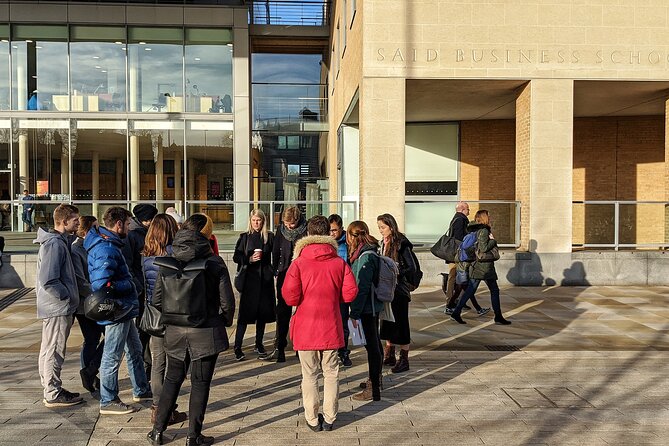
Meeting point is outside Saïd Business School, Park End Street (Park End St, Oxford OX1 1HP, UK). The tour ends beside Blavatnik School of Government (120 Walton St, Oxford OX2 6GG, UK).
That start-to-finish choice matters. You’re not looping back to where you began, so you can treat this as either an early “Oxford power map” or a later “what you just saw, who paid for it” reflection. End near Walton Street also makes it easier to keep moving on your own right after.
Stop 1 at Saïd Business School: Wafiq Said and the price of big donations
The tour begins outside Saïd Business School on Park End Street. The focus here is Wafiq Said and the controversies connected to his large donations to the University of Oxford.
This stop works well because it’s the kind of place you’d normally breeze past on a classic campus walk. Here, the building name becomes the point. You look at a major educational institution and immediately connect it to the question that hangs over donor-funded power: when money shapes prestige, who controls the story, and who gets pushed to the margins?
A possible drawback at this first stop is mental whiplash for people who came expecting only neutral facts. If you’re sensitive to charged topics right from minute one, it helps to mentally frame this as discussion-led travel, not a museum label walk.
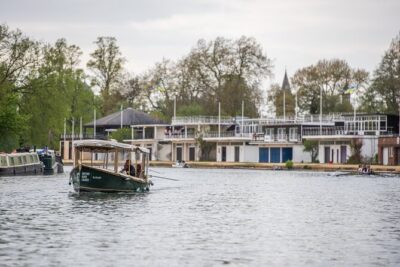
Stop 2 at Middle Fisher Row Gardens: Oxford’s housing pressure in a green pause
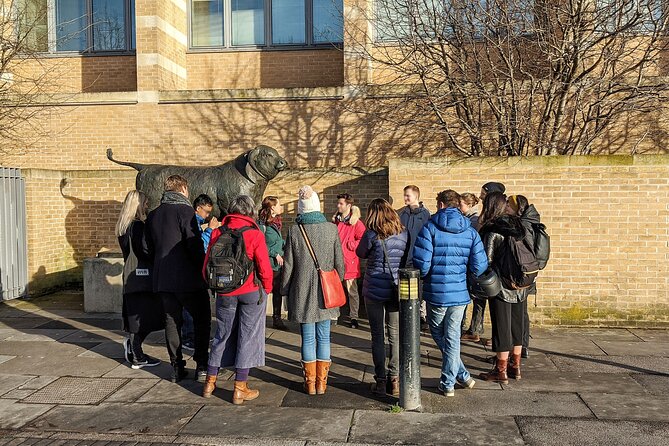
Next up is Middle Fisher Row Gardens, a calmer pocket of green. The topic shifts from donor names to the ongoing Oxford housing crisis, and the tour uses the garden setting to prompt a question: what does it mean that the city can look so peaceful while housing access remains strained?
This is where the tour becomes more than university branding. You start thinking beyond donors and toward outcomes. Even if you’re not an Oxford housing expert, the location makes the contrast feel real, not theoretical.
In a short tour like this, that balance is smart. One stop talks ethics of money entering institutions. The next stop asks you to consider money and policy inside the wider city. It keeps the tour from becoming a narrow, campus-only argument.
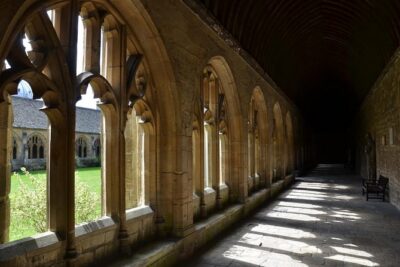

Stop 3 at Nuffield College: Lord Nuffield and the tug-of-war over memory
After the gardens, the walk moves to Nuffield College. Here the tour covers Lord Nuffield and tensions over his memory in Oxford.
The practical value of this stop is that it teaches you how Oxford public space works. College names, donor legacies, and commemorations are not just old-fashioned plaques. They are active decisions about what the city chooses to honor, and what it prefers to ignore.
This kind of stop is also great for group discussion. People tend to have very different instincts about public memory, from removing names to keeping them and teaching the context. The tour format gives room for those differences without forcing one side to win.
Stop 4 at the Bodleian library: Romanesque beauty and the Sackler naming
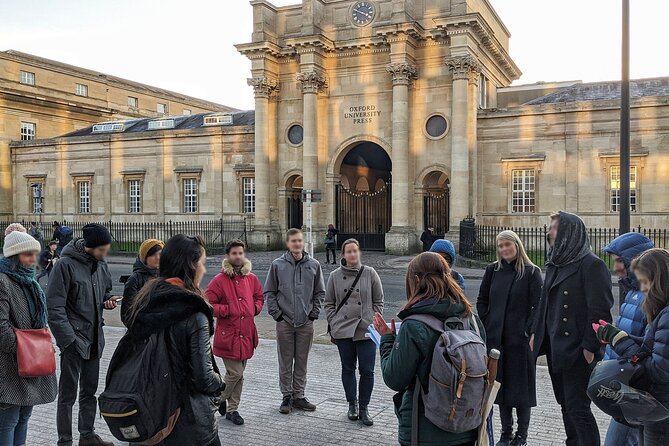
Then you pause at Bodleian Art, Archaeology and Ancient World Library. The building is described as Romanesque, and the stop spotlights its naming after the Sackler family, who are described as controversial.
This is one of the most visually arresting moments on the list. You get to see how aesthetic charm can sit next to moral controversy. That tension is exactly the point. The tour encourages you to notice the architecture and then confront the fact that names on public institutions are never value-neutral.
Possible consideration: if you prefer to treat library spaces and scholarship as purely academic, this stop will feel uncomfortable, because it asks you to connect the scholarly world to donor controversy. That’s not a flaw. It’s the whole mission.
Stop 5 at Wellington Square: a former workhouse turned garden peace
At Wellington Square, the tour leads you into a peaceful garden that was the former site of the Oxford Workhouse.
This stop is valuable because it changes the frame again. You’re no longer only talking about wealthy donors and elite institutions. You’re dealing with the material history of the city, and with how places tied to poverty get repurposed over time.
It’s also a good reminder for your own sightseeing. When you see a tidy square or a calm garden, don’t assume it emerged blank and innocent. Ask what was there before, and who benefitted from change.
The main drawback here is more practical than philosophical. The stop is short, so you’ll want to be ready to follow the guide’s thread quickly. If you like slow, reflective wandering, this isn’t a long linger-and-read tour at each location.
Stop 6 by Blavatnik and the Stephen A. Schwarzman Centre: two donor-funded end points
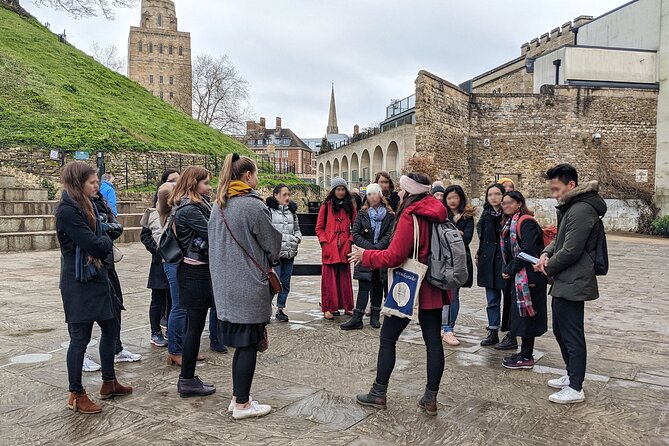
The tour finishes at Blavatnik School of Government, with a closing glance beside two sites funded by controversial billionaires: Blavatnik School of Government itself, and the soon-to-be Stephen A. Schwarzman Centre for the Humanities.
Ending with two major contemporary donor projects gives the walk a forward-looking punch. You can see that these questions are not just ancient history wrapped in medieval stone. They’re active, ongoing, and tied to what Oxford is building right now.
This final stop is also where the tour’s discussion style often lands best. You’ve already built a pattern: donor names, ethics, public impacts, and memory. Now you’re asked to think about the line people draw when accepting money that comes with reputational baggage.
If you’re the type who likes a moral compass question at the end of a trip, this is a strong closer.
How the guide keeps the discussion balanced
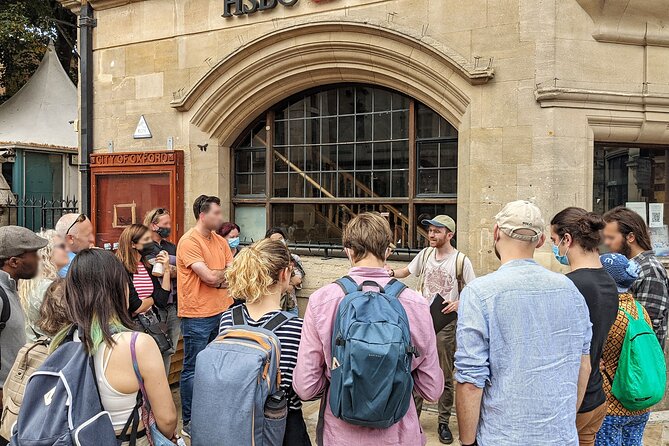
A consistent theme across experiences tied to Uncomfortable Oxford is that the guides tend to avoid pushing a single agenda. Instead, the guide offers information, then invites the group’s thoughts. It’s described as a safe space for discussion, with a mix of viewpoints that helps the conversation feel grounded rather than scripted.
That approach matters because these topics can turn into shouting matches if a guide lets it. Here, the structure helps. Each stop is short, focused, and tied to a specific place in the city. That means your reactions are anchored in something concrete, not just abstract opinions.
Another big plus is the storytelling. Guides are praised for being engaging and for pacing the narrative so it doesn’t feel like a checklist. When the guide is doing their job well, you leave with questions you want to keep asking, which is the best kind of souvenir.
Price and value: what you get for $89.12
The price is $89.12 per person for about 1 hour 30 minutes. That’s not bargain-basement pricing. You are paying for a research-led route, a trained guide, and a small-group format (maximum 15 travelers). You’re also paying for the freedom to learn without paying extra entry fees, since each stop is listed as admission ticket free.
So where’s the value? In two places. First, you skip the work of connecting donor names to real civic consequences. Second, you get a structured setting for discussion, which is hard to replicate if you’re just wandering around on your own.
You might also appreciate the practical part: group discounts are listed as available. If you’re traveling with friends, that can make the price feel less painful.
Booking timing is another practical value point. The tour is booked on average about 11 days in advance, so if you’re visiting during a busy weekend, it’s smart to lock it in earlier rather than waiting for inspiration.
Who should book this tour, and who should skip it
You should book if you want Oxford with a sharper edge. This works especially well for:
- People who enjoy ethics, power, and how public institutions get shaped by money
- Travelers who like discussion and are comfortable sharing opinions
- Anyone who wants more than campus facts, and prefers interpretation linked to real places
You might skip if you want a calm, purely historical stroll with minimal controversy. This tour leans into discomfort by design, and it asks you to think about moral trade-offs.
Also, it’s a good fit for solo travelers who like interactive activities. A group of up to 15 makes it easier for conversation to happen, and the format seems built to let most people participate.
Practical tips before you go
- Wear comfortable walking shoes. This is a steady urban walk with multiple stops.
- Bring curiosity, not a verdict. The tour repeatedly returns to questions like how far you go to secure funding.
- Plan your after-touring route. It ends at Blavatnik School of Government, which is convenient for continuing through that part of town.
- If discussion topics make you anxious, consider what kind of travel day you want. This one expects participation.
- Use your mobile ticket. It’s part of the experience setup, and you’ll have confirmation at booking.
Should you book Follow the Money in Oxford?
Book it if you want to understand Oxford beyond postcards. This tour is a tight, ticket-free way to connect names on buildings to real questions about funding, public memory, and city impact. The strongest selling point is the discussion format, supported by guides like Hera Jay and Julie, and the repeated praise for thoughtful, balanced facilitation.
Don’t book it if you want only neutral sightseeing. This route is designed to make you think, and you’ll spend part of the time reacting out loud.
If you’re on the fence, treat this like a litmus test. Ask yourself if you enjoy travel conversations about money, politics, and ethics. If the answer is yes, this is an efficient, memorable choice.
FAQ
How long is the Follow the Money Tour?
The tour lasts about 1 hour 30 minutes.
Where does the tour start and end?
It starts outside Saïd Business School on Park End Street (Park End St, Oxford OX1 1HP, UK) and ends by Blavatnik School of Government (120 Walton St, Oxford OX2 6GG, UK).
Is there an admission fee for the stops?
Each stop is listed as admission ticket free.
What language is the tour offered in?
The tour is offered in English.
What is the group size limit?
The tour has a maximum of 15 travelers.
Do I get a confirmation when I book?
Yes, confirmation will be received at the time of booking.
What is the cancellation policy?
Free cancellation is available up to 24 hours in advance for a full refund. If you cancel less than 24 hours before the experience starts, the amount paid will not be refunded.
More Oxford, College By College





Fresh off the notebook in Oxford
- Cotswolds One Day Guided Cycle Tour – Private Groups
★ 5.0 · 7 reviews - Follow the Money Tour – by Uncomfortable Oxford™
★ 5.0 · 7 reviews - History of Medicine Tour – by Uncomfortable Oxford™
★ 4.5 · 8 reviews - Oxford: to Cotswolds (Half Day)
★ 5.0 · 8 reviews - CS Lewis & Tolkien Tour with Magdalen Entry Public tour 13.45
★ 5.0 · 8 reviews - Oxford Private Guided Walking Tour
★ 4.5 · 8 reviews
Oxford Tours, compared.
 ★ 5.0Oxford University Walking Tour With University Alumni GuideFrom $416,905 reviews
 ★ 4.5Windsor Castle, Stonehenge, and Oxford Day Trip from LondonFrom $1235,292 reviews
 ★ 4.5Oxford, Stratford-upon-Avon, Cotswolds & Warwick Castle Day TripFrom $1092,943 reviews
★ 4.5Windsor Castle, Stonehenge, and Oxford Day Trip from LondonFrom $1232,474 reviews
★ 4.5Oxford, Stratford-upon-Avon, Cotswolds & Warwick Castle Day TripFrom $1092,943 reviews
★ 4.5Windsor Castle, Stonehenge, and Oxford Day Trip from LondonFrom $1232,474 reviews
 ★ 4.5Windsor Castle, Stonehenge and Oxford Day Guided Tour from LondonFrom $1111,486 reviews
 ★ 4.51.5-hour Oxford City and University Walking TourFrom $381,383 reviews
 ★ 4.5Oxford and Traditional Cotswolds Villages Small-Group Day Tour from LondonFrom $1001,196 reviews
 ★ 5.0Oxford Official University & City TourFrom $411,134 reviews
Browse the lists this tour appears in