
REVIEW · JACK THE RIPPER TOURS
Jack the Ripper and Victorian London Beyond the Shadows
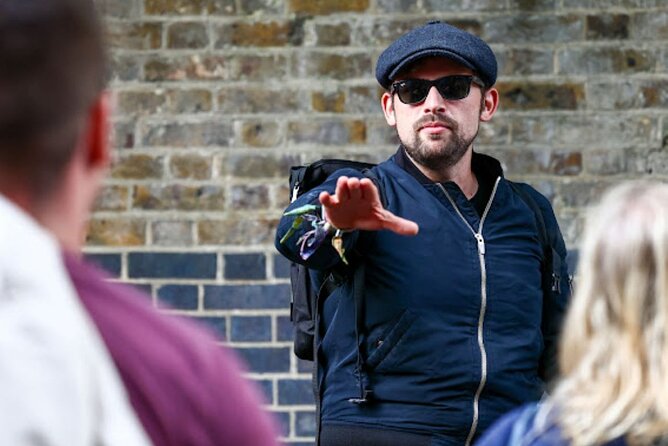
Jack the Ripper is grim fun. This 2.5-hour East End walk, guided by historians like Nick (an East End native), keeps the story victim-focused and fact-first.
I especially like how the route mixes crime locations with real neighborhood context, from Brick Lane to Spitalfields Market. One thing to consider, though: it’s a walking tour at night, and the subject matter is heavy, so it helps to be mentally prepared.
In This Review
- Key Highlights You’ll Feel Fast
- Why This East End Walking Tour Hits Different
- Price and What $24.98 Buys You in Real Terms
- Starting at Braham Street, Then Shifting from Legend to Street Life
- Brick Lane at 1888 Pressure and Today’s Cultural Shift
- Spitalfields Market: Where Food, Fashion, and Street Sound Break the Dark Mood
- Ten Bells Pub: A Famous Name, But Hear the Human Angle
- Goulston Street and the 1888 Riots After Stride and Edowes
- How the Guide Keeps 2.5 Hours from Dragging
- Night Tour Tips to Make It Feel Easy
- Who This Tour Is Best For
- Should You Book Jack the Ripper and Victorian London Beyond the Shadows?
- FAQ
- What time does the tour start?
- How long is the tour?
- Where do I meet the guide?
- Where does the tour end?
- Is the tour offered in English?
- Do I get a mobile ticket?
- How large is the group?
- Is there free cancellation?
- Are service animals allowed?
- Is public transportation nearby?
Key Highlights You’ll Feel Fast

- Victim-first storytelling that treats the women as people, not plot devices
- Guides like Nick who use a local angle and a sympathetic, factual approach
- Brick Lane, Spitalfields Market, Ten Bells pub, and Goulston Street in one coherent night route
- Real Victorian context, including the social pressures of 1888 East End life
- An interactive style where you can ask questions and stay engaged
Whitechapel after dark, other guides tested
- London Jack the Ripper Guided Tour with Ripper-Vision★ 4.5 · 4,840 reviews
- London Jack The Ripper Guided Walking Tour★ 5.0 · 3,131 reviews
- Ultimate Jack the Ripper : Guided Tour of London★ 5.0 · 1,495 reviews
- The Original Jack the Ripper : Guided Tour★ 5.0 · 1,264 reviews
Why This East End Walking Tour Hits Different

Jack the Ripper tours can go one of two ways. Either they turn into a trivia contest about the killer, or they treat the victims and the streets as part of the same painful machine.
This one leans hard into the second approach. I like that the tone stays respectful and human. You hear about the women’s lives and struggles for survival in Victorian London, which makes the events feel less like legend and more like people caught in an unfair system.
The guide angle also matters. Multiple accounts spotlight Nick as a trained historian with an East End background, and that local familiarity comes through in how the streets are explained. Even if you have done another Ripper walk, this format feels different because it keeps returning to daily life and social conditions, not just the mystery.
And you get the payoff of being outside, at night, in the same kind of neighborhood layout that shaped how things unfolded in 1888. That’s the value of walking, not museum viewing. You see how neighborhoods connect, and the story has room to breathe.
Price and What $24.98 Buys You in Real Terms
At $24.98 per person for about 2 hours 30 minutes, this tour sits in the affordable end for a guided evening in London. The better question is what you’re actually paying for.
You’re paying for:
- A guided route through key sites connected to the Ripper case
- Historical context about Victorian London and how the East End has changed over time
- A storytelling style that aims to be accurate and engaging, not sensational
- A small-group feel, since the tour caps at 40 travelers
That last point is worth your attention. A group of up to 40 is still a lot, but it’s not an enormous bus crowd. It also helps explain why many people describe feeling actively involved rather than talked at.
If you’re a true crime fan, the site list helps. If you’re a history person, the neighborhood angle helps. Either way, you’re getting more than a list of locations. You’re getting a night walk with a point of view.
One more value note: it’s described with mobile tickets, which is convenient. You don’t need to hunt for printed papers the night you’re already navigating London streets.
Starting at Braham Street, Then Shifting from Legend to Street Life
The tour begins at Braham Street (Braham St), London E1, with a start time of 7:30 pm. It ends at Spitalfields Market, 65 Brushfield St, London E1 6AA. That timing matters. A night walk means you see the East End as it functions now, not as it looks in daytime postcards.
It also changes the vibe. You’ll likely feel more of the atmosphere around the streets, especially once you’re close to the locations tied to the case. Just plan for darkness, sidewalks, and the fact that you’ll be outside for a chunk of time.
I also like that the ending is at Spitalfields Market. If you want food after, you can plan that without doing a full extra journey. It turns the tour into a complete evening, not just a storytelling detour.
Before you head out, wear shoes you trust. The experience is built around walking a lot, and even a short stumble can ruin the flow when you’re trying to follow directions closely.
Brick Lane at 1888 Pressure and Today’s Cultural Shift
Your first major stop is Brick Lane, a street that layers multiple eras on top of each other. In 1888, the East End was marked by poverty, overcrowding, and brutal economic pressure. You’ll hear about what survival meant on these streets for people living through that era, and you’ll get a sense of why conditions were ripe for chaos and fear.
What I appreciate is that the story doesn’t treat Brick Lane like a backdrop. It’s treated like a lived-in place, with cultural dynamics that kept changing. So the tour doesn’t stop at murder dates. It ties the past to how the area has developed across decades.
Potential drawback: Brick Lane can be busy in the evening, depending on timing. That doesn’t make the tour bad, but it can mean you’ll need to stay attentive when the group is moving in and out of crowds. Give yourself a little buffer and listen for the guide’s instructions so you don’t fall behind.
Still, for anyone who wants their Ripper story grounded in a real neighborhood, this stop is key. It sets the emotional context before the tour moves toward the more specific sites connected to the investigation.

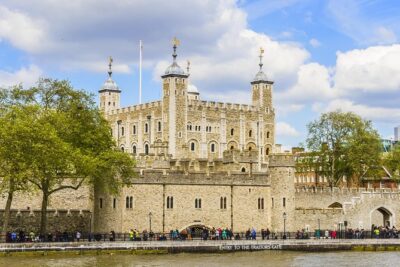
Spitalfields Market: Where Food, Fashion, and Street Sound Break the Dark Mood
Next, you’ll spend time at Spitalfields Market. This part of the evening works well because it creates contrast. After heavier material, a market stop reminds you that the East End is not trapped in 1888.
The market is described as a place locals and tourists use for all kinds of things, from food to clothes, with live or musical moments hiding around corners. That matters because it makes the area feel like a living district, not a reenactment set.
I also like the practical value. If you need a moment to grab a drink or snack, you’re not forced to do it before the tour starts. It’s a built-in pause point in the route.
That said, markets can be unpredictable. You might encounter different crowds and noise levels, depending on the day. If you’re sensitive to loud spaces, just remember this is part of the atmosphere, not a quiet museum stop.
Even with that, the Spitalfields stop gives you a concrete way to hold two times in your head: the Victorian pressure of survival, and the modern rhythm of the same streets.
Ten Bells Pub: A Famous Name, But Hear the Human Angle
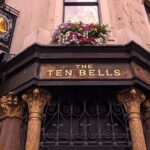
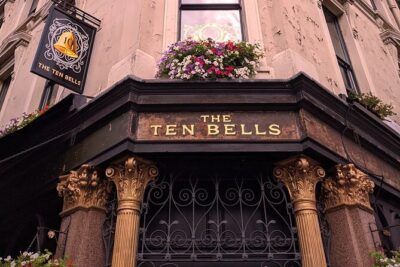
The tour then brings you to the historic Ten Bells pub, linked to the Ripper case. This pub shows up often in documentaries and films about the murders, and you’ll likely understand why once you’re standing there.
The important thing is how it’s handled. The tone stays focused on the victims and on the world they were navigating, rather than treating the pub as a spooky prop. That approach is exactly why many people rate this tour so highly. It keeps the story from turning into pure spectacle.
From a travel perspective, this is also a smart stop because a pub is a recognizable anchor in a city full of street turns. It helps you connect the narrative to an exact location.
Potential consideration: Ten Bells is tied to a very specific case, so the stop can feel intense if you’re not ready for the emotional weight of the subject. If you prefer lighter history, you might find the topic heavy. But if you want the Ripper story told with sympathy and care, this is one of the most meaningful moments in the night.
Goulston Street and the 1888 Riots After Stride and Edowes
One of the most concrete, high-impact segments is your walk through the area around Goulston Street. This is a key location connected both to the Ripper case and to the 1888 riots that followed.
The tour ties the street to the double murders of Elizabeth Stride and Catherine Edowes on 30 September 1888. Hearing those names in this context matters, because it forces you to connect dates to people and place. It also helps explain why the aftermath wasn’t just a police story. It turned into community panic and public unrest.
This stop is where the tour’s pacing and storytelling style really show. You’re not just being pointed at a location. You’re being walked through how fear spreads, how people react, and how an incident can reshape a neighborhood’s mood for years.
Practical note: this is a street-focused segment. Keep your eyes up for directions and don’t let your attention drift to the sidestreets. The guide’s job is to connect what you see on the ground to what happened historically, and that connection depends on staying together.
If you like your history with emotional clarity, this is a highlight. If you prefer a puzzle with lots of theories and suspects, you may notice the tour gives more weight to the lived experience of the women and the conditions surrounding the case.
How the Guide Keeps 2.5 Hours from Dragging
A walking tour can run long if the guide sounds like a lecture. Here, many accounts emphasize an engaging, story-driven delivery.
Several people highlight that:
- The guide tells the story in an interactive way, not a monologue
- There’s room for questions
- The approach is theatrical but respectful
- Period photos may be shown, including real images via an iPad
I like that mix. Photos help you picture what words can’t. Questions keep the group alert. And a bit of humor, when used lightly, can make the mood manageable without turning tragedy into entertainment.
One more detail I find useful: guides are described as carefully focused on accurate facts while also being sensitive about victims, especially the way women are often reduced to a stereotype in pop culture. If you’re tired of the usual shortcuts, that victim-centered tone is the whole point of choosing this tour.
Night Tour Tips to Make It Feel Easy
This experience is simple on paper, but London at night adds a few real-world wrinkles. Here’s how to make the evening smooth.
- Wear good shoes. The tour is a walking format, and you’ll want traction and comfort for a few hours.
- Arrive a few minutes early at Braham Street so you don’t miss the start.
- Bring a jacket or layer. Evening air in London can drop quickly, and you’ll be outside.
- Stay close when crossing streets. The story is tied to exact corners and streets.
- Ask questions early. The guides are described as willing to involve everyone.
Also, if you’re going with family, the guided structure can help keep younger participants focused. One account includes a multi-generational group, and the guide’s inclusive style is mentioned, which is a good sign if you want the pace to work for mixed ages.
If you’re traveling solo, this tour also makes it easier to connect with others in a shared learning moment, especially because the guide invites interaction rather than shutting the group down.
Who This Tour Is Best For
This tour is a strong match if you:
- Are a true crime fan who wants more than theories and suspects
- Love Victorian London but want context tied to real neighborhoods
- Prefer history told with empathy rather than sensationalism
- Enjoy walking routes that connect streets, not just facts
It’s also a good fit if you want an evening plan that doesn’t feel like a generic sightseeing circuit. Brick Lane and Spitalfields add texture beyond the case.
If you hate walking, or if you’re sensitive to grim topics, you might find the subject matter intense. And if you’re purely after a puzzle about who Jack the Ripper was, this tour may feel more focused on conditions and victims than on chasing a single answer.
Should You Book Jack the Ripper and Victorian London Beyond the Shadows?
Book it if you want a night with strong storytelling, a neighborhood backbone, and a respectful focus on the people affected. For $24.98, you’re getting a well-paced route through key locations, plus context that helps the case make sense in its own time.
I’d skip it only if you want a light, casual experience, or if you dislike walking after dark. Otherwise, this is the kind of tour that turns famous street names into real, complicated human events, which is exactly what a good London history night should do.
FAQ
What time does the tour start?
The tour starts at 7:30 pm.
How long is the tour?
It lasts about 2 hours 30 minutes.
Where do I meet the guide?
Meet at Braham Street (Braham St), London E1.
Where does the tour end?
The tour ends at Spitalfields Market, 65 Brushfield St, London E1 6AA.
Is the tour offered in English?
Yes, it is offered in English.
Do I get a mobile ticket?
Yes, the tour includes a mobile ticket.
How large is the group?
The tour has a maximum of 40 travelers.
Is there free cancellation?
Yes, cancellation is free. You can cancel up to 24 hours in advance for a full refund.
Are service animals allowed?
Yes, service animals are allowed.
Is public transportation nearby?
Yes, it is near public transportation, and most travelers can participate.
More Nights In Whitechapel

Fresh off the notebook in London
- Private Rock ‘n’ Roll Music Tour of Central London
★ 5.0 · 7 reviews - London Walking Tour: Camden Town Photography Walkabout
★ 5.0 · 7 reviews - Private Transfer from London accommodation to Cruise terminal
★ 5.0 · 7 reviews - Amazing Nightlife in London East Tour
★ 4.5 · 7 reviews - The British Museum: a highlights tour with a TV historian
★ 5.0 · 7 reviews - Heathrow Airport to Cambridge private taxi transfers
★ 5.0 · 7 reviews
Jack the Ripper Tours, compared.
 ★ 4.5London Jack the Ripper Guided Tour with Ripper-VisionFrom $274,840 reviews
 ★ 5.0London Jack The Ripper Guided Walking TourFrom $03,131 reviews
 ★ 5.0Ultimate Jack the Ripper : Guided Tour of LondonFrom $271,495 reviews
 ★ 5.0The Original Jack the Ripper : Guided TourFrom $221,264 reviews
 ★ 5.0London Jack The Ripper Small-Group Walking TourFrom $1511,013 reviews
 ★ 5.0Jack the Ripper Tour in SpanishFrom $17875 reviews
 ★ 3.5The Original Jack the Ripper Coach Tour of Haunted LondonFrom $82419 reviews
 ★ 5.0Jack the Ripper Walking Tour in LondonFrom $34354 reviews
Browse the lists this tour appears in