
REVIEW · JACK THE RIPPER TOURS
Jack the Ripper Walking Tour with Expert Ripperologist
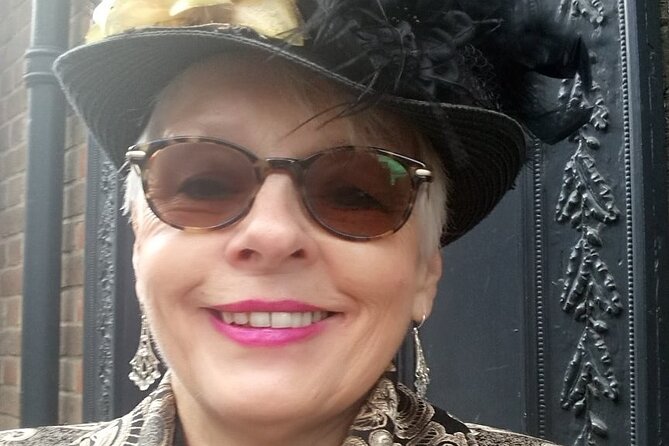
Whitechapel has teeth if you listen. This Jack the Ripper walk, led by an expert Ripperologist, uses costumed theatrical flair and a 14-inch tablet of visuals to make 1888 feel close. I also love the respectful focus on the women victims, not the usual movie-gloss version. One drawback to note up front, the route has very limited toilets, so you will want to plan ahead.
You get an easy-to-follow route where you do not need to stop and check maps. The pacing is steady, and the guide connects street corners to real events, including the City boundary and where police searched. If your group is large, you may find it a bit crowded at stops, since the tour caps at 30.
It runs about 2 hours 30 minutes, and it is offered in English with a mobile ticket. You should also be ready for standing and walking for 2-plus hours, since the “history” is literally on the sidewalks. I did notice one low-score report about a no-show, so I recommend keeping your confirmation handy and showing up a few minutes early.
In This Review
- Key reasons this Jack the Ripper walk works
- Costumed Ripperology and 14-inch visuals that keep you grounded
- Aldgate Station to St Botolph’s Church, where the story opens
- Aldgate Square and Petticoat Lane, poverty plus the City line
- Mitre Street and Goulston Street, from the double event to a key clue
- Gunthorpe Street to Thrawl Street, Martha Tabram and Mary Ann Nichols
- Hanbury Street and Puma Court, Annie Chapman plus the Dear Boss letter
- Ten Bells, Itchy Park, and the final walk to Mary Kelly
- Value, pacing, and who should book
- Should you book Jack the Ripper Walks?
- FAQ
- How long is the Jack the Ripper walking tour?
- Where does the tour start and end?
- Is the tour in English?
- Do I get a mobile ticket?
- Are there any admission tickets included during the stops?
- What fitness level do I need?
- Is the group size limited?
Key reasons this Jack the Ripper walk works

- A costumed guide plus clear 14-inch tablet visuals that help you picture the area back then
- A route with 12 specific stops, tied to victims, locations, and key moments from 1888
- Street-by-street context, including the City of London versus Metropolitan police distinction
- Stops built around real clues and letters, like the doorway clue and the Dear Boss letter
- A clear sense of respect, with an emphasis on the victims rather than shock for shock’s sake
- Small enough to feel guided, but still up to 30 people, so you may want to stand near the front
Whitechapel after dark, other guides tested
- London Jack the Ripper Guided Tour with Ripper-Vision★ 4.5 · 4,840 reviews
- London Jack The Ripper Guided Walking Tour★ 5.0 · 3,131 reviews
- Ultimate Jack the Ripper : Guided Tour of London★ 5.0 · 1,495 reviews
- The Original Jack the Ripper : Guided Tour★ 5.0 · 1,264 reviews
Costumed Ripperology and 14-inch visuals that keep you grounded
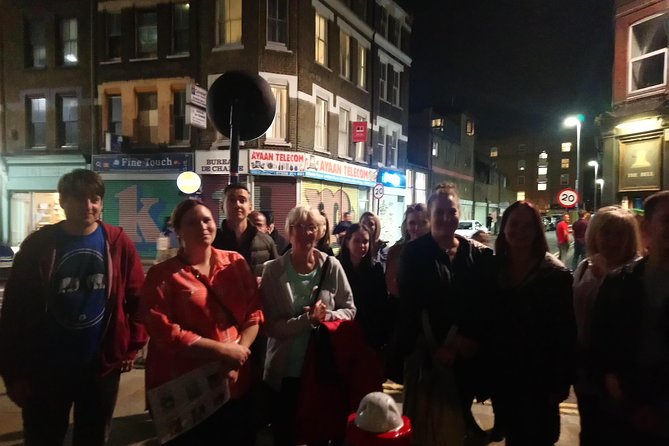
This tour is not just a string of dark anecdotes. The guide brings a bit of costume theatrics to set the tone, but the real hook is the way the story stays anchored to place. At each stop, you see photos of victims, sites, and the surrounding area on a 14-inch backlit tablet, which makes it much easier to understand what you are standing on.
I like that the visuals are big and clear. You are not squinting at a phone screen while trying to follow a moving crowd. One review called out the guide’s upbeat, slightly witty delivery, and another highlighted the before-and-after style presentation, which is exactly the kind of help that turns ruins and alleys into real scenes.
You also get a specific emotional approach. Multiple strong reviews praised the guide for being sensitive about the women victims. That matters on a tour like this, because it keeps the focus on people and context, not just grim headlines.
Here’s a practical thing to consider: the tour covers a lot of ground on real streets. Even if the pacing is organized, you will still be standing at corners and listening. Also, one 4 out of 5 comment mentioned wanting more about suspects, so if that is your top interest, set expectations that the emphasis is mainly on victims and the conditions around them, with suspects handled more briefly toward the end.
Aldgate Station to St Botolph’s Church, where the story opens
The experience starts at Aldgate Station, on Aldgate High St (London EC3N 1AH). From there, you begin walking into the Whitechapel story with an immediate sense of why this area mattered.
Stop 1 is St Botolph’s Aldgate Church. The guide introduces it as the St Botolph’s Church also known as the Prostitutes Church, because women used to solicit on the island where it stood. It is a dark opener, but it sets a key idea you will keep seeing throughout the tour: this was a neighborhood with poverty pressures, crowded living, and constant vulnerability.
This first stop also gives you a way to orient mentally. Once you understand what kind of place you are in, later stops hit harder, because the guide can connect the same themes of desperation and opportunity. It is also a nice entry point if you are coming straight from central London and need a quick on-ramp to the geography.
Staying outside is part of the setup here. The church stop is listed as free, but the tour is designed so you can follow the narrative without needing to hunt for entrances. Total time at the stop is short, around five minutes, so you will not feel stuck.
Aldgate Square and Petticoat Lane, poverty plus the City line
After St Botolph’s, you move to the square beside the church for Stop 2 at Aldgate Square. This is where the tour shifts from a single site to the lived reality of 1888. You get a vivid description of Whitechapel as poverty stricken and overcrowded, with squalor, crime, and hardship for people living on the breadline.
I like how the guide uses this moment to build context before moving toward the murders themselves. It changes how you understand later locations. Instead of treating the crimes as random horror, you start seeing how living conditions and neighborhood structure shaped everything.
Then you continue to Stop 4 at Petticoat Lane Market, also known as Middlesex St. This stop is a clever reminder that London was not policed the same way everywhere. The tour calls out the boundary between the City of London and the Metropolitan area, and the fact that separate police forces operated in those different jurisdictions.
That detail is one of those “wait, that explains a lot” moments. If you have ever wondered why information, pursuit, and accountability could get messy, this is the kind of local government distinction that helps make the story more understandable. It is also a good example of how the tour teaches you history through street logic, not just dates.
One consideration: two of the listed stops note admission tickets are not included. In practice, that usually means the story is delivered from the street or public areas, but if you want to go inside something along the route, you may need your own plans. For most people, sticking with the guided stops is the whole point.
Mitre Street and Goulston Street, from the double event to a key clue
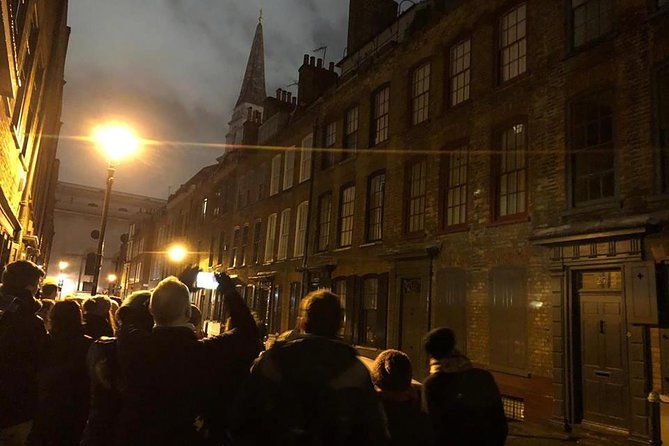
Stop 3 is Mitre Street, around Mitre Square and just inside the City boundary. Here the guide focuses on Elizabeth Stride, nicknamed Long Liz, described as the first victim killed during the night of the double event. The tour then moves a few yards so the guide can also talk about Catherine Eddowes, killed only about 45 minutes later right there.
I appreciate this pairing because it shows you how close events were in both time and space. If you only know the broad outline, this kind of timing detail makes the night feel more real, and it also helps you follow why the police response and neighborhood movement mattered.
Next comes Stop 5 at Goulston Street. You proceed to a doorway where the only clue was found along the same route that police took that night, hot on the trail of Jack the Ripper. This is where the tour gets a bit more detective-like. You are not just hearing what happened, you are learning why certain spots were treated as important.
If you are the type who likes evidence, letters, and how people tried to piece together what they saw, this is a highlight. Even if you are not sure about every theory out there, the physical clue location gives you something concrete to hold onto.
One more practical note: on a walking tour built around outdoor corners and doorways, hearing matters. The tour is capped at 30 people, and one response notes the guide uses a microphone to help everyone hear. Still, if you want the best experience, try to keep yourself close to the front during these tighter storytelling moments.
More on foot, at a pace you can hear the guide
Gunthorpe Street to Thrawl Street, Martha Tabram and Mary Ann Nichols
Stop 6 shifts perspective again. At Gunthorpe Street, you view the street from Wentworth St looking toward the spot where Martha Tabram was found murdered on 7 August 1888, in the George Yard Buildings. The tour also frames her as the most likely first victim of Jack the Ripper, which is one of those theory-driven points that makes the walk feel like research, not just legend.
If you want to go beyond Hollywood stereotypes, this is part of the value. The guide acknowledges that not everything fits neatly, and the tour gives you the local evidence angle that people use when debating who the first victim was.
Then you move to Stop 7 at Thrawl Street. The group stops opposite the Frying Pan Pub on the corner of Thrawl St, where Mary Ann Nichols had her last drink before staggering down Whitechapel Road to be murdered in Bucks Row behind Whitechapel Station.
This stop often works because it is specific. A named pub, a final drink, and a described route makes it easier to understand how someone moved through the neighborhood in real time. It also anchors the story to a spot that feels like everyday London life today, even if you know what happened there in 1888.
A small comfort tip: since this is a walking tour, wear shoes that you can stand in. You are out in real streets for roughly 2-plus hours, and the stops are timed for storytelling, not for long breaks. If it rains, the route is still doable, and one review explicitly mentioned enjoying it even in rain.
Hanbury Street and Puma Court, Annie Chapman plus the Dear Boss letter
Stop 8 is Hanbury Street. You turn left into Hanbury Street where Annie Chapman was murdered in the back yard of 29 Hanbury St. The guide uses this to tighten the story again around a single location and a specific personal tragedy.
From there, Stop 9 takes you to Wilkes Street, a street described as untouched by time since the 1800s. The tour then makes its way to Puma Court, where you hear about the Dear Boss letter.
If you like the “letters and communication” side of the case, this is your moment. The Dear Boss letter is one of the most famous pieces of the Jack the Ripper puzzle, and having it connected to a physical location helps it feel less like trivia and more like an event that affected real people in real streets.
This part of the tour is also a good reality check about storytelling. Some tours lean too hard into theory and wild speculation. Here, you get letters and place together, and you come away with a clearer sense of how information traveled and how investigators and vigilantes responded.
One practical consideration here: Puma Court and surrounding areas can feel tight depending on crowd flow. If you are someone who hates being squeezed, keep your group position steady early and aim to pause a bit off the tightest bottlenecks.
Ten Bells, Itchy Park, and the final walk to Mary Kelly
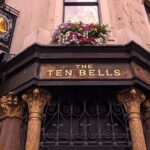
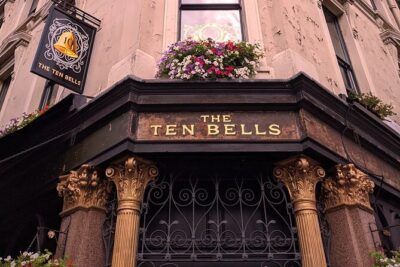
Stop 10 is the Ten Bells area. You stop opposite the Ten Bells, described as Mary Kelly’s favourite pub. From there, you view Christchurch Graveyard, known in the story as Itchy Park, where homeless people would sleep in the daytime.
This is a powerful combo, because it shows how the case connects to ordinary structures of neighborhood life. A pub, a graveyard, and the reality of homelessness. It is not just crime theatre, it is a reminder of why some people were at risk.
Stop 11 brings you to Old Spitalfields Market. Opposite the market is the London Fruit and Wool Exchange, and you stop in the entrance for the letter sent to George Lusk, head of the Whitechapel Vigilance Group. This is another “this mattered to someone” moment, tied to how the community responded and tried to organize.
Then Stop 12 closes the tour in the London Fruit Exchange square behind the London Fruit & Wool Exchange. The walk ends with the murder of Mary Kelly, described as Jack’s last victim, killed on 9 November 1888. From here, the tour notes it is about a five-minute walk to Liverpool Street Station, where you can connect to multiple tube lines.
I like ending near transit. It keeps the tour from feeling like an island at the end. You can wrap up, grab a warm drink, and hop back into your plan without a long slog.
Value, pacing, and who should book
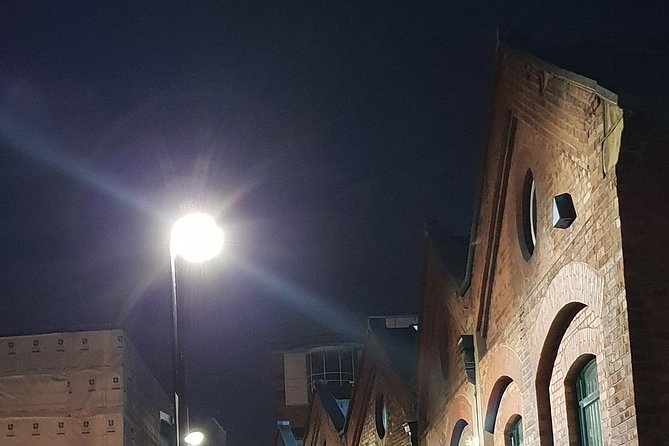
At $23.61 per person for about 2 hours 30 minutes, I think you get good value if you care about both the streets and the visuals. The 14-inch backlit tablet is not a gimmick, it is the core teaching tool here, and it helps a lot on a tour of narrow streets and quick stops.
The group size cap of 30 is also a smart middle ground. It is not a huge crowd experience, but it is not a private, silent stroll either. One review did mention feeling like there were too many people, so if you prefer personal space, aim to be near the front at the stops, or consider a private option if the provider offers it for you.
This tour also comes with clear rules about who it suits. It is best for adults and teens who can walk and stand for 2-plus hours. Children under 15 are not allowed, and 16 to 17 need to be accompanied by an adult. It is offered in English, and it is near public transportation, so you are not fighting an empty London bus system to get there.
Booking looks popular, with an average of 40 days in advance. If you are traveling during a busy season, I would not wait too long.
Should you book Jack the Ripper Walks?
Book it if you want a guided walk through Whitechapel that focuses on street-level context, victims, and the way investigators and communities tried to respond. The combination of costumed flair plus 14-inch visuals is the kind of format that makes the story easier to follow and harder to forget.
Skip it if you only want a broad, Hollywood-style version or if you are uncomfortable with crowding and standing outdoors. Also, if toilets are a dealbreaker for you, plan ahead since the route has very limited options.
If you fit the walking-friendly, English-speaking, dark-history-with-standards vibe, this is an excellent pick, especially since it has a 4.8 rating and a 97% recommendation rate.
FAQ
How long is the Jack the Ripper walking tour?
The tour runs for about 2 hours 30 minutes.
Where does the tour start and end?
It starts at Aldgate Station, Aldgate High St, London EC3N 1AH, UK. It ends at 66-68 Bell Ln, London E1 7LA, UK, and you finish in the square of the London Fruit and Wool Exchange on Brushfield St, about a five-minute walk from Liverpool Street Station.
Is the tour in English?
Yes, the tour is offered in English.
Do I get a mobile ticket?
Yes, the tour uses a mobile ticket.
Are there any admission tickets included during the stops?
Some stops are free while others note that admission tickets are not included. For example, St Botolph’s Aldgate is free, while Aldgate Square and Petticoat Lane Market list admission ticket not included.
What fitness level do I need?
You should have moderate physical fitness. The tour is not recommended if you cannot walk and stand for 2-plus hours.
Is the group size limited?
Yes, the maximum group size is 30 travelers.
More Of London On Foot



More Nights In Whitechapel

Fresh off the notebook in London
- Private Rock ‘n’ Roll Music Tour of Central London
★ 5.0 · 7 reviews - London Walking Tour: Camden Town Photography Walkabout
★ 5.0 · 7 reviews - Private Transfer from London accommodation to Cruise terminal
★ 5.0 · 7 reviews - Amazing Nightlife in London East Tour
★ 4.5 · 7 reviews - The British Museum: a highlights tour with a TV historian
★ 5.0 · 7 reviews - Heathrow Airport to Cambridge private taxi transfers
★ 5.0 · 7 reviews
Jack the Ripper Tours, compared.
 ★ 4.5London Jack the Ripper Guided Tour with Ripper-VisionFrom $274,840 reviews
 ★ 5.0London Jack The Ripper Guided Walking TourFrom $03,131 reviews
 ★ 5.0Ultimate Jack the Ripper : Guided Tour of LondonFrom $271,495 reviews
 ★ 5.0The Original Jack the Ripper : Guided TourFrom $221,264 reviews
 ★ 5.0London Jack The Ripper Small-Group Walking TourFrom $1511,013 reviews
 ★ 5.0Jack the Ripper Tour in SpanishFrom $17875 reviews
 ★ 3.5The Original Jack the Ripper Coach Tour of Haunted LondonFrom $82419 reviews
 ★ 5.0Jack the Ripper Walking Tour in LondonFrom $34354 reviews
Browse the lists this tour appears in