
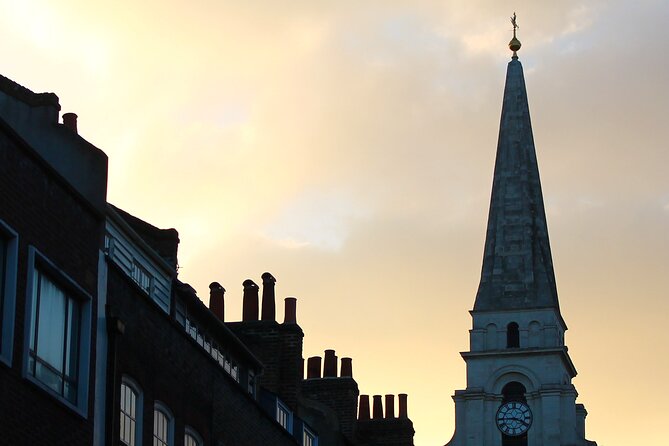
REVIEW · JACK THE RIPPER TOURS
Jack the Ripper – What About the Women?
Meet the women behind the myth. This 2-hour, evening walking tour traces the lives of Jack the Ripper’s victims across Whitechapel and toward Aldgate and Spitalfields, keeping the focus where it belongs. You will also get a clear sense of the Victorian East End, including the day-to-day hardships that shaped these women’s choices.
I love how grounded the tour is in working-class reality, not just crime headlines. I also like the respectful, non-graphic approach, with storytelling aimed at helping you understand the women as real people, not one-line footnotes. The guide is praised for being friendly and very clear, and names like Cecily and Ellie come up in the most enthusiastic comments.
One possible consideration: it is mostly time on your feet at dusk, and it requires good weather. If evenings make you stiff or you prefer long sit-down breaks, plan accordingly and bring comfortable shoes.
In This Review
- Key highlights and what to expect
- Why this Jack the Ripper tour feels different
- The value of a $34.28, 2-hour evening format
- Meeting at Aldgate High Street and getting oriented fast
- Whitechapel Road: Martha Tabram, Polly Nichols, and Victorian survival
- Brick Lane: the pub site, addiction themes, and a mosque stop
- Old Spitalfields Market and Truman Brewery: Annie Chapman and the Ten Bells story
- Old Spitalfields Market deeper: Crispin Street, Mary Jane Kelly, and the feeling of the last chapter
- Petticoat Lane: textile work and why this matters to the story
- St Botolph’s Aldgate and Mitre Square: Elizabeth Stride and Catherine Eddowes
- What you will notice about the guide, especially Cecily and Ellie
- The route in real terms, and how to enjoy it
- Who should book this tour, and who may prefer something else
- Should you book this women-focused Jack the Ripper tour?
- FAQ
- Where does the tour start and end?
- What time does the tour begin?
- How long is the tour?
- How much does it cost?
- Is the tour in English?
- What is included in the price?
- How big is the group, and can service animals join?
- What happens if weather is poor or you need to cancel?
Key highlights and what to expect

- Women-first storytelling across the main Whitechapel and Spitalfields sites, with context for daily life
- Respectful, history-based tone, no graphic images or graphic murder details spelled out
- Small group size (up to 20), which makes questions and follow-ups feel easier
- A late-day East London route starting at 6:30 pm, ending near Spitalfields Market
- Street-level stops at locations tied to Martha Tabram, Polly Nichols, Annie Chapman, Mary Jane Kelly, Elizabeth Stride, and Catherine Eddowes
- Named modern connections, including how the Ten Bells pub name changed through Reclaim the Night
Whitechapel after dark, other guides tested
- London Jack the Ripper Guided Tour with Ripper-Vision★ 4.5 · 4,840 reviews
- London Jack The Ripper Guided Walking Tour★ 5.0 · 3,131 reviews
- Ultimate Jack the Ripper : Guided Tour of London★ 5.0 · 1,495 reviews
- The Original Jack the Ripper : Guided Tour★ 5.0 · 1,264 reviews
Why this Jack the Ripper tour feels different

This is not the usual Jack the Ripper routine where the story circles the killer and the myth. Instead, you spend the whole walk learning how these women lived, what their world looked like, and why the system around them was so harsh. It has the feel of a careful local-history tour with just enough true-crime context to make the events make sense.
You will notice quickly that the guide keeps the focus on the women’s lives before the murders. That matters because the Victorian East End was packed with grinding pressures, bad housing, and limited options. When you understand those constraints, the story stops feeling like a sensational legend and starts feeling like human tragedy.
The value of a $34.28, 2-hour evening format
At about $34.28 per person for roughly 2 hours, this price makes sense for a guided walk with multiple stops. You are not paying for museum entry or a bus ride, which helps keep things focused on what you can only really get with a knowledgeable guide: place-specific context and the “why” behind the facts.
Also, small-group pacing helps. With a maximum of 20 people, you are more likely to hear details clearly at street corners and at church steps, rather than getting swept up in a big crowd. That also fits the tour’s style, which is factual, empathetic, and built around questions.
One more practical note: the tour starts at 6:30 pm. That is a smart time because the area looks different as day turns to night, and you get that East London evening atmosphere without trying to cram a daytime schedule.
Meeting at Aldgate High Street and getting oriented fast
You meet at Aldgate High St, London EC3N 1AH, a straightforward spot near Aldgate station. The end is Spitalfields Market (65 Brushfield St, London E1 6AA), so you finish in an area where you can keep wandering right after the tour.
Because it is a walking tour, arriving a few minutes early helps. You will want a quick moment to check your bearings, use the restroom if needed, and settle in before the guide starts the first stop. A mobile ticket is included, which cuts down on fiddling around with paper on the street.
Whitechapel Road: Martha Tabram, Polly Nichols, and Victorian survival

The tour begins at Whitechapel Road, and this is where the tone is set. You will hear the stories of Martha Tabram and Polly Nichols, but you will also get the bigger picture: what it was like to live as a working-class resident of the Victorian East End.
This stop is important because it frames the entire walk. The guide explains the harsh living conditions, including dosshouses and workhouses, plus other forms of accommodation that were part of daily survival. You do not just memorize names and dates. You start to see how poverty, overcrowding, and limited support could funnel people into dangerous circumstances.
You also get a practical modern connection here, with the tour pointing out charities still doing work in the area today. That makes the past feel connected to something real, not just a set of grim facts behind glass.


Brick Lane: the pub site, addiction themes, and a mosque stop

Next is Brick Lane, with a focus on the public places tied to Polly Nichols’s final night. Even if you know the headline story already, this stop helps you connect the dots between place and person, and it does it with a strong emphasis on the social realities of the time.
The guide brings in the topic of alcoholism and addiction in the Victorian era. This is not just a moral lecture. It helps you understand how dependence, vulnerability, and unstable living could work together in a world with few safety nets.
You will also stop at the Brick Lane Mosque, which shifts the story from Victorian London to immigration and cultural diversity in the East End. This is a smart balance point. It reminds you that Whitechapel and the surrounding streets have always been shaped by new arrivals, different communities, and changing identities.
Old Spitalfields Market and Truman Brewery: Annie Chapman and the Ten Bells story
At Spitalfields Market, you get several layers at once: industrial London, a specific crime location, and how later memory changed over time.
The tour visits the site of the old Truman Brewery, once described as the largest brewery in the world. Even if beer production does not sound like a “Ripper” topic, it matters because breweries and factories shaped employment and neighborhoods. Understanding the local economy helps you understand why many residents lived in tight, tough conditions.
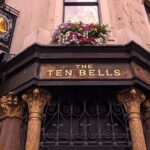
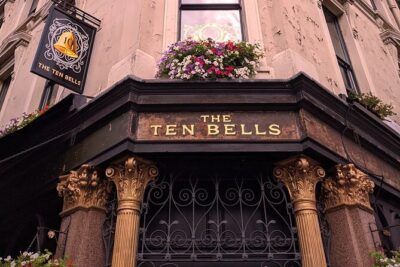
From there, the tour connects to 29 Hanbury Street, where Annie Chapman was found the morning of September 8. The stop near the famous Ten Bells Pub brings Annie Chapman’s story into a place many people have walked past without knowing what it meant historically.
Then comes one of the tour’s most interesting modern angles: the discussion of Reclaim the Night and how it helped push the Ten Bells name back from the Jack the Ripper label. This is a quiet but powerful reminder that public memory is not fixed. It changes based on what a community chooses to emphasize, and on whose lives it wants honored.
Old Spitalfields Market deeper: Crispin Street, Mary Jane Kelly, and the feeling of the last chapter

After the Truman Brewery and Hanbury Street segment, the tour returns to Old Spitalfields Market for a brief look at contrasts of the Victorian era. The timing here works, because by now you have the daily-life context. When you see an old marketplace setting, it hits differently.
You then move to Crispin Street, where the guide points out a refuge for working-class people that actually worked. That phrasing is memorable because it challenges the idea that all help was missing. Even in an unfair system, there were spaces trying to provide some form of stability.
Across the street, you will see the former site of Mary Jane Kelly’s residence, the last victim in the murders and often described as the most mysterious. This stop is handled carefully. The point is not to sensationalize. It is to help you understand why this case became such a lasting question in public memory.
Petticoat Lane: textile work and why this matters to the story
You make a short stop at Petticoat Lane Market, described as a former heart of the textile industry. Even though this is only about 5 minutes, it is not filler.
Textiles connect to the larger “life in the East End” theme. Work was often manual, repetitive, and tied to mills and trades that shaped neighborhoods. When you learn the kind of economy people depended on, the story of vulnerability feels less random and more structural.
If you are the kind of person who likes to understand the “why this place” behind the headlines, you will appreciate this quick but pointed stop.
St Botolph’s Aldgate and Mitre Square: Elizabeth Stride and Catherine Eddowes
The tour continues to St Botolph’s without Aldgate, a church stop where the guide introduces Elizabeth Stride. You will learn that she was originally from Sweden, including background tied to Gothenburg, before her later life in London.
This matters for two reasons. First, it broadens the story beyond one stereotype. Second, it reinforces the East End as a place shaped by movement and relocation, not a sealed-off world.
From there, the tour finishes close to Mitre Square, where Catherine Eddowes’s body was discovered. You will hear about Catherine as a feisty woman from Wolverhampton and how the narrative around her has lived on. Even though the tour touches the crimes, the repeated emphasis stays on the person, the context, and the impact on the community.
What you will notice about the guide, especially Cecily and Ellie
The strongest praise in the feedback focuses on the guides. Cecily and Ellie are named as particularly friendly, factual, and respectful, with strong clarity. If you care about hearing the story in plain language, this is a big plus.
The delivery style also gets attention. This tour avoids sensational visuals and avoids graphic details, which makes it feel appropriate for a wider range of ages. One guest specifically called out that it felt safe for children because the tour does not rely on gruesome pictures or explicit descriptions of the murders.
Another useful detail: guides here seem to make time for questions. When you pause at each stop and you can ask, you stop feeling like you are just walking through locations. You feel like you are learning how to connect them.
The route in real terms, and how to enjoy it
All up, you are looking at a well-paced sequence of street stops: Whitechapel Road (about 20 minutes), Brick Lane (about 15), Spitalfields Market sites (about 10, plus more nearby time), then Petticoat Lane (about 5), and St Botolph’s Aldgate area (about 25). The structure supports both storytelling and short breaks to regroup.
Because it is evening walking, dress for the weather. The experience requires good weather, and if conditions are poor, you can expect a different date or a refund option. Bring a light layer, watch your footing on uneven pavement, and keep water on hand if you tend to get thirsty while walking.
At the end, you are set for an easy continuation. You finish near Spitalfields Market, so you can grab food or keep exploring without needing to transport across town.
Who should book this tour, and who may prefer something else
Book this if you want Jack the Ripper that does not worship the killer. You will like it if you are interested in working-class life, Victorian-era housing and institutions, and how communities remember tragedy. It is also a great pick if you have read or heard about the women-focused angle and want the locations tied to the names.
You might consider skipping if you want a full true-crime, step-by-step replay of the murders with graphic detail. This tour is set up as a history and sociological story of the victims and their world. It is thoughtful, and it is not trying to shock you.
Because most people can participate and the group is kept to a maximum of 20, it is a comfortable size for couples, friends, and families who can handle walking.
Should you book this women-focused Jack the Ripper tour?
Yes, if you want a respectful, place-based London walk that centers the women and explains the world they lived in. The value is strong for the price because you get an experienced guide, a focused route across major East End sites, and context that you will not pick up on your own without someone tying it together.
If your ideal Ripper tour is heavy on sensational visuals and graphic crime detail, this is probably not your match. But if you want to understand why these events happened, what life was like around Whitechapel, and why the names matter, this one is a smart choice.
FAQ
Where does the tour start and end?
It starts at Aldgate High St, London EC3N 1AH, UK, near Aldgate station. It ends at Spitalfields Market, 65 Brushfield St, London E1 6AA, UK.
What time does the tour begin?
The start time is 6:30 pm.
How long is the tour?
The tour lasts about 2 hours.
How much does it cost?
The price is $34.28 per person.
Is the tour in English?
Yes, the tour is offered in English.
What is included in the price?
An experienced guide is included, and the tour uses a mobile ticket.
How big is the group, and can service animals join?
The tour has a maximum of 20 travelers, and service animals are allowed.
What happens if weather is poor or you need to cancel?
The tour requires good weather. If it is canceled due to poor weather, you will be offered a different date or a full refund. You can cancel for a full refund up to 24 hours before the experience starts; if you cancel less than 24 hours before, the amount you paid will not be refunded.
More Nights In Whitechapel


Fresh off the notebook in London
- Private Rock ‘n’ Roll Music Tour of Central London
★ 5.0 · 7 reviews - London Walking Tour: Camden Town Photography Walkabout
★ 5.0 · 7 reviews - Private Transfer from London accommodation to Cruise terminal
★ 5.0 · 7 reviews - Amazing Nightlife in London East Tour
★ 4.5 · 7 reviews - The British Museum: a highlights tour with a TV historian
★ 5.0 · 7 reviews - Heathrow Airport to Cambridge private taxi transfers
★ 5.0 · 7 reviews
Jack the Ripper Tours, compared.
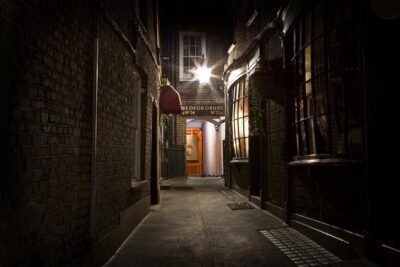 ★ 4.5London Jack the Ripper Guided Tour with Ripper-VisionFrom $274,840 reviews
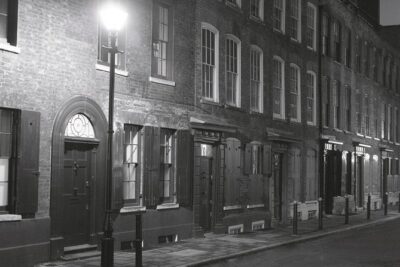 ★ 5.0London Jack The Ripper Guided Walking TourFrom $03,131 reviews
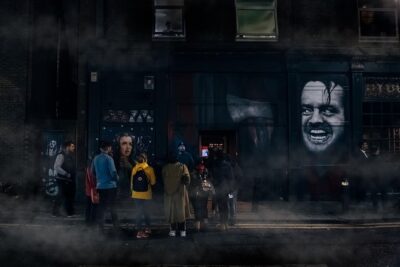 ★ 5.0Ultimate Jack the Ripper : Guided Tour of LondonFrom $271,495 reviews
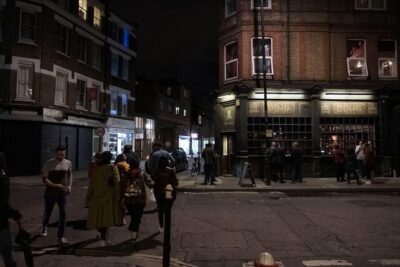 ★ 5.0The Original Jack the Ripper : Guided TourFrom $221,264 reviews
 ★ 5.0London Jack The Ripper Small-Group Walking TourFrom $1511,013 reviews
 ★ 5.0Jack the Ripper Tour in SpanishFrom $17875 reviews
 ★ 3.5The Original Jack the Ripper Coach Tour of Haunted LondonFrom $82419 reviews
 ★ 5.0Jack the Ripper Walking Tour in LondonFrom $34354 reviews
Browse the lists this tour appears in