
REVIEW · BATH AND THE ROMAN BATHS
Jane Austen’s Bath And History Trail
Bath has a way of making literature feel real. This tour threads Jane Austen through the city’s most recognizable stones and street corners, turning famous landmarks into story clues you can actually see.
I love the clean focus here: you get Austen connections plus Bath’s big architectural set pieces, all in a tight 2.5 hour loop. I also like the practical pacing, with short stops where the guide points out what to look for and how the buildings shaped life in Austen’s era.
One possible drawback: it’s still a walking tour, so expect some uphill and steps, and you will miss details if you hate moving between sights.
In This Review
- Key highlights you will actually feel while walking
- Pulteney Bridge to the Austen trail start point, and why the first 15 minutes matter
- The Jane Austen Centre stop, what you get for free and how to use it
- Royal Crescent’s grand facade and Bath Abbey’s long timeline
- Thermae Bath Spa rooftop pool and the spring origins story
- Roman Bath focus, Pump Room gatherings, and Austen connections
- Circus and Assembly Rooms, the architecture behind social life
- Walking stamina, ticket budgeting, and how to get the most from your 2.5 hours
- Should you book Jane Austen’s Bath and History Trail?
- FAQ
- How long is the Jane Austen’s Bath And History Trail?
- Where does the tour start?
- Is the Jane Austen Centre included?
- What tickets or entrances are not included?
- How big is the group?
- What languages is the guide available in?
- Is the tour dependent on weather?
Key highlights you will actually feel while walking
- Meeting at Pulteney Bridge with the route set up for fast orientation (and a quick note on a common photo mix-up)
- Free entry to the Jane Austen Centre, plus time for the shop
- Royal Crescent and Bath Abbey explained so you know what you are seeing before you pay for museum time
- Thermal water and spring origins stories linked to Bath’s geology and daily life
- Circus, Assembly Rooms, and Regency social spaces tied to how people gathered
- Sulis Minerva, Pump Room, and Northanger Abbey connections so Roman and Georgian Bath click together
Bath again, done a few different ways
- Walking Tour of Bath with Blue Badge Tourist Guide★ 5.0 · 1,877 reviews
- Stonehenge, Avebury & the Cotswolds from Bath (Small group)★ 5.0 · 798 reviews
- Roman Baths and Bath City Walking Tour★ 4.5 · 762 reviews
- Fully Guided Bath Ghost Tours★ 5.0 · 539 reviews
Pulteney Bridge to the Austen trail start point, and why the first 15 minutes matter
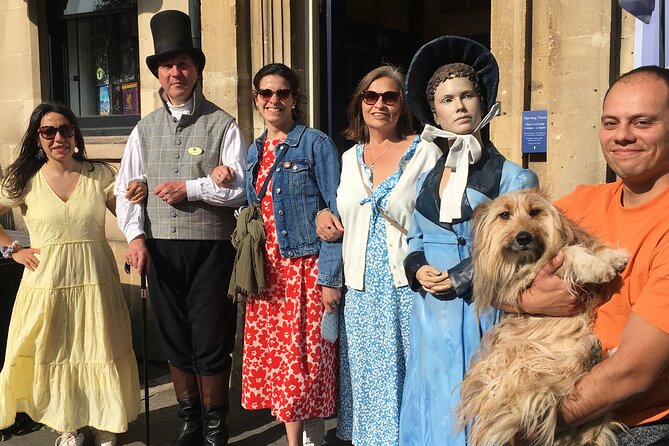
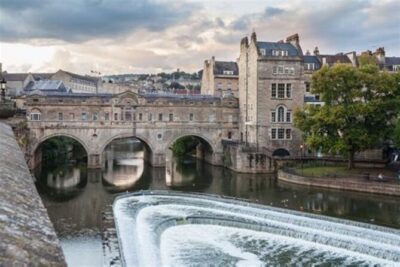
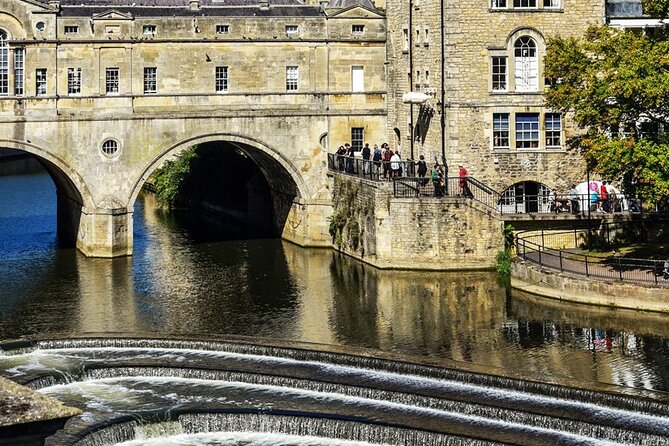
Your tour begins at Pulteney Bridge Coffee Shop, 17 Pulteney Bridge, Bath BA2 4AY. That matters because Bath is walkable, but it is also easy to end up at the wrong building if you are relying on a photo from an ad.
Right at the start, you are put in a very Bath moment. Pulteney Bridge is designed in 1769, with shops lined along both sides, and it is visually compared to Florence’s Ponte Vecchio style. From here, you head along nearby streets to see how the city’s layout drives views, entrances, and the feel of a place.
You will also get a guided pass along key streets near Argyle Street, including a stop for Laura Place and Great Pulteney Street. This is the moment when the guide helps you notice the Georgian townhouse architecture and calls out why the building front lines look so dramatic. If you like photos, you are positioned for them, but you are also learning what each facade is trying to say.
There is an extra little Austen-friendly detail you can spot nearby: you can walk along Pulteney Street toward the Holburne Museum, then look at the front of No. 4 Sydney Place where a name plaque marks Jane Austen’s first dwelling in Bath. It is not a ticketed stop, but it is exactly the kind of street-level realism that makes this tour worth your time.
If it is your first time in Bath, this opening section works like a map in motion. You start by understanding where people would have moved, and then the rest of the route makes more sense.
The Jane Austen Centre stop, what you get for free and how to use it
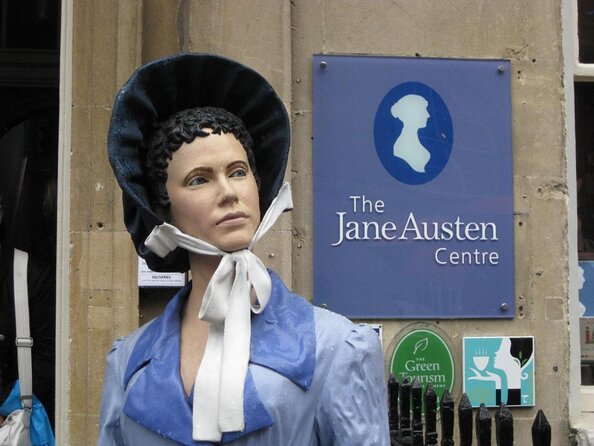
The tour includes free entry to the Jane Austen Centre. That is a big deal for value, because the centre is one of the only places in Bath where Austen’s story is packaged for you in one clear setting.
In the centre, you get a snapshot of Regency life and how living in Bath influenced Austen’s writing. This is not just a display of costumes and portraits. The goal is to help you connect the city’s social world with the novels people love.
You also get time to visit the book shop. If you have even a mild curiosity about Austen-era details, this is where you can walk out with something practical, like background reading that matches what you just saw on the street.
One small caution: there is mention that Jane Austen Centre’s internal tour guides are not included. Translation for you: you are covered for admission and the experience, but you should not expect an extra paid guide inside unless you choose to add it on your own.
This stop is short, about 20 minutes. That is intentional. The tour is built for street viewing, not for sitting for an hour in a museum. If you want more centre time, plan to come back later on your own.
Royal Crescent’s grand facade and Bath Abbey’s long timeline
After Austen Centre, you move into the “wow, Bath is real” zone with No. 1 Royal Crescent. The Royal Crescent is famous for a reason: built in the second half of the 18th century, it features 30 terraced houses connected with giant Ionic columns. It is the kind of building that looks theatrical even if you have seen photos before.
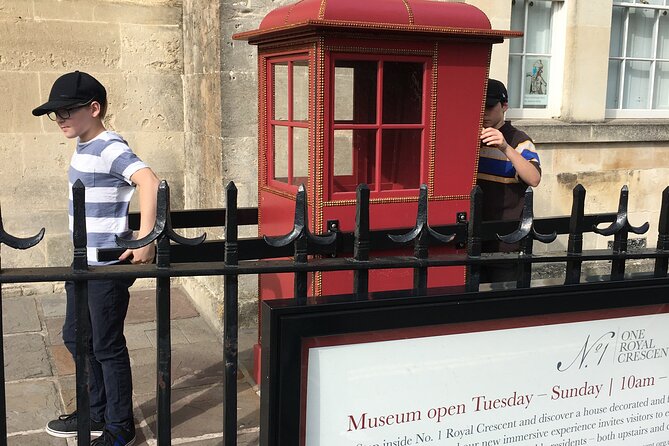
No. 1 Royal Crescent is a museum. The important practical point is that museum entry is not included. So here is how I would handle it as your decision-maker: treat this as your guided exterior and orientation stop first. Then, if you want the interior rooms, you decide on the spot based on your energy and your ticket budget.
From a storytelling angle, Royal Crescent works well because it shows how wealth and design were welded together. You can look at the symmetry and imagine how a social life would have been staged from windows and doorways. The guide helps you make that mental picture instead of just staring at columns.
Next is Bath Abbey, a medieval cathedral whose construction and restoration span centuries. The story points are worth noting:
- started in the early 12th century
- restoration began in 1499 under Bishop Oliver King
- completion took place under Elizabeth I in 1611
- famous for memorials and wall plaques
- linked to the crowning of Edgar I in 977
Abbey interiors are part of the experience, but entry fees are not included. So you get the guided explanation and you can visit, but you may need to pay separately for access depending on what is open.
If you like details you can see quickly, Bath Abbey is strong. Wall plaques and memorials are the kind of things most people rush past. This tour gives you the reason to slow down.
Thermae Bath Spa rooftop pool and the spring origins story
One of the most memorable parts of this route is the thermal water theme. Bath is not just pretty buildings. It is built around water that comes up from deep below.
The tour includes a stop tied to the idea that this is the only place in Britain where you may swim in natural thermal water, with a rooftop pool that runs at about 35 degrees Celsius and is open in summer and winter. Even if you are not planning to swim, it is a powerful Bath context moment. It reminds you that the city’s fame did not start with Georgian taste. It started with heat and health.
You will also hear explanations of the Hetling Spring, Cross Spring, and King’s Spring, including that their origins are traced back roughly 10,000 years. That kind of timeline makes Bath’s character feel older than any single building style.
Practical tip: even if you skip the pool, keep your eyes open for how the thermal spring concept influences the surrounding city experience. People come to Bath to take the waters, not just to take photos.
If you are heat-sensitive or you do not want to spend time around a spa facility, you can still enjoy this stop as a story break, then continue.
More history led walks worth the hour
Roman Bath focus, Pump Room gatherings, and Austen connections
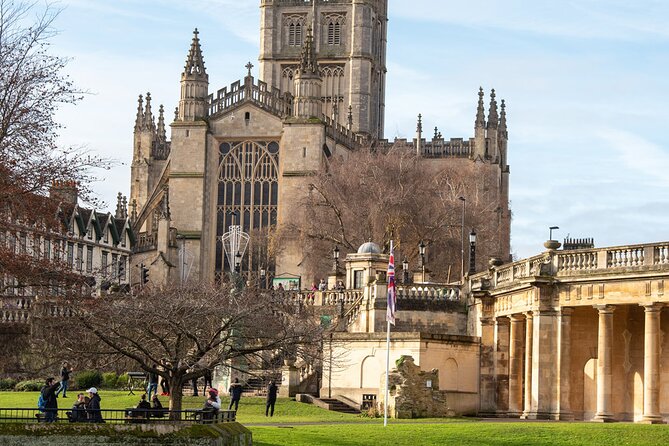
The tour also points you toward Bath’s Roman core. You will visit the area featuring the Roman temple of Sulis Minerva and related pools, commonly described as the city’s main landmark from the 1st century AD.
As you look at Roman Bath, remember that this stop is more about understanding context than about turning it into a full standalone ticketed museum day. The tour even recommends that you book audio tours for the Roman Baths separately either before or after, if you want deeper exploration.
This is where the Austen connection becomes extra fun. You are not just looking at stones and columns. The guide links Bath’s Roman-to-Georgian continuity to how later elites lived, socialized, and wrote about the city.
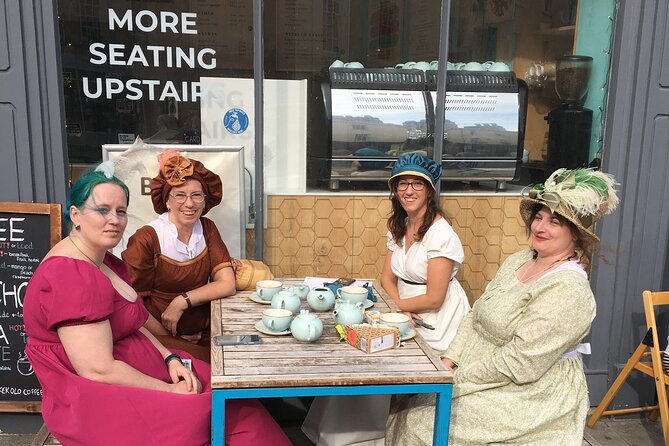
Right next to this Roman focus is the Pump Room, described as a symbol of Bath’s golden age in the Georgian period. It is where fashionable people gathered for tea, balls, and to take the waters. Then the tour adds a literary hook: Catherine and Isabelle meet in Austen’s novel Northanger Abbey.
In your brain, Pump Room becomes more than a pretty interior you might pass. It becomes a setting you can imagine in motion, with people talking, watching, and trading news between treatments.
Circus and Assembly Rooms, the architecture behind social life
Bath is famous for its set pieces, and two of the biggest are The Circus and Assembly Rooms.
The Circus stop gives you the origin story of the architecture. It is associated with the John Wood architects and designed to emulate the Coliseum in Rome, while also inspired by their interest in prehistoric stone circles. Construction began in 1754. When you stand here, you can see why people love it for photos, but the real value is hearing the thinking behind it.
There is also a practical “stand here and notice” element. One of my favorite parts of Bath tours is when someone points out a feature you can experience with your own senses. In this route, you get the chance to play with how the space sounds, especially in the Circus setting.
Then you move to Assembly Rooms, where the tour connects the architecture to social behavior. This stop focuses on the public and ball rooms of Regency society, including the octagon, the card room, and the tea room. These spaces still host events, which makes the past feel current.
As with other interior-heavy sights, entrance for specific museum-style areas is not included. You can still enjoy the guided walk and explanations, then decide later whether you want paid access to rooms depending on what is available during your visit.
For many people, Circus plus Assembly Rooms is the best section for understanding how Austen characters might have moved through Bath. You get the physical spaces where conversations and courtship could happen.
Walking stamina, ticket budgeting, and how to get the most from your 2.5 hours
Let’s talk about value, because this is priced at $40.24 per person for about 2 hours 30 minutes. You should think of it as a guided ordering system for Bath. It helps you see the right places in the right order, and it gives you context you would not get just wandering.
A big value point is free entry to the Jane Austen Centre. Another value point is the tight focus on recognizable Austen and Bath architecture: Pulteney Bridge, Royal Crescent, Bath Abbey, Circus, Assembly Rooms, plus Roman Bath and Pump Room connections.
What is not included: entrance fees for museums, including No. 1 Royal Crescent, and other paid interior access. So you should budget a little extra if you want to go inside everything. If you are trying to do Bath on a lean budget, you can still get a lot from the exterior viewing and guide explanations.
About walking: plan for a fair amount of walking, and be ready for uphill. There can also be some steep steps depending on your exact path. Wear comfortable shoes. Bring water. This tour is manageable for most people, but it is not a sit-and-sip stroll.
Group size stays small, with a maximum of 10 travelers. In practice, smaller groups tend to make it easier for the guide to answer questions and keep people together, and that is part of why reviews rate this highly at 4.8.
One more practical tip based on how this tour runs: the meeting point is not the Austen Centre. If you are going straight there first, you can end up late for the start. Get yourself to Pulteney Bridge early, then let the guide lead you.
Also, the experience needs good weather. If the weather is rough, you might be offered options to shelter or adjust how you experience the stories. So pack for rain, but also be ready for a slightly different flow if the sky turns mean.
Should you book Jane Austen’s Bath and History Trail?
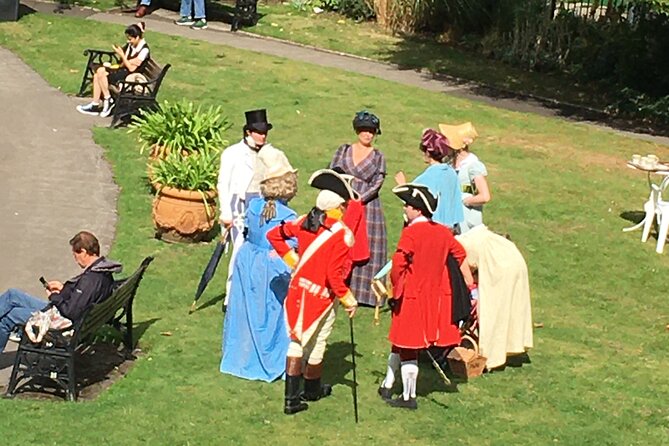
Book it if you want the smartest Austen route through Bath in a short window. The small group, the free Jane Austen Centre entry, and the way the guide connects buildings to daily life are the winning combo. If you love architecture, you will appreciate how the route keeps pointing you to details you might otherwise miss.
Skip or rethink if you do not like walking, or if you want a heavily ticketed museum day. This tour is built for seeing and understanding, not for powering through paid interiors back-to-back.
If you are going to Bath and you only have a half day or less dedicated to Austen, this is the kind of tour that helps you get your bearings fast and then enjoy the rest of your trip with a clearer mental map.
FAQ
How long is the Jane Austen’s Bath And History Trail?
It runs about 2 hours 30 minutes.
Where does the tour start?
The meeting point is Pulteney Bridge Coffee Shop, 17 Pulteney Bridge, Bath BA2 4AY, UK.
Is the Jane Austen Centre included?
Yes. The tour includes free entry to the Jane Austen Centre, and it also includes time to visit the book shop.
What tickets or entrances are not included?
Entrance fees are not included for museums, including No. 1 Royal Crescent. The tour also notes that Jane Austen Centre internal tour guides are not included, and several stops list admission as not included.
How big is the group?
The tour has a maximum of 10 travelers.
What languages is the guide available in?
The tour offers a multilingual guide in English or German.
Is the tour dependent on weather?
Yes. The experience requires good weather. If it is canceled due to poor weather, you are offered a different date or a full refund.
More History Led Walks

Bath, Done Differently





Fresh off the notebook in Bath
- Private Guided Tour of Jane Austen’s Bath
★ 5.0 · 7 reviews - Bridgerton’s Filming Locations in Bath Audio Guide
★ 5.0 · 7 reviews - Private Day Tour from Bath to Stonehenge and Salisbury with Pickup
★ 5.0 · 9 reviews - Bath Private Guided Walking Tour
★ 5.0 · 10 reviews - The Beatles in Bath June 10th 1963
★ 4.5 · 10 reviews - Wells, Cheddar Cheese and Cheddar Gorge – Private Day Trip from Bath
★ 5.0 · 10 reviews
Bath and the Roman Baths, compared.
 ★ 4.5Stonehenge, Windsor Castle, and Bath from LondonFrom $11118,662 reviews
 ★ 4.5Stonehenge, Windsor Castle and Bath with Pub Lunch in LacockFrom $1237,402 reviews
 ★ 4.5Stonehenge, Windsor Castle and Bath Full Day Guided TourFrom $1235,346 reviews
 ★ 4.5Stonehenge and Bath Tour from LondonFrom $994,295 reviews
 ★ 5.0Windsor, Stonehenge and Bath Day Trip from London SpanishFrom $1232,656 reviews
 ★ 5.0Stonehenge and Bath Day Trip from London with Optional Roman Baths VisitFrom $1372,028 reviews
 ★ 5.0Stonehenge Inner Circle Private Tour from London with Bath VisitFrom $1881,909 reviews
 ★ 5.0Walking Tour of Bath with Blue Badge Tourist GuideFrom $301,877 reviews
Browse the lists this tour appears in