
REVIEW · WALKING TOURS
London Crimes And Punishment Private Walking Tour
London gets darker when you walk it. This private 3-hour route threads together pubs, courts, and churchyards where punishments were public, loud, and often brutal, from medieval London all the way to WW2. I like that it is not just a list of famous names, it is a guided way of reading the city like a crime scene, starting in the East End and moving south.
Two things I especially liked: you get real story momentum at each stop, and the guide slows down for the meaning behind the landmarks, not just dates. At the pub sites tied to the Krays and Jack the Ripper, the talk tends to be vivid, but it stays tied to what you can actually see around you, like street layouts and building histories.
One drawback to consider is the pace of coverage. With around 30 stops and many at 5 to 10 minutes, you see a lot, but you will not linger long at any single site. If you want deep time in one place, you might feel slightly rushed.
In This Review
- Key things you should know before you go
- Price and Logistics: What you get for about $248 a person
- Whitechapel Bell Foundry: Where names like Big Ben get explained
- The Krays, the pubs, and Jack the Ripper: Whitechapel to Ten Bells
- Brick Lane and Jamme Masjid: When poverty, refuge, and food share the same street
- Pye Corner, Christ Church Spitalfields, and the Jewish Poor
- Old Spitalfields Market and Smithfield: Where commerce and cruelty sit close
- From William Wallace to St Paul’s: Public punishment in stone and law
- Viaduct Tavern, Holy Sepulchre, and the Old Bailey: The court system as theater
- Blitz memorials, London Bridge, and the suicide-story viewpoint
- Shakespeare’s Globe and the Clink: From street misery to stage entertainment
- Borough Market to Marshalsea: Dickens’s world of markets and debt
- Crossbones, Red Cross Cottages, and finishing in Ye Olde England Tours territory
- Who this tour is best for (and who should skip it)
- Should you book this London Crimes and Punishment Private Walking Tour?
- FAQ
- How long is the London Crimes and Punishment Private Walking Tour?
- What are the start time and meeting point?
- Where does the tour end?
- Is this a private tour?
- Is hotel pickup and drop-off included?
- Are admission tickets included for all stops?
- Does the tour run in bad weather?
- What walking or physical fitness level is required?
- Are service animals allowed?
- Is free cancellation available?
Key things you should know before you go
- Private, just your party: you keep the pace and can ask questions as you walk.
- Hotel pickup and drop-off included: pickup is on foot or via London Underground, so you are not starting from a random corner.
- A story-led route through punishment sites: executions, prisons, famous courts, and the places where rumors became legend.
- Some stops are free, some need tickets: a few venues include entry, but many do not include admission.
- Best with comfortable shoes and a curious mind: you will walk and you will learn quickly, even in short stop times.
More on foot, at a pace you can hear the guide
- Tour for Muggles The Ultimate Harry Potter Walking Tour in London★ 5.0 · 4,684 reviews
- London Jack The Ripper Guided Walking Tour★ 5.0 · 3,131 reviews
- Changing of the Guard Guided Walking Tour in London★ 5.0 · 1,793 reviews
- The Great British Rock and Roll Walking Tour★ 5.0 · 1,371 reviews
Price and Logistics: What you get for about $248 a person
At $247.73 per person, this is not a bargain-basement walking tour. The value comes from the mix of things that usually cost extra on other tours: it is truly private, you get a local guide plus a professional guide, and you also get hotel pickup and drop-off (on foot or London Underground). That reduces friction on a day when you want to focus on the stories, not on figuring out transport.
The tour is also built around a practical rhythm. It runs about 3 hours, starts at 9:30am near Whitechapel (277 Whitechapel Rd), and ends near Borough High St (SE1 1JX). You are not bouncing around by taxi. You walk between sites, and you get guided context so the route feels like one connected story.
Do note one important cost detail: admission tickets are not included for many stops. Some sights are free to view, but others come with a note that tickets are not included. Translation: if you want to go inside every place that offers it, you will likely pay additional entry fees. The tour does still work well if you stick to what is included and enjoy the outside view, churchyard context, and street-level details.
Whitechapel Bell Foundry: Where names like Big Ben get explained
You start at 277 Whitechapel Rd and your first stop is the Whitechapel Bell Foundry, with about 10 minutes there. This is a smart opener because it is not yet about murders and executions. It is about how iconic London sounds were made, and why a name like Big Ben even matters.
You will also hear that the foundry connects to earlier political life in London, and then you jump from that broad “how London was built” theme into the crafts that shaped what London became famous for. The Big Ben naming story is exactly the type of detail that makes a tour feel worth paying for, because it turns a landmark you already know into something you actually understand.
If you are photo-happy, this is a decent first stop. You can grab images before the route becomes more emotionally heavy.
The Krays, the pubs, and Jack the Ripper: Whitechapel to Ten Bells
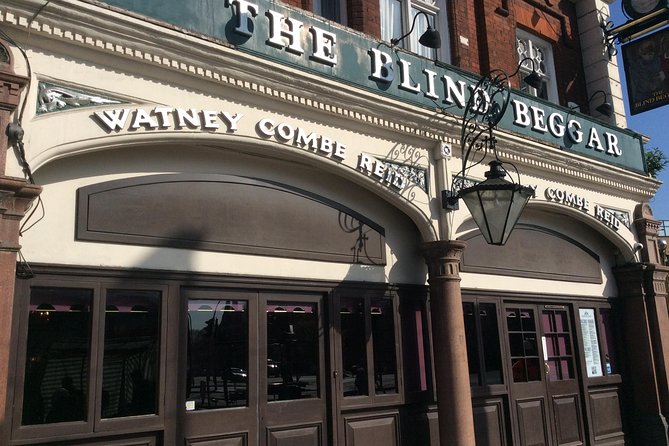
After the foundry, the route turns squarely toward the dark side. The next stop is the Blind Beggar Public House Whitechapel for around 10 minutes. This pub is linked to a notorious London gangland shooting involving the Kray brothers in the 1960s. It is one of those places where you can stand outside and feel how a street corner can become part of the city’s mythology.
Then it is on to The Ten Bells for about 5 minutes. This pub is closely tied to Jack the Ripper, and you will hear it described in relation to the street linked with where he lived. From a tour-value point of view, short stops can still be meaningful here because the guide helps you connect the dots between addresses and the surrounding streets you are literally standing on.
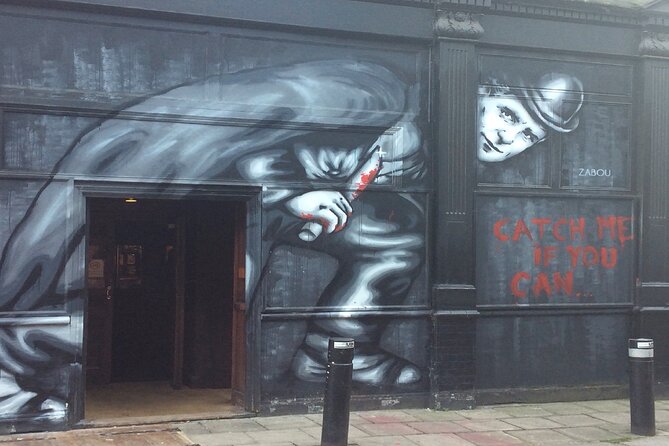
Next comes the White Hart pub, also around 10 minutes, another stop connected with Jack the Ripper. You will also be pointed toward the site of a potential Ripper killing nearby. This is where the tour earns its title. You are not just hearing “this happened here.” You are learning how stories spread, how certain locations get repeated, and why people keep building the same legends around the same corners.
One small practical note: if you are sensitive to violent subject matter, give yourself a mental heads-up. The tour repeatedly hits shootings, killings, and execution-related sites. The guide frames it as crime and punishment in London over centuries, but the topic is still grim.
Brick Lane and Jamme Masjid: When poverty, refuge, and food share the same street
From the pubs, you move to Brick Lane for about 15 minutes. Today it is known for that long stretch of curry restaurants, but you are guided back to Victorian-era life when Jack was about. This stop is a good pivot because it shows you that “dark London” was also daily London, packed with work, crowding, and the kinds of neighborhoods where fear and desperation can take root.
Then the tour includes Brick Lane Jamme Masjid for about 5 minutes. What you learn here is a layered story of changing religious spaces: the building was a synagogue in the Ripper era, and a century earlier it served as a Protestant church for French refugees. Even if you have never studied London immigration patterns, this is the kind of stop that makes the city feel real. It is not a museum lesson. It is evidence that people kept coming, changing, and leaving their mark.
If you want to snack, this is a smart moment to plan it. The tour is not a food tour, but Brick Lane’s restaurant strip is right here when you are ready for a break.
More private departures, group size noted


Pye Corner, Christ Church Spitalfields, and the Jewish Poor
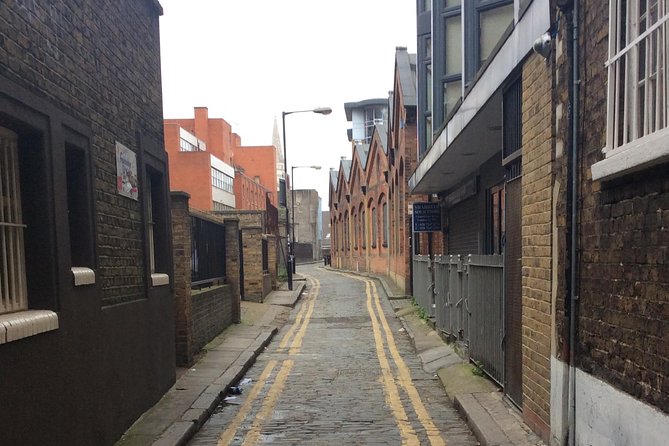
A short walk brings you to the Golden Boy of Pye Corner for about 5 minutes. The golden statue of a chubby young boy is tied to the Great Fire of London, and the guide helps explain why a symbol like this ends up stuck to a specific spot. It is a quick stop, but it helps you see how London remembers catastrophes, not just crimes.
After that, you visit Christ Church Spitalfields for around 10 minutes. It is described as the centre of Victorian life, across from the bustling market and brewery areas, yet adjacent to what is framed as one of the worst streets in London. That contrast is the point. London’s harsh realities did not live far away. They were often next to everyday church and community spaces.
Next is the Soup Kitchen for the Jewish Poor for about 5 minutes. You are shown one of the first, and described as one of the last, Jewish soup kitchens in the East End. This stop changes the emotional tone in a useful way. It reminds you that punishment is one side of the story, and survival support is another.
Old Spitalfields Market and Smithfield: Where commerce and cruelty sit close
The tour then includes Old Spitalfields Market for about 5 minutes, and this is marked as included admission. It used to be an industrial market and is now a lively market under the old Victorian roof. It is a practical breather after heavier stops. You get to see how the area has become a shopping destination while still keeping its historical structure.
Then you reach Smithfield Market for around 10 minutes. This is where the “crime and punishment” theme keeps its edge, but shifts toward historical industry. Smithfield was a centre of London’s meat trade, and the guide points out that butchery practices were not what you would call ethical by modern standards. You will hear that it was not only the slaughtered animals that were part of the supply chain. The tour uses this to show how harsh systems existed long before modern laws.
If you are the type who gets uncomfortable with heavy topics, take care here. This is more than a quick “facts only” stop. The guide likely frames it as part of how people were controlled through poverty and food systems.
From William Wallace to St Paul’s: Public punishment in stone and law
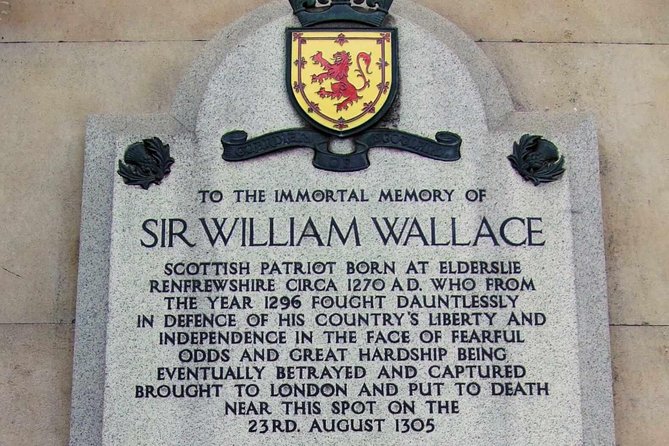
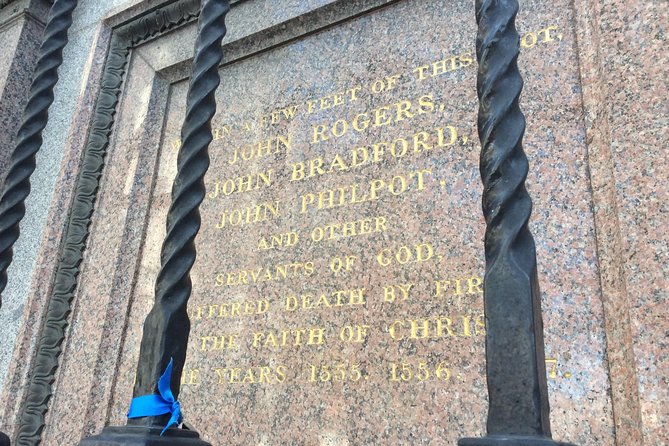
Next you visit the William Wallace Memorial for about 10 minutes. This stop is tied to the place where William Wallace, the “Braveheart” figure, was hung, drawn, and quartered, plus mention of other histories nearby. It is one of the clearest “punishment as spectacle” moments on the route.
Then you pause at the Peasants’ Revolt Plaque for around 5 minutes. This is not a murder scene. It is about political fallout, and how the revolt is said to have helped shape later life in Western countries. It is a reminder that punishment also appears as backlash against power.
After that comes Church of St. Bartholomew the Great for about 5 minutes. This one is focused on a graveyard and the secrets you might find there. The key is that it offers atmosphere and quiet, which helps balance the more violent stops.
Then you get St. Paul’s Cathedral from the outside for about 5 minutes, with the story that it miraculously avoided destruction in WW2. Even if you have seen the cathedral before, the tour uses it as a “city resilience” beat, showing how London survived bombs while also holding on to iconic architecture.
Viaduct Tavern, Holy Sepulchre, and the Old Bailey: The court system as theater
The next stop is the Viaduct Tavern for about 5 minutes. It is described as notorious because it sits next to sites linked with executions, and because the cellars beneath the streets held condemned men in the last night before punishment. That combination, pub above and holding spaces below, turns the area into something you experience in two layers: street-level normal, underground waiting rooms of fear.
Then it is Holy Sepulchre London for about 5 minutes. The guide shares the church’s history with the note that it includes gruesome stories. This stop works if you like your architecture with an edge, but it may feel intense if you prefer lighter walking tours.
Next is the Old Bailey for about 5 minutes. This is framed as perhaps the oldest court in the Western world, and it is still a functioning trial place for serious criminal cases. Seeing it through that lens makes the building feel less like “historic architecture” and more like an operating system for justice.
Blitz memorials, London Bridge, and the suicide-story viewpoint
From courts you head toward WW2 memory. Christchurch Greyfriars Church Garden is a small garden and ruins memorial for the Blitz, again about 5 minutes. The guide keeps it short and focused, so you leave with a sense of place rather than a full lecture.
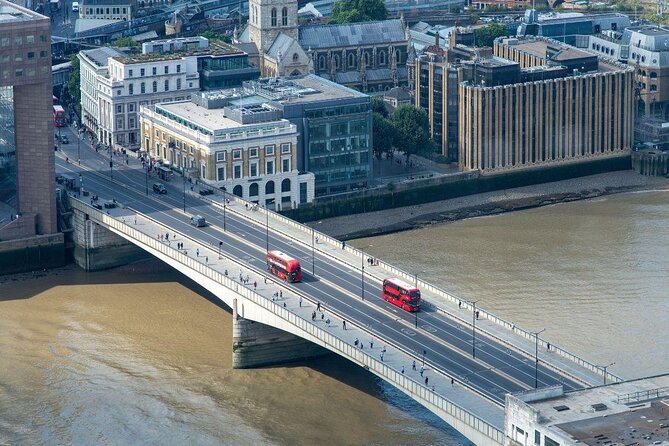
Then the tour reaches London Bridge for about 5 minutes. You will hear about the ceremonial spike where heads of the executed were stuck as a warning to those entering the city. That is a heavy detail, and it is exactly the sort of reason this tour exists. It makes the idea of deterrence feel immediate.
Next is the National Firefighters Memorial for about 5 minutes, which remembers those who died protecting London during Blitz bombing and fires. This stop adds a human scale and a different kind of courage, not punishment but rescue.
Then you walk to the Millennium Bridge for about 5 minutes, where you get context about past suicide hotspots and the guidance described as sexist that it was too. This is another short, story-based stop. If you find suicide-related stories upsetting, you may want to mentally prepare, and you can also ask your guide to keep that part brief if needed.
Shakespeare’s Globe and the Clink: From street misery to stage entertainment
The route continues with Shakespeare’s Globe for about 10 minutes. Today it is a major place to see plays, but in Shakespeare’s time the area is described as rough and grim, sometimes compared to the idea of a low-quality version of Amsterdam. The point is not to degrade art. It is to show that the same geography can swing from poverty and trouble to cultural spotlight.
Then you visit The Clink Prison Museum, spending about 10 minutes, but importantly you are not going into the museum. You see the outside, which is described as very authentic, and you hear why this area was so bad. Even without entry, the tour uses the setting to tell you what matters.
After that comes Winchester Palace for about 5 minutes. It is described as mostly destroyed in one of the many huge fires of London, and you hear that it was once home to the bishop and his terrible ways. It is a reminder that power and cruelty often had a home address.
Borough Market to Marshalsea: Dickens’s world of markets and debt
You then reach Borough Market for about 10 minutes. The guide frames it as heart-of-Dickens London and ties it to Oliver Twist, plus the note that there has been a market here since Roman times. That combination helps you see continuity. People have kept buying and selling here for ages, even when the surrounding streets were dangerous.
The last major stop is Marshalsea Prison South Wall, about 10 minutes, and this is marked as admission included. This debtors prison is described as having a terrible impact on Charles Dickens. Even if you know Dickens only from school, this stop grounds his writing in a specific place tied to hardship and captivity.
After Marshalsea, you head to quieter, final beats in the tour.
Crossbones, Red Cross Cottages, and finishing in Ye Olde England Tours territory
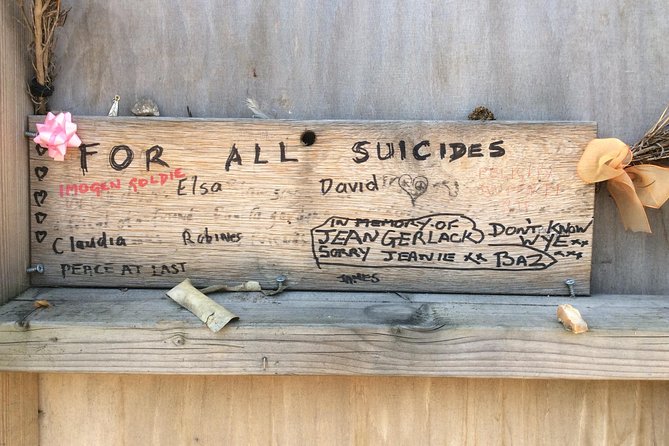
You visit Crossbones Graveyard and the Garden of Remembrance for about 15 minutes. This is one of the most haunting stops on the whole walk. It is described as almost unknown even to Londoners, and linked with the graves of criminals, prostitutes, plague victims, and suicides over centuries. The guide frames it as tragic but beautiful. It is also the kind of stop where your guide’s tone matters, because you are processing real human suffering.
Then comes Red Cross Cottages and Garden for about 5 minutes. This is tied to one of the first attempts to improve welfare for a poverty-stricken London. After so much punishment and hardship, this is a mercy-focused note. It helps the tour end feeling less like a horror gallery and more like a story about change.
Finally, the tour wraps with Ye Olde England Tours as the end segment, marking the provider as part of the experience and keeping the day simple to finish up near the route’s end point on Borough High St.
Who this tour is best for (and who should skip it)
This London Crimes And Punishment tour is ideal for you if you love your city with context. You want more than “famous name, quick photo.” You want the kind of guided explanations that make London’s corners and buildings make sense, even when the topic is ugly.
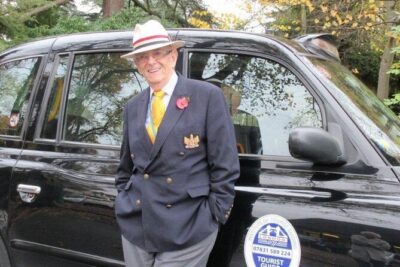
It is also a good fit if you like a guide who spends time on details. Past bookings mention Stephen Liddell by name, and the recurring theme in that feedback is how carefully he handles the stories and how much care he puts into turning short stops into meaningful moments.
I would skip it, or at least consider a gentler alternative, if you do not want heavy subjects. The tour includes killings, executions, prisons, and public warning displays. Also, the stop times are short, so if you want a slow museum-style pace, you might find the route packed.
Should you book this London Crimes and Punishment Private Walking Tour?
If you want a private London walking tour that mixes iconic landmarks like St Paul’s and London Bridge with streets tied to the Krays and Jack the Ripper, this is a strong choice. The best reason to book is the format: it is short, guided, and story-driven, with pickup and drop-off so you do not spend your morning wrestling with transit.
I would book it when you have enough stamina for a 3-hour walk, comfortable shoes, and you are okay with dark subject matter. If that sounds like your kind of London, this tour is likely to give you a day you will remember for more than the headlines.
FAQ
How long is the London Crimes and Punishment Private Walking Tour?
The tour is about 3 hours.
What are the start time and meeting point?
It starts at 9:30am at 277 Whitechapel Rd, London E1 1BY, UK.
Where does the tour end?
The tour ends at Borough High St, London SE1 1JX, UK.
Is this a private tour?
Yes. It is a private tour, and only your group participates.
Is hotel pickup and drop-off included?
Yes. Hotel pickup and drop-off are included, on foot or via London Underground.
Are admission tickets included for all stops?
No. Many stops note that admission tickets are not included. Some stops are listed as admission ticket included, such as Old Spitalfields Market and Marshalsea Prison South Wall.
Does the tour run in bad weather?
Yes. It operates in all weather conditions, so dress appropriately.
What walking or physical fitness level is required?
The tour recommends a moderate physical fitness level.
Are service animals allowed?
Yes, service animals are allowed.
Is free cancellation available?
Yes. You can cancel up to 24 hours in advance for a full refund. If you cancel less than 24 hours before the start, the amount paid is not refunded.
More Private Departures




More Of London On Foot


Fresh off the notebook in London
- Witchcraft, Ancient Cults & MI15 Spy Secrets
★ 4.0 · 3 reviews - Arrival Transfer: London Train Stations to London Hotels
★ 5.0 · 3 reviews - Royal Afternoon Tea & Walk at Kensington Palace
★ 4.5 · 3 reviews - Bridgerton Tour in London
★ 5.0 · 3 reviews - Private Transfer from central London to Southampton Cruise Terminal
★ 5.0 · 3 reviews - Photographer, Professional Photo Shoot – London
★ 5.0 · 3 reviews
Walking Tours, compared.
 ★ 5.0Oxford University Walking Tour With University Alumni GuideFrom $416,905 reviews
 ★ 5.0Tour for Muggles The Ultimate Harry Potter Walking Tour in LondonFrom $234,684 reviews
 ★ 5.0London Jack The Ripper Guided Walking TourFrom $03,131 reviews
 ★ 5.0Cambridge University Walking Tour by Alumni™ Kings College OptionFrom $332,336 reviews
 ★ 5.0Blackbeard to Banksy – The Ultimate Walking Tour of BristolFrom $181,961 reviews
 ★ 5.0Air Raid Shelter + St. Nicholas Market Walking TourFrom $171,950 reviews
 ★ 5.0Walking Tour of Bath with Blue Badge Tourist GuideFrom $301,877 reviews
 ★ 5.0Changing of the Guard Guided Walking Tour in LondonFrom $251,793 reviews