
REVIEW · JACK THE RIPPER TOURS
London Private Jack The Ripper Tour
Eight street corners, one chilling timeline. This private London walk turns the Jack the Ripper story into a clear, guide-led timeline, with private group attention and an expert guide who can answer the questions that always pop up. The one watch-out is simple: it involves a good amount of walking and standing, so wear comfy shoes.
You start near Whitechapel, then work your way through the neighborhoods and street locations linked to the case’s best-known names, finishing at Liverpool Street. You’ll also use a mobile ticket, and you’ll be in English the whole time, which makes it easier to follow the story beats without a lot of guesswork.
In This Review
- Key things to know before you go
- A private Jack the Ripper tour that tells the story in order
- Timing, route flow, and how the logistics affect your day
- Whitechapel Station area: Polly Nichols and the start of the canonical list
- The Working Lads Institute area: how Victorian inquests worked
- Hanbury Street: 29 Hanbury Street and Annie Chapman’s press-triggered panic
- Henriques Street (formerly Berner Street): Liz Stride and the “true” victim debate
- Mitre Square: the double event and how the name Jack the Ripper caught on
- Goulston Street: a vital clue and why it still gets mentioned
- Gunthorpe Street: an earlier possible murder and how forensics changed the game
- Old Spitalfields Market: Mary Kelly and the final canonical murder
- Price and value: who gets the best deal at $246.91 per group
- Who this tour suits best
- Should you book this Jack the Ripper private tour?
Key things to know before you go

- Private group format means more back-and-forth, not just a headset-style lecture
- Eight major stops connect the case from Polly Nichols to Mary Kelly in a single line of story
- Victorian inquest focus helps explain how rumors turned into accepted “truth”
- Real street context is built around where people lived, worked, and gathered
- Guide comfort and pacing matter here, especially if you’re traveling solo
Whitechapel after dark, other guides tested
- London Jack the Ripper Guided Tour with Ripper-Vision★ 4.5 · 4,840 reviews
- London Jack The Ripper Guided Walking Tour★ 5.0 · 3,131 reviews
- Ultimate Jack the Ripper : Guided Tour of London★ 5.0 · 1,495 reviews
- The Original Jack the Ripper : Guided Tour★ 5.0 · 1,264 reviews
A private Jack the Ripper tour that tells the story in order
This is the kind of tour that works because it is structured like a case file. You do not just hear spooky legends. You get guided stops tied to the canonical victims, the press frenzy, the inquests, and the communications that helped shape the name Jack the Ripper. The private setup is the real quality-of-life upgrade, because you can ask for clarification as you go, instead of waiting until the end.
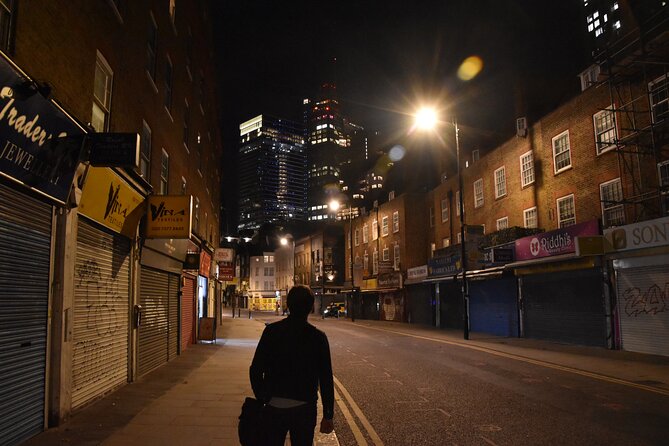
The best part is that the route is short enough to stay focused, but long enough to feel like you have moved through the geography of the story. Whitechapel is not a single landmark. It’s a web of streets, institutions, and public places. When you walk those spots in sequence, the myths make a lot more sense. And if you’re the type who always wants answers to the classic questions, the guide is there to give them to you.
One bonus for solo travelers: the tour format makes it easier to feel like you’re part of a group without being swallowed by a crowd. You might even be lucky enough to get a guide like Michael, who has been noted for keeping things calm, clear, and comfortable for women traveling alone.
Timing, route flow, and how the logistics affect your day
Expect about 2 hours 30 minutes on the clock, and plan on doing more walking than you might expect from the “10 minutes at each stop” breakdown. Each location is short, but you’ll string eight of them together, plus a little shifting time between streets.
Also note what’s not included: London Underground travel between Whitechapel and Aldgate is listed as not included. Even if your exact route day-of differs, you should assume you might need one tube hop to connect the start and finish areas.
You can usually get comfortable with the plan fast because the tour has a clear start and end:
- Start: 277 Whitechapel Rd, London E1 1BY
- End: Liverpool Street Station, London EC2M 7QA
This ending point is handy. Liverpool Street is a big hub, so you’re not stuck hunting for transit afterward.
Finally, this tour is private (only your group participates), and it’s offered in English. Confirmation comes at booking, and the tour allows service animals. The meeting area is near public transportation, which helps if you’re starting from somewhere else in the city.
If you’re the planning type, book ahead. The experience is commonly reserved around 45 days in advance on average, and popular time slots can disappear.
Whitechapel Station area: Polly Nichols and the start of the canonical list
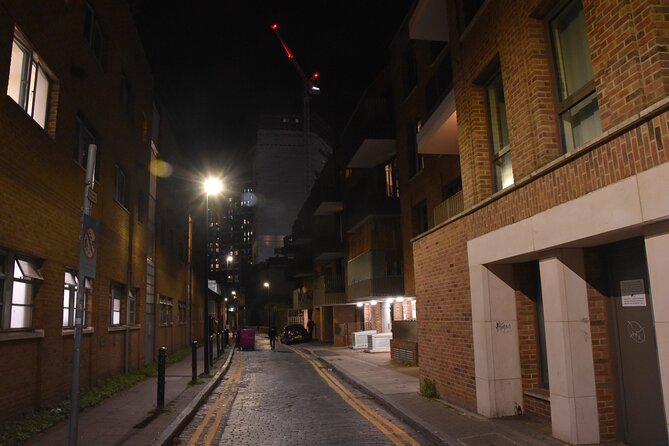
Your first stop puts you close to Whitechapel Station, at the spot associated with the Ripper’s first canonical murder, tied to Polly Nichols. This is where the guide does an important job: they explain what happened to her, how she was found, and why she ended up labeled the first canonical victim.
That last part matters, because “canonical” is one of those words that makes the story sound tidy when the reality was messy. The tour’s value here is that it treats the early case like a foundation, not just a starting scare. You’ll learn how evidence and reporting helped shape who got grouped into the accepted sequence, and why that sequence became the one most people talk about later.
What to expect at this stop
- A short walk and then a focused explanation at street level
- The basics of the first official victim, including discovery and framing
- Time to ask why the story was later organized the way it was
Small drawback to consider
Because it’s early in the tour, it can feel a bit information-heavy if you’re tired. If you’re sensitive to long listening sessions, pace yourself with a water sip and a quick stretch before you move on.
The Working Lads Institute area: how Victorian inquests worked
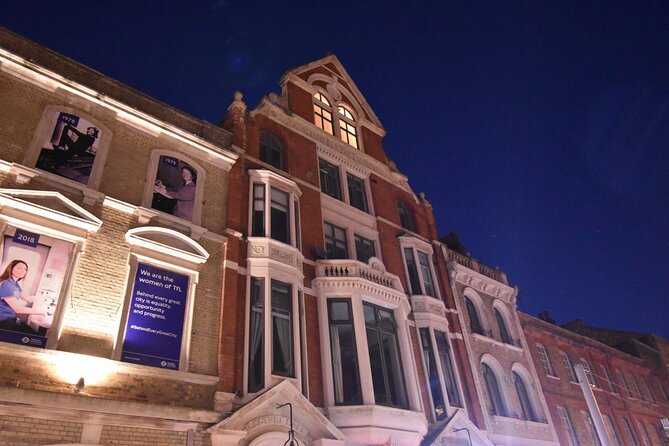
Next you’ll be outside the former Working Lads Institute, where inquests tied to the Ripper murders were held. This stop is a reality check. The case isn’t only about street crime and fear. It’s also about how Victorian institutions tried to make sense of chaos.
You’ll hear how inquests were run during the period, how each inquest progressed, who was called as a witness, and what outcomes were reached. Even if you know the broad outline of the murders, this part helps you understand the machinery of the era: the formal questioning, the public nature of hearings, and the way conclusions could ripple into public belief.
Why this stop is worth it
Modern true-crime fans often assume everything is built for clarity. Victorian inquests were trying to do something different. They were building narratives, deciding what was proven, and doing it in a high-pressure environment where the media was already hungry for explanations.
In practical terms, this stop gives you language for what you’ll see later in the story, especially when the press panic starts to steer public opinion.
More private departures, group size noted

Hanbury Street: 29 Hanbury Street and Annie Chapman’s press-triggered panic
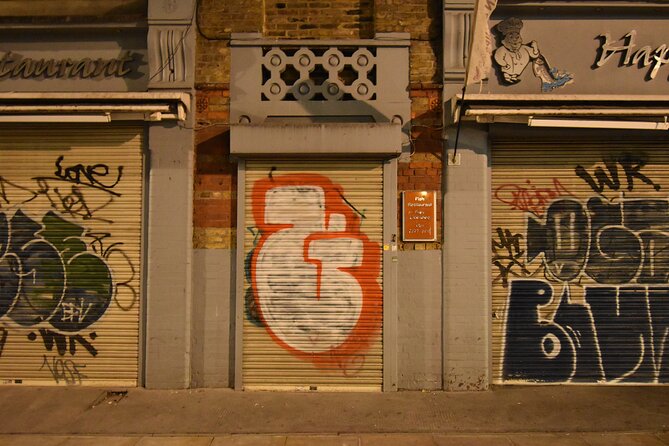
Then you move to Hanbury Street, specifically 29 Hanbury Street, connected to the second victim, Annie Chapman. The tour frames Chapman’s death as the moment when public and media pressure jumped into a new gear.
You’ll learn how the intense panic fueled the myth of what newspapers were calling the Whitechapel Murderer, and how that term gained traction. This stop is where you start seeing the Ripper story as something partly made by reporting, not only by events.
What you’ll pick up here
- Why Chapman’s death sparked a wider public reaction
- How newspapers and public fear can turn a label into a brand
- How that brand then supports later “connections” people want to make
Tip for best enjoyment
If you like digging into how rumor becomes legend, slow down here. Let the guide finish the arc from panic to myth before you rush to the next street.
Henriques Street (formerly Berner Street): Liz Stride and the “true” victim debate
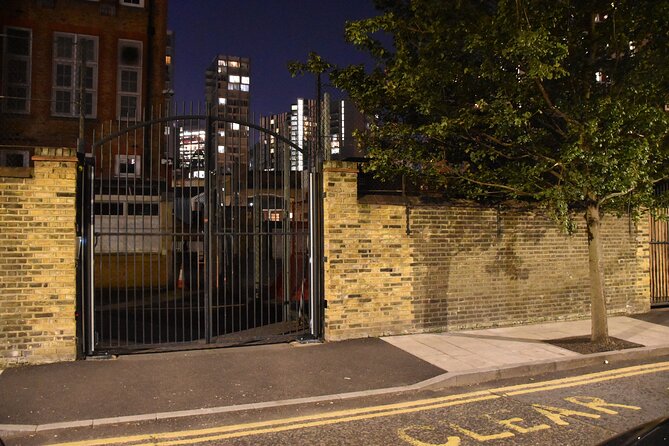
At Henriques Street (the guide also notes the street’s former name, Berner Street), you’ll focus on the third victim, Liz Stride. This stop leans into a specific detail that has long fueled argument: Liz was not mutilated after her murder, and that has led some people to question whether she belonged in the same Ripper sequence.
The tour uses this to tackle a broader point: why there’s so much conjecture about who was murdered by Jack the Ripper. In other words, you’re not just hearing gossip. You’re learning how differences in the reporting, injuries, and later interpretations can create uncertainty that even today still gets debated.
Why this matters
When you’re trying to understand a serial-killer legend, you need to track not only what is known, but what is assumed. This stop is one of the best for building that habit.
Mitre Square: the double event and how the name Jack the Ripper caught on
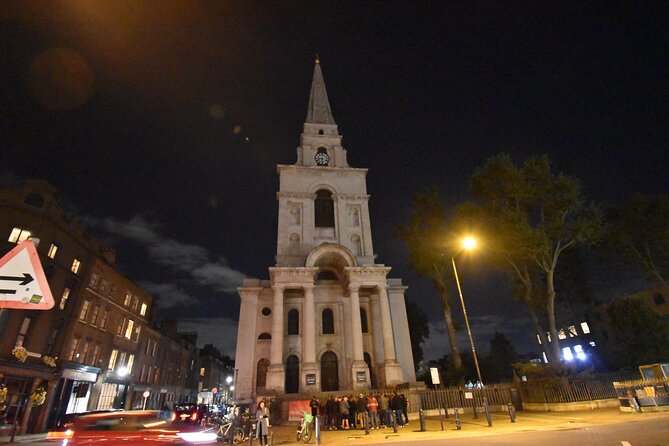
Next is Mitre Square, tied to the murder of the fourth victim, Catherine Eddowes. This is where the tour tackles the event often called the double event, the only night when two women are associated with the killings in one stretch: Catherine Eddowes and Liz Stride.
Then comes the naming story. You’ll hear how the double event and communications sent to the Central News Agency in London helped lead to the name Jack the Ripper replacing the earlier label. This is a big theme in the tour: language matters. Labels shape how people interpret evidence, and those interpretations shape what becomes “history.”
What to listen for
Pay attention to how the guide connects the streets to the messages. It’s easy to think of letters and newspaper headlines as separate from real life, but this stop makes the link feel immediate.
Goulston Street: a vital clue and why it still gets mentioned
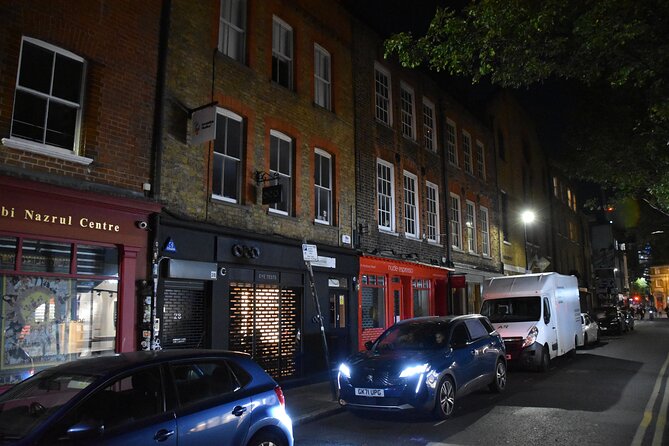
At Goulston Street, the tour highlights a vital clue connected to the investigation. The details provided for this stop are brief, but the point is clear: some spots become famous because investigators found something there that later people kept circling back to.
This is a good moment to switch from pure storytelling to pattern recognition. When you see how the tour sets up the clue’s importance, you’ll understand why people keep arguing about the Ripper case long after the facts were first gathered.
How to make the most of it
Ask the guide how they think about “clue value” versus “myth value.” A good guide will help you separate what’s strongly evidenced from what is only widely repeated.
Gunthorpe Street: an earlier possible murder and how forensics changed the game
Your next stop is Gunthorpe Street, described as the site of an earlier possible murder. Here, the tour explains how this murder might have been the Ripper’s first, and how modern policing techniques and forensic science have been applied to later investigations into the murders.
This part does something smart. It shows you that the fascination didn’t end because the case ended. Instead, technology and new methods kept people looking again, and they used those tools to test older assumptions.
You’ll also hear why people remain obsessed with Victorian murders. It’s not only shock value. It’s the mix of unknowns, the role of institutions like inquests, and the way public fear became part of the evidence trail.
Practical note
Gunthorpe Street is one of those “short stop, big idea” locations. Bring your questions. If you’re wondering how investigators today would think differently, this is where your guide can likely give you the clearest answers.
Old Spitalfields Market: Mary Kelly and the final canonical murder
The final canonical murder stop is at Old Spitalfields Market, associated with Mary Kelly. This ending spot brings a satisfying closure to the tour’s structure, because you start with Polly Nichols and you finish with Mary Kelly, tracing the canonical sequence the tour follows.
The guide keeps the tone grounded in location and context, not just drama. By the time you reach Spitalfields, you’ve already built the context for why each name matters, and why each stop shaped what people believed next.
What makes this ending feel different
You finish not in a museum, but in a real London working area tied to daily life. That’s the point. These murders were not happening in a Hollywood set. They happened in a city with markets, routines, and crowded streets.
And when the tour ends at Liverpool Street Station, you get a smooth transition back to normal London, which is a relief if you’re sensitive to heavy topics.
Price and value: who gets the best deal at $246.91 per group
At $246.91 per group for up to 15 people, the price makes the most sense when you can share it. A private tour sounds expensive if you compare it to per-person group pricing, but here you’re paying for guide time and privacy as a unit.
If you’re traveling with a small circle, you may still find it worth it because the private format lets you ask questions and adjust pace. If you have a group that can use the full capacity, it becomes one of the better “value per person” options for a guided, multi-stop route like this.
Also remember that the itinerary is outdoors and each stop lists admission as free, so you are paying for guiding and storytelling, not entrance fees that pile up.
Who this tour suits best
This is a strong fit if you:
- Want a private format where questions are encouraged
- Like crime-history storytelling with context, not only spooky legends
- Prefer walking through neighborhoods tied to the timeline
It may be less ideal if you:
- Need very limited walking or lots of sitting breaks
- Expect museum-style displays at each stop, since these are street-level locations
Should you book this Jack the Ripper private tour?
Yes, if you want a focused, guide-led way to see the Whitechapel sites tied to the canonical victims and to understand how press panic, inquests, and communications helped shape the legend. The private setup is especially worth it when you’re traveling with friends, or when you want a solo outing that feels safe and comfortable, paced by a real person like Michael (not just a script).
One last nudge: bring comfortable shoes and stay open to uncertainty. This tour does a good job showing that some parts are clearer than others, and that’s part of why the story keeps living on.
More Private Departures





More Nights In Whitechapel

Fresh off the notebook in London
- Private Rock ‘n’ Roll Music Tour of Central London
★ 5.0 · 7 reviews - London Walking Tour: Camden Town Photography Walkabout
★ 5.0 · 7 reviews - Private Transfer from London accommodation to Cruise terminal
★ 5.0 · 7 reviews - Amazing Nightlife in London East Tour
★ 4.5 · 7 reviews - The British Museum: a highlights tour with a TV historian
★ 5.0 · 7 reviews - Heathrow Airport to Cambridge private taxi transfers
★ 5.0 · 7 reviews
Jack the Ripper Tours, compared.
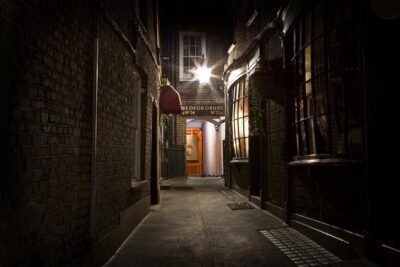 ★ 4.5London Jack the Ripper Guided Tour with Ripper-VisionFrom $274,840 reviews
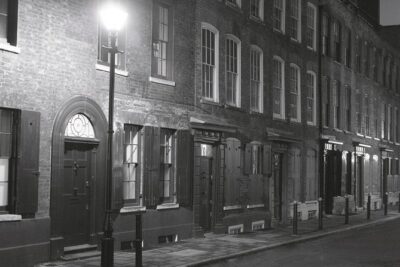 ★ 5.0London Jack The Ripper Guided Walking TourFrom $03,131 reviews
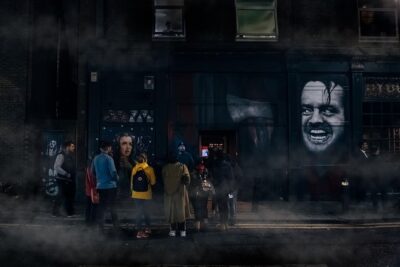 ★ 5.0Ultimate Jack the Ripper : Guided Tour of LondonFrom $271,495 reviews
 ★ 5.0The Original Jack the Ripper : Guided TourFrom $221,264 reviews
 ★ 5.0London Jack The Ripper Small-Group Walking TourFrom $1511,013 reviews
 ★ 5.0Jack the Ripper Tour in SpanishFrom $17875 reviews
 ★ 3.5The Original Jack the Ripper Coach Tour of Haunted LondonFrom $82419 reviews
 ★ 5.0Jack the Ripper Walking Tour in LondonFrom $34354 reviews
Browse the lists this tour appears in