
REVIEW · LONDON MUSEUMS AND GALLERIES
Marvels at the British Museum: Rosetta Stone, Parthenon, Mummies
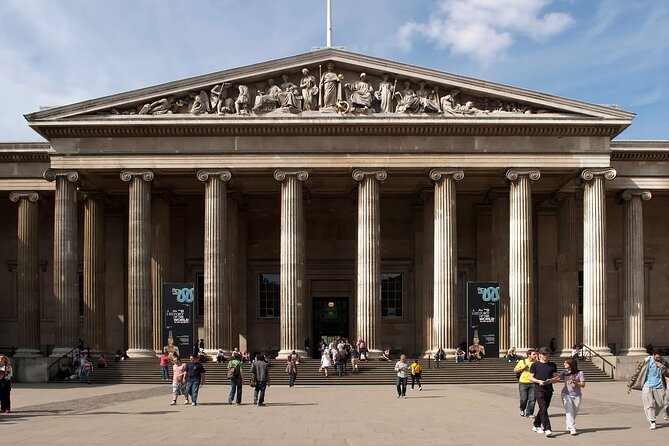
The British Museum in two hours, with a guide. What makes this one work is the priority queuing that gets you inside quicker, and the storytelling that turns famous pieces like the Rosetta Stone into something you can actually follow. One thing to plan for: the British Museum is huge, so even with a tight plan, you still walk a lot, and comfy shoes matter.
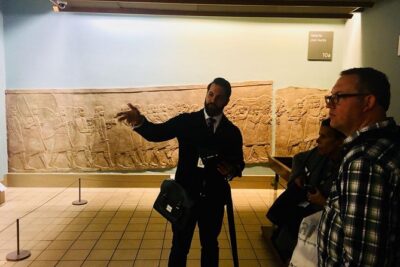
I like that this is a small-group style visit, with a maximum of 25 people, which keeps questions from getting lost in the crowd. My guide for the day was Joe, and he guided us through the noise of thousands of visitors with clear, memorable context, plus the kind of details you do not see in the labels.
This tour uses a mobile ticket, starts at the British Museum at Great Russell St, and it ends right back at the meeting point. If you are the sort of person who wants to wander at your own speed for hours, this setup may feel too structured, but if you want the highlights with a real guide, it is a smart use of time.
In This Review
- Key things to know before you go
- Two hours inside a museum that feels endless
- Getting in faster: priority queuing and mobile ticket basics
- The meeting point, the walking pace, and the 25-person group reality
- The British Museum’s highlights run: what you will actually see
- Rosetta Stone focus: why one object changes how you read the museum
- Parthenon marbles: understanding Greek art without the museum fog
- Mummies and Egyptian moments: seeing beyond the wow factor
- Anglo-Saxons and the museum’s wide span: how the guide keeps it coherent
- Ask questions, get unstuck: why guided time beats solo wandering
- Price and value: is $102.43 per person a smart deal?
- Who this tour fits best, and who should skip it
- Practical tips so your two hours feel smooth
- Should you book Marvels at the British Museum, Rosetta Stone, Parthenon, Mummies?
- FAQ
- How long is the British Museum highlights tour?
- What is included in the price?
- What is not included?
- Where does the tour start and end?
- Is the tour private?
- How big is the group?
- Do I need to bring anything for entry?
- What does skip the line mean here?
- What if the time slot I pick is not available?
- What if I book last minute and there are no places?
Key things to know before you go
- Priority queuing helps you skip the long wait and start learning sooner
- Two hours is built for choosing focus over seeing every gallery
- Joe-style guided storytelling gives context beyond the display text
- A max of 25 travelers keeps the group moving and questions manageable
- On foot route means you should plan for a lot of walking inside the museum
Rainy afternoon fixed: more museum visits we tried
- British Museum London Guided Tour Semi-Private 8ppl Max★ 5.0 · 984 reviews
- The British Museum London – Exclusive Guided Museum Tour★ 5.0 · 555 reviews
- British Museum Guided Tour★ 4.0 · 470 reviews
- Private Guided Tour of the British Museum – Tickets Included★ 5.0 · 193 reviews
Two hours inside a museum that feels endless
The British Museum is not just big, it is eight-million objects big, and that can be paralyzing. This tour is designed for the opposite of stress. You get a guided path that aims at a few headline artefacts, plus connecting themes across ancient cultures.
I like that the emphasis is on quality over quantity. Instead of pretending you can see everything, you leave with the stories that help the objects make sense. It is also a good match for first-time visitors who want the museum’s greatest hits without getting lost in the maze.
The flip side is simple: you will not “do the whole museum.” This is a highlight route, not a free-roam day. If you have the energy to spend half a day or more, you might later return on your own. But for one visit, this is a tight, value-focused plan.
Getting in faster: priority queuing and mobile ticket basics
The biggest time-saver here is priority queuing. In a place like the British Museum, shaving off waiting time is not just convenience, it is more actual museum time. You also do not need to arrive hours early to make the day feel workable.
You also get a mobile ticket, which is usually the easiest way to handle entry without printing or fumbling at check-in. When you are using your day well in London, small friction matters.
Plan to arrive at the entrance at least 15 minutes before your scheduled start time. That buffer helps because the tour is timed, and you want to be part of the group when it starts.
The meeting point, the walking pace, and the 25-person group reality
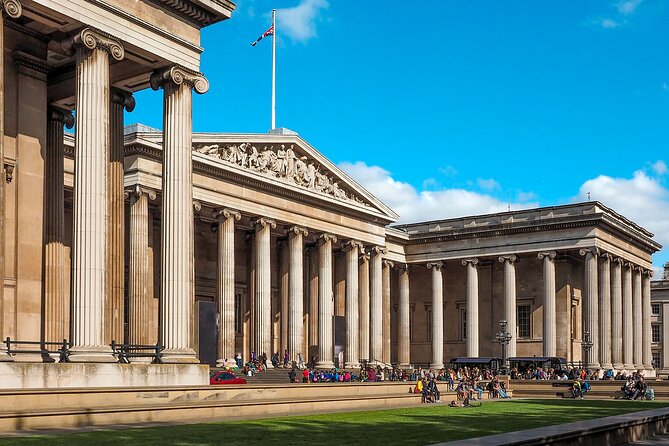
The tour meets at the British Museum, Great Russell St, London WC1B 3DG, and it ends back at that same meeting point. There is no hotel pickup, and you are on your own for getting there by public transportation.
The tour runs for about two hours, on foot. That means you should treat it like a brisk indoor walk day. The museum is huge, and even a focused highlights route still moves through multiple spaces.
Group size is capped at a maximum of 25 travelers, and this is a key part of why the experience can stay lively. Smaller groups are easier for a guide to manage, and it also makes it more realistic to ask questions. It also explains why you should come ready to listen and move, not to stop and read every label.
The British Museum’s highlights run: what you will actually see

You are entering a museum that spans many civilizations, with key stops that make it easy to understand how different cultures expressed power, belief, and art. This tour is built around famous objects, and the themes stretch from Egypt to Greece, and beyond into other ancient periods.
The “Marvels” focus is practical. Rather than treating the museum like a scrolling checklist, you follow a guided narrative across standout pieces. It is a route that helps you connect what you see with what you hear.
The guided experience is also about interpretation. You will not just get facts read off a wall. You will get stories and context, with time to ask questions as you go.
Other collections we queued for





Rosetta Stone focus: why one object changes how you read the museum
A big reason this tour is worth it is that it puts you in front of the kind of artefacts that act like anchors. The Rosetta Stone is one of those anchors, because it is famous enough that you may recognize the name, but seeing it is a different experience than hearing about it.
What I like is that you go beyond the display text. Instead, your guide connects the object to the bigger story of the people who made it and why it matters in the world of historical interpretation. That extra layer is what turns a static object into a “now I get it” moment.
If you normally skip label reading because it feels slow, this tour may change your habit. The guide’s pacing gives you just enough time to look, then explains what to notice so you can move on with a mental hook.
Parthenon marbles: understanding Greek art without the museum fog
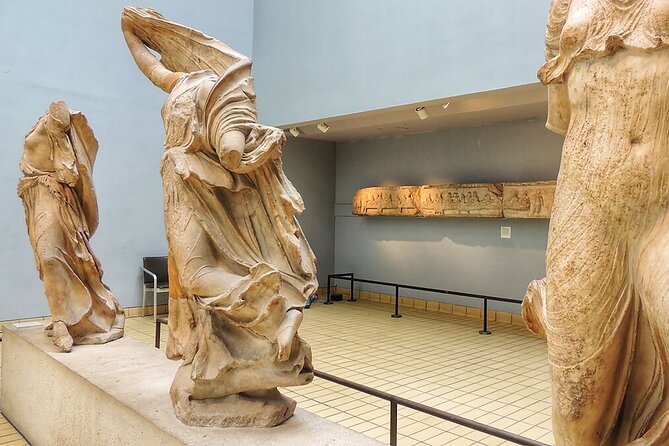
Another major highlight is the Parthenon sculpture area, including the Parthenon marble tiles. This is the kind of collection people talk about a lot, but you can still miss the meaning if you just look for a few seconds and move on.
The guide helps you see the objects as part of a larger cultural story. In my experience, Joe gave key details and great insight into the history of important Ancient Greek artefacts, and he kept the explanation clear even with crowds around us.
One practical benefit: you do not need to be a classics expert to enjoy this section. The guidance helps you understand what you are looking at and why it has lasted in public memory.
And because the tour is time-limited, you get a focused view. You are not stuck hunting for one specific gallery on your own while everyone else is doing the same thing.
Mummies and Egyptian moments: seeing beyond the wow factor
The tour also includes Egyptian highlights, including mummies, which are often the first objects that make people stop in their tracks. It is easy to treat mummies as a spectacle, but with a guide, they become something more grounded.
The key is the way the stories connect these objects to broader themes. You hear how the artefacts fit into ancient Egypt’s beliefs and practices, not just what they look like. That difference matters, because it helps you shift from “wow” to “I understand what this means.”
Even if you think you already know the basics, you may find that the guided context changes what you notice in the room. You start looking with a question in mind, not just with curiosity.
Anglo-Saxons and the museum’s wide span: how the guide keeps it coherent
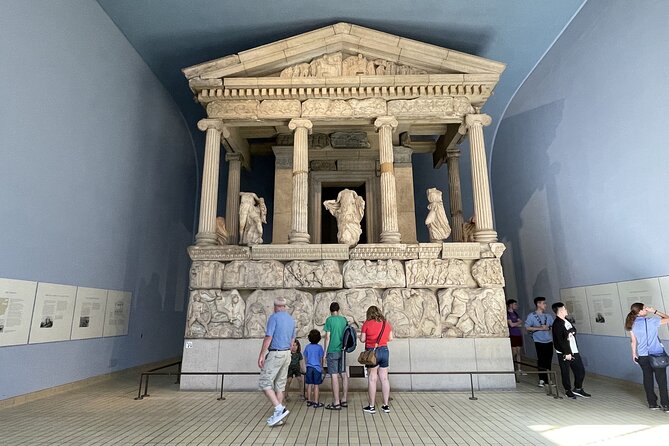
One thing the tour does well is its span. It does not stay locked only in one civilization. It moves from the Egyptians toward other periods, including Anglo-Saxon themes.
That matters because the British Museum can feel like a pile of eras if you are not careful. A guide provides the thread, even if you are only seeing a small set of highlights. You leave with a sense of how museums tell stories across time, not just how the objects sit behind glass.
Think of it like a guided sampler. You get a few “chapter openings” that help you understand what the museum is saying overall. Then, if you want, you can come back later and explore the deeper galleries you actually care about.
Ask questions, get unstuck: why guided time beats solo wandering
One of the highlights you can count on is time for questions. You are not just passively watching. The best part of a guide-led visit is that you can ask the burning questions you would otherwise research later, or never ask at all.
This is where small group size helps. With up to 25 people, your question has a chance of landing. Instead of competing with fifty voices, you feel like part of an actual conversation.
I also like the way a guide can point out what is worth your attention in the moment. In a huge museum, that is the difference between seeing objects and actually learning something you can remember.
Price and value: is $102.43 per person a smart deal?
At $102.43 per person, you are paying for three things: a guided route, admission included, and priority queuing. The British Museum itself is a major draw, and the main cost of a DIY visit is time, not money.
If you are short on time, this becomes good value fast. Two hours with a guide means you get a plan that is hard to replicate if you are trying to coordinate your own highlight run among crowds.
Priority queuing also has real value. Waiting around is the easiest way to waste a London morning. This tour is built to reduce the time you spend in lines and increase the time you spend in the rooms that matter most to you.
That said, this is not “cheap museum” pricing, and it is not meant for travelers who want complete freedom. If you have lots of time and you love reading every label slowly, you can make a free-form visit work. If your goal is “hit the key artefacts and understand them,” the structure helps justify the price.
Who this tour fits best, and who should skip it
This is a strong choice if you are:
- On a first London visit and want a best-of British Museum plan
- Short on time, but still want more than “I saw it”
- Interested in major Egyptian and Ancient Greek highlights, including Rosetta Stone, Parthenon sculptures, and mummies
- The type who likes asking questions and learning as you look
It might be less ideal if you:
- Want a long, slow museum day with deep gallery browsing
- Hate walking through crowded rooms
- Prefer audio-guide or self-guided exploration without group pacing
If you are unsure, think about your personal style. Do you enjoy guided structure when you have only a little time? If yes, you will probably feel comfortable here.
Practical tips so your two hours feel smooth
Even with priority entry, you should think like a two-hour tour. You will get the most out of it if you show up ready to move.
Bring comfortable shoes because the museum is huge and this route is on foot. Also, plan to reach the meeting point early enough that you are not rushing. The tour recommends arriving 15 minutes before the scheduled travel time, and that is not just a formality.
Since food and drinks are not included, plan your meal timing around the tour slot. Two hours flies by when you are listening and looking, so you do not want hunger to become an issue midway through.
Finally, use the guide’s expertise actively. Ask questions as you go. That is literally part of the format, and it is where guided time becomes more than a route.
Should you book Marvels at the British Museum, Rosetta Stone, Parthenon, Mummies?
If your goal is to get oriented and understand a few of the museum’s biggest headline objects, I think you should book it. This is a smart way to turn the British Museum from a “how do I even start” place into a clear set of stories you can remember.
The priority queuing and the guided storytelling are the big wins. You also get a manageable group size and an easy meeting setup at the British Museum on Great Russell St. At about two hours, it is a good fit for travelers who want results, not wandering.
If you have plenty of time and you love slow independent exploring, you may decide to DIY instead. But for most first-time visitors, the value here is simple: you buy time saved, focus gained, and context delivered, so you leave the museum feeling like you actually understood what you saw.
FAQ
How long is the British Museum highlights tour?
The tour is approximately 2 hours.
What is included in the price?
The British Museum guided tour and online support at the time of boarding are included. Admission ticket is included, too.
What is not included?
Pick up from your hotel and food and drinks are not included.
Where does the tour start and end?
It starts at the British Museum, Great Russell St, London WC1B 3DG, UK. It ends back at the meeting point.
Is the tour private?
No, it is not private. It is shared with other participants.
How big is the group?
The tour has a maximum of 25 travelers.
Do I need to bring anything for entry?
You will have a mobile ticket. You should still arrive at the entrance at least 15 minutes before your scheduled start time.
What does skip the line mean here?
Skip the line means you enter a fast, priority queue instead of waiting in the normal long queue.
What if the time slot I pick is not available?
If your chosen time is not available, you will be transferred to another time on the same day.
What if I book last minute and there are no places?
If there is a lack of places for last minute bookings, you will be placed on the day following the booked date.
Other Collections Worth An Hour






Museum Days In London


Fresh off the notebook in London
- Witchcraft, Ancient Cults & MI15 Spy Secrets
★ 4.0 · 3 reviews - Arrival Transfer: London Train Stations to London Hotels
★ 5.0 · 3 reviews - Royal Afternoon Tea & Walk at Kensington Palace
★ 4.5 · 3 reviews - Bridgerton Tour in London
★ 5.0 · 3 reviews - Private Transfer from central London to Southampton Cruise Terminal
★ 5.0 · 3 reviews - Photographer, Professional Photo Shoot – London
★ 5.0 · 3 reviews
London Museums and Galleries, compared.
 ★ 5.0British Museum London Guided Tour Semi-Private 8ppl MaxFrom $108984 reviews
 ★ 5.0The British Museum London – Exclusive Guided Museum TourFrom $108555 reviews
 ★ 4.0British Museum Guided TourFrom $18470 reviews
 ★ 5.0Private Guided Tour of the British Museum – Tickets IncludedFrom $187193 reviews
 ★ 5.0British Museum Guided Tour with Priority Timeslots(Small Group)From $48192 reviews
 ★ 5.0National Gallery of London Museum Tour Semi-Private 8ppl MaxFrom $108178 reviews
 ★ 5.0British Museum & National Gallery of London Semi-Private 8ppl MaxFrom $201168 reviews
 ★ 5.0Natural History Museum London – Exclusive Guided Museum TourFrom $108153 reviews
Browse the lists this tour appears in