
REVIEW · TOWER OF LONDON TOURS
Medieval History Walking Tour from The Tower of London
Medieval London comes alive on foot. This 2-hour guided route connects centuries of stories from the Tower of London to St Paul’s Cathedral, so the landmarks feel less random and more linked. I especially like how the guide uses a tight stop-and-start rhythm, keeping your brain on the timeline instead of dragging you through one big museum moment.
Two things I really like: the route packs major medieval and early modern sights without turning into a marathon, and the storytelling style gets called out again and again by groups who loved how the guide explains the connections between places. A heads-up though, at least some stops have admission fees not included, so if you want to go inside multiple sites, budget extra time and money.
You finish right by St Paul’s, which is handy if you want to grab the Underground or keep exploring after. Also, plan on walking shoes, because even when the tour feels fast, it’s still London sidewalks, curbs, and crowds.
In This Review
- Key highlights worth showing up for
- Tower Hill to St Paul’s: the 2-hour medieval route that keeps pace
- Tower of London: 1078, William the Conqueror, and why this place mattered
- Tower Bridge crossing: how the Thames became a project, not just a view
- HMS Belfast: World War II on top of older London
- London Bridge through the ages: from 43AD to the Great Fire of 1212
- Borough Market: medieval trade energy under railway arches
- Southwark Cathedral and Bloody Mary’s heresy trials
- Golden Hinde: Sir Francis Drake and the controversy angle
- Winchester Palace ruins: kings, queens, and the Liberty of the Clink
- Shakespeare’s Globe: rebuilt after fire, and right by the Thames
- Thames River lessons: 30 million years plus medieval-to-Victorian grime
- Millennium Bridge back-crossing and the big Thames view to St Paul’s
- St Paul’s Cathedral: Wren’s masterpiece, plus a site of worship going back to the 700s
- Price and value: is $25 good for what you get?
- Who this tour suits best (and who should skip it)
- Should you book the Medieval History walking tour?
- FAQ
- How long is the Medieval History walking tour?
- Where does the tour start and end?
- What time does the tour run?
- Is the tour offered in English?
- Is admission included for the landmarks?
- Do you provide a mobile ticket?
- How large is the group?
- Can I cancel for a full refund?
Key highlights worth showing up for
- A guided 2-hour route that covers medieval to 17th-century London without feeling endless
- Tower of London to St Paul’s gives you a clear end-to-end orientation of central London
- Stories built around major landmarks like Tower Bridge, London Bridge, Borough Market, and Shakespeare’s Globe
- A small group (max 20) keeps it easier to hear the guide and ask questions
- Crossing the Thames multiple times helps the medieval past feel physical, not abstract
- Guide favorites include Mick, Michael, and Nick, known for lively delivery and helpful visuals like illustrations
Other ways in to the Tower and its bridge
- Tower of London and Crown Jewels Exhibition Ticket★ 4.5 · 6,677 reviews
- London Sightseeing Tour: Guard Change with Tower of London Option★ 4.5 · 2,672 reviews
- The London Pass®: 100+ Things To Do – Includes Tower Bridge★ 3.5 · 1,916 reviews
- Tower of London: Crown Jewels & Beefeater Opening Ceremony★ 4.5 · 969 reviews
Tower Hill to St Paul’s: the 2-hour medieval route that keeps pace
This tour runs about 2 hours and is built as a classic London walk with a clean start and finish. You begin at Tower Hill (London EC3N 4DJ) and end at St Paul’s Churchyard (London EC4M 8AD). Starting at 2:00 pm works well if you’re already in the City area, and the end point near St Paul’s is convenient for onward plans, including public transit.
The big value here is structure. You get short stops, enough time for the story behind each place, and then you move on. That matters because medieval London spans a messy mix of invasions, power struggles, religious conflict, trade, and rebuilding. A guided “hop through time” format helps you keep it straight.
The group size also helps. With up to 20 people, you’re not lost in a huge crowd, so the guide’s explanations land better. And if you’ve ever tried to figure London out solo, you know the frustration: you see a famous building, but you miss the why. This tour is designed to give you the why fast.
One practical note that affects enjoyment: several stops are outside-focused, and several have admission not included. So think of this tour as an outdoor history guide plus landmark orientation, not a ticket bundle.
Tower of London: 1078, William the Conqueror, and why this place mattered
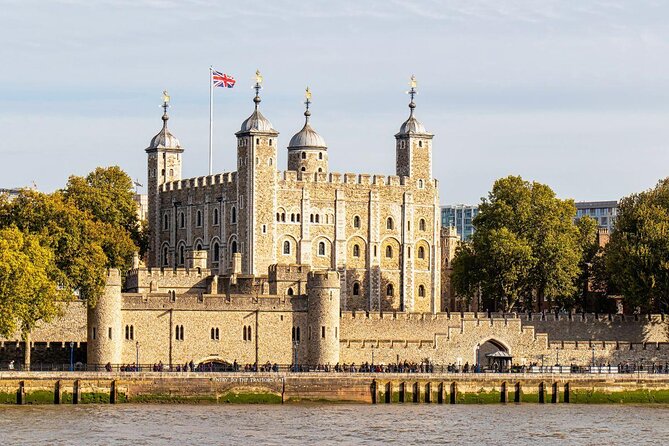
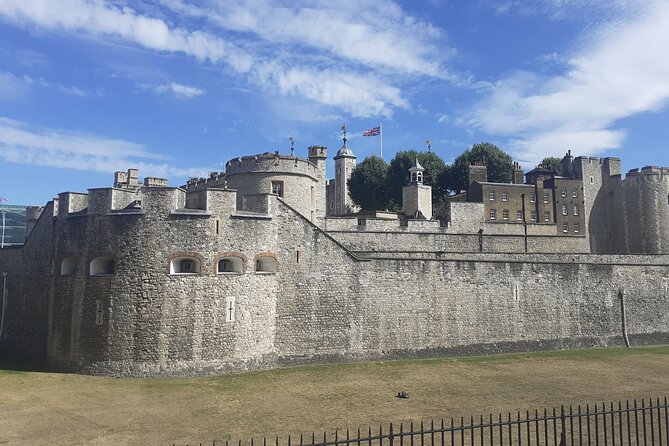
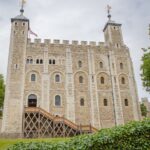
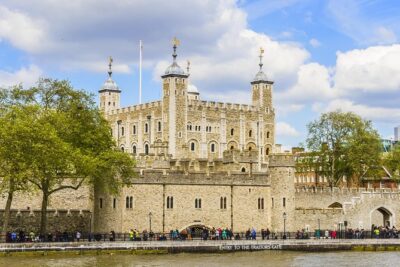
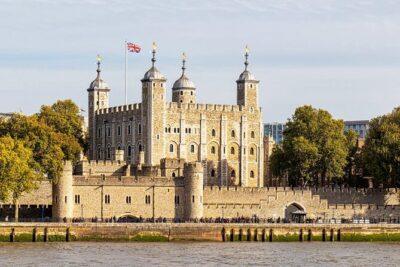
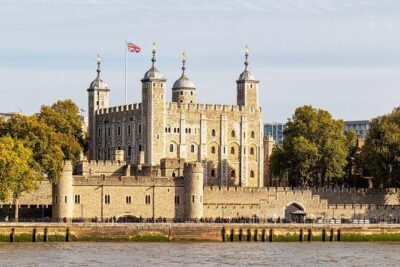
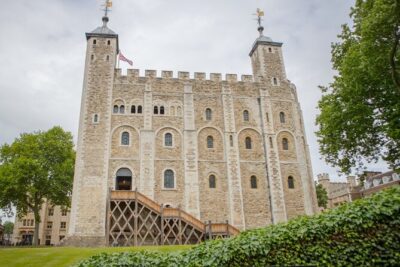
You start by passing the Tower of London, originally built in 1078. Even if you’ve walked past it before, the guide’s medieval framing changes how you read the walls. This is a place tied to power, control, and high-stakes politics, and you’ll hear the long arc from the era of William the Conqueror to later centuries.
What you’ll like: the way this stop sets the tone. It’s hard to understand medieval London without a sense of how authority got enforced, and the Tower is the clearest symbol.
Possible drawback: this stop is a pass-by moment with a short time window, and any entry is not included. If your dream includes going inside, you’ll likely want separate plans after the tour (or choose fewer “in and out” stops).
Tower Bridge crossing: how the Thames became a project, not just a view
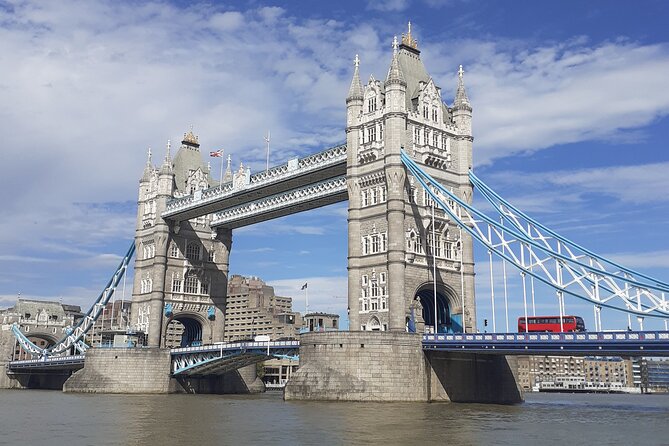
Next you cross to Tower Bridge and learn how it was built. The Thames is everywhere in London, but a lot of people treat it like scenery. This stop re-tunes you to think of the river as infrastructure and engineering.
Why it’s valuable: medieval London isn’t only about kings and battles. It’s also about how goods move, how cities connect, and how rivers shape life. Tower Bridge becomes a modern lens for a much older landscape.
Watch-outs: again, this is a brief stop and any admission is not included. If you’re hoping for a full interior visit, plan that separately.
HMS Belfast: World War II on top of older London
You then see HMS Belfast, the famous World War II battleship that took part in D-Day landings and other conflicts. This is not a medieval stop, but it’s an important pivot: London’s “medieval past” doesn’t vanish. It stacks, layer after layer, on the same river edges and docks.
What this teaches you: the city keeps reusing its geography. A place that mattered for earlier power and trade becomes a platform for later war and defense.
Consideration: you’ll be viewing it briefly, and admission is not included. If you want more time aboard, you can circle back later.
More on foot, at a pace you can hear the guide
London Bridge through the ages: from 43AD to the Great Fire of 1212
At London Bridge, the story jumps to early origins around 43AD, then moves through medieval times and the 1212 Great Fire of Southwark. After that, it continues onward to the English Civil War of the 1640s and reaches modern day.
This stop is one of the best examples of why a guided timeline works. A bridge might look like a single object, but it has to keep rebuilding as the city grows, burns, fights, and changes.
What you’ll take away: the bridge becomes your “timeline marker.” You start associating other sights with turning points, instead of treating each location like a separate postcard.
Value detail: this stop lists admission as free, which helps if you’re trying to keep costs predictable.
Borough Market: medieval trade energy under railway arches
You pass Borough Market, described as around 900 years old, located beneath early Victorian railway arches. The guide frames it as part of the oldest food market idea in the world.
This is where the tour gets more human. Medieval London wasn’t just palaces. It was commerce, daily food, and the movement of people and goods. Market life is one of the best ways to feel what ordinary survival looked like.
What you’ll like: the market setting makes the history concrete. Even if you don’t go inside for a full meal, you can picture the bustle and supply chain energy.
Practical note: this stop is free, but if you want to snack, factor in time. The tour is timed, so keep it light unless you’re sure you won’t miss the next story.
Southwark Cathedral and Bloody Mary’s heresy trials
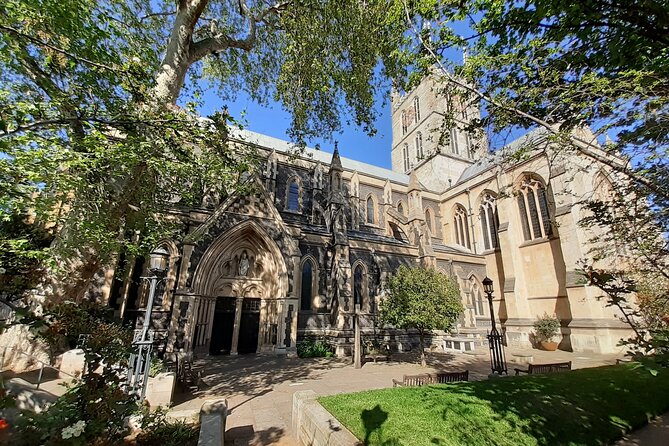
At Southwark Cathedral, you learn that what you see today has stood since 1420, even though worship on this site goes back to 606. You also get one of the darkest medieval threads: in the 1550s, the cathedral was used for heresy trials connected with “Bloody Mary.”
Why this stop lands: it shows how faith and power collided in real places. You’re not just hearing dates. You’re seeing a physical building associated with fear, judgment, and political religion.
What to watch: religious sites can have changing rules or quieter entry moments. Since your time here is short and the tour includes pass-by time, focus on the external storytelling unless there’s time for more.
Golden Hinde: Sir Francis Drake and the controversy angle
You then move to the Golden Hinde at St. Mary Overie dock. Here the emphasis is on Sir Francis Drake’s 1577 round-the-world voyage, plus the controversies surrounding it.
That controversy detail is a smart choice for modern visitors. It stops the story from turning into simple “hero worship.” Drake becomes a complex figure, tied to empire, exploration, and the arguments about what counts as brave versus brutal.
Consideration: admission is not included at this stop, and you’ll have limited time for any deeper look.
Winchester Palace ruins: kings, queens, and the Liberty of the Clink
Next comes Winchester Palace, a ruin of a 12th-century palace that was once one of medieval London’s more spectacular buildings. The guide also connects it to the Liberty of the Clink, plus the detail that it features the country’s oldest prison.
Even as ruins, this stop shows how medieval power and legal punishment could be wrapped into the same space. It also gives you a sense of how London functioned as a patchwork of authority, not one uniform system.
Value for history buffs: you get a “behind the scenes” place type. Palaces and prisons do not sound like the same story, but in medieval London they often sat in the same neighborhoods and political networks.
Practical note: this stop lists admission free, which is great if you’d rather keep costs down while still getting big-site context.
Shakespeare’s Globe: rebuilt after fire, and right by the Thames
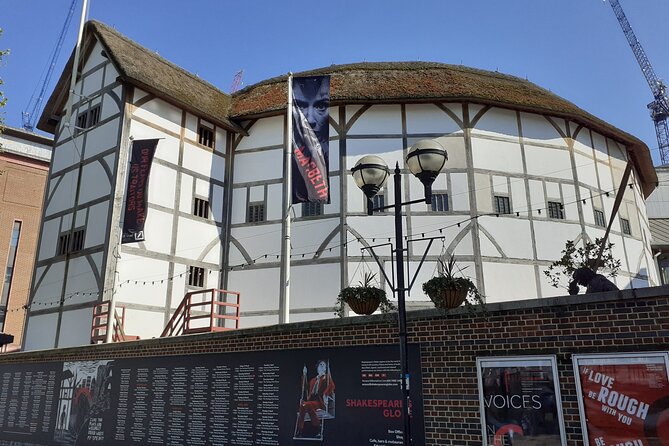
At Shakespeare’s Globe Theatre, you learn it was painstakingly rebuilt after a cannon-related fire in 1613. The Globe sits by the Thames, and the tour frames it as a feeling of 16th-century London.
This part works well after all the medieval governance and conflict stops. Drama and public culture become part of the city’s story too. The Thames location also makes sense: theaters, commerce, and the movement of people all meet along the river.
Possible drawback: admission is not included. If you want a show or an interior look, you’ll need a separate booking or later plan.
Thames River lessons: 30 million years plus medieval-to-Victorian grime
At the river stop, you get a sweep of time: the Thames’s 30-million-year history, plus what took place here from roughly the 11th century through Victorian times, including the unpleasant realities of river life.
This is the stop where the tour does something many history walks skip: it treats the river as a living system with consequences. Medieval cities used waterways for trade, waste, and transport, and the story of the Thames becomes part of the story of public health and urban development.
Why it matters: you’ll leave with a different mental map of the river. Instead of thinking “pretty view,” you think “engine of the city.”
Millennium Bridge back-crossing and the big Thames view to St Paul’s
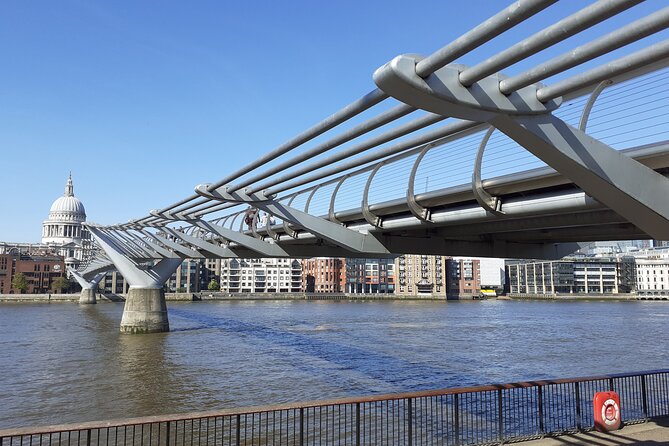
You cross the Millennium Bridge again and get views along the river toward St Paul’s. This is less about one specific medieval event and more about orientation.
I like this kind of “zoom out” moment. After walking through so many stories, the bridge gives you breathing space to see the city layout and connect it to what you heard. It’s also an easy photo moment, and several guides are praised for taking group pictures too, which can be a nice add-on.
What to expect: admission is free here, and this is a simple crossing with scenic payoff.
St Paul’s Cathedral: Wren’s masterpiece, plus a site of worship going back to the 700s
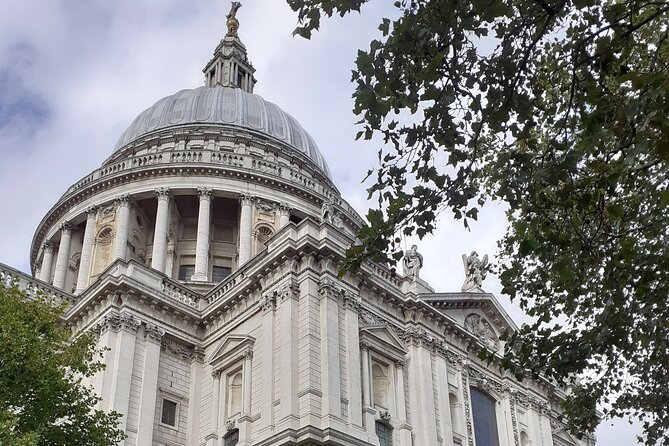
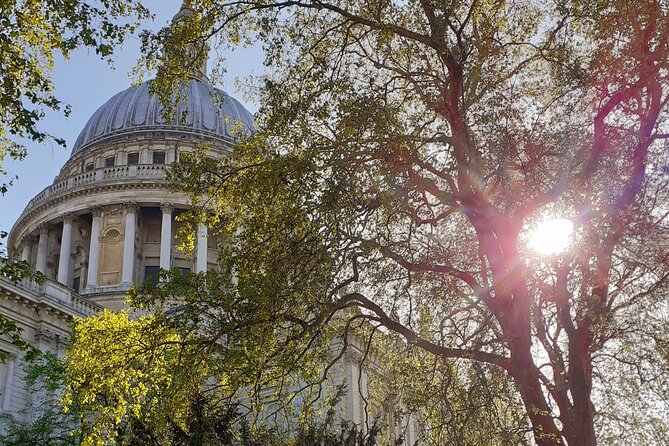
Finally, you arrive at St Paul’s Cathedral, the Wren masterpiece standing atop Ludgate Hill since the 1670s. You also learn the site of worship goes back to the 7th century, and the cathedral has seen countless historical events.
This ending point ties together why the route works. You start at a symbol of medieval power and control, and you end at a symbol of later rebuilding and national identity. In between, you get markets, legal conflict, exploration, and cultural life.
Admission note: it’s listed that admission is not included at this stop, so plan for viewing from the exterior unless you have your own tickets.
Price and value: is $25 good for what you get?
At $25 per person for about 2 hours, the value is mostly about interpretation. You’re paying for a guided sequence that turns famous landmarks into a connected medieval timeline.
The tour also has cost clarity built into it. Some stops are free to access (like London Bridge, Borough Market, Southwark Cathedral, Winchester Palace, the river views, Millennium Bridge), while other big names list admission not included (like Tower of London, Tower Bridge, HMS Belfast, Golden Hinde, Shakespeare’s Globe, and St Paul’s Cathedral).
So here’s the practical way to think about it:
- If you want a guided story and photos plus a few free exterior moments, $25 feels like a bargain.
- If you plan to go inside multiple paid sites, you’ll still enjoy the tour, but treat it as the history primer, then add any entry tickets you choose.
Who this tour suits best (and who should skip it)
This works best for you if:
- You love medieval London and want landmarks explained in plain language.
- You want a route that helps you get your bearings quickly, ending near St Paul’s.
- You prefer a small group feel (max 20) rather than being swallowed by a large crowd.
You might choose a different style of tour if:
- You want a deep inside-visit schedule with no outside viewing.
- You need long museum time at a single location, because this is timed and stop-by-stop.
Should you book the Medieval History walking tour?
If you’re trying to understand London’s medieval layers without spending your whole day reading plaques, this is a smart pick. I’d book it if you like storytelling, want a fast timeline through major sites, and appreciate a guide who can connect Tower, bridge, markets, religion, and theater into one coherent walk.
Also, take comfort in the guide reputation. The consistent praise focuses on lively delivery, strong group handling in bad weather, and helpful visuals. If you arrive with comfortable shoes and a curiosity for how the city changed over time, you’ll leave with a clearer London and fewer blank spots.
FAQ
How long is the Medieval History walking tour?
The tour lasts about 2 hours.
Where does the tour start and end?
It starts at Tower Hill (London EC3N 4DJ) and ends at St Paul’s Cathedral area (St Paul’s Churchyard, London EC4M 8AD).
What time does the tour run?
The start time listed is 2:00 pm.
Is the tour offered in English?
Yes, the tour is offered in English.
Is admission included for the landmarks?
Admission is not included for some stops such as the Tower of London, Tower Bridge, HMS Belfast, Golden Hinde, Shakespeare’s Globe, and St Paul’s Cathedral. Other stops are marked free.
Do you provide a mobile ticket?
Yes, the tour offers a mobile ticket.
How large is the group?
The tour has a maximum of 20 travelers.
Can I cancel for a full refund?
Yes. Free cancellation is available if you cancel up to 24 hours in advance for a full refund.
More History Led Walks






More Of London On Foot



Still At The Tower? Keep Going


Fresh off the notebook in London
- Private Rock ‘n’ Roll Music Tour of Central London
★ 5.0 · 7 reviews - London Walking Tour: Camden Town Photography Walkabout
★ 5.0 · 7 reviews - Private Transfer from London accommodation to Cruise terminal
★ 5.0 · 7 reviews - Amazing Nightlife in London East Tour
★ 4.5 · 7 reviews - The British Museum: a highlights tour with a TV historian
★ 5.0 · 7 reviews - Heathrow Airport to Cambridge private taxi transfers
★ 5.0 · 7 reviews
Tower of London Tours, compared.
 ★ 4.5Tower of London and Crown Jewels Exhibition TicketFrom $496,677 reviews
 ★ 4.5London Sightseeing Tour: Guard Change with Tower of London OptionFrom $952,672 reviews
 ★ 3.5The London Pass®: 100+ Things To Do – Includes Tower BridgeFrom $1351,916 reviews
 ★ 4.5Tower of London: Crown Jewels & Beefeater Opening CeremonyFrom $88969 reviews
 ★ 4.5VIP Tower of London and Crown Jewels Tour with Private Beefeater Meet & GreetFrom $155849 reviews
 ★ 5.0Skip the Line Tower of London & Westminster Tour and River CruiseFrom $165730 reviews
 ★ 5.0VIP Early Access: Opening Ceremony Tower of London & Bridge EntryFrom $206673 reviews
 ★ 4.0Tower Bridge River Sightseeing Cruise from WestminsterFrom $18457 reviews
Browse the lists this tour appears in