
REVIEW · JACK THE RIPPER TOURS
Private Jack the Ripper Walking Tour of Whitechapel and Brick Lane
Whitechapel turns spooky after dark. This private Jack the Ripper walk threads myths and measured clues through Aldgate, Brick Lane, and East London pubs, with a backlit tablet to show photos as you move from street to street.
I love the undivided attention you get on a private format, and I also love how Jenny’s approach turns each stop into a specific moment tied to names and places. You get a 14-inch backlit tablet for vintage photos and supporting material, so you are not just hearing about the area, you are seeing it matched to the exact spot.
One possible drawback: this is a 2.5 hour, outdoors walking tour with short stops and no food or bottled water provided. If you need frequent breaks or prefer long indoor segments, plan accordingly.
In This Review
- Key highlights you will feel fast
- Why this Jack the Ripper walk works so well in East London
- Private, not crowded: how the guide keeps control of the mood
- The 14-inch backlit tablet: seeing the evidence, not just hearing it
- Aldgate begins the story in 1888, step by step
- Mitre Square, the double event, and the City border feel
- Petticoat Lane area and the boundary that changes the story tone
- Goulston Street: the doorway detail that makes the story physical
- Martha Tabram and the earliest victim theory
- Brick Lane and the Frying Pan Pub moment
- Hanbury Street and the backyard setting
- Puma Court and the Dear Boss letter
- Ten Bells, Christchurch graveyard, and a key pub reference
- London Fruit and Wool Exchange: From Hell and the courtyard story beats
- End near Liverpool Street: finishing with space to reset
- Price and group value, how to judge if it is worth it
- Timing, weather, and what to bring for a late-day walk
- Who should book this private Whitechapel and Brick Lane tour
- Should you book it?
- FAQ
- How long is the private Jack the Ripper walking tour?
- Is this a private tour or a group tour?
- What is the group size limit?
- What is the price for the tour?
- What language is the tour offered in?
- What is included with the tour?
- Is bottled water or food included?
- Where do I meet the guide?
- Where does the tour end?
- Is there a suggested minimum age?
- Can I cancel for free?
Key highlights you will feel fast
- Private group of up to five means you can ask questions without a guide competing with a crowd
- 14-inch backlit tablet brings the photos and period documents into view right where the story happened
- Concrete stop list with named people and dates keeps the walk from turning into vague ghost lore
- Pubs and graveyard moments around Whitechapel sites add atmosphere while still pointing to real locations
- Victorian style, in-character storytelling helps the history land as a lived-in street scene
- End near Liverpool Street makes it easier to roll straight into dinner or transit afterward
Whitechapel after dark, other guides tested
- London Jack the Ripper Guided Tour with Ripper-Vision★ 4.5 · 4,840 reviews
- London Jack The Ripper Guided Walking Tour★ 5.0 · 3,131 reviews
- Ultimate Jack the Ripper : Guided Tour of London★ 5.0 · 1,495 reviews
- The Original Jack the Ripper : Guided Tour★ 5.0 · 1,264 reviews
Why this Jack the Ripper walk works so well in East London
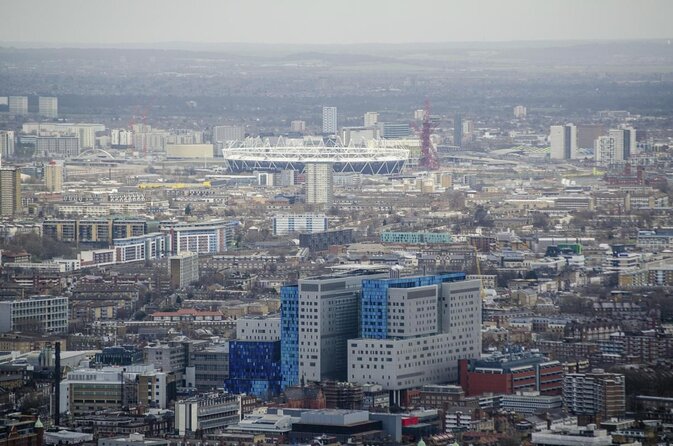
Jack the Ripper stories can float around in foggy headlines. This tour keeps you grounded in a tight slice of London’s East End and treats the neighborhoods as the main character.
You move through streets tied to the 1888 panic and its most infamous headlines, from the Aldgate area to Brick Lane and deeper into Whitechapel. The tone is dark, but the delivery aims to be practical and clear, with a guide who brings the setting to life without turning it into a circus.
This is also the kind of tour that rewards attention. You are given names of victims, locations, and even period letters that were sent to newspaper offices or key figures. It is much easier to keep the story straight when you are stopping at the places themselves.
Private, not crowded: how the guide keeps control of the mood
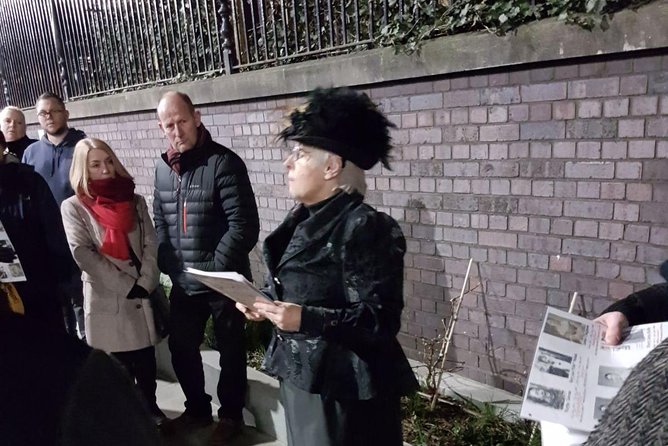
The biggest quality jump here is simple: you have a private group, not a mass of people funneling behind each other. With only your group participating, the guide can set pacing that fits your questions and your curiosity level.
In the experience, Jenny is repeatedly praised for an enthusiastic, in-character style. You may see her dressed in Victorian dress and framed as if she belongs to the era, which helps the subject feel like London street history rather than just modern trivia.
You also get the feeling that the guide is not rushing. The walk stays focused, with time built in for short explanations at each stop, plus room to ask follow ups as you go. For a topic this intense, that matters. You do not want a sprint through grim locations, you want context that lands gently but firmly.
The 14-inch backlit tablet: seeing the evidence, not just hearing it
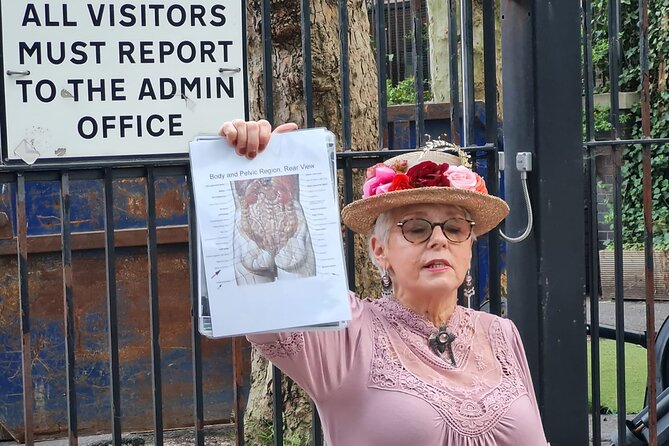
Most walking tours rely on your memory of what you heard. This one adds a visual layer through a 14-inch backlit tablet.
As you stand at key sites, the tablet is used for photos and period references tied to the people and places you are hearing about. That means when the guide mentions someone by name or points to a specific street, you can connect it to an image instead of juggling details in your head.
This is especially useful for letter moments in the story, because seeing what is being discussed makes it stick. Even if you have read about Jack the Ripper before, you may find the visuals help you reframe how you think about locations and evidence.
And since the tablet is backlit, it is built for low-light conditions that fit an evening walking schedule.
Aldgate begins the story in 1888, step by step
The walk starts in the Aldgate area and sets the baseline: what East London felt like in 1888 and why these streets became part of the broader panic.
First you begin at St Botolph’s Aldgate, where you get an introduction to the area as it was in 1888. It is a short stop, but it frames the rest of the route so later stops do not feel random.
Next comes Aldgate Square, where the focus turns to the daily realities the neighborhood was dealing with. You hear about poverty, workhouses, and common lodging houses endured by Whitechapel inhabitants. Even if the Ripper murders are the headline, this part helps explain why so many people were living close together in conditions that shaped the era.
The timing matters too. Starting earlier in the afternoon-to-evening window helps the walk feel like an old street scene, not like daytime sightseeing with a spooky theme.
More on foot, at a pace you can hear the guide
Mitre Square, the double event, and the City border feel
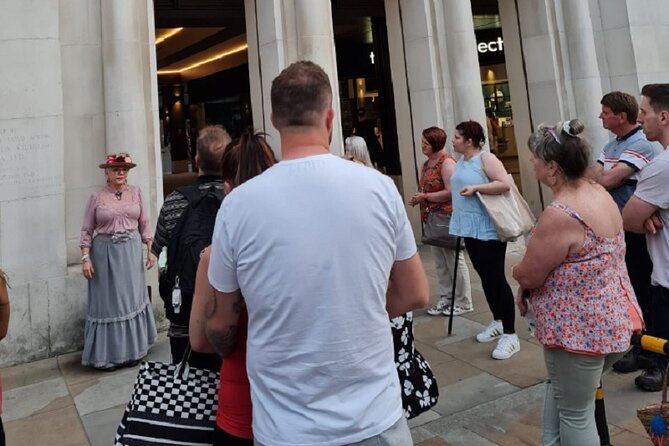
From Aldgate you shift toward the City of London, with a key stop at Mitre Square. Here the tour focuses on the murders of Elizabeth Stride and Catherine Eddowes on 30 September 1888, described as the night of the double event.
What I like about this segment is how it stays tied to a specific moment rather than treating the story as one long blur. Having two named victims and a clear date gives your brain anchor points.
You also start to feel the geography. You are no longer just in one neighborhood vibe. You are moving across boundaries, and the guide brings out how the City and nearby areas were linked in real life, even when they felt different on the ground.
Petticoat Lane area and the boundary that changes the story tone
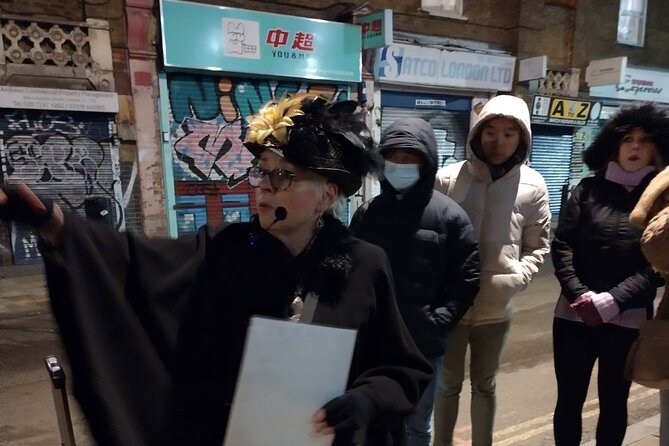
Then you head to Petticoat Lane Market, tied to its identity as the boundary between the City of London and the Metropolitan area. The tour points out the boundary angle by naming it as Middlesex Street.
This kind of stop sounds abstract until you are walking and noticing how the streets shift around you. Boundaries mattered in 19th century London, and the tour uses this point to remind you that the story is not just about people, it is also about place.
It is also a chance to reset your attention. After heavier murder-focused stops, the boundary framing helps you understand why witnesses, movement, and confusion could all overlap.
Goulston Street: the doorway detail that makes the story physical

One of the most gripping street-level stops is at the doorway at 118 to 119 Goulston Street.
Here, you focus on a piece of apron belonging to Catherine Eddowes that was found, along with graffiti on the doorpost. That is concrete, physical, and oddly hard to forget, because it is not just a story beat. It is a specific object and a specific place.
This stop is also a good example of what the tour does well overall. It uses short, focused points instead of long speeches. You learn something specific, look at the spot, then move on, so your attention stays sharp.
Martha Tabram and the earliest victim theory
The route then moves to Wentworth Street, where the story turns to the murder of Martha Tabram. The guide presents the idea that she is now believed to be the first victim of Jack the Ripper.
It is a key idea in the broader debate around the murders, and the tour gives it a dedicated stop so you can hold the theory in your mind while the rest of the route unfolds. Even if you have heard different versions of the story before, this stop helps you track how the narrative can shift based on what people believe now.
From there, you go to Gunthorpe Street, looking at where Martha was murdered in George Yard Buildings. The tour keeps it short, but the pairing of a named victim with the building location is what makes it feel grounded.
Brick Lane and the Frying Pan Pub moment
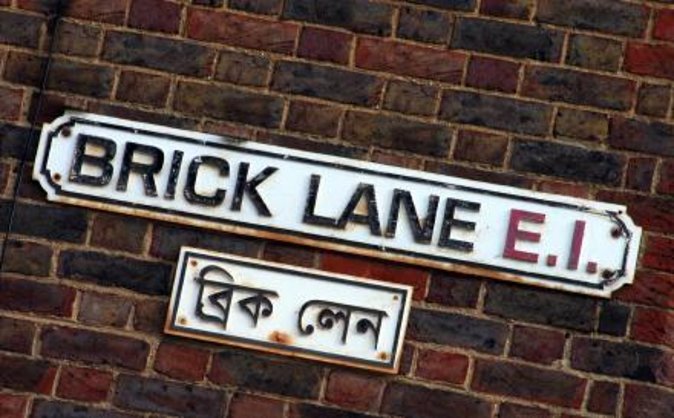
Next, you reach Brick Lane and stop opposite the Frying Pan Pub. This is tied to Mary Anne Nichols, also referred to as Polly, and the story notes this was her last drink.
This is one of those moments where the tour balances grim content with a very human detail. A pub stop can sound too ordinary for such a dark theme, but that ordinariness is exactly what makes the location feel real.
Even if you are not a history person, you will likely remember Brick Lane because it has that mix of modern street life and old London references. The tour uses that contrast to keep you oriented.
Hanbury Street and the backyard setting
The route continues to Hanbury Street, the site of Annie Chapman’s murder in the backyard of 29 Hanbury Street.
Backyard stories change how you picture the event. They shrink the scene down, making it feel closer and more enclosed than street-level rumor would suggest. The tour does not need to stretch it out. It gives you the address focus and lets the street setting do the work.
It is also a good stop for asking questions, because enclosed locations raise practical thoughts like timing and visibility. With a private group, you are not stuck swallowing curiosity.
Puma Court and the Dear Boss letter
Next is Puma Court, an old courtway. This is where the tour examines the Dear Boss letter sent to the Central News Office.
Letters can feel like a separate category from street locations, but this stop connects them. You see how written communication fed the public narrative and how it linked back to the streets you have been walking.
The guide likely pairs the letter discussion with what is shown on the backlit tablet, which helps turn text into a location-based memory.
Ten Bells, Christchurch graveyard, and a key pub reference
At the Ten Bells stop, you stand opposite Mary Kelly’s favourite pub and also near Christchurch graveyard, where the tour notes many homeless prostitutes used to gather in the day.
This part is heavy. It is also essential, because it shows how the story involved everyday spaces, not just alley myths. A pub reference gives a social context, and the graveyard tie-in puts the theme back into the physical map of the neighborhood.
The tour’s pacing here is fairly quick, but the stop is loaded with meaning. If you want a one-stop snapshot of how the tour connects people, place, and atmosphere, this is it.
London Fruit and Wool Exchange: From Hell and the courtyard story beats
The route then reaches London Fruit and Wool Exchange. First you look in the passage leading to the central courtyard, tied to the From Hell letter sent to George Lusk of the Whitechapel Vigilance Society.
Letters plus named individuals keeps the story from floating. Instead of only hearing rumors, you get the idea that the events sparked responses from identifiable groups and people.
Later, you move into the courtyard area connected to Millers Court in Dorset Street. This is where the tour notes the murder of Mary Kelly, described as the last victim of Jack the Ripper.
The guide also mentions that suspected men were discussed over the years. You get a wider look at how the narrative evolved, not just one fixed explanation.
The final stretch here is where the tour slows down more than the earlier quick hits, giving you time to take the whole route in.
End near Liverpool Street: finishing with space to reset
The walk ends after a short final stroll, described as a five minute walk from Liverpool Street Station.
That matters more than it sounds. After a 2 hour 30 minute evening walk through intense subject matter, you want your exit to be simple. Having a close transit reference makes it easier to grab dinner, warm up, and move on.
You do not leave the neighborhood in a maze. The tour aims to let you step out with your bearings intact.
Price and group value, how to judge if it is worth it
This tour is priced per group, with a cap of up to five people. The listed group price is $205.76. The additional tour info also notes a basic price of £150 for up to five people, with £25 per extra person.
Either way, the math is straightforward. If you come with one or two friends, the cost becomes far easier to swallow because you are paying for a private guide and a custom pacing. If you are solo, it is still a solid choice if you truly want the one-on-one experience and the guided photo-by-location format.
What you are buying is not just a route. You are buying:
- Private attention that keeps the guide focused on your questions
- A dedicated tablet tool used during the walk
- A stop list that stays anchored to names, streets, and letters
That combo is harder to get on a cheaper group tour where you are squeezed in, trying to hear over everyone else.
Timing, weather, and what to bring for a late-day walk
The tour runs Monday through Thursday between 3:00 PM and 9:00 PM during the stated season dates. It is also set up for a moderate fitness level and includes walking between several small stops.
Here is what to plan for:
- Bring layers for East London evenings, even if the day was mild
- Wear shoes with solid grip since you will be moving street to street
- Bring water if you like, because bottled water and food are not provided
- Use your mobile ticket and keep it handy, since that is how you access it
The guide also accommodates service animals, and the tour is offered in English. The suggested minimum age is 12+, so it is a more teen and adult friendly choice.
If you want to avoid rushing for a start time, book ahead. This tour is often reserved about 51 days in advance on average, so prime evenings can fill up.
Who should book this private Whitechapel and Brick Lane tour
Book this if you want:
- A private experience with room for questions
- A guide who uses in-character style to set tone
- A structured route tied to named victims and specific places
- A visual aid through a 14-inch backlit tablet
You might skip it if you prefer a lighter, purely scenic walk, or if you do not want to spend your evening around murder-related sites and letters. This walk is meant to feel eerie and exacting, not casual.
Should you book it?
Yes, if you are choosing a Jack the Ripper tour and you care about depth without chaos. The private format, the tablet visuals, and the tight focus on Aldgate, Whitechapel, Brick Lane, and the letter stops add up to a more coherent experience than the typical crowd route.
Also, the ending near Liverpool Street gives the evening a clean finish. You can handle the subject matter, then get back to normal life quickly.
If you are traveling as a small group, this is one of those tours where paying a bit more can actually buy you sanity and better attention.
FAQ
How long is the private Jack the Ripper walking tour?
It lasts about 2 hours 30 minutes.
Is this a private tour or a group tour?
It is a private tour. Only your group participates.
What is the group size limit?
The tour is priced for a group up to 5 people.
What is the price for the tour?
The group price is $205.76 per group up to 5 people. The additional info also lists a basic price of £150 for up to five people, with £25 per extra person.
What language is the tour offered in?
The tour is offered in English.
What is included with the tour?
You get all photos of murder victims, sites, and the area shown on a 14-inch backlit tablet for high quality viewing.
Is bottled water or food included?
No. Bottled water and food are not provided.
Where do I meet the guide?
Meet at Aldgate High St, London EC3N 1AH, UK.
Where does the tour end?
It ends at Bell Lane, London E1, UK, and it is described as about a 5 minute walk from Liverpool St Station.
Is there a suggested minimum age?
The suggested minimum age is 12+.
Can I cancel for free?
Yes, you can cancel for a full refund if you cancel at least 24 hours in advance.
More Private Departures





More Of London On Foot



More Nights In Whitechapel

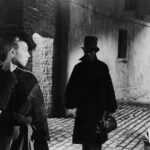
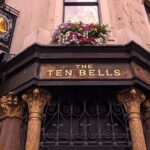
Fresh off the notebook in London
- Private Rock ‘n’ Roll Music Tour of Central London
★ 5.0 · 7 reviews - London Walking Tour: Camden Town Photography Walkabout
★ 5.0 · 7 reviews - Private Transfer from London accommodation to Cruise terminal
★ 5.0 · 7 reviews - Amazing Nightlife in London East Tour
★ 4.5 · 7 reviews - The British Museum: a highlights tour with a TV historian
★ 5.0 · 7 reviews - Heathrow Airport to Cambridge private taxi transfers
★ 5.0 · 7 reviews
Jack the Ripper Tours, compared.
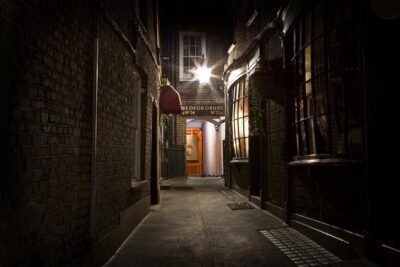 ★ 4.5London Jack the Ripper Guided Tour with Ripper-VisionFrom $274,840 reviews
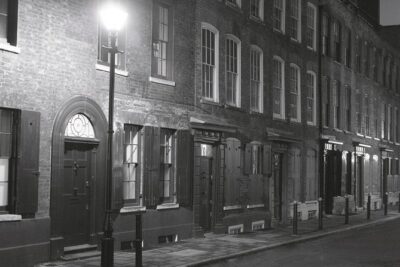 ★ 5.0London Jack The Ripper Guided Walking TourFrom $03,131 reviews
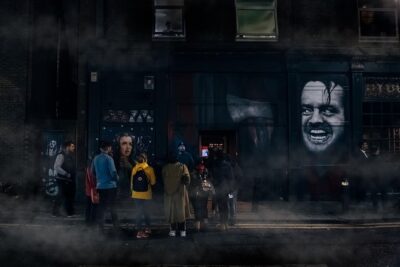 ★ 5.0Ultimate Jack the Ripper : Guided Tour of LondonFrom $271,495 reviews
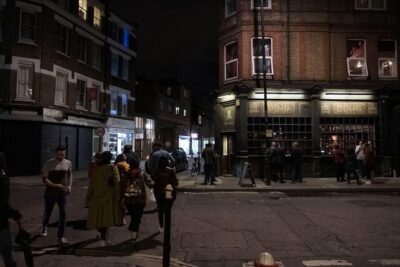 ★ 5.0The Original Jack the Ripper : Guided TourFrom $221,264 reviews
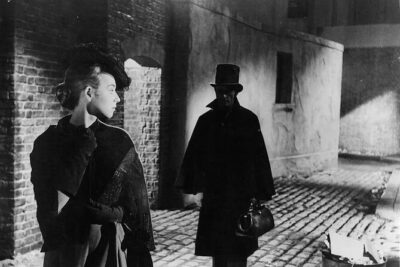 ★ 5.0London Jack The Ripper Small-Group Walking TourFrom $1511,013 reviews
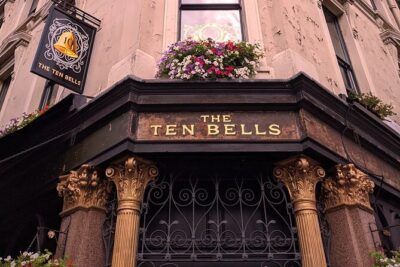 ★ 5.0Jack the Ripper Tour in SpanishFrom $17875 reviews
 ★ 3.5The Original Jack the Ripper Coach Tour of Haunted LondonFrom $82419 reviews
 ★ 5.0Jack the Ripper Walking Tour in LondonFrom $34354 reviews
Browse the lists this tour appears in