
REVIEW · PRIVATE
Private Rock ‘n’ Roll Music Tour of Central London
Rock music landmarks are everywhere here. This private, 3-hour walk strings together real London street corners with pop and rock turning points. You get private attention while covering major stops tied to Central London legends.
I love how the tour connects famous songs and myths to specific places you can point at. I also like the ask-anything style, where your guide can go deeper as you walk. That makes it feel less like a script and more like a focused music conversation on foot.
One thing to consider: this is a walking tour with a moderate fitness level, and most stops are outside quick pauses rather than long museum-style visits.
In This Review
- Key things to know before you go
- Value and pacing for a 3-hour London music walk
- Starting outside the London Palladium, then powering into BBC music
- Pink Floyd beginnings, Carnaby Street fashion swagger, and Bag O’Nails sounds
- Ziggy cover locations, the Savile Row rooftop, and Apple HQ vibes
- Clapton’s clothes shop, Café Royal’s Ziggy party, and the Marquee club era
- Studios, McCartney publishing power, and what Soho controlled
- Ronnie Scott’s, ODEON Covent Garden, and Foyles Bookshop punk-to-pop links
- Denmark Street: finishing with the British music machinery
- Should you book this Central London rock tour?
- FAQ
- How long is the Rock ‘n’ Roll Music Tour of Central London?
- Is this tour private?
- What is the price, and how many people can join?
- What language is the tour offered in?
- What is included in the tour price?
- Do I need separate tickets for every stop?
- Where does the tour start and end?
Key things to know before you go
- Private group up to 15 means you can ask lots of questions without waiting your turn.
- Half-day timing (about 3 hours) works well if you want big music coverage without losing a whole day.
- All the stops are tightly themed around rock and pop milestones across Soho, Fitzrovia, and nearby areas.
- Mostly no ticket needed at stops, with a couple of notable exceptions where entry is not included.
- Denmark Street ends the story with a hands-on feel for where British music industry action happened.
More private departures, group size noted
- The Premier Classic London: Private 4-Hour Tour in a Black Cab★ 5.0 · 2,737 reviews
- Stonehenge Inner Circle Private Tour from London with Bath Visit★ 5.0 · 1,909 reviews
- Private Tour: Black Taxi Tour of London★ 5.0 · 1,153 reviews
- Private London Arrival Transfer – Airport to Hotel / Accommodation★ 3.5 · 1,085 reviews
Value and pacing for a 3-hour London music walk
At $205.67 per group (up to 15), this is priced for groups that want one guide and shared access to the best locations. Per person, it can feel like better value than paying for separate entries or solo audio guides, especially if you’re a music fan traveling with friends. Also, you’re not stuck with a slow, all-day route. You get a concentrated hit of sites tied to the Beatles, David Bowie, the Rolling Stones, and more.
The pacing is built around short stops. Many are about 5 to 10 minutes, with a couple closer to 15. That matters because it keeps momentum, and it also means you’re seeing a lot of London in a short window. Expect quick context at each place, then move on.
The private format is the real advantage. If you care more about one artist than the next, you can steer the conversation. If you’re traveling with someone who knows little about British rock history, the guide can still make it click, without forcing everyone to keep up with dense trivia.
Starting outside the London Palladium, then powering into BBC music
You start at the London Palladium on Argyll Street. It’s a smart opener because this is where London showbiz energy is real, even from the sidewalk. The guide points out how huge names performed here and ties it to the TV vibe of Sunday Night at the London Palladium.
Two connections stand out right away. First, Beatlemania is described as truly taking off in this kind of spotlight setting. Second, the tour notes the Rolling Stones pulling away from the usual show routine at the end, the kind of small detail that makes legends feel human and specific.
Then you move to Broadcasting House, the BBC headquarters area. This stop goes beyond “BBC is important.” It connects the BBC’s role in radio and mainstream airplay with the friction rock and pop sometimes faced. You also get the John Peel wing referenced, which helps explain why the BBC became part of the story, not just a background player.
This pair of stops works because it frames rock and pop in two ways. You see performance culture at the Palladium, and you see distribution culture at the BBC. Put together, it explains why certain songs and artists reached millions while others stayed underground.
Pink Floyd beginnings, Carnaby Street fashion swagger, and Bag O’Nails sounds
One of the more interesting turns on the route comes at a former London Polytechnic building tied to Pink Floyd’s early days. The guide points to 1962 as the moment Roger Waters, Nick Mason, and Richard Wright enrolled, then rehearsed in a tea room in the basement in a group called Sigma 6. Syd Barrett joining later is part of the chain of cause and effect, not just name-dropping.
If you’ve ever wondered how bands actually form, this stop helps. It shows you that big music moments often start with ordinary rooms, ordinary study, and a group of students trying to make something work.
Next comes Carnaby Street, the middle of swinging London. The guide connects the street’s fashion coolness to unexpected 1950s roots, then links it to flamboyant clothes worn by bands like The Small Faces, The Who, and the Rolling Stones. You also hear about Don Arden, the promoter and manager tied to the scene.
Then you head to Kingly Street for the former Bag O’Nails site. This is where the tour gets extra fun for guitar and gig fans. The guide references Jimi Hendrix Experience, The Who, The Animals, and Tom Jones, and you get the story detail about Paul McCartney meeting Linda in 1967.
These stops reward you if you like how culture overlaps. Fashion influences music presentation, managers shape careers, and venues create scenes. Even if you don’t know every artist, you’ll still feel the way London functioned like a connected machine.
Ziggy cover locations, the Savile Row rooftop, and Apple HQ vibes
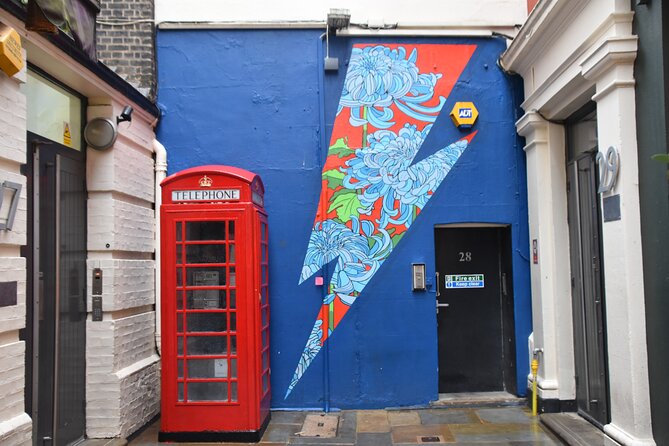
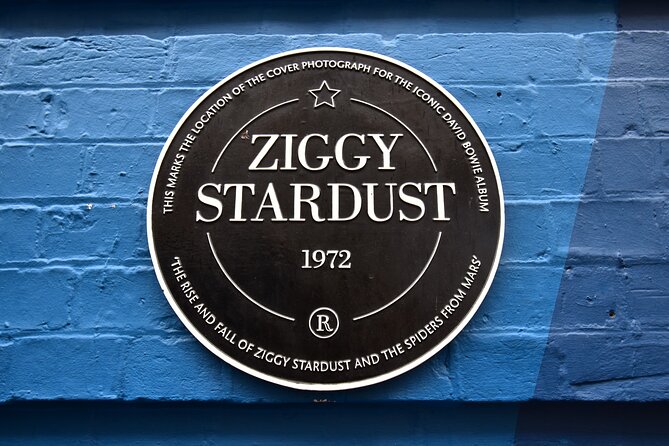
Heddon Street is a standout location stop for Bowie fans. The tour points to the spot connected to the front and back cover of The Rise and Fall of Ziggy Stardust and the Spiders From Mars. You also get the story of the photoshoot, including the detail that it happened on a cold and wet January night in January 1972, with a chance to recreate the iconic photos.
That’s more than a photo moment. It gives you a sense of place for the art, and why the look became so specific. You’re not just hearing that Ziggy Stardust exists. You’re seeing where the image was created and why it feels like a moment frozen in time.
Then you move to 3 Savile Row, which is heavily Beatles-coded. The guide shows the building tied to the legendary rooftop concert in 1969, including how it appears in Let It Be and Get Back. The stop also covers the Beatles’ final performance at that address, and notes the office became the Apple headquarters, pulling in Beatles fans from around the world.
This is one of those tour moments where you can’t help but look up. You’re standing where a major public moment happened, and you get reminded that music history isn’t just audio. It’s buildings, logistics, and timing.

Clapton’s clothes shop, Café Royal’s Ziggy party, and the Marquee club era
Cordings Ltd is a clever stop because it connects music to style and money. The guide explains how Eric Clapton window-shopped as a teenager, then later became a regular customer and eventually invested in the business as design director. For a music tour, it’s a smart reminder that creativity and identity show up in the clothes too.
Hotel Café Royal follows, starting from its cafe roots in 1865. Here, the tour ties it to David Bowie’s 1973 bash where Ziggy Stardust is retired. The guide also mentions a Ziggy Stardust cocktail bar inspired by the event inside the hotel.
These two stops make the point that scenes don’t only happen on stages. They happen in shops and celebrations, where artists meet, plan, and turn public moments into brand-like stories.
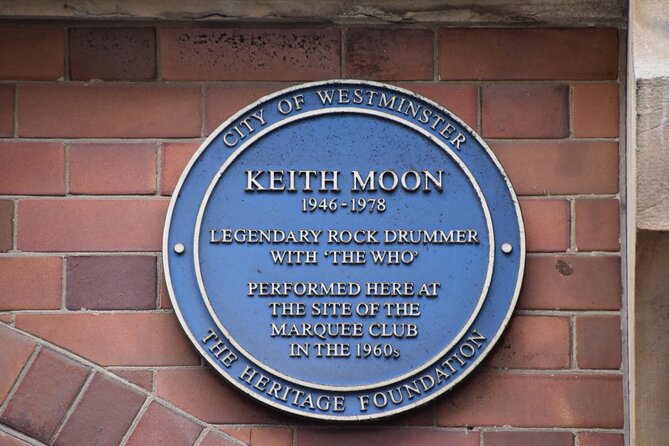
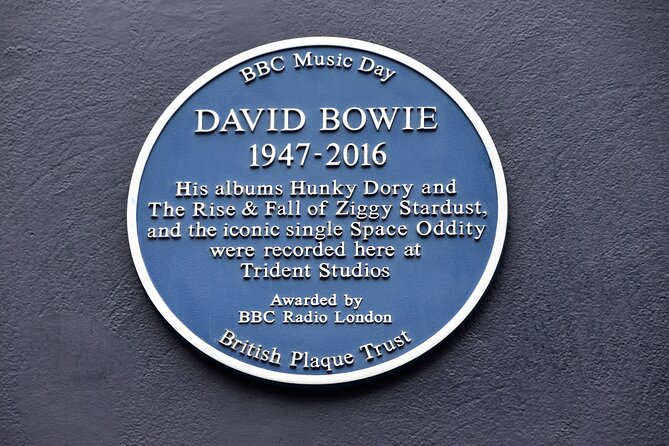
Next is Wardour Street for the Marquee Club. The guide notes it opened for 26 years and frames it as a launchpad for early careers, including The Who and David Bowie. You’ll also learn about a dusty plaque to Keith Moon over the door, which adds a vivid “small detail, big meaning” feel.
From there you reach The Ship in Soho. When the Marquee lost its alcohol licence, music fans moved to this pub, and the singers and musicians followed. The tour describes rock legend antics outside the pub and why the place felt like it rocked.
If you’re the type who likes the social side of music, this stretch is for you. It’s about who hung out where, and how venues shaped who met whom and who got heard.
Studios, McCartney publishing power, and what Soho controlled
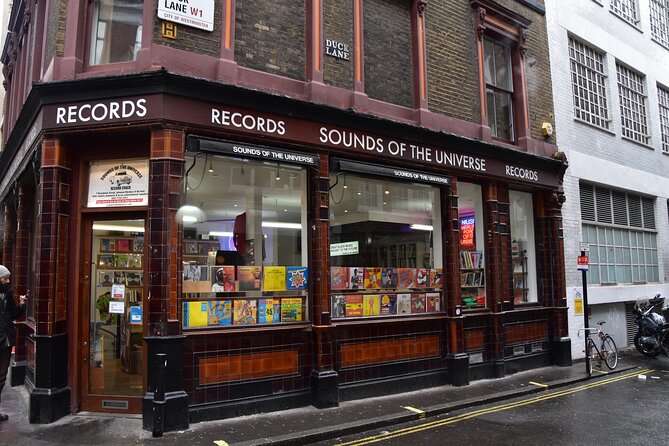
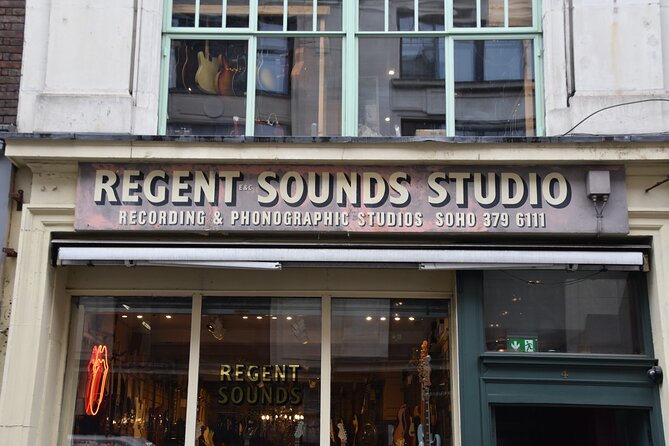
Trident Studios comes next, introduced through a plaque in a tiny alley near The Ship. The guide places the studio’s key period between 1968 and 1981 and lists major artists who recorded there, including David Bowie, The Beatles, Queen, Elton John, Rolling Stones, and Black Sabbath. It’s short, but it’s packed, and it makes the alley feel like a creative corridor rather than just a back street.
Then you’re at Soho Square for MPL, McCartney Publishing Limited. This stop shifts from recording to publishing, and that’s a smart change of angle. The guide explains that Paul McCartney’s billionaire status is tied partly to music publishing, and it frames publishing as a power center, not just paperwork.
Together, Trident Studios and Soho Square teach you something useful: rock history isn’t only about the final recording in a studio. It’s about who owns rights, who distributes, and who benefits for years after the song is released.
Ronnie Scott’s, ODEON Covent Garden, and Foyles Bookshop punk-to-pop links
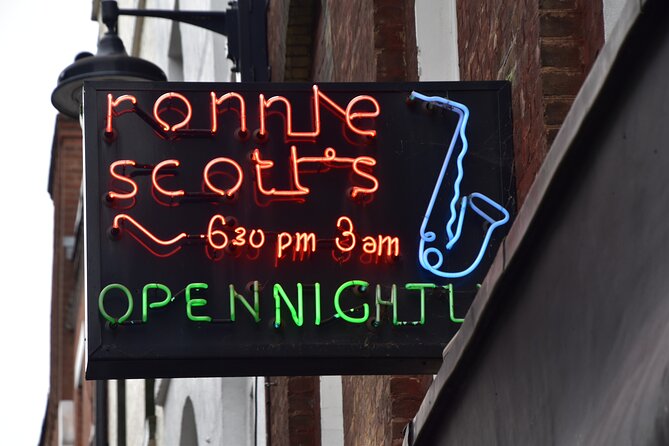
Ronnie Scott’s Jazz Club is introduced on Frith Street, noting that Ronnie Scott moved the venue there in 1965. The guide highlights major names and includes references to a surprising Lady GaGa performance, plus Jimi Hendrix’s final performance. Admission is not included, so you’ll want to treat this as a talking-and-looking stop, not a guaranteed indoor visit.
Next is ODEON Covent Garden, tied to Brian Epstein. The tour explains that in 1966 Epstein decided to buy a theatre, with plans for what he would do with it, and which legendary artists played there as the 60s prepared to be revived. Again, admission is not included, so plan for street-level context and let the guide show you the key stories rather than expecting a full interior tour.
Then comes Foyles Bookshop, which once was a university building. The guide connects it to the Sex Pistols’ first gig, Malcolm McLaren’s approach of only booking them for student gigs early on, and the story of Steve Jones getting their guitars from the place. It’s a surprisingly good stop because it shows how punk found opportunities through networks and access points that were very practical.
This section is best for listeners who want the music business angle too. You’re seeing how managers and institutions helped shape what reached an audience, whether that audience was mainstream, student crowds, or both.
Denmark Street: finishing with the British music machinery
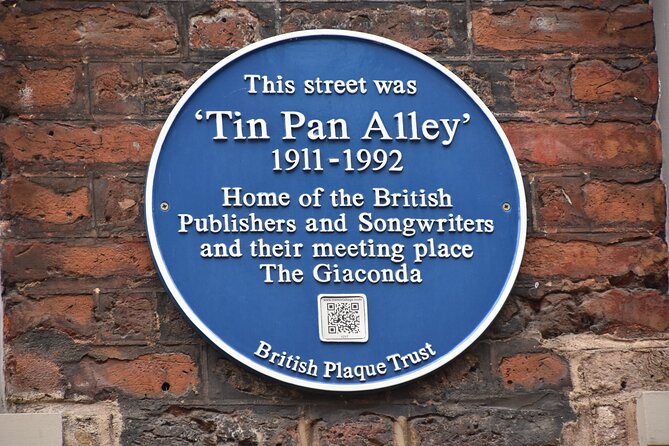
Denmark Street ends the tour and gives you the most “industry in motion” feeling of the route. The guide frames it as one of the most important British 20th-century music streets. The tour connects it to the Beatles’ first music publishing deal, the Rolling Stones’ first album recording, and the Sex Pistols crashing, rehearsing, and causing chaos.
There’s also a memorable detail about John Lydon drawing rude pictures on the wall that are apparently still visible. Whether you’re into punk or you just like the vibe of rebellion, this kind of specificity makes Denmark Street feel like a working set, not a dead monument.
Finally, the stop brings in Elton John and David Bowie, connecting them to early days on the same street that also fed publishing and recording. You close the walk with a strong sense that London wasn’t just a backdrop. It was an engine that ran on venues, shops, and deals.
Should you book this Central London rock tour?
I think it’s a strong pick if you’re traveling with people who love British music, and you want a guide-driven route that covers big names without turning into a museum marathon. The private group size up to 15 can make the price feel fair, especially for groups that would otherwise need multiple paid experiences.
Book it if:
- you want a tight half-day plan with major sites connected to the Beatles, Bowie, Stones, Pink Floyd, and punk-era London
- you like asking questions and getting answers tailored to your interests
- you prefer seeing music history in the streets, not only on screens
Skip it if:
- you’re hoping for lots of long indoor ticketed visits, since several stops are outside and some venue admission is not included
- you dislike walking and short stop-and-go pacing
FAQ
How long is the Rock ‘n’ Roll Music Tour of Central London?
It lasts about 3 hours.
Is this tour private?
Yes, it’s a private tour, and only your group participates.
What is the price, and how many people can join?
The price is $205.67 per group, up to 15 people.
What language is the tour offered in?
The tour is offered in English.
What is included in the tour price?
All guiding fees are included as part of the tour.
Do I need separate tickets for every stop?
Admission tickets are listed as free for most stops, but tickets are not included for Ronnie Scott’s Jazz Club and ODEON Covent Garden.
Where does the tour start and end?
It starts outside the London Palladium at 8 Argyll St, London W1F 7TF, and finishes on Denmark Street in London WC2H.
More Private Departures


Fresh off the notebook in London
- Private Rock ‘n’ Roll Music Tour of Central London
★ 5.0 · 7 reviews - London Walking Tour: Camden Town Photography Walkabout
★ 5.0 · 7 reviews - Private Transfer from London accommodation to Cruise terminal
★ 5.0 · 7 reviews - Amazing Nightlife in London East Tour
★ 4.5 · 7 reviews - The British Museum: a highlights tour with a TV historian
★ 5.0 · 7 reviews - Heathrow Airport to Cambridge private taxi transfers
★ 5.0 · 7 reviews
Private, compared.
 ★ 5.0The Premier Classic London: Private 4-Hour Tour in a Black CabFrom $5532,737 reviews
 ★ 5.0Stonehenge Inner Circle Private Tour from London with Bath VisitFrom $1881,909 reviews
 ★ 5.0Private Historical Walking Tour of YorkFrom $1951,324 reviews
 ★ 5.0Private Tour: Black Taxi Tour of LondonFrom $3061,153 reviews
 ★ 5.0Private 3-Hour Guided Beatles Classic Tour of LiverpoolFrom $2771,074 reviews
 ★ 5.0British Museum London Guided Tour Semi-Private 8ppl MaxFrom $108984 reviews
 ★ 5.0London Sightseeing Private Black Cab Tour with Hotel Pick UpFrom $441917 reviews
 ★ 4.5VIP Tower of London and Crown Jewels Tour with Private Beefeater Meet & GreetFrom $155849 reviews