

REVIEW · ENGLAND
Quoits, Stone circles and Monoliths on Bodmin Moor
Megaliths in the rain make perfect stories. This private 8-hour route strings together Bodmin Moor stone circles and Cornwall river towns, with a driver-guide who knows the small roads and timings.
What I like most is the ease of hotel pickup across Cornwall and the fact you travel by air-conditioned private vehicle with on-board WiFi. I also love that many stops list admission as free, so you can spend more time looking at the sites and less time budgeting tickets.
One possible drawback: a lot of this day is outdoors. If it’s wet and windy on the Moor, you’ll want good layers, real shoes, and patience, because the stops are short and the weather decides how long you linger.
In This Review
- Key points to know before you go
- Why this Bodmin Moor circuit feels so efficient
- Price and value for a group of up to 4
- Pickup, timing, and what the day actually feels like
- Stop 1, Lerryn: a small river village that sparked a classic tale
- Stop 2, Fowey Harbour and the Bodinnick ferry to Polruan
- Stop 3, The Hurlers: three stone circles and a Sunday legend
- Stop 4, Trevethy Quoit: Cornwall’s best preserved Neolithic doorway
- Stop 5, Charlestown UNESCO harbour: film-friendly, but still very real
- Stop 6, St Breock Downs monolith: the biggest stone in Cornwall
- Stop 7, Castle an Dinas: Neolithic hillfort views in every direction
- What to bring so the day stays comfortable
- Who this tour is best for
- A few practical tips to get the most from each stop
- Should you book Quoits, Stone circles and Monoliths on Bodmin Moor?
Key points to know before you go

- Private hotel pickup anywhere in Cornwall means no rental car math
- On-board WiFi keeps you connected while you bounce between historic sites
- Stone circles, quoits, and monoliths in one focused circuit, not a scattershot tour
- Fowey and Lerryn stops add softer, human-scale scenery before you hit the megaliths
- Small time blocks at each stop (often 10 to 20 minutes) suit a brisk, see-and-learn style
Undecided so far? Here are further Cornwall tours we have written up.
- Taster Surfing Lesson in Bude★ 5.0 · 101 reviews
- 2-Hour Coasteering Adventure Near Bude★ 5.0 · 68 reviews
- Stand Up Paddle Boarding Journey Down Bude Canal★ 5.0 · 44 reviews
- Coasteering Adventures in Bossiney Cove, Bude, and Cornwall★ 5.0 · 19 reviews
Why this Bodmin Moor circuit feels so efficient
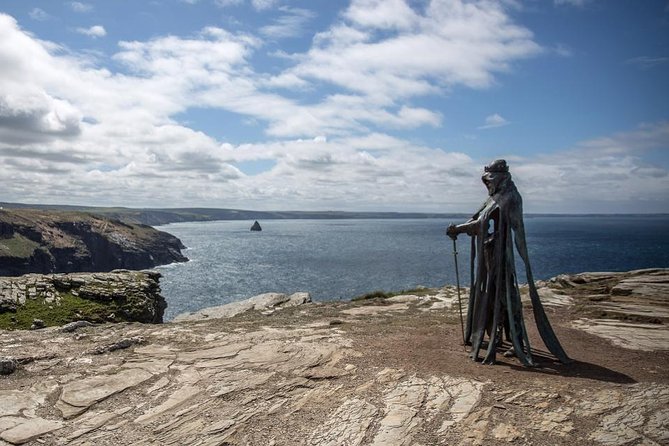
This tour works because it avoids the usual travel friction. You’re not juggling buses, parking, or a self-drive route of tiny lanes that suddenly turn into mud. Instead, you ride in a private vehicle with a driver-guide, and you get dropped right where you need to be.
I also like the way the day is paced. The itinerary hits several “big ticket” Neolithic and Bronze Age landmarks, but you’re not stuck at a single site all day. That matters when weather changes quickly in Cornwall, because you keep momentum even when skies switch from fine to moody.
Finally, it’s a good value style of experience for a small group. The price is for the whole group up to 4, so if you split costs between friends or family, the private part becomes the bargain, not the extra.
Price and value for a group of up to 4
The tour price is $1,032.67 per group for up to 4 people, and the duration is about 8 hours. That’s a straightforward setup: the fewer people you have in your group, the more you feel the per-person cost.
Here’s why it can still feel like good value. Many of the stops list admission ticket as free, so the main “paid” part is transportation plus guiding. You also get on-board WiFi and a driver-guide who handles the tricky bits, like winding roads and timing the quick photo and look-around windows.
If you’re traveling as a couple and you hate driving in unfamiliar countryside, you may find the privacy and convenience worth it. If you’re traveling solo, you might compare against ticketed tours that include more stops, but you’ll give up some of the door-to-door ease.
Pickup, timing, and what the day actually feels like
The start time is 9:00 am, and pickup is offered from any hotel in Cornwall. This is a big deal if you want to sleep in a little and avoid “meet me at X at Y o’clock” stress.
The schedule is built from short visits: roughly 10 minutes at several stops, about 20 minutes at key sites, and one longer look at Castle an Dinas (40 minutes). That structure is best if you enjoy getting the highlights and moving on. It’s not the format for slow tourism where you want to spend an hour at each stone, sketch, and re-read every sign.
Language is English, and the tour operates as a private experience, so only your group participates. The reviews also mention a host named Doug, with praise for safe driving around the little roads, even in heavy rain.
Stop 1, Lerryn: a small river village that sparked a classic tale
Lerryn is a small village upstream from Fowey, set along the riverbank. It’s tied to author Kenneth Graham, who was inspired there to write The Wind in the Willows, including the river-focused stories known as Tales of the Riverbank. This is the soft landing before the stone stuff, and it helps the day feel human and local.
Expect a quick orientation stop, about 10 minutes. There’s no admission ticket involved, so it’s more about atmosphere than entry fees.
One practical tip: river villages can be damp underfoot, even when the sky looks fine. Bring footwear that doesn’t get slippery easily, and if you’re chasing photos, keep your camera lens hood handy.


Stop 2, Fowey Harbour and the Bodinnick ferry to Polruan
Next you roll into Fowey, a small town with even smaller streets. It’s a popular spot for visiting yachts, but it’s also tied to the China clay industry, so it has a working-port feel, not just postcard prettiness.
You’ll also get a taste of the crossing by taking the Bodinnick vehicle ferry to the Polruan side of the Fowey river. That adds a practical, sensory element to the day, because ferries are slow in the good way. Even with a short stop (around 10 minutes), you’re reminded that this landscape is shaped by water routes.
Like Lerryn, the admission ticket is listed as free here. This stop is best for getting your bearings, spotting the mix of old streets and modern activity, then heading back toward the high ground.
If it’s rainy, don’t worry. You can still do this stop because it’s compact. Just keep your plans simple: look, soak up the atmosphere, and get back in the vehicle when it’s time.
Stop 3, The Hurlers: three stone circles and a Sunday legend
Then the tour turns more mythic at The Hurlers, a group of 3 stone circles. These are believed to have been used for ceremonies, and there’s also a local legend that links the site to a group of men turned to stone for playing hurlers on a Sunday.
You’ll have about 20 minutes here. That’s enough time to walk around, read the key context, and take in the way multiple circles create a larger “story” than one lone ring of stones.
A quick caution: stone circles often sit on exposed land. If the wind is up on the Moor, plan to keep your coat on and your hands warm. You’ll enjoy the site more if you can relax into the views instead of fidgeting against cold.
Stop 4, Trevethy Quoit: Cornwall’s best preserved Neolithic doorway
Trevethy Quoit is described as the best preserved Neolithic quoit in Cornwall, dating to around 3500 to 2500 BC. In simple terms, it’s the kind of site where you start thinking about how much effort went into placing and shaping these structures long before modern tools.
You’ll spend about 20 minutes here, and admission is listed as free. That gives you time to look closely and notice details you might otherwise miss at the “quick photo only” speed.
The quoit is also a good mental bridge between the circles and the bigger monoliths later in the day. You go from multiple stone circles (ritual landscape) to this single monumental stone context (ritual focus), and then you’ll eventually end with a Bronze Age monolith and a hillfort viewpoint.
Stop 5, Charlestown UNESCO harbour: film-friendly, but still very real
Charlestown is one of those places where the camera has been interested for a long time. It’s a UNESCO site and a Georgian harbour, and it’s probably best known recently as the port of Truro in Poldark. You’ll also see it pop up in other filmed works, including The Onedin Line, Doctor Who, and The Three Musketeers.
You’ll have about 20 minutes. That’s enough to orient yourself, appreciate the harbour setting, and remember that this is not just movie set scenery. It’s a working-feeling landscape shaped by maritime life and old harbour design.
Admission is listed as free for this stop, which makes Charlestown a nice contrast point. After several prehistoric landmarks, you get buildings and water, plus a sense of how communities made use of this geography.
If you want the best experience here, don’t chase only the most obvious photo angle. Spend a minute looking up the streets too, since the “small streets” feel can show up in how the harbour town is laid out.
Stop 6, St Breock Downs monolith: the biggest stone in Cornwall
St Breock Downs is home to Cornwall’s largest monolith, and the views are part of the package. The standing stone dates to the Bronze Age and weighs around 17 tonnes, which is one of those facts that feels abstract until you see the scale for yourself.
This stop is about 10 minutes, with admission listed as free. Because time is short, your strategy matters: decide where you want your main sightline first, then take the photos and do a quick scan of the surrounding area.
This is also a perfect place to appreciate what the stones were doing for people. When you’re standing near a huge standing stone, it’s hard not to think about visibility, gathering points, and the way landmarks structure movement across open land.
Weather note: high, open spaces can be windy. Keep your balance, watch footing on uneven ground, and don’t try to “just one more” photo if the wind is knocking you around.
Stop 7, Castle an Dinas: Neolithic hillfort views in every direction
The day finishes strong at Castle an Dinas, described as one of the best preserved Neolithic hillforts. You’ll have about 40 minutes here, which is the longest stop and a clue about what you’re meant to take away.
On a clear day, you can get impressive 360 degree views over Cornwall. The reason early settlers likely chose it makes sense immediately: it’s easier to guard land when you can see so far.
This is the stop where I’d slow down the most, even if you feel the rest of the day ran briskly. Read the interpretation if it’s available, then look around for natural lines in the land. Even without fancy map skills, you’ll start noticing why this kind of hillfort placement mattered.
Also, because it’s longer, it’s a better buffer if earlier stops ran short due to rain.
What to bring so the day stays comfortable
This tour doesn’t include lunch or coffee and/or tea, so plan to handle meals yourself. I’d pack a light snack and water, especially if you get hungry between stops. The itinerary is compact, and the gaps aren’t long enough to assume you’ll always find a quick bite.
For gear, focus on comfort. Bring a rain layer and dress in layers so you can handle temperature shifts between sheltered harbour areas and exposed Moorland. Proper walking shoes matter, since stone sites and hill paths can get slick.
If you’re sensitive to cold, bring gloves. You’ll thank yourself at the open-air viewpoints.
Who this tour is best for
This is a great match if you want private door-to-door convenience and you like seeing multiple landmark types in one day, stone circles, quoits, monoliths, and a harbour town.
It’s also a strong option for small groups who would rather pay for comfort than spend time driving. The tour format is manageable for most travelers, and there’s space to move at your own pace within the time windows.
If you’re the kind of person who loves long, quiet museum-style reading, you might find the shorter stop lengths a bit tight. But if you prefer a guided highlights route with quick context and big views, you’ll probably enjoy the pace.
A few practical tips to get the most from each stop
Here’s how I’d make your day smoother, based on how the itinerary is structured.
- At each 10 minute stop, pick one goal: one photo, one quick read, one short walk, then move on.
- At the 20 minute and 40 minute sites, spend the extra time looking for “why here” clues, like visibility or how stones are positioned.
- If rain hits hard, don’t fight it. Keep your coat on, focus on the key sightline, and let the guide’s timing do the heavy lifting.
That approach also fits what you learn from the experience itself. The route works best when you trust the flow and let the driver-guide handle the movement across Cornwall.
Should you book Quoits, Stone circles and Monoliths on Bodmin Moor?
I’d book this if you want a one-day mix of river towns and megalithic landmarks, without the stress of self-driving. The private vehicle, hotel pickup, and on-board WiFi make it feel like a service, not a DIY mission.
I’d hesitate only if you dislike outdoor sites in bad weather or if you need long stops to absorb information. This is a brisk, guided highlights day. When conditions are rough, it’s still enjoyable, but your comfort depends on layers, shoes, and a simple plan.
If you like the idea of seeing Cornwall’s stone monuments with enough context to understand what you’re looking at, while also fitting in Charlestown’s harbour charm, this is a smart way to spend your time.
Fresh off the notebook in Cornwall
- Full Day Private Guided Tour of Poldark Filming Locations
★ 5.0 · 3 reviews - Quoits, Stone circles and Monoliths on Bodmin Moor
★ 5.0 · 4 reviews - Castles, Canals and Witches in Cornwall England
★ 5.0 · 4 reviews - Full Day Private Tour of West Cornwall
★ 5.0 · 5 reviews - West Cornwall Tour with Poldark Filming Locations
★ 5.0 · 13 reviews - Private Tour of North Cornwall for Breathtakingly Rugged Coast
★ 5.0 · 15 reviews