
REVIEW · WALKING TOURS
Secrets of the London Underground Small Group Walking Tour
London’s underground has more stories than you think. This small-group Tube-themed tour turns everyday stops into a guided history lesson. You start at Baker Street and finish at Westminster, with a route that connects stations, engineering, and a few ghostly what-ifs.
I love the way the tour mixes big-picture context with specifics you can actually picture, like how early lines shaped today’s map. Two things really land for me: the chance to see an original underground station up close, and the focus on how the system was built in the Victorian era before modern tech made everything easier.
One consideration before you book: transport is not included. You’ll need a Zones 1–2 day travel card or an equivalent option, which can affect the value if you already plan to use Tube all day.
In This Review
- Key Takeaways Before You Go
- Tube History on Foot, Starting at Baker Street
- What Makes the Tour Worth Your Time (and Not Just a Station Tour)
- Baker Street Station: The Underground’s Early Footprint
- Oxford Circus: When Construction Plans Became Real Lines
- Green Park and the Story of a Station That Closed
- Piccadilly Circus: The Underground’s Junction of Projects
- Embankment to the Thames: City Engineering You Can Still See
- Westminster: From Bridge Street Access to a Busy End Point
- Haunted and Disused Stations: The Spooky Thread (With a Practical Edge)
- Price and Value: The $41 Question, Plus Your Tube Fares
- Who This Tour Fits Best (and Who Might Be Less Happy)
- Practical Tips for a Smooth 2.5 Hours
- Should You Book This Secrets of the London Underground Tour?
- FAQ
- Where does the tour start and where does it end?
- What time does the tour begin?
- How long is the Secrets of the London Underground tour?
- How much does it cost?
- Is a travel card included in the price?
- What language is the tour offered in?
- How many days per week does it operate?
- Is this tour suitable for reduced mobility?
Key Takeaways Before You Go
- Original-station access at Baker Street: you get an up-close start at an underground site tied to the system’s earliest era.
- Victorian-era building stories: the guide explains how the Underground was made long before today’s tools.
- Disused and haunted-station talk: expect spooky legends and real notes about abandoned parts of the network.
- A route that links architecture and lines: each stop connects station design to how lines developed over time.
- Small group size (max 25): easier to follow than the typical crowd-wrestling day in central London.
- Plan for lots of steps: it is not built for reduced mobility.
More on foot, at a pace you can hear the guide
- Tour for Muggles The Ultimate Harry Potter Walking Tour in London★ 5.0 · 4,684 reviews
- London Jack The Ripper Guided Walking Tour★ 5.0 · 3,131 reviews
- Changing of the Guard Guided Walking Tour in London★ 5.0 · 1,793 reviews
- The Great British Rock and Roll Walking Tour★ 5.0 · 1,371 reviews
Tube History on Foot, Starting at Baker Street
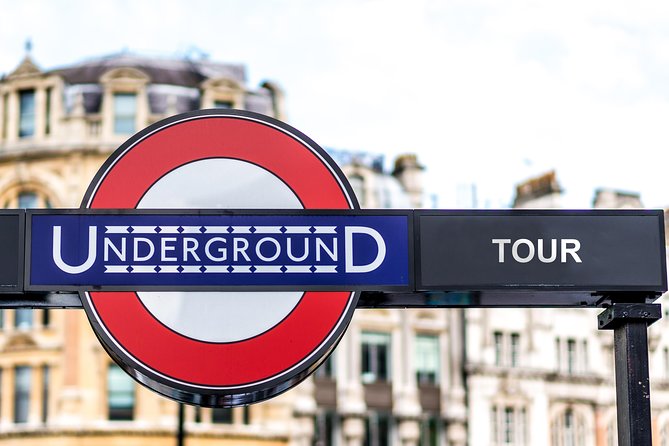
If you have ever treated the Tube like a magic teleport, this tour is a good wake-up call. The Underground is not just a fast commute. It is a stack of engineering decisions, political fights, and station designs that changed the way London moves.
This is small-group touring at a practical pace. You meet at Baker Street Station in Marylebone, then work your way through some of the most famous central London stations. The format feels like a mix of walking and short Tube movements, with the guide keeping you pointed toward what matters: why that station exists, what came first, and how it connects to later expansions.
At a listed duration of about 2 hours 30 minutes, you get enough time for real storytelling without feeling like an all-day commitment. That matters in London, where every extra hour can feel like a transfer and a wait.
What Makes the Tour Worth Your Time (and Not Just a Station Tour)
The biggest strength here is the tour theme: secrets and history, not just a checklist of stations. You are not spending the whole time reading plaques or staring at maps. The guide is actively explaining the system, including the Underground’s evolving roles over time.
There are also a few built-in ingredients that tend to create a more memorable experience:
- One of the underground’s earliest stations is part of the route, opened in 1863.
- The guide connects the dots to how the Underground was built in the Victorian era, when construction was far harder than it looks on a modern platform.
- The tour includes stories about haunted and disused stations, which gives you that fun London flavor while still grounding it in what is actually known about closures and abandoned areas.
And yes, the guide matters. In the feedback I’ve seen from past groups, guides such as John and Peter get praised for being energetic, clear, and willing to share plenty of practical transit context, not just trivia. Another guide name that shows up is Angela, with mentions of broader context that can include politics and even wartime experiences. Those details make the tour feel like it has a point, not like you are walking around a station brochure.
Baker Street Station: The Underground’s Early Footprint
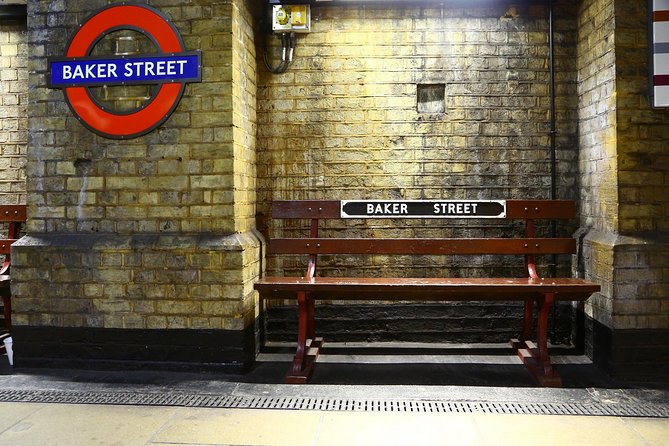
Your tour begins at Baker Street Underground Station, one of the original stops on the Metropolitan Railway. This detail is not just a fun opener. It tells you why Baker Street is a perfect start: it sits near the beginning of the story, when the Underground concept was still new and ambitious.
This is also where the tour’s “original station” value shows up. The experience is designed so you visit an underground station tied to the era when the system was still taking shape, with Baker Street connected to the 1863 opening of an early underground service.
What I like at this stop is that it reframes what you usually see. You stop thinking of Baker Street as a busy interchange and start seeing it as a gateway to how the Underground got its start. Even if you already know where platforms are, you begin to understand how line decisions and station placement shaped what came next.
Practical note: Baker Street can be crowded. The best times to look for patterns are when the group is guided clearly and you are pointed at what to notice. That pacing is usually a strength, based on guide feedback that mentions a calm, clear approach and good crowd awareness.
Oxford Circus: When Construction Plans Became Real Lines

Next up is Oxford Street / Oxford Circus Station, a spot that feels like the definition of central London. But the tour focuses on what is under the surface of the everyday chaos.
At Oxford Circus, you hear how the station developed from long-term plans. Construction began in 1962 on an initial section that was intended to support a cross-platform interchange at Oxford Circus. Then the Victoria line platforms opened on 7 March 1969, tied to a later extension from Warren Street toward Victoria.
Why this stop is worth attention: it shows how the Underground is not one single project. It is a series of upgrades and compromises, built over decades. You get a sense for the logic behind interchange stations, which you experience every time you change lines, even if you never think about why the connection is arranged the way it is.
What you might miss on your own: most people pass through Oxford Circus without noticing that the station’s layout is the outcome of specific engineering and planning timelines. With a guide, those dates stop being random facts and start explaining why the station feels the way it does.



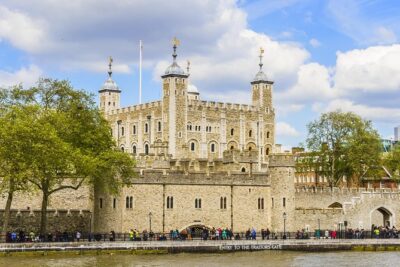
Green Park and the Story of a Station That Closed
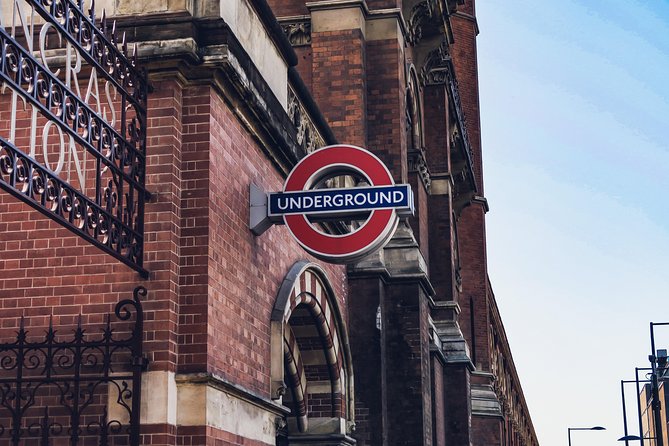
Then you reach Green Park / Down Street Station. This stop has a built-in drama: the station opened in 1907 by the Great Northern, Piccadilly and Brompton Railway, later served by the Piccadilly line, and was positioned between Dover Street (now Green Park) and Hyde Park Corner stations.
The interesting part is what happened next. The station closed in 1932, and the tour explains why: lack of patronage paired with proximity to other stations. In other words, this is a real example of how the Underground can shrink, not just grow.
This stop is valuable because it adds balance. You are not only hearing about expansion and famous upgrades. You are also learning about how systems adapt, and sometimes stop using certain spaces entirely.
For history buffs, this is one of the more satisfying moments. It turns the network from a forever-changing machine into something with a timeline, including choices that did not last.
Consideration: you spend a short amount of time here, so if you want to keep every detail straight, bring an attitude of curiosity rather than expecting this to feel like a full museum stop.
Piccadilly Circus: The Underground’s Junction of Projects
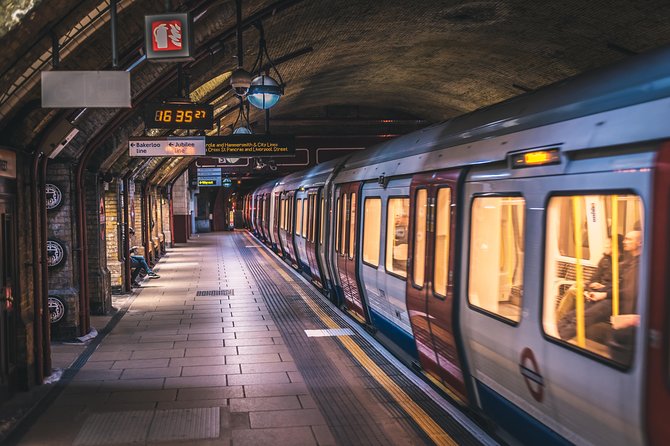
At Piccadilly Circus Station, the tour ties together how different railways fed into the modern Underground lines. The station opened on 10 March 1906 by the Baker Street and Waterloo Railway, with platforms from the Great Northern, Piccadilly and Brompton Railway (now the Piccadilly line) opening later on 15 December 1906.
This is the kind of information that helps you see the Tube map in a new way. Instead of thinking of lines as neat colors, you start thinking of them as stitched-together projects, with stations evolving as technology, traffic, and political will shifted.
What I find most helpful is that you learn how stations can represent overlap. Piccadilly Circus is busy today, but the story explains why it became a core junction in the first place.
Embankment to the Thames: City Engineering You Can Still See
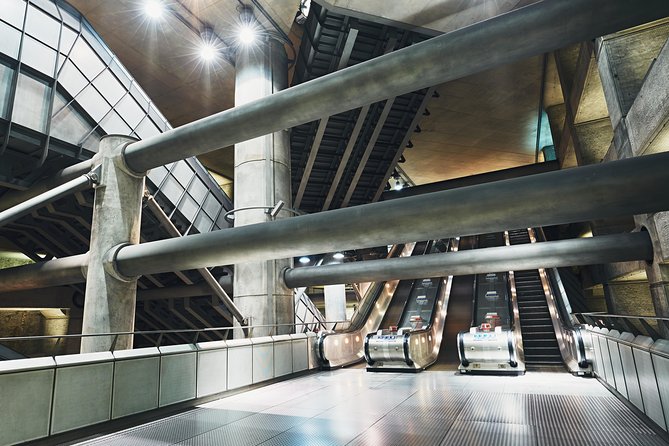
Next comes Victoria Embankment / Embankment Station, which puts the Underground story in conversation with the Thames. The tour covers how the area was developed in the 19th century to reclaim marshy land along the river banks.
This is a smart stop because it broadens your brain beyond train tunnels. London’s transport history is also city-shaping history. Land reclamation changes what gets built where. And once you understand the riverfront context, you start noticing how the city’s “surface geography” and the Underground’s structure are connected.
If you like seeing how old decisions still show up in modern London, this part delivers. Even if you never care about architecture for its own sake, you can appreciate the engineering logic once you are told what the space used to be like.
Westminster: From Bridge Street Access to a Busy End Point
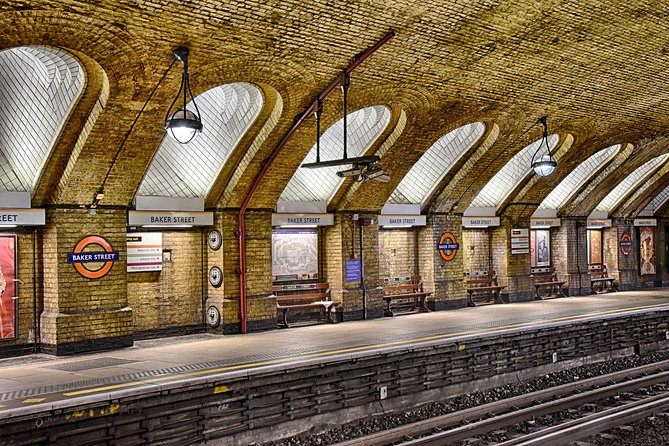
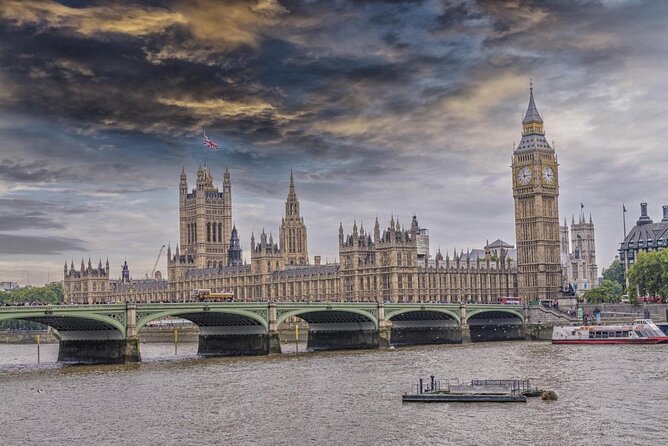
Your last stop is Westminster Station, finished at the end of the tour at Bridge Street. Westminster has a deep origin story too. The station was opened as Westminster Bridge on 24 December 1868 by the steam-operated District Railway, when the line opened its first section from South Kensington.
One detail that makes Westminster feel real is the access story. The tour explains that access was via a passageway from Bridge Street and a pedestrian subway under the road.
That is a good theme for the entire tour: the Underground has always been about more than tunnels. It is about connections, entry points, and how people move through space. When you hear those early access plans, you understand why stations look like they do, and why certain pathways feel the way they do during peak hours.
By the time you finish at Westminster, you are not just relieved to be done walking. You are also leaving with a clearer mental map of why these central stations became central.
Haunted and Disused Stations: The Spooky Thread (With a Practical Edge)
One of the inclusions is stories about haunted and disused stations left abandoned. That could easily turn into pure legend if a guide is not careful, but this tour’s structure tends to keep it grounded in how stations were closed and why.
I like this element because it gives you a reason to pay attention to what you see in the network, including closed corridors, unused spaces, and the difference between what is operating and what is not. You also get a better sense for how the Underground’s growth creates leftovers, like older alignments or spaces that no longer make sense for modern traffic.
Just keep your expectations tuned for “storytelling,” not a promise to access locked-off areas. The tour is about learning the stories tied to the network, not breaking rules to reach forbidden platforms.
Price and Value: The $41 Question, Plus Your Tube Fares
The tour price is listed at $41.13 per person, for about 2.5 hours. On paper, that can be a solid deal for a guided history experience in central London.
But value depends on one big factor: transport is not included. You are asked to purchase a day travel card for Zones 1 to 2, or use contactless/Oyster/travel card options that are valid in Zone 1. Since this is a Tube-themed route, you should assume you will be spending money on your own transit anyway.
How to judge whether it is worth it for you:
- If you love station history and you plan to use the Tube a lot that day, you may treat this as part of your overall transport plan, and the guided content becomes the main benefit.
- If you were hoping the fee covered transit rides from stop to stop, you might feel a squeeze. Some people have pointed out that they expected the day pass or transit amount to be included, since the tour uses Tube travel between major points.
So, my practical take: for $41.13, the price can feel fair if you are there for the stories and you are already budgeting Tube travel. If you are trying to minimize extra costs, add your day pass cost to the equation before deciding.
Who This Tour Fits Best (and Who Might Be Less Happy)
This is a great match for:
- History-minded London visitors who want the Underground explained in human terms.
- People who like engineering and station design, especially Victorian-era construction and later expansion timelines.
- Anyone who wants a more intimate experience than big walking tours, since the group cap is 25.
It can be a tougher fit for:
- Anyone who does not do well with lots of steps, because it includes many stairs and walking segments and is not suited for reduced mobility.
- People who expect a purely off-the-tracks, inside-the-control-room style of access. The tour is focused on stories tied to well-known stations, not hidden backstage areas.
Practical Tips for a Smooth 2.5 Hours
A few simple things will make this easier.
First, bring the right transit setup before you start. Since ticketing matters for Zone coverage, set yourself up with a valid option for Zones 1–2 so you are not scrambling at the station gates.
Second, wear shoes that are comfortable for walking and steps. The tour is built on movement, and you are not just strolling on flat sidewalks.
Third, think weather. One prior visitor specifically mentioned it was wet and wished they had known to bring an umbrella. Since this is a walking day, you should plan for rain as a possibility, even if the forecast looks calm.
Finally, arrive a few minutes early at Baker Street. Central London stations can be chaotic, and a small group tour works best when everyone starts together.
Should You Book This Secrets of the London Underground Tour?
Book it if you want a guided Tube history route that connects stations from Baker Street to Westminster with stories about Victorian construction, station development, and even abandoned and haunted corners of the network’s past.
Skip it or reconsider if you:
- Are mainly in London for quick sightseeing and do not care about how the Underground evolved.
- Want the price to include your Tube fares, since you will need your own Zones 1–2 travel ticket option.
- Need a low-step experience, because the tour is not designed for reduced mobility.
If you fall into the first group, this is the kind of tour that makes the Tube feel new again. You ride the rails every day, but afterward you start seeing the system as a sequence of decisions that shaped modern London.
FAQ
Where does the tour start and where does it end?
The tour starts at Baker Street Underground Station (Marylebone Rd, London NW1 5LJ) and ends at Westminster Station (Bridge St, London SW1A 2JR).
What time does the tour begin?
The start time listed is 1:00 pm.
How long is the Secrets of the London Underground tour?
It runs for about 2 hours 30 minutes.
How much does it cost?
The price is listed as $41.13 per person.
Is a travel card included in the price?
No. Travel cards are not provided. You need to purchase a day travel card for Zones 1 to 2 or use contactless/Oyster options that are valid for Zone 1.
What language is the tour offered in?
The tour is offered in English.
How many days per week does it operate?
It operates Tues, Thurs, and Sun from Apr to Mar, except 24-26 December and 1 January.
Is this tour suitable for reduced mobility?
No. It includes many steps and is not suitable for guests with reduced mobility.
More Of London On Foot






Fresh off the notebook in London
- Private Rock ‘n’ Roll Music Tour of Central London
★ 5.0 · 7 reviews - London Walking Tour: Camden Town Photography Walkabout
★ 5.0 · 7 reviews - Private Transfer from London accommodation to Cruise terminal
★ 5.0 · 7 reviews - Amazing Nightlife in London East Tour
★ 4.5 · 7 reviews - The British Museum: a highlights tour with a TV historian
★ 5.0 · 7 reviews - Heathrow Airport to Cambridge private taxi transfers
★ 5.0 · 7 reviews
Walking Tours, compared.
 ★ 5.0Oxford University Walking Tour With University Alumni GuideFrom $416,905 reviews
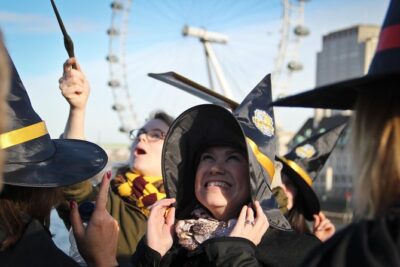 ★ 5.0Tour for Muggles The Ultimate Harry Potter Walking Tour in LondonFrom $234,684 reviews
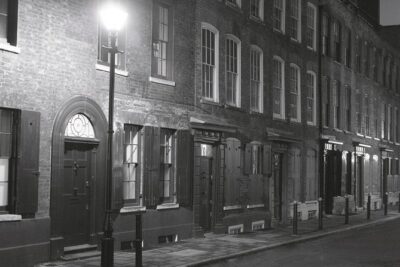 ★ 5.0London Jack The Ripper Guided Walking TourFrom $03,131 reviews
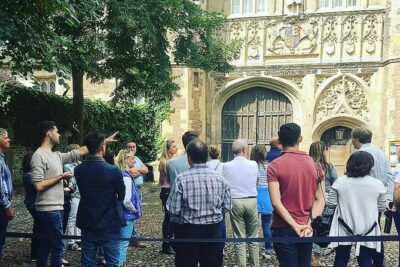 ★ 5.0Cambridge University Walking Tour by Alumni™ Kings College OptionFrom $332,336 reviews
 ★ 5.0Blackbeard to Banksy – The Ultimate Walking Tour of BristolFrom $181,961 reviews
 ★ 5.0Air Raid Shelter + St. Nicholas Market Walking TourFrom $171,950 reviews
 ★ 5.0Walking Tour of Bath with Blue Badge Tourist GuideFrom $301,877 reviews
 ★ 5.0Changing of the Guard Guided Walking Tour in LondonFrom $251,793 reviews