
REVIEW · SOUTHAMPTON AND THE NEW FOREST
Small-group New Forest Discovery Walk from Lyndhurst
Wildlife clues start the moment you meet. This New Forest Discovery Walk out of Lyndhurst is a smart, family-friendly way to learn how the Forest works, not just what it looks like. I love the small-group size and the way guides like Marcus and Emily turn birdcalls and habitat into something you can spot for yourself.
My other favorite part is the mix of places and topics. You’ll move from panoramic heath and mire views to ancient woodland, then back through working coppice, with stories that connect commoning and land management to what you see on the ground. One possible drawback: you’ll cover about 8 km, so even at a relaxed pace it may feel like a lot if you prefer short strolls, or if weather turns damp.
In This Review
- Key highlights you’ll notice on the trail
- Bolton’s Bench to The Ridge, the walk gets good fast
- The Ridge heath and mire views, plus real bird spotting
- Denny Inclosure ancient woodland, where age shows up in trees
- Pondhead Inclosure working coppice, commoning is the real story
- The Forest’s layered history, Parc Pale to WW2 range
- What wildlife and fungi you might actually see
- Timing, route length, and how to dress for a relaxed 2 hours
- Price and value, what you get for about $23
- Who this walk is for, and who may want something else
- Should you book the New Forest Discovery Walk from Lyndhurst?
- FAQ
- How long is the New Forest Discovery Walk from Lyndhurst?
- Where does the walk start?
- How far will we walk?
- What fitness level is required?
- How big is the group?
- What happens if the weather is bad?
Key highlights you’ll notice on the trail
- Bolton’s Bench start with a route built for big viewpoints and easy rhythm
- The Ridge panoramic heath and mire views, with help identifying birdsong
- Denny Inclosure ancient woodland stops focused on long-lived trees and habitats
- Pondhead Inclosure working coppice and the role of ponies and cattle in shaping the Forest
- Commoning and layered history from Parc Pale remains to a WW2 bombing range
- Wildlife surveyor style guiding, built around what you might spot: from Dartford Warbler to fallow deer
More south coast days and forest drives
- Southampton: Post-Cruise Tour to London via Salisbury, Stonehenge and Windsor★ 4.5 · 333 reviews
- Guided Walking Tour of New Forest National Park in Hampshire★ 5.0 · 31 reviews
- Small-group New Forest Discovery Walk from Lyndhurst★ 5.0 · 27 reviews
- Stonehenge Tour from Southampton to London★ 4.0 · 11 reviews
Bolton’s Bench to The Ridge, the walk gets good fast
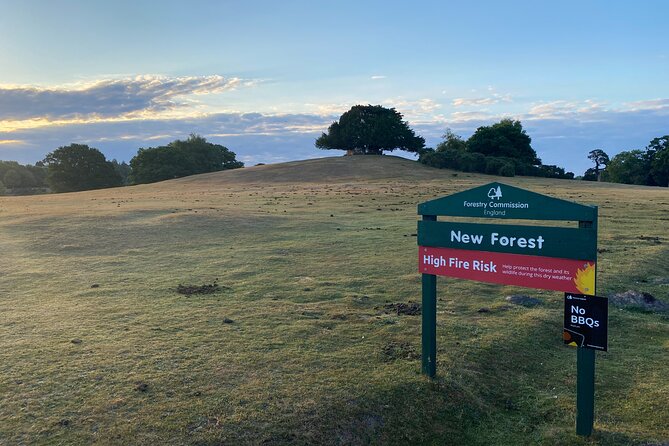
The meeting point is Bolton’s Bench in Lyndhurst, on Beaulieu Road. The best mindset for this walk is simple: take your eyes off your phone and look up, then down. Right after you start, the guide sets the tone by linking the view in front of you to how the New Forest stays the New Forest.
From there, the route follows The Ridge. Expect that classic New Forest look, heath and mire stretching out with patches of distant woodland breaking up the view. This is also where you’ll learn to slow down and notice small things. Birdlife is a big focus, and if you can hear birdsong, you can usually learn to pick out what species it might belong to.
Practical tip: start with comfortable layers. Even on bright days, you can feel the chill under canopy later on, and it helps to be ready without carrying too much.
The Ridge heath and mire views, plus real bird spotting
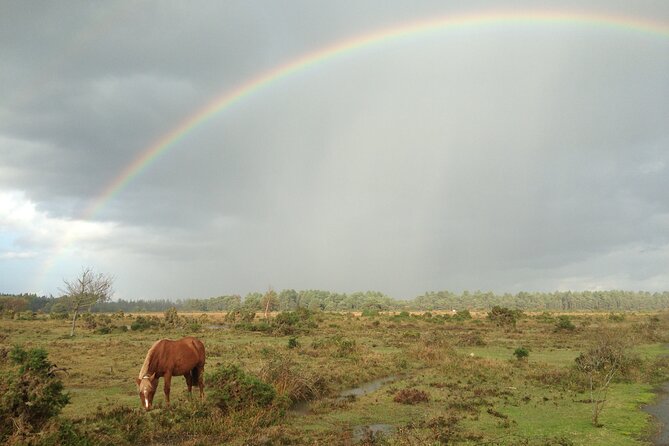
The Ridge is all about connection. You get panoramic scenery, and you also get a reason to care about the habitat. Heath and mire are not just pretty backdrops. They support very particular plant and insect life, which in turn supports birds and larger animals.
This walk is designed for a moderate pace. It is still a proper walk, about 8 km, but the pace leaves room to stop often. That matters because the guide is using those pauses to teach you what to look for, rather than rushing you through the Forest like it is a photo line.
Wildlife likely to come up in the conversation includes birds such as Dartford Warbler, plus mammals like fallow deer. You might not see every target on the day, but the guide’s job is to help you interpret what you do spot, from movement in the undergrowth to calls you can hear even when you cannot see the bird.
If you are the kind of traveler who gets excited by sounds as much as sights, you will probably love this section. One of the most repeated strengths in guides for this walk is bird-focused observation, including identifying what you can hear.
Denny Inclosure ancient woodland, where age shows up in trees
After the ridge views, the route enters Denny Inclosure, described as ancient woodland. This is the shift you want on a morning walk: open panorama gives way to forest shade, and suddenly the world feels smaller and more detailed.
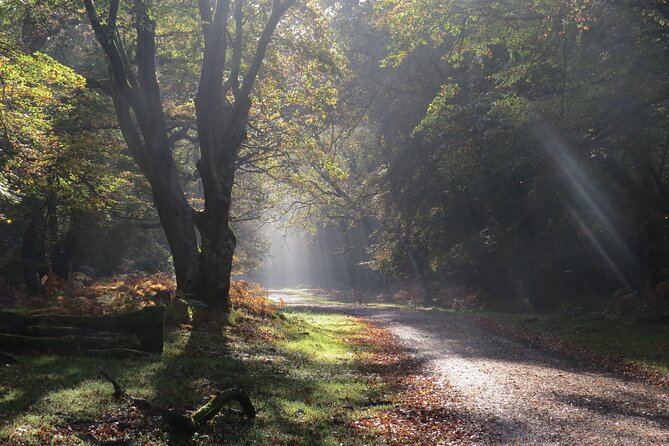
Here, you will spend time moving through a mix of woodland habitats. The guide points out long-lived tree types you can actually look for, including ancient beech and oak. These trees matter because they create conditions for other life, from fungi and invertebrates to birds that prefer deeper cover.
This is also a section where the talk tends to connect ecology to daily life in the Forest. You learn why certain plants show up in certain places, and why the Forest is not a static postcard. It is a working system.
What I like about this approach is that it gives you a mental map. You stop thinking of the New Forest as one thing. Instead, you start seeing it as a patchwork of habitats, each with its own signals.
Pondhead Inclosure working coppice, commoning is the real story
On the way back, the walk returns via Pondhead Inclosure, a working coppice woodland area. That phrase matters. Coppicing is a traditional method that creates a cycle of regrowth, and it helps keep woodland structure varied. Varied structure means more niches for wildlife.
This is where the walk’s theme of land management becomes very practical. You are not just hearing the word commoning as a history lesson. You’re learning how ponies and cattle have helped manage the vegetation, shaping what you see around you today.
Even if you have never heard the term before, the guide makes it make sense in plain language: the Forest needs management, and commoning is one of the ways people have done that for a very long time. That management links directly to habitat, and habitat links to the wildlife you are hoping to spot.
If you enjoy learning why landscapes look the way they do, this part tends to land well. It also helps you connect your observations to broader ideas about conservation, not just species lists.
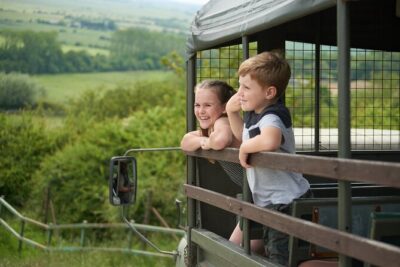



The Forest’s layered history, Parc Pale to WW2 range
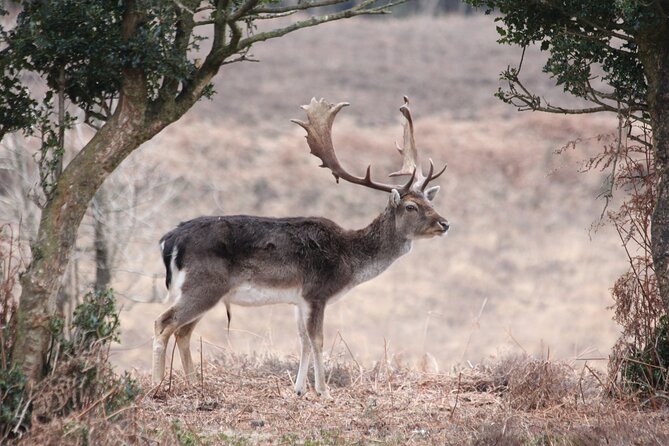
The New Forest is famous for ecology, but the walking route also threads in history. You’ll hear stories that start with older human traces, including remains linked to Parc Pale. Then the talk moves forward in time to a more recent and darker chapter, including the WW2 bombing range.
This section is worth paying attention to, even if you mostly come for wildlife. The reason is simple: history explains why certain places ended up where they are today, and why some routes and clearings exist. The New Forest did not become what you see through nature alone.
A good guide keeps it grounded. You don’t get a lecture. You get small, place-based stories that connect to what you’re walking through right now.
What wildlife and fungi you might actually see
This walk is built around wildlife survey skills. That means it is not just, here is what exists in theory. It is more, here is what you can look for in this exact habitat, at this exact time of year, with this kind of weather.
The walk highlights a broad range of living things, including:
- birds (including Dartford Warbler)
- fallow deer (you may spot them, or at least hear or see signs)
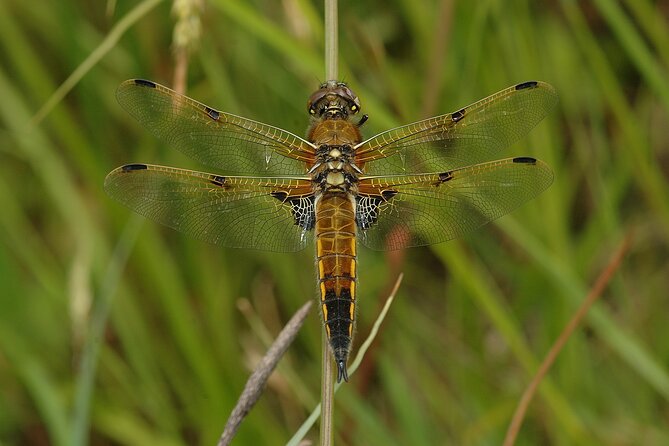
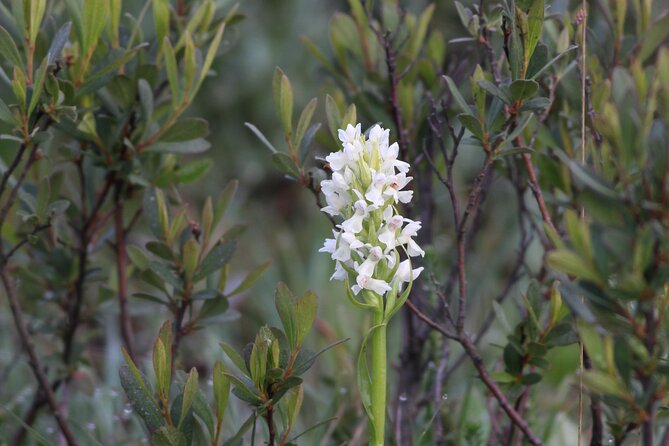
- wildflowers, fungi, butterflies, and invertebrates
You also get a sense that fungi are not a side topic. On days when fungi are active, the guide’s attention can make you see patterns you would otherwise miss, like which woodland conditions tend to support certain types.
From the examples shared by previous participants, there are sometimes standout moments such as sightings of a young cuckoo, a silver-washed fritillary, and even a bee-wolf colony. Those are not guaranteed, but they show the range of what can turn up when the guide is paying close attention.
If you want to be more than a passive observer, bring one habit: when you see something interesting, pause. Let the guide finish the explanation, then re-check the same spot with fresh eyes.
Timing, route length, and how to dress for a relaxed 2 hours
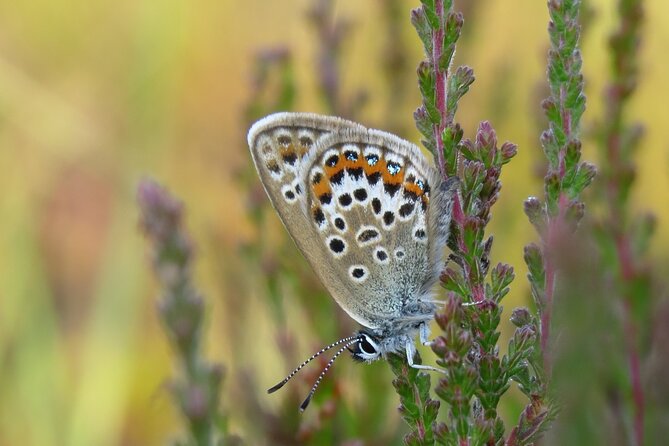
The duration is about 2 hours, and the walk covers roughly 8 km. That combination is a sweet spot for a discovery walk. It is long enough to feel like you truly entered the Forest, but short enough that most people can handle it with a moderate fitness level.
You’ll get a relaxed pace with time to drink in the surroundings and to explore whatever wildlife should appear. The key is that you should still expect stops to take time. If you are someone who hates pauses, this may feel slow. If you like the whole point of learning by watching, this pace is ideal.
Dress advice based on how woodland walks feel:
- wear shoes with grip for uneven ground
- bring a light waterproof layer since good weather is required, and damp can change trail comfort
- use layers, because you can feel different temperatures moving from open view to shaded woodland
Price and value, what you get for about $23
At about $23.30 per person for a small group (maximum 12 travelers), the value mostly comes from the guide time and the structure of stops. You are paying for a guided, place-based learning route, not just access to a trail.
The best value indicators are the details you notice while walking. The guides are often praised for being friendly and easy to talk to, and for the enthusiasm that makes questions feel normal instead of awkward. On this walk, having space to ask about what you are seeing is a big part of why it is worth it.
Another value point is the wildlife surveyor approach. If you come in with curiosity but no field skills, you leave with practical sight and sound recognition you can use on your own next walk around the Forest.
If budget is tight, consider this: many New Forest experiences focus on one thing, like birds or scenery. This one ties together birds, habitats, trees, management, and history across multiple woodland types in a single morning.
Who this walk is for, and who may want something else
This is a great fit if you want:
- a family-friendly outing
- wildlife and habitat learning at a relaxed pace
- an expert guide to help you see more than you would alone
It also works well if you are a serious nature person, but you do not want a heavy hike. You still get walking, but the stops are part of the experience.
If you have very limited mobility or you prefer very short outings, you may find the 8 km distance challenging, even with breaks. In that case, look for a shorter, less distance-focused option.
Should you book the New Forest Discovery Walk from Lyndhurst?
I’d book it if your idea of a good day is: small group, great guide energy, and learning what different spots mean in terms of wildlife. The combination of The Ridge views, ancient Denny Inclosure woodland, and working coppice at Pondhead gives you variety in a short time. Add in the stories about commoning and the Parc Pale to WW2 history thread, and you get more than a simple nature stroll.
If you hate question-heavy experiences or you want zero stopping, it may not match your style. But for most people who want a smarter New Forest introduction, this one is a strong choice.
FAQ
How long is the New Forest Discovery Walk from Lyndhurst?
The walk lasts about 2 hours.
Where does the walk start?
The meeting point is Bolton’s Bench on Beaulieu Road in Lyndhurst (SO43 7DA). The walk ends back at the meeting point.
How far will we walk?
The walk covers about 8 km at a relaxed pace.
What fitness level is required?
It is suitable for walkers with moderate fitness levels.
How big is the group?
The group size is capped at 12 travelers.
What happens if the weather is bad?
The experience requires good weather. If it’s canceled due to poor weather, you’ll be offered a different date or a full refund.
More Of South East England On Foot
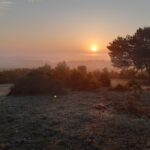
South Coast And New Forest


Fresh off the notebook in South East England
- 25 minute Helicopter Discovery Trial Lesson
★ 5.0 · 9 reviews - Private Minibus Arrival Transfer: Gatwick to Central London Airport
★ 3.0 · 10 reviews - Yoga & Forest Bathing Day Retreat
★ 5.0 · 10 reviews - RHS Garden Wisley and Tea in the Garden Entry Ticket
★ 4.0 · 10 reviews - Stonehenge Tour from Southampton to London
★ 4.0 · 11 reviews - 40 minute Helicopter Explorer Trial Lesson
★ 5.0 · 12 reviews
Southampton and the New Forest, compared.
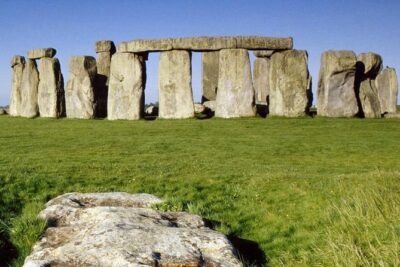 ★ 4.5Southampton Pre-Cruise Tour: London to Southampton via StonehengeFrom $192469 reviews
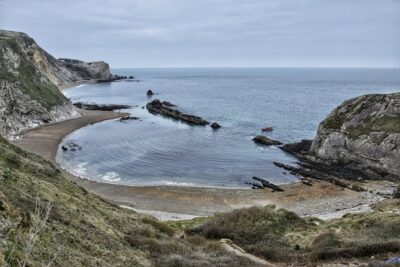 ★ 5.0Lulworth Cove & Durdle Door Mini-Coach Tour from BournemouthFrom $41460 reviews
 ★ 5.0Journey Through Winchester’s PastFrom $16341 reviews
 ★ 4.5Southampton: Post-Cruise Tour to London via Salisbury, Stonehenge and WindsorFrom $228333 reviews
 ★ 5.0Full Day Jurassic Coast Mini-Coach Tour from BournemouthFrom $69158 reviews
 ★ 5.0Guided Walking Tour of PortsmouthFrom $13153 reviews
 ★ 5.0Private Walking Tour of SouthamptonFrom $3086 reviews
 ★ 4.5SEA LIFE Weymouth Admission TicketFrom $1976 reviews
Browse the lists this tour appears in