

REVIEW · THAMES RIVER CRUISES
Stand up Paddleboarding on the beautiful Thames at Richmond
Paddling the Thames from Richmond feels instantly doable. This is a small-group stand up paddleboarding session with land training near Richmond Bridge, then time on the water where wind and tide shape your route. I like that you get real coaching, not just boards handed over and sent away.
Two things I especially like: you get buoyancy aids included and compulsory, so you can focus on learning instead of worrying about flotation. Also, your instructor takes a few snapped photos, which is a nice memory for an activity where you might be too busy to grab your own shot.
One consideration: you do need a bit of physical flexibility. You should be comfortable with falling while wearing the buoyancy aid, and you need the ability to get from kneeling to standing to learn the paddle basics.
In This Review
- Key points to know before you go
- Richmond Bridge SUP: why the Thames feels like the right first paddle
- The two-hour format that keeps you learning, not just paddling
- Where you meet: Richmond Bridge Boathouses is easy to find
- Safety briefing and land training: the part that makes water feel calmer
- Learning to stand on a moving board (without feeling judged)
- Upstream vs downstream: how the tide changes your Thames session
- Richmond scenery and what you might spot from your board
- Your instructor and the “few snapped photos” bonus
- Gear, included extras, and what to bring
- Price and value: is $89.13 a good deal for SUP coaching?
- Who should book this Richmond SUP session?
- Common first-timer moments to expect (and how to handle them)
- Should you book Paddle Richmond at Richmond Bridge?
- FAQ
- How long is the SUP session on the Thames?
- Where does the experience start and end?
- Is a buoyancy aid provided, and do I have to wear it?
- Do I need to be a proficient swimmer?
- What if I cannot easily get up from kneeling to standing?
- How many people are in the group?
- Are photos included?
- Is bottled water included?
- What happens if the weather is poor?
Key points to know before you go

- Small group size (max 6), so you get hands-on attention.
- Buoyancy aids included and compulsory, helping you feel safer and freer to learn.
- 15 to 20 minutes of on-land practice near Richmond Bridge before you hit the water.
- Tide and wind decide the direction, either toward Eel Pie Island and Teddington or down toward Richmond Lock, Isleworth, Kew, and Chiswick.
- Instructors snap a few photos, handy when you are busy learning.
- Wildlife sightings are possible, with at least one seal sighting in the paddling group.
Prefer to see it from the water? Start here
- High-Speed Thames River Speedboat in London★ 5.0 · 3,971 reviews
- London Tootbus Hop on Hop off Bus Tour and Thames River Cruise★ 4.0 · 3,834 reviews
- Westminster to Greenwich Sightseeing Thames Cruise in London★ 4.5 · 2,969 reviews
- London Dinner Cruise on the Thames River★ 4.0 · 1,772 reviews
Richmond Bridge SUP: why the Thames feels like the right first paddle
If you want a first-time SUP that does not feel intimidating, Richmond is a strong choice. You are on the River Thames near Richmond Bridge, where the experience is structured around short instruction bursts and then controlled time on the water. It is a great setting because you get that London feeling, without needing to plan a whole day of logistics.
The route is flexible. Depending on the day’s tide, you head upstream toward places like Eel Pie Island and Teddington, or you go downstream toward Richmond Lock, Isleworth, Kew Gardens, and Chiswick. That matters because the Thames can feel very different when the current and wind shift, and the guides are clearly using that to keep the session enjoyable.
This is also not a huge production. Maximum 6 travelers means more time watching you, correcting your stance, and giving tips you can actually use immediately. In my book, that is what turns a fun activity into a skill you leave with.
The two-hour format that keeps you learning, not just paddling

Plan on about 2 hours total, with a focused rhythm. The safety briefing and land training usually take 15 to 20 minutes, depending on group size. Then you are on the water for about 90 to 105 minutes, and the distance covered will vary with wind and tide.
That timing is smart for beginners. You get enough time on the river to feel the board under you, but you also avoid the long, tiring grind that turns lessons into survival. Expect some effort by the end, especially as you learn to balance and paddle with good control.
You start and finish at the same launch point: Richmond Bridge Boathouses, Riverside, Richmond TW9 1TH. So you do not spend your time guessing where to go or how to transition between stages. For a first SUP day, that kind of clarity is underrated.
Where you meet: Richmond Bridge Boathouses is easy to find
Your session starts at Richmond Bridge Boathouses right on the riverside. The location is close to public transportation, which is useful if you do not want to build a whole transport plan just for a two-hour activity.
Also, you are back at the same meeting spot when the session ends. That means you can line up dinner plans without thinking too hard about “where will we be when it’s over.” The whole session is built around that simple loop.
One more practical note: since service animals are allowed, the operator is clearly set up for real people moving through real spaces, not just a closed studio environment. Bring what you need to be comfortable at a riverside start, then let them handle the SUP part.
Safety briefing and land training: the part that makes water feel calmer

Before you head out, you get kitted up and then do a safety briefing plus land-based training on the riverbank near Richmond Bridge. This usually takes 15 to 20 minutes.
Why this is valuable: most first-timers struggle with balance and paddle control, not with the idea of being on the water. The training phase helps you get your bearings fast, so when you step on the board, your brain is not panicking. It also gives you a chance to practice the movements that matter most for learning quickly.
The buoyancy aid piece is also part of this. You do not bring your own flotation. They provide it and require it for all sessions. That lets you concentrate on technique and confidence, instead of worrying about safety gear.





Learning to stand on a moving board (without feeling judged)
You do not need to be a proficient swimmer, but you should be comfortable with the idea of falling into the water while wearing a buoyancy aid. That sentence matters, because it sets the tone: you are learning. You are not trying to prove anything.
Physical readiness matters too. You need a certain level of flexibility and ability to get up from kneeling to standing. If you have any knee or mobility limits, it is worth thinking honestly about that requirement before booking.
What helps in practice is the small-group size and instruction style. Based on multiple experiences with different instructors, the coaching approach is patient and very hands-on. Names that come up include Nigel, Sarah, Peter, Suzanne, and Sophy, and the consistent theme is clear, practical instruction.
As you learn, expect a mix of control drills and turn or stopping practice. First SUP sessions often feel tiring because your stabilizing muscles work overtime. That is normal, and it is usually temporary.
Upstream vs downstream: how the tide changes your Thames session
The route depends on the tide that day. You will either paddle upstream toward areas such as Eel Pie Island and Teddington, or downstream toward Richmond Lock, Isleworth, Kew Gardens, and Chiswick.
Here is what this means for you as a paddler:
- Going one way can feel smoother if the current and wind line up.
- Going the other way can feel more “work,” if wind is pushing against you.
- You may cover different distances each time, because actual travel distance changes with conditions.
So when you book, do not treat the route like a guaranteed itinerary. Treat it like a guided choice that aims to keep the experience enjoyable. The operator is clearly planning the direction to match the day’s water feel.
It also means you get variety. One day might feel like a mini safari along quieter stretches, another might feel like a controlled coaching loop with waves and crosswind practice. Either way, you are still learning core skills.
Richmond scenery and what you might spot from your board
The Thames around Richmond has a lot of visual payoff. Even when you are focused on paddling, you will be taking in riverside views, big sky, and passing boats at a slower pace than you would experience from shore.
Wildlife sightings are possible. One of the experiences included seeing a seal, which is exactly the kind of moment that makes an outdoor lesson feel special. You might also notice birds and river life during your session, especially since you are moving slowly enough to actually look.
The best part is that your guide helps you steer away from other boats when needed. That keeps the experience safe and also reduces the stress of figuring out right-of-way in a busy river environment.
Your instructor and the “few snapped photos” bonus

You should not count on a full photo shoot, but they do capture the experience with a few snapped pictures. That matters for SUP because you will often be looking down at your feet, checking your grip, or managing your balance.
Having those photos means you can remember:
- what your stance looked like early on,
- how you improved by the second half,
- and where on the Thames you were when the learning felt real.
In a sport where your hands are busy, that small add-on is a genuine quality-of-life perk.
Gear, included extras, and what to bring
Included is your paddleboard and paddle, plus the buoyancy aid. Buoyancy aids are not optional here, and the operator treats that seriously. That is good news for first-timers.
Not included is bottled water. So plan to bring your own water if you think you need it. A riverside paddle can be surprisingly tiring, and having water after will feel good.
Beyond that, follow your gut about basics: wear clothes that can handle getting wet and bring something small to carry essentials. The session is only about two hours, so you do not need to overpack.
Price and value: is $89.13 a good deal for SUP coaching?
At $89.13 per person for about two hours, the value mostly comes from the coaching format. You are paying for:
- equipment (board and paddle),
- compulsory buoyancy aid safety,
- guided instruction and water time,
- and the small-group size (max 6) that supports real learning.
If you have ever tried a “do it yourself” SUP, you know the problem. A board alone does not teach you turning, stopping, or how to manage paddle strokes when wind hits. Here, you get the structure that helps you leave with a workable skill set, not just a wobble with a laugh.
Also, since the photos are included and the guides are actively working with you, you are not paying for a vague rental. You are paying for a guided experience that aims to keep you safe and moving.
Who should book this Richmond SUP session?
This fits well if you want an activity that is adventurous but organized. Most travelers can participate, and the learning path is set up for people who do not need advanced swimming skills.
It is a good match if you:
- want a first-time introduction,
- enjoy being outside and trying something hands-on,
- and like the idea of learning on a well-known stretch of the Thames.
It can also suit families, including people traveling with kids, because the operator focuses on guidance and small-group attention. One experience included a family with a daughter and a dog, and the group had a seal sighting. That suggests the vibe can work for more than just adults.
If you have mobility limits that make kneeling to standing hard, or you know you struggle to stay calm if you fall, you should think carefully. The session does not hide the requirement, and that honesty is part of why the experience earns strong recommendations.
Common first-timer moments to expect (and how to handle them)
Your first few minutes on the board are where most people feel it. Balancing is new. Paddle strokes feel awkward. Then you improve quickly once someone adjusts your stance and gives you simple cues.
Wind and waves can show up depending on conditions. The Thames can have bumps that are not huge, but they are enough to make you work your core. That is not a bad thing. It is part of why you get land training first.
If you get tired, that also happens. One review described being exhausted at the end, which sounds about right for a first serious paddling session. Take the tips, keep your posture steady, and you usually end with a proud sense of effort.
Should you book Paddle Richmond at Richmond Bridge?
I would book this if you want a guided first SUP on the Thames with safety taken seriously and coaching that actually helps. The combo of small-group instruction, compulsory buoyancy aids, and a real learning phase on land makes it a reliable way to try SUP without turning it into guesswork.
I would think twice if you cannot manage the physical side of getting up from kneeling, or if the idea of falling into the water feels like it would ruin your day. The operator is clear about that, and you will likely be happier if you know where you stand.
If you are choosing a “try SUP once” experience, Richmond hits a sweet spot. You get London riverside energy, guided technique, and the kind of outdoors time that feels like more than a quick activity.
FAQ
How long is the SUP session on the Thames?
The total experience is about 2 hours. You will spend roughly 90 to 105 minutes paddling on the water, and about 15 to 20 minutes of that total is safety briefing and land-based training near Richmond Bridge.
Where does the experience start and end?
You meet at Richmond Bridge Boathouses on the riverside (Richmond TW9 1TH). The activity ends back at the same meeting point.
Is a buoyancy aid provided, and do I have to wear it?
Yes. Buoyancy aids are provided and are compulsory on all sessions.
Do I need to be a proficient swimmer?
No, you do not need to be a proficient swimmer. You should be comfortable with falling into the water while wearing a buoyancy aid.
What if I cannot easily get up from kneeling to standing?
A certain level of flexibility and ability to get up to standing from kneeling is required for learning to paddleboard. If that is difficult for you, this may not be the right fit.
How many people are in the group?
This activity has a maximum of 6 travelers.
Are photos included?
Your instructor will capture the experience with a few snapped photos.
Is bottled water included?
No, bottled water is not included.
What happens if the weather is poor?
This experience requires good weather. If it is canceled due to poor weather, you will be offered a different date or a full refund.
Seen From A Boat Instead





Fresh off the notebook in London
- Private Rock ‘n’ Roll Music Tour of Central London
★ 5.0 · 7 reviews - London Walking Tour: Camden Town Photography Walkabout
★ 5.0 · 7 reviews - Private Transfer from London accommodation to Cruise terminal
★ 5.0 · 7 reviews - Amazing Nightlife in London East Tour
★ 4.5 · 7 reviews - The British Museum: a highlights tour with a TV historian
★ 5.0 · 7 reviews - Heathrow Airport to Cambridge private taxi transfers
★ 5.0 · 7 reviews
Thames River Cruises, compared.
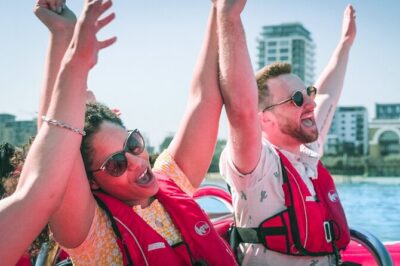 ★ 5.0High-Speed Thames River Speedboat in LondonFrom $903,971 reviews
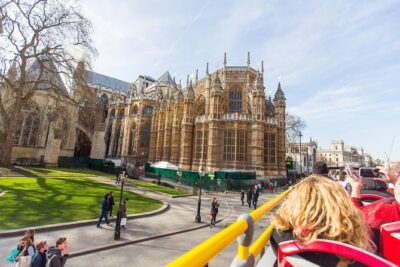 ★ 4.0London Tootbus Hop on Hop off Bus Tour and Thames River CruiseFrom $533,834 reviews
 ★ 4.5Westminster to Greenwich Sightseeing Thames Cruise in LondonFrom $222,969 reviews
 ★ 4.0London Dinner Cruise on the Thames RiverFrom $951,772 reviews
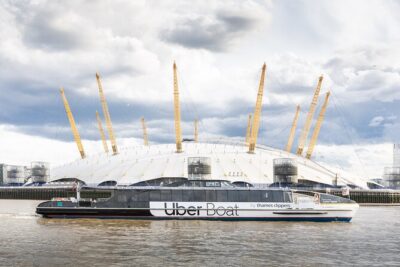 ★ 4.0London: Uber Boat – Single Journey River Thames CruiseFrom $131,597 reviews
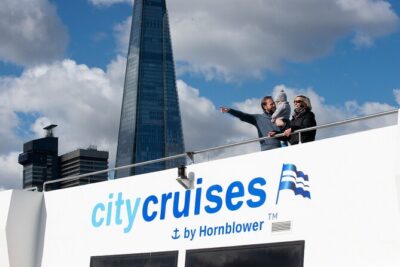 ★ 4.0Hop-On Hop-Off Sightseeing River Cruise on the ThamesFrom $331,256 reviews
 ★ 4.5Lunch River Cruise on the Thames with 2-Course MealFrom $59994 reviews
 ★ 4.0Afternoon Tea River Cruise on the ThamesFrom $55884 reviews
Browse the lists this tour appears in