

REVIEW · THAMES RIVER CRUISES
Thames Beachcombing
Mudlarking on the Thames feels like time travel. This hands-on walk along the foreshore is all about learning what the river leaves behind, from older ceramics to clay pipes, and then getting instant help making sense of what you spot. I like that it stays practical, because you are out there searching yourself, not just listening, and you still get guide support from start to finish.
I especially like two things. First, the session is built for small group attention, so you can ask questions while you look, not after the fact. Second, the guide helps identify your finds and adds context at the end, which turns a random haul of bits into real London stories, including examples like tiles and pottery tied to major periods such as the Great Fire era.
One drawback to think about: this is weather and tide dependent. If you hate mud or you want a guaranteed jackpot, you might find it frustrating, because you are visiting different river stretches depending on the day and conditions.
In This Review
- Key highlights worth your time
- What Thames mudlarking really feels like at low tide
- Price and value for a hands-on 2-hour hunt
- Gear basics: what you get, and what you should bring in practice
- How the meeting works when the Thames site changes
- The mudlarking walk: what you do during the search
- Getting help identifying finds, with Robert in the spotlight
- Itineraries in practice: London foreshore sites throughout the year
- What makes this activity special for history lovers (and skeptical minds)
- The group size and pace: why it does not feel rushed
- Weather and physical comfort: plan around the real constraints
- Who should book Thames beachcombing, and who might skip it
- Quick practical tips before you go
- Should you book Thames Beachcombing?
- FAQ
- How much does Thames Beachcombing cost?
- How long is the mudlarking experience?
- Where does the activity take place?
- How will I know the exact meeting time and location?
- How big is the group?
- What is included in the tour?
- What should I wear?
- What types of items might I find?
- Is there help identifying the objects I find?
- What is the cancellation and bad-weather policy?
Key highlights worth your time
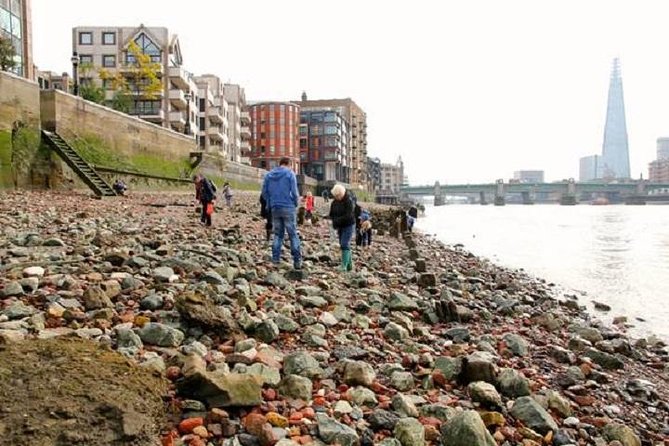
- Low-tide foraging with a guide: you search the foreshore during low tide, not from a distance
- Small groups for hands-on questions: no crowding, so you can actually focus on what’s in front of you
- Gloves and plastic bags provided: you are set up to start right away
- Finds get identified on-site: the guide helps you sort what you found and gives historical context
- Real examples show up often: clay pipes, pottery fragments, tiles, and other period objects are common finds
- Good boots matter: wellington boots or hiking boots are strongly advised for the stony, muddy shore
Prefer to see it from the water? Start here
- High-Speed Thames River Speedboat in London★ 5.0 · 3,971 reviews
- London Tootbus Hop on Hop off Bus Tour and Thames River Cruise★ 4.0 · 3,834 reviews
- Westminster to Greenwich Sightseeing Thames Cruise in London★ 4.5 · 2,969 reviews
- London Dinner Cruise on the Thames River★ 4.0 · 1,772 reviews
What Thames mudlarking really feels like at low tide
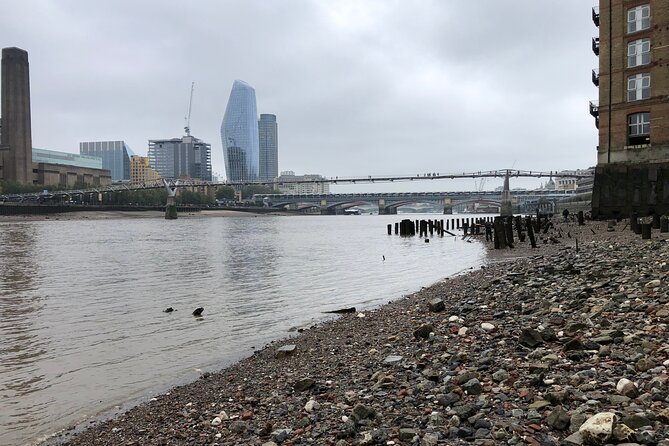
Mudlarking is not a museum visit. It is closer to slow treasure hunting, with rules of common sense: look carefully, pick thoughtfully, and pay attention to what the river has dropped.
The key is that you are working the Thames foreshore at low tide. That means the river floor and edges are exposed in a way you do not usually see from the bridges or along the walkways, so you can scan for fragments that might be coated in silt. It’s also why this experience works best with a calm pace. You are not rushing from stop to stop, you are watching the ground, then checking the next patch.
Price and value for a hands-on 2-hour hunt
At $41.41 per person, this is priced as a short, focused activity rather than a full-day excursion. That matters, because you get what you came for fast: a local guide, gloves, and a guided search window.
You are also getting value in the most practical way. The tour includes help identifying objects you find, which is where many people struggle on their own. Anyone can pick up random bits of debris. The difference here is turning those bits into something you can date or place, and understanding why it ended up at the Thames edge.
One more value point: the group size is kept small. A maximum of 20 travelers, and described as no more than 15 for the active mudlarking time, means the guide can actually keep track of people while you look, not just shepherd you along.
Gear basics: what you get, and what you should bring in practice
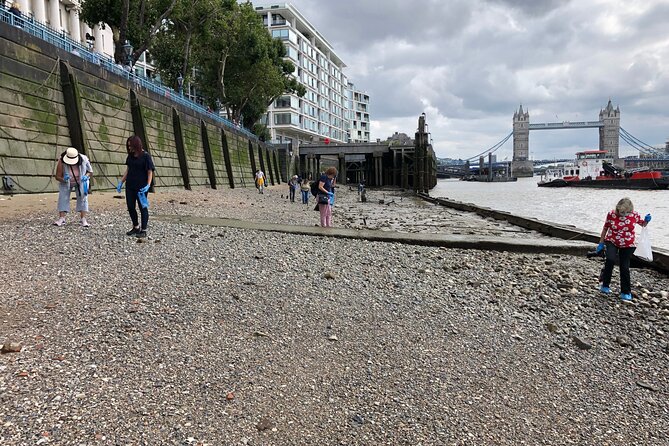
The tour provides gloves and plastic bags. That’s helpful because you are dealing with stony ground that can be muddy, and you do not want to start the hunt without basic protection.
But plan around fit, especially if you are traveling with kids. One parent mentioned the gloves ran large for a young child, so if you are bringing a smaller kid, you may want to consider bringing your own gloves sized for them, if you can.
Most important is footwear. The dress code is wellington boots or hiking boots, because the foreshore is stony and can be muddy. This is not the place for fashion sneakers unless you want wet socks and a grumpy mood. Come ready to stand, crouch, and walk on uneven surfaces.
How the meeting works when the Thames site changes
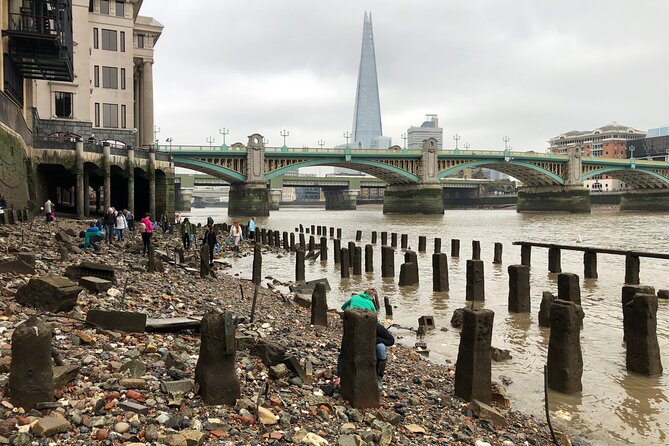
You do not show up at one fixed spot year-round. The guide will contact you to provide the location and time, which changes throughout the year based on the river conditions.
That flexibility is a big deal. Thames mudlarking only makes sense at low tide, and different stretches of the foreshore can expose different material. So your start point shifts, and that also explains why the tour is organized around a guided search rather than a set sightseeing route.
The activity ends back at the meeting point, so you can plan your day without a long wandering finish. It is also close to public transportation, which helps if you want to pair this with something else in central London later.





The mudlarking walk: what you do during the search
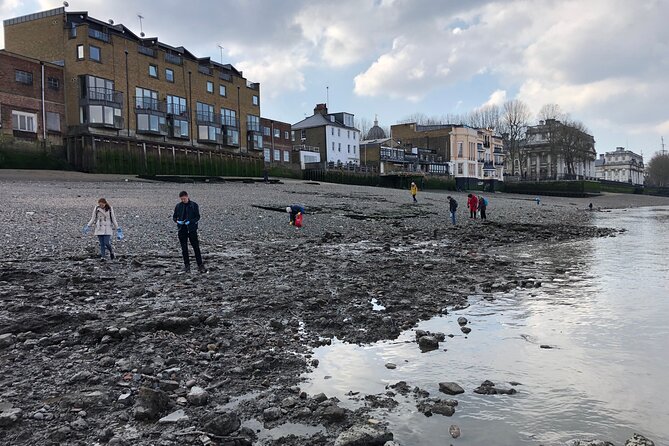
Once you meet your guide, you get gloves and a bag and a quick setup for what to look for. The search period is about 1.5 hours, and the objects you are trying to spot may be visible with your eyes before you pick them up.
What tends to show up, based on real examples people found: clay pipes, pottery fragments, tiles, and other small objects. Some finds can feel surprisingly human. For example, one participant described a bowl handle imprint that looked like fingerprints from when it was made. That kind of detail is exactly why this activity is so compelling. You are not only searching for dates, you are bumping into everyday evidence of people who lived long ago.
You will likely move slowly along the exposed edge, scanning the ground in front of you. Your best strategy is to watch for shapes and textures that do not look natural to the river, like glazed ceramic, broken tile patterns, or the distinct curved forms of pipe stems and fragments.
And yes, you will get messy. It is part of the deal.
Getting help identifying finds, with Robert in the spotlight
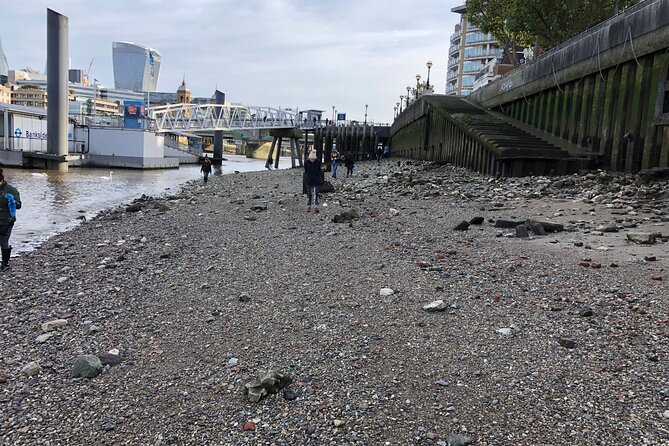
The guide is there while you look, and then also at the end for identification. In the most positive feedback, people emphasized how much the guide helped during the search and during the wrap-up, with special credit going to Robert.
That matters because identification is not just academic. You can leave feeling like you found random junk, or you can leave knowing what each object likely was and why it matters. Robert, in particular, was repeatedly described as approachable and helpful, and people noted that he explained their finds and sorted what was interesting from what to treat as less meaningful.
A couple of small but important details show up in the feedback. One person said the guide showed pictures of things you might find before starting, which helps you learn how to spot candidates early. Another said the guide helped them decide which items to keep and which to treat as junk after the search. That kind of guidance is what turns mudlarking into learning, not just rummaging.
Itineraries in practice: London foreshore sites throughout the year
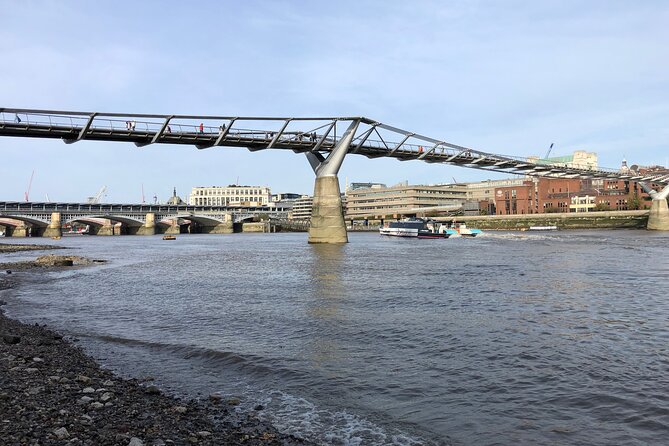
This tour does not run one single route. Instead, the Thames foreshore is visited at various places during the year, and the guide confirms your exact location and time.
In real experience, people have mentioned different Thames areas. You might find yourself working around stretches such as Putney Bridge or the Cannon Street area, depending on the day. The point is not the neighborhood name, it is the exposed foreshore itself. A change in stretch can mean a change in what washes up there that day.
That also explains why two people can have totally different results. Even if you search carefully for the same kind of objects, the river is delivering different material depending on tides, winds, and time of year.
What makes this activity special for history lovers (and skeptical minds)
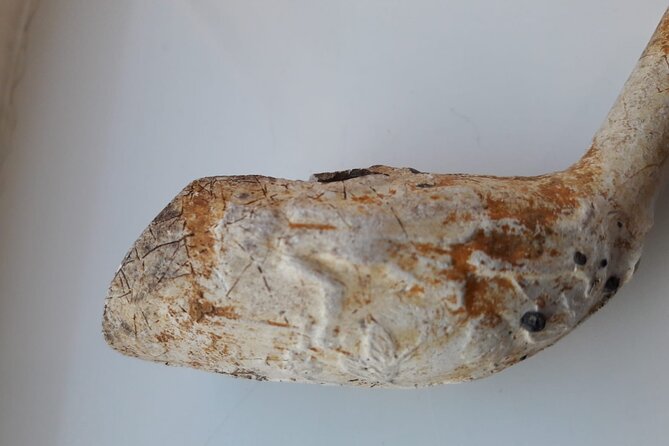
Mudlarking has a neat psychological twist. You start thinking of the Thames as scenery, then you spend time looking at the physical layer of what the city has discarded, lost, and carried.
Even better, you are learning history through objects you can hold. One participant described finding tiles that predated the Great Fire of London. Another noted pottery and roof tiles that pointed back to earlier periods. Whether you find something that dramatic or just a couple of smaller fragments, the experience trains your eye to notice what is out of place.
For history buffs, it is a hands-on way to connect dates to material culture. For skeptical minds, it is also honest: you are not promised a trophy. You are promised a guided method, a period-correct way of thinking, and a chance to experience London in a different, slightly surreal way.
The group size and pace: why it does not feel rushed
A lot of London tours feel like a sprint with photo stops. This one is slower by design. With no more than 15 people during the active mudlarking portion, and a maximum of 20 travelers overall, you have room to search without constantly bumping into others.
The pace is also relaxed enough that adults and kids can stay engaged. One family reported that even a 5-year-old stayed interested through most of the session. That is partly because the activity gives constant little wins, like spotting a tile edge or a pipe fragment, and partly because the guide keeps attention on what you can actually see.
If you like walking, but not the kind where you are forced to keep up, this is a better fit than many big-city checklists.
Weather and physical comfort: plan around the real constraints
This experience requires good weather. That is not a throwaway line, it’s the heart of mudlarking. When conditions are bad, the tour can be canceled, and you will either get a different date or a full refund if the company cancels because of poor weather.
You also need a moderate physical fitness level. That means you should be comfortable with walking on stony, uneven ground. Expect bending, stepping around rocks, and navigating muddy patches. If your mobility is limited, you might struggle, even if the group is small.
Bring the right boots and dress for damp air. Layer up. You are going to be close to the ground, where cold and wet show up fast.
Who should book Thames beachcombing, and who might skip it
You’ll probably love this if you enjoy hands-on discovery, have an interest in London’s material past, and like the idea of learning while you search. It’s also a great choice if you want something different from standard sightseeing, because the Thames foreshore is not something you usually get access to in a guided, structured way.
I would be more cautious if you hate getting muddy, you are expecting a guaranteed stream of valuable artifacts, or you get annoyed when conditions change. One participant described a disappointment tied to how the session felt compared with a previous mudlarking outing, which is a reminder that results can vary depending on the exact stretch and conditions.
Quick practical tips before you go
- Wear wellington boots or hiking boots and accept that your feet might get very dirty.
- Expect to search slowly for 1.5 hours, not snap photos at landmarks.
- Ask questions while you are looking, not only at the end. The best learning happens when the guide can react to what you are holding.
- If you are bringing a young child, consider whether the provided gloves fit well enough, because at least one family found gloves ran large.
Should you book Thames Beachcombing?
Yes, if you want a hands-on, small-group activity that teaches you how to spot and understand everyday objects from London’s past. At $41.41 for about 2 hours, with gloves provided and real help identifying finds, it offers strong value for people who like active learning and can handle getting a bit muddy.
Skip it if your top priority is comfort or if you need a high likelihood of major finds. This is the kind of experience where the joy comes from the process and the guide’s explanations, not from a guaranteed jackpot.
FAQ
How much does Thames Beachcombing cost?
It costs $41.41 per person.
How long is the mudlarking experience?
The duration is about 2 hours.
Where does the activity take place?
It takes place on the River Thames foreshore in London, at various places depending on the time of year.
How will I know the exact meeting time and location?
Your guide contacts you to provide the location and time, and it changes throughout the year.
How big is the group?
It is a small group with no more than 15 people, and the activity has a maximum of 20 travelers.
What is included in the tour?
The tour includes a local guide, gloves, and plastic bags.
What should I wear?
Wear wellington boots or hiking boots because the foreshore is stony and can be muddy.
What types of items might I find?
You may find items such as clay pipes, pottery fragments, tiles, and other objects that wash up on the foreshore.
Is there help identifying the objects I find?
Yes. At the end, your guide helps identify your finds and provides historical context.
What is the cancellation and bad-weather policy?
You can cancel for free up to 24 hours in advance for a full refund. If the experience is canceled due to poor weather, you will be offered a different date or a full refund.
Seen From A Boat Instead






Fresh off the notebook in London
- Private Rock ‘n’ Roll Music Tour of Central London
★ 5.0 · 7 reviews - London Walking Tour: Camden Town Photography Walkabout
★ 5.0 · 7 reviews - Private Transfer from London accommodation to Cruise terminal
★ 5.0 · 7 reviews - Amazing Nightlife in London East Tour
★ 4.5 · 7 reviews - The British Museum: a highlights tour with a TV historian
★ 5.0 · 7 reviews - Heathrow Airport to Cambridge private taxi transfers
★ 5.0 · 7 reviews
Thames River Cruises, compared.
 ★ 5.0High-Speed Thames River Speedboat in LondonFrom $903,971 reviews
 ★ 4.0London Tootbus Hop on Hop off Bus Tour and Thames River CruiseFrom $533,834 reviews
 ★ 4.5Westminster to Greenwich Sightseeing Thames Cruise in LondonFrom $222,969 reviews
 ★ 4.0London Dinner Cruise on the Thames RiverFrom $951,772 reviews
 ★ 4.0London: Uber Boat – Single Journey River Thames CruiseFrom $131,597 reviews
 ★ 4.0Hop-On Hop-Off Sightseeing River Cruise on the ThamesFrom $331,256 reviews
 ★ 4.5Lunch River Cruise on the Thames with 2-Course MealFrom $59994 reviews
 ★ 4.0Afternoon Tea River Cruise on the ThamesFrom $55884 reviews
Browse the lists this tour appears in