
REVIEW · WALKING TOURS
Walking Tour around Spitalfields in the East End of London
Spitalfields has a secret life right underfoot. This is a small-group walking tour in the East End that trades crowds for close, story-led stops, then sends you off with tea and cakes in an old townhouse.
I love the way the guide connects buildings to real lives, so you understand what changed, who moved in, and why it mattered. You also get the kind of attention you usually only get in private touring, because the group is capped at 5 people.
One drawback to consider: this is about two hours of standing and walking, and it is not recommended if you cannot manage that.
In This Review
- Key highlights of this Spitalfields walking tour
- Why Spitalfields feels like a different London
- Price and what you truly get for $90.28
- Timing, meeting point, and how to plan your afternoon
- Walking the neighborhood, with small-group attention that actually works
- The Hawksmoor stop: English Baroque you can read in real time
- Human stories behind institutions, including Jewish immigration from Eastern Europe
- The ancient market and the medieval survival that still matters
- St Mary Spital and the brewery story told through two women
- A famous thoroughfare, plus the controversy over its future
- The Huguenot Chapel transformation: from Chapel to Synagogue to Mosque
- The fine eighteenth century houses and the neighborhood’s design choices
- Nicholas Culpeper’s herb garden, and why 17th century plants still feel modern
- Tea and cakes in an 18th century drawing room, recipe from 1720
- Who this Spitalfields walking tour suits best
- Should you book this Spitalfields walking tour?
- FAQ
- How long is the walking tour?
- What is the maximum group size?
- Where do I meet the guide?
- What language is the tour offered in?
- Is the tour suitable if I cannot stand and walk for two hours?
- What if I need to cancel or the weather is poor?
Key highlights of this Spitalfields walking tour
- Small group size (max 5) for focused questions and slower pacing
- Nicholas Hawksmoor’s English Baroque landmark near Christ Church Spitalfields
- Immigrant stories tied to specific institutions, including East European Jewish community history
- A medieval survival connected to the market, explained as more than just a pretty old thing
- A rare transformation story, from a Huguenot Chapel to Synagogue to Mosque
- Nicholas Culpeper’s 17th century herb garden, plus an end stop for tea and cakes
More on foot, at a pace you can hear the guide
- Tour for Muggles The Ultimate Harry Potter Walking Tour in London★ 5.0 · 4,684 reviews
- London Jack The Ripper Guided Walking Tour★ 5.0 · 3,131 reviews
- Changing of the Guard Guided Walking Tour in London★ 5.0 · 1,793 reviews
- The Great British Rock and Roll Walking Tour★ 5.0 · 1,371 reviews
Why Spitalfields feels like a different London
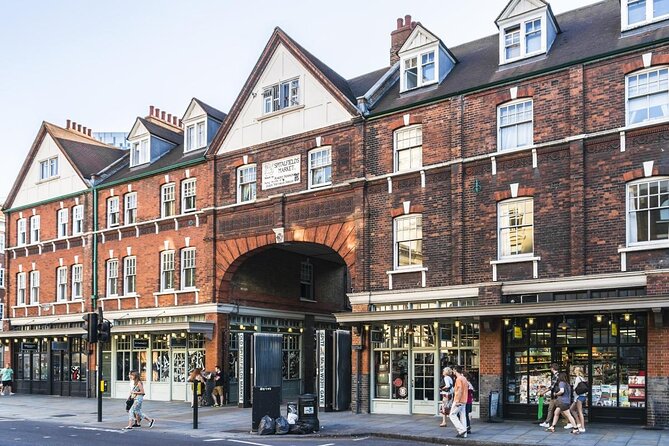
If your idea of London is mostly big vistas and famous museums, Spitalfields gives you a sharper angle. This walk focuses on one neighborhood and treats it like a living puzzle: architecture, migration, work, trade, and faith all show up in the streets.
You start at Christ Church Spitalfields and stay on foot. That matters, because the East End does not reveal itself from a bus window. The best moments are the small ones: the way a building sits, how an old structure survived into modern life, and how the neighborhood’s uses changed over time. The walk has that slow, detail-friendly rhythm.
Two hours sounds short, but the pacing is smart. The guide keeps moving, then stops long enough for you to read the place with your eyes, not just your ears. If you like understanding the why behind what you see, you are in the right lane.
Price and what you truly get for $90.28
At $90.28 per person for about two hours, the price feels like it is doing more than paying for steps and signage. The value is in three places.
First, the group limit of 5 people means you are not lost in a crowd. You get more of that guided back-and-forth feel, especially when the tour turns into personal stories of real local people.
Second, the tour includes a built-in break at the end: tea and cakes baked to a recipe of 1720 in an 18th century drawing room, with admission ticket included for that stop. That is not just a perk. It is part of the experience, a final scene that ties the historical story to something you can actually taste.
Third, you get a route that covers old and new landmarks, with stops that explain institutions and controversies rather than only pointing at facades. If you enjoy history that connects directly to the neighborhood’s evolution, you will likely feel the money was spent where it counts.
Timing, meeting point, and how to plan your afternoon
The tour starts at 2:00 pm and ends back at the same meeting point. You meet at Christ Church Spitalfields, Commercial St, London E1 6LY, UK.
It is also described as being near public transportation, which is a practical win in London. You should still plan to arrive a bit early so you can get oriented without stress. The tour uses a mobile ticket, so have your phone ready, and keep your confirmation handy in case staff ask for it.
One more thing: this experience requires good weather. On a rainy day, you may be offered a different date or a full refund. So, if you are scheduling a packed itinerary, build in a little flexibility around this one.
Walking the neighborhood, with small-group attention that actually works

A max group of 5 people is one of those details that changes everything. It is not just comfort. It affects how the tour is told.
With a small group, the guide can adjust. If you are curious about how a building’s purpose evolved, you can usually ask. If something clicks, you stay with it longer. And when the tour moves into sensitive topics like community life and migration, you are not competing with dozens of other voices.
That is also why the walk is built around short focus points. You are not only passing landmarks. You are stopping to look closely, then hearing the story that makes the architecture and street layout feel logical.
Also note the obvious but important bit: it is not recommended if you cannot stand and walk for about two hours. If you have mobility concerns, this is the detail to take seriously, not a technicality.


The Hawksmoor stop: English Baroque you can read in real time
The walk anchors on Nicholas Hawksmoor’s masterpiece of English Baroque. This is the kind of stop that works best when you are close enough to notice proportions and details.
Rather than treating the church like a landmark sticker, the guide uses it as a starting point for how Spitalfields developed. Hawksmoor’s style is dramatic, and in a neighborhood like this, drama is never only aesthetic. You feel how different eras left their mark, even when the neighborhood changed around them.
If you enjoy architecture, this stop gives you something to do with your eyes. Look for how the building signals importance in a working neighborhood. Then let the guide connect it to what people needed, built, and worshipped over time.
Human stories behind institutions, including Jewish immigration from Eastern Europe
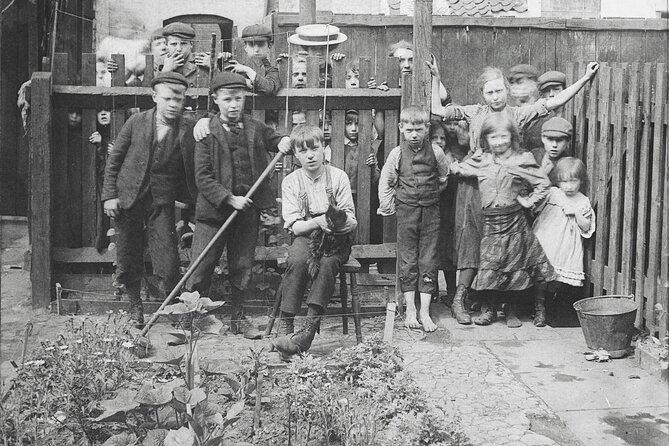
One of the most powerful parts of the tour is when it turns from stones to people. You meet the people whose lives were bound up with an institution that served Jewish immigrants arriving from Eastern Europe, including communities connected to the area now associated with Ukraine.
This is where the tour earns its 5 out of 5 reputation. The guide does not just list events. The story becomes personal and specific, and that makes it easier to understand why a place’s purpose could change without losing its emotional weight.
You walk through the neighborhood with that context in your head, and suddenly the buildings feel less like random backdrops. They become signposts in a larger story of arrival, settlement, and community needs.
The ancient market and the medieval survival that still matters
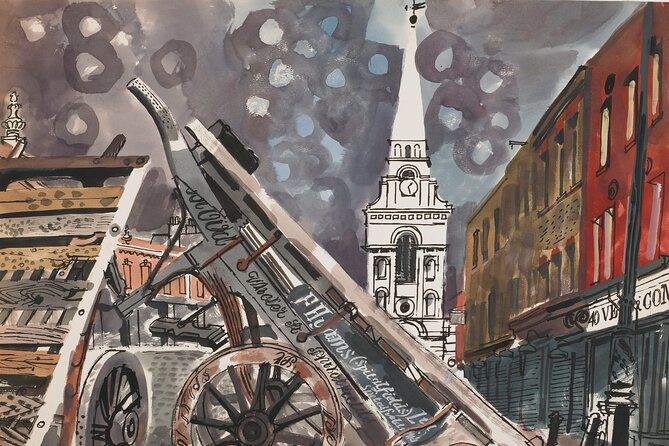
Spitalfields has an old-market story, and you get to hear it in a way that makes the present feel connected to the past. You learn the story of this ancient market and then what the guide calls the purpose behind an astonishing medieval survival.
The practical takeaway for you: do not rush this part. Markets are about movement, trade, and daily problem-solving. Even if you have never heard the technical terms, you will get it through the narrative: why markets were built, who relied on them, and how something medieval could still shape the neighborhood’s identity later on.
If you like local color, this stop is also a bridge to the “look and feel” of the area. It explains the neighborhood’s economic heartbeat, not only its decorative features.
St Mary Spital and the brewery story told through two women
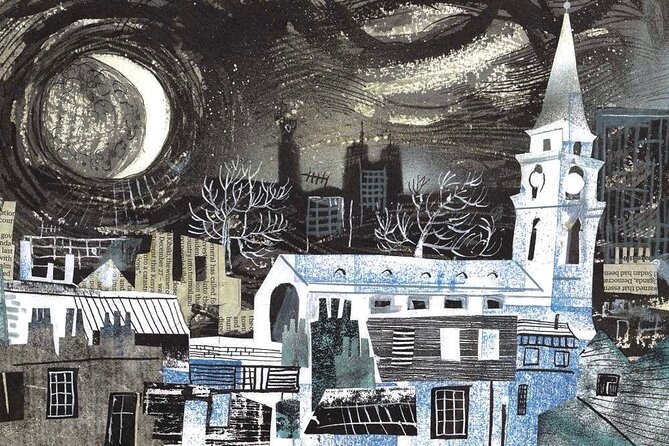
The tour then points you toward the site of the Priory of St Mary Spital. Priory sites can feel abstract until someone explains what kind of world they belonged to. Here, the guide uses the location to set the stage for what comes next: work, industry, and ordinary lives.
Then comes a brewery story told through the lives of two women who worked there. This part is a smart contrast. Priory land suggests earlier spiritual and social structures, while a brewery anchors the story in labor and daily survival.
It is also one of those moments where you will likely notice how the East End economy shaped who could thrive, and why certain institutions mattered beyond their walls. When you hear the story through specific people, the neighborhood stops being a general “history lesson” and becomes a sequence of choices and constraints.
A famous thoroughfare, plus the controversy over its future
At some point, the tour addresses a famous thoroughfare and the ongoing controversy over its future. This is important because neighborhoods are not frozen in time.
The guide does not present it as a simple good-bad debate. You get the sense that when a street is central to daily life, change is never only about development. It touches identity, community memory, and what people think the neighborhood should protect.
You are walking, so you get to see the street as you hear the arguments. That makes the discussion feel grounded rather than theoretical.
The Huguenot Chapel transformation: from Chapel to Synagogue to Mosque
This is one of the tour’s most fascinating “how can that be possible?” moments. You visit a building emblematic of Spitalfields’ history, where a Huguenot Chapel became a Synagogue, and later became a Mosque.
You are not just being told a timeline. You are being shown how a place can carry layers of meaning. Different communities may have different religious practices, but the structure can keep offering dignity, gathering space, and identity continuity.
If you are the type who loves how migration reshapes cities, you will likely find this stop especially moving. It also makes the earlier immigration context feel even more real, because you can see how the neighborhood absorbed new communities without erasing the physical footprint of what came before.
The fine eighteenth century houses and the neighborhood’s design choices
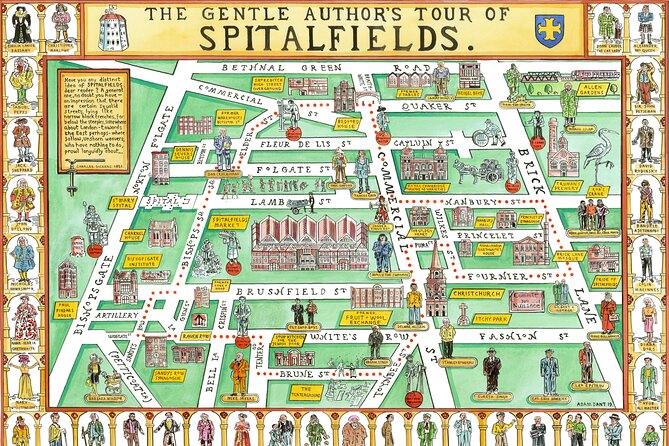
Eighteenth-century houses come up next, and the tour uses them to explain the neighborhood’s growth patterns. You learn the story behind these fine eighteenth century houses, which helps you understand Spitalfields not just as a place of dense streets, but as a planned response to changing population pressures.
For you, this is a good moment to slow down and look at details: window rhythms, street-facing presence, and how the buildings relate to the pace of the neighborhood. Even if you are not an architecture nerd, these kinds of explanations make the blocks feel intentional rather than accidental.
Nicholas Culpeper’s herb garden, and why 17th century plants still feel modern
Near the later part of the walk, you visit the herb garden of the 17th century herbalist, Nicholas Culpeper.
Herb gardens have a special kind of magic because they connect knowledge to the physical world. Culpeper’s story turns plants into a lens on medicine, trade, and the practical side of science in earlier centuries. It is not only about beauty. It is about use.
If you like hands-on history, this stop is a great change of pace from churches and streets. You get something quieter, more sensory, and easier to remember later when you look back at the neighborhood.
Tea and cakes in an 18th century drawing room, recipe from 1720
The tour ends with a relaxing payoff. You put your feet up in an 18th century drawing room overlooking Christ Church Spitalfields, then enjoy tea and cakes baked to a recipe of 1720.
This is the kind of finishing touch that makes a walking tour feel complete. You are not rushed out at the street corner. You slow down at the right moment, with a view of the church that anchored the whole route.
Because this stop includes a 30-minute block and an admission ticket included, it is built into the experience rather than tacked on. For your planning, treat it like part of the tour itself, not a separate detour.
Who this Spitalfields walking tour suits best
This experience is a strong match if you want your London history to be:
- Human, with stories tied to real institutions and real people
- Local, focused on one neighborhood rather than a whirlwind list
- On foot, so you can see how streets and buildings connect
It is also a good pick if you appreciate a guide who explains the why behind historical facts, not only the facts themselves. The small-group format makes it easier to follow and harder to get left behind.
You might think twice if you have limited standing tolerance. The tour is designed for people who can manage about two hours of walking.
Should you book this Spitalfields walking tour?
Yes, you should book it if you like East End London when it is personal, specific, and grounded. The combination of Hawksmoor architecture, immigration history, the market story, the chapel transformation to Synagogue and then Mosque, and the Culpeper herb garden gives you a rounded picture of Spitalfields without feeling like a checklist.
The biggest reason I would recommend it is the structure. It is a small-group walk that saves space for meaning, then closes with an included pause for tea and cakes in a setting that matches the time period you just heard about.
If you are short on time, you might not want to spend two hours walking. But if you can do the walking and you want a neighborhood story that actually sticks, this one is an easy yes.
FAQ
How long is the walking tour?
The tour lasts about 2 hours.
What is the maximum group size?
The tour has a maximum of 5 travelers.
Where do I meet the guide?
You meet at Christ Church Spitalfields, Commercial St, London E1 6LY, UK, and the tour ends back at the same meeting point.
What language is the tour offered in?
The tour is offered in English.
Is the tour suitable if I cannot stand and walk for two hours?
It is most suitable for people who can stand and walk for about two hours. It is not recommended for people who cannot manage that. Service animals are allowed.
What if I need to cancel or the weather is poor?
You can cancel for a full refund if you cancel at least 24 hours before the experience starts. If the tour is canceled due to poor weather, you will be offered a different date or a full refund.
More Of London On Foot






Fresh off the notebook in London
- Private Rock ‘n’ Roll Music Tour of Central London
★ 5.0 · 7 reviews - London Walking Tour: Camden Town Photography Walkabout
★ 5.0 · 7 reviews - Private Transfer from London accommodation to Cruise terminal
★ 5.0 · 7 reviews - Amazing Nightlife in London East Tour
★ 4.5 · 7 reviews - The British Museum: a highlights tour with a TV historian
★ 5.0 · 7 reviews - Heathrow Airport to Cambridge private taxi transfers
★ 5.0 · 7 reviews
Walking Tours, compared.
 ★ 5.0Oxford University Walking Tour With University Alumni GuideFrom $416,905 reviews
 ★ 5.0Tour for Muggles The Ultimate Harry Potter Walking Tour in LondonFrom $234,684 reviews
 ★ 5.0London Jack The Ripper Guided Walking TourFrom $03,131 reviews
 ★ 5.0Cambridge University Walking Tour by Alumni™ Kings College OptionFrom $332,336 reviews
 ★ 5.0Blackbeard to Banksy – The Ultimate Walking Tour of BristolFrom $181,961 reviews
 ★ 5.0Air Raid Shelter + St. Nicholas Market Walking TourFrom $171,950 reviews
 ★ 5.0Walking Tour of Bath with Blue Badge Tourist GuideFrom $301,877 reviews
 ★ 5.0Changing of the Guard Guided Walking Tour in LondonFrom $251,793 reviews