
REVIEW · WEST END AND THEATRE SHOWS
West End and South Bank Theatre Walking Tour in London
London’s theatre circuit is right here. This West End to South Bank walking tour strings together some of the city’s most famous playhouses, plus the Royal Opera House and Shakespeare’s Globe, with a tight 12-person group and smart, guide-led storytelling. I love how it mixes big-name landmarks with the kind of small stage details you would miss on your own. I also like that it runs on a real walking route instead of turning into a bus-and-brochure day. One consideration: it’s a long walk with short stops, so comfortable shoes matter.
What really makes this tour worth it is the guide’s voice and structure. Charlie Tantam keeps the pace moving and the facts usable, so you leave with a better sense of why the West End looks the way it does and what each theatre represents. I also like the practical angle, like learning how the Leicester Square discount booths work so you can chase good seats without paying full price for every show.
The only drawback is stamina. You should plan for roughly 3 hours 30 minutes outdoors, with stops that are often just a few minutes each, plus the added energy of standing in crowds near major theatres.
In This Review
- Key things I’d watch for
- Why This West End to Globe Walk Feels Like Theatre, Not Tourism
- Pricing and Value: What $38.39 Buys You
- Meet at the Oscar Wilde Statue, Then Start Building the Map
- London Coliseum: The Big Entrance and the Big Scale
- Duke of York Theatre: Debuts, Stars, and the Peter Pan Connection
- Noel Coward and Wyndham’s: When One Building Has a Standout Detail
- Leicester Square: The Discount Ticket Booth Tip You Can Use Later
- Haymarket Theatre Royal and His Majesty’s: Rumours and Longevity
- Harold Pinter Theatre to Prince of Wales: Comedy, Music, and Big Names
- Shaftesbury Avenue: The Theatre Road That Explains the West End
- Palace Theatre to St. Martin’s: “Bring the House Down” and a Super-Long Run
- The Arts Theatre, Covent Garden, and the Royal Opera House: Smaller Rooms, Big Ideas
- Fortune Theatre, Drury Lane, and Lyceum: Horror, Oldest Active, and Victorian Power
- The National Theatre and Shakespeare’s Globe: Ending on Meaning
- Pace and Practical Tips That Actually Help
- Who This Tour Is Best For
- Should You Book This West End to South Bank Theatre Tour?
- FAQ
- How long is the West End and South Bank Theatre Walking Tour?
- Where does the tour start and where does it end?
- What is the group size?
- Is the tour in English?
- Are admission tickets included?
- What happens if the weather is poor?
Key things I’d watch for
- Small group, capped at 12 so you can hear the commentary without strain.
- 25 theatre-related stops, from West End powerhouses to South Bank icons.
- Charlie Tantam leads the stories, including debuts, famous performers, and odd stage trivia.
- A mix of genres and venues, from musicals and plays to opera and horror.
- Mostly free exterior viewing, with one stop marked as not included for admission.
- Designed for weather, since the tour depends on good conditions.
Curtain up elsewhere: more shows reviewed
- London West End Musical Silent Disco Walking Tour Top 1% Rated★ 5.0 · 1,057 reviews
- London Theatre: Wicked the Musical★ 4.5 · 316 reviews
- London Theatre: Moulin Rouge! The Musical★ 4.5 · 272 reviews
- Pasta Making with Unlimited Prosecco in London’s West End★ 5.0 · 264 reviews
Why This West End to Globe Walk Feels Like Theatre, Not Tourism
This tour is built around a simple idea: London’s theatre culture is geography. Once you walk the streets around Leicester Square, Shaftesbury Avenue, and the West End’s cluster of stages, the names start to connect. You stop seeing theatres as random buildings and start understanding them as a living network.
I like that you are not stuck in one “theme zone.” The route moves from the classic West End theatre corridor into the South Bank area, then ends at Shakespeare’s Globe. That gives you a sense of continuity, from modern hits and legends to older theatrical traditions.
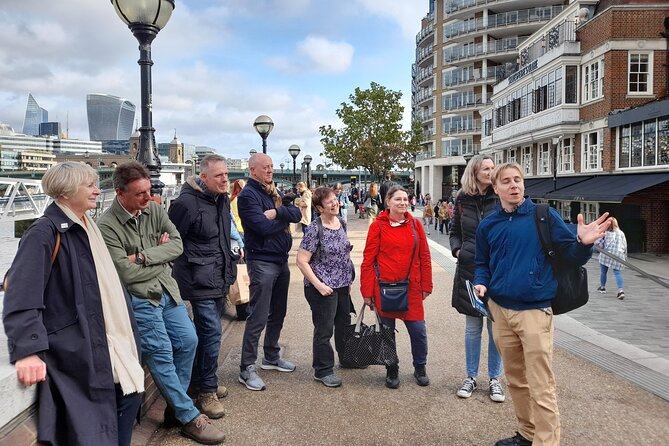
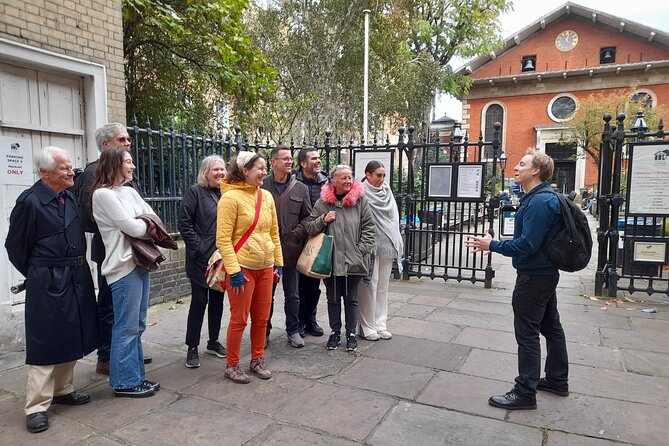
You also get a small-group format that fits the subject. Theatre history is detail-heavy, and in a group that stays at 12 or fewer, the guide can keep the flow without losing people. You get a tour that feels closer to a knowledgeable local walk than a rushed sightseeing loop.
Pricing and Value: What $38.39 Buys You
At $38.39 per person for about 3 hours 30 minutes, this is priced for theatre fans who want more than a quick exterior look. The value comes from two things.
First, the tour is packed with stops. You move past many major names without paying for show tickets. Second, the tour includes mobile ticketing and is led in English, so you can focus on the walk and the commentary instead of logistics.
A helpful nuance: most stops are listed as admission free, meaning you’re not paying again just to see the theatre from the outside. One stop, Palace Theatre, notes that admission is not included, so if you plan to go inside there, you may need to handle that separately.
Meet at the Oscar Wilde Statue, Then Start Building the Map
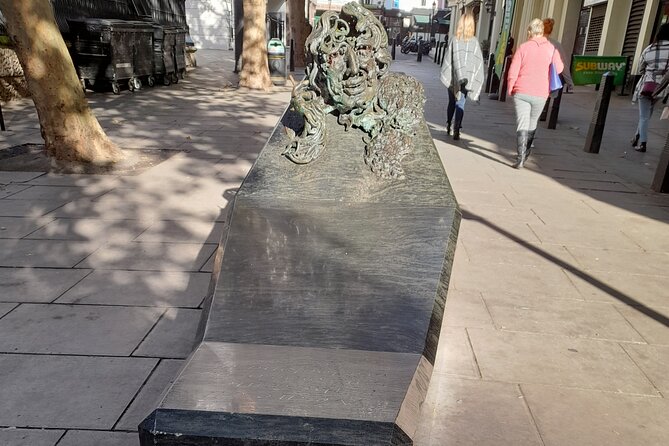
The walk starts at the Oscar Wilde Statue, 3 Adelaide St, London WC2N 4HZ, with a start time of 10:30 am. Meeting there is convenient because it puts you right near the West End theatre density, so the day clicks into place quickly instead of starting with a long transit segment.
From your first block, you begin training your eyes. Charlie Tantam uses each stop to add a piece to the city’s theatre puzzle, like the building’s era, the performers connected to it, and the kind of productions it became known for. That method matters, because the West End can feel visually similar if you are just snapping photos.
London Coliseum: The Big Entrance and the Big Scale
Your first stop is London Coliseum, where you learn the history of the theatre described as the largest in the West End. Even if you only see it from outside, scale is part of the story. The Coliseum’s size signals that this is a flagship venue, the kind of stage that draws major productions and serious audiences.
This is also a good early stop because it sets expectations. If you’re coming in knowing a few theatre names, you’ll quickly understand that the West End isn’t one “theatre thing.” It’s a collection of venues with distinct identities.
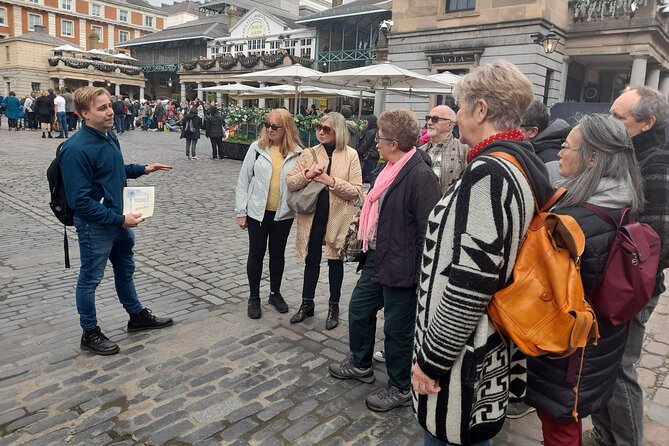
More on foot, at a pace you can hear the guide
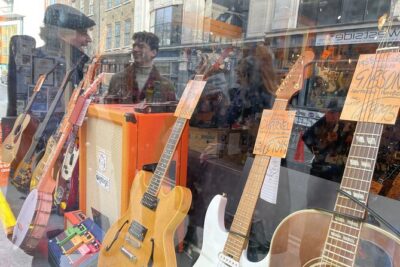
Duke of York Theatre: Debuts, Stars, and the Peter Pan Connection
Next up is the Duke of York Theatre. The highlight here is the idea of theatrical beginnings, including stars who made debuts on this stage, with Peter Pan specifically mentioned.
This stop is short, but it helps you notice something useful: many theatres are remembered as much for who started their careers here as for what plays they hosted. It’s a different way to read the West End, and it makes the whole route more interesting as the day goes on.
Noel Coward and Wyndham’s: When One Building Has a Standout Detail
At the Noel Coward Theatre, you hear about notable productions from the past and a specific trivia point: it is noted as the only theatre where two major theatre figures shared a stage. Short stops like this can sound like filler, but in practice they help you lock in facts that make each building feel distinct.
Then you reach Wyndham’s Theatre, where the standout detail is a bust of Shakespeare on the front, described as the only one of its kind in the West End. That’s the kind of detail you would never notice quickly on your own, and it’s exactly why this walk works. You end up looking at facades like they have footnotes.
Leicester Square: The Discount Ticket Booth Tip You Can Use Later
Leicester Square is more than a theatre signpost. This stop includes a note about a discount ticket booth and how to get great West End seats at lower prices. That’s practical, because it turns your tour into something that can influence what you see next.
You also pick up a sense of the area’s older music hall legacy, with references to historic theatres such as The Alhambra and The Empire. Even if those names are not on every visitor’s radar, they help you understand why Leicester Square became such a theatre hub.
Haymarket Theatre Royal and His Majesty’s: Rumours and Longevity
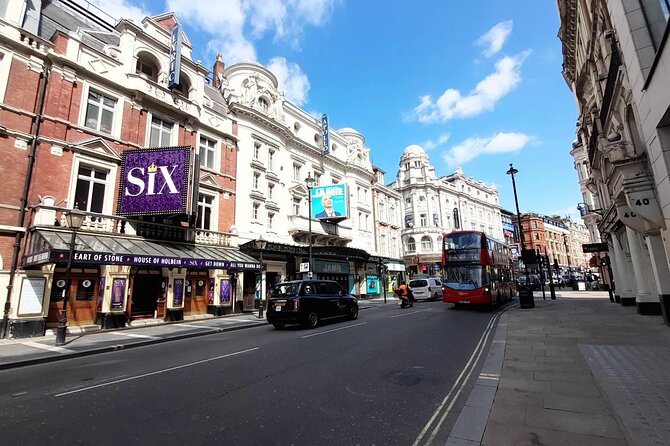
The walk continues to Haymarket Theatre Royal, described as favoured by Sir Ian McKellen and Dame Judi Dench, plus a rumour of a haunting. A haunting story is obviously not something you can confirm from a street corner, but it does give you a fun, human way to connect to theatre folklore.
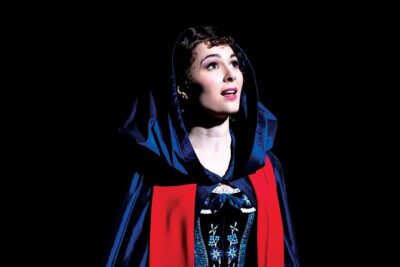
Then you reach His Majesty’s Theatre London, where the tour highlights it as the second oldest active theatre site in London. It’s also noted for the long-running musical The Phantom of the Opera. This combination, age plus a major current anchor, is a theme across the route: the West End keeps renewing itself without fully losing its roots.
Harold Pinter Theatre to Prince of Wales: Comedy, Music, and Big Names
At the Harold Pinter Theatre, you learn it opened in 1881 and is one of the oldest playhouses in the West End. The route also mentions sensational stars connected to the theatre, including Marilyn Monroe.
Then you shift to the Prince of Wales Theatre, now home to The Book of Mormon, with past connections to comedy and musical spectacle. The names listed here include The Beatles, Peter Sellers, and Barbara Streisand.
What I like about these stops is how they show the West End’s range. The tour doesn’t treat theatres as one-note venues. You get the feeling that this part of London is where different kinds of entertainment share a stage identity.
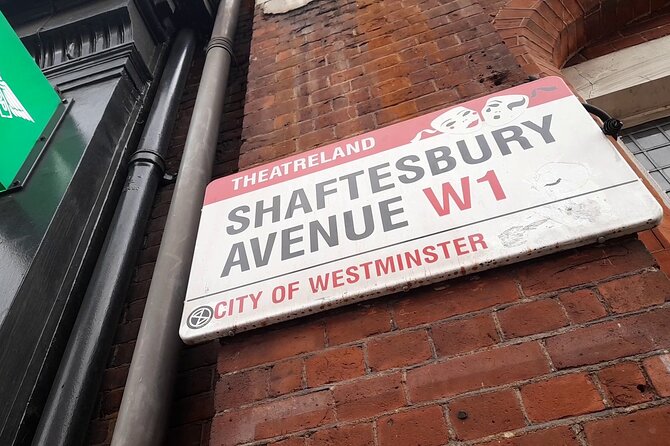
Shaftesbury Avenue: The Theatre Road That Explains the West End
Shaftesbury Avenue is described as a road with more theatres than any other, and the tour uses that idea to connect the dots. You’ll hear how the street’s history shaped the cluster you see today.
The route includes multiple stops along this stretch, including:
- The Lyric Theatre, noted as the oldest surviving theatre on Shaftesbury Avenue, plus a tragic death mentioned for a British comedy icon.
- The Apollo Theatre, described as the first Edwardian Theatre, opening in 1901, and linked to a legendary production.
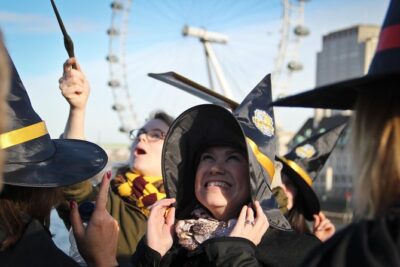
- Gielgud Theatre, named after Sir John, with West End debuts mentioned including Harry Potter himself.
- Sondheim Theatre, with the history of Les Miserables highlighted as the world’s longest-running musical, plus famous faces who debuted there in the 80s.
Even if you only know a few of these titles, this section helps you learn the geography of theatre. You start seeing Shaftesbury Avenue as a spine, not a random set of streets. And if you’re the type who plans shows once you arrive, these stops also give you a shortlist of places to check for tickets.
Palace Theatre to St. Martin’s: “Bring the House Down” and a Super-Long Run
At Palace Theatre, the tour points you to its modern anchor, Harry Potter & the Cursed Child, and a behind-the-scenes idea tied to the phrase bring the house down. This is the kind of language origin trivia that makes a theatre name stick in your brain.
The stop also notes that admission is not included, so if you want to go inside, you’ll need to plan for that separately. If your goal is mainly the stories and the exterior architecture cues, you can still enjoy this stop as part of the walking narrative.
Then you reach Ambassadors Theatre, described as unremarkable outside but rich in stage history, including debuts connected to Vivien Leigh and Paul Robeson. After that comes St. Martins Theatre, home of The Mousetrap, described as the world’s longest-running play.
A long-running show makes the West End feel steady. It’s not just about glitter and premieres. Some productions become part of the city’s rhythm, and the tour gives you that perspective in plain terms.
The Arts Theatre, Covent Garden, and the Royal Opera House: Smaller Rooms, Big Ideas
You then pass The Arts Theatre, described as the West End’s smallest theatre, with a mention that it was once home to a controversial play. Small venues can make audiences feel closer, and the fact that this place is tied to controversy hints at how the West End has always been a stage for ideas, not just entertainment.
Next is Covent Garden, where you see the legendary market area and the mention of London’s official Actors Church. The tour also points out street theatre spots and older theatre sites. Covent Garden works as a mood shift. It’s a reminder that theatre culture spills into daily life, not just ticketed performances.
Finally, you reach the Royal Opera House, noted as one of the oldest theatre spots in London, established in 1732. It is now home to the Royal Opera and Royal Ballet. This stop matters because it broadens your definition of theatre. Even if you mostly love plays and musicals, the opera house gives you a sense of how long performing arts has shaped this city.
Fortune Theatre, Drury Lane, and Lyceum: Horror, Oldest Active, and Victorian Power
The walk continues to Fortune Theatre, home to The Woman in Black, described as the longest-running horror play ever. The tour also flags spooky stories connected to the play’s 30+ year history. Whether you’re into horror or not, this stop helps explain why some venues become synonymous with a genre.
Then comes Theatre Royal Drury Lane, described as the oldest active theatre spot in the West End. It’s a perfect stop for anyone who wants to feel the weight of continuity in London theatre.
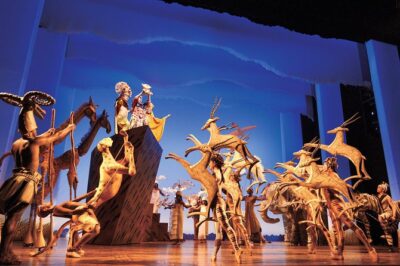
After that, you reach Lyceum Theatre, now home to The Lion King, which has been running since 1999. The tour mentions Victorian-dominant leading actors like Sir Henry Irving and Dame Ellen Terry, plus the origin of a famous gothic horror creation. The mix of Victorian names and a modern megahit is the point. The West End keeps layers stacked.
The National Theatre and Shakespeare’s Globe: Ending on Meaning
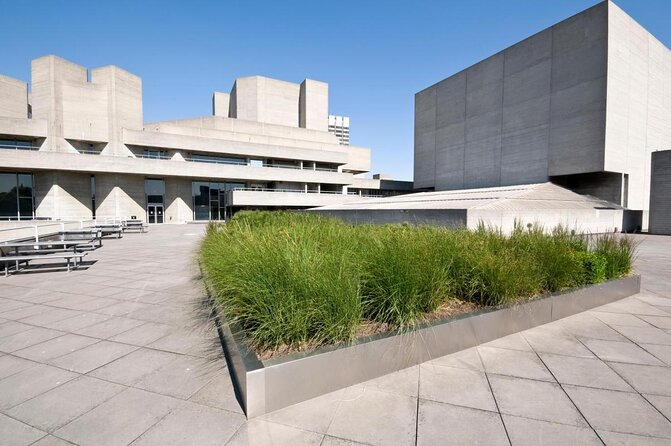
The day finishes with a move to the South Bank side, including the National Theatre, where you hear about its history. The tour also notes that Laurence Olivier, connected to the National, stated the opposite of one idea mentioned by the tour. The takeaway is simple: even legends disagree about what institutions should be.
Then the route ends at Shakespeare’s Globe at 21 New Globe Walk, London SE1 9DT. The tour highlights the Bankside setting where Shakespeare made his name, the reconstruction of Shakespeare’s Globe, and a final top-secret theatre location.
I like how this ending turns your day from a list of theatres into a story arc. You’ve gone from modern West End fame and recurring hits all the way to the original “why” behind English-language stagecraft.
Pace and Practical Tips That Actually Help
This is a walking tour with lots of quick viewpoints. Most stops are around 5 minutes, with a few longer ones such as Leicester Square, Shaftesbury Avenue, Covent Garden, and Shakespeare’s Globe. That means you won’t linger for photos at every theatre, so be ready for a steady flow.
Because the route depends on good weather, I strongly suggest you bring a compact umbrella or light rain layer. Also, wear shoes you trust for a lot of walking. Several stops funnel you through busy theatre areas, and standing still for even a few minutes can feel longer when you’ve already been on your feet.
If you love theatre, you’ll get extra value by keeping a short mental list. During the tour, note the theatres you recognize, plus the ones you did not know. Then, later in your trip, pick a show that matches what you learned about each venue’s identity.
Who This Tour Is Best For
This tour is ideal if you:
- Love West End shows and want to understand the buildings behind the titles
- Want a theatre day that also feels like city walking and not a museum lecture
- Enjoy facts, performer debuts, and stage trivia in context
- Prefer a small-group format with a live guide
It’s also a great pick for history lovers, since the guide’s commentary ties theatres to eras and cultural shifts. And if you are the type who likes planning tickets once you arrive, the Leicester Square discount booth tip is the kind of thing you can use immediately.
Should You Book This West End to South Bank Theatre Tour?
If theatre is your vacation interest, I think this is a strong booking. The 4.9 rating and the fact it’s consistently recommended point to a tour that delivers on depth without turning into a slog. You get a lot of famous landmarks, but the tour’s best feature is how it connects them with stories you can actually remember.
Book it if you want a structured way to see the West End and South Bank in one go, with a guide like Charlie Tantam who clearly knows how to keep the day moving. Skip it only if you hate long walking days, or if you prefer deep inside-theatre time rather than outside viewing and quick stops.
If your goal is to leave London with a mental map of how theatre culture works, this route does that job.
FAQ
How long is the West End and South Bank Theatre Walking Tour?
The tour lasts about 3 hours 30 minutes.
Where does the tour start and where does it end?
It starts at the Oscar Wilde Statue, 3 Adelaide St, London WC2N 4HZ and ends at Shakespeare’s Globe, 21 New Globe Walk, London SE1 9DT.
What is the group size?
The tour is capped at a maximum of 12 travelers.
Is the tour in English?
Yes, it is offered in English.
Are admission tickets included?
Most stops are listed as free admission, but Palace Theatre is marked as Admission Ticket Not Included.
What happens if the weather is poor?
The tour requires good weather. If it is canceled due to poor weather, you will be offered a different date or a full refund.
More Of London On Foot

More Nights At The Theatre



Fresh off the notebook in London
- Private Rock ‘n’ Roll Music Tour of Central London
★ 5.0 · 7 reviews - London Walking Tour: Camden Town Photography Walkabout
★ 5.0 · 7 reviews - Private Transfer from London accommodation to Cruise terminal
★ 5.0 · 7 reviews - Amazing Nightlife in London East Tour
★ 4.5 · 7 reviews - The British Museum: a highlights tour with a TV historian
★ 5.0 · 7 reviews - Heathrow Airport to Cambridge private taxi transfers
★ 5.0 · 7 reviews
West End and Theatre Shows, compared.
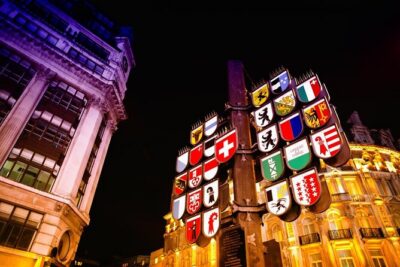 ★ 5.0London West End Musical Silent Disco Walking Tour Top 1% RatedFrom $531,057 reviews
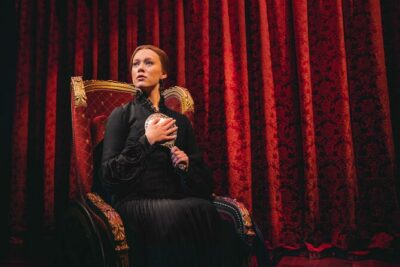 ★ 4.5London Theatre: Wicked the MusicalFrom $43316 reviews
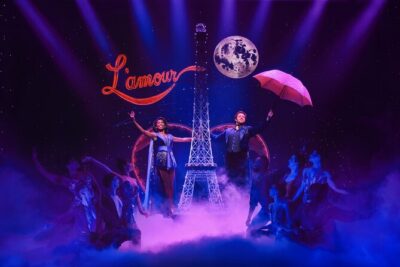 ★ 4.5London Theatre: Moulin Rouge! The MusicalFrom $35272 reviews
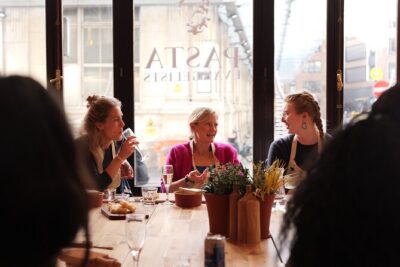 ★ 5.0Pasta Making with Unlimited Prosecco in London’s West EndFrom $94264 reviews
 ★ 4.5London Theatre: Disney’s The Lion KingFrom $60245 reviews
 ★ 4.5London Theatre: TINA – The Tina Turner Musical-Closes Sept 2025!From $18217 reviews
 ★ 4.5London Theatre: The Phantom of the OperaFrom $46215 reviews
 ★ 3.5London Theatre: The Devil Wears PradaFrom $43176 reviews
Browse the lists this tour appears in