
REVIEW · WALKING TOURS
Women of Bloomsbury Walking Tour
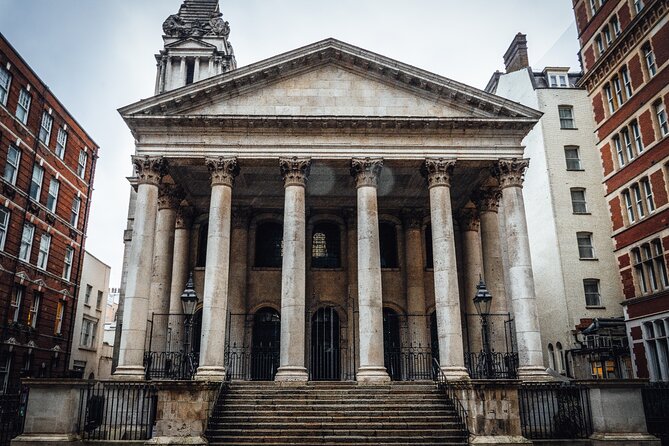
Follow women’s stories through central London. This walk connects major London landmarks with names you likely know, like Virginia Woolf, while also spotlighting people who deserve more attention, such as Noor Inayat Khan and Mary Prince. You’ll move from the theatre district area toward Covent Garden and end in a green pocket of Gordon Square.
I love the way the guide turns street corners into conversation starters, with blue plaques and statues used as story triggers, not just photo ops. I also love the small-group feel, so you can ask questions and get clear, friendly answers without the usual rush.
One consideration: this is mostly outdoors and you should plan on the full walk in whatever London sends your way. Bring an umbrella, dress for cool and wet weather, and make sure you’re comfortable with a moderate amount of walking.
In This Review
- Key highlights to look for on this walk
- Entering London through women’s street-level stories
- From Cambridge Theatre to Gordon Square, start smart and finish well
- Stop 1: Seven Dials in about 10 minutes, short stop, strong context
- Stop 2: Bloomsbury for about 45 minutes, where stories meet the streets
- Tavistock Square for about 20 minutes, public space and memory
- Gordon Square for about 20 minutes, ending where London relaxes
- What to notice on the walk: blue plaques, statues, and the story behind the view
- The guide factor: warmth, questions, and humor that keep history moving
- Pace and stamina: a moderate walking tour you should plan around
- Group size and why max 20 makes a difference
- English-language commentary and who this tour suits best
- Price and value: what $54.82 buys you on this route
- Practical logistics that matter for comfort and timing
- Should you book Women of Bloomsbury Walking Tour?
Key highlights to look for on this walk
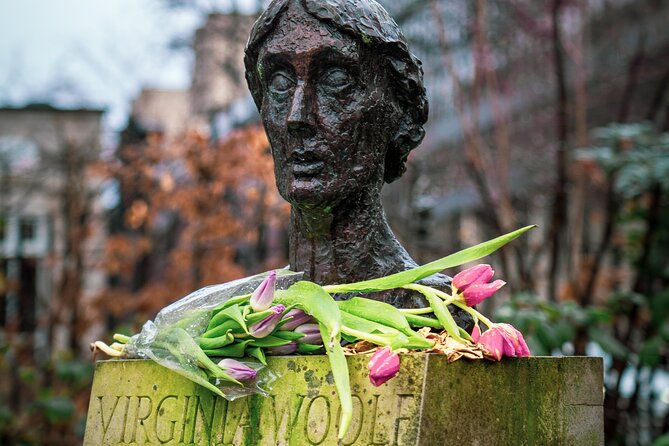
- Women’s history across Bloomsbury and nearby streets, with recognizable names and lesser-known figures put side by side
- Blue plaques and public landmarks used as prompts for stories that explain context, not just dates
- A compact route with short stops, about 2 hours 30 minutes total, with time to hear and ask questions
- Two end points that make sense for a day out, starting near Cambridge Theatre and finishing near lunch and transit
- Small group size (max 20) that keeps the pace human
- English-language commentary with a guide who keeps things engaging, even when the weather is not
More on foot, at a pace you can hear the guide
- Tour for Muggles The Ultimate Harry Potter Walking Tour in London★ 5.0 · 4,684 reviews
- London Jack The Ripper Guided Walking Tour★ 5.0 · 3,131 reviews
- Changing of the Guard Guided Walking Tour in London★ 5.0 · 1,793 reviews
- The Great British Rock and Roll Walking Tour★ 5.0 · 1,371 reviews
Entering London through women’s street-level stories
If your usual London plan is museums and monuments, this tour is a great change of pace. You’ll see plenty of famous sights, but the real focus is on people, choices, and the everyday power that shaped ideas and events in this part of town.
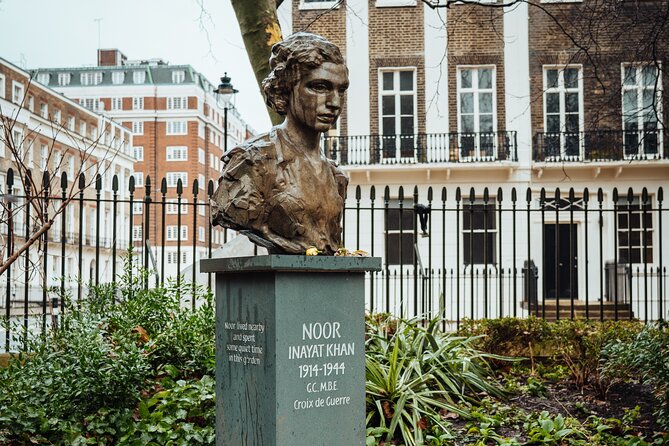
The heart of the experience is a guided walk built around women who influenced literature, activism, and public life. You’ll hear about Virginia Woolf, and then the story widens beyond the literary world to include figures like Noor Inayat Khan and Mary Prince. That mix matters, because it helps you understand how Bloomsbury and its surrounding neighborhoods connected to larger movements across the British Empire and beyond.
I also like that the tour doesn’t treat women’s history as a separate side quest. Instead, it folds women’s lives into the places you’re already passing through, including the theatre land area and the route toward Covent Garden. You get a clearer sense of why these neighborhoods matter, not only because they look good on a postcard.
From Cambridge Theatre to Gordon Square, start smart and finish well
The walk starts at Cambridge Theatre on Earlham Street, then ends at Gordon Square. That layout is handy for planning your day, because you begin in an easy-to-find central spot and finish near a leafy park and nearby transport and lunch options.
Here’s how you can use this to your advantage:
- If you’re planning a theatre night, starting near Cambridge Theatre puts you in position to do the tour earlier, then head into the evening without a long commute.
- If food matters to you, Gordon Square is a strong end point. You’re not stranded at some random curb with nothing around you, you’re close to places you can realistically grab a meal.
Also, the tour runs on a mobile ticket. That’s simple, and it reduces the friction that sometimes happens with paper tickets on a walking route.
Stop 1: Seven Dials in about 10 minutes, short stop, strong context
Seven Dials is a great opener because it’s compact, recognizable, and full of the kind of city energy that makes history feel alive. In roughly 10 minutes, you’ll explore the women connected to the area’s story.
The tour approach here is important: rather than walking you through an encyclopedia, it gives you the mental map first. You learn why this spot is a meaningful starting point, and then the guide uses that context to make the next blocks easier to follow.
Practical tip: Seven Dials can be busy around the theatre and shopping zones. If you tend to get slowed down by crowds, arrive a touch early so you can settle into the group before the guide starts moving.
Stop 2: Bloomsbury for about 45 minutes, where stories meet the streets
Bloomsbury is the big section of the tour, with about 45 minutes focused on the women tied to the neighborhood. This is where the walking turns into real place-making.
You’ll hear how Bloomsbury links to writing, ideas, and public life. The tour connects Virginia Woolf and other influential figures to the surrounding streets and landmarks you can actually see. That does two useful things for you:
- It helps you connect the names to geography, not just to books or textbooks.
- It gives you a sense of how neighborhoods shape thinking, and how thinking shapes the world.
Another thing I like: the guide keeps the tone approachable. Expect clear explanations, room for questions, and often a light touch of humor. That matters because Bloomsbury history can get heavy quickly if you only get facts and no human context.
If you’re a first-time London visitor, this is also a good foundation block. You walk away understanding why Bloomsbury is famous, but more importantly, you understand why its stories stayed relevant.

Tavistock Square for about 20 minutes, public space and memory
Tavistock Square gets about 20 minutes, and the time is used well. This stop works as a reminder that history is not only about private rooms and published works. Public spaces also carry meaning, and the guide helps you see how events and people shaped what these squares became.
Even if you’re not focused on monuments day to day, this stop is useful because it teaches you how to read the street. You learn what details to watch for and why those details connect to the women and stories you’ve heard earlier.
Practical note: if the weather turns, you’ll still be outside. Tavistock Square can be a good spot to pause and reset your attention, but it is still part of a walking day. Keep your layers handy.
Gordon Square for about 20 minutes, ending where London relaxes
The tour finishes at Gordon Square, with about 20 minutes allocated to its story. This stop is a double win: you get the final pieces of the narrative, and then you end somewhere you can actually use right away.
Gordon Square is also where the tour’s pacing usually feels best. By the time you arrive, you have enough context to appreciate the final stories, and you’re not left with an abrupt ending. The guide wraps things up in a way that leaves you ready to go get food, check out nearby streets, or hop on transport without rushing.
If you’re trying to plan your afternoon, I’d put Gordon Square at the center. It’s an easy place to pivot into the rest of your day.
What to notice on the walk: blue plaques, statues, and the story behind the view
A big part of why this tour works is how the guide uses blue plaques and other visible landmarks as story engines. You’re not just staring at a building and guessing why it matters. You get told what to connect it to.
When you’re walking, here are the signals to look for:
- Plaques that mark people tied to specific places, then listen for what the guide says that plaque represents.
- Statues and memorial-like elements that help explain the tone of an area, and how women’s public roles were recognized or missed.
- Street layout clues, especially around Bloomsbury, that help you understand how the neighborhood functions.
This matters because London history can feel abstract if you only visit indoor sites. On this walk, the neighborhood itself becomes the classroom.
The guide factor: warmth, questions, and humor that keep history moving
The tour experience depends on more than facts. A good guide helps you hold onto the thread, and that’s exactly where this one shines.
From what you can expect, the guides bring a friendly, open style, and they handle questions well. One review specifically highlighted Matilda as warm and open to conversation, and another praised Becky for researching and writing the tour herself. Either way, the pattern is consistent: the storytelling feels researched, but not stiff.
You can also expect good communication and a guide who can adapt on the fly. In other words, if you want to ask what connects one figure to another, you’ll usually get a clear answer instead of a dead end.
Pace and stamina: a moderate walking tour you should plan around
This is a 2 hours 30 minutes walk, and the route keeps you outside the whole time. The good news is the stops are built into the experience, with multiple short segments that break up the walking.
The watch-outs are simple:
- Dress for cold and wet weather, because you’ll likely be out in it.
- Bring an umbrella.
- If you have mobility limitations, think carefully about the whole route and your pace needs.
The tour is designed for moderate physical fitness. If you’re generally comfortable walking around central London for a chunk of time, you’re probably fine.
Group size and why max 20 makes a difference
This tour caps at 20 travelers, which is a sweet spot for this kind of experience. A small group means the guide can actually address questions without steamrolling the conversation. It also means the walk feels social, not like you’re following a long line of people in silence.
If you hate feeling lost in a crowd, this format helps. And if you like hearing explanations beyond the basics, small-group pacing is a big part of the value.
English-language commentary and who this tour suits best
The tour is offered in English, and it leans into history and context. That makes it a solid pick if you like learning while you walk and you want a guided narrative rather than a self-paced stroll.
It may be less ideal for very young children, since this is substantive and story-heavy. If you have a brainy middle schooler or high school student, it can work well as an engaging way to connect real people to real places.
For adults, it’s a great fit if you enjoy:
- Literary and cultural history
- Activism and women’s public life
- London neighborhood exploration that feels purposeful
Price and value: what $54.82 buys you on this route
At $54.82 per person, this tour is priced like a mid-range guided walking experience. The value comes from what’s included and how the guide uses the time.
You’re paying for:
- A professional tour guide
- A structured route that covers several key stops
- Guided storytelling built around women’s history, not generic sightseeing
You’re also not likely to run into extra admission costs. The stops on this route are marked as ticket-free, which helps keep the day from turning into a surprise add-on expense.
Given the small group size and the time on foot, I’d think of it as paying for context and connection. If you’re the kind of traveler who likes to understand what you’re looking at, it can feel like a smart buy. If you prefer totally free-form wandering with no guide structure, you might find the cost harder to justify.
Practical logistics that matter for comfort and timing
Here are the practical pieces you should plan around:
- Start at Cambridge Theatre, Earlham Street, WC2H 9HU.
- End at Gordon Square, WC1H.
- About 2 hours 30 minutes total.
- You’ll want public transport nearby. The end point is close to transit and lunch spots.
- You’ll have a mobile ticket.
- Service animals are allowed.
- Confirmation is received at booking time.
One more realistic tip: if you can, wear shoes you’d be comfortable in for a longer walk than you think you’ll do. City pavements plus rain plus curiosity equals more steps than you planned.
Should you book Women of Bloomsbury Walking Tour?
Book it if you want London that feels human. This is not just a route through pretty streets. It’s a guided narrative that connects women’s lives to real neighborhoods, with blue plaques, statues, and story-driven stops that make you look twice at what you’d otherwise pass.
Skip or reconsider if you hate being outside for long stretches, because you’ll be out the entire time. Also, if you want light entertainment only, the content here is history-focused and substantive.
If your plan includes Bloomsbury anyway, this walk is a strong way to get meaning from the geography. And if you’re traveling with someone who enjoys questions and thoughtful conversation, the small group and guide style make it an especially good match.
More Of London On Foot


Fresh off the notebook in London
- Private Rock ‘n’ Roll Music Tour of Central London
★ 5.0 · 7 reviews - London Walking Tour: Camden Town Photography Walkabout
★ 5.0 · 7 reviews - Private Transfer from London accommodation to Cruise terminal
★ 5.0 · 7 reviews - Amazing Nightlife in London East Tour
★ 4.5 · 7 reviews - The British Museum: a highlights tour with a TV historian
★ 5.0 · 7 reviews - Heathrow Airport to Cambridge private taxi transfers
★ 5.0 · 7 reviews
Walking Tours, compared.
 ★ 5.0Oxford University Walking Tour With University Alumni GuideFrom $416,905 reviews
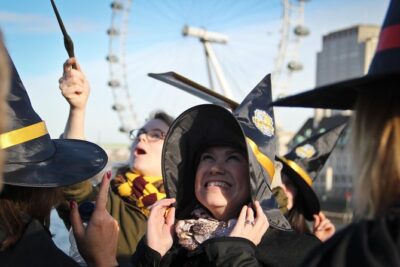 ★ 5.0Tour for Muggles The Ultimate Harry Potter Walking Tour in LondonFrom $234,684 reviews
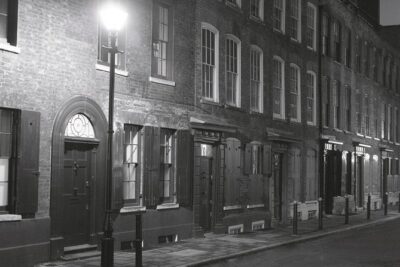 ★ 5.0London Jack The Ripper Guided Walking TourFrom $03,131 reviews
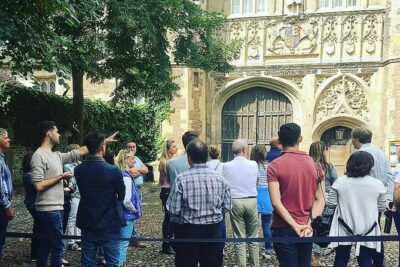 ★ 5.0Cambridge University Walking Tour by Alumni™ Kings College OptionFrom $332,336 reviews
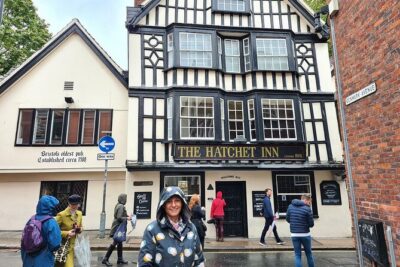 ★ 5.0Blackbeard to Banksy – The Ultimate Walking Tour of BristolFrom $181,961 reviews
 ★ 5.0Air Raid Shelter + St. Nicholas Market Walking TourFrom $171,950 reviews
 ★ 5.0Walking Tour of Bath with Blue Badge Tourist GuideFrom $301,877 reviews
 ★ 5.0Changing of the Guard Guided Walking Tour in LondonFrom $251,793 reviews