

REVIEW · WALKING TOURS
Working Women of the East End Walking Tour
London has a quieter side of power. This walking tour traces the working women who shaped London’s East End, with stops at Spitalfields Market and Brick Lane, plus a section on the women of the Tower. You also get a clear look at the fear and fallout tied to Jack the Ripper.
I love how the stories cover working women across class lines, not just the famous names. I also like the way the guide ties the past to what you can still see in the neighborhood today, including the Jack the Ripper era and the Tower connection.
One thing to plan for: it’s outside most of the time and runs about 2 hours 30 minutes, and lunch is not included, so you’ll want to eat before or after.
In This Review
- Key highlights you will feel on the walk
- Why this East End walk beats the usual London tour
- Tower Hill start: get your bearings fast
- Spitalfields Market (E1): where daily work shows up in the streets
- Brick Lane: the street where trades and communities overlap
- Women of the Tower: power, fear, and public memory in one segment
- The mid-tour break: when you get a breather without losing the story
- Price and value: what $55.50 buys in the real world
- Who should book this walk, and who might skip it
- A quick guide to meeting your guide
- Should you book Working Women of the East End?
- FAQ
- How long is the Working Women of the East End walking tour?
- Where does the tour start and where do you finish?
- Is the tour in English, and is it a small group?
- Do you need to pay for entry tickets at the stops?
- Is lunch or food included?
- Is there a toilet break during the tour?
- Can I cancel for free, and how far in advance?
Key highlights you will feel on the walk
- A women-first East End route that goes beyond the usual Central London sights
- Stops with practical context at Spitalfields Market and Brick Lane (both free admission)
- A Tower-focused segment that explains how women fit into power, public memory, and local life
- Tight storytelling, not a lecture with a guide who keeps the pace comfortable
- A mid-tour pause including a toilet break and time to reset
More on foot, at a pace you can hear the guide
- Tour for Muggles The Ultimate Harry Potter Walking Tour in London★ 5.0 · 4,684 reviews
- London Jack The Ripper Guided Walking Tour★ 5.0 · 3,131 reviews
- Changing of the Guard Guided Walking Tour in London★ 5.0 · 1,793 reviews
- The Great British Rock and Roll Walking Tour★ 5.0 · 1,371 reviews
Why this East End walk beats the usual London tour

If your last London tour felt like a highlight reel, this is the opposite. Instead of monuments and royalty, you follow the threads of everyday life and labor. Women’s work, political pressure, and community survival are the main characters, and the East End becomes the classroom.
What makes it work is the balance between local detail and bigger themes. The East End market streets, the working neighborhoods, and the Tower area all connect back to how women earned a living, organized, and got pushed into history whether they wanted that spotlight or not. Even the darker themes, including Jack the Ripper, are framed as part of how fear, poverty, and policing shaped daily life.
You also get real value from the guide role. This is a guided walk with all fees and taxes included, and the group max is 20. That size helps you ask questions and actually hear the reasoning behind the stories, not just the facts.
Tower Hill start: get your bearings fast
The tour begins at Tower Hill, London EC3N 4DJ. That starting point matters. It puts you in the right mood for the big theme: the Tower’s reach, and how power shows up in ordinary neighborhoods.
Before you even move far, you’re set up to read the street like evidence. The guide is there to connect places to people, including influential women tied to the area’s history. If you’re the kind of traveler who likes to understand why a place matters, this format fits you well.
A practical note: since it ends at Spitalfields Market, you’re essentially doing a route that finishes in a lively area with transport and food options. That’s a nice setup for dinner plans the same day.
Spitalfields Market (E1): where daily work shows up in the streets
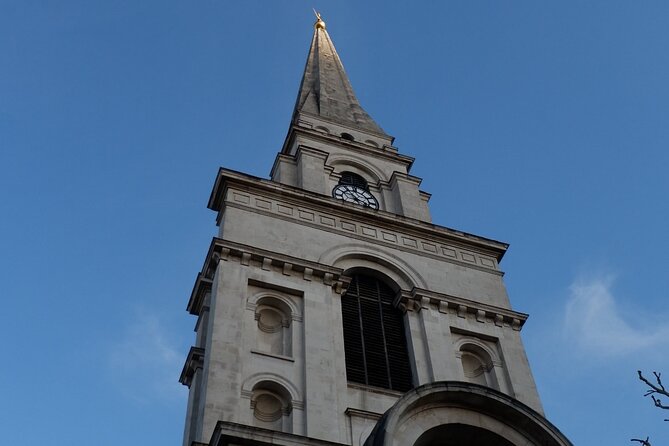
One of the first stops is Spitalfields Market in E1, where the market’s historic East End role comes to life. The stop is listed as about 5 minutes, and that tells you something important about the tour style: it’s not a long museum visit. Instead, you get a quick, focused orientation.
What you should expect here is context. The market is not just a place to shop. In a women-led narrative, it becomes a snapshot of work and trade, and how neighborhoods fed themselves. You also get a chance to look at the street layout and the rhythm of the area, then fold that into the larger story the guide is building.
Because admission is free at this stop, there’s less friction. You can spend your attention on the explanation, not on tickets, lines, or extra logistics. Short stop, meaningful framing, then you move on.
Potential drawback: five minutes means you won’t have time to wander on your own if you like to browse. If you want browsing time, plan that before or after the tour when you’re finished.
Brick Lane: the street where trades and communities overlap

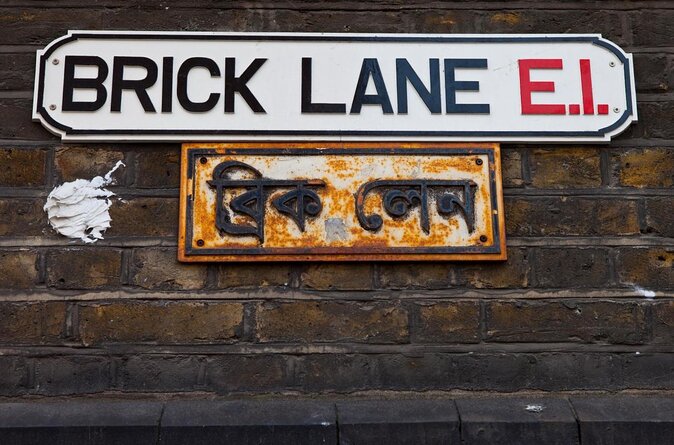
Next up is Brick Lane. Like Spitalfields, it’s listed at about 5 minutes, and admission is also free. This is another quick hit, but the value is in what the guide connects to the street.
Brick Lane has long been a mix of community life and trade. In a women-focused route, it’s the kind of place where you start to notice how work and identity overlap. You’re not just hearing names, you’re learning how neighborhoods functioned, including the push and pull between economic survival and social change.
The best part of short street stops like this is that you don’t get lost in details. You learn the big picture, then you physically move to the next site and keep the momentum. That matters because the whole tour is only about 2 hours 30 minutes.
One practical consideration: the route is timed, so don’t count on lots of extra photo stops at each point. Bring your camera, but keep moving with the group.





Women of the Tower: power, fear, and public memory in one segment
Some tours talk about the Tower like it’s just a backdrop. This one uses it as a story engine, with an explicit segment called exploring the women of the Tower.
The key idea here is that women were not outside history. They were part of it, shaped by it, and in some cases helped shape it. The Tower area is tied to authority and public systems, which makes it a natural place to discuss who had access, who was constrained, and how women’s lives intersected with the machinery of London.
This is also where the darker East End thread comes in, including the horrific events caused by Jack the Ripper. You should expect the guide to connect crime and fear to the social conditions of the time, rather than treating it like a stand-alone “gothic” story. It’s about understanding why the East End felt different, and how communities lived under strain.
From the review details, it’s clear the guide brings local labor life into the same conversation, including women’s roles in working life and organizing. If you enjoy hearing how big historical events land on real people, this is the section that usually sticks with you.
If you dislike heavy topics, you can still handle it, but it helps to know the tour is not only cheerful. It addresses fear, hardship, and the brutal realities of the era.
The mid-tour break: when you get a breather without losing the story
The tour includes a toilet break, and multiple people highlight that there is also a small pit stop for restrooms and coffee or tea. In a walking tour, this is not a small thing. It’s the difference between arriving in good shape and feeling wrecked before the end.
The pacing also matters. The experience is about 2 hours 30 minutes, and the stop structure suggests a rhythm of short visits plus storytelling. That works well for most people, especially if you’re not trying to do a super long walking day.
Also, the group size cap of 20 helps here. You’re less likely to feel like you’re stuck waiting for someone to catch up or for the guide to reset the room.
Practical advice: if you want the break to help you fully recharge, use it even if you do not feel desperate. Long story tours can keep you focused, and that can trick you into forgetting basics until later.
Price and value: what $55.50 buys in the real world

At $55.50 per person, you’re paying for a guided explanation, not just movement between landmarks. And for this kind of themed walk, the guide is the product. The places are the stage, but the stories are what you’re buying.
A few value signals stand out from the details you have:
- The tour includes the guide and all fees and taxes.
- Stops you’re at right near public life are free to access at least for Spitalfields Market and Brick Lane.
- The group is capped at 20, which usually means you get more interaction than you would on a giant bus-style tour.
- It is offered in English, with a mobile ticket, so it’s straightforward to manage day-of.
Then there’s the content value. People rate this walk highly because it covers influential women in working life, including politics and the labor movement, not only the decorative “women of history” version. It also includes connections to local practices, with one review mentioning wash houses from the mid 1800s and even an overview of layout. That sort of detail is the kind of specificity that makes a themed tour feel real.
Is it perfect? Not every part is long. The short stop timing at the market and Brick Lane means you won’t get an in-depth self-guided wander inside those spots. But that’s also how the tour protects its total length. You finish with the ability to explore on your own afterward, especially since it ends at Spitalfields Market.
Who should book this walk, and who might skip it
This tour is a great fit if you like:
- Social history, labor history, and community stories
- Tours that connect people to real streets, not just famous buildings
- A smaller-group feel, with time to ask questions
- A guide-led narrative that stays energetic through the whole walk
It is also a good choice if you are traveling with mixed interests. One review notes it’s enjoyable for all people, not only those specifically focused on women’s history. That broad appeal comes from the way the guide places working women within the wider East End context.
Consider skipping or pairing thoughtfully if:
- You want mostly light, sightseeing-only content. This tour includes serious material, including Jack the Ripper.
- You want lots of time to browse shops and markets during the walk. The market stops are short, so you’ll likely want to return after the tour.
A quick guide to meeting your guide
Women of London runs the experience, and the guide role is central. From the guide names that show up in the feedback, you may encounter a guide such as Becky or Emily. Regardless of who leads your group, the consistent theme is clear communication, strong research, and stories told in a way that keeps you listening.
One reason the ratings are so strong is that guides are handling questions well. People call out how approachable the guide is when you want to go deeper.
If you like tours where you can ask, this is the one to choose. Show up with a curious mindset and you’ll likely leave with new threads to follow online afterward.
Should you book Working Women of the East End?
I’d book it if you want London that feels human. This isn’t a standard “big sights” walk. It’s a targeted East End story about how working women shaped the area, including the Tower connection and the grim atmosphere tied to Jack the Ripper. The guides seem to bring the material alive with humor, context, and enough detail to make the neighborhood feel newly understandable.
You should skip it only if you dislike darker chapters, or if you need long free time at each stop. The stops at Spitalfields Market and Brick Lane are brief, and the tour is built for storytelling, not drifting.
If your goal is a 2.5-hour walk that gives you a fresh lens on London, this one is an easy yes. End at Spitalfields, grab something to eat nearby, and let the stories follow you into dinner.
FAQ
How long is the Working Women of the East End walking tour?
The tour lasts approximately 2 hours 30 minutes.
Where does the tour start and where do you finish?
It starts at Tower Hill, London EC3N 4DJ. It ends at Spitalfields Market, 65 Brushfield St, London E1 6AA.
Is the tour in English, and is it a small group?
Yes, it is offered in English. The tour has a maximum of 20 travelers, and it is near public transportation.
Do you need to pay for entry tickets at the stops?
For the listed stops, admission is free for Spitalfields Market and Brick Lane. The experience also includes all fees and taxes.
Is lunch or food included?
No. Lunch and all food and drink are not included.
Is there a toilet break during the tour?
Yes, the tour includes a toilet break.
Can I cancel for free, and how far in advance?
You can cancel for a full refund up to 24 hours in advance of the experience start time. If you cancel less than 24 hours before the start time, the amount paid is not refunded.
More Of London On Foot






Fresh off the notebook in London
- Private Rock ‘n’ Roll Music Tour of Central London
★ 5.0 · 7 reviews - London Walking Tour: Camden Town Photography Walkabout
★ 5.0 · 7 reviews - Private Transfer from London accommodation to Cruise terminal
★ 5.0 · 7 reviews - Amazing Nightlife in London East Tour
★ 4.5 · 7 reviews - The British Museum: a highlights tour with a TV historian
★ 5.0 · 7 reviews - Heathrow Airport to Cambridge private taxi transfers
★ 5.0 · 7 reviews
Walking Tours, compared.
 ★ 5.0Oxford University Walking Tour With University Alumni GuideFrom $416,905 reviews
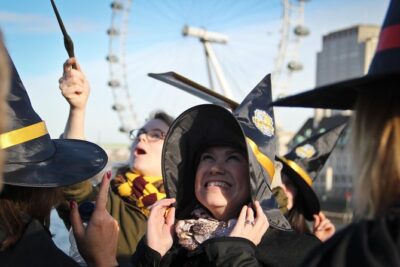 ★ 5.0Tour for Muggles The Ultimate Harry Potter Walking Tour in LondonFrom $234,684 reviews
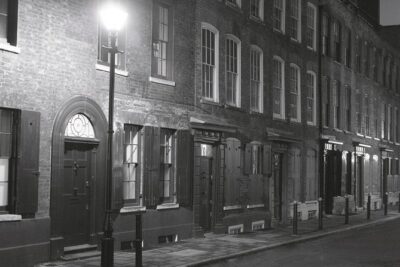 ★ 5.0London Jack The Ripper Guided Walking TourFrom $03,131 reviews
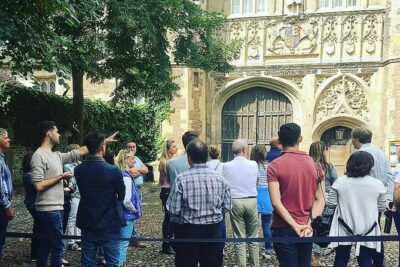 ★ 5.0Cambridge University Walking Tour by Alumni™ Kings College OptionFrom $332,336 reviews
 ★ 5.0Blackbeard to Banksy – The Ultimate Walking Tour of BristolFrom $181,961 reviews
 ★ 5.0Air Raid Shelter + St. Nicholas Market Walking TourFrom $171,950 reviews
 ★ 5.0Walking Tour of Bath with Blue Badge Tourist GuideFrom $301,877 reviews
 ★ 5.0Changing of the Guard Guided Walking Tour in LondonFrom $251,793 reviews