
REVIEW · TOURS
8 Lakes and Magnificent Scenery – Afternoon Half Day Tour
A high road, a few ancient stones, and eight lakes in one afternoon. This 4 hour Lake District tour is built for big scenery without the stress of self driving, and it pairs viewpoints with clear stories about how this national park got famous.
I like the small group size and the way the guide keeps stopping in the best places, so you can actually look around instead of watching the clock. I also like the mix of photo friendly lake viewpoints and quick walks, from Kirkstone Pass breezy panoramas to Castlerigg Stone Circle on a hill.
One thing to consider: even with a max group of 7, the ride is still a van drive on winding roads, and if you have long legs, seat comfort can feel tight on fuller days. Bring waterproof layers, because the Lakes change fast.
In This Review
- Key things I’d plan around on this tour
- Why this half-day driving tour beats DIY on twisty Lake District roads
- Van comfort, pacing, and photo breaks that actually help
- Kirkstone Pass to Ullswater: high roads and a lake that curves like a ribbon
- Castlerigg Stone Circle and Ashness Bridge: two iconic views with different moods
- Surprise View: the one stop that feels like a whole map at once
- Wordsworth lakes: Grasmere, Rydal Water, and the small details that make them feel lived-in
- Ambleside and Windermere: Victorian hubs, “most visited” scale, and Roman-era clues
- Derwentwater to Bassenthwaite: Keswick’s mining roots and the birdlife theme
- Thirlmere and the fells: legendary stories, lost villages, and why you stay in the van
- Price and value: why $123.62 can be a smart spend for a short window
- Who should book this tour, and who might want a different plan
- The small practical stuff that makes a big difference in the Lakes
- Should you book this 8 Lakes and magnificent scenery afternoon tour?
- FAQ
- How long is the 8 Lakes and magnificent scenery afternoon tour?
- What group size is this tour?
- Are entrance fees included?
- Is food or drink included?
- Do I need suitable clothing for weather?
- Is the tour suitable for children?
Key things I’d plan around on this tour
- Kirkstone Pass and its skyline views where Herdwick sheep and dry stone walls frame the valley below
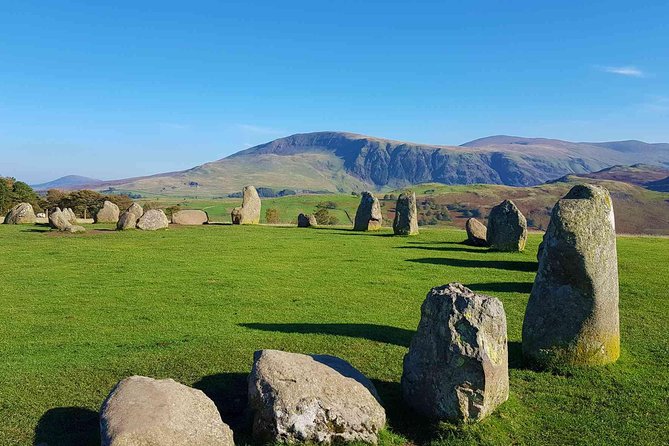
- Castlerigg Stone Circle with 48 stones and a short walk into an open, dramatic setting
- Surprise View and Ashness Bridge for Derwentwater, Skiddaw, and Borrowdale panoramas
- Wordsworth country stops including Dove Cottage in Grasmere and classic Grasmere Gingerbread
- Northern lakes viewpoints like Bassenthwaite, where birdlife is a real theme of the day
Undecided so far? Here are further Windermere tours we have written up.
- Mountain Goat Full Day Tour: Ten Lakes Tour of the Lake District★ 5.0 · 1,717 reviews
- Beatrix Potter’s Half Day Lake District Tour Including Lake Cruise★ 4.5 · 334 reviews
- High Adventure Mountain Passes & Muncaster Castle from Windermere★ 5.0 · 296 reviews
- Ultimate Full-Day Lake District Tour: 10 Lakes, Amazing Scenery & Lake Cruise★ 5.0 · 166 reviews
Why this half-day driving tour beats DIY on twisty Lake District roads
The Lake District is gorgeous, but it is also a place where “getting there” can eat your time. This tour is designed to solve that. Instead of you wrestling a map, finding parking, and timing traffic, you sit back in a comfortable minivan with a route that hits the best angles.
You also get context. The guide role here matters. A good driver can move you through the valleys, but the best part is when the story adds meaning to what you see. Guides from the company lineup, including Tim, Gillian, Sandra, and Steve (names shared in the reviews), are repeatedly praised for making the place click: why lakes look the way they do, what locals talk about, and how these roads became part of the visitor route.
Finally, it is a great “first day” plan. You get a fast overview of multiple lake areas and the main towns, then you can return later under your own steam for longer hikes or a slower boat day if you want.
Van comfort, pacing, and photo breaks that actually help
This is a relaxed, friendly small-group tour, capped at no more than 7 guests. That size is not just a feel-good number. It affects how often you can stop, how quickly the group regroups, and how easy it is to ask a question when you are standing somewhere windy like Kirkstone Pass.
The minivans come with air-conditioning, WiFi, and charging points for most mobile devices. Seats are comfortable enough that many people finish the afternoon thinking they did a lot more than they expected in a short time.
Still, here is the practical caution: one review notes that on a crowded van day, legroom felt tight and window sightlines can be limited. If you care about both comfort and views, plan to arrive early at the pickup so you have your choice of seats.
Expect a rhythm of driving between scenic pull-offs, then short stops for photos or brief walks. You are not doing long hikes here. The walking that exists is mostly short and uneven, with some uphill steps at viewpoint stops, so your shoes matter.
Kirkstone Pass to Ullswater: high roads and a lake that curves like a ribbon
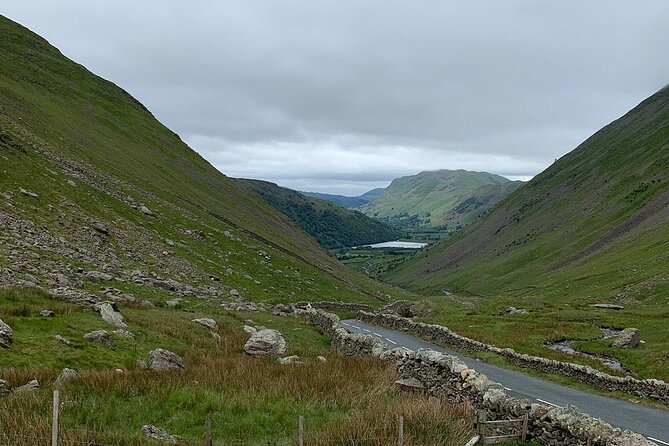
Kirkstone Pass sets the tone fast. You climb through a twisting road that is described as the highest road in the Lake District. The stop near the old Kirkstone Pass Inn is all about the panorama. On a clear day, you may even spot out as far as Morecambe Bay. Down below, Windermere Lake sparkles in the distance.
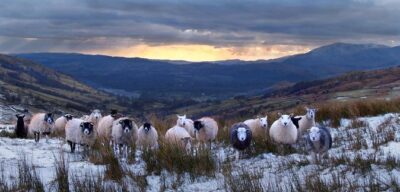
What makes this stop work is the mix of natural and human details. You can see Herdwick sheep grazing among dry stone walls, plus walkers looking like tiny dots on ancient pack horse trails. That scale shift is a quick reality check, and it is exactly the kind of view that benefits from a guide who knows where to look.
Then the tour heads toward Ullswater, one of the Lakes with a dramatic, serpentine shape. The key points you learn here are part geography, part poetry. Ullswater is close to eight miles long, and it is the second longest lake in the region. You also hear how it sits under towering fells, especially Helvellyn in the background.
The shores come with their own explanation. Ullswater has leafy edges, and the mix of oak, birch, and hazel is described as one of the best examples of pre-plantation Lakeland scenery. That matters because it helps you read what you are seeing, not just admire it.
Castlerigg Stone Circle and Ashness Bridge: two iconic views with different moods
Castlerigg Stone Circle is the tour’s “time travel” stop. You reach a hilltop with a panorama of mountains all around, then you step into the circle of 48 stones that were set in place over 5000 years ago. The romantic Victorian idea was that Druids met here, but the actual purpose is still shrouded in mystery.
What I like about this kind of stop, when it is done well, is that it gives you a place where the scenery feels ancient, not just scenic. From Castlerigg, the views make you understand why people would build something like this where the land opens up.
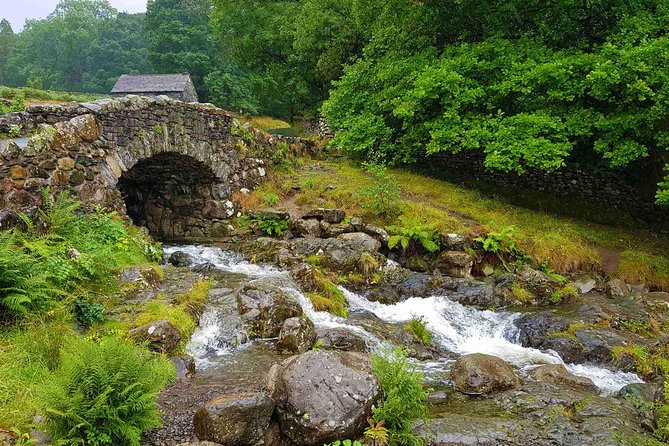
Next comes Ashness Bridge. This stop involves climbing a steep, half-mile stretch up a hidden single-track road to an old dry stone packhorse bridge. It is a quick hike, but it is short enough that you can do it without a full day of walking.
The payoff is why Ashness Bridge is one of the most photographed spots in the Lake District. You get a stream tumbling below, plus a view across Derwentwater to Skiddaw rising above Keswick. If you care about photos, this stop is one of the most direct “line-of-sight” wins on the route.
Surprise View: the one stop that feels like a whole map at once
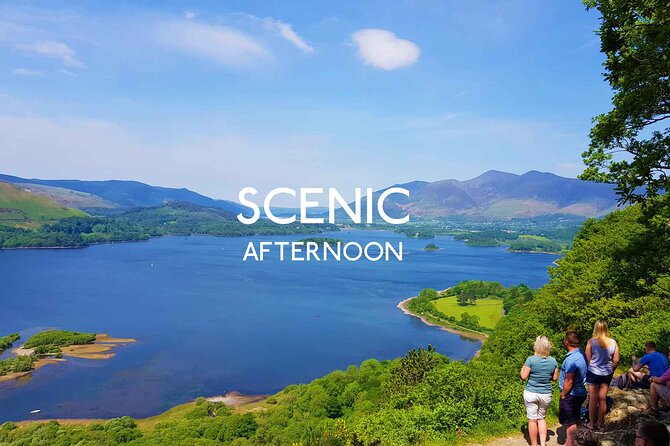
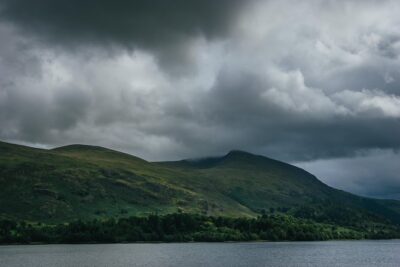
Surprise View is exactly what it sounds like. You stand on a cliff edge with oak trees around you, and the view spreads across Derwentwater, the Skiddaw mountain range, Borrowdale Valley, Keswick, Bassenthwaite Lake, and even the Solway. On a good day, you may see as far as Scotland.
This is also one of the best stops for using your eyes with a little guidance. After a couple of passes on a windy road, it can be hard to remember which valley is which. A good guide turns a wide view into a labeled experience: which peaks are which, where the lakes sit, and what direction you are looking.
If you want the best photos, dress for the wind. Several stops are described as breezy, and this one is perched. Plan to spend the full time here, because the light can shift quickly and your best view angle often comes after you stand still for a minute.
Wordsworth lakes: Grasmere, Rydal Water, and the small details that make them feel lived-in
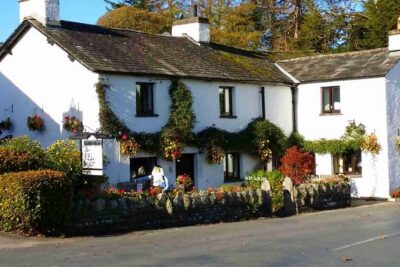
After the big panoramas, the tour pivots into Wordsworth country. In Grasmere, you get a quick pass of Dove Cottage, a tiny whitewashed cottage linked to William Wordsworth and his family life while he wrote poems. Even just snapping a photo from the roadside helps set the emotional backdrop for the Vale of Grasmere.
Then there is Grasmere itself. You get a brief look at the archetypal Lake District village: ringed by shapely fells, with the ancient church beside the river Rothay. The churchyard and its monuments are part of why literary visitors come here year after year.
And yes, there is time for a stop at the Grasmere Gingerbread Shop. It is a short break, but it is also a cultural one. The shop makes Grasmere Gingerbread, first created in 1854, and they sell related items like rum butter and a lot of ginger-themed goodies, including things like Kendal Mint Cake and ginger beer. The practical tip is simple: if you are hungry, grab a treat during the stop, because the tour does not include food.
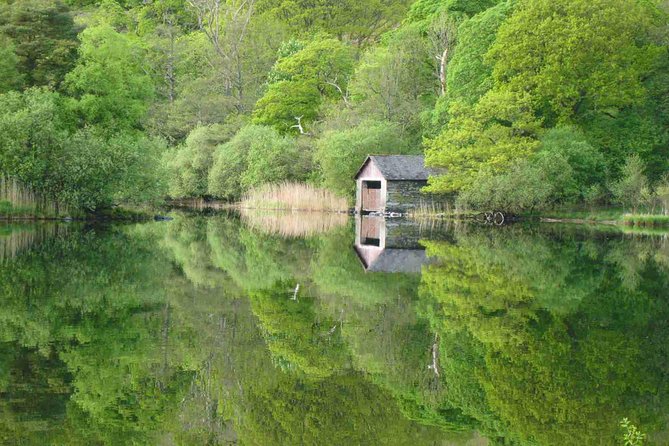
Next is Rydal Water. You often see it from the road, and the emphasis here is scale and mood. Rydal Water is smaller than its neighbor at about three-quarter mile long and one-quarter mile wide, with a depth around 50 feet. The guide frames it as a lake that can look magical in a frost, golden in autumn mist, and calm in morning light.
You also hear practical local nature notes: wildfowl around the area, gulls roosting along the shoreline, and the possibility of red squirrels in the larches. Herdwick sheep show up too, linking the scene back to the Lakeland farming character.
There is also a famous viewpoint detail: rocky knolls with steps leading up to Wordsworth’s seat, described as his favorite place to sit and gaze across the lake.
Ambleside and Windermere: Victorian hubs, “most visited” scale, and Roman-era clues
Ambleside is described as a hub for roads radiating out into the central valleys. As you pass through the town centre, the Victorian tourist boom shows in the slate buildings built by local craftsmen, plus the tiny Bridge House over the clattering Stock Ghyll stream. You also get a nod to Roman history, including Galava, a Roman fort connected to the shores of Windermere.
One of the most photographed buildings in the Lakes is also mentioned here: Bridge House. It is 300 years old, quirky in look, and straddles the brook, which makes it easy to spot even when you are just glancing through a drive-through stop.
Windermere is the scale check. The tour calls it England’s largest and most visited lake, named after a Norse hero. It is easy to see why people keep coming back. The lake has rocky inlets, secluded bays, grassy banks, and wooded heights. The northern skyline is indented with volcanic peaks, while the southern shore is heavily wooded with broadleaf trees.
The guide story adds a few hooks so you do not just stare at the water. You hear how Windermere was created, what the Romans did here, the arctic fish that made the lake its home, and local boat tales, including why a local boggle supposedly stopped the ferry running at night. Even if you only remember one of those legends, it gives the lake personality.
Windermere village and Bowness also show up as more than just a drive-by. Windermere’s Victorian rail arrival shaped the village, and Bowness is described as older, with narrow streets clustered behind the parish church dating back over 300 years. You also get name-checks like Charles Dickens staying at the Hole in t’Wall inn, plus references to boatmen and fishermen cottages. Those details are why a short driving tour can feel richer than a list of stops.
Derwentwater to Bassenthwaite: Keswick’s mining roots and the birdlife theme
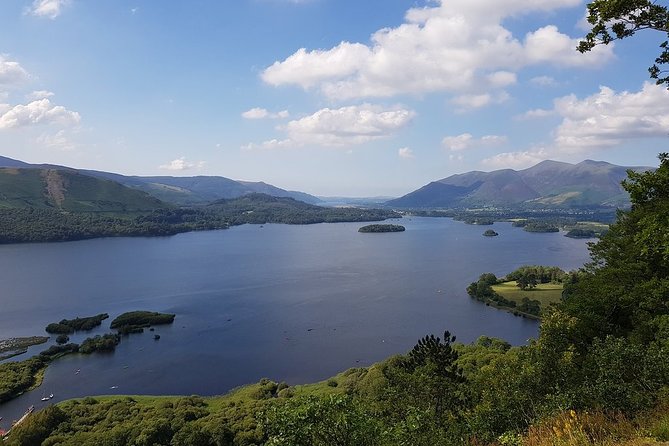
As the tour heads toward Keswick, the story becomes more rugged and northern. Derwentwater is called the Queen of the English Lakes, and you hear about islands and craggy fells. From the shoreline drive, you get glimpses of Cat Bells and dramatic Jaws of Borrowdale.
This part of the tour also leans into folklore. You hear tales that include hermits, hedgehogs, squirrels, and mock sea battles, wrapped into the lake’s long visitor culture. It is an easy way to make the drive feel like a journey instead of a transfer.
Keswick itself is described as the northern tourist capital, crowded with shops, cafes, bars, hotels, and Victorian guest houses. But the mining story is the backbone. You learn it began with German miners seeking gold on Derwent Isle, and they found copper instead. Later, when mining declined, tourism grew after the arrival of the railway in 1865.
You also hear a direct Wordsworth link, plus a Coleridge quote about how the town shifts between retirement and tourist chaos. If you have ever wondered why the Lakes feel so “occupied” even in wild-looking places, that history explains it.
Then you reach Bassenthwaite Lake. From the Surprise View area, you can see it in the distance. Bassenthwaite is described as the northernmost of the major stretches of water, with the shoreline protected in the national park. The bird theme is strong here, including more than seventy species of bird and wildfowl wintering and breeding, plus magnificent ospreys. You also hear about vendace, a nine-inch fish related to Arctic species, found here.
If you care about wildlife, this is one of the most satisfying “learn and look” moments on the tour, because the guide frames what to pay attention to, not just where to stand.
Thirlmere and the fells: legendary stories, lost villages, and why you stay in the van
You may also hear stories tied to Thirlmere and the surrounding mountains, even if you do not get out to walk. Thirlmere is described as tranquil now, but it carries a tragic past. The guide talks about the lost villages of Armboth and Wythburn, submerged below the water due to the power of 19th century Manchester.
The tour also includes a major fell theme as you approach Keswick. Blencathra is described as an old name meaning Saddleback in ancient Cumbric, with purple heather in summer and a snowy cap in winter. You also get the idea of Sharp Edge, an arête that provides one of the famous scrambles in the area, described with a sense of risk.
Finally, Helvellyn may come up depending on the route day. The tour mentions that you pass Helvellyn in a comfy air-conditioned minivan, so you do not have to climb. Helvellyn is described as the third highest peak in the Lake District and popular all year round. The guide also covers how Helvellyn’s weather assessors climb between December and March to assess avalanche risk and record conditions like wind chill, snow depth, and temperature. Then there is the Wordsworth angle, plus the story of Foxie, a faithful dog mentioned in Wordsworth’s poem Fidelity.
Even if you do not hike here, the stories change how the mountains feel from a distance. You start seeing why people take on these places for walking and scrambling.
Price and value: why $123.62 can be a smart spend for a short window
At $123.62 per person for about four hours, this is not a bargain-basement outing. But it is also not just a “drive around.” The value is in the mix of included entrance fees, the guide-led stops, and the transport that saves time and stress.
A few value points you should use to judge price:
- Entrance fees are included for locations on the route, so you do not get hit with surprise add-ons when you want to step out
- A professional guide ties the scenery together, which is what helps you plan future trips around what you actually liked
- Comfort and logistics are handled, including travel through tricky roads and frequent photo stops
- Small group size means the tour does not feel like a race through the scenery
If you are traveling solo, or you are short on time, it can also be cheaper than trying to rent a car, pay for parking, and bounce between locations that are spread out.
If you prefer total freedom and long stops, you might find the half-day format too tight. But for a first look at the Lake District, it is the kind of pay-once approach that gives you direction.
Who should book this tour, and who might want a different plan
This tour is a strong match if you want:
- A fast overview of multiple lake areas, from Windermere and Ullswater to Derwentwater, Bassenthwaite, and Thirlmere
- Photo-friendly viewpoints and a few quick heritage stops like Castlerigg and Dove Cottage
- A guide to explain what you are seeing, including folklore, farming details, and regional history threads
It may be less ideal if:
- You want to do long hikes or spend half a day at a single destination
- You are extremely sensitive to road driving on winding routes
- You need a lot of wheelchair-friendly or stroller-friendly terrain, because the tour mentions some walking on uphill and uneven or wet terrain
It is also clearly an adult-oriented plan: no children under age 7, and children must have a seat.
The small practical stuff that makes a big difference in the Lakes
This is one of those tours where what you wear matters as much as where you go. The weather in the English Lake District can change quickly, even in summer. Bring a waterproof coat with a hood. If it is windy, you will feel it at places like Kirkstone Pass and Surprise View.
Wear comfortable shoes. The tour involves a little walking and some uphill sections, including at Ashness Bridge where the climb is described as steep. If conditions are wet, treat every stone step as slippery.
Also, plan your snacks. Food and drink are not included. If gingerbread makes you happy, go for it. If you want a proper meal, bring a plan for before or after the tour.
Should you book this 8 Lakes and magnificent scenery afternoon tour?
If you are visiting the Lake District with limited time, or you want to get your bearings fast, I think this is an excellent way to spend an afternoon. You hit multiple lakes and viewpoints that would be harder to organize in one go, and the guide adds stories that make the drive feel like it has purpose, not just motion.
I would book it if your priority is: great views, short stops, and a guided overview. I would hesitate if you want long time at one place, or if van seating comfort is a top concern for you on longer winding rides.
If you go, show up prepared for wind and rain, and spend your stop time looking, not rushing. That is when this tour pays off.
FAQ
How long is the 8 Lakes and magnificent scenery afternoon tour?
It runs for about 4 hours.
What group size is this tour?
It is a relaxed small-group tour with a maximum of 7 travelers.
Are entrance fees included?
Yes. All entrance fees for locations on the itinerary are included.
Is food or drink included?
No. Food and drink are not included.
Do I need suitable clothing for weather?
Yes. Lake District weather can change quickly, so bring a waterproof coat with a hood in case of rain or windy weather.
Is the tour suitable for children?
No children under age 7. Children must be accompanied by an adult, and every passenger must have a seat purchased.
Fresh off the notebook in Windermere
- Ten Lakes Tour – Full Day – Up to 4 People
★ 5.0 · 9 reviews - 4 hour Private Lake District tour (tour B)
★ 5.0 · 10 reviews - Private Yorkshire Dales from Windermere in a 16 seater Mercedes
★ 5.0 · 10 reviews - William Wordsworth: Morning Half Day Tour with an Expert Guide
★ 4.5 · 11 reviews - Private Tour: The Brontes: Full Day All-Inclusive Tour with an Expert Guide
★ 5.0 · 12 reviews - 8 Lakes in a Morning
★ 5.0 · 13 reviews
Tours, compared.
 ★ 3.5London Big Bus Hop-On Hop-Off Tour with Optional River CruiseFrom $3910,803 reviews
 ★ 5.0London Small Group Tour of Historical PubsFrom $4010,422 reviews
 ★ 5.0Beatles Magical Mystery TourFrom $309,266 reviews
 ★ 5.0Liverpool: “Blue Route” – City & Beatles TourFrom $278,562 reviews
 ★ 5.0Oxford University Walking Tour With University Alumni GuideFrom $416,905 reviews
 ★ 4.5Stonehenge, Windsor Castle and Bath Full Day Guided TourFrom $1235,346 reviews
 ★ 4.5London Jack the Ripper Guided Tour with Ripper-VisionFrom $274,840 reviews
 ★ 5.0Tour for Muggles The Ultimate Harry Potter Walking Tour in LondonFrom $234,684 reviews