

REVIEW · ENGLAND
A Story of Discovery, Education and Remembrance
A spire of steel, built for remembrance. The International Bomber Command Centre in Lincoln helps you understand WWII Bomber Command with interactive galleries and the Orchestra of Voices, so you do not just hear one side of the story. I especially love the scale and clarity of the 31.09 m metal war memorial and the Orchestra of Voices presentation style.
Second, I like the personal way remembrance works here, with the Losses Database and the chance to look for names connected to almost 58,000 Bomber Command losses. One drawback to plan for: this is serious, emotionally heavy, and part of the history is contested, so you should go in with the right mindset.
In This Review
- Key things you will notice right away
- Why Bomber Command remembrance feels different at IBCC Lincoln
- Start at the International Bomber Command Centre, Lincoln’s 31.09 m memorial
- The names and losses database: where remembrance gets personal
- Interactive galleries and Orchestra of Voices: learning with perspectives
- Peace gardens after the exhibits: a quiet part you will actually feel
- Free guided tours of memorial and gardens: what they add to the day
- Hub Café breaks up the day, and it’s part of the trip
- Timing your 2 to 5 hour visit in the best order
- Price and value: about $15.94 for an admission-focused visit
- Getting there from Nottingham, and using public transit
- Who should book, and who should think twice
- Should you book IBCC Lincoln?
- FAQ
- Where do I redeem my ticket for this experience?
- How long should I plan to spend at the centre?
- What are the opening hours?
- What is included in the ticket price?
- Are the tours of the memorial and gardens included?
- Is the experience offered in English?
- What are the key things to see on site?
- Is there a way to look up names connected to Bomber Command losses?
- Is there a café on site?
- Is the centre accessible, and can I cancel for a refund?
Key things you will notice right away

- 31.09 m metal memorial with city views that make it easy to orient yourself and take strong photos
- Losses Database plus remembrance panels tied to almost 58,000 individuals
- Orchestra of Voices interactive galleries that show perspectives from those involved
- Two landscaped peace gardens for a quiet reset after the exhibitions
- Free guided tours of the memorial and gardens, led by experienced guides
Undecided so far? Here are further Nottingham tours we have written up.
- A Story of Discovery, Education and Remembrance★ 5.0 · 347 reviews
- Daily Nottingham City Centre Walking Tour (10:30am)★ 5.0 · 81 reviews
- Robin Hood’s Nottingham: Interactive Game & Walking Tour★ 4.5 · 25 reviews
- Nottingham and Robin Hood Private Guided Walking Tour★ 5.0 · 10 reviews
Why Bomber Command remembrance feels different at IBCC Lincoln
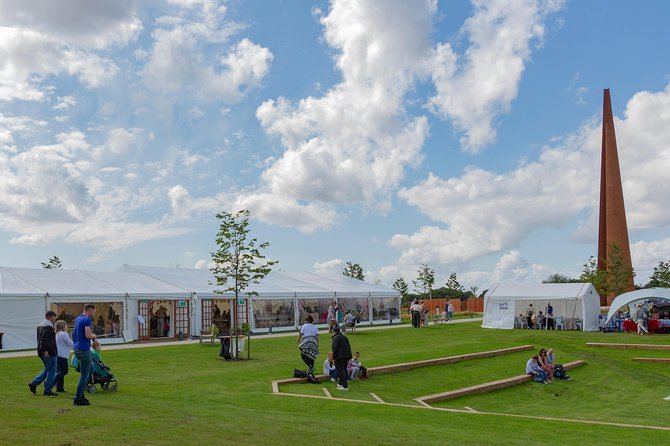
If you know WWII history only through headlines, this visit changes the temperature. The International Bomber Command Centre is built around remembrance, but it does not treat the Bomber Command story as a simple one-liner. You get interactive exhibits that connect policy, pilots and crews, and the long shadow of those missions.
What I like is the way the centre encourages you to think in perspectives, not slogans. The Orchestra of Voices approach means you are not boxed into one interpretation, even when the topic is hard. That matters because Bomber Command history is contentious, and people often arrive already holding strong opinions.
You also get the emotional rhythm right. You can start with the information and the names, then step outside into the peace gardens for a calmer pace. That shift helps your brain process what you just learned, instead of leaving you stuck in museum-mode for hours.
Start at the International Bomber Command Centre, Lincoln’s 31.09 m memorial
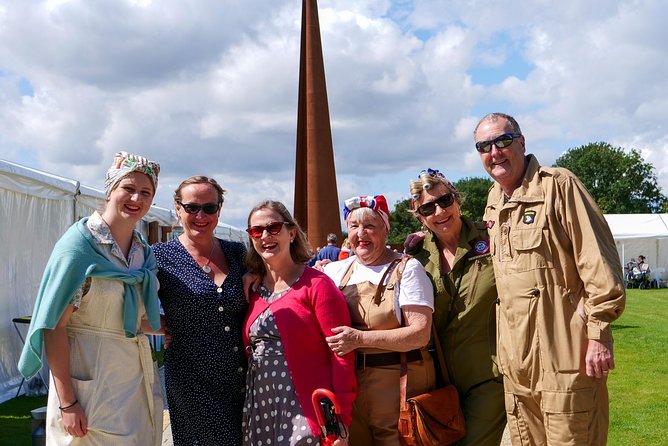
Your main anchor is the memorial itself. The centre houses the UK’s tallest metal war memorial, rising to 31.09 m, and it gives you fantastic views over Lincoln. Even if you are not a “look at the view” person, this part works, because the height lets you grasp the scale of the site and how it sits in the city.
From a photo perspective, this is a standout. The memorial’s metal form is visually strong, and the elevated setting gives you angles that are hard to get elsewhere in town. Bring your camera, but also take a minute to just look. The memorial is designed for remembrance, not for quick check-the-box snapshots.
Inside, you will find a layout that keeps you moving between storytelling and reflection. You are not stuck in a single room. The design nudges you to transition, from exhibits to the names and back out again.
Practical note: plan your visit so you are not rushing the memorial exterior. The views are a core part of the experience, and the peace gardens outside work best when you are not sprinting through them.
The names and losses database: where remembrance gets personal
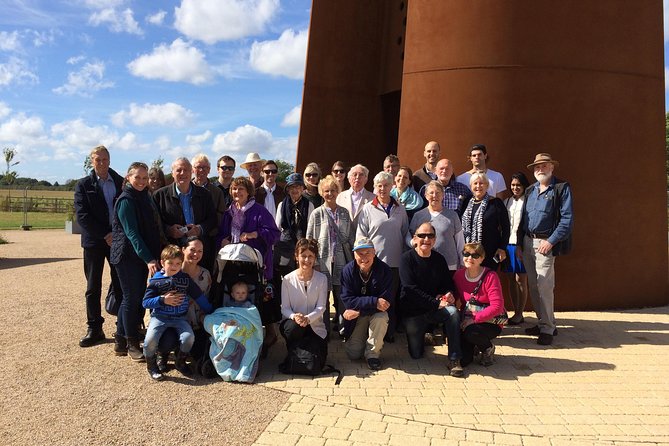
One reason this centre hits hard is that it makes loss feel specific. You can see the names of almost 58,000 individuals who lost their lives serving Bomber Command in WWII. That is not a vague number. The whole experience is built around the idea that remembrance is for real people, not just statistics.
The centre also points you to the Losses Database. This is where you can find out more about individuals connected to those losses. If you have family connections, this is often the moment that turns a history visit into something much more personal.
If you are searching for a relative or someone you feel connected to, go slowly. Start broad first, then narrow your focus. Write down what you find right away. Even with the centre’s helpful structure, name research can be emotionally intense, and you might want to pause between screens or panels so the details land.
Also, keep in mind what you are learning here. Bomber Command involvement includes people with different roles and responsibilities. The centre’s emphasis on both names and context helps you understand that the story is not one clean category.
Interactive galleries and Orchestra of Voices: learning with perspectives

The exhibition experience is built around three interactive and immersive exhibition galleries, with a presentation style called the Orchestra of Voices. The key promise is simple: you learn about this period through the eyes of those who were there, on all sides.
That “all sides” wording is important. Many WWII exhibits focus mainly on one national or moral frame. Here, you should expect the story to include competing viewpoints and the reality that people interpreted events in different ways.
What makes the interactive part valuable is not just the technology. It is that it helps you connect information to human experience. You might be reading a panel, then interacting with elements that bring the story closer to the people involved.
A good strategy: give yourself enough time indoors that you can re-read parts that affect you. If you rush, you miss the nuance that makes the galleries more than “facts on walls.” And since the topic is contentious, it helps to stay curious instead of trying to decide everything in one sitting.
If you are visiting with teenagers, this is also a place where the questions they ask can be better than the answers you already know. The structure invites discussion, and the centre’s approach supports that.
Peace gardens after the exhibits: a quiet part you will actually feel
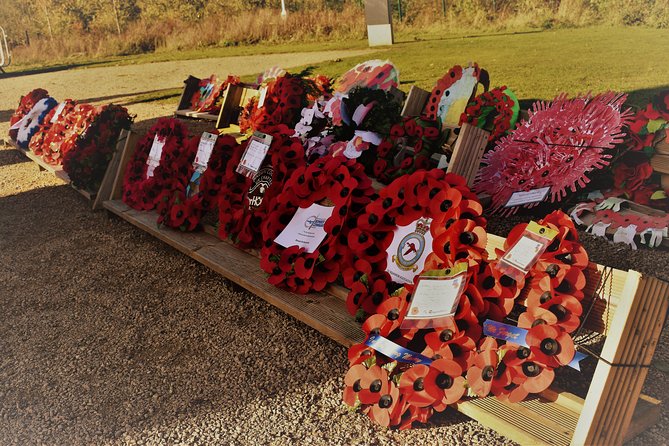
After the heavier material inside, the peace gardens are not an afterthought. The centre has two landscaped peace gardens, designed to slow you down.
I like this kind of planning because it makes space for reflection. WWII history can stick to you, especially when you have read names and learned about the roles people played. A garden walk is a simple tool, but it helps you process instead of just absorbing.
Use this time to reset. Walk at an unhurried pace. Take photos if that feels right, but consider keeping most of the camera work for the memorial and key views. In the gardens, the best value is mental distance, not another angle of metal.
If you need accessibility-friendly pacing, this is a natural break too. You can take the gardens at your own speed while still staying connected to the site’s remembrance theme.
Free guided tours of memorial and gardens: what they add to the day
One of the strongest positives here is the guided element. You can take one of the free tours of the memorial and gardens with experienced guides. This is the part that often makes visitors feel the visit really “clicks,” because a good guide turns information into meaning.
Here is how I’d use the tours to get the most value:
- Ask questions about what you just saw, not just what is next.
- Pay attention to how the guide explains the memorial and the remembrance panels, because that is where context matters.
- If you are visiting in a quieter time window, you may enjoy a more personal pace. Showing up earlier can sometimes mean fewer people around, which makes it easier to focus.
Even if you are not an “I must read every label” person, a guided tour helps you connect the dots. It also gives you a chance to clarify anything that feels confusing, especially because the Bomber Command history is complex and often politically debated.
The memorial outside is impressive, but it is also symbolic. A guide can help you read that symbolism without turning the experience into a lecture.
Hub Café breaks up the day, and it’s part of the trip

The centre includes the Hub Café with a range of locally sourced food and drink. This matters more than you might think. A 2 to 5 hour visit can feel long if you are hungry, and it can also feel shorter in a good way if you planned a snack break.
The café gives you a practical rhythm: read and walk, then sit and eat, then return to the exhibits or gardens with fresh attention. If you are visiting with kids, this kind of pause helps a lot, because it lets them recharge without losing momentum.
A simple planning tip: if you want a calmer pace, slot the café break after you have taken in the indoor exhibits. Then you can head out for the peace gardens with your energy back.
Timing your 2 to 5 hour visit in the best order
The experience usually runs 2 to 5 hours. That time range is wide because the visit can be as focused or as leisurely as you want. Here’s a sensible order that matches what the centre is best at:
- Start at the memorial area and take in the 31.09 m structure and views.
- Move into the indoor exhibition galleries, including the Orchestra of Voices.
- Spend focused time with the remembrance panels and the Losses Database.
- Finish outdoors with the two landscaped peace gardens and any free guided segment you want to join.
Why this order works: the memorial exterior helps you get oriented first, then the indoors provides context, then the names and losses give you a personal anchor. Ending with the peace gardens prevents the day from ending on the most intense details.
If you are tight on time, prioritize names and the memorial views over trying to absorb everything at once. If you have a full half-day, you will enjoy lingering in the interactive parts and returning to the memorial for another look after the garden break.
Price and value: about $15.94 for an admission-focused visit
The price is $15.94 per person, with admission included. For what you get, the value feels strong: you are paying for entry into a purpose-built memorial and exhibition space, plus access to guided tours of the memorial and gardens.
Also, because this is booked an average of 8 days in advance, you may want to reserve ahead if your schedule is fixed. This is especially true if you are planning a weekend visit, since the centre is open Tuesday to Sunday only.
The one cost detail you should remember is that parking fees are not included. If you are driving, that can change the total trip cost. If you can use public transportation instead, you can keep the experience budget more predictable.
If you are trying to decide whether this is worth it compared with other WWII stops, the answer is usually yes because the centre does three things well at once: it teaches, it memorializes through names, and it gives you a guided and reflective pathway. Many museums can do one of those well. This one tries to do all three, without turning it into a rushed checklist.
Getting there from Nottingham, and using public transit
Even though the location is listed with Nottingham, the meeting and redemption point is at the International Bomber Command Centre, Canwick Ave, Lincoln LN4 2HQ, UK. Plan your day around reaching Lincoln first, then the centre will be straightforward once you arrive.
The centre is near public transportation, so you do not have to treat this as a car-only outing. That also makes it easier to avoid parking uncertainty and keep your head clear during a solemn visit.
If you are coming from outside the area, build in a small buffer. Once you step into the memorial environment, the best experience comes from not feeling rushed.
Who should book, and who should think twice
This is a strong choice for:
- People who want WWII history with perspective, not just one moral frame
- Anyone who likes interactive exhibits and guided explanation
- Families, since the exhibits can work well for children and the café helps the day feel manageable
- Visitors with family connections who want a structured way to search Losses Database and remembrance panels
This is a choice to think about if:
- You prefer lighter, purely recreational attractions. This site is built for remembrance and includes emotionally heavy content.
- You are sensitive to politically contentious history. The centre’s approach includes multiple perspectives, which can challenge your existing views.
On accessibility, service animals are allowed and there is a Changing Places facility. Most travelers can participate, and the centre’s layout is designed to support a visit for a wide range of needs. If accessibility needs are a major concern for you, the Changing Places info is the key detail to consider while planning.
Should you book IBCC Lincoln?
If you are planning a Lincoln day or a WWII-focused trip, I think this is worth booking. The combination of interactive galleries, the Orchestra of Voices approach, and the names connected to almost 58,000 losses gives the visit a weight that a typical museum stop cannot match. Add the free guided tours and the quiet reset of the peace gardens, and you get a full experience, not just a ticket scan.
Book it if you want your learning to come with context and remembrance, and if you are willing to slow down for a serious topic. Pass on it only if you want something upbeat and casual, because this is built to make you reflect, and it does that well.
FAQ
Where do I redeem my ticket for this experience?
You redeem your ticket at the International Bomber Command Centre, Canwick Ave, Lincoln LN4 2HQ, UK.
How long should I plan to spend at the centre?
Plan for about 2 to 5 hours.
What are the opening hours?
The centre is open Tuesday to Sunday from 9:30 AM to 4:00 PM.
What is included in the ticket price?
All fees and taxes are included, and the admission ticket is included. The free tours of the memorial and gardens are also part of the visit.
Are the tours of the memorial and gardens included?
Yes. You can join one of the free tours of the memorial and gardens with experienced guides.
Is the experience offered in English?
Yes, it is offered in English.
What are the key things to see on site?
You can see the UK’s tallest metal war memorial, the interactive exhibition galleries, remembrance panels with names connected to Bomber Command losses, and the two landscaped peace gardens.
Is there a way to look up names connected to Bomber Command losses?
Yes. The Losses Database helps you learn more about individuals, alongside the remembrance panels.
Is there a café on site?
Yes. The Hub Café offers locally sourced food and drink.
Is the centre accessible, and can I cancel for a refund?
Service animals are allowed, and there is a Changing Places facility. You can cancel for a full refund up to 24 hours in advance of the experience start time.
Fresh off the notebook in Nottingham
- Nottingham and Robin Hood Private Guided Walking Tour
★ 5.0 · 10 reviews - Airport Taxi Service | Lincolnshire to London Heathrow Airport
★ 5.0 · 24 reviews - Robin Hood’s Nottingham: Interactive Game & Walking Tour
★ 4.5 · 25 reviews - Daily Nottingham City Centre Walking Tour (10:30am)
★ 5.0 · 81 reviews - A Story of Discovery, Education and Remembrance
★ 5.0 · 347 reviews