
REVIEW · ENGLAND
Coasteering
Cornwall rocks and jumps with sea life. This Newquay coasteering trip is interesting because it mixes professional safety gear with a route planned around tide, weather, and your group’s ability. I like that it’s not one-size-fits-all, and you spend real time on wildlife-rich cove areas instead of just doing random jumps.
The main catch is footwear is not included, and you’ll need a moderate physical fitness level for climbing, scrambling, and short wild-swim sections.
In This Review
- Quick hits before you book
- A practical look at Newquay coasteering, 3 hours of real coastline
- Meeting point and timing, what you need to know
- Gear and safety briefing, the part that makes you relax
- The coastline route, why coves and caves are the point
- Jumps and how the guides match your nerve, not your ego
- Rock pooling and marine life, what you actually get to see
- Cave time, the thrill with a safety mindset
- Who it suits best, and who should think twice
- Price and value, what $75.42 gets you
- Weather and tides, why your day won’t be identical
- Small extras and guide personalities, the human part
- What to bring and how to prep, so you feel steady from minute one
- Should you book this coasteering trip?
- FAQ
- How long is the coasteering trip?
- What’s included in the price?
- Do I need to bring footwear?
- Where do I meet for the tour?
- What language is the experience offered in?
- Is there a limit on group size?
- What fitness level do I need?
- What happens if the weather is poor?
- Can I cancel and get a refund?
Quick hits before you book
- Gear is handled: wetsuit, buoyancy aid, and helmet are included.
- Tides and weather can shift the plan: coasteering can run at all tide stages, with different locations used as conditions change.
- Abilities drive the route: activities range from introductory discovery to extreme options, based on your group.
- Guides keep it fun and safe: I’d look for supportive coaching, like the way guides (Dale, Bertie, Rosa, Pete, Nick, and Scot) focus on comfort first, then confidence.
- Small group size: up to 16 travelers, which usually means you get more attention than bigger tour groups.
- English-speaking, mobile ticket: you get confirmation at booking and an easy mobile ticket for check-in.
Undecided so far? Here are further Newquay tours we have written up.
- Doc Martin Tour in Port Isaac, Cornwall★ 4.5 · 840 reviews
- Coasteering Experience in Newquay★ 5.0 · 465 reviews
- Surf Lesson★ 5.0 · 349 reviews
- Half-Day Coasteering in Newquay Cornwall★ 5.0 · 239 reviews
A practical look at Newquay coasteering, 3 hours of real coastline
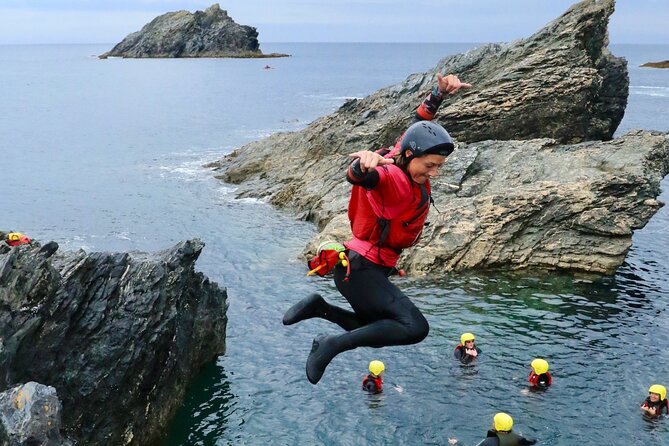
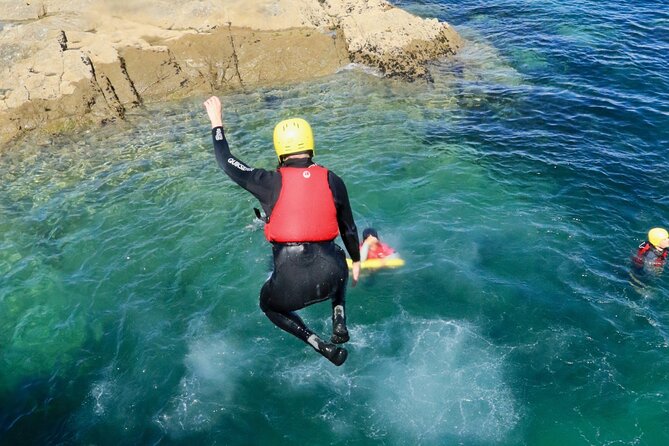
If you’re picturing Cornwall as photos, this kind of coasteering is what turns those views into a physical experience. You’ll move along the coast using a mix of climbing, careful traversing over rocks, wild swimming bursts, rock pooling, cave time, and cliff jumps when conditions allow.
This is run by Quest Coasteer Adventures, based with Quiksilver Surf School Newquay. The big idea is simple: you explore the Cornish coastline and marine life while staying guided and geared up. It’s the combination that makes it work, not just the adrenaline.
The trip lasts about 3 hours, and you meet at Quiksilver Surf School Newquay at The Esplanade Hotel, 9 Esplanade Rd, Newquay TR7 1PS. Sessions run on weekends during late May through early October, then again through October, and the day’s exact timing is arranged after your booking.
Meeting point and timing, what you need to know
You’ll start and finish back at the meeting point at Quiksilver Surf School Newquay, right by The Esplanade Hotel. That matters because coasteering days can be a little chaotic with gear, changing conditions, and groups moving quickly. Starting and ending in the same place keeps things straightforward.
The operator is open on weekends from 9:00 AM to 3:00 PM during the listed season dates in 2026. You’ll get confirmation at time of booking. On average, people book about a week ahead, so if you want a specific weekend slot, it’s smart to reserve early.
One more helpful detail: this tour is offered in English, and it’s set up as a group experience with a maximum of 16 travelers. That size is big enough to feel social, but small enough that guides can keep an eye on everyone’s footing and comfort level.
Gear and safety briefing, the part that makes you relax
Coasteering can look wild from the outside. The reason it feels manageable on the day is that you don’t just show up and hope for the best.
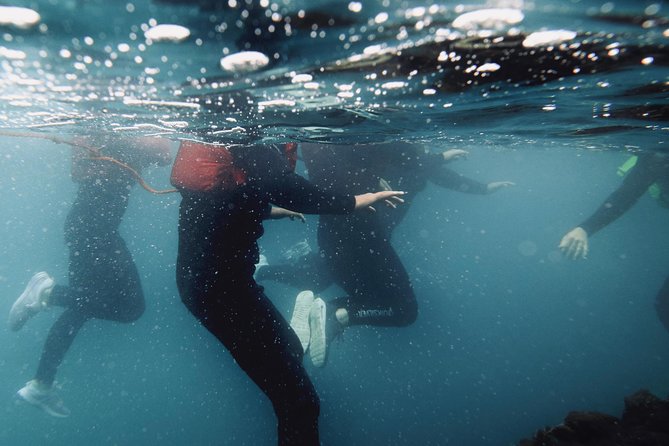
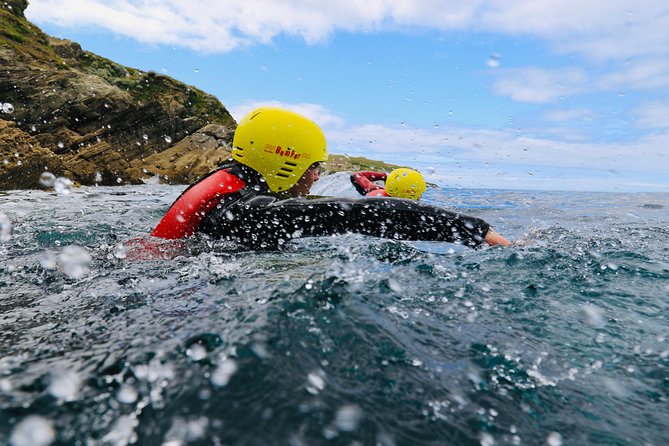
You’re provided with a wetsuit, buoyancy aid, and helmet. Those three items do a lot of heavy lifting for safety and comfort: wetsuit helps with temperature, buoyancy aid adds flotation support, and helmet protects you from the reality of rock edges and low ceilings in cave sections.
You’ll also get professional advice on how to traverse rocks, climb, and jump safely. In practice, the best part of this is how the instruction is applied in the moment. Guides like Dale and Bertie are repeatedly described as encouraging with kids, while also building confidence in adults who might be nervous about jumps. That coaching tone is key because it changes the day from threat-based to skill-based.
The coastline route, why coves and caves are the point
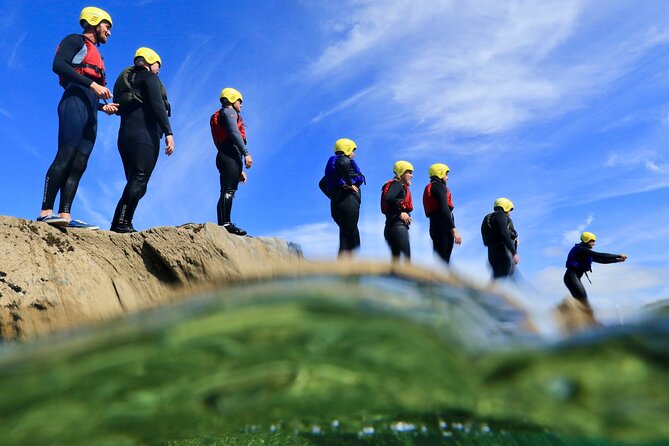
The core “itinerary” is the experience itself, moving along the coast in a carefully planned way to see marine life and explore features along the route. You’re not just jumping from rock to rock randomly. You’re following a line that gives you different environments back-to-back: cliffs for jumps, rocky passages for traversing, and protected spots like coves and cave entrances.
A useful way to think about the route is as variety through controlled risk. You’ll typically get:
- climbing and scrambling sections to reach the next stretch of coast
- wild swimming bits where you’re moving through water rather than only standing around
- rock pooling moments that slow things down and let you look closely
- cave exploration when conditions fit the route
- jump opportunities that come after you’ve built confidence on the earlier movements
What makes it more than thrill-seeking is the marine-life focus. The plan aims to show you coves inhabited by sea life, which turns your stop-and-look moments into something you can connect to, not just “wow, that’s wet.”
One practical note: coasteers can go out at all stages of tides, and the operator uses different locations depending on weather. So the exact sequence can change, but the goal stays the same: a safe route that matches conditions that day.
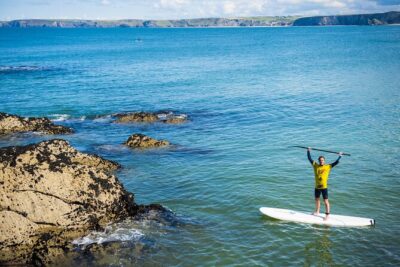
Jumps and how the guides match your nerve, not your ego
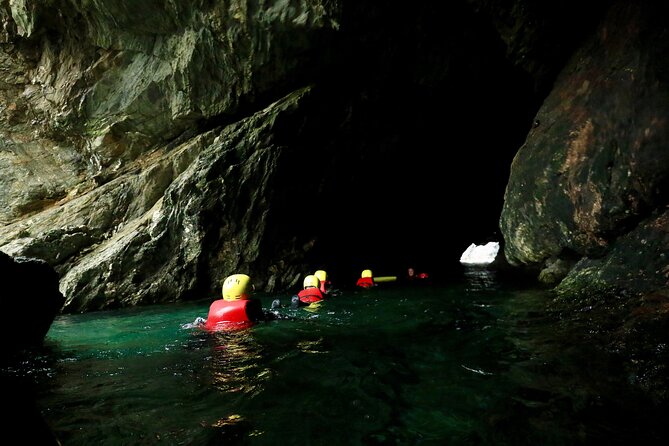
Cliff jumps are the headline. They’re also the part where you most need coaching and structure, because jumping is optional in spirit even if it looks like the main event.
What I really like here is how the experience is tailored. If you’re in a group with mixed comfort levels, the guides are used to adapting. One family experience highlights how guides helped a daughter step-by-step, and how the group got a mix of smaller jumps, medium jumps, and bigger ones for people who wanted that push, with no pressure to do the scary options.
Names that come up in a standout way include Dale and Bertie, and also guides like Rosa and Pete, Nick, and Scot. Across these accounts, the common theme is support. Encouragement is practical, too, not just hype. You get the sense that the route and the jump sizes are set with your group’s energy in mind.
If you’re worried, here’s the truth: coasteering is physical, and jumps are a commitment. But because the route is planned for the group and the staff is focused on safety, you’re not expected to act like a fearless movie stunt double. You’re expected to listen, move smart, and choose your level when it’s time.
Rock pooling and marine life, what you actually get to see
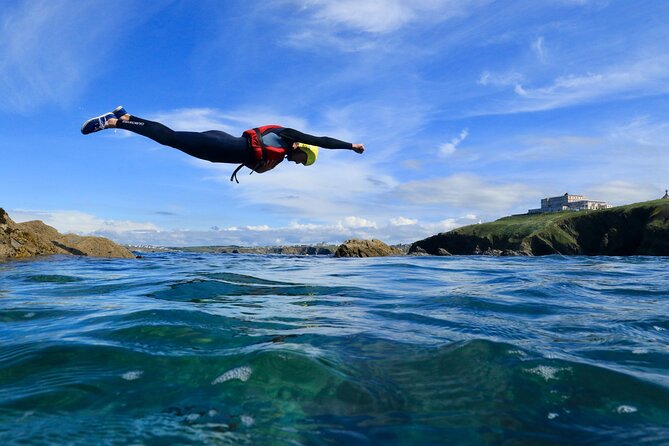
Rock pooling isn’t just a cute add-on. It’s one of the best “memory anchors” from a coasteering day because it gives your eyes something to do besides scan for footing.
The tour is designed to traverse areas with coves inhabited by sea life. That means you’ll likely spend time pausing at spots where you can look closely at what’s living around the rocks and in tide-influenced areas. Even if you’re not a marine biologist, it’s the kind of environment where you can spot patterns quickly once someone points you in the right direction.
The guided side is important. Some guides are described as sharing local knowledge and history, which helps you connect what you’re seeing with the coastline itself. You get that sense of place, not just a “jump, swim, jump” circuit.
Cave time, the thrill with a safety mindset
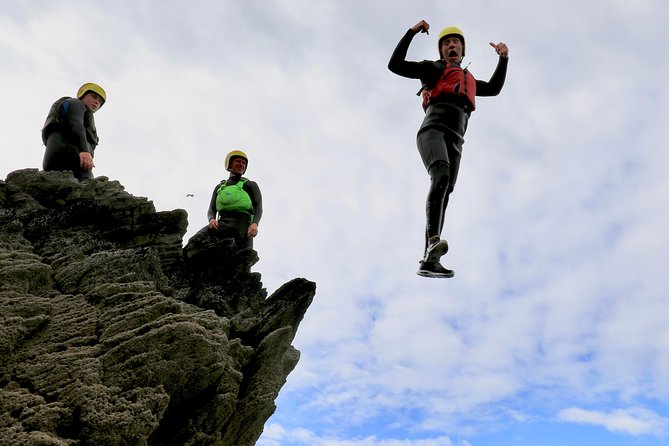
Cave sections are where coasteering feels most different from a beach day. You might deal with low ceilings, narrow passages, and controlled steps where you rely on both skill and the group pace.
Because you’re wearing a helmet and buoyancy aid, cave exploration feels less like a scramble and more like a guided movement through a specific route. You’ll still need to be comfortable with uneven ground, and you’ll want to pay close attention to instructions because cave areas can change the way you move compared to open rock.
If you’re traveling with kids, this is also where the guide’s calm leadership shows. Reports emphasize how instructors helped younger participants step-by-step, which tells me the team manages cave and rock tasks with a “do it safely, then build confidence” approach.
Who it suits best, and who should think twice
This activity is listed for travelers with a moderate physical fitness level. That’s not a vague label. It means you should feel comfortable with:
- climbing and scrambling over uneven rocks
- getting in and out of the water multiple times
- moving with focus, even when you’re tired and wet
It’s also a group tour with up to 16 people, so you need to be okay with following a pace and staying with the group at key moments.
Families can do well here, especially if your kids are curious and not afraid of water. One trip description includes 8 and 13-year-olds getting cliff jumps, climbing, caves, and rock features, with quality instruction. Another account highlights 10 and 12-year-old boys having a great time.
If you’re someone who hates feeling rushed, you might still enjoy it, but you should go in with patience. Coasteering is condition-driven, and the guide team needs to keep the group coordinated through the route.
Price and value, what $75.42 gets you
At $75.42 per person for about 3 hours, you’re paying for more than a “beach activity.” You’re paying for guide expertise, safety gear, and a structured exploration of a coastline environment that most people never see firsthand.
Here’s the value math that matters:
- Safety gear is included (wetsuit, buoyancy aid, helmet). That’s a real cost you wouldn’t have to cover separately.
- You get professional guidance for climbing, traversing, and jumping, which is the main reason people feel safe and confident.
- The route aims at coves and marine life, so it’s not just physical exercise.
- The group size cap of 16 helps you get more attention than you would on a huge crowd tour.
The only financial caution is the booking and rescheduling limits. This experience is non-refundable and cannot be changed for any reason. If your plans might shift, you’ll need to be confident before you click confirm. On the plus side, if it’s canceled due to poor weather, you’re offered a different date or a full refund, and if the minimum number of travelers isn’t met, you get a different date or full refund.
Weather and tides, why your day won’t be identical
Coasteering is tied to nature. The operator states that coasteers can go out at all stages of tides, and they use different locations depending on weather conditions.
That flexibility is one reason this experience can still happen when other outdoor tours get canceled. Still, weather matters. The trip requires good weather, and it can be canceled due to poor weather, with a full refund or an alternate date.
So your best strategy is to plan around it like a semi-weather-dependent activity. If you’re visiting during a week where the forecast looks mixed, consider booking your coasteering day with some slack in your schedule.
Small extras and guide personalities, the human part
The gear and the route are the headline. The day feels great because guides keep the tone positive and practical.
Guides repeatedly named include:
- Dale and Bertie, described as encouraging for kids and confident coaching for adults
- Rosa and Pete, praised for supportive handling of a daughter, step-by-step help
- Nick, praised for local knowledge plus lots of jumping opportunities
- Scot, highlighted alongside Dale and Bertie as excellent instruction for families
There are also small “story” moments that make the day memorable. One account mentions free chips on the way home. Another mentions a guide helping a guest with a lift arrangement using The Odessey boat. Those aren’t the main reason to book, but they show that the guides pay attention to people, not just the activity checklist.
What to bring and how to prep, so you feel steady from minute one
Footwear is not included, so you’ll need to plan on bringing it yourself. Since you’ll be climbing and moving over rocks and doing wild swimming, your footwear choice matters for grip and protection.
Also, because this is a moderate fitness activity, prep like you’re doing a physical half-day. Wear clothing you can handle getting wet during the swim and rock sections.
Finally, because the meeting point is tied to Quiksilver Surf School Newquay at The Esplanade Hotel, keep your arrival simple. You’ll want time to check in and get kitted up before you start moving.
Should you book this coasteering trip?
I’d book this if you want a true Cornwall coastline experience that mixes adventure with real structure. The safety gear, the guided instruction, and the ability-matched approach are exactly what make coasteering work for families and first-timers.
Skip it if:
- you’re not comfortable with moderate physical effort
- you don’t want to provide your own footwear
- your schedule is too tight to handle a weather-dependent day (even though there are refunds or alternate dates)
If you want one simple takeaway, it’s this: this isn’t just about jumping. It’s about moving along a real coastline route with a team that helps you do it safely and enjoyably at your level.
FAQ
How long is the coasteering trip?
It runs for about 3 hours.
What’s included in the price?
The price includes a wetsuit, buoyancy aid, and helmet.
Do I need to bring footwear?
Footwear is not included, so you should plan to bring your own.
Where do I meet for the tour?
The meeting point is Quiksilver Surf School Newquay, The Esplanade Hotel, 9 Esplanade Rd, Newquay TR7 1PS, UK. The activity ends back at this same meeting point.
What language is the experience offered in?
The tour is offered in English.
Is there a limit on group size?
Yes, the maximum group size is 16 travelers.
What fitness level do I need?
You should have a moderate physical fitness level.
What happens if the weather is poor?
The experience requires good weather. If it’s canceled due to poor weather, you’ll be offered a different date or a full refund.
Can I cancel and get a refund?
This experience is non-refundable and cannot be changed for any reason. If it’s canceled due to poor weather or because a minimum number of travelers isn’t met, you’ll be offered a different date or a full refund.
Fresh off the notebook in Newquay
- Essential Cornwall – the “must see” places
★ 5.0 · 13 reviews - Private Two on One Surf Lesson in Newquay (2 students, 1 instructor)
★ 5.0 · 17 reviews - Full-Day (2 x 2 hr lessons) Surf Experience Newquay: All levels
★ 5.0 · 17 reviews - Children’s School Holiday Surf Session (8-13 year olds)
★ 5.0 · 19 reviews - Private One on One Surf Lesson in Newquay, for Beginners / Novice Surfers
★ 5.0 · 23 reviews - Private Family / Small-Group Surf Lesson (max. 4) in Newquay.
★ 5.0 · 35 reviews