
REVIEW · CORNWALL AND DEVON TOURS
Half-Day Coasteering in Newquay Cornwall
Fast water, big laughs, and raw Cornwall.
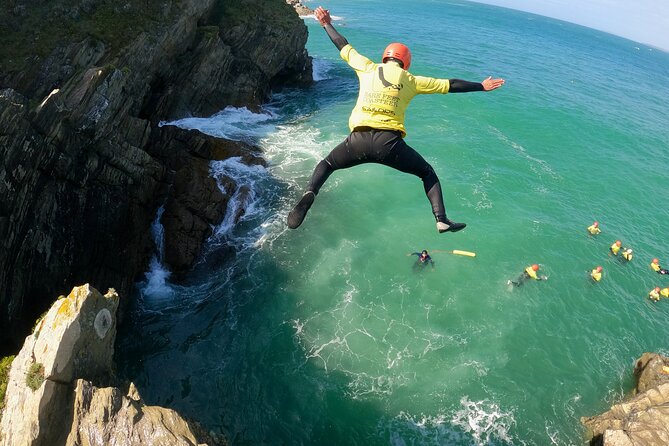
Coasteering in Newquay is one of those activities where the coast does the storytelling, not a brochure. You jump, swim, and climb along a rugged shoreline guided by qualified lifeguards, with helmeted safety and super-warm wetsuits that help you actually enjoy the water (not just survive it).
What I like most is the setup, equipment included, plus the fact you can go from basics to bigger moves on the same trip. Another win is the included GoPro photos and videos, so you get something to remember besides a wet phone. One thing to plan for: timing can be weather-driven, and rougher water can mean a shorter or harder session.
In This Review
- Key Things I’d Tell a Friend Before You Go
- Coasteering Begins at Fistral Beach, and That Sets the Tone
- Your 3 Hours: Swim, Climb, Jump, Repeat (But the Ocean Chooses)
- Safety Gear That Actually Makes You Less Miserable
- The Guides: Nick and Tony Set the Tone, Paul and Noah Help You Grow
- Who Can Join: Swim 50 Metres, Bring Confidence, Skip Ego
- Weather, Winter Weekend Bookings, and Why Timing Can Shift
- Price and Value: $76.25 Includes the Stuff You’d Otherwise Pay For
- Meeting Point Practicalities: Arrive Ready to Move
- Should You Book Bare Feet Coasteer in Newquay?
- FAQ
- How long is the coasteering session?
- Where does the activity start?
- What time do sessions begin?
- Do I need prior coasteering experience?
- How well do I need to be able to swim?
- What gear is included, and do I need footwear?
- Can I book for just one person?
Key Things I’d Tell a Friend Before You Go
- Fistral Beach start point keeps it simple, and it sets you up for proper ocean time right away.
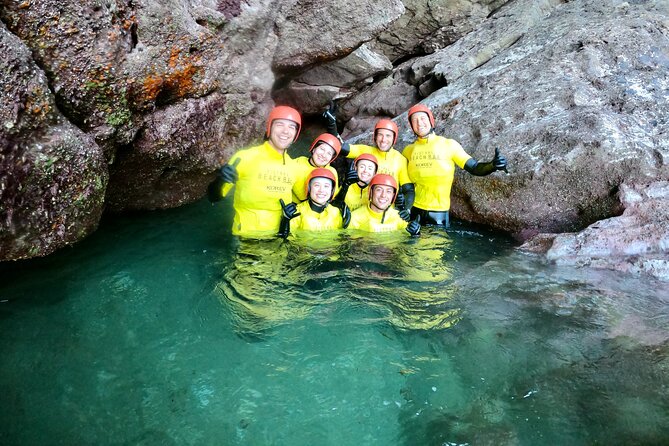
- Qualified lifeguard guides and a helmet mean safety is taken seriously from moment one.
- No experience needed, just confidence and the ability to swim 50 metres.
- Gear is mostly handled for you, including winter boots and gloves (and a 5mm wetsuit).
- GoPro photos and videos are included, so your group will have proof of the jumps.
- Small group max 16 helps you learn and move without feeling shuffled.
Further southwest: coast paths and coves
- Doc Martin Tour in Port Isaac, Cornwall★ 4.5 · 840 reviews
- Coasteering Experience in Newquay★ 5.0 · 465 reviews
- Half-Day Coasteering in Newquay Cornwall★ 5.0 · 239 reviews
- Beginner Surf Lesson in Newquay, Cornwall★ 5.0 · 215 reviews
Coasteering Begins at Fistral Beach, and That Sets the Tone
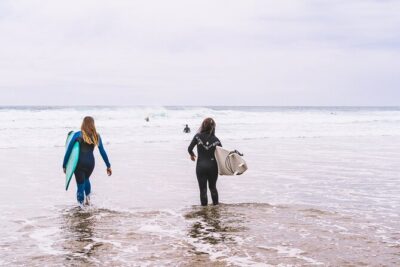
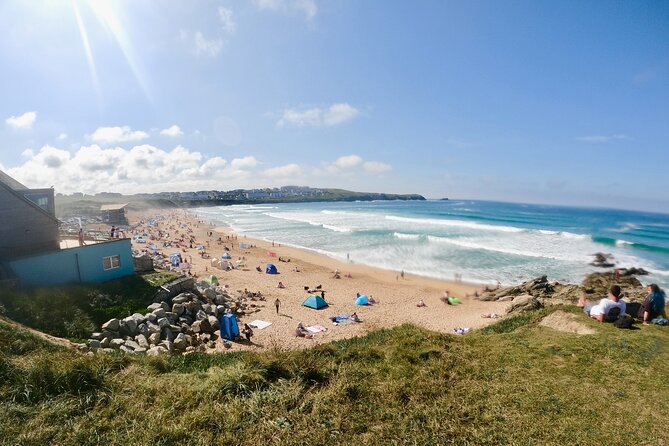
Your half-day kicks off at Newquay TR7 1HY, UK, and the activity ends back at the same meeting point. The big practical detail is where it starts: the team runs from Newquay’s famous Fistral Beach, just a short walk from their route access.
Fistral matters for two reasons. First, you are in a real working coastal spot with the kind of wind, waves, and swell that make coasteering feel like coasteering. Second, it makes the start feel uncomplicated. Instead of a long transfer to some remote stretch, you’re already in the right place to jump into the water and get on with it.
Also, keep the start time in mind. Sessions begin at 11:00 am, and the total time is listed as about 3 hours. In real life, the sea has veto power. If conditions are different than expected, you may find the session runs a bit later or earlier, because the route and water conditions determine what’s safe and fun.
Your 3 Hours: Swim, Climb, Jump, Repeat (But the Ocean Chooses)
Coasteering is basically a rhythm game. You move from sea to rock and back again, using short swims, mindful climbs, and jumps that grow as your confidence grows.
Here’s the flow you can expect in a typical session:
- Gear up and get briefed
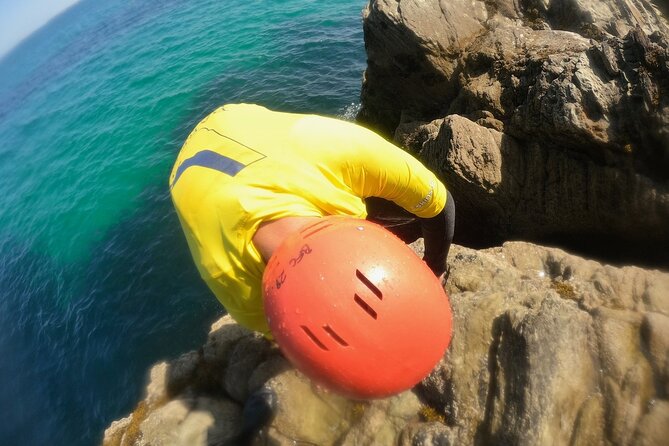
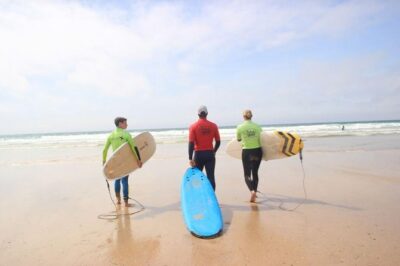
You’ll get fitted with your 5mm wetsuit, helmet, and buoyancy boots. Winter adds gloves (more on gear below). You’ll also get instruction on how to move safely on wet rock and how to jump without turning it into a bad idea.
- First entry and basic technique
Many groups start with easy entries and movement drills. One review described getting geared up, then going straight into the sea with a belly flop before practicing small jumps. That first phase is about learning how to breathe, control your body in the water, and step onto slick surfaces without panicking.
- Small jumps and short swim links
After you get comfortable, you link together jumps and swims. You’re building a mental checklist: look where you’re going, keep your body tight, and trust your guide if they tell you it’s safe. You also learn how to read where the water is pushing and where it’s calmer for the swim between sections.
- Cliff ledges and climbs
This is where coasteering shifts from jumping to hands-on climbing. You’ll grab ledges, shuffle along rock, and keep moving. One review called out a range of accessible climbs and jumps, which is what you want when you’re new. You’re not expected to be a rock climber first. You’re expected to follow instructions and take it step by step.
- Bigger jumps as the session builds
Many groups end with the most dramatic jump(s). One review mentioned a final jump around 40 feet, which is the kind of thing you remember for years. That said, don’t bank on one exact jump height. You’ll work up toward the bigger spots based on conditions and your comfort level.
Two real-world considerations from experience notes in the reviews:
- If the water gets rough, swimming can feel much harder, even for strong swimmers. One person reported they gave up near the end because rough water made swimming difficult.
- If conditions are right and the group stays focused, the pace can feel quick. Another review said a small group helped them get through the course faster, leaving more time for the biggest jumps.
In other words: this is not a theme park timeline. It’s a sea-dependent adventure. I like that, because it feels honest. If you prefer strict schedules, bring a flexible mindset.
Safety Gear That Actually Makes You Less Miserable
Coasteering lives or dies on comfort and control. Bare Feet Coasteer makes that easier by supplying most of the key gear.
Included equipment:
- 5mm wetsuit
- Helmet
- Buoyancy boots
- In winter, gloves too
- Photos and videos from a GoPro
The helmet is an obvious safety win. The wetsuit is the practical one. A 5mm suit plus boots and gloves (in winter) means you can spend time on wet rock and in the sea without losing feeling in your hands and feet early. That matters because cold can turn a fun challenge into a stressed survival mission.
Winter detail: they mention staying warm in any weather, and they specifically note winter months include boots and gloves. They also say for summer months May to Nov, you should bring your own trainers or wetsuit boots. That doesn’t mean you’re stuck without gear. It means they expect you to arrive with proper footwear for the summer conditions.
One more safety note that showed up strongly in the feedback: guides were attentive to health needs. For example, one group mentioned an asthma inhaler being carried in a medicine bag during the session. If you have any medical needs, tell your guide before you start. That’s the simplest way to avoid awkward surprises.
The Guides: Nick and Tony Set the Tone, Paul and Noah Help You Grow
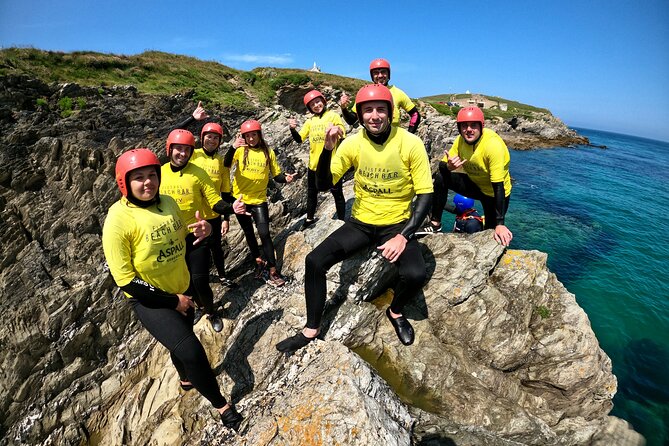
The guides can make or break coasteering. Here, the names that kept coming up were Nick, Tony, Paul, and Noah.
What shines across multiple accounts:
- Patient coaching for beginners, not just leading you from jump to jump.
- Motivation with a sense of humor, which helps when your brain is doing the usual first-timer math of how many ways this could go wrong.
- Step-by-step progression, taking you up a level at a time so you are not shoved into something you’re not ready for.
Nick came up in a few stories: people described him as accommodating, charismatic, and motivating, plus very knowledgeable on safe jumping basics. Tony also shows up as an excellent guide, helping groups find accessible climbs and jumps. Paul was mentioned as part of a fun, attentive team, and Noah as a guide who helped take participants to the next level on the jumps.
Why this matters for value:
When you get good coaching, you spend less time stuck on fear and more time actually doing the activity. That means more smiles per minute. It also means fewer wasted attempts, which can happen when guides are rushed or unclear.
Coasteering is physical. Your guides are the translation layer between what you can do and what the coast offers.
Who Can Join: Swim 50 Metres, Bring Confidence, Skip Ego
This is billed for people who are confident in the water and can handle physical effort. The requirements are clear:
- You must be able to swim to participate
- You need the ability to swim 50 metres
- You should have a strong physical fitness level
- There’s no prior coasteering experience required, just confidence
So, this is not for people who are only comfortable bobbing in shallow water. It’s also not the best choice for anyone who wants a purely sit-and-watch experience.
That said, the feedback includes families and groups with teenage kids, including a dad with two teenage girls. The common thread there seems to be guidance that matches your comfort level. One review explicitly said there was no pressure to do anything not comfortable with, which is what you want in a learning situation.
One more note for solo travelers: if you book for one person, they ask you to contact them in advance because sessions don’t run for a single person. They can update you on the nearest group session.
Finally, group size is capped at 16 travelers. That’s small enough to feel personal, but big enough to keep the session moving.
Weather, Winter Weekend Bookings, and Why Timing Can Shift
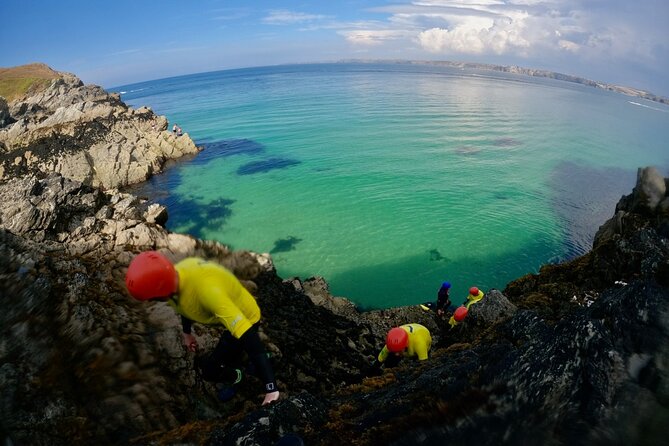
Coasteering requires good weather. If conditions are poor, the experience can be canceled due to weather, and you’ll be offered a different date or a full refund.
Also, there’s a seasonal detail worth planning around:
- They run summer or winter coasteering in Cornwall.
- During winter, they are only open for weekend bookings.
So if you’re aiming for a weekday winter trip, you may find you can’t book it. Plan your timing around weekends in winter, and keep your schedule open in shoulder-season weeks when the forecast can swing.
One more timing reality from the feedback: even when a session is booked for 3 hours, rough water and tougher swimming can cut the practical time down. That’s not a quality issue. It’s ocean physics.
Price and Value: $76.25 Includes the Stuff You’d Otherwise Pay For
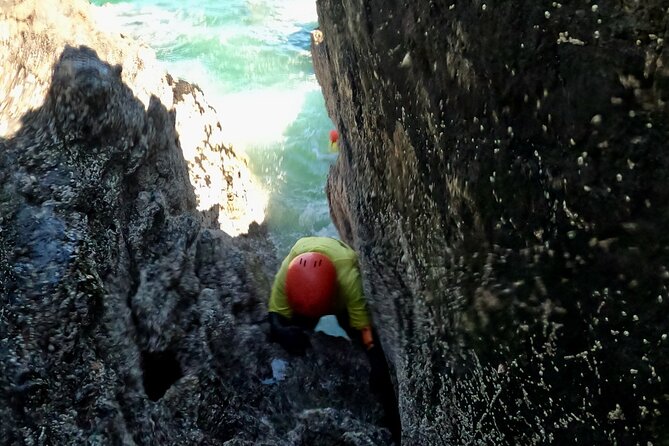
At $76.25 per person for about 3 hours, this is not a cheap activity. But the price stacks up better when you look at what you actually get.
Included in the price:
- Full training and expert supervision
- All equipment (wetsuit, helmet, buoyancy boots, plus winter gloves)
- GoPro photos and videos
The value angle is simple. Coasteering gear is not optional, and renting or buying it can add up. Plus, that GoPro keepsake is real value. You’ll be in the moment, not asking strangers to take blurry pictures.
What’s not included:
- Summer May to Nov: bring your own trainers or wetsuit boots.
That’s a small cost you can plan for. If you arrive with the wrong footwear, you’ll spend the day thinking about your feet instead of the coast.
Bottom line on value:
If you want one memorable, physical, guided experience in Cornwall without managing gear rental or hoping someone else captures the big moments, this price makes sense.
Meeting Point Practicalities: Arrive Ready to Move
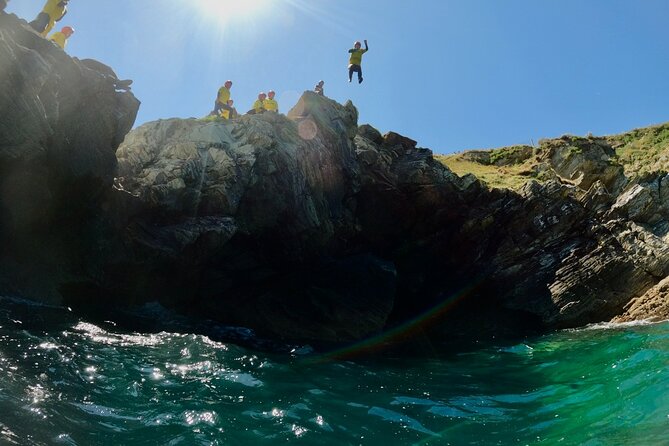
Your meeting point is Newquay TR7 1HY, UK, and you should expect to start at 11:00 am.
A caution from one less-favorable note: one person reported organization issues on arrival, including lack of staff at first, neglected changing room conditions, and missing toilets and showers. They also said the start slipped and the session felt shorter than expected.
That doesn’t cancel out the overall quality, because most feedback is strongly positive. But it does point to this practical mindset: arrive a little early, keep expectations flexible about how smooth the first 10 to 20 minutes feel, and be ready to get in the water once things start rolling.
In general, you’ll be happier if you show up dressed to move as soon as you can.
Should You Book Bare Feet Coasteer in Newquay?
I think this is a strong booking if you want a true Cornwall coastal adventure, not a scenic walk. It’s especially worth it when:
- you’re comfortable swimming (50 metres) and you want a real workout
- you like guided activities with step-by-step coaching
- you want the photos and videos without paying extra
- you’re going with friends or family and you want shared bragging rights later
Skip it if:
- you can’t swim 50 metres
- you’re not fit enough for a physically active session
- you hate activities where the ocean can change the plan
If you’re deciding between a passive beach day and doing something that feels alive, coasteering is the choice that gives you stories you cannot get from a viewpoint.
FAQ
How long is the coasteering session?
It’s listed as about 3 hours.
Where does the activity start?
It starts at Newquay TR7 1HY, UK, and it ends back at the same meeting point.
What time do sessions begin?
The start time is 11:00 am.
Do I need prior coasteering experience?
No prior experience is required. You do need confidence and the ability to swim.
How well do I need to be able to swim?
You must be able to swim to participate, specifically the ability to swim 50 metres.
What gear is included, and do I need footwear?
Included gear is a 5mm wetsuit, a helmet, and buoyancy boots. In winter, gloves are included too. For summer months May to Nov, you should bring your own trainers or wetsuit boots.
Can I book for just one person?
If you book for one person, contact them in advance since they don’t run sessions for one person and can help you find the nearest group session.
Coast Paths And Coves
Fresh off the notebook in Newquay
- Essential Cornwall – the “must see” places
★ 5.0 · 13 reviews - Private Two on One Surf Lesson in Newquay (2 students, 1 instructor)
★ 5.0 · 17 reviews - Full-Day (2 x 2 hr lessons) Surf Experience Newquay: All levels
★ 5.0 · 17 reviews - Children’s School Holiday Surf Session (8-13 year olds)
★ 5.0 · 19 reviews - Private One on One Surf Lesson in Newquay, for Beginners / Novice Surfers
★ 5.0 · 23 reviews - Private Family / Small-Group Surf Lesson (max. 4) in Newquay.
★ 5.0 · 35 reviews
Cornwall and Devon Tours, compared.
 ★ 4.5Doc Martin Tour in Port Isaac, CornwallFrom $22840 reviews
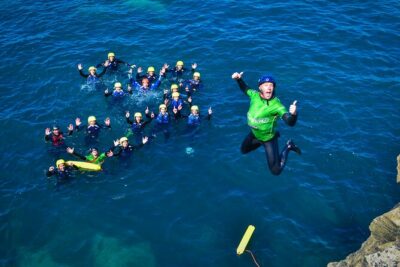 ★ 5.0Coasteering Experience in NewquayFrom $76465 reviews
 ★ 5.0Lulworth Cove & Durdle Door Mini-Coach Tour from BournemouthFrom $41460 reviews
 ★ 5.0Torquay Coastal RIB SeafariFrom $51410 reviews
 ★ 5.05-Day Devon and Cornwall Small-Group Tour from LondonFrom $1,347296 reviews
 ★ 5.0Falmouth Uncovered Walking Tour (Award Winning)From $22267 reviews
 ★ 5.0Beginner Surf Lesson in Newquay, CornwallFrom $62215 reviews
 ★ 5.0Sea Kayak Lesson & Tour in NewquayFrom $83189 reviews
Browse the lists this tour appears in