
REVIEW · TOURS
Gangster Tour of Soho
Soho has a shadow side worth walking. This 2-hour gangster tour threads together street gangs, famous club owners, and 1960s and 1970s nightlife on foot. You will move from famous stages and court steps to back-street corners tied to the Kray era and police corruption.
I especially like the way you get an authentic street-level angle from a local Londoner who saw these places in the day. I also love that the stops are built around real locations you can still point to today, including London Palladium and the clubs and doorways around Carnaby Street, Wardour Street, and Greek Street.
One consideration: this is a walking tour of crime-related stories, and it is listed as unsuitable for under 18s. Also, it depends on decent weather, so wear shoes that handle wet sidewalks and keep a rain layer in your day bag.
In This Review
- Key points worth knowing before you go
- Soho, gangs, and the real reason this walk works
- How the 2-hour route pans out, stop by stop
- Stop 1: London Palladium and the Brian Epstein plaque area
- Stop 2: Courthouse Hotel, stage-door area, and the court angle
- Stop 3: Carnaby Street and early Soho gang names
- Stop 4: 50 Carnaby St and the club turnover story
- Stop 5: Spirit of Soho Mural and the names that give the streets personality
- Stop 6: The John Snow replica pump on the cholera trail
- Stop 7: Walker’s Court and Paul Raymond’s early Soho hustle
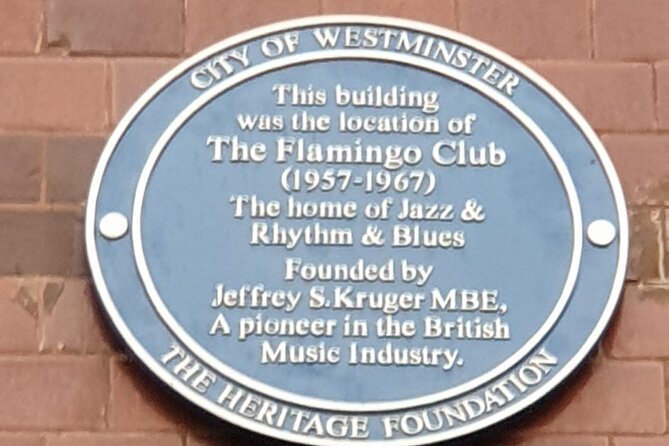
- Stop 8: Wardour Street and the Flamingo Club
- Stop 9: Gerrard Street, hostess clubs, and the Kray connection
- Stop 10: The French House and Lord Boothby
- Stop 11: 2i’s Coffee Bar green plaque and British rock DNA
- Stop 12: Frith Street and Ronnie Scott’s Club footprint
- Stop 13: Greek Street corners and the murders tied to the streets
- Stop 14: 58 Greek St, police corruption, and how the system bent
- What makes the stories feel real, not like trivia
- Price and value: yes, it is free, but here is what you are really buying
- Logistics that matter on a street tour
- Who should book this Soho gangster walk
- Quick pick: your best way to pair this with the rest of your trip
- Should you book the Gangster Tour of Soho?
- FAQ
- How long is the Gangster Tour of Soho?
- What is the starting point for the tour?
- Where does the tour end?
- Is the tour free?
- Do I need a printed ticket?
- What is the maximum group size?
- Is the tour suitable for children?
- What is included in the tour?
- What is not included?
- What if the weather is bad?
- Are service animals allowed?
Key points worth knowing before you go
- A local Londoner leads the stories from the street, not from a classroom.
- You track Soho through iconic stops, from the London Palladium area to 58 Greek St.
- Expect true-crime vibes, tied to street gangs and police corruption in the 1960s and 1970s.
- Carnaby Street to Wardour Street keeps the tour grounded in real club and fashion geography.
- You get helpful context with place comparisons, including photos showing how scenes looked in the 1950s and 1960s.
- It is free and runs about two hours, with a maximum group size of 25.
Undecided so far? Here are further London tours we have written up.
- Stonehenge, Windsor Castle, and Bath from London★ 4.5 · 18,662 reviews
- London Big Bus Hop-On Hop-Off Tour with Optional River Cruise★ 3.5 · 10,803 reviews
- London Small Group Tour of Historical Pubs★ 5.0 · 10,422 reviews
- Stonehenge, Windsor Castle and Bath with Pub Lunch in Lacock★ 4.5 · 7,402 reviews
Soho, gangs, and the real reason this walk works
Soho is the kind of neighborhood where stories stick to the pavement. Step into it and you can still feel the old mix of music, fashion, late nights, and trouble. This tour leans hard into that. It is not about museum cases. It is about the corners and buildings where people made money, made trouble, and made headlines.
The big draw is the focus on the 1960s and 1970s. That era matters here because Soho was changing fast. Music culture and fashion culture were exploding. At the same time, organized crime and corruption were shaping how nightlife played out. So when your guide links a club location to a gang story, it does not feel random. It feels like a pattern.
You also get a true “walking-and-spotting” style of history. Each stop is close enough to keep moving, but detailed enough to make you look twice at what is there now. You end at 58 Greek St, and by then you start seeing Soho less like a map and more like a chain of cause and effect.
How the 2-hour route pans out, stop by stop
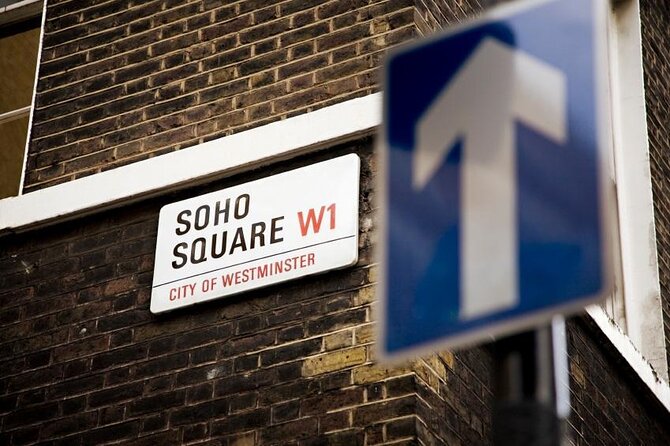
This tour is designed like a guided loop across Soho. You start near Oxford Street, then work your way through the classic nightlife streets and end near key Tube lines. The full walk is about 2 hours, give or take, with short stops that keep the pace lively.
Stop 1: London Palladium and the Brian Epstein plaque area
You begin outside the London Palladium, a major 1960s and 1970s performance address. Even if you have never seen a show there, the location hits instantly because it was part of the mainstream entertainment machine.
Your guide also points out a plaque connected to Brian Epstein, the Beatles manager. That is a smart opener. You are not just jumping into crime right away. You are starting with the industry side of Soho, where fame, money, and influence already mixed.
Practical note: the outside-of-the-theatre start can be busy. Give yourself a moment to settle your group and get ready for the walking portion.
Stop 2: Courthouse Hotel, stage-door area, and the court angle
From the Palladium zone, you move along toward the Courthouse Hotel. The tour description focuses on a time when it was Great Marlborough St’s Magistrates Court, tied to famous faces tried for drug charges and other offenses.
This is the tour’s “how did the system respond?” moment. Soho was not only parties and clubs. It also had hearings, charges, and legal outcomes. Bringing that in here helps you understand why nightlife had consequences, and why policing was a big part of the story.
Stop 3: Carnaby Street and early Soho gang names
Then you walk into the heart of the fashion-and-nightlife corridor: Carnaby Street. Here the guide connects Soho gang history right back to the 1920s, naming figures such as Darby Sabini, Billy Kimber (often associated with Peaky Blinders), Billy Hill, Jack ‘Spot’ Comer, and the Messina Bros.
This stop is valuable if you like true-crime narratives that have roots. It is easy to think crime history starts in the 1960s. The tour pushes you to see earlier groundwork, then shows how Soho kept generating new trouble as culture shifted.
Stop 4: 50 Carnaby St and the club turnover story
At 50 Carnaby St, you look at how multiple clubs came and went from the 1930s until the 1970s. This is one of those Soho details that makes the neighborhood feel real. Businesses changed. Venues changed. But the stream of people and the incentive to control entertainment stayed.
This stop is short, but it works as a bridge. You are learning how to read Soho’s layers: the place you stand on today might have been something totally different for decades.
Stop 5: Spirit of Soho Mural and the names that give the streets personality
Next is the Spirit of Soho Mural, which lists famous and infamous people tied to Soho, from Casanova and Mozart to George Melly, Jeffery Bernard, Brendan Behan, and Johnnie Dankworth.
This stop adds texture. It reminds you Soho stories were not only gang fights and courtroom drama. Artists, writers, and music figures lived here too. That mix matters, because it helps explain why Soho was such a magnet for both legitimate culture and criminal exploitation.
Stop 6: The John Snow replica pump on the cholera trail
Now you shift to a very different type of “mystery story”: epidemiology. The tour shows a replica pump outside the pub named after John Snow, linked to the 1854 cholera outbreak in the area that had already killed 500 people.
This is not the 1960s gang story. But it is a strong mid-tour pause that widens your lens. It shows how streets can carry repeated lessons about public health, human error, and who gets blamed. If you like police dramas, this will feel like the “case file” side of London history, not just the nightlife side.
Stop 7: Walker’s Court and Paul Raymond’s early Soho hustle
At Walker’s Court, the tour focuses on Raymond’s Revue Bar, described as the first place in Soho where stripper could move once naked. It also names Paul Raymond as the publisher of men’s magazines Men Only, Mayfair, and escort, plus a property magnate worth £650 million.
This is where Soho’s business model becomes clear. Some crime stories are about fists and fear. Other stories are about money, property, media, and access. By the time you reach this stop, you start connecting the dots between nightlife and the wider economy of influence.
Stop 8: Wardour Street and the Flamingo Club
On Wardour Street, you look at where the Flamingo Club stood. The tour highlights how British and American rock and pop stars flocked there in the 1960s and 1970s.
This is a fun stop if you like music history and celebrity gravity. It also sets up why gangs were interested in nightlife zones. When big-name artists and crowds show up, so do opportunists.
Stop 9: Gerrard Street, hostess clubs, and the Kray connection
Moving to Gerrard Street, you get a denser stretch of name-dropping and nightlife geography. The tour mentions the Boulogne Restaurant, a hostess club at the Wardour St end, and then “no 15,” where the Kray twins opened their El Morocco club.
It also references their first central London club, Esmeralder’s Barn in Kensington, then circles back to figures like Kate Merricks, the nightclub queen, connected to the 43 Club at number 43.
This stop is a major highlight for true-crime fans. It is not abstract. You are standing near the streets tied to the Krays, and you are also shown the surrounding ecosystem of hostess clubs, venues, and doorways.
If you are sensitive to violence-related stories, take your time here. This is where the tour leans hardest into the darker edge of Soho.
Stop 10: The French House and Lord Boothby
Opposite The French House, the guide talks about the Kray Twins’ relationship with Lord Boothby.
This is useful because it brings in “connections” instead of only “confrontations.” It suggests how powerful people could overlap with nightlife figures, and how those relationships mattered offstage.
Stop 11: 2i’s Coffee Bar green plaque and British rock DNA
At a green plaque for 2i’s Coffee Bar, the tour frames it as the birthplace of British rock and roll, run by a wrestler described as Dr Death. The guide mentions future stars discovered from 1960 onwards, including Tommy Steel, Cliff Richard and the Shadows, Screaming Lord Sutch, and others.
Then it notes the site is now a fish and chip restaurant, Poppies.
This is one of those smart Soho contrasts. Same street, different purpose. But the neighborhood keeps producing people who change culture, whether through music, nightlife, or controversy.
Stop 12: Frith Street and Ronnie Scott’s Club footprint
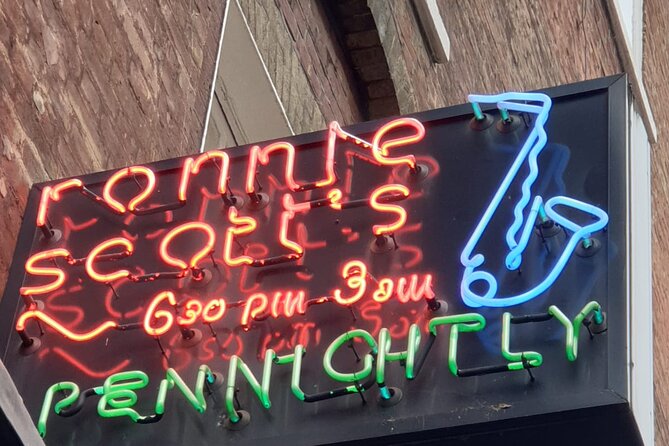
On Frith Street, you look down toward Ronnie Scott’s Club, still here today, with the note that Ronnie Scott and his wife Cleo Laine are sadly no longer with us.
This stop is lighter on gang details, but it adds balance. Soho also became a center for live music culture. Frith Street helps you understand why this area attracted so much attention in the first place.
Stop 13: Greek Street corners and the murders tied to the streets
On Greek Street, at the corner with Old Compton St, you get the Krays again and the murders tied to the street lore. The tour references the murder of Jack the Hat and the Mad Axman Frank Mitchell, plus Freddie Foreman and Ronnie Knight, described as Barbara Windsor’s first husband. It also mentions the murder of Alfredo Zomperelli.
This stop is important for two reasons. First, it shows how Soho street gangs were treated like characters in a larger story. Second, it highlights how violent crime became part of the neighborhood’s mythology.
Stop 14: 58 Greek St, police corruption, and how the system bent
The final stop is 58 Greek St. Here the focus shifts to police corruption in the 1960s and 1970s, naming Bernie Silvers as a top dog at the time, and Frank Mifsud who ran most of the doorbell flats. The tour also mentions Commander Drury of Scotland Yard and his relationship with porn baron Jimmy Humpheries and his wife Rusty Gaynor.
You end here, and it makes sense. It ties the earlier club and gang stories to the official side of London life. The message is not just that Soho was dangerous. It is also that institutions were not always clean, and that mattered.
Location finish note: the end point is a five-minute walk from either Tottenham Court Rd Station on the Central, Northern, and Elizabeth lines, or Leicester Sq Station on the Piccadilly and Northern lines.
What makes the stories feel real, not like trivia
This tour is praised for its story-heavy approach and the way it makes places click into your brain. A big part of that is the use of comparisons, including brilliant photos that show how some points looked in the 1950s and 1960s. That photo matching is not just entertainment. It is a memory tool.
When you can see what stood there before, the street stops become evidence. You stop thinking in terms of “a place I passed once” and start thinking “this address mattered.” That is the difference between a casual walk and a walk that changes how you see the neighborhood.
The other standout is the guide angle. The tour is led by an authentic local Londoner who tells the tales from experience, including the kind of details that make London streets feel lived-in.
If you are coming from a police drama background, you will probably like the way the guide connects the crime to the environment. Soho was not only where crimes happened. It was a place where people moved, drank, performed, and hid.
Price and value: yes, it is free, but here is what you are really buying
The price shows as $0.00. That is rare in London, and it is a big deal. But the real value is not the money. It is the time you gain. For about two hours, you get a guided storyline across multiple iconic locations that normally take way longer to piece together on your own.
You are also getting an organization that caps groups at 25. That matters on a walking tour because too-large groups turn guides into noise. Here, you are more likely to hear the story and follow the route.
One more value point: the tour is followed by included suggestions for places to visit after the walk, with many shops, restaurants, and bars in the area. That helps you turn the gangster theme into a practical evening plan.
What is not included is also worth knowing. No alcoholic drinks, no coffee or tea, no bottled water, no snacks. Plan to bring your own water and decide in advance where you will stop for a proper meal after.
Logistics that matter on a street tour
This is a mobile ticket experience. You will want your phone charged and ready at the start point, ICE, International Currency Exchange at 241 Oxford St, London W1D 2LT.
The tour lasts about two hours and runs in the open, so weather matters. It requires good weather. If the day is rainy, wear shoes you trust and keep a light rain layer.
It is also listed as suitable for most travelers, but it is unsuitable for under 18s. Service animals are allowed, and the route is near public transportation, which makes the start and end easy to fit into a broader London day.
My practical advice: treat this like a focused neighborhood walk. Wear comfortable shoes. Keep your phone away until you are at a stop. Save time for the moments your guide is pointing things out.
Who should book this Soho gangster walk

This tour is best for you if:
- You like true crime and stories that connect people to specific addresses.
- You watch or read police dramas and want the street-level London behind them.
- You want a Soho overview that includes both nightlife and the darker institutional side of the story.
- You enjoy cultural context, including the way 1960s and 1970s fashion and music culture overlapped with organized influence.
It may not be for you if:
- You prefer light comedy history and minimal violence in stories.
- You dislike walking in crowds around major streets and theatre areas.
Quick pick: your best way to pair this with the rest of your trip
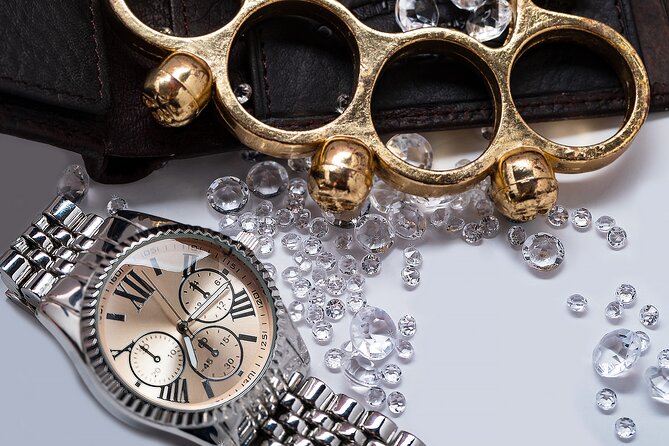
After you finish at 58 Greek St, you are near Tottenham Court Rd and Leicester Sq. That makes it easy to connect to dinner, a show, or a last museum stop without wasting time crossing town.
If you want to keep the theme going, plan your evening around the streets you just learned to read. You will be able to spot the vibe changes street by street.
And if you are the type who likes to take notes, jot down two or three names your guide mentions. Picking one gang-related name and one music or fashion-related name helps you remember the tour’s theme and keep your Soho story straight.
Should you book the Gangster Tour of Soho?
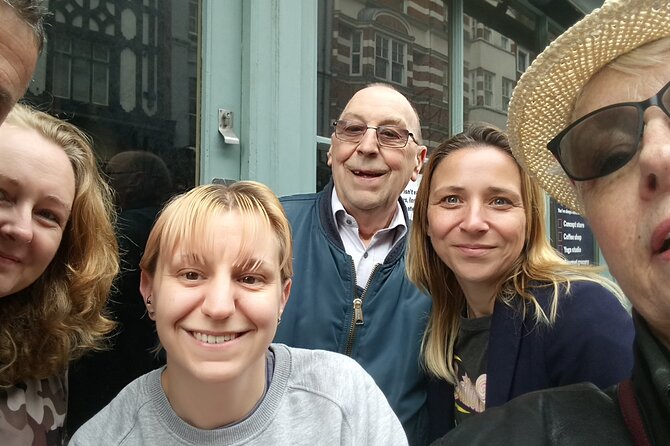
Book it if you want a high-impact Soho walk that mixes gang stories, club lore, and the behind-the-scenes side of London life. The route is packed with recognizable places, and the best-rated element is the storytelling plus the old-versus-new place comparisons that make the neighborhood feel time-traveled.
Skip it if you are shopping for a gentle sightseeing stroll. This tour leans into crime, policing, and darker events. Also, commit to it only if you can handle about two hours of walking in whatever weather London gives you.
If you like your London history with grit and street context, this is a strong choice. It is free, time-efficient, and it teaches you how to look at Soho like it is a living crime map.
FAQ
How long is the Gangster Tour of Soho?
It runs for about 2 hours.
What is the starting point for the tour?
The meeting point is ICE, International Currency Exchange, 241 Oxford St, London W1D 2LT.
Where does the tour end?
The tour ends at 58 Greek St, London W1D, near Tottenham Court Rd Station and Leicester Sq Station.
Is the tour free?
The listed price is $0.00.
Do I need a printed ticket?
No, it uses a mobile ticket.
What is the maximum group size?
The maximum number of travelers is 25.
Is the tour suitable for children?
It is listed as unsuitable for under 18s.
What is included in the tour?
It includes a walking tour of Soho, with lots of shops, restaurants, and bars to visit after the tour.
What is not included?
Alcoholic beverages, coffee or tea, bottled water, and snacks are not included.
What if the weather is bad?
The tour requires good weather. If it is canceled due to poor weather, you will be offered a different date or a full refund.
Are service animals allowed?
Yes, service animals are allowed.
Fresh off the notebook in London
- Private Rock ‘n’ Roll Music Tour of Central London
★ 5.0 · 7 reviews - London Walking Tour: Camden Town Photography Walkabout
★ 5.0 · 7 reviews - Private Transfer from London accommodation to Cruise terminal
★ 5.0 · 7 reviews - Amazing Nightlife in London East Tour
★ 4.5 · 7 reviews - The British Museum: a highlights tour with a TV historian
★ 5.0 · 7 reviews - Heathrow Airport to Cambridge private taxi transfers
★ 5.0 · 7 reviews
Tours, compared.
 ★ 3.5London Big Bus Hop-On Hop-Off Tour with Optional River CruiseFrom $3910,803 reviews
 ★ 5.0London Small Group Tour of Historical PubsFrom $4010,422 reviews
 ★ 5.0Beatles Magical Mystery TourFrom $309,266 reviews
 ★ 5.0Liverpool: “Blue Route” – City & Beatles TourFrom $278,562 reviews
 ★ 5.0Oxford University Walking Tour With University Alumni GuideFrom $416,905 reviews
 ★ 4.5Stonehenge, Windsor Castle and Bath Full Day Guided TourFrom $1235,346 reviews
 ★ 4.5London Jack the Ripper Guided Tour with Ripper-VisionFrom $274,840 reviews
 ★ 5.0Tour for Muggles The Ultimate Harry Potter Walking Tour in LondonFrom $234,684 reviews