

REVIEW · WALKING TOURS
GRAILTRAIL: Quest for the Holy Grail (Self-Guided Adventure Walk)
Grail hunting in London is way more fun than it sounds. This self-guided outdoor scavenger hunt uses a smartphone and Telegram Messenger to turn Paternoster Square into a medieval-style clue trail that ends near Covent Garden. I like that the story is fictional, but the places are real, so you get both the game and the city walk. One thing to consider: you will need a smartphone plus reliable access to Telegram, and mobile data costs are on you.
What I love most is the pace and freedom. No time slot means you can play any day and start any time during daylight hours, and you can pause for a bite or a drink along the way. I also like that the route is step-free at about 5km, so it stays comfortable for a moderate walking outing. The one drawback is that it depends on you noticing details, so if puzzles are not your thing, you might prefer a straight sightseeing route.
This is designed as a private activity for your group, not a crowded guided tour. You get a symbolic quest inspired by medieval legends and Templar-era ideas, with clues built from patterns, names, symbols, and the spaces between them. If you go in expecting strict “history class,” you may miss the point, because the instructions push you to play first and interpret second.
In This Review
- Quick hits before you go
- Why this “Grail” hunt works in London
- The route basics, walking comfort, and timing that fits real life
- How the smartphone clues work (Telegram and your game code)
- Start at Paternoster Square, then shift into clue-hunting mode
- Mid-walk: alleyways, chapels, relic vibes, and symbolic geography
- Pub breaks: why this hunt feels natural for a casual day out
- Languages: same game, different comfort levels
- Ending near Covent Garden, then rolling back to the start area
- Who this is best for (and who should pick something else)
- Value for money: $13.71 for a 2-hour London game walk
- Small logistics that matter once you start
- Should you book this self-guided Holy Grail quest?
- FAQ
- What is Grailtrail: Quest for the Holy Grail in London?
- How long is the walk?
- Where does it start and end?
- Do I need a guide?
- What do I need to play?
- Is there a time slot I must book?
- How far do I walk, and is it step-free?
- What about mobile data costs?
- Are cancellations refundable?
Quick hits before you go
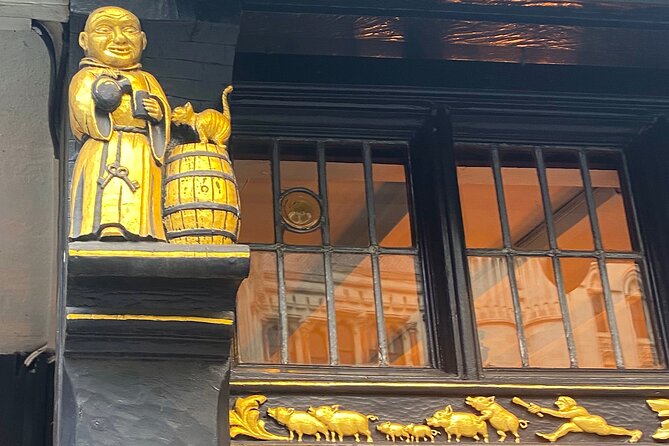
- Start at Paternoster Square, a smart launching pad for wandering into older-feeling streets.
- No guide required, just your phone and a Telegram message with your game code.
- 5km and step-free, a solid walking length that usually fits a relaxed afternoon.
- Pub-friendly pauses, the route gives you chances to stop without derailing the game.
- 11 playable languages, helpful if your group has mixed language comfort.
- Fictional story, real locations, a nice way to see London while staying in “what if?” mode.
More on foot, at a pace you can hear the guide
- Tour for Muggles The Ultimate Harry Potter Walking Tour in London★ 5.0 · 4,684 reviews
- London Jack The Ripper Guided Walking Tour★ 5.0 · 3,131 reviews
- Changing of the Guard Guided Walking Tour in London★ 5.0 · 1,793 reviews
- The Great British Rock and Roll Walking Tour★ 5.0 · 1,371 reviews
Why this “Grail” hunt works in London
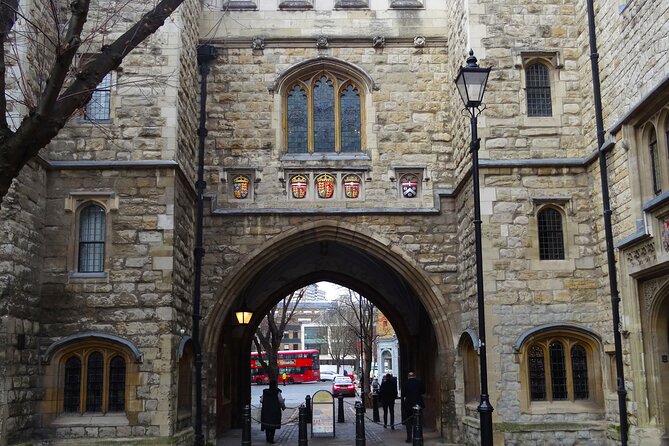
London can be loud, crowded, and hard to “read” as a visitor. This adventure flips that problem. Instead of trying to see everything at once, you follow a symbolic quest that nudges you to look at the city the way locals and historians do: at names, shapes, patterns, and the tiny hints people leave behind.
The story is built around a medieval-flavored journey that connects things like early Christianity, Celtic saints, and Knights Templar ideas, plus mysterious alignments. The important part is your role. You are not asked to believe the plot. You are asked to notice what is already there. That mindset turns ordinary street-level details into clue material, which is exactly why puzzle walks feel so satisfying.
I also like the “choose-your-moment” structure. Because there is no set time slot and no guide herding you along, you can move at your speed. If you want more time at a specific spot to figure out a clue, you can. If you want to skip forward and save energy for the end, you can do that too.
The route basics, walking comfort, and timing that fits real life
This is about a 2-hour experience, roughly, and the route is around 5km. That makes it a good option when you want something active but not exhausting. It is also step-free, which is a big deal for London walks, where cobbles and curb cuts can turn “easy” outings into surprise leg workouts.
You also get daylight flexibility. Play any day, any time during daylight hours, and there is no time slot requirement. That matters because London weather changes fast. If you plan for late morning or early afternoon instead of the middle of the day, you usually dodge the worst crowds and keep your clue-solving calm.
One more practical note: it is set up so you end back near the start area. The trail is described as ending in Covent Garden, and the activity is listed as ending back at the meeting point. In practice, that usually means you will finish in the Covent Garden direction and then wrap back toward Paternoster Square or the start area.
How the smartphone clues work (Telegram and your game code)
You’ll use your smartphone to play. The tour does not work through the Tripadvisor ticket link for the code. After booking, your game code is generated and sent to you by message. So, do not wait until you are outside hunting clues to test things.
You will need the Telegram Messenger app. The instructions are simple: install Telegram, then use it to access your quest messages. The listing also warns about mobile data charges. In other words, if you are mostly on Wi-Fi, you might be fine. If you are relying on cellular data the whole time, expect your plan to pay the bill.
Practical tip: before you start, do a quick phone check. Bring a charged battery, and if you can, download an offline map of the area around Paternoster Square and your walking route. Even if the game itself is inside Telegram, offline maps still help when you step away from the exact spot to read signage or re-check a clue.
Start at Paternoster Square, then shift into clue-hunting mode
Paternoster Square is a solid start. It puts you close to big “London postcard” areas, but it also makes it easy to drift into smaller streets and older-looking corners as the walk continues. Starting there feels logical because you can orient fast, grab water if you need it, and get into the game without a complicated meeting point hunt.
The “Holy Grail” framing is also a clever way to get you into observation mode early. You are not just walking from A to B. You are scanning for things the game points you toward: patterns, names, and symbols you might otherwise pass without noticing.
For puzzle lovers, this is where the fun begins. The questions are designed to be approachable, not locked behind trivia facts you can only memorize. In one family-friendly review, the hunt was described as easy, and it worked well for a family of four with two teens. That’s what you want: a challenge that feels like play, not school.
Rather go alone? More self led routes here





Mid-walk: alleyways, chapels, relic vibes, and symbolic geography
This hunt is built around places like alleyways, chapels, relics, and ideas of invisible lines across the city. You are likely to encounter a mix of street textures and built-space details, the kind of things that make London feel layered. The medieval vibe is not just in the story. It’s in how the clues tie to the world you can see right in front of you.
Here is what that means for your experience: you will slow down. That is the whole point. You will stop at signs, façades, corners, and the in-between spaces, then decide what the clue wants you to connect. When it clicks, it feels like you are decoding a private map the city has been hiding in plain sight.
A small drawback to consider: if you prefer a guided tour where you are told what something means, this may feel too open-ended. The clues are embedded visually, and there is no guide to interpret them for you in the moment. Still, that is also the benefit. You get to do the noticing yourself.
Pub breaks: why this hunt feels natural for a casual day out
One reason this works well for real life is that it is built for pauses. The experience encourages you to take a break whenever you want, and the route includes lots of pub options along the way. That matters in London, because a “quick drink” can easily become a whole plan if you do not schedule it.
If you are traveling with mixed interests, this also helps. While one person is solving a clue, another can take a break and grab a snack. You can reset your energy without losing momentum.
If you are traveling without kids, you can easily treat this as a light pub crawl style outing. If you are traveling with kids or teens, it can be a structured way to keep them moving and engaged without the constant, “Are we there yet?” rhythm that drags down sightseeing days.
Languages: same game, different comfort levels
The clue system is fully playable in 11 languages: English, French, German, Italian, Spanish, Portuguese, Russian, Japanese, Chinese, Korean, and Arabic. That’s a big plus if you are traveling with friends or family who have different language comfort. You are not forced into one shared language just to join the fun.
For groups, this also helps with pacing. People can solve clues in the language they think in best, which reduces delays from translating on the fly. It can make the walk feel more like a team activity and less like everyone is waiting for one person to decode.
Ending near Covent Garden, then rolling back to the start area
The trail is described as ending in Covent Garden, and the activity is listed as ending back at the meeting point. That combination usually gives you the best of both worlds: you get the “quest finish” feeling as you approach a lively part of town, and you are not stuck stranded far away with no plan for the rest of the day.
Covent Garden is a great place to finish because you have options. Even if the game wraps up and you are slightly hungry, you are already in an area designed for food and people-watching. The hunt also benefits from the contrast. You start in a more structured, formal-feeling square, then move into the city’s layered, older textures, then finish where you can decompress.
Who this is best for (and who should pick something else)
This is best for people who like:
- Puzzle-style walking more than museum-style listening
- Noticing details in the street environment
- A break-friendly route, not a strict timed itinerary
- A moderate amount of walking that fits a 2-hour plan
- Group travel where not everyone wants the same type of sightseeing
It may not be ideal for you if you want a guide telling you exactly what each clue means. Since it is self-guided, the experience leans on your curiosity. The good news is that the story is fiction, so you are not required to have any specialized background before you go.
Value for money: $13.71 for a 2-hour London game walk
At $13.71 per person for about 2 hours, this is one of those rare city activities that can be both affordable and memorable. You are not paying for transportation or a ticketed attraction. You are paying for the structure: the storyline, the clue design, and the smartphone-based quest that turns a simple walk into an active challenge.
If you are the type who enjoys walking anyway, the value is even clearer. You would still spend money on transit and snacks during a day out. This gives you a planned route, built-in curiosity, and pub-friendly breaks without forcing you into a group pace.
Also, because it is step-free and around 5km, you are not buying something that turns into an endurance test. That makes the cost easier to justify for families and for visitors who want a fun activity that does not steamroll their feet.
Small logistics that matter once you start
Here are the details that affect your success rate the most:
- You must use a smartphone with Telegram Messenger.
- Your game code arrives after booking via message, not through the Tripadvisor ticket link.
- Bring mobile data expectations into your planning.
- The experience is private, so it is only your group.
- You need moderate physical fitness, but it is step-free and about 5km.
If you do these things right, the experience becomes smooth. If you do not, you will spend time troubleshooting rather than solving clues, which drains the fun fast.
Should you book this self-guided Holy Grail quest?
Book it if you want a low-stress way to see older London corners while doing something playful at street level. The mix of fictional quest framing and real-world clue locations is exactly the recipe for a memorable walking afternoon, especially if you enjoy trivia-like problem solving.
Skip it if you need a guide to explain every stop, or if you do not want to look closely at symbols and names. This is a “notice and connect” experience. When you lean into that, you get a smart, budget-friendly way to wander, snack, and solve along the way.
FAQ
What is Grailtrail: Quest for the Holy Grail in London?
It is a self-guided outdoor scavenger hunt adventure walk in London. You solve puzzles and uncover clues as you explore, using your smartphone.
How long is the walk?
The duration is about 2 hours.
Where does it start and end?
The start point is Paternoster Square, London EC4M, UK. The trail ends in Covent Garden, and the activity is listed as ending back at the meeting point area.
Do I need a guide?
No guide is required. It is fully playable on your own.
What do I need to play?
You need a smartphone with the Telegram Messenger app. You also need the game code, which is sent to you by message after booking.
Is there a time slot I must book?
No time slot is required. You can play any day, any time during daylight hours.
How far do I walk, and is it step-free?
The trail is about 5km and is step-free.
What about mobile data costs?
Mobile data charges are not included, so using Telegram may cost depending on your phone plan.
Are cancellations refundable?
Yes, free cancellation is offered, with a full refund if you cancel at least 24 hours in advance.
If you want, tell me your travel month and group makeup (solo, couple, kids, language needs). I can suggest the best time of day to do a clue walk and how to plan a smooth pub or snack stop without rushing the game.
Other Departures With A Guide Attached






Routes You Can Walk Unaccompanied






More Of London On Foot





Fresh off the notebook in London
- Private Rock ‘n’ Roll Music Tour of Central London
★ 5.0 · 7 reviews - London Walking Tour: Camden Town Photography Walkabout
★ 5.0 · 7 reviews - Private Transfer from London accommodation to Cruise terminal
★ 5.0 · 7 reviews - Amazing Nightlife in London East Tour
★ 4.5 · 7 reviews - The British Museum: a highlights tour with a TV historian
★ 5.0 · 7 reviews - Heathrow Airport to Cambridge private taxi transfers
★ 5.0 · 7 reviews
Walking Tours, compared.
 ★ 5.0Oxford University Walking Tour With University Alumni GuideFrom $416,905 reviews
 ★ 5.0Tour for Muggles The Ultimate Harry Potter Walking Tour in LondonFrom $234,684 reviews
 ★ 5.0London Jack The Ripper Guided Walking TourFrom $03,131 reviews
 ★ 5.0Cambridge University Walking Tour by Alumni™ Kings College OptionFrom $332,336 reviews
 ★ 5.0Blackbeard to Banksy – The Ultimate Walking Tour of BristolFrom $181,961 reviews
 ★ 5.0Air Raid Shelter + St. Nicholas Market Walking TourFrom $171,950 reviews
 ★ 5.0Walking Tour of Bath with Blue Badge Tourist GuideFrom $301,877 reviews
 ★ 5.0Changing of the Guard Guided Walking Tour in LondonFrom $251,793 reviews