
REVIEW · ENGLAND
Handel Hendrix House General Admission
Two centuries of music in one stop. Handel and Hendrix House puts George Frideric Handel and Jimi Hendrix under the same London roof, separated by floors and time. You go at your own pace, starting on Handel’s side and then heading up to the recreated flat where Hendrix lived in the late 1960s.
I really like that you can choose your tempo. The Handel rooms include a 250-year-old staircase, restored music spaces tied to his work, and a look at where he died, plus small extras that make it feel lived-in rather than lectured. I also love the way the Hendrix floor feels specific, with details like Kathy Etchingham’s involvement and period-aimed recreations, plus standout instrument/effects displays.
One thing to consider is that this is mostly stairs and walking. Expect a climb up wonky, historic steps, so if you need step-free routes, plan carefully.
In This Review
- Key takeaways before you go
- Handel and Hendrix House on Brook Street, London
- Handel’s house: wonky stairs and the rooms where Messiah took shape
- The third-floor Hendrix flat: period details and gear you can picture
- How the self-paced format changes what you should prioritize
- Practical timing: opening hours, last admission, and what that means
- Value check: is $19.98 worth it?
- Who this fits best (and who might want a different plan)
- Tips to make your visit feel effortless
- Should you book Handel Hendrix House general admission?
- FAQ
- Where is Handel Hendrix House located?
- How much does general admission cost?
- How long should I plan for the visit?
- What are the opening hours?
- What time is the last admission?
- Is this a guided tour or self-guided?
- What language is it offered in?
- Do I need to bring anything for the ticket?
- Are children allowed?
- Can I cancel and get a refund?
Key takeaways before you go
- Self-guided visit with a set time window inside Wednesday to Sunday, 10am to 5pm
- 250-year-old staircase gives real physical scale to Handel’s London
- Handel’s rooms tied to Messiah and other major moments in his career
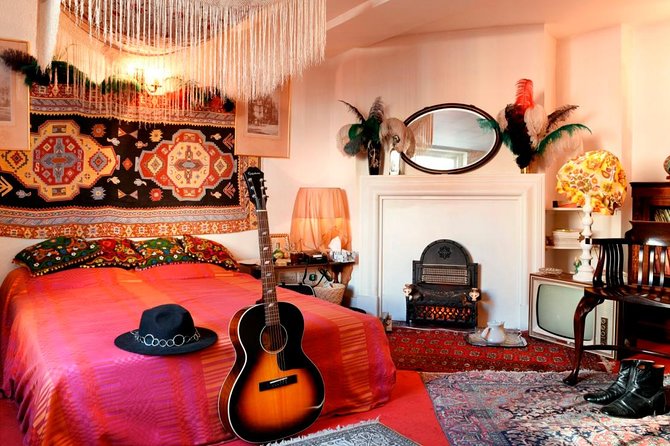
- Jimi Hendrix’s third-floor flat recreated for the way he lived from 1968 to 1969
- Instrument and effects displays that connect Hendrix to the gear behind the sound
- Music in the house is possible, since musicians sometimes practice there in the evening
Undecided so far? Here are further London tours we have written up.
- Stonehenge, Windsor Castle, and Bath from London★ 4.5 · 18,662 reviews
- London Big Bus Hop-On Hop-Off Tour with Optional River Cruise★ 3.5 · 10,803 reviews
- London Small Group Tour of Historical Pubs★ 5.0 · 10,422 reviews
- Stonehenge, Windsor Castle and Bath with Pub Lunch in Lacock★ 4.5 · 7,402 reviews
Handel and Hendrix House on Brook Street, London
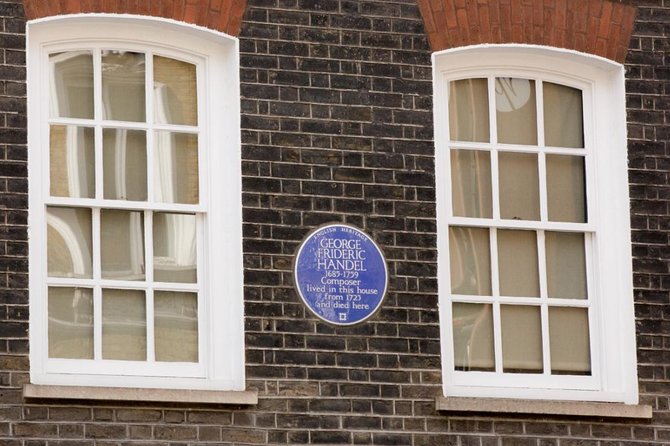
This is the kind of London stop that works even if you are not a hardcore classical or hard rock fan. The building does the heavy lifting. On Brook Street, you move from Handel’s 1700s world to Hendrix’s late-1960s London, and you feel the time gap in a very concrete way, by climbing and changing floors.
The address is easy, too. You head to 25 Brook Street on your own, then enter at your chosen time during open hours. Your ticket is general admission, and you explore at your own pace, which is ideal if you like to linger or want to spend more time on one composer than the other.
The museum experience is also practical for visitors who want structure without a strict schedule. You get roughly 1 to 2 hours in the building, which is long enough to see both sides without turning your day into a full production. And because it is offered in English with a mobile ticket, it is straightforward.
Handel’s house: wonky stairs and the rooms where Messiah took shape

Start with George Frideric Handel’s part of the museum. You go up a staircase that is described as wonky and about 250 years old, which immediately changes how you look at everything else. It is a small thing, but it sets the tone. You are not just reading about a composer, you are getting the physical vibe of an older home.
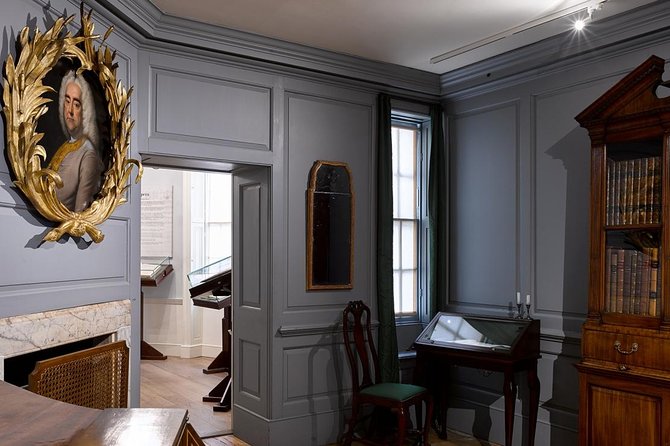
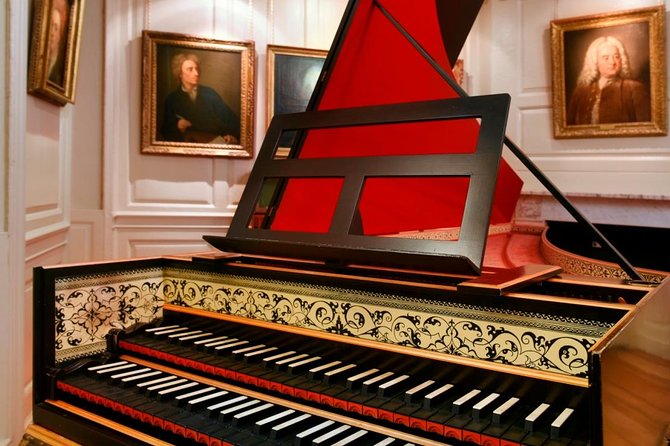
Once you are in, you can wander through restored rooms tied to his working life. Think music rooms where Handel composed, rehearsed, and interacted with other musical luminaries of his era. This is where the museum makes a smart choice: it does not try to cram in every detail. Instead, it gives you enough context to understand what those spaces were for, and you can decide how long to spend in each room.
One highlight is the connection to his most famous work, Messiah, which is said to have been written here. Another striking detail is the story about the windows, where Handel threatened to throw opera stars out if they refused to sing his arias. Even if you know nothing about baroque opera, that anecdote makes the whole setting feel more human and less museum-like.
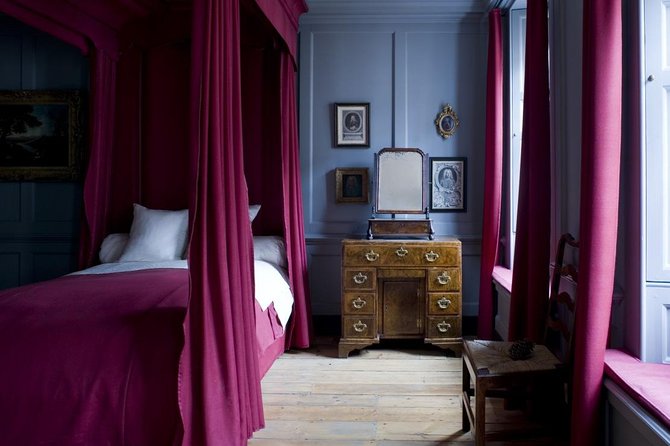
You can also move into the dressing room and bedroom area, including a look at where Handel died. That matters because it changes your visit from “composer achievement” to “a person’s life.” It is also a good moment to slow down, since the rooms are intimate and you are walking through a home rather than a huge gallery.
There may be temporary additional exhibitions as well. That is the part that can vary, but it is also part of the value of a return visit, since you are not locked into a single, fixed storyline forever.
The third-floor Hendrix flat: period details and gear you can picture
When you reach the top, you step into the next-door flat where Jimi Hendrix lived from 1968 to 1969. The museum frames it as a special period in his life, including the detail that Hendrix described the flat at 23 Brook Street as the first place he called home.
The third-floor layout is designed so you are not just looking at a room behind glass. You see the main room recreated in a way that reflects how Hendrix had it, and you learn about how he lived and played there. For music fans, that shift is the magic. You are used to hearing about Hendrix through recordings, gear lists, and interviews. Here, the story becomes spatial. You start to picture how a guitar hero actually moved around a room day to day.
The museum also credits Kathy Etchingham as a consultant on Hendrix’s room. That specific name is a small detail, but it signals something important: the presentation is not generic. You are getting a recreation tied to someone who had real connection to that period.
If you catch it during your visit, you might also get music in the air. One experience described practicing musicians in the evening, with sound carrying through the home. The same review also mentioned hearing a warming-up singer. That is not something you should bank on, but it is a reminder that this is an active music environment, not a silent, dead display.
For gear lovers, the Hendrix side has stand-out display choices. You can see items such as an Epiphone acoustic guitar and Roger Mayer’s Octavia, including explanations of why Hendrix used certain effects. This is one of the best parts for visitors who care about the “how” behind the sound, not just the “wow” of the performance.
How the self-paced format changes what you should prioritize
Because the admission is general admission and self-paced, you control the balance. That sounds obvious, but it changes how you plan your time. If you are more of a Handel fan, you should carve time for the staircase and the music rooms, because those are the pieces that connect to “how it felt” rather than just “what happened.” If you are a Hendrix fan, give the third-floor flat enough time to read the explanations and take in the main room recreation, plus the instrument and effects displays.
A self-guided setup also helps you avoid the common problem of museum visits that feel like a race. Here, you can slow down without worrying you will be left behind. And if you like to take breaks, it is easier to do that in a smaller museum footprint than in larger, full-day attractions.
The downside is that there is no built-in forced pacing. If you get impatient when you are not on a tour schedule, you will want to set your own pace. My advice is simple: pick a target time for each floor. Aim to spend around half your visit on Handel and half on Hendrix, then adjust based on what grabs you.





Practical timing: opening hours, last admission, and what that means

This museum is open Wednesday through Sunday, 10:00 AM to 5:00 PM. Last admission is 4:00 PM, which means you should arrive earlier than you think, especially if you want time to stop, read, and not feel rushed.
The good news is that your ticket is valid for you to choose your entry time during opening hours, as long as you get in before the cutoff. This flexibility helps if your London day is already packed with other plans like museums, markets, or a show.
Also, plan for a visit that is more like a short walk-through plus sitting with a few rooms, not a quick photo stop. The museum experience works best when you slow down and let the spaces do their job.
Value check: is $19.98 worth it?
At $19.98 per person, this is not the cheapest thing in central London. But it is also not trying to replace a full day of major attractions.
The value comes from three practical areas. First, you get both eras in one ticket, Handel on one side and Hendrix on the other. Second, the museum is small enough that you can actually experience it within 1 to 2 hours, rather than leaving with the feeling you barely scratched the surface. Third, the content is varied, mixing composer context, a lived-in home layout, and music-gear storytelling on the Hendrix floor.
If you are a fan of either artist, it tends to feel like an “easy yes,” because you are paying for a physical place tied to people you already care about. If you are not, it is still a good cultural stop because the museum explains why these two musicians matter to London across time, with spaces that help you understand the stories without a heavy lecture.
Who this fits best (and who might want a different plan)
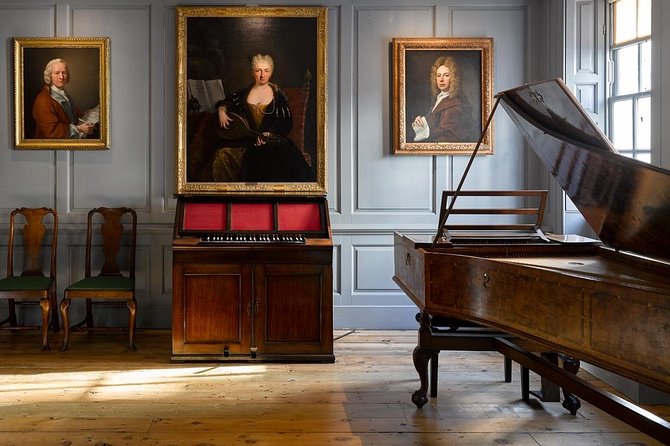
This works well for:
- You if you like music history that is grounded in real rooms and objects.
- You if you enjoy self-guided exploring and want control over how long you stay in each part.
- You if you are a Hendrix fan who also wants a strong Handel counterpoint, or the reverse.
It might not be the best choice if:
- You want a long, multi-hour museum with lots of big, separate galleries.
- You need a fully step-free experience, since you will be climbing the historic staircase.
If you are traveling with kids, remember that children must be accompanied by an adult. For families, it can be a fun way to show two famous musicians in a home setting rather than just a traditional exhibit hall.
Service animals are allowed, and most travelers can participate, which helps make it a reasonable option for many visitors.
Tips to make your visit feel effortless
A few small moves can improve your experience a lot:
1) Start earlier in the day if you can
With last admission at 4:00 PM, earlier entry gives you more breathing room for reading and for any unexpected music sounds in the house.
2) Decide your “main interest” before you enter
You can absolutely enjoy both sides, but if you go in without a plan, it is easy to short-change the part you actually care about. Choose what you want to see most, then let the second floor be a bonus.
3) Use the stairs as part of the story
This sounds silly, but the wonky staircase is part of what makes the building memorable. Take a moment to look around as you climb, so you feel the time shift, not just read it.
4) Look closely at the Hendrix gear displays
If you pay attention to details like the Octavia effects and the instrument items on display, the Hendrix section becomes more than a room replica. It becomes a practical “how the sound was made” experience.
Should you book Handel Hendrix House general admission?
If you want a London music stop that is compact, self-paced, and genuinely different from the big-ticket attractions, I think you should book this. The combination of Handel’s house rooms, a climb into Hendrix’s recreated flat, and practical storytelling around music creation and performance makes the ticket feel like more than “just entry.”
Book it especially if you care about either composer, or if you like the idea of seeing how one city can shape artists across two centuries. If you are short on time, the 1 to 2 hours window is perfect. If stairs are an issue, make your decision with that in mind.
Either way, this is the kind of place where you will come out thinking about music as a physical space, not just a set of recordings.
FAQ
Where is Handel Hendrix House located?
It is at 25 Brook Street, London.
How much does general admission cost?
The price is $19.98 per person.
How long should I plan for the visit?
Plan for about 1 to 2 hours.
What are the opening hours?
It is open Wednesday to Sunday, 10:00 AM to 5:00 PM.
What time is the last admission?
Last admission is 4:00 PM.
Is this a guided tour or self-guided?
This is self-paced, so you explore at your own pace.
What language is it offered in?
The experience is offered in English.
Do I need to bring anything for the ticket?
You get a mobile ticket, and confirmation is received at booking.
Are children allowed?
Yes, but children must be accompanied by an adult.
Can I cancel and get a refund?
Yes. Free cancellation is available up to 24 hours in advance for a full refund.
Fresh off the notebook in London
- Private Rock ‘n’ Roll Music Tour of Central London
★ 5.0 · 7 reviews - London Walking Tour: Camden Town Photography Walkabout
★ 5.0 · 7 reviews - Private Transfer from London accommodation to Cruise terminal
★ 5.0 · 7 reviews - Amazing Nightlife in London East Tour
★ 4.5 · 7 reviews - The British Museum: a highlights tour with a TV historian
★ 5.0 · 7 reviews - Heathrow Airport to Cambridge private taxi transfers
★ 5.0 · 7 reviews