
REVIEW · TREASURE HUNTS AND CITY QUESTS
London Charles Dickens Puzzle Questo and Self-Guided Tour
Dickens, puzzles, and London streets in one hour. I like this experience because it turns famous literary sites into a self-guided challenge you control from the moment you arrive. I also love that it is built for start-anytime flexibility, so you can take pauses for photos and a quick snack without losing the flow.
You get a set of stops and you have to look around for answers to move on, which makes the walk feel purposeful instead of like random sightseeing. The one drawback is also the trade-off, there is no physical guide, so if you prefer someone to explain everything out loud, you may miss that human layer.
If you enjoy city puzzles and you want a budget-friendly way to stitch together Dickens-related corners of London, this is a fun format. You will start at 47 Doughty St in Holborn and finish at 145 Fleet St, and the whole route is designed to fit into about an hour if you keep a steady pace.
In This Review
- Key things to know before you play
- How the Questa Dickens puzzle tour really works
- Price and value for an hour of London game time
- Your route: from 47 Doughty Street to Fleet Street
- Stop 1 at the Charles Dickens Museum, 48 Doughty Street
- Vine Street history and the Man in the Moon Passage clue
- The Three Cripples link to Oliver Twist
- Staple Inn, a survived landmark with wartime scars
- The site of the Lincoln’s Inn Fields Theatre
- The Maughan library and a major London building
- Dr Johnson’s House and the Samuel Johnson connection
- Ye Olde Cheshire Cheese for old pub London
- St Peter of all Nations and the story of wartime use
- Royal College of Surgeons and medicine’s long fight for recognition
- St Dunstan-in-the-West and Romanian Orthodox heritage details
- What I think you will enjoy most about this Dickens puzzle day
- Who this tour fits best
- Should you book the London Charles Dickens Puzzle Questo tour?
- FAQ
- Do I need an internet connection to play?
- Is there a physical guide with this tour?
- How long does the experience take?
- Where do I start and where do I finish?
- What language is the tour available in?
- Can I start at any time and take breaks?
- What is the cancellation policy?
Key things to know before you play
- Offline puzzle play means you can keep going even if your phone data is flaky.
- Private and no human contact helps you avoid crowds and do this on your own schedule.
- Start any time, break anytime, which is ideal when London weather or your energy level changes.
- The game pushes you to look closely at places tied to Dickens, theater, publishing, and even medicine.
- The route is spread across Central London sites, from Holborn toward Fleet Street.
- Expect the clues to be a mix of easy spotting and light brainwork, enough to keep you engaged.
More puzzle trails to argue over with friends
- The Hunt for the Cheshire Cat by HiddenCity★ 5.0 · 225 reviews
- The Enchanted Mirror by HiddenCity★ 5.0 · 156 reviews
- Private Escape Room with a Zombie in London★ 5.0 · 128 reviews
- The Beatles & Liverpool Magical Mystery Tour from London★ 4.5 · 80 reviews
How the Questa Dickens puzzle tour really works
This is a mobile, self-guided experience. You do not meet a person at each stop. Instead, you follow the prompts on your phone, find answers by looking around, and only then move to the next location.
The big win for me is the pacing. You can start at any hour, then resume later if you step away. That flexibility matters in London, because the best part of a walking day is also the least predictable part.
You also play offline, so you are not stuck standing on a corner waiting for a signal. For a city game, that is a big quality-of-life feature.
Price and value for an hour of London game time
At about $8.33 per person, this is priced like a bargain, not like a classic guided tour. The value comes from structure: you get a route with meaningful stops and built-in reasons to pay attention.
In a traditional tour, you might spend the same day passively hearing stories while your guide controls timing. Here, you control timing, which often means you see more because you look for clues rather than just absorbing facts.
If you like Dickens, theater, and the London of old inns and institutions, you will likely feel the value right away. If you only want a narrated walking tour with no guessing, you may find you are paying for the game element more than the storytelling.
Your route: from 47 Doughty Street to Fleet Street
The start is 47 Doughty St, London WC1N 2LW, and you finish at 145 Fleet St, London EC4A 2BU. The experience is set for about one hour, which is a useful target, not a strict rule.
I suggest you plan for around 75 to 90 minutes if you want time for photos, a quick restroom stop, or a slower look at any building. The game encourages you to pause and really scan your surroundings, so moving fast is not the point.
The good news is that it runs every day, and you can book it any time. That is helpful if your trip schedule is tight, or you want a low-commitment activity between other plans.
Stop 1 at the Charles Dickens Museum, 48 Doughty Street
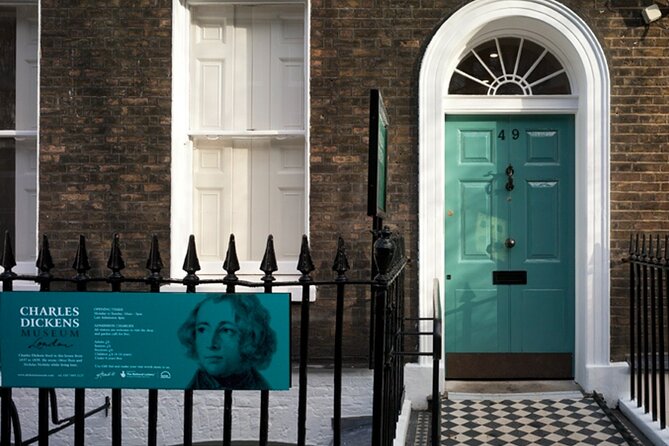
Your first real anchor point is the Charles Dickens Museum, in Dickens’s own home at 48 Doughty Street. The museum is a Georgian terraced house, and Charles Dickens lived there from 25 March 1837 to December 1839, right after his marriage.
This stop works especially well for a puzzle format. You are not just reading a label and moving on. You are actively scanning the place for the game’s answer, which makes the setting stick.
The only thing to consider is that author-house museums can involve lots of small details. If you rush, you might miss what the clue is pointing to, so take your time and look slowly.
Rather go alone? More self led routes here

Vine Street history and the Man in the Moon Passage clue
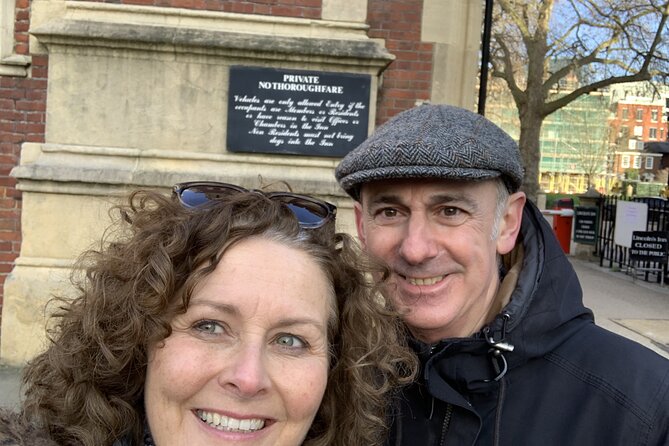
Next, the game drops you into the story of an older street layout, tied to what is now the Man in the Moon Passage. The area was laid out around 1686, and it originally ran further than it does today, along the route shown on John Rocque’s Map of London from 1746.
You also get a glimpse of everyday industry from the early 1700s, since records show a brewery and a carpenter’s yard among the main properties around 1720. For a puzzle game, this kind of local detail is gold, because it turns a nondescript stretch into a timeline you can picture.
A possible drawback here is simple: street history can be subtle. If you are expecting big landmarks, this section may feel more like urban archaeology than photo stops.
The Three Cripples link to Oliver Twist
Then you hit an inn with a Dickens-friendly narrative. The building dates to 1759, but the moment it becomes famous in this story is 1838, when Charles Dickens changed its name to the Three Cripples and made it Bill Sykes’s watering hole of choice in Oliver Twist.
I like this part because it ties Dickens to London places that feel lived-in, not just museum-like. And because the clue requires you to look around, you get a chance to notice the atmosphere rather than only the literary reference.
The word of caution is that pubs and inns can be busy, depending on time of day. Even though this experience is private and designed to avoid crowds, you may still find foot traffic near popular spots.
Staple Inn, a survived landmark with wartime scars
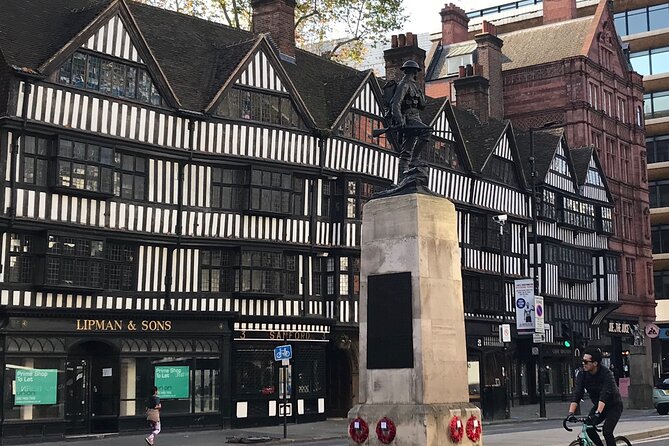
Staple Inn dates from 1585 and once functioned as the wool staple, where wool was weighed and taxed. It survived the Great Fire of London, and later it took serious damage during World War II from a Nazi Luftwaffe aerial bomb in 1944, then was restored.
This is one of those stops where the puzzle mechanic pays off. You are encouraged to slow down, because the clue pushes you to look at features that you might otherwise walk past.
If you are a person who likes layers, this stop gives you several in one building: medieval commerce, post-fire survival, and 20th-century restoration. If you prefer brand-new, polished attractions only, this might feel more complex than you want.
The site of the Lincoln’s Inn Fields Theatre
After Staple Inn, you shift into the world of theater. The Lincoln’s Inn Fields Theatre sat in the fields from 1661 to 1848, before it was demolished. It began as the Duke’s Theatre, created in 1695 by converting Lisle’s Tennis Court.
This is a clever stop for a Dickens-adjacent walk because Dickens and theater both helped define popular London culture. The game nudges you to connect buildings to performances, even if the theater itself is long gone.
A practical note: because this is a former theater location, you may not see the exact structure you expect. The puzzle should help you focus on what is still there.
The Maughan library and a major London building
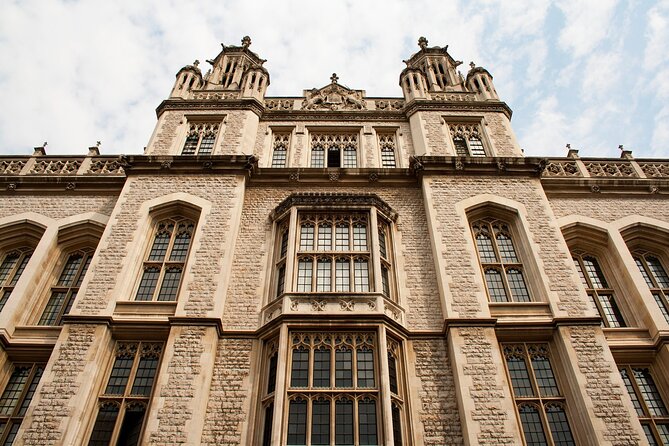
Next up is a modernized heavyweight: the Maughan. After a £35m renovation designed by Gaunt Francis Architects, it became the largest new university library in the UK since World War II. The building traces back to Sir James Pennethorne’s design from 1851, with extensions between 1868 and 1900, and it is Grade II* listed.
For a puzzle tour, this stop feels satisfying because you get both drama and architecture. You are dealing with something that reads as institutional and impressive, yet the game still forces you to engage with details.
If you want quiet and uninterrupted looking time, aim for a calmer moment of day. Libraries and public buildings can have schedules and foot traffic, even when you are not in a big guided group.
Dr Johnson’s House and the Samuel Johnson connection
You then move to Dr Johnson’s House, associated with Samuel Johnson (1709 to 1784). The house was probably built for a city merchant, and Johnson rented it from 1748 to 1759, which is why it matters to English literary history.
I like that the route does not only stick to Dickens. By bringing in Johnson, it quietly broadens the literary London story, and the puzzle answer keeps you from turning this into a quick glance.
One consideration: author houses and literary sites can be more about atmosphere than action. If you need hands-on interpretation, you might want to pair the puzzle walk with a little extra time at one museum stop.
Ye Olde Cheshire Cheese for old pub London
Now you hit a classic pub setting with deep roots. Ye Olde Cheshire Cheese was built in the 1530s, though the original pub was lost in the Great Fire of London in 1666. The current pub dates from 1667 and was among the first London buildings reconstructed after the Great Fire.
This is the part of the route that many people enjoy most, because a pub stop makes the walking feel like a day out, not just a mission. It also fits the Dickens-era flavor of the walk, since old taverns and writers went together like ink and paper.
The only tip I will give is to plan your timing so you do not end up rushing your clue-finding. Even if you take a break with a drink, keep your phone ready so you can continue smoothly.
St Peter of all Nations and the story of wartime use
Next is the Church of St Peter of all Nations, consecrated on 16 April 1863. At the time, it was the only basilica-style church in the UK, and the organ was built in 1886 by Belgian Anneesen. During World War II, when Italian immigrants were interned, Irish Pallottines made use of the church.
This stop is powerful in a quiet way. You are in a place shaped by changing communities and real-world events, and the clue format helps you spend a bit more time noticing religious architecture instead of just taking a quick photo.
A practical consideration: churches can have limited visiting hours depending on services. The puzzle keeps you moving, but you should still be mindful of what the building is doing that day.
Royal College of Surgeons and medicine’s long fight for recognition
After the church, you land at the Royal College of Surgeons. The institution’s roots go back to the 1540s, when the Company of Barbers and the Fellowship of Surgeons joined together to form the Company of Barber-Surgeons. In the 1700s, medicine became an academic discipline, and surgeons pushed for more recognition of their expertise.
This is a great stop for readers of London’s social story. It reminds you that cities like London were built not just by writers and theater people, but by professionals shaping science and public life.
Since you are solving puzzles outdoors or in semi-public spaces, you might want to slow down if the area around you is active. You do not want to miss the clue just because you are walking through quickly.
St Dunstan-in-the-West and Romanian Orthodox heritage details
Your final stretch includes Romanian Orthodox chapel St Dunstan-in-the-West, sharing space with the Romanian Orthodox community at St George church. The chapel to the left of the main altar is closed off by an iconostasis, originally from Antim Monastery in Bucharest, dedicated in 1966.
I like how this end point widens the angle again. London is a patchwork of immigrant communities and shared buildings, and this stop gives you one clear example.
If you are tired, this is still a good place to slow down, because the clue-finding approach works well when you take time to look carefully. Finishing near Fleet Street also keeps your options open afterward for food, coffee, or a short train ride.
What I think you will enjoy most about this Dickens puzzle day
The most praised part of this experience is the way it stays easy to manage and enjoyable at your pace. You start when you want, you can pause when you need to, and the game keeps you moving without requiring you to keep up with a group.
I also really like the balance of clue difficulty. If you want a puzzle that is either too obvious or too frustrating, this is not that kind of game. The clues push you to look around, but they are not designed to punish you.
And yes, it genuinely fits people who want pub time. The route includes classic old-school drinking spots, so you can turn the walking into a proper London afternoon, not just a quick museum hop.
Who this tour fits best
This is ideal if you like a self-paced sightseeing day and you enjoy puzzles that ask you to pay attention. It is also a great fit if you want to avoid crowds and do not want to spend your trip waiting for a guide to catch up.
It is less ideal if you want a deep, spoken narration of every stop. Since there is no physical guide, you will be reading and looking for answers rather than listening to a person interpret everything for you.
If you are traveling with friends or family, private play is a plus. You stay together as a group, but you are not forced into a large crowd rhythm.
Should you book the London Charles Dickens Puzzle Questo tour?
I think you should book it if you want a budget-friendly, low-pressure way to do Dickens-related London in about an hour, while still seeing real landmarks instead of just scanning a map. The offline puzzle format, private setup, and start-anytime flexibility make it feel practical for modern travel.
You might skip it if you prefer guided storytelling and do not want to solve clues by looking around. But if you like the idea of hunting for answers in places tied to Dickens, theater, old commerce, and even medicine, this is a smart use of time.
FAQ
Do I need an internet connection to play?
No. The tour is designed for offline play, so you do not need an internet connection to use it.
Is there a physical guide with this tour?
No. This tour does not come with a physical guide. It is private and self-guided with no human contact.
How long does the experience take?
It is listed as about 1 hour.
Where do I start and where do I finish?
Start at 47 Doughty St, London WC1N 2LW. The tour ends at 145 Fleet St, London EC4A 2BU.
What language is the tour available in?
The tour is offered in English.
Can I start at any time and take breaks?
Yes. You can start at any hour, take a break at any time, and resume later.
What is the cancellation policy?
Free cancellation is available. You can cancel up to 24 hours in advance for a full refund, and if you cancel less than 24 hours before the start time, the amount you paid is not refunded.
If you want, tell me your travel dates and whether you prefer pub stops or quieter looking time, and I can suggest a pacing plan to fit the route into your day.
Other Departures With A Guide Attached


Routes You Can Walk Unaccompanied



More Trails, Clues And Dead Ends






Fresh off the notebook in London
- Witchcraft, Ancient Cults & MI15 Spy Secrets
★ 4.0 · 3 reviews - Arrival Transfer: London Train Stations to London Hotels
★ 5.0 · 3 reviews - Royal Afternoon Tea & Walk at Kensington Palace
★ 4.5 · 3 reviews - Bridgerton Tour in London
★ 5.0 · 3 reviews - Private Transfer from central London to Southampton Cruise Terminal
★ 5.0 · 3 reviews - Photographer, Professional Photo Shoot – London
★ 5.0 · 3 reviews
Treasure Hunts and City Quests, compared.
 ★ 5.0Beatles Magical Mystery TourFrom $309,266 reviews
 ★ 5.0Fun, Flexible Treasure Hunt Around Manchester with Cryptic Clues & Hidden GemsFrom $20253 reviews
 ★ 5.0Fun, Flexible Treasure Hunt Around York with Cryptic Clues & Hidden GemsFrom $20248 reviews
 ★ 5.0The Hunt for the Cheshire Cat by HiddenCityFrom $40225 reviews
 ★ 5.0Fun, Flexible Treasure Hunt Around Bath with Cryptic Clues & Hidden GemsFrom $20208 reviews
 ★ 5.0Fun, Flexible Treasure Hunt Around Oxford with Cryptic Clues & Hidden GemsFrom $20202 reviews
 ★ 5.0Shepton Mallet Prison Escape Room – The CellFrom $38187 reviews
 ★ 5.0Fun, Flexible Treasure Hunt Around Birmingham with Cryptic Clues & Hidden GemsFrom $20167 reviews
Browse the lists this tour appears in