
REVIEW · PHOTOGRAPHY SESSIONS
London Photography Tour – Private Tour
Big landmarks get better with coaching.
This private London photography tour turns famous sights into real practice time, with a professional Fine Art photographer guiding your camera choices and framing at each stop. In recent experiences, the instruction often comes from Lou, who is praised for making settings click, not just showing where to stand.
Two things I like a lot here are private, hands-on guidance and the steady focus on camera settings as you walk. You are not just sightseeing while holding a camera, you are learning how to shoot what you see, then adjusting as light and scenes change.
The main drawback to consider is pace. You cover a lot of central London in about four hours, so comfortable shoes matter, and you will be moving between photo spots more than you will be standing still.
In This Review
- Key highlights to look for
- How the private London photo lesson works in 4 hours
- Trafalgar Square: framing and depth of field on classic London stone
- The National Gallery: a quick lesson in angles and focusing
- Leicester Square to Piccadilly Circus: light, angles, and portraits that feel alive
- Horse Guards Parade and Whitehall: portraits, action freezing, and flash fill
- Big Ben and Parliament Square: making iconic scenes look intentional
- Westminster Abbey outside: scale, zoom choice, and lens thinking
- London Eye from the river: shutter speed and depth for a big-scale subject
- What you’ll learn, and why it matters for your next trip
- Price and value: what $336.40 per person is really paying for
- Gear, pace, and smart prep before you meet at Charing Cross
- Who this tour suits best
- Should you book this London photography tour?
- FAQ
- How long is the London Photography Tour?
- What are the start and end points?
- Is this a private tour?
- What language is the tour offered in?
- Do I need to bring my own camera?
- What’s included in the tour price?
- Is lunch or refreshments included?
- Does the tour run in bad weather?
- Are service animals allowed?
- Can I get a full refund if I cancel?
Key highlights to look for
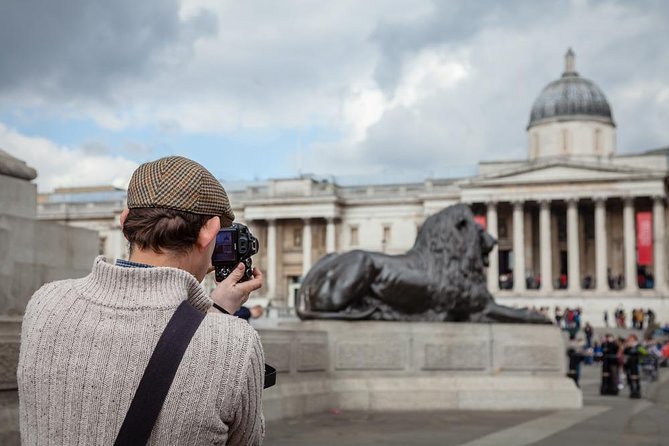
- Private coaching with a professional Fine Art photographer, with help at each location
- Practical lessons on camera settings like aperture, depth of field, focusing, and shutter speed
- A “shoot, then check” rhythm, including a short working break to review progress
- A classic central route that stacks iconic backdrops into one walk, from Trafalgar Square to the London Eye
- Free-entry stops planned throughout, so your cost goes mostly to instruction rather than admissions
Cameras out: further shoots we tagged along on
- Professional Photoshoot in London Photographer★ 5.0 · 102 reviews
- Private landmarks photoshoot for families and couples★ 5.0 · 92 reviews
- Professional Private Photoshoot in London★ 5.0 · 63 reviews
- 30 Major London Attractions Walking Tour With Photos★ 4.5 · 51 reviews
How the private London photo lesson works in 4 hours
This tour is built like a guided photo workshop that happens outdoors. You start at Charing Cross (London WC2N 5DP), then you end near Victoria Embankment, so you can finish close to major transit instead of backtracking.
The structure is simple: you reach a landmark, you spend a focused window photographing it, and your photographer coaches you on what to change in your camera. Stops are short enough to keep you moving, but long enough to try more than one angle. The tour also includes a review of your photographs and how to develop your photography skills, which is where the learning sticks.
Because it is private, the guidance can be tuned to your level. It is offered for all skill levels, and the tour is suitable for digital cameras including smartphones, so you are not stuck if your gear is basic. You do want to bring a fully charged battery and, ideally, some extra memory cards since you will take more photos than you think you will.
Trafalgar Square: framing and depth of field on classic London stone
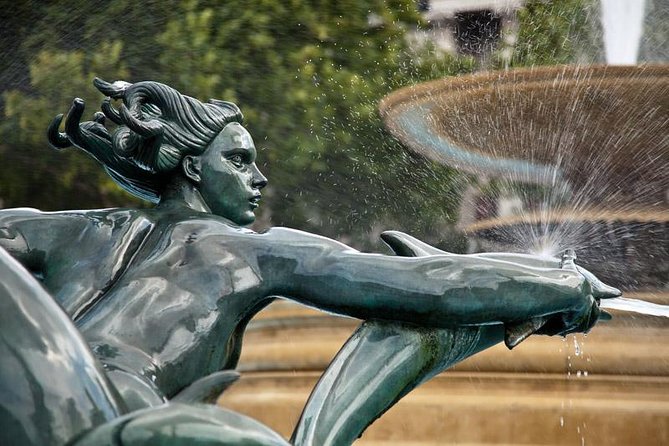
You begin in one of London’s most photogenic squares. Trafalgar Square gives you layers to work with: architecture, statues, fountains, and that wide-open plaza feel. The tour time at this stop is about 35 minutes, which is plenty for testing composition ideas instead of only grabbing a single postcard shot.
The coaching here is centered on how to make a big scene look intentional:
- improve composition
- use framing for creativity
- learn how to use light effectively
- choose lenses (or at least focal lengths on a smartphone)
You also get a real-world subject that photographers love in London: street performers and pavement artists. Trafalgar Square has a constant flow of color, including chalk drawings, so you can practice photographing people and details while the background stays recognizable.
If you like learning the “why” behind a photo, this is a strong first stop. You also get a chance to photograph views from Trafalgar Square toward Whitehall, which is a different kind of challenge than shooting just monuments up close.
Practical note: this area can be busy, but the tour is timed for walking and shooting, so you will likely be focused on specific angles and techniques rather than wandering randomly.
The National Gallery: a quick lesson in angles and focusing
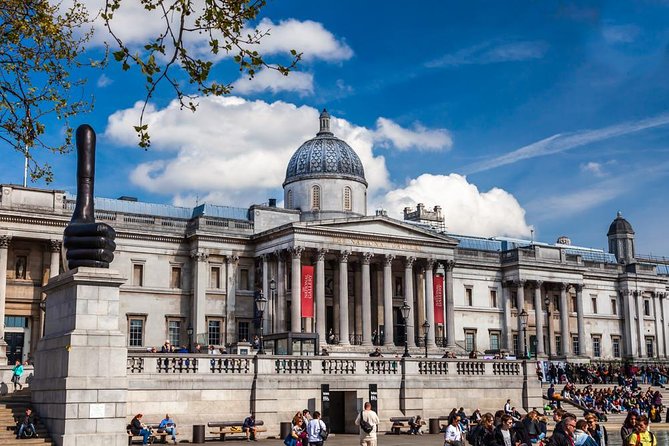
Next comes the National Gallery for about 15 minutes. This is a short stop, so the point is not to do a full museum visit. Instead, you learn how to translate the building’s geometry into stronger photos.
The themes here are clear and useful:
- angles of view
- depth of field
- focusing techniques
This matters because museums and large buildings can trick you into shooting everything as one flat image. With this stop, you get practice in separating layers and making the scene feel more dimensional. Even if you are using a phone, “depth” is still a compositional decision, like choosing what is sharp and what fades.
The good part about this quick segment is that it keeps you in momentum. You are learning techniques that you can reuse later at different types of landmarks, not only here.
Leicester Square to Piccadilly Circus: light, angles, and portraits that feel alive
Leicester Square is next for about 25 minutes, then you move into Piccadilly Circus for about 45 minutes, including a short working break to review progress.
Leicester Square gives you recognizable faces in a very London way: statues like William Shakespeare and a photo-friendly mix of gardens, fountains, and that entertainment vibe. The coaching pushes you to think about light and settings through small, manageable experiments:
- composition and framing
- how light affects the final look
- aperture and depth of field
- general camera handling
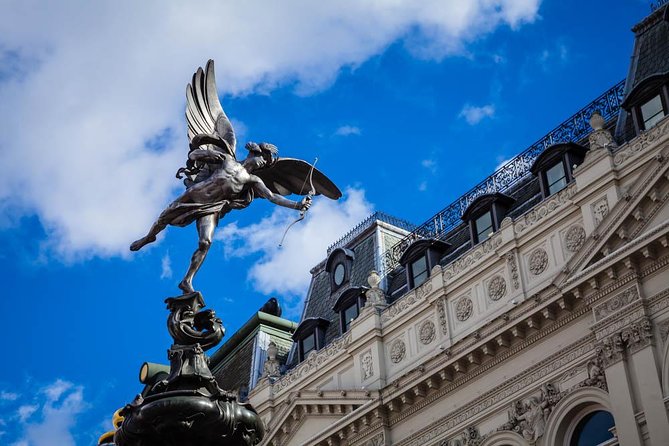
Then Piccadilly Circus shifts the mood. You photograph red telephone boxes, red buses, and the Statue of Eros. Your route passes banners over Regent’s Street, plus those quirky side streets and small shops that can become great backdrops if you shoot them like scenes, not just signage.
At Piccadilly, your photographer also covers:
- camera handling
- composition
- light
- white balance
- how to see locations with fresh perspective
The working break is a smart feature. You get time to look at what you shot, talk about what worked, and adjust for the rest of the tour. That is how you avoid repeating the same settings again and again.
If you care about portraits, this part includes guidance on how to photograph statues as subjects and how to experiment with focus and aperture values for a more “intentional” look.
More private departures, group size noted
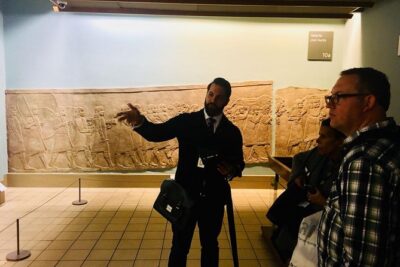
Horse Guards Parade and Whitehall: portraits, action freezing, and flash fill
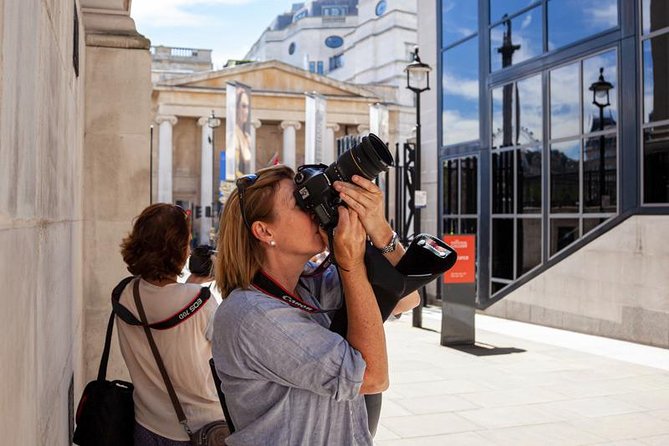
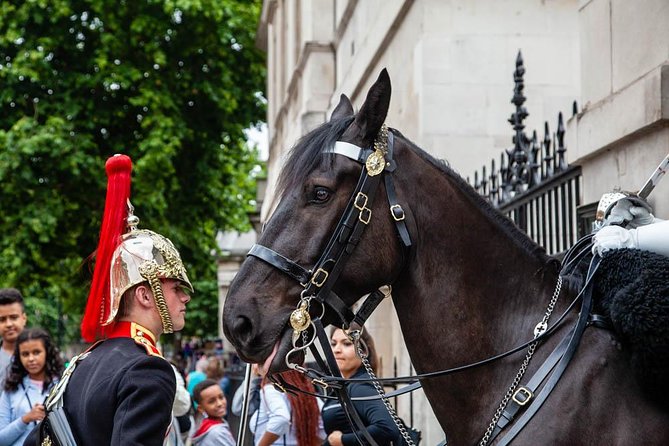
This section is about 40 minutes and it is one of the best places for learning real photo challenges: uniforms, movement, and dramatic subject poses.
You will photograph Horse Guards Parade and sentries, including colorful uniforms and mounted scenes. This is not only about getting the correct landmark in frame. It is also about learning how to create imposing portraits:
- aperture values for portraits
- shutter speed to freeze action
- focusing techniques
- fill in flash
That fill in flash point is especially practical. If you have ever taken a portrait in bright daylight and hated the harsh shadows, guidance like this is gold. Even if you are using a phone, the principle translates to how you manage lighting and brightness.
You also pass the Cabinet War Rooms and statues honoring the Women of the Second World War. These stops give you a chance to shoot a more respectful, documentary-style frame, rather than only chasing bright color.
There is a practical bonus in having Westminster Tube signage along the way too. Text and design can be tricky to photograph without making it look crooked or blurry, so it is a good checkpoint for focus and perspective skills.
Big Ben and Parliament Square: making iconic scenes look intentional
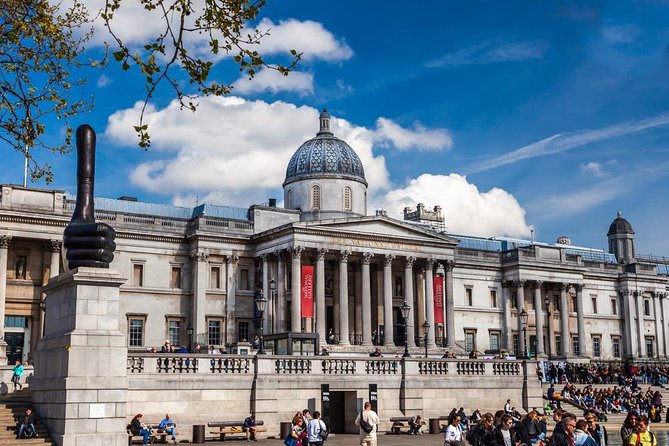
After Whitehall, you reach Big Ben and the Houses of Parliament area.
Big Ben gets about 15 minutes. The time is short on purpose: you focus on iconic compositions and quick adjustments to make the shot feel less like a forced souvenir and more like a real photograph. You also get a classic London touch with the red telephone box in the iconic setting.
Then you spend about 30 minutes at Parliament Square, where the photographer helps you line up the most impressive statues. You learn how to photograph major figures like Winston Churchill, Gandhi, and Nelson Mandela against the Houses of Parliament backdrop.
This part is where composition matters most. Big buildings can swallow your subject if your framing is off, and statuary can become too small if you do not manage perspective. Your photographer helps with that by pointing out how to work the scene like a layered image: subject first, then context.
If you want photos that look like they belong in a photo book, this is the segment to treat carefully.
Westminster Abbey outside: scale, zoom choice, and lens thinking
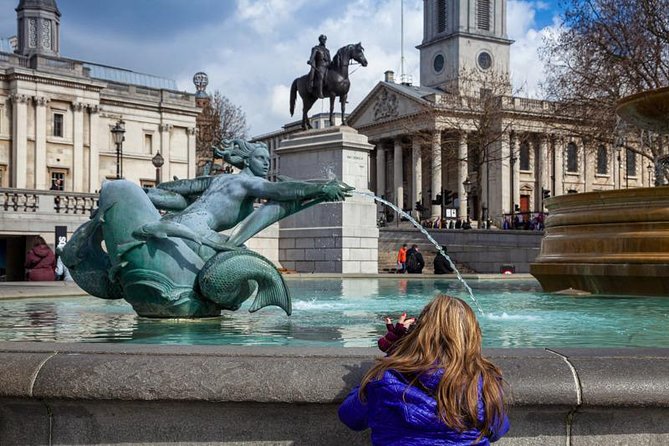
Westminster Abbey is about 15 minutes and you photograph it from the outside. Even without entering, the building is a scale test. Abbey walls and architectural lines can easily turn into a “everything in one frame” blur unless you make deliberate framing choices.
You are taught:
- composition and framing
- scale
- lens choice and zoom selection
- creative aperture values
This is useful even if you use a smartphone. Zoom choice is still a decision. Do you want the building to dominate, or do you want a tighter crop that emphasizes texture? Creative aperture values can also translate into how you position people, edges, and distances so you get a more layered look.
The learning payoff is that you will start thinking in layers during your own future travel photos, not just during this tour.
London Eye from the river: shutter speed and depth for a big-scale subject
Your final main landmark is the London Eye, about 20 minutes. You are photographing from across the river, which changes everything. Light angle, reflections, and distance all come into play, so your photographer focuses on how to keep a large subject looking sharp and composed.
This stop includes coaching on:
- light
- depth of field
- general camera handling
- shutter speed
- focusing techniques
- composition
You also get time to consider the relationship between the London Eye and the surrounding river life. That helps you avoid only shooting a single perfect frame. Instead, you learn to include motion or context without losing the subject.
The London Eye is huge, and that can be intimidating on a camera. This is where shutter speed and focusing guidance pays off. If you keep trying the settings under direction, you walk away with photos that feel more “designed.”
What you’ll learn, and why it matters for your next trip
The tour is packed with technical terms, but the teaching approach is practical: you learn a concept, apply it to an actual scene, then adjust based on results.
Here are the key skill areas you will practice:
- Aperture and depth of field: how much your background fades, and when sharpness on a subject is what you want
- Composition and framing: using edges, landmarks, and sightlines to guide the eye
- Light and white balance: making colors and brightness look natural instead of off
- Focusing and lens choice: deciding what should be sharp and what can soften
- Shutter speed: freezing action when there is movement, and managing blur when it helps
- Camera handling: basic stability and control, especially when you are shooting quickly while walking
One of the most praised parts in the experience feedback is that instruction is encouraging and confidence-building. People talk about feeling more capable with exposure, sharpness, and composition after the session. That is the real value here: you can turn what you learned into better photos the very next day, even when you are on your own.
Price and value: what $336.40 per person is really paying for
At $336.40 per person, this tour is not a casual add-on. You are paying for a professional Fine Art photographer with teaching experience and the time to coach you through multiple camera settings and compositions over a half-day.
The value angle is that you are also getting a route that covers many central sights without you having to plan photo logistics. Stops are planned with Admission Ticket Free marked at each listed location, so the cost is mostly focused on instruction and guiding rather than museum entry fees.
It is also private, meaning the attention stays on your group. That matters because photo coaching is the kind of learning where small corrections are huge. A public group tour might point and walk, but this setup is built for adjustment and feedback.
You also get a working break to check your progress. That time is not just a rest, it is a learning checkpoint, and it can prevent you from repeating the same camera mistake for the rest of the walk.
Gear, pace, and smart prep before you meet at Charing Cross
This tour works with many camera types, but you still need to show up ready so you can focus on shooting.
Here’s what to do before you go:
- Bring your own camera and make sure the battery is fully charged
- Plan on extra photos, so pack additional memory cards
- Wear comfortable shoes for a walking tour of multiple central locations
- Dress for the weather, since it operates in all weather conditions
The tour is also designed to be friendly for different levels, including beginners and people using smartphones. That does not mean you skip the learning. It means the photographer can translate the same ideas into settings that match your device.
If you are traveling with kids or teens, the tour can still work well because it is hands-on and uses real subjects: statues, street art, architecture, and big landmarks.
Who this tour suits best
This is a great match if you want:
- real instruction on how to get sharper, better composed photos
- a curated central London walk that hits major sights efficiently
- private coaching instead of generic tips
- a format that works for both beginners and more experienced photographers
It may feel less ideal if you want long stops to explore interiors at your own pace. This is a shooting-and-learning route, so the emphasis is on time at each location for practice, not deep sightseeing.
Should you book this London photography tour?
I’d book it if you like the idea of turning iconic London scenes into a skill-building session. The strongest reasons to choose it are private coaching, repeated practice with real landmarks, and that focus on settings like aperture, depth of field, shutter speed, focusing, and even white balance. You are likely to leave with photos you are proud of and more control over how you shoot next.
If you are only looking for a casual photo walk with minimal instruction, you might find it more structured than you want. But if you want your camera to behave more like a tool you understand, not a button you hope works, this is a smart way to spend a half-day in London.
FAQ
How long is the London Photography Tour?
The tour runs for about 4 hours (approx.), with time spent at multiple central London stops.
What are the start and end points?
You start at Charing Cross, London WC2N 5DP, and the tour ends at Victoria Embankment, London.
Is this a private tour?
Yes. It is listed as a private tour/activity, and only your group participates.
What language is the tour offered in?
The tour is conducted in English.
Do I need to bring my own camera?
Yes. You should bring your own camera and a fully charged battery. The tour is also suitable for smartphones.
What’s included in the tour price?
Included are a Professional Fine Art Photographer with teaching experience, expert photography instruction, guidance from a professional photographer, a photography walking tour, and a review of your photographs and how to develop your photography skills.
Is lunch or refreshments included?
No. Refreshments and lunch are not included.
Does the tour run in bad weather?
Yes, it operates in all weather conditions, so you should dress appropriately.
Are service animals allowed?
Yes, service animals are allowed.
Can I get a full refund if I cancel?
Free cancellation is available. You can cancel up to 24 hours in advance for a full refund. If you cancel less than 24 hours before the start time, you will not be refunded.
More Private Departures
More Photo Walks And Shoots
Fresh off the notebook in London
- Private Rock ‘n’ Roll Music Tour of Central London
★ 5.0 · 7 reviews - London Walking Tour: Camden Town Photography Walkabout
★ 5.0 · 7 reviews - Private Transfer from London accommodation to Cruise terminal
★ 5.0 · 7 reviews - Amazing Nightlife in London East Tour
★ 4.5 · 7 reviews - The British Museum: a highlights tour with a TV historian
★ 5.0 · 7 reviews - Heathrow Airport to Cambridge private taxi transfers
★ 5.0 · 7 reviews
Photography Sessions, compared.
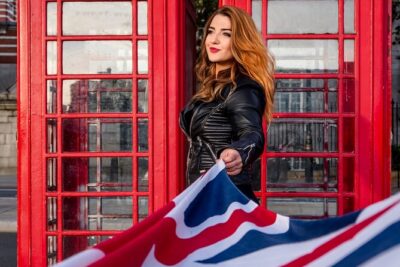 ★ 5.0Professional Photoshoot in London PhotographerFrom $305102 reviews
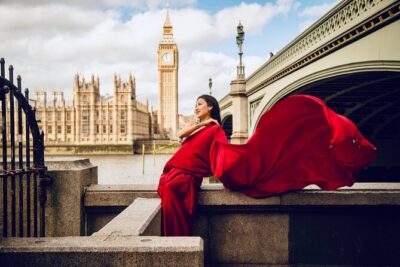 ★ 5.0Private landmarks photoshoot for families and couplesFrom $16692 reviews
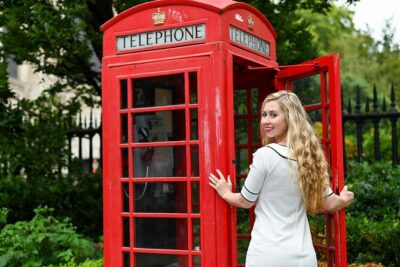 ★ 5.0Professional Private Photoshoot in LondonFrom $10963 reviews
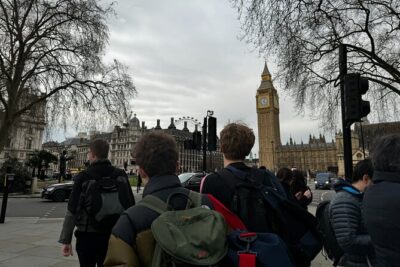 ★ 4.530 Major London Attractions Walking Tour With PhotosFrom $6751 reviews
 ★ 5.0Private Tour: Night Photography Tour in LondonFrom $33748 reviews
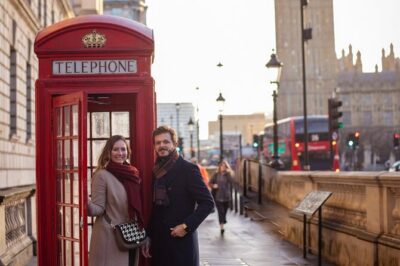 ★ 5.0Professional Private Couple PhotoshootFrom $15735 reviews
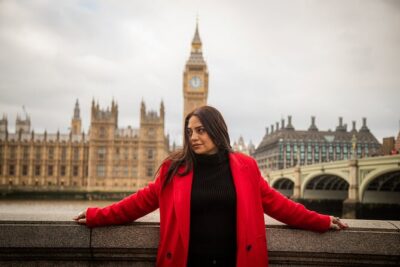 ★ 5.0London: Private Landmarks with a Professional PhotographerFrom $17930 reviews
 ★ 5.0Private Night Photography Tour in LondonFrom $16429 reviews
Browse the lists this tour appears in