
REVIEW · SELF-GUIDED TOURS
Private Chester Self-Guided Tour
Chester rewards slow walking and sharp listening. This private app-guided self-walk takes about 2 to 3 hours, layering Chester Cathedral, Roman ruins, and Victorian park views into one easy route with GPS support. It is a good way to get oriented fast without locking yourself into a strict tour pace.
I love two things most. First, the price is low enough that you can treat it like a smart city warm-up, not a big splurge. Second, the audio is guided by Jake, and you also get media plus practical recommendations to help you plan what to do after the walk.
One possible drawback: it depends on your phone and the Exploro app. If your audio or directions act up, you might lose some of the flow, so go in with headphones ready and a little patience.
In This Review
- Key highlights you can count on
- Why Chester works so well as a 2 to 3 hour self-guided loop
- Price and value: what $12.33 buys you, and what it does not
- Using the Exploro app like a pro (no babysitting required)
- Stop-by-stop: Chester Cathedral to Grosvenor Park
- Stop 1: Chester Cathedral (about 15 minutes, ticket not included)
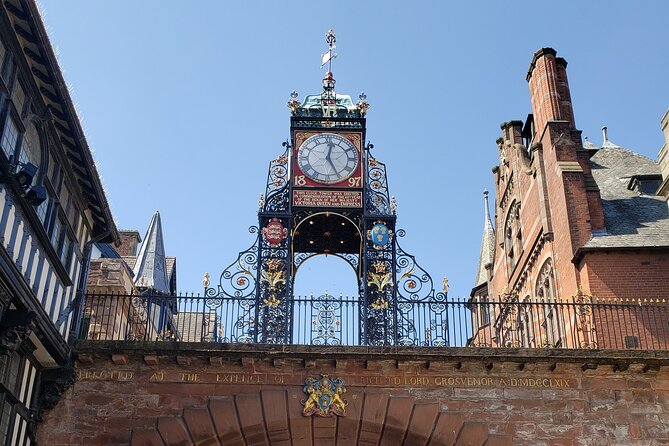
- Stop 2: Eastgate & the Eastgate Clock (about 5 minutes, free)
- Stop 3: Chester City Walls (about 15 minutes, free)
- Stop 4: The civil war cross and why it was set there
- Stop 5: Minerva’s Shrine at Edgar’s Field Park (about 10 minutes, free)
- Stop 6: Chester Roman Gardens (about 15 minutes, free)
- Stop 7: Chester Roman Amphitheatre (about 15 minutes, free)
- Stop 8: Grosvenor Park finish (about 20 minutes, free)
- The walking plan and pacing: how to control your day
- What you’ll really learn, beyond facts
- Who should book this Chester self-guided tour
- Should you book this tour?
Key highlights you can count on
- App-guided pacing with a mapped route, GPS directions, and clear stops
- Jake’s audio narration with supporting pictures, videos, and recommendations
- A Roman-heavy route through walls, the Minerva shrine area, Roman Gardens, and the amphitheatre
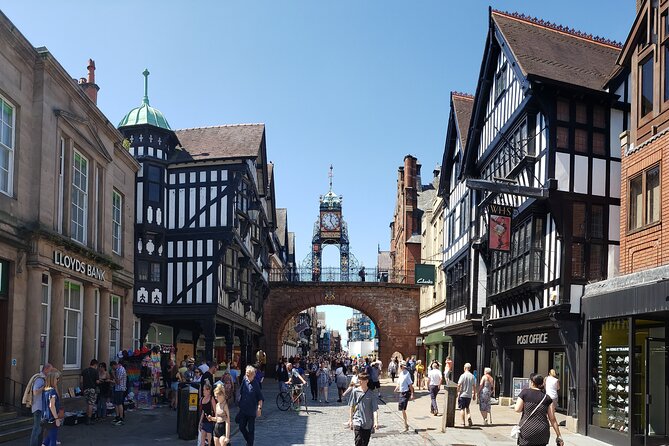
- Iconic Chester landmarks like Eastgate Gate and the Eastgate Clock
- A pretty finish in Grosvenor Park, overlooking the River Dee
Rather go alone? More self led routes here
- Haunted Chester and its Ghosts: A Self-Guided Walking Tour★ 5.0 · 19 reviews
Why Chester works so well as a 2 to 3 hour self-guided loop

Chester is the kind of city where the best moments are small. A gate clock you thought was just decorative turns out to sit on top of Roman stone. A stretch of wall becomes less of a barrier and more of a timeline you can walk along.
This tour fits that style perfectly. You start at Chester Cathedral, then work your way through Roman-era highlights, a medieval Norman legacy, and finishing with a Victorian park stretch. With stops timed around 5 to 20 minutes each, you can control how long you linger without breaking the route.
The self-guided format also keeps you out of the awkward shuffle. You will not feel rushed to hear every detail at once, and you can pause when something catches your eye, like the lines of the walls or the setting of Edgar’s Field Park.
If you are visiting for the first time, this kind of route is especially useful. It gives you a clean mental map so the rest of your Chester day makes more sense.
Price and value: what $12.33 buys you, and what it does not
At about $12.33 per person, this is priced like a budget city orientation tool. You are paying for structure, route clarity, and audio context, not for paid access to every attraction.
That matters because some of the stops mention admission tickets as not included. Chester Cathedral and Chester Castle fall into that category, so if you want interior access, you will need to plan for that separately.
On the other hand, several stops are explicitly free, including Eastgate & the Eastgate Clock, the City Walls segment, and the Roman Gardens, Minerva shrine area, and the Roman Amphitheatre. So even if you skip paid interiors, you can still get a meaningful route.
Another value point is access time. You get 3 weeks unlimited access on the app after activation, which means you can re-walk or re-read parts without pressure. If your first attempt starts late, you can also come back and use the content again later.
Finally, the tour is booked about 10 days in advance on average. That is not a reason to stress, but it does suggest it is a popular way to see Chester efficiently, especially for independent travelers.
Using the Exploro app like a pro (no babysitting required)

The experience runs through the Exploro app. You should download it and follow the instructions in the email you receive to activate the tour, and the app points you to a mapped route with GPS directions and stop markers.
The audio is a big deal here. The tour is described as being guided by Jake, with audio plus pictures, videos, and recommendations. That is a solid combo for a self-guided walk because you are not stuck with only text while you are walking.
Here are practical ways to make sure it works smoothly:
- Start with a charged phone and headphones you can comfortably wear for 2 to 3 hours.
- Begin exactly at the Chester Cathedral meeting point on St Werburgh St, because GPS routes can start off if you wander.
- Keep an eye on app autoplay. Some reviews mention that audio can begin automatically when you are near a site, even if you are not. If that happens, you will want to pause or shut it off and restart at the correct stop.
- Expect that directions can be a little imperfect on any walking app, especially in older city centers. If your route seems off, pause and re-check the stop list rather than marching into the wrong street.
One more small note: you are getting a private experience for your group only, so you are not coordinating with strangers. That is great, but it also means you are the one running the app, so take the activation step seriously before you head out.
Stop-by-stop: Chester Cathedral to Grosvenor Park
This is a linear walking route with stop times that add up to roughly 2 to 3 hours, depending on how often you pause for photos and audio. Admission rules vary by stop, so it helps to know which ones ask you to pay separately.
Other guided options for the same sights
Stop 1: Chester Cathedral (about 15 minutes, ticket not included)
You kick off with the big perspective. Chester Cathedral is described as the mother church of the Diocese of Chester, and the tour uses it to give you a city-level starting point before you zoom into Roman details.
Because admission is not included, you may do either of these:
- Focus on the exterior and the area around it while you listen to the orientation content.
- Or decide to add paid entry if you want to go inside. The tour content will still help you make sense of what you are looking at.
The practical value of starting here is simple. Cathedral architecture gives you a visual anchor, and the audio helps you see how Chester’s religious and civic identity developed over time.
Stop 2: Eastgate & the Eastgate Clock (about 5 minutes, free)
Then you shift to Chester’s most recognizable emblem. Eastgate Gate and the Eastgate Clock are explained as an emblem of the city, and the audio connects the clock to an older Roman gate beneath it.
This is one of those stops where the time seems short, but the takeaway lasts. Even if you only spend a few minutes, you will start noticing Roman layers everywhere you go next.
If you want to maximize it, stand close enough to see the gate features clearly and let the narration frame what you are looking at.
Stop 3: Chester City Walls (about 15 minutes, free)
Now you walk along the City Walls segment from east toward the north gate. The content focuses on why the walls were created and why they were preserved.
This stop is useful even if you are not a “walls person.” The audio storytelling approach turns the walls into practical history, so you understand what protection meant in Chester, and why people kept these defenses instead of letting them disappear.
Shoes matter here. Even a short section can feel longer than expected if you are stopping often for audio and photos.
Stop 4: The civil war cross and why it was set there
After the walls, you get a different kind of landmark moment. The tour explains what happened in Chester during the civil war and focuses on a cross placed at a specific site, including why it functioned as a high cross in the past.
Because the tour content is tied to that exact placement, do not rush through it. Pause, listen, and then look around the setting. The value is learning why location matters, not just what happened.
Stop 5: Minerva’s Shrine at Edgar’s Field Park (about 10 minutes, free)
Next is Minerva, Roman goddess territory. You are guided to the shrine at Edgar’s Field Park, and the tour describes it as a shrine to Minerva, recorded as a Grade I listed building. You also get information about an early 2nd-century sandstone quarry and what it meant to people at the time.
This stop stands out because it is quieter and more specific than the big ticket sights. You get a Roman religious connection in a park setting, which helps Chester feel less like a museum and more like a living city with older layers still present.
If you are the type who enjoys small but meaningful details, this one is a good reward after the more dramatic Roman wall sections.
Stop 6: Chester Roman Gardens (about 15 minutes, free)
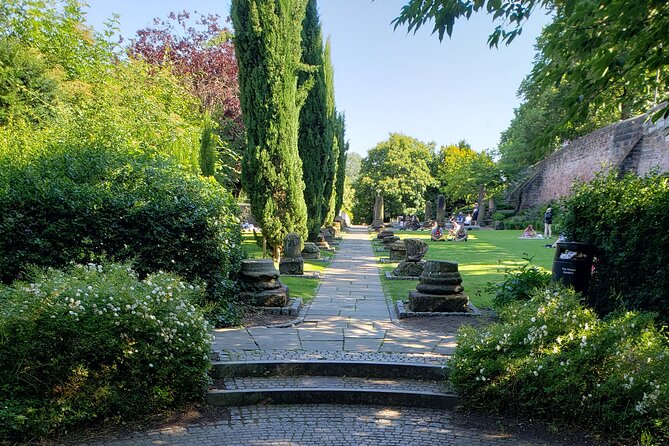
Now you hit the reconstructed Roman story. Chester Roman Gardens is framed as part of Chester’s Roman fort identity, Deva Victrix, with reconstructed buildings presented for public viewing.
The tour also mentions that this garden is a controversial choice, which is a helpful hint. Even if you never get deep into Roman archaeology, learning that there was debate helps you interpret what you see without treating reconstructions like untouched originals.
Spend a little time here listening first, then looking. When you know what you are seeing and why it was built this way for display, the Roman Gardens feel more informative and less abstract.
Stop 7: Chester Roman Amphitheatre (about 15 minutes, free)
The Roman Amphitheatre stop focuses on exposed ruins, described as the northern half of a large stone amphitheatre structure. It is presented as the largest Roman amphitheatre uncovered so far in Britain, tied to the 1st century when Deva Victrix was founded.
This is one of the stops where the audio context pays off. Amphitheatre seating and layout can look confusing if you just see scattered stone. With the narration, you can picture what the space was meant for, and how it connected Chester to Roman entertainment culture.
Take a moment at the edge of the visible remains. Even a brief pause helps your brain map the scale.
Stop 8: Grosvenor Park finish (about 20 minutes, free)
You end in Grosvenor Park, just outside Chester’s historic walls and overlooking the River Dee. The tour describes it as a Grade II registered park and notes it has the Green Flag Award. You also get recommendations for what to do and where to eat around the city.
This ending is practical. You finish your walking loop with a calmer setting where you can stretch, review what you learned, and plan the next part of your day. If you are hungry, you are in a good spot to switch from history mode to food mode.
It also acts like a visual reset. After walls and ruins, the greenery and river views can feel like a breath.
The walking plan and pacing: how to control your day
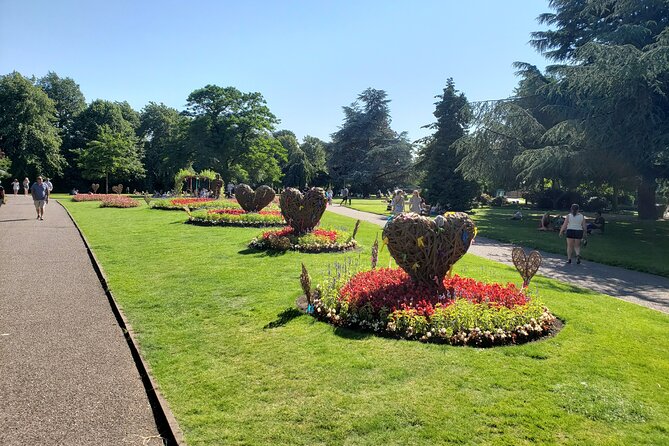
Even though the route is structured, it is designed so you can set your pace. The stop times give you a rough plan, but the self-guided format lets you linger if something is grabbing your attention.
A good strategy is to treat the first half as your orientation period. Spend closer attention at Chester Cathedral and Eastgate because they establish the story. Then you can walk the City Walls at a comfortable speed while the audio connects Roman and post-Roman changes.
For the Roman Gardens and amphitheatre, I suggest you slow down slightly. Those stops are more about interpretation than about a single photo-friendly view. If you rush, you will miss the how and why behind what you are looking at.
For the Minerva shrine, you can keep it shorter if you are low on energy, because it is a focused stop. But do not skip entirely unless you already know you dislike Roman devotional sites. It gives variety to the Roman portion of the day.
By the time you reach Grosvenor Park, you should have enough context to spot patterns. You start noticing how Chester keeps reusing important sites across eras.
What you’ll really learn, beyond facts
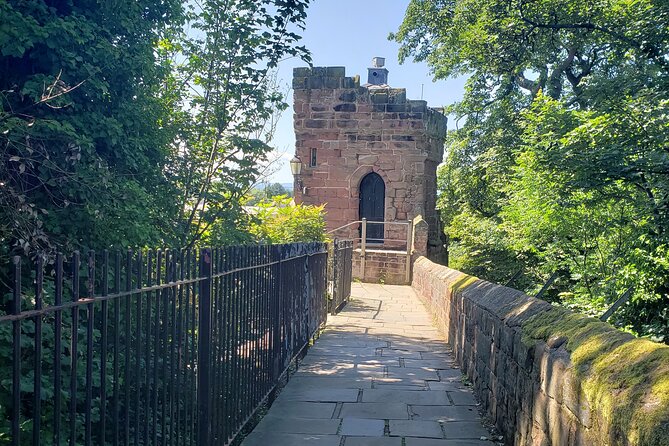
This tour is not trying to turn you into a Chester scholar. It is trying to help you see the connections.
You repeatedly get the Roman theme: Chester as Deva Victrix, Roman gate architecture under Eastgate, Roman walls as a visible line through the city, and Roman entertainment through the amphitheatre. When those pieces are connected in the audio, Chester stops feeling like a pile of separate sights.
You also get a sense of what came after Rome. Chester Castle content references William the Conqueror and the Norman era, and the amphitheatre and Roman Gardens content grounds you earlier in time. That change helps you understand why Chester has the architecture it does.
Then the tour adds curveballs, like the civil war cross tied to a specific place. That matters because it reminds you Chester history is not locked in ancient stone. It continues into later eras that shaped the city’s identity.
Finally, you get a practical bonus: insider tips and recommendations for what to do after the walk. Even if you only use a couple of suggestions, that can save you the time of building a plan from scratch.
Who should book this Chester self-guided tour
This experience is a good fit if:
- You want structure without committing to a set meeting window for a live guide.
- You like history that you can connect by walking between places, especially Roman Chester.
- You are traveling with family or friends and you want a shared plan with independent pacing. The route covers a wide range of building types, so different interests usually find something.
- You are budget-conscious and you are comfortable handling admission tickets if you decide to enter Chester Cathedral or Chester Castle.
It may be less satisfying if:
- You crave dramatic storytelling and strong human voice performance all the way through. If the audio feels too factual, you may want to pair it with other reading or a separate guided visit.
- You are prone to frustration with app glitches. This is a phone-based tour, so if your GPS or audio playback is unreliable, you might have a bumpier time.
Should you book this tour?

Yes, I would book it if you want a smart, low-cost way to see the key Chester landmarks and understand what connects them. The best value is that you get an efficient walk that covers cathedral orientation, Eastgate’s Roman link, city walls, and multiple Roman sites, then ends in a pleasant park where you can recharge.
If you are the type who needs a lively, story-first narration, keep your expectations realistic. This is built for self-paced learning, not for theatre. Bring headphones, start on time, and give the audio a fair shot before you judge.
If you want a simple answer: for most independent travelers, this is a good way to get your bearings fast and make the rest of Chester click.
Other Departures With A Guide Attached


Routes You Can Walk Unaccompanied
Fresh off the notebook in Chester
- Private Chester Self-Guided Tour
★ 4.0 · 23 reviews - The Heart of Chester Walking Tour – Guided Walk
★ 5.0 · 83 reviews - City Sightseeing Chester Hop-On Hop-Off Bus Tour
★ 4.5 · 147 reviews - Chester Food Tour: Unique Food With Drinks & Sightseeing
★ 5.0 · 152 reviews - Medieval Walking Tour of Chester
★ 5.0 · 155 reviews - Fun, Flexible Treasure Hunt Around Chester with Cryptic Clues & Hidden Gems
★ 5.0 · 162 reviews
Self-Guided Tours, compared.
 ★ 4.0Westminster Abbey Entrance Ticket Including Audio GuideFrom $41661 reviews
 ★ 5.0Western Approaches Self Guided TourFrom $24505 reviews
 ★ 3.5Windsor Castle Tour from London with Transportation & Audio GuideFrom $94222 reviews
 ★ 4.0London Panoramic Open Top Bus Tour with Audio GuideFrom $48209 reviews
 ★ 4.5Romans, Vikings and Medieval York: An Audio TourFrom $11118 reviews
 ★ 4.5Emirates Stadium and Arsenal Museum Entrance Ticket Including Audio GuideFrom $48113 reviews
 ★ 4.5Private Self-Guided Dinky Door Hunt in CambridgeFrom $11103 reviews
 ★ 5.0Buckingham Palace: Walking Tour with Entry & Audio GuideFrom $9291 reviews