
REVIEW · WALKING TOURS
Private Guided Walking Tour of Bloomsbury, London
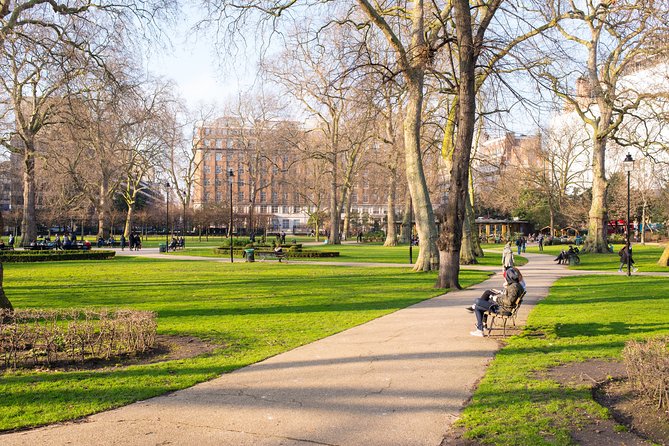
Bloomsbury has a polished face, but the stories behind it get real fast. This private guided walking tour lets you cover key sights on foot, while your guide brings the kind of details you would otherwise miss, from quiet squares to landmark institutions. I like that it’s built for questions, so you can slow down when something sparks your curiosity.
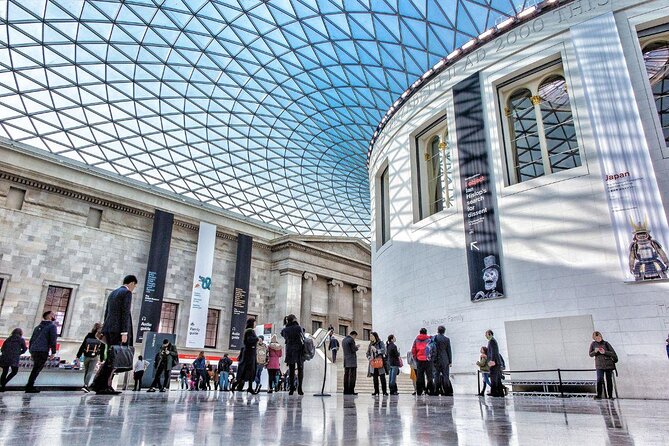
Two things I especially appreciate: the way the route links people and places across centuries, and the finish at the British Museum exterior, where you get a clear lens on what you are seeing. One possible drawback is that the British Museum interior is not included by default, so if you want galleries inside, plan to add the upgrade.
In This Review
- Key Highlights You Will Feel on the Walk
- Why Bloomsbury Works Best on Foot With a Private Guide
- Price and What You Actually Get for $140.49
- How the 2-Hour Pace Feels (and When to Ask Questions)
- Stop 1: Gardens and Early Bloomsbury History Behind the Elegant Surface
- Stop 2: Elizabethan Traders and Feminist Publishing on a Historic Shopping Street
- Stop 3: World-Famous Children’s Hospital, Literature Links, and Monarchs Treated in Private
- Stop 4: Foundling Hospital Origins and Why Abandoned Children Moved Hearts
- Stop 5: Brunswick Centre and Post-War Urban Planning That Still Divides Opinions
- Stop 6: Tavistock Square Monuments and How Conflict Ties In
- Stop 7: Senate House, University of London, and the Bloomsbury Group
- Stop 8: British Museum Exterior Views, Empire Context, and Exploration
- What Makes the Best Versions of This Tour So Memorable
- Practical Tips to Get the Most From Your Walk
- Should You Book This Bloomsbury Walking Tour?
- FAQ
- How long is the Bloomsbury private walking tour?
- Where does the tour start?
- Is the tour only in English?
- Is a British Museum interior visit included?
- Is this a private tour?
- What is the cancellation policy?
Key Highlights You Will Feel on the Walk
- Private, on-foot route through Bloomsbury’s most story-dense streets and squares
- Stop-to-stop storytelling that connects gardens, hospitals, publishing, and monarchy
- British Museum exterior first, with an optional short interior add-on
- Time for questions without the pressure of moving a big group along
- Personal touch, including bespoke London recommendations and optional restaurant reservation
More on foot, at a pace you can hear the guide
- Tour for Muggles The Ultimate Harry Potter Walking Tour in London★ 5.0 · 4,684 reviews
- London Jack The Ripper Guided Walking Tour★ 5.0 · 3,131 reviews
- Changing of the Guard Guided Walking Tour in London★ 5.0 · 1,793 reviews
- The Great British Rock and Roll Walking Tour★ 5.0 · 1,371 reviews
Why Bloomsbury Works Best on Foot With a Private Guide
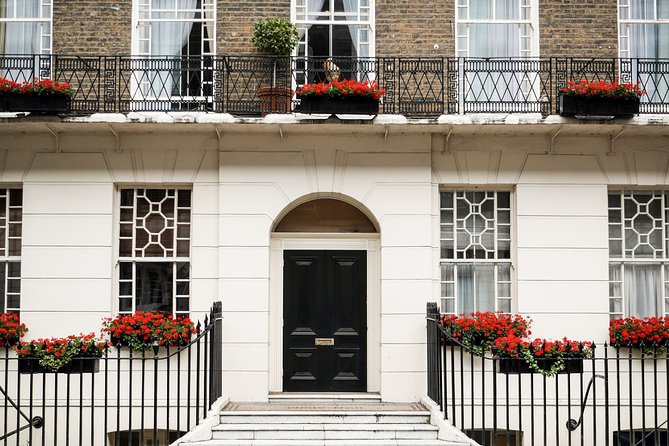
If you only skim Bloomsbury from a bus window, you miss the point. This neighborhood rewards slow looking: doors, terraces, garden edges, and those calm squares that somehow still carry big events in their background.
With a private expert guide, you are not stuck with a script. You can ask why a place looks the way it does, or how one institution ties into another. That is a big deal in London, where landmarks can feel impressive but disconnected if you do not get the story stitched together.
And since the tour is designed for walking, you get the ambiance in the real way: the change in street feel, the stop-and-turn perspective at each corner, and the sense that you are moving through eras rather than just passing buildings.
Price and What You Actually Get for $140.49
At $140.49 per person for about 2 hours, this is not the cheapest way to see Bloomsbury. But you are paying for a one-on-one or one-group experience, plus a guide who adjusts to your interests instead of reading from a handheld device.
For me, the value comes from three practical things you do get:
- A guide’s context for what you are seeing, not just what you are standing in front of
- A curated route that covers multiple themes without wasting time
- Optional add-ons and follow-through, like a short British Museum interior tour and help with where to eat
If you are visiting London for a short stay, this kind of walking tour can help you spend your remaining time smarter. You will leave with a mental map of what to prioritize later, plus a better sense of what questions to ask yourself when you are sightseeing on your own.
How the 2-Hour Pace Feels (and When to Ask Questions)
Two hours is a sweet spot in London. Long enough to feel like you toured something, short enough that you do not end up tired and cranky before you even reach your next plan.
The itinerary is built around multiple stops, so you get a steady rhythm: walk a bit, pause, learn, ask questions, then move on. The private format matters here. When you want clarification, you get it right away, not later, not through a whisper behind a crowd.
If you have specific interests, this is where you can get more value. Let the operator personalize your tour. If you care more about literature, medicine, architecture, or social history, you can steer the conversation so the walk matches your mood and your trip style.
Stop 1: Gardens and Early Bloomsbury History Behind the Elegant Surface
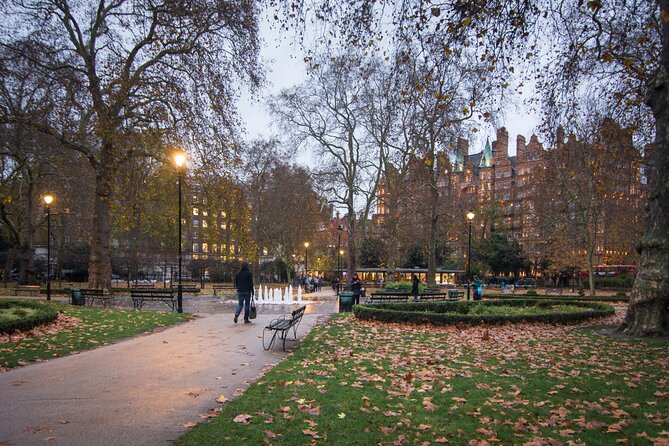
The tour starts by setting the stage: early history of Bloomsbury, plus the contrast between the neighborhood’s beauty and what has happened beneath it. You begin with gardens and the idea that there is a darker layer to the story than the surface suggests.
This stop is useful even if you think you already know Bloomsbury. London’s showpieces can hide complexity, and Bloom’sbury is a perfect example. When you learn that kind of context early, the rest of the walk makes more sense because you start noticing connections instead of isolated facts.
A practical tip: use this first stop to orient yourself. Ask your guide what themes you will see repeated later, like institutions tied to health, learning, or social care. When you know the pattern, the tour becomes easier to track.
Other guided options for the same sights

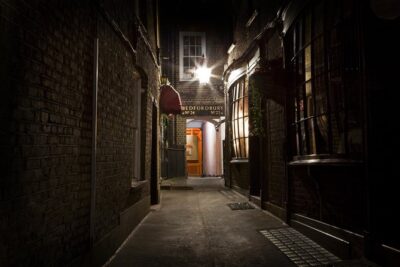

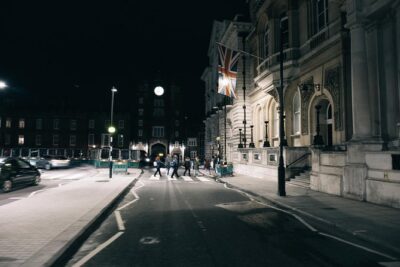
Stop 2: Elizabethan Traders and Feminist Publishing on a Historic Shopping Street
Next comes a historic shopping street where you pick up two threads: the history of Elizabethan traders and the surprisingly specific story of feminist publishers. This is a good example of how Bloomsbury works as more than scenery.
What I like about this part is the human scale. You are not just looking at famous buildings, you are learning about people who made culture and commerce happen in the same space.
If you are the kind of traveler who enjoys how ideas spread, you will likely perk up here. The neighborhood has always been a place where publishing, thinking, and social movements intersect. And once your guide frames the street that way, it feels like more than a corridor for shops.
Stop 3: World-Famous Children’s Hospital, Literature Links, and Monarchs Treated in Private
This is one of the stops that makes the tour feel different from a standard highlights walk. You hear the story of the world-famous children’s hospital, including a surprising connection to a classic work of literature. Then you move to an adjoining square where a monarch was privately treated, adding a medicinal heritage angle to the neighborhood.
That medicine theme is not just trivia. It changes how you interpret the area. Bloomsbury is often talked about for writers and artists, but there is a parallel storyline about care, institutions, and the real-world efforts that shaped society.
What to watch for here is the way your guide links the dots. Hospitals and literature might sound like separate worlds, but you will see how storytelling and social change often share the same address on the map.
One consideration: if you are expecting lots of museum-style interiors, this stop is still very much outdoors. The learning comes from stories tied to place, not from walking into buildings.
Stop 4: Foundling Hospital Origins and Why Abandoned Children Moved Hearts
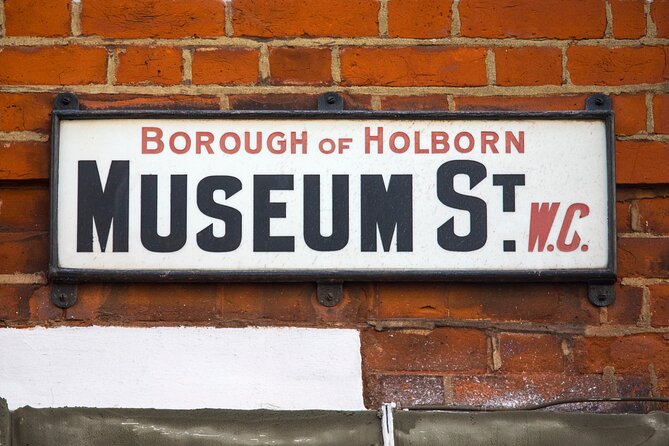
You then go to the place where the Foundling Hospital was created. The guide shares how the plight of poor abandoned children moved hearts across England, and you learn that it reached far beyond ordinary charity work, connecting to illustrious composers and renowned writers.
This stop gives Bloomsbury one of its strongest identity threads: social responsibility. When you understand that, the neighborhood starts to feel less like a postcard and more like a living network of people trying to solve problems.
It also makes you look at institutions differently. Instead of seeing a hospital or school as a static building, you see it as a response to people who were often powerless. That shift is what makes the tour stick after you leave.
If you want to get the most out of this stop, ask how these cultural figures helped spread attention. Even if you do not get a full historical lecture, the framework your guide provides will help you recognize similar patterns in other cities.
Stop 5: Brunswick Centre and Post-War Urban Planning That Still Divides Opinions
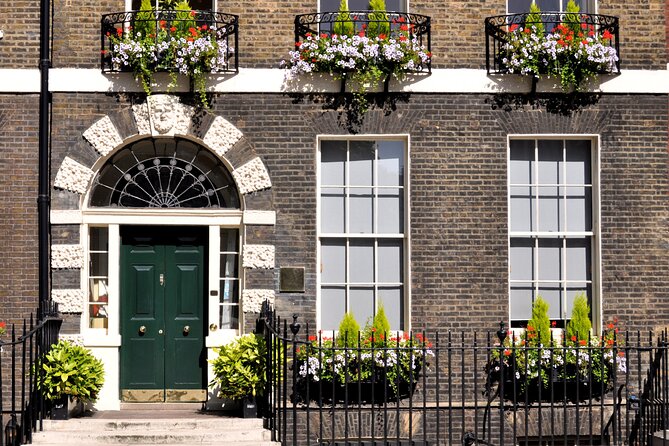
Time for architecture with a side of controversy. Brunswick Centre is described as a milestone of post-war urban planning, and also one of the more contentious developments in Bloomsbury.
This is a smart inclusion because it gives you the modern layer. Bloomsbury is not frozen in Georgian charm. It has debates, experiments, and compromises, just like any city that tries to house people and still wants to keep its character.
As you explore, pay attention to how the structure fits the surrounding vibe. Your guide can help you understand why planners built it this way and why opinions still linger. Even if you do not love the look, you will likely appreciate the logic and the consequences.
Drawback to consider: if your personal style is purely “classic London only,” this stop might feel less emotional than the story-heavy hospital and founding-hospital moments. Still, it is worth it for a complete sense of Bloomsbury.
Stop 6: Tavistock Square Monuments and How Conflict Ties In
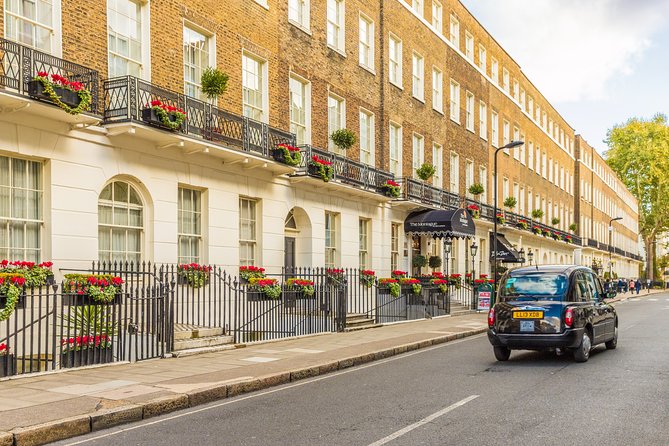
After Georgian architecture, you step into Tavistock Square, a tranquil place with monuments that connect to some of the bloodiest conflicts in history. The tone changes from institutions to memory, from social care to the way a city records loss.
This stop is ideal if you like learning how public spaces carry meaning. A square can look peaceful, but it can also be a ledger of events you would not guess from the calm atmosphere.
A practical tip: slow down here and look at the monuments like you would read text. Even when you do not know the details, you can tell there is a message. Let your guide fill in the rest, and you will feel like you have unlocked the square’s real purpose.
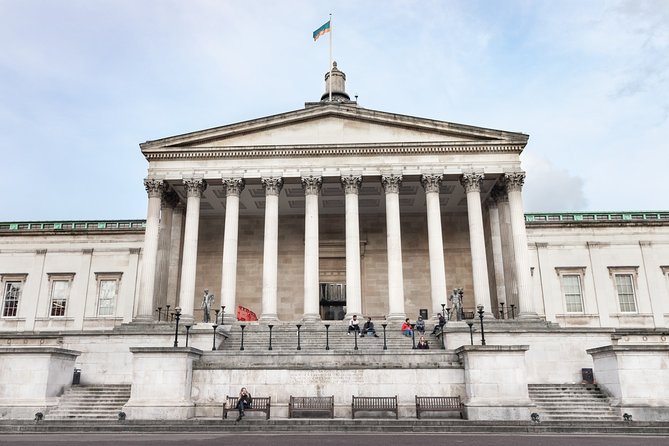
Stop 7: Senate House, University of London, and the Bloomsbury Group
Next comes Senate House, the imposing structure marking the home of the University of London. You also hear about members of the Bloomsbury Group and how elite and artistic circles made homes around this area.
This is where the tour smoothly ties everything together. The earlier stops covered social institutions and cultural publishing. Here you see learning formalized, plus the creative scene that made Bloomsbury famous.
I like this stop because it is a bridge between categories. You are not learning “writers” in one corner and “universities” in another. You are seeing how ideas and institutions reinforce each other across decades.
Consider arriving with a short list of interests: literature, art, philosophy, politics, education. Your guide can steer you toward the most relevant angle as you look at Senate House and the surrounding area.
Stop 8: British Museum Exterior Views, Empire Context, and Exploration
The tour ends with exterior views of the British Museum, including a story about how it came to represent empire, status, and exploration. An interior tour is not included, but you can upgrade to add a short museum tour.
This is a smart way to handle museum time. The British Museum is enormous. Starting with context outside helps you understand why the building and collection approach matters, and what to keep an eye out for once you go in later.
What you should do if you add the upgrade: set expectations. A short interior tour is not a full museum visit. It is a guided highlight experience, best used to learn what connects to the themes your guide already introduced.
If you do not add the interior, do not worry. You still get value. Exterior orientation plus the empire and exploration frame can make your first self-guided visit far more satisfying.
What Makes the Best Versions of This Tour So Memorable
The top feedback points to a pattern that you can plan for: storytelling that feels human, plus a guide who knows how to connect the dots without turning it into a lecture.
One name that comes up is Jack, praised for making the afternoons feel enjoyable and for giving extra perspective at the British Museum finish. That matches what you should look for in a great Bloomsbury guide: clear pacing, story control, and the confidence to answer your questions without rushing you.
The walk also has a “history on every corner” quality, meaning the surprises are not limited to one or two dramatic moments. You get multiple mini-revelations, like the literature link tied to a children’s hospital, or the medicated care angle connected to a monarch treated privately nearby.
Practical Tips to Get the Most From Your Walk
- Wear shoes you can walk in for 2 hours, since this is a true walking tour.
- Bring curiosity, not a checklist. Ask why certain places relate to each other.
- If you have strong interests, request a personalized version. The tour is designed to adjust.
- If you plan to see the British Museum later, decide in advance whether you want the short interior add-on.
Also, the tour uses a mobile ticket and is offered in English, with confirmation at booking. Service animals are allowed, and it is described as doable for most travelers.
Should You Book This Bloomsbury Walking Tour?
Yes, if you want Bloomsbury to feel like a story instead of a series of landmarks. This is a strong pick for history-curious travelers, literature fans, and anyone who likes to understand how places connect across time.
You should also consider booking if you are the type who benefits from a plan. The route covers early neighborhood history, publishing and trade, hospitals and monarchy, post-war architecture debates, conflict memory in a square, university life, and a museum frame tied to empire and exploration.
Skip it or adjust expectations if you mainly want long interior time in famous buildings. The British Museum interior is optional, not included in the default experience, so you would need to plan separately or upgrade.
If you like, tell me your travel month and what you care about most, medicine and institutions, literature, architecture, or wartime memory, and I will suggest what to emphasize during the personalization request.
FAQ
How long is the Bloomsbury private walking tour?
The tour is about 2 hours.
Where does the tour start?
It starts at Underground Ltd, Holborn Station, Kingsway, London WC2B 6AA, UK.
Is the tour only in English?
Yes, it is offered in English.
Is a British Museum interior visit included?
No, the British Museum interior tour is not included by default, but it can be added as an upgrade.
Is this a private tour?
Yes, it is private. Only your group participates.
What is the cancellation policy?
You can cancel for free up to 24 hours in advance for a full refund. If you cancel less than 24 hours before the start time, the amount paid is not refunded.
More Private Departures






Other Departures With A Guide Attached






More Of London On Foot




Fresh off the notebook in London
- Witchcraft, Ancient Cults & MI15 Spy Secrets
★ 4.0 · 3 reviews - Arrival Transfer: London Train Stations to London Hotels
★ 5.0 · 3 reviews - Royal Afternoon Tea & Walk at Kensington Palace
★ 4.5 · 3 reviews - Bridgerton Tour in London
★ 5.0 · 3 reviews - Private Transfer from central London to Southampton Cruise Terminal
★ 5.0 · 3 reviews - Photographer, Professional Photo Shoot – London
★ 5.0 · 3 reviews
Walking Tours, compared.
 ★ 5.0Oxford University Walking Tour With University Alumni GuideFrom $416,905 reviews
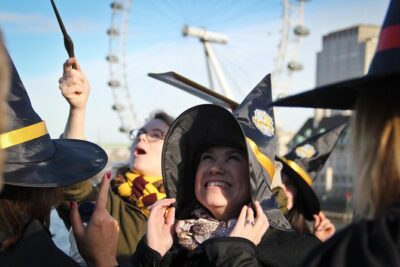 ★ 5.0Tour for Muggles The Ultimate Harry Potter Walking Tour in LondonFrom $234,684 reviews
 ★ 5.0London Jack The Ripper Guided Walking TourFrom $03,131 reviews
 ★ 5.0Cambridge University Walking Tour by Alumni™ Kings College OptionFrom $332,336 reviews
 ★ 5.0Blackbeard to Banksy – The Ultimate Walking Tour of BristolFrom $181,961 reviews
 ★ 5.0Air Raid Shelter + St. Nicholas Market Walking TourFrom $171,950 reviews
 ★ 5.0Walking Tour of Bath with Blue Badge Tourist GuideFrom $301,877 reviews
 ★ 5.0Changing of the Guard Guided Walking Tour in LondonFrom $251,793 reviews