
REVIEW · WORKSHOPS
Private Shoreditch Street Photography Workshop
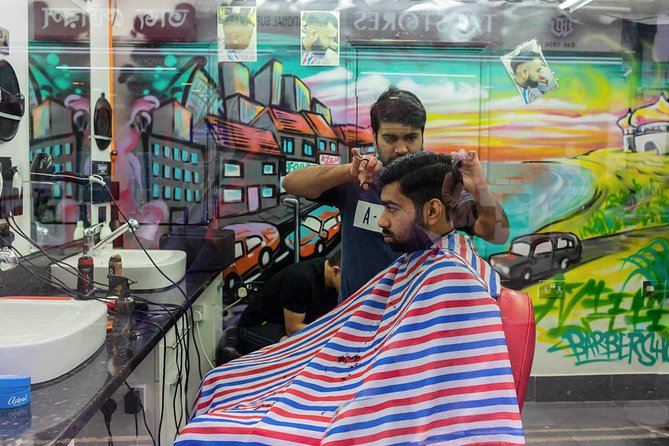
Street photos start with the right walk. This private Shoreditch and Brick Lane workshop is built for hands-on urban shooting, with Lou Smith guiding you through real street art, backstreets, and photo-ready corners. I really like the short, practical shooting assignments and the fact you get a photo review to help you level up fast. One thing to keep in mind: even though it’s private, the lesson can feel like a structured class rather than fully customized, so come with what you want to learn.
You’ll start at Liverpool Street Station (EC2M 7QA) and head back there when you’re done, roughly 4 hours of moving, shooting, and quick coaching. It’s a great match if you want better framing, focusing, and camera setup for candid street scenes, and it works whether you use a DSLR, mirrorless, compact, or a phone. If you’re hoping for a very slow, highly tailored route and long one-on-one coaching, plan to communicate your goals upfront.
In This Review
- Key points before you go
- Shoreditch and Brick Lane: a street scene that teaches you to compose
- Starting at Liverpool Street: how the day stays efficient
- Lou Smith’s teaching style: practical street skills, not theory dumps
- The street-art route: learning to find shots on every corner
- Shooting assignments: how you learn to be candid on purpose
- Black and white and color mood: choosing the right emotional tool
- Framing quick moving subjects: the real street photographer problem
- Camera settings and focus tips you can use right away
- Photo review: turning good street shots into better habits
- Price and value: $337.03 for 4 hours of guided shooting
- Is it truly customized, and how to avoid mismatch?
- Who this workshop is best for
- Should you book this Shoreditch street photography workshop?
- FAQ
- What should I bring to the workshop?
- How long is the Private Shoreditch Street Photography Workshop?
- Where does the workshop start and end?
- Is this tour private?
- Is lunch included?
- What is the cancellation policy?
Key points before you go
- Private guidance with Lou Smith, a Fine Art Photographer with extensive teaching experience
- Short shooting assignments designed to capture street moments as they unfold
- Photo review included, so you can practice smarter, not just take more pictures
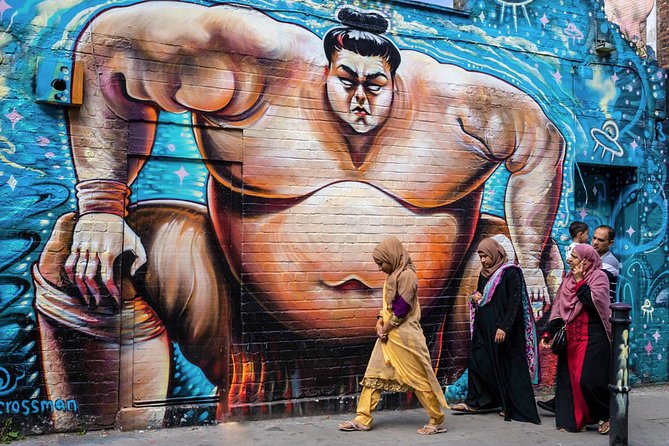
- Street art and cobbled backstreets give you lots of built-in story and texture
- Black and white plus color mood coaching for more than one style
- Made for quick-moving subjects, with framing and focusing tips you can use immediately
Cameras out: further shoots we tagged along on
- Professional Photoshoot in London Photographer★ 5.0 · 102 reviews
- Private landmarks photoshoot for families and couples★ 5.0 · 92 reviews
- Professional Private Photoshoot in London★ 5.0 · 63 reviews
- 30 Major London Attractions Walking Tour With Photos★ 4.5 · 51 reviews
Shoreditch and Brick Lane: a street scene that teaches you to compose
Shoreditch and Brick Lane are exactly the kind of place that makes street photography click. You get street art, small cozy shops, and those tight cobbled backstreets that force you to think about angles, layers, and what belongs in the frame. Instead of chasing famous landmarks, you’re learning how to see the small scenes that already look like a photograph.
What I like about this workshop approach is that it treats street photography like a skill, not a mood. You’re not just walking and hoping for good shots. You’re practicing how to frame what you notice, focus fast, and create images with a sense of story.
The tradeoff is that it’s still a street walk. You’ll be on your feet and stopping often, and some of the best frames come from moving quickly and responding to what you see.
Starting at Liverpool Street: how the day stays efficient
The meeting point is Liverpool Street Station (EC2M 7QA), and the experience ends back there. That matters because you can keep your logistics simple. You don’t need to figure out a different finish point or plan your route around a late pickup elsewhere.
Because it’s about 4 hours, the workshop uses that time for momentum. You’ll likely spend much of the session shooting, then pausing to learn and adjust. If you want to get the most out of it, arrive ready with a charged battery and your camera settings you can change quickly.
If you rely on your phone, that’s fine too. The workshop is listed as suitable for all types of digital cameras including smart phones, so you can learn the same fundamentals even if your gear is different.
Lou Smith’s teaching style: practical street skills, not theory dumps
The guide for this workshop is Lou Smith, described as a professional Fine Art Photographer with extensive teaching experience. That blend is important. Fine art training can help you think about composition and narrative, while teaching experience usually means you get clear guidance that actually fits how street photography works in the real world.
This session includes expert photography instruction and a review of your photographs. In practice, that means you can expect more than just tips during the walk. You should leave with a clearer idea of what to do differently next time, not just a handful of “nice shots.”
One smart part is the way the lessons are designed to keep you focused. Short assignments help you stay in the moment. You can’t overthink for too long when you’re given a prompt and asked to shoot what unfolds in front of you.
The street-art route: learning to find shots on every corner
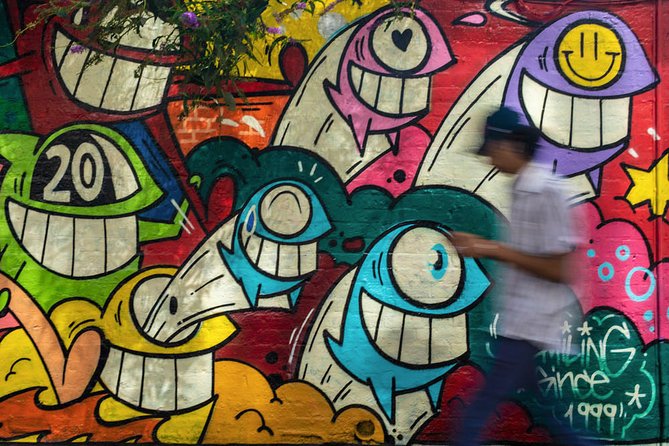
You’ll explore the East End around Shoreditch and Brick Lane, focusing on colorful locations and small cobbled backstreets. The route is about texture, contrast, and layers, meaning it’s built for foreground, midground, and background storytelling.
On every corner, there’s a photo opportunity. That’s not just poetic. Street photography thrives on repetition: you train your eye to spot a composition quickly, then you learn how to refine it with the camera you’re holding.
A practical way to look at this part of the workshop is to treat it like a checklist of visual ingredients:
- Street art as graphic subject matter and color cues
- Cozy shops for human-scale details and small textures
- Backstreets for leading lines, tight framing, and depth
- People plus cityscape as the narrative engine
The drawback to expect is simple: street photography rewards attention. If you’re the type who prefers quiet sightseeing, this can feel like a lot of looking and shooting. But if you’re there to learn, that constant feedback loop is the value.
More private departures, group size noted

Shooting assignments: how you learn to be candid on purpose
One of the most useful elements is the promise of short assignments aimed at “candid street capture.” That’s exactly what you want when your goal is real street photography, not posed travel photos.
Instead of trying to plan every frame in advance, you’ll likely be asked to work on a specific goal for a short window of time. That could mean focusing on a type of subject, a composition approach, or how you handle movement. Then you’ll compare results, adjust, and try again.
This is where private coaching helps you catch mistakes early. If your framing is too centered, or your focus locks slowly, you can correct it during the session rather than realizing weeks later when you get home.
Also, the workshop emphasizes adding narrative to your images. That’s a key distinction. A narrative image doesn’t require a dramatic event. It’s often built from small choices like including a telling detail, framing a person within the environment, or creating a mood through color and light.
Black and white and color mood: choosing the right emotional tool
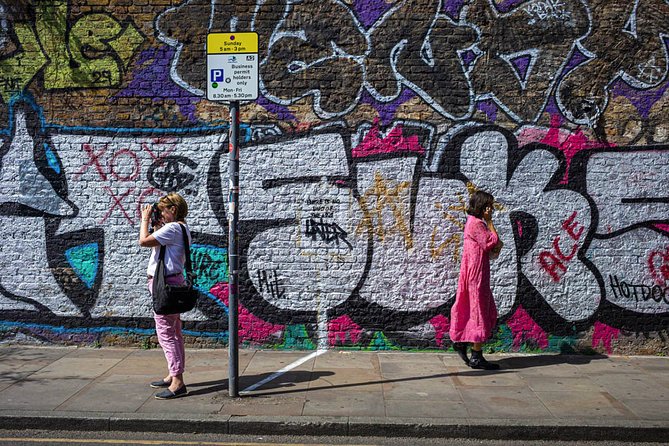
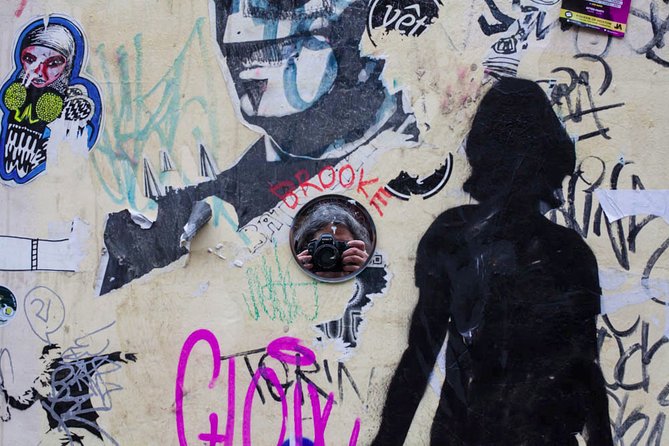
You’ll work on creative techniques that cover both black and white and color. That matters because black and white can simplify a scene and strengthen shapes, shadows, and texture. Color, on the other hand, can create mood through the exact tones street art and shop fronts bring into the frame.
The workshop guidance includes learning how to use colour to create mood and atmosphere and also explore black and white captures. In a street setting, those two modes teach you different kinds of “seeing.”
If you’re new to street photography, this kind of training can prevent a common problem: taking photos that technically look sharp but feel flat. By learning how to use color deliberately, and how to reduce distractions in black and white, you’ll get images that feel more intentional.
Framing quick moving subjects: the real street photographer problem
Street photography isn’t just about what you see. It’s about what you can capture before it changes. This workshop specifically teaches you how to frame and compose quick moving subjects with confidence, guided by an expert street photographer.
That training is practical because movement is the hardest part for most beginners. People shift their posture, walk out of frame, or turn their faces at the wrong second. A good street photographer learns to anticipate, react, and keep the frame usable even when the moment is fleeting.
You’ll also learn focusing techniques specifically for street photography and how to set your camera for street photography. Those are the two things that usually separate “I got a photo” from “I made a photo.”
Camera settings and focus tips you can use right away
The workshop is designed to work with many camera types. It includes instruction from a professional photographer who knows a multitude of cameras. That’s helpful because the advice can map to your real controls, not just one brand or one shooting style.
While the exact settings are not listed, the included topics are clear:
- learning new focusing techniques for street
- learning how to set your camera for street photography
- learning how to frame and compose moving subjects
Here’s how you can maximize this segment even before the workshop starts. Pick your street mode, know where your focus setting lives, and practice switching quickly. If you arrive still hunting through menus, you lose the chance to apply coaching while it matters.
Also, since you can use a phone, you can still learn the principles: where to place focus, how to manage motion, and how to compose so the environment supports the subject.
Photo review: turning good street shots into better habits
A standout included item is a review of photographs and how to develop skills. That’s the part that often gets skipped in casual camera walks. You end up with a memory and a photo folder, but you don’t know what to do next.
With a photo review included, you should be able to connect the dots between what the instructor taught and what you actually captured. That feedback loop is where improvement happens.
If you want value, come ready to share a few images you’re unsure about. Ask why something worked or didn’t. Street photography improves when you learn your own patterns, like when you tend to overexpose for bright signage or when you keep the frame too busy.
This also helps you build a personal style. The workshop covers both black and white and color mood, and it encourages integrating the environment. The best takeaway is that you learn how to blend people and cityscape, not just photograph surfaces.
Price and value: $337.03 for 4 hours of guided shooting
At $337.03 per person for about 4 hours, this isn’t a cheap “wander and take pictures” outing. It’s priced like a true workshop with expert instruction, photo review, and private attention for your group.
So the question is whether the included coaching and review justify the cost for you. If you want:
- hands-on practice in a photo-friendly area
- help setting camera and focus for street shooting
- guidance on narrative, framing, and composition
- a review that tells you what to fix next
Then the price starts to make sense. You’re paying for time and expertise, not just a walk through Shoreditch.
One cost-saver note: the listing includes group discounts. If you can bring a friend or two, the per-person value can improve.
If you’re already very comfortable with street photography and only need route ideas, you might find cheaper options. But if you want structured feedback, private guidance, and clear instruction, this is a solid way to learn without guessing.
Is it truly customized, and how to avoid mismatch?
It’s private, exclusive to you or your personal group. That usually means your guide can respond to what you shoot and what you want to learn. Still, the lesson can be shaped around prompts and assignments, which may feel like a standard format even in a private setting.
To avoid that problem, show up with a short list of goals. For example:
- Do you want better focusing on moving subjects?
- Should you lean into black and white, color, or both?
- Do you want more narrative images where people and environment connect?
If you care about your skill level being matched closely, bring that up before you start so the teaching can land at the right pace. That’s the best way to make a private workshop feel personal.
Who this workshop is best for
This workshop suits art lovers and anyone who wants a unique London experience built around observation. It’s listed as suitable for all skill levels, and it works with different camera types, including smart phones.
You’ll likely enjoy it most if you:
- want a guided route through Shoreditch and Brick Lane street scenes
- want coaching on focusing, composition, and camera setup for street photography
- enjoy street art and want photos that include environment and people
- learn best through short assignments and immediate feedback
If you hate walking or prefer long museum-style time, you might find the format less comfortable. This is about making photos, not standing still for hours.
Should you book this Shoreditch street photography workshop?
Book it if you want a structured street photography session with a real instructor, Lou Smith, plus practical coaching and a photo review. The route and skills focus are a strong combination: street art and backstreets give you great subject matter, and the assignments give you a way to learn instead of just collecting pictures.
Skip or rethink if you want a fully customized experience that changes with your every preference, with no set teaching flow. In that case, message in advance about what you want and how experienced you are, so the workshop can match your expectations.
FAQ
What should I bring to the workshop?
Bring your own camera and fully charged battery. It’s suitable for all types of digital cameras, including smart phones.
How long is the Private Shoreditch Street Photography Workshop?
The duration is listed as approximately 4 hours.
Where does the workshop start and end?
It starts at Liverpool Street Station, London EC2M 7QA, UK and ends back at the meeting point.
Is this tour private?
Yes. It’s a private tour, exclusive to you or your personal group.
Is lunch included?
Lunch and light refreshments are not included.
What is the cancellation policy?
Free cancellation is offered. You can cancel up to 24 hours in advance for a full refund. If you cancel less than 24 hours before the start time, the amount paid is not refunded.
More Private Departures


More Photo Walks And Shoots
Fresh off the notebook in London
- Witchcraft, Ancient Cults & MI15 Spy Secrets
★ 4.0 · 3 reviews - Arrival Transfer: London Train Stations to London Hotels
★ 5.0 · 3 reviews - Royal Afternoon Tea & Walk at Kensington Palace
★ 4.5 · 3 reviews - Bridgerton Tour in London
★ 5.0 · 3 reviews - Private Transfer from central London to Southampton Cruise Terminal
★ 5.0 · 3 reviews - Photographer, Professional Photo Shoot – London
★ 5.0 · 3 reviews
Workshops, compared.
 ★ 5.0Surf LessonFrom $62349 reviews
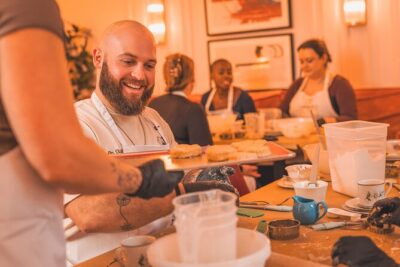 ★ 5.0London Traditional English Scone Making and Tea WorkshopFrom $48271 reviews
 ★ 5.0Beginner Surf Lesson in Newquay, CornwallFrom $62215 reviews
 ★ 5.0Sea Kayak Lesson & Tour in NewquayFrom $83189 reviews
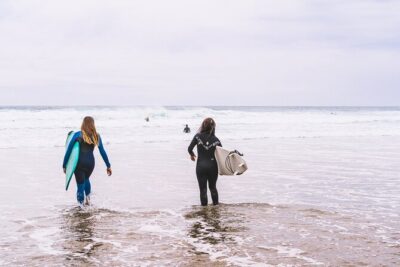 ★ 5.0Private Surfing LessonFrom $138173 reviews
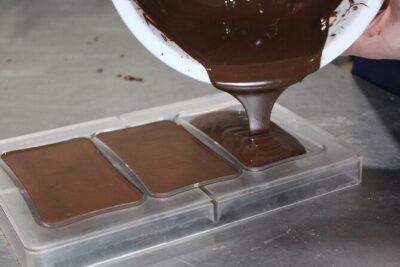 ★ 4.5Chocolate Bar Making Workshop – York Cocoa WorksFrom $34170 reviews
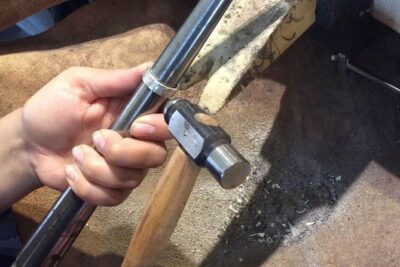 ★ 5.0Silver Ring Workshop in Kent, EnglandFrom $131102 reviews
 ★ 5.0Taster Surfing Lesson in BudeFrom $62101 reviews
Browse the lists this tour appears in