
REVIEW · YORK TOURS
Private York Self-Guided Tour
York in 2 hours, with zero crowd stress. This private, self-guided route is interesting because it strings together centuries of York life, from Roman layers to Vikings, using a three-week app with human audio by Jenny. I love that you get the key landmarks in one walk without fighting schedules, and I also love the short stop-by-stop audio that helps you learn fast without constantly staring at your screen. One thing to consider, though, is that the experience depends on phone use, so it can feel annoying if your battery is low or if the app navigation feels fiddly.
What you’re really buying here is time and mental ease. For a quick York trip, you can get a solid overview of the city, then choose what to spend extra time on when you reach the spots that grab you. Just know the highlights include places where admission is optional, so you might still want to plan tickets if you want inside views at York Minster.
Key things I found useful
- Jenny’s audio guide uses real narration, not a robotic voice.
- GPS route and maps help you find each stop without second-guessing.
- Three weeks unlimited access means you can pause, restart, or revisit later.
- A tight 2 to 3 hour loop keeps the “seeing everything” promise realistic.
- You get extra media like pictures, videos, and recommendations, not just talking heads.
- Flexibility to walk at your pace is built into the format.
In This Review
- First, know what this York private tour really is
- Price and value: where $12.33 per person makes sense
- How the Jenny audio guide works (and how to avoid common headaches)
- York Minster: starting at the heart of the Church of England
- Roman York begins at the Roman Column and spreads outward
- The Liberty of St Peter: a city within a city
- St Michael le Belfrey and Guy Fawkes on 16 April 1570
- High Petergate, Bootham Bar, and the Roman to Georgian contrast
- York City Walls: walk as far as you feel like
- Multangular Tower and Museum Gardens: Roman stone meets landscaped time
- St Mary’s Abbey ruins and the Alan Rufus to Stephen of Whitby link
- Shambles: the street that turns history into a movie set
- Saint Margaret Clitherow shrine and why one house matters
- Vikings in Jorvik and the Clifford’s Tower finale
- Who this self-guided York walk is best for
- Should you book this York private tour?
- FAQ
- How long does the Private York Self-Guided Tour take?
- Is this a live guided tour with a person walking with you?
- Where does the tour start and end?
- What language is the tour offered in?
- What’s included with the tour?
- Are attraction entrance fees included?
- How long is the app available after I activate it?
- Is the tour private?
- Can I get a refund if I cancel?
First, know what this York private tour really is
This is not a live guide walking with your group. It’s a private smartphone tour for your party, led by an audio guide you play as you move. In practice, that means you control the tempo. You can linger outside York Minster for a good look, speed up through a less interesting lane, then slow down when a street or ruin suddenly clicks.
The route runs about 2 to 3 hours on foot. That’s a great length for York, because it fits neatly into a day where you also want time for a pub lunch, a coffee stop, or a longer pause by the walls.
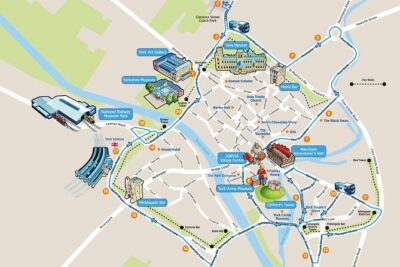
You’ll start at 6 Minster Yard, York (YO1 7JD) and finish at Clifford’s Tower, York (Tower St, YO1 9SA). The meeting and end points matter, because this route is designed to flow downhill or along the natural historic core, not to make you double back.
Other York walks inside the old walls
- Mad Alice’s The Bloody Tour of York -Best Tour Award Europe★ 5.0 · 2,749 reviews
- Ghost Bus Tour of York★ 4.5 · 2,404 reviews
- Shadows of York: Ghost Walk and Horrible History.★ 5.0 · 1,403 reviews
- Private Historical Walking Tour of York★ 5.0 · 1,324 reviews
Price and value: where $12.33 per person makes sense
At around $12.33 per person, you’re paying for structure, not for museum entries. Most major stops on the walk are free to view from the street or open spaces, and you’re guided by narration plus GPS. If you were planning to wander anyway, the value comes from having the story tied to what you’re actually seeing.
Is it worth it if you love “read everything” tourism? Maybe not. But if you prefer learning on your feet, with a guide that doesn’t expect you to keep up, it can be a smart buy.
I also like that the app stays with you. You get three weeks of unlimited access, so if you don’t finish in one pass, you can return and pick up later without needing to book a second tour. That feature shows up again and again in how people describe the experience: the route is short and flexible, and you can break it into smaller chunks.
How the Jenny audio guide works (and how to avoid common headaches)
The app is built around stop-by-stop narration, maps, and route directions. The audio is narrated by Jenny, and it’s not computer-generated. Instead, you get human pacing that makes the history easier to absorb while you’re walking.
A practical tip based on real feedback: treat this like an app-first day. Some people worry about screen time draining battery, and that’s a fair point. I’d plan for a fully charged phone and bring a charger if you’re the type who uses maps constantly.
Also, be patient at the start. A couple of people found the navigation hard at first. Once you understand how the app presents the route and where it expects you to stop, it usually clicks. My advice is simple: once you start walking, don’t keep jumping between screens. Follow the stop prompts, keep your headphones in, and let the map do its job.
One more note. There have been reports of audio cutting off early due to an app bug. The provider later stated they fixed an issue that interfered with audio. So if your audio does behave strangely, don’t assume you did something wrong. Check the app and try again, and if it stays broken, use the support route that the company has used to respond quickly in past cases.
York Minster: starting at the heart of the Church of England
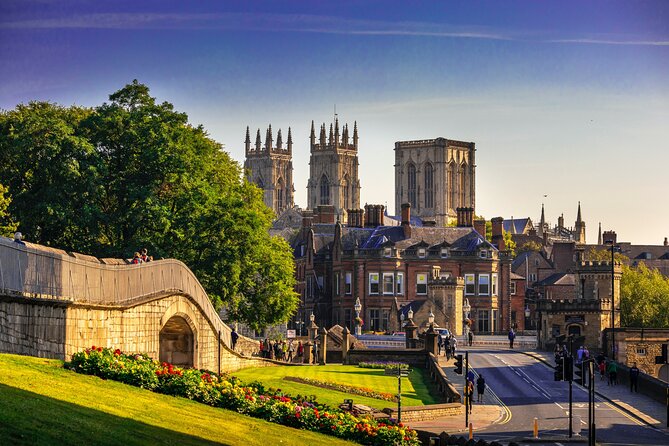
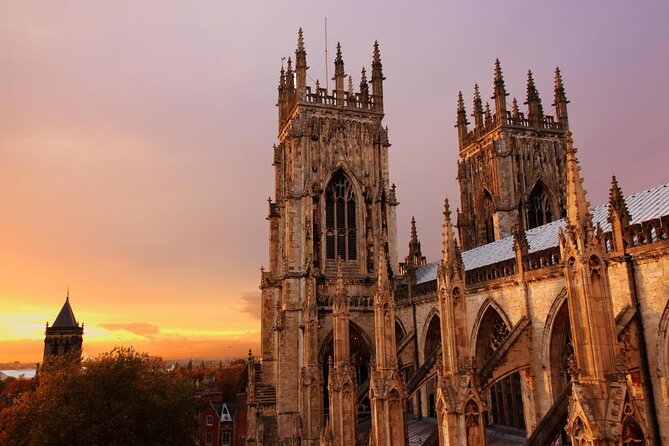
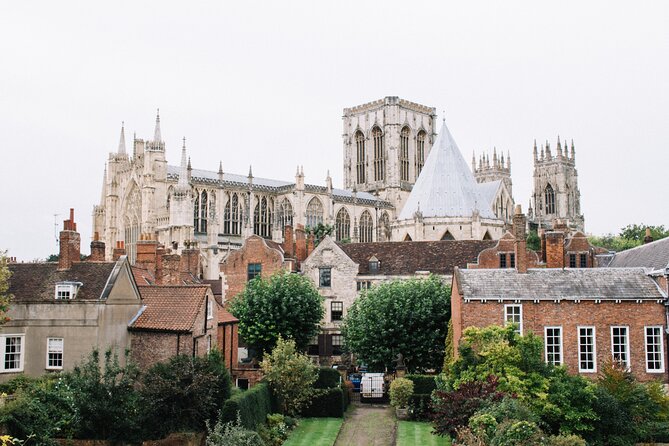
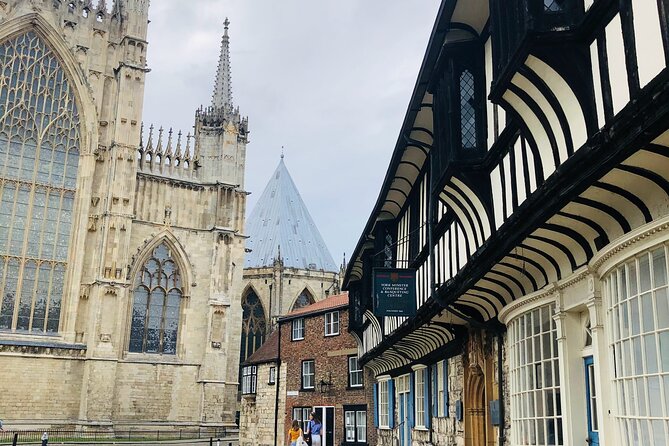
Your first stop is York Minster, formally the Cathedral and Metropolitical Church of Saint Peter. This is one of the biggest cathedrals in Northern Europe, and it serves as the seat of the Archbishop of York, the third-highest office in the Church of England.
York Minster is a strong opener because it gives you the main axis of the historic town. Even if you don’t go inside, you can still absorb a lot from the exterior, the surrounding streets, and the way the Minster anchors the skyline.
Important detail: admission tickets aren’t included for this stop. So think of this as an “understand what you’re seeing” introduction rather than a guaranteed inside visit. If you want the interior highlights, you’ll need separate planning.
What the audio adds here is context. Instead of just pointing at the building, it frames the Minster in relation to the people and power systems around it. That sets you up for the next stops, where York stops being one era and starts becoming a stack of eras.
Roman York begins at the Roman Column and spreads outward
Next you’ll walk to the Roman Column, a reminder that York was once the Roman fort Eboracum. The fort is dated to 71 AD, founded by Roman general Quintus Petillius Cerialis of the Ninth Legion.
This stop works well because it’s quick, and you’re not forced to sit still. You get a “how did this city start” moment without turning the tour into a museum day.
From a visitor standpoint, Roman York can feel abstract because you’re walking through streets laid down long after Rome. The app helps bridge that gap by telling you what remains you can still find today and why those traces matter. If Roman history is your thing, this stop gives you momentum. If it’s not, it still helps you understand why York’s layout feels the way it does.
Rather go alone? More self led routes here


The Liberty of St Peter: a city within a city
Then the tour shifts into medieval governance with a fascinating idea: the Liberty of St Peter. This is centered on the boundaries around St Peter’s Church and the people tied to it.
The key point is power. The area inside this liberty did not fall under the Mayor’s authority, which created a “city within a city” setup. In plain terms, that means the Minster sphere could operate with different rules, and those social differences had real consequences for who lived where, and how authority worked.
This is one of those parts that can be easy to miss while just wandering. But it’s a big reason York feels layered. The audio narration here helps you see that York wasn’t only a backdrop for kings and battles. It was also a place where institutions shaped everyday life.
St Michael le Belfrey and Guy Fawkes on 16 April 1570
At St Michael le Belfrey Church, you get one of the tour’s strongest “story hooks.” The church is described as the only remaining sixteenth-century church in York, and it’s the largest pre-Reformation parish church in the city.
Then the tour makes it pop: the church is linked to the baptism of Guy Fawkes on 16 April 1570.
If you’ve ever wondered why the Gunpowder Plot story sticks in British culture every year, this stop offers a human scale entry point. It connects the big national myth to a specific place in York, which makes your history brain stop treating it as abstract.
Admission isn’t required for this stop, so it’s a good one to hit even if you’re conserving time or energy.
High Petergate, Bootham Bar, and the Roman to Georgian contrast
After the church stop, you head along High Petergate. The tour explains that the street stands on the line of the Roman Via Principalis, the main east-west route through the Roman fortress.
High Petergate’s name ties it to York Minster because it’s near St Peter’s dedication. It was also a medieval route into York from the north, running between Bootham Bar and Stonegate.
This section is valuable because it shows you York’s “then and now” in one walk. You get medieval building forms plus later architectural styles, so the street feels like a timeline rather than a single photo.
Along the way, you’ll hear about Petergate House, a Grade II listed building that was once home to Sir Thomas Herbert, a historian and groom of the bedchamber to Charles I. The audio also includes a haunted house story in the area, which is fun because it encourages you to look up and imagine rather than just read.
At the northern end, you’ll reach Bootham Bar, one of the four Roman fortress entrances dating to around 2000 years ago. The key win here is that the bar is still preserved enough to give you a real sense of how the city controlled movement. Even if you don’t nerd out on fortifications, the structure helps you picture York as something you entered, not just something you walked through.
York City Walls: walk as far as you feel like
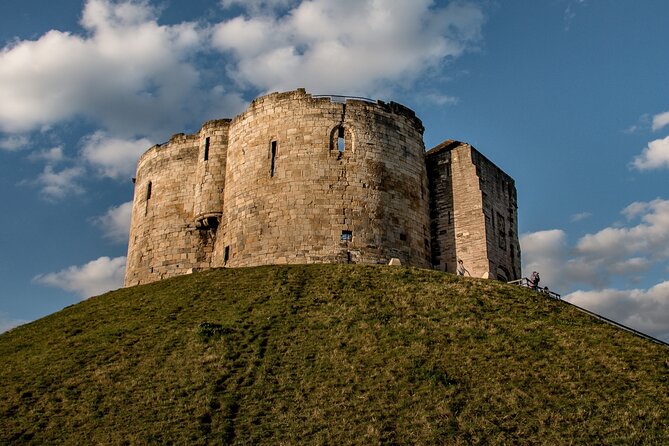
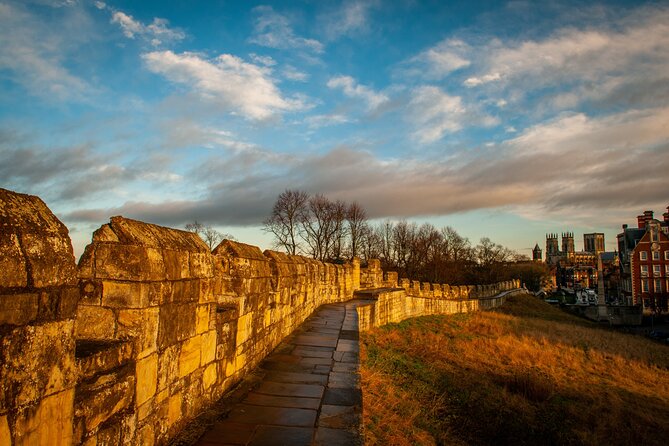
The tour then shifts into the defensive story with York City Walls. It notes that York has more miles of intact wall than any other city in England, and that you may hear different names like Bar Walls or Roman walls.
This is a high-value stop because it’s interactive. The tour gives recommendations for where to “hop on” and then lets you walk the wall as long as you like. That’s perfect for different walking styles. Want a short taste? Do it. Want a longer view? You can keep going.
Also, walls change how you experience a city. Instead of street-level walking, you get height, angles, and the chance to spot roofs, church towers, and the general shape of York’s layout.
If you love photos, this stop is where you’ll get them. If you don’t, it’s still where you’ll feel the scale.
Multangular Tower and Museum Gardens: Roman stone meets landscaped time
In the western corner area, you’ll see the Multangular Tower. It’s described as part of the Roman fortress, standing about 9 metres high, and it contains stonework from both Roman and medieval periods.
The best way to use a stop like this is to take 60 seconds and look for how the structure changes. When the audio mentions both eras, you start noticing why that matters. A tower like this isn’t just an object, it’s a physical record of reuse and rebuilding.
Then you head to Museum Gardens, a ten-acre botanical garden surrounding the Yorkshire Museum. The gardens sit on the grounds of the former medieval St Mary’s Abbey. The tour notes the gardens were established in the early nineteenth century by the Yorkshire Philosophical Society, with landscape architect Sir John Murray Naysmith credited in the design.
You’re also told what to look for, including trees, shrubs, perennials, and bulbs. But more importantly, this stop is how York transitions from “hard history” to “a place where people spend time.” If you’re touring in warmer weather, you’ll likely appreciate having real green space in the middle of the route.
The audio also points out historic buildings within the gardens, including remains of the west corner of the Roman fort of Eboracum and St Mary’s Abbey remains.
St Mary’s Abbey ruins and the Alan Rufus to Stephen of Whitby link
St Mary’s Abbey is the next chapter, and it adds names and dates that make the ruins feel less vague. The abbey is described as a Benedictine foundation with origins dating back to 1086, granted by magnate Alan Rufus (a cousin of William the Conqueror, and Count of Brittany) to the monk Stephen of Whitby.
This is one of those stops where the audio helps you connect people to place. You can look at stone remains and wonder what used to be here. Then the narration gives you the shape of the institution, which makes the ruins feel like a story rather than a leftover.
The stop also mentions remains of the Roman Anglian Tower, which is an excellent reminder that York’s layers do not stop at one era. You’re often standing in overlap, where older structures influenced what came later.
Shambles: the street that turns history into a movie set
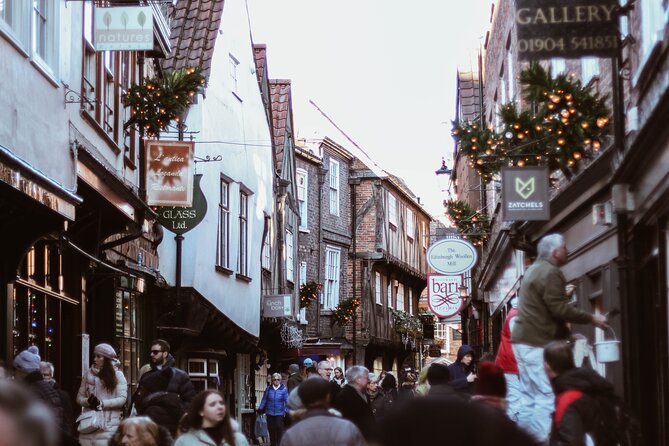
Then comes the Shambles, one of York’s best-known streets. It’s described as an old street with overhanging timber-framed buildings, with some dating back to the fourteenth century.
It used to be called the Great Flesh Shambles and is tied to meat shelves from butcheries. The audio encourages you to compare myth and reality, specifically about Harry Potter and the real-life events connected to the Shambles.
I like Shambles as a tour stop because it’s sensory. You’re walking in narrow space with old facades overhead. Even if you don’t care about meat trade history, it’s a classic “slow down and look” street.
Admission isn’t required for the stop, so it’s a low-pressure experience. You can take your time and still stay on schedule.
Saint Margaret Clitherow shrine and why one house matters
Inside the Shambles area, you’ll find a shrine connected to Saint Margaret Clitherow. She’s an English saint and martyr of the Roman Catholic Church.
The tour frames her story through a key detail: she was married to a butcher who owned and lived in a shop in this street, and her home is thought to be No. 10 Shambles.
This is a strong stop if you like human stories. It’s not about battles or architecture first. It’s about a person, a home location, and why she became a saint. The shrine’s stop notes admission not included, so you should be prepared for the possibility you might need to pay separately if you want to go inside any specific structure.
Vikings in Jorvik and the Clifford’s Tower finale
The tour moves into the Viking era with Jórvík, also called Danish York. The audio says this term is used for the period when Vikings dominated the area, roughly the late 9th century into the first half of the 10th century.
The route notes that Vikings established themselves here more than a thousand years ago. It also includes bonus stories about three famous Vikings who visited the city, including Ragnar.
This stop is helpful because it gives you a sense of what “Viking York” means in real terms. Without that, people often treat Vikings as a costume party in history books. With narration tied to the streets, it becomes more grounded.
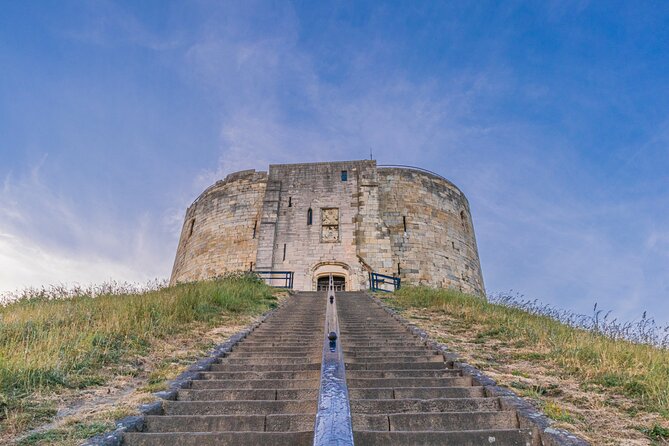
Finally, you end at Clifford’s Tower. The tour describes it as one of York’s best-loved landmarks and the largest remaining part of York Castle, once the centre of government for the north of England.
This finale works because the tower is visually dramatic. It also gives you a natural closing point for planning your next steps, since the audio includes recommendations on places to eat and what to do in York.
Who this self-guided York walk is best for
This is a great fit if you:
- Want a quick, well-paced overview of York’s biggest landmarks
- Prefer learning with audio narration while walking
- Like the freedom to move at your own speed, and possibly break the route into parts
- Are traveling with a group and want everyone to stick together without waiting for a live guide
It may be less ideal if you:
- Hate using your phone as part of your travel plan
- Get frustrated with app navigation, especially at the start
- Want guaranteed inside access to ticketed attractions without extra planning
Should you book this York private tour?
I’d book it if your main goal is to understand York fast, using a guided path you can repeat over time. The big win is the combination of GPS routing, Jenny’s narration, and a stop count that feels achievable in a couple of hours. For the price, it’s a practical way to get the story behind the Minster, the Roman traces, the medieval liberties, the Shambles, and the Viking and castle finale.
I’d hold off if your phone battery is unreliable or you know you dislike app-based navigation. In that case, you might do just fine wandering with a simple map and saving this kind of guided narration for a future trip when you can use your phone comfortably.
If you want, tell me when you’re visiting York and what you care about most, Roman York, medieval churches, or the Viking era, and I can suggest how to prioritize the route inside your 2 to 3 hour window.
FAQ
How long does the Private York Self-Guided Tour take?
The tour is approximately 2 to 3 hours.
Is this a live guided tour with a person walking with you?
No. It’s self-guided. An audio guide in the app provides the narration, and there is no in-person guide.
Where does the tour start and end?
It starts at 6 Minster Yard, York YO1 7JD and ends at Clifford’s Tower, York Tower St, York YO1 9SA.
What language is the tour offered in?
The tour is offered in English.
What’s included with the tour?
You get 3 weeks of unlimited access to the self-guided tour in the app, plus map, directions, and GPS route with stops. You also get narration by Jenny, along with audio guide content, pictures, videos, and recommendations. You’ll receive an email with instructions to activate your tour.
Are attraction entrance fees included?
Entrance fees for attractions mentioned during the tour are not included.
How long is the app available after I activate it?
Once downloaded and activated, the tour is available for three weeks, with unlimited access during that time.
Is the tour private?
Yes. It’s a private tour/activity, meaning only your group participates.
Can I get a refund if I cancel?
No. This experience is non-refundable and cannot be changed for any reason.
Other Departures With A Guide Attached





Routes You Can Walk Unaccompanied

Inside The Walls Of York






Fresh off the notebook in York
- Welcome to York – The River Route
★ 5.0 · 7 reviews - Private Walking Tour: York City Highlights and York Minster
★ 5.0 · 8 reviews - York 3-Hour Photography Walking Tour
★ 5.0 · 9 reviews - Guided Historic Pub Tour (York)
★ 4.5 · 11 reviews - Full-Day Heartbeat Locations Tour from York
★ 3.5 · 11 reviews - Private Roman Tour of York
★ 5.0 · 14 reviews
York Tours, compared.
 ★ 5.0Mad Alice’s The Bloody Tour of York -Best Tour Award EuropeFrom $202,749 reviews
 ★ 4.5Ghost Bus Tour of YorkFrom $272,404 reviews
 ★ 5.0Shadows of York: Ghost Walk and Horrible History.From $181,403 reviews
 ★ 5.0Private Historical Walking Tour of YorkFrom $1951,324 reviews
 ★ 4.5Daytime Sightseeing Boat Cruise in YorkFrom $201,256 reviews
 ★ 4.5York Dungeon Entry TicketFrom $261,108 reviews
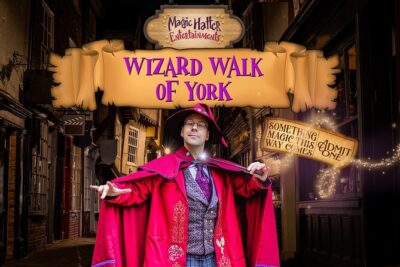 ★ 5.0Wizard Walk of York – WINNER Best Tour & Best of York AwardFrom $16918 reviews
 ★ 5.0The Best of York on Foot in a Small GroupFrom $27783 reviews
Browse the lists this tour appears in