

REVIEW · MANCHESTER TOURS
Rock and Goal Manchester Walking Tour
Manchester has a soundtrack you can walk. This Rock and Goal tour links music and football landmarks, from Bob Dylan’s Free Trade Hall moment to the Premier League origin story, all on foot with frequent stops to look, photograph, and ask questions.
I love how the route turns Manchester street corners into a living timeline, from iconic venues to music-and-sport history right where it happened. I also love that you get photo and refreshment stops while stepping into most sights without paying extra, in a small group that keeps it chat-friendly.
The main downside is pace. Some people find the walk brisk and long for the time, and on certain days the guide may lean more into Oasis, so double-check if you want every stop on the printed route treated equally.
In This Review
- Key takeaways
- Why this Manchester walk works so well for first-timers
- Price and timing: what $20.79 buys you
- Free Trade Hall: Bob Dylan’s Manchester crowd moment
- Manchester Central Library: a Pantheon-like reading room
- Chinatown on foot: why Chinese communities took root in Manchester
- Portland Street: blitz survival and the Stone Roses contract
- Newton Street: film sets, TV locations, and early band hangouts
- The Whiskey Jar: 300 whiskies and rehearsal roots
- Greater Manchester Police Museum: catching criminals before tech
- Stevenson Square: the Northern Quarter’s almost-accidental start
- Oldham Street: from a chip shop to band fame and Safe
- Mosley Street: the football league story behind the Premier League
- Afflecks arcade: Madchester style, mosaics, and a cool ending
- Walking pace, weather plans, and what to bring
- Who this tour is best for, and who should think twice
- Should you book Rock and Goal in Manchester?
- FAQ
- How long is the Rock and Goal Manchester walking tour?
- How much does the tour cost?
- Is the tour in English, and do I need a printed ticket?
- How many people are in the group?
- What happens if the weather is bad?
- Can I get a refund if I cancel?
Key takeaways
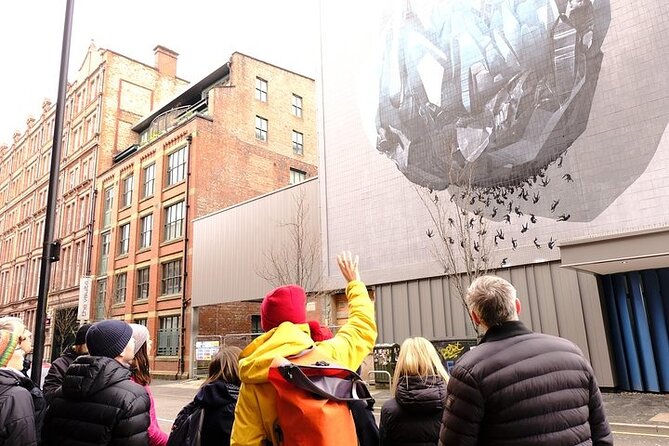
- Bob Dylan at Free Trade Hall: Learn what made his crowd moment in Manchester unforgettable.
- Pantheon-inspired Central Library: You get the why behind a landmark that looks grand and feels practical.
- Portland Street to Stone Roses: A short walk with big music milestones, including a contract story.
- Mosley Street to the Premier League: Football origins that scale up to billions of annual viewers.
- Afflecks and Madchester: End in a boutique arcade tied to the city’s 80s and 90s style.
- Bring good shoes: The tour can add up fast, especially in bad weather.
Other Manchester walks and stadium visits
- Alcotraz Prison Cocktail Experience in Manchester★ 5.0 · 1,216 reviews
- LEGOLAND Discovery Centre Manchester★ 4.0 · 1,049 reviews
- Manchester Afternoon Walking Tour★ 5.0 · 1,033 reviews
- SEA LIFE Manchester Admission Ticket★ 4.0 · 1,007 reviews
Why this Manchester walk works so well for first-timers
Manchester can feel like two cities at once, industrial stone and modern music energy side by side. This tour uses that mix on purpose. You’re not just hearing facts, you’re moving through the streets where those stories actually sit.
The best part is how the guide stitches together themes. Music history is never treated like a museum display. Football history isn’t either. Both are explained through places, buildings, and street-level details you can see in minutes.
Price and timing: what $20.79 buys you
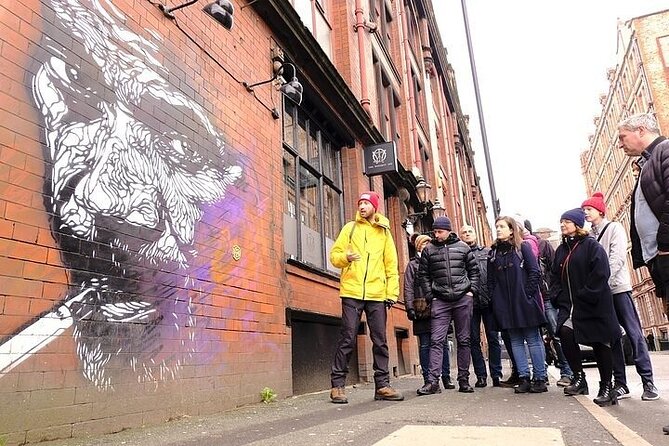
At $20.79 per person, this is one of those tours that feels like good value because so much is included. The walk runs about 2 to 3 hours, and you visit 11 stops with short, focused explanations.
Another reason it feels fair: most stops are listed as free to enter, meaning you are paying mostly for a local guide and the story thread. With a rating of 4.9 and 587 reviews, it also suggests the format lands well for both visitors and people who want a faster way to understand Manchester.
Free Trade Hall: Bob Dylan’s Manchester crowd moment
You start at Free Trade Hall near the Edwardian Manchester Hotel area, and it’s a strong opener. This is where you learn about Bob Dylan’s infamous moment with the crowd, and why Manchester’s music venues became magnets for big personalities.
What to look for here is context more than scenery. The tour explains how a city gets labeled as a music place, not because of one song, but because of repeated history in the rooms and streets that host people.
If you’re the type who likes asking why and how questions, this is a good early stop. You’ll quickly understand the tour’s style: fast, specific, and story-driven.
Manchester Central Library: a Pantheon-like reading room

Next up is Manchester Central Library, shaped by a design idea linked to Rome’s Pantheon. It’s a reminder that Manchester’s “culture” isn’t only guitar riffs and match days. It’s also civic pride in architecture.
The value of this stop is the bridge between eras. You get to see how a city builds public spaces that last, then you connect that stability to the creativity Manchester became known for later.
Even though the stop is brief, it works if you slow down for 30 seconds and look up. Libraries like this tend to be impressive in details people miss when they rush.
More on foot, at a pace you can hear the guide


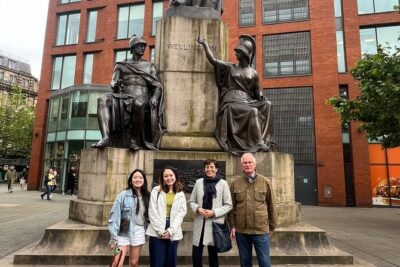
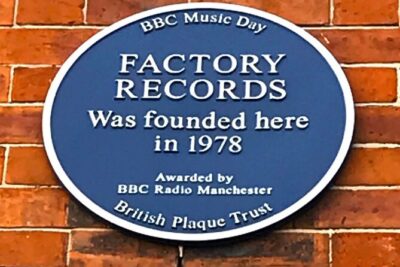
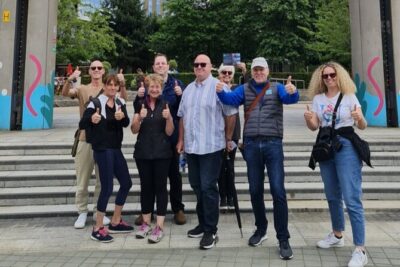
Chinatown on foot: why Chinese communities took root in Manchester
Then you move into Chinatown, one of the largest in the UK and also among the biggest in Europe. The tour keeps it grounded by explaining why the Chinese came to Manchester, what they did when they arrived, and how one individual member of the community became especially notable.
This is a useful pause for understanding migration as part of the city’s story, not a side note. Manchester’s music and football scenes didn’t grow in a vacuum. They grew in a city with many communities and many ways of building a life.
If you’re sensitive to time, keep your expectations realistic. This is a short look, not a deep cultural walkthrough. Still, it gives you a strong foundation to explore on your own afterward.
Portland Street: blitz survival and the Stone Roses contract
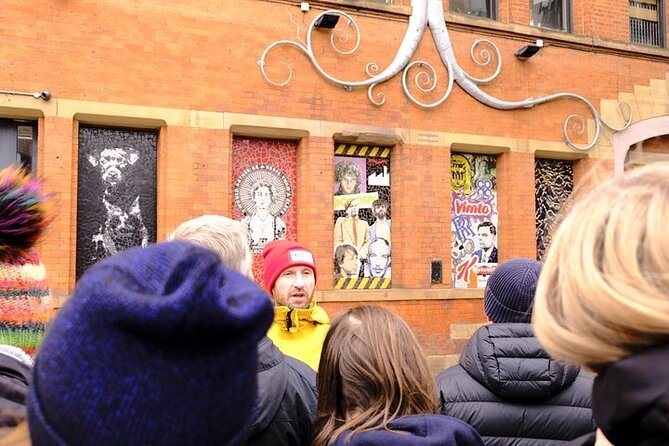
Portland Street is where Manchester’s survival instincts show up in brick and street-level history. You learn how a hotel survived the blitz during World War II, and then you shift back into music with the story of where the Stone Roses signed their first record contract.
This pairing matters. It shows that Manchester’s music identity is not separate from its wartime and industrial past. It’s the same city, reshaped.
In the rain, the street stops feel extra practical because you can keep moving while still getting the story. In dry weather, it helps to bring your phone for photos, since the architecture and street textures add a lot to the visuals.
Newton Street: film sets, TV locations, and early band hangouts
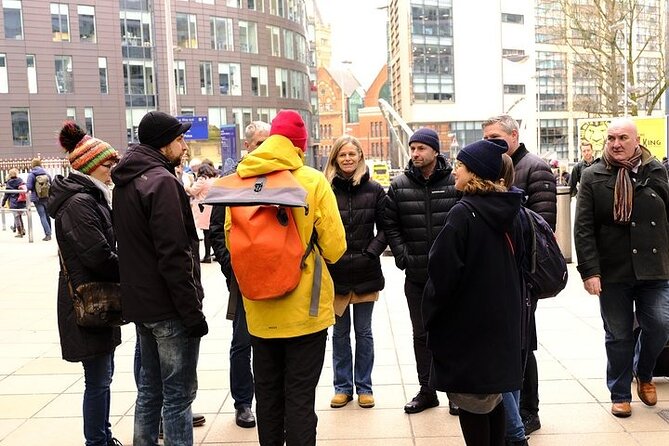
Newton Street is a different kind of landmark stop. Here the tour points out the sets of BBC and Netflix series and even Hollywood movies. Then it connects that screen presence back to music, including venues where famous bands started.
It’s fun because it reframes Manchester as a production city too, not just a music city. And it gives you a way to recognize what you might see later when you watch something filmed there.
A small caution: because this stop includes references to media productions, if you prefer only music and football with no film talk, you might want to ask the guide to keep you focused as you walk.
The Whiskey Jar: 300 whiskies and rehearsal roots
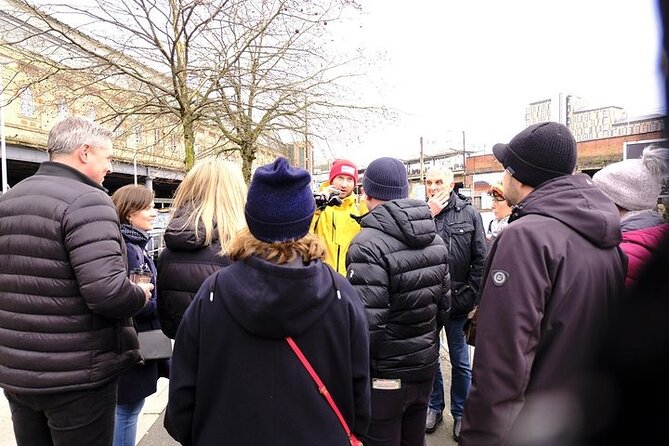
The tour’s stop at The Whiskey Jar is a natural energy shift. The venue is described as having over 300 whiskies from around the world, and the story ties it to Manchester bands like The Smiths, The Stone Roses, and 808 State rehearsing there.
This is where the tour’s theme becomes tactile. Instead of just reading about bands, you get a place where people actually went to make music. It’s also a welcome moment to slow down, breathe, and grab a refreshment.
If you like pairing a story with a sensory break, this is one of the best moments on the route. Even if you do not plan to buy a drink, take the time to look around. The room supports the narrative.
Greater Manchester Police Museum: catching criminals before tech
Next is the Greater Manchester Police Museum, and it’s a great reminder that Manchester’s inventiveness shows up outside music and sports. You learn about how police caught criminals in the days before mobile phones, CCTV, and even walkie talkies.
This stop can surprise you in a good way. It adds depth to Manchester as an ideas-driven city, not only a creative one. And it helps balance the tour if you feel like you’re spending too much time on one topic.
Because the stop is short, I recommend asking one targeted question here, something like how the methods worked in practice. It’s the kind of museum story that becomes more interesting when you connect it to your everyday assumption of what modern policing looks like.
Stevenson Square: the Northern Quarter’s almost-accidental start
At Stevenson Square, the tour explains how the Northern Quarter started and includes a story about how one man became famous almost by mistake. It’s a fun angle, because it suggests that scenes do not always get planned from the start. Sometimes they grow because people show up, open doors, and keep going.
This is also a “look around” stop. Even in a brief window, you can spot the layers of the square and the neighborhood vibe that later became tied to music, art, and creative independence.
If the day is gloomy, use that time to focus on details you can control, like storefront shapes and street corners. The scene reads differently depending on weather, and the guide’s story helps you notice more.
Oldham Street: from a chip shop to band fame and Safe
Oldham Street brings you back to music origin stories. You learn how a former chip shop helped bands such as Elbow become famous, and the tour adds that the street has also been featured in the Netflix series Safe.
This stop works because it’s not a grand venue. It’s a “normal” kind of place that becomes important through what people did there. That makes it feel real.
If you are trying to picture Manchester as a place where scenes form in everyday spaces, this is your proof. Just be ready for a quick stop, then keep walking so you catch the rhythm of the whole tour.
Mosley Street: the football league story behind the Premier League
Mosley Street is one of the most important stops in the football thread. The tour explains where the football league started and how it grew into the Premier League broadcast annually to over 4 billion people.
This is where you’ll get scale. Manchester is local in street-level terms, but the story stretches far beyond the city. The guide turns that scale into something you can follow without needing a textbook.
One practical note: this stop is mostly informational, so if you want lots of photo time, ask about the best angles for pictures. Otherwise, you may find yourself standing and listening longer than you expect.
Afflecks arcade: Madchester style, mosaics, and a cool ending
You finish at Afflecks on Church Street, a boutique arcade that feels like it was made for browsing. Here the tour highlights the mosaics on the side of Afflecks and talks about the fashion connected to the Madchester music scene of the 80s and 90s.
This last stop is a smart closer because it turns history into something you can experience in the moment. Even if you do not buy anything, you can still soak up the vibe and connect it back to the stories you heard earlier.
Also, this is listed as admission included, so you do not need to manage extra entry fees at the end of the walk.
Walking pace, weather plans, and what to bring
This tour asks for comfortable walking. One guest noted it added up to around 18k steps for a 2 to 3 hour window, and other people have said it can feel brisk. If you want a slow amble with lots of pauses, plan extra time for your own break at key stops.
Weather matters too. The experience requires good weather, and if it gets canceled due to poor conditions, you’ll be offered a different date or a full refund. That means you should pack like you mean it: water-resistant layers, and shoes with grip.
If rain hits, you can still enjoy it. A few groups have done the tour despite rainy, windy conditions and still felt the stories landed. The route is built around city streets and short stop windows, so you are not stuck waiting in one place.
Who this tour is best for, and who should think twice
This tour is a great match if you want to connect Manchester’s music and football identities fast. If you like story-driven walking tours, and you enjoy hearing anecdotes that explain why places became famous, you will likely have a good time.
It is also a good option for first-timers who feel overwhelmed by Manchester’s many neighborhoods. The route keeps you oriented and gives you a mental map that you can use later when you wander independently.
Think twice if you are sensitive to pace or long distances, because you will keep moving. Also, if your heart is set on every exact stop, know that the route can shift on certain days to focus more on Oasis, based on how the guide sets the theme for that day.
Should you book Rock and Goal in Manchester?
I think you should book it if you want an efficient, street-level way to understand why Manchester made global waves in music and football. For the price, you get a guided thread through major landmarks, mostly free entries, and a finale at Afflecks that turns the story into something you can browse.
I would only skip if your priority is slow sightseeing, or if you dislike tours that keep a steady walking tempo. If you can handle that, this tour gives you a practical shortcut to knowing Manchester, not just seeing it.
FAQ
How long is the Rock and Goal Manchester walking tour?
It lasts about 2 to 3 hours.
How much does the tour cost?
The price is $20.79 per person.
Is the tour in English, and do I need a printed ticket?
The tour is offered in English, and you’ll receive a mobile ticket.
How many people are in the group?
The tour has a maximum of 30 travelers.
What happens if the weather is bad?
The experience requires good weather. If it gets canceled due to poor weather, you will be offered a different date or a full refund.
Can I get a refund if I cancel?
Yes, you can cancel up to 24 hours in advance for a full refund. If you cancel less than 24 hours before the start time, the amount paid is not refunded.
More Of Manchester On Foot



More Of Manchester On Foot





Fresh off the notebook in Manchester
- Private Cocktail Making Class in Manchester
★ 5.0 · 8 reviews - MANCHESTER: Yorkshire Adventure – Sightseeing Day Trip Tour
★ 5.0 · 9 reviews - Manchester: Luggage Storage Central
★ 5.0 · 10 reviews - Musical MADchester Quest Experience in Manchester
★ 4.0 · 14 reviews - Murder Detective Self-Guided Tour in Manchester
★ 3.5 · 16 reviews - Manchester’s Music Scene with a Local Host, Private + Custom
★ 4.0 · 17 reviews
Manchester Tours, compared.
 ★ 5.0The Manchester City Stadium TourFrom $354,176 reviews
 ★ 5.0Alcotraz Prison Cocktail Experience in ManchesterFrom $701,216 reviews
 ★ 4.0LEGOLAND Discovery Centre ManchesterFrom $221,049 reviews
 ★ 5.0Manchester Afternoon Walking TourFrom $241,033 reviews
 ★ 4.0SEA LIFE Manchester Admission TicketFrom $221,007 reviews
 ★ 5.0Manchester Cheese Crawl : Guided Food TourFrom $68559 reviews
 ★ 4.5Manchester iFLY Indoor Skydiving Experience – 2 Flights & CertificateFrom $110387 reviews
 ★ 5.03-Hour Guided Manchester Food Tour with LunchFrom $124374 reviews
Browse the lists this tour appears in