
REVIEW · LONDON MUSEUMS AND GALLERIES
Tate Modern Museum London Guided Tour Semi-Private 8ppl Max
Modern art can feel intimidating fast. This semi-private Tate Modern tour turns it into a clear, human story, with expert guidance inside a converted power plant. You’ll move through major 19th and 20th century galleries, and you’ll get time to ask questions as you go, not at the end.
I especially like the small-group size, capped at 8, which makes it easier to hear your guide and actually talk about what you’re seeing. I also love the way the art’s personal and historical context gets explained without flattening your own reactions, so you leave with ideas you can use right away.
One consideration: it is not offered for people with walking disabilities or wheelchair users, and security is strict about bag size, so plan on carrying just a handbag or a small thin bag pack.
In This Review
- Key highlights to look for
- Entering Tate Modern, where the building does half the work
- Semi-private touring with up to 8 people, and actual room to ask
- The 2-hour walkthrough: from Mondrian grids to Warhol faces
- Picasso and Dali, Spain’s political shockwave in paint
- Monet and Rothko: learning two different ways of seeing
- Pop art at Warhol speed, with Marilyn Monroe in focus
- Duchamp’s Fountain: when the guide helps you ask better questions
- The quiet-room rules: respecting museum behavior while still learning
- What to expect about temporary exhibitions
- Building logistics that actually matter on the ground
- Price and value: is $107.45 a good deal for a 2-hour modern art tour?
- Who should book this Tate Modern guided tour?
- After the tour: how to keep your momentum in Tate Modern
- Should you book this Tate Modern semi-private tour?
- FAQ
- Where does the tour start?
- How long is the Tate Modern guided tour?
- What group size is this tour?
- Is the tour offered in English?
- Is hotel pickup or drop-off included?
- Is admission to Tate Modern included?
- Are temporary exhibitions included?
- Is the tour wheelchair accessible?
- Are large bags allowed inside the museum?
- What is the cancellation policy?
Key highlights to look for
- Semi-private group cap of 8 so the tour feels personal and questions are welcome
- 2-hour route that hits big names, from Mondrian and Picasso to Warhol and Rothko
- Converted power plant setting that adds atmosphere to every gallery stop
- Real interaction with the guide, including time around Duchamp’s Fountain
- Core collections first, with temporary exhibitions not included
Rainy afternoon fixed: more museum visits we tried
- British Museum London Guided Tour Semi-Private 8ppl Max★ 5.0 · 984 reviews
- The British Museum London – Exclusive Guided Museum Tour★ 5.0 · 555 reviews
- British Museum Guided Tour★ 4.0 · 470 reviews
- Private Guided Tour of the British Museum – Tickets Included★ 5.0 · 193 reviews
Entering Tate Modern, where the building does half the work
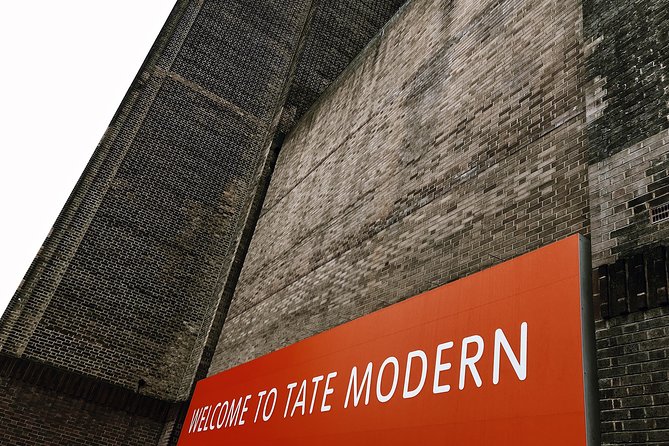
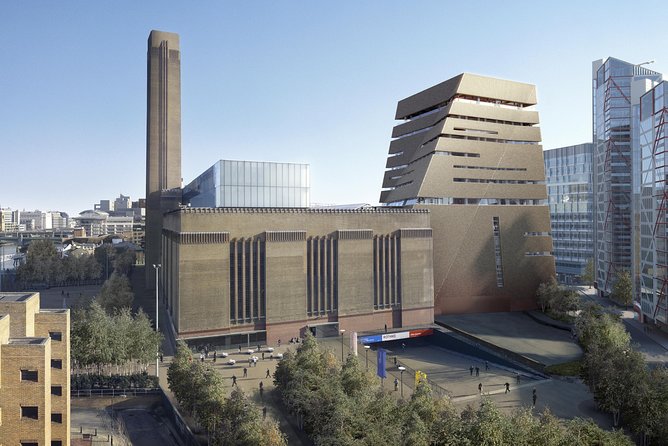
Tate Modern is not like a quiet classic museum where you whisper and shuffle past frames. The building itself is part of the show, since it started life as a power plant and still carries that industrial weight. You’ll feel it the moment you’re inside: broad spaces, big forms, and a layout that invites you to keep moving.
That matters because this tour is short, about 2 hours. The guide’s job is to help you spend your time well, and the museum’s dramatic architecture helps you find your footing without it being overwhelming.
Semi-private touring with up to 8 people, and actual room to ask
The biggest practical win here is the group size. This is semi-private, with a maximum of 8 people, so you’re not fighting for space or lost in the back row. It also means your guide can respond to what your group cares about, instead of running a one-speed script for a large crowd.
You’ll also notice the tour is built around discussion. The pace is not just “look, then move on.” Your guide encourages questions, which is exactly what you want if modern art has you stuck thinking, I don’t get it. This kind of back-and-forth makes the art feel less like a test and more like a conversation.
Two guide names show up with outstanding results: Sasha and Becky. Sasha is praised for picking a wide variety of art forms and giving insight that makes you think, not just watch. Becky is praised for being interactive and for offering context without telling you what to believe, which is a subtle skill that turns confusion into curiosity.
The 2-hour walkthrough: from Mondrian grids to Warhol faces
Stop 1 is the main event at Tate Modern. You’ll be guided through many galleries and halls covering key 19th and 20th century works. The route is a guided “greatest hits” style tour, but with context that helps each piece land.
Here’s the kind of sequence you can expect:
- You’ll start with the modern geometry that people instantly recognize, including Mondrian’s colored grid patterns.
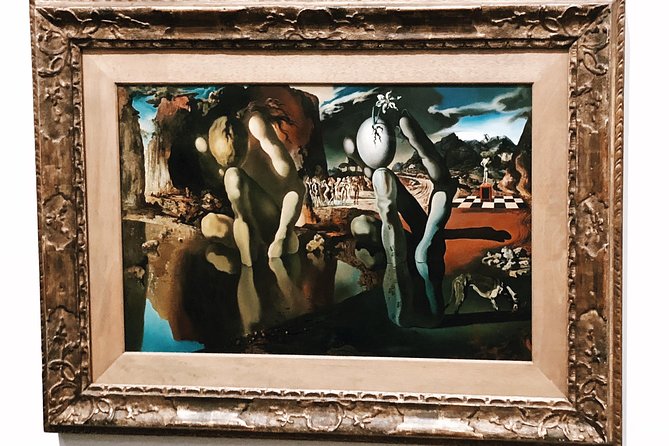
- Then you’ll move into the dramatic, story-driven world of Spanish-born artists, including major work connected to the Spanish Civil War period by Picasso and Dali.
- From there, you’ll hit the art of perception and color through Impressionist highlights, including Monet.
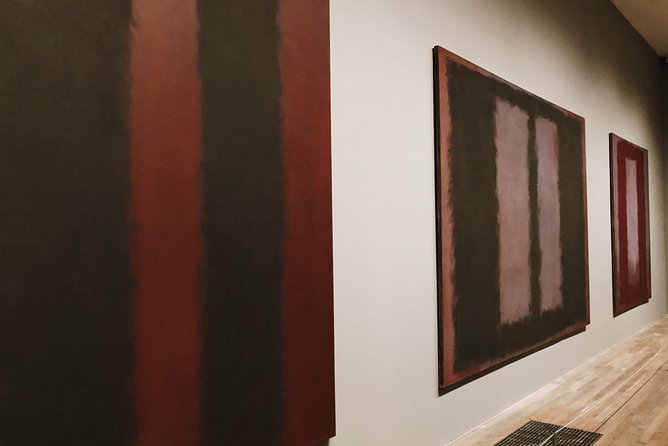
- Next comes a shift toward mood and abstraction with Mark Rothko, where the goal is learning how to look at color and feeling without hunting for a single right answer.
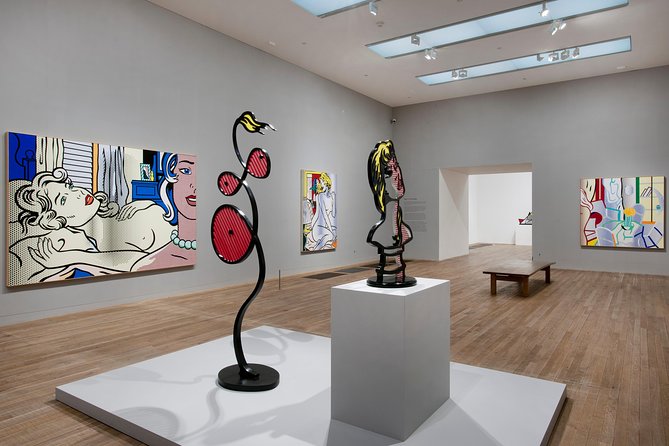
- Finally, you’ll step into the pop culture layer of modern art with Andy Warhol, including celebrity imagery such as Marilyn Monroe.
The point of this arc is not just variety. It shows you how artists change their tools over time, from representational scenes to bold abstraction and pop art. That progression is one reason this tour works well for beginners. You’re not dropped into modern art as if it appeared fully formed. You’re shown how it got made.
Picasso and Dali, Spain’s political shockwave in paint
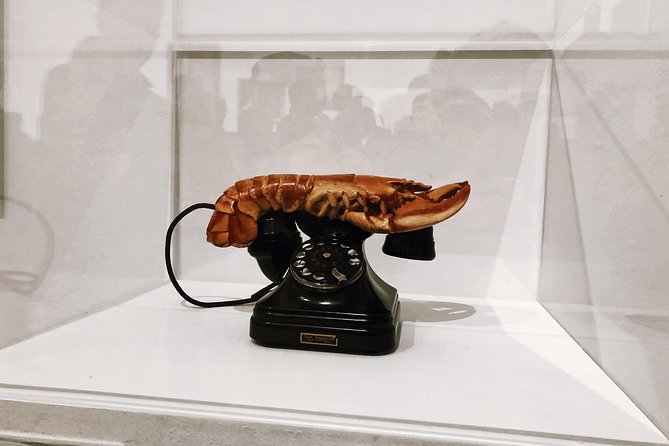
One of the most useful parts of this tour is the way it connects artwork to personal histories and major events. The Picasso and Dali segment is especially strong for that.
You’ll learn about how those artists produced some of their greatest work during the Spanish Civil War era. That changes your viewing. Instead of seeing images as just style choices, you start noticing how urgency, danger, and identity can shape what gets made, what gets emphasized, and even what gets left out.
For you, this is practical because it gives you a framework for talking about the art. You can say things like, this work is reacting to a specific moment, not just exploring a look. Even if you do not love every piece, you’ll understand why it exists.
Other collections we queued for



Monet and Rothko: learning two different ways of seeing
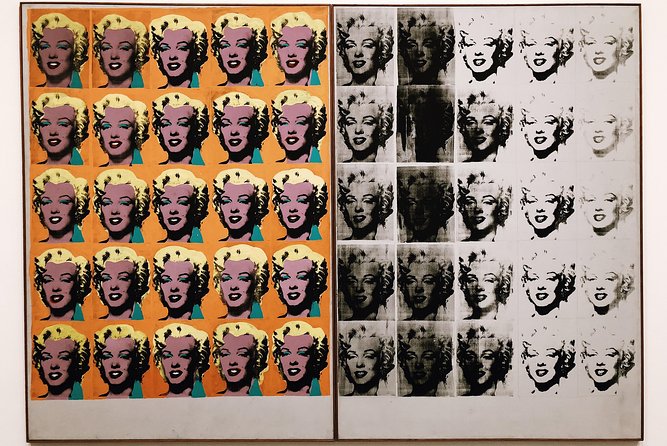
Not every modern art experience helps you change how you look. This one does, especially when it moves from Monet to Rothko.
With Monet, the guide can steer your attention to what Impressionists were chasing: the shifting effects of light and atmosphere. Then Rothko becomes the opposite challenge. You’re not tracking a scene or a story. You’re learning how a painting can be built to carry emotion through color and scale.
If you’ve ever stood in front of an abstract work and felt stuck, this part can unstick you. The guide’s context nudges you away from searching for a subject and toward noticing relationships, temperature of color, and how your eye moves across the surface.
Pop art at Warhol speed, with Marilyn Monroe in focus
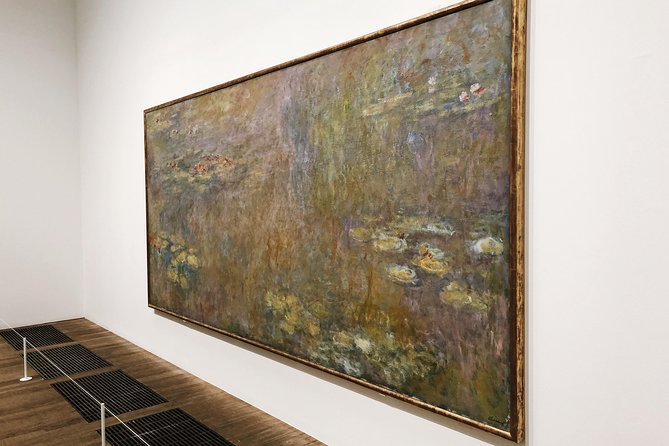
Pop art can feel like it should be obvious, but it’s often more complicated once you know what artists were responding to. The Warhol section brings that extra layer, especially through famous faces like Marilyn Monroe.
You’ll step back into the 1960s, the era tied to Warhol’s pop art breakthrough. That matters because the culture around celebrity, media, and mass production was changing fast. Seeing these works through that lens helps them feel less like mere celebrity posters and more like commentary.
This is also where the tour’s question time shines. Pop art invites strong opinions. With a small group, you can ask your guide how to read the choices without turning it into an argument.
Duchamp’s Fountain: when the guide helps you ask better questions
One moment that stands out is the stop around Duchamp’s Fountain. This is the kind of work that makes people say, what am I supposed to be looking at?
Instead of shutting that down, this tour leans into the big question of what art is in the first place. You’ll stand, take a breath, and then you can ask questions. That is huge if you’re a modern art novice. The guide gives you permission to be unsure, then helps you turn uncertainty into observation.
This is also where you may notice a shift in group energy. Several people end up talking to each other because the artwork itself demands participation, not passivity. If you like museums where you can actually process what you’re seeing out loud, this works.
The quiet-room rules: respecting museum behavior while still learning
Tate has some rooms where speaking is restricted or where you may need to be very quiet. The guide will explain these rules before entering those specific areas.
This detail may sound small, but it affects your comfort level. You’re less likely to feel anxious about talking at the wrong time, and you can focus on listening. It also helps the group stay respectful without killing the learning vibe.
What to expect about temporary exhibitions
This tour includes the core museum experience, but temporary exhibitions are not included. That’s not necessarily a negative. It usually means you’ll spend your limited time on the permanent collection highlights that map well to the tour’s theme of modern art development.
If you’re hoping to see a specific temporary show, plan to add it separately. This guided option is built for a structured introduction to the biggest names and ideas.
Building logistics that actually matter on the ground
This tour starts at Tate Modern in Bankside, London SE1 9TG, and it ends back at the meeting point. There is no hotel pickup or drop-off, so you’ll want to plan your arrival. An Uber or taxi is suggested, and it’s also near public transportation.
Security rules are real at Tate Modern. No large bags or suitcases are allowed inside, and you can carry only handbags or small thin bag packs through security. That affects what you bring in your day pack. If you tend to carry a lot, keep it minimal.
The tour also notes a moderate physical fitness level. Tate Modern involves walking through multiple galleries, plus some standing around key works. If you can comfortably manage that pace, you’ll be fine.
You’ll also be asked for a mobile phone number at booking, including the country code. That’s there for confirmation and updates, and it’s smart to provide it right away so the day-of flow stays smooth.
Price and value: is $107.45 a good deal for a 2-hour modern art tour?
Let’s talk value in plain terms. At $107.45 per person for about 2 hours, you’re paying for three things:
1) A guide to steer you through a huge museum
2) Context that makes modern art easier to interpret
3) A small-group setting where questions are part of the experience
You’re also not paying extra for basic museum entry as part of the tour package, since the experience lists admission as free. Even so, the tour fee is what covers expert guidance and time.
If you go solo and have no art background, Tate Modern can be a lot of rooms and a lot of uncertainty. This tour is designed to reduce the uncertainty fast. You’ll see major works in a sensible order, and you’ll get reminders of what matters historically and personally behind the art.
On the other hand, if you already know exactly what you want and you love wandering without guidance, you might feel the fee is unnecessary. For a first or second visit though, or if modern art feels like a puzzle, the price can feel fair quickly.
Who should book this Tate Modern guided tour?
This tour is a great fit if you want modern art to feel understandable without turning it into a lecture.
It’s especially good for:
- Modern art novices who want structure and explanation
- People who enjoy discussion and want time for questions
- Visitors who like the idea of seeing a range of styles in one focused visit
It’s less of a fit if you need wheelchair access or support for walking disabilities, since the tour is not available for those needs.
Families can also do well. One standout experience involves a parent and child having conversations after the guide helped the art feel relatable.
After the tour: how to keep your momentum in Tate Modern
When a guide helps you look at works from multiple angles, your solo time after the tour gets easier. You’ll likely want to circle back to a few pieces that stuck with you, especially anything you questioned around Duchamp’s Fountain or anything that felt emotionally strong in the Rothko section.
A practical tip: since this tour keeps you moving through major galleries, you can use the 2-hour structure as a map. Even if you don’t remember every title, you’ll remember the ideas, and that makes future Tate Modern visits more rewarding.
Should you book this Tate Modern semi-private tour?
If you’re torn, here’s the simplest decision guide: book it if you want modern art to make sense faster, with a small group and real Q&A built in. The strength of this experience is not just seeing famous works, it’s learning how to interpret them in human terms, through personal histories and historical context.
Skip it if you already have a tight plan for what you want to see and you prefer self-guided wandering with no structured explanations. But if you want a confidence boost for modern art and a guided path through the museum’s biggest names, this one is an easy yes.
FAQ
Where does the tour start?
The tour starts at Tate Modern, Bankside, London SE1 9TG, UK.
How long is the Tate Modern guided tour?
The duration is approximately 2 hours.
What group size is this tour?
It is semi-private with a maximum of 8 guests.
Is the tour offered in English?
Yes, the tour is offered in English.
Is hotel pickup or drop-off included?
No, hotel pickup and drop-off are not included. Uber or taxi are recommended.
Is admission to Tate Modern included?
The tour listing indicates admission is free with the experience.
Are temporary exhibitions included?
No, temporary exhibitions are not included.
Is the tour wheelchair accessible?
No, the tour is not available for those with walking disabilities or using a wheelchair.
Are large bags allowed inside the museum?
No large bags or suitcases are allowed. Only handbags or small thin bag packs are allowed through security.
What is the cancellation policy?
You can cancel for a full refund up to 24 hours in advance of the experience start time, and confirmation is received at booking.
Other Departures With A Guide Attached






Other Collections Worth An Hour






Museum Days In London


Fresh off the notebook in London
- Private Rock ‘n’ Roll Music Tour of Central London
★ 5.0 · 7 reviews - London Walking Tour: Camden Town Photography Walkabout
★ 5.0 · 7 reviews - Private Transfer from London accommodation to Cruise terminal
★ 5.0 · 7 reviews - Amazing Nightlife in London East Tour
★ 4.5 · 7 reviews - The British Museum: a highlights tour with a TV historian
★ 5.0 · 7 reviews - Heathrow Airport to Cambridge private taxi transfers
★ 5.0 · 7 reviews
London Museums and Galleries, compared.
 ★ 5.0British Museum London Guided Tour Semi-Private 8ppl MaxFrom $108984 reviews
 ★ 5.0The British Museum London – Exclusive Guided Museum TourFrom $108555 reviews
 ★ 4.0British Museum Guided TourFrom $18470 reviews
 ★ 5.0Private Guided Tour of the British Museum – Tickets IncludedFrom $187193 reviews
 ★ 5.0British Museum Guided Tour with Priority Timeslots(Small Group)From $48192 reviews
 ★ 5.0National Gallery of London Museum Tour Semi-Private 8ppl MaxFrom $108178 reviews
 ★ 5.0British Museum & National Gallery of London Semi-Private 8ppl MaxFrom $201168 reviews
 ★ 5.0Natural History Museum London – Exclusive Guided Museum TourFrom $108153 reviews
Browse the lists this tour appears in