
REVIEW · TOURS
The Freemasons Tour of London
Freemasons in London sounds odd, until you walk it. This is a private 3-hour route through the City of London and Clerkenwell, where religion and military orders overlap with the Masonic story. I like that it moves fast enough to hit major landmarks, yet still pauses for the smaller, easy-to-miss details that make this part of town feel human.
I love the complimentary hotel pickup for central accommodations, because it cuts out the morning scrambling. Another big plus for me is the sheer variety in a short walk, from Clerk’s Well and plague-era sites to Temple Church and the Seven Stars pub tied to early Masons. One thing to consider: many stops are brief, and a few museums have weekday closures (including Monday for some sites), so the route can feel more “look and learn” than “sit and study.”
In This Review
- Key things to know before you go
- Why This Freemasons Route Feels Like a City Walk, Not a Lecture
- Price and What You Actually Get in 3 Hours
- Hotel Pickup and Transport, From Farringdon to Freemasons Hall
- Stop-by-Stop: Clerk’s Well, Knights of St John, Plague Pits, and the Templar Trail
- Clerkenwell and the Knights of St John connection
- Plague-era London and older church power
- Legal London meets film streets
- Freemasons and the final approach to Freemasons’ Hall
- The Best Parts, Based on What Sticks With You
- Who This Tour Fits Best
- Should You Book the Freemasons Tour of London?
- FAQ
- How long is the Freemasons Tour of London?
- What does the tour cost?
- Is hotel pickup included?
- Where does the tour start and end?
- Is admission included anywhere?
- Which museums have day-of-week closures?
- Do I need tube tickets?
- Is this a private tour?
- What language is the tour offered in?
- What is the physical demand level?
Key things to know before you go
- A private, fast-paced City of London route (about 3 hours, with stops that are often 5 to 15 minutes)
- Hotel pickup included if you’re staying in central London
- Three sites with included admission: the Museum of the Order of St John, Temple Church, and Inner Temple
- Strong “orders and symbols” theme with Knights of St John, Templars, and Freemasons’ ties
- Good mix of free stops and paid options, so you can control how much you enter
- Museum hours matter, especially Monday and Tuesday for certain stops
Undecided so far? Here are further London tours we have written up.
- Stonehenge, Windsor Castle, and Bath from London★ 4.5 · 18,662 reviews
- London Big Bus Hop-On Hop-Off Tour with Optional River Cruise★ 3.5 · 10,803 reviews
- London Small Group Tour of Historical Pubs★ 5.0 · 10,422 reviews
- Stonehenge, Windsor Castle and Bath with Pub Lunch in Lacock★ 4.5 · 7,402 reviews
Why This Freemasons Route Feels Like a City Walk, Not a Lecture
This tour is built around the idea that London’s stories are written into doors, gates, courtyards, churches, and street corners. You’re not only chasing famous sights. You’re also learning how different groups of people, from crusading orders to Freemasons, left traces in the same tight area.
I also like the practical feel of it. The route is compact, so you’ll spend your time outside looking up at old stonework rather than burning time on transport. And because it’s private, you can ask questions as you go, which matters when the theme is a mix of religion, military history, and symbolic tradition.
One small caution: this is a stop-and-go style experience. If you’re hoping for long museum time at every location, you’ll need to follow up on your own after the walk.
Price and What You Actually Get in 3 Hours
At $253.66 per person for about 3 hours, this isn’t a budget stroll. You’re paying for a guide-led route that compresses a lot of “why this matters” into a short window, plus convenience like pickup.
Here’s the value math that makes sense:
- Hotel pickup is included, which usually costs extra on other tours.
- You get multiple short stops with free entry, so you can enjoy the learning without paying at every corner.
- Admission is included at three key places: the Museum of the Order of St John, Temple Church, and Inner Temple. Those are the moments where you move from street-level symbolism to something you can actually see inside.
If you’re the type who likes to return home with a clear mental map of how this part of London fits together, this price can feel fair.
Hotel Pickup and Transport, From Farringdon to Freemasons Hall
The day starts at 9:30 am. Your tour begins near Farringdon Station (Cowcross St, London EC1M 6BY) and ends at Freemasons’ Hall (60 Great Queen St, London WC2B 5AZ). That end point is handy, because you’ll be close to Holborn and Covent Garden.
If you’re staying in central London, you’ll get complimentary pickup. You’ll meet the guide in your hotel reception area, then head to Farringdon by Underground or taxi. If pickup isn’t offered for your area, the alternative is meeting outside Farringdon Station.
Important practical note: tube tickets before and after the tour are not included. You’ll still want a plan for getting back after you finish at Freemasons’ Hall.
For logistics, I’d also pack for a walking tour at an easy, steady pace. The tour notes a moderate fitness level, and the time at each stop is short.
Stop-by-Stop: Clerk’s Well, Knights of St John, Plague Pits, and the Templar Trail
This route leans heavily into Clerkenwell and the City of London, where medieval institutions shaped the streets you see today. Think of it as three mini-walks in one: Clerkenwell, crusader and church connections, then a long arc toward Freemasons’ Hall.
Clerkenwell and the Knights of St John connection
1) Clerk’s Well: You’ll see a well that most people miss, and you’ll connect it to how the district got its name. The tone here is simple, local, and grounded in everyday London.
2) Marx Memorial Library: This is a quick stop at a working institute tied to communist heritage. You’re not there for a deep detour, just a reminder that later political movements also left fingerprints in the same neighborhood.
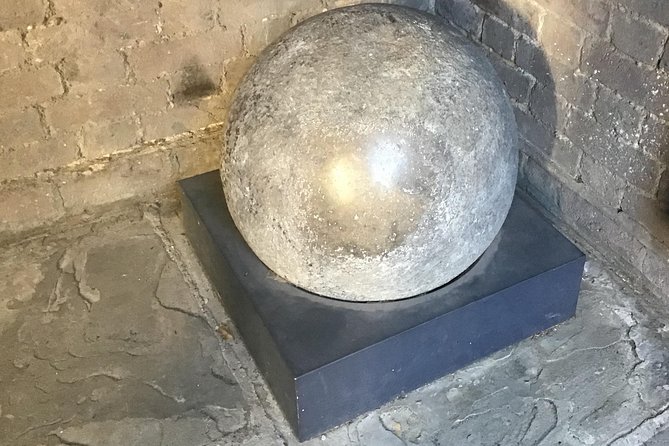
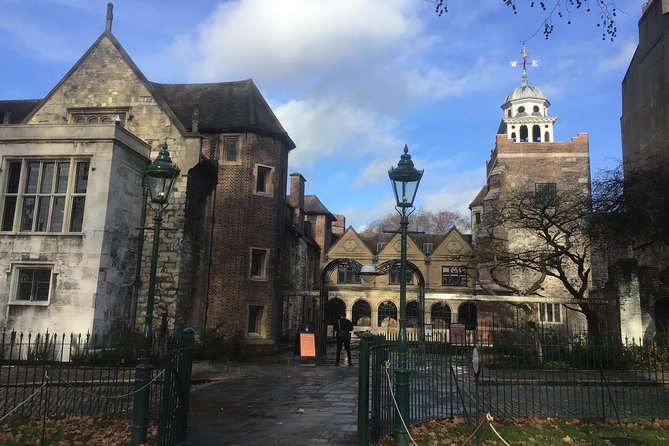
3) St John Priory Church: Look for the church garden with traditional medicinal plants. This stop also includes a surprising ancient military weapon, so it fits the tour’s religion-and-military theme in a very tangible way.
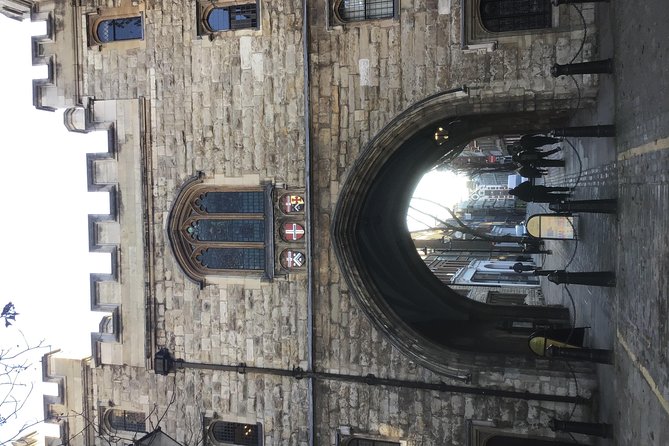
4) St John’s Gate: An impressive old gatehouse, once the entry to the Knights of St John compound. Gates like this are basically architectural footnotes that tell you how power moved through a city.
5) The Museum of the Order of St John: This is one of the included admission stops. You’ll start at the gatehouse connected to the crusaders and then have a quick look inside at weapons and armour. Note the closure detail: the museum is closed on Mondays and Tuesdays. If your tour falls on those days, you may get more of the outside story.
Plague-era London and older church power
6) The Charterhouse: Expect a striking link to the Black Death. You’ll stand at Charterhouse Square, known for one of the largest plague pits, and then move toward Charterhouse chapel territory where a recently discovered skeleton of a Black Death victim is referenced. This stop hits hardest if you like real evidence stories rather than just dates.
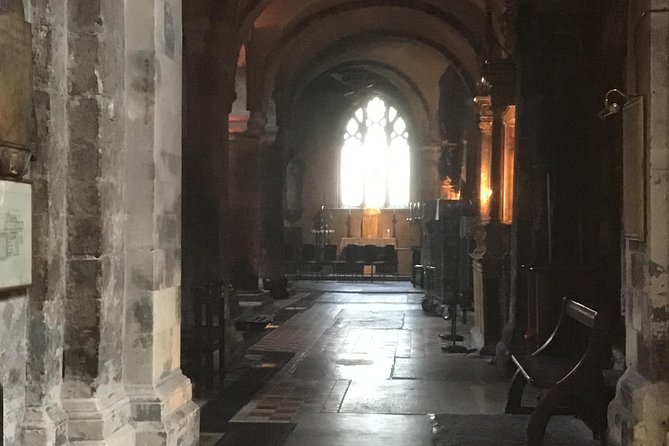
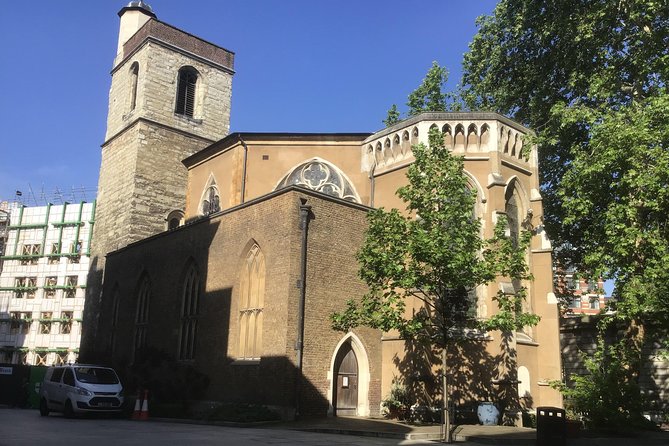
7) Church of St. Bartholomew The Great: One of London’s oldest churches, built by a crusader. It’s another quick stop, but it gives you context for why crusading influence shows up so often in this area.
8) St Bartholomew’s Gatehouse: You’ll pass a near-eight-century-old gatehouse that many tourists skip. The payoff is that it shows how layered this city actually is, old on old on old.
9) William Wallace Memorial: You’ll visit the spot where William Wallace died. The tour also mentions other notable events around the location, which helps you feel how history crowds into one address.
10) Christchurch Greyfriars Church Garden: The ruins form a garden near St Paul’s Cathedral. It’s a small pause where the focus shifts from armed orders to quieter remnants you can picture as sacred space.
11) Christopher Wren’s Temple Bar: An old City gate with a sometimes gory past. This is the kind of stop where the guide’s job is to make a brief exterior view feel connected to people and events.
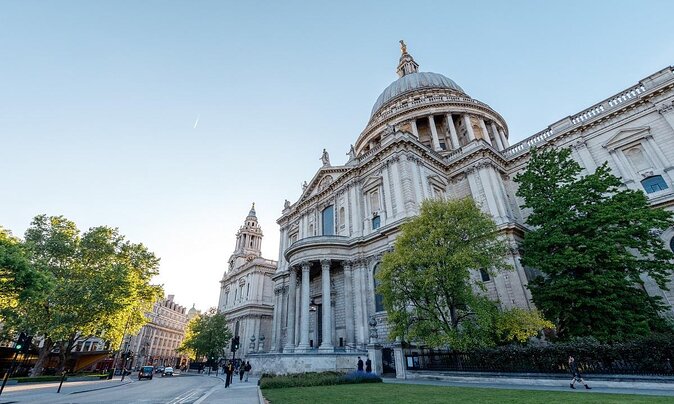
12) St. Paul’s Cathedral: A stop that works as a visual anchor. Even if you do not go in, you get a sense of how the route lines up against one of the city’s biggest landmarks.
13) Blackfriars: You’ll see what remains of an institution that gave this part of London its name. It’s a short stop, but it reinforces how naming, geography, and institutions are welded together.
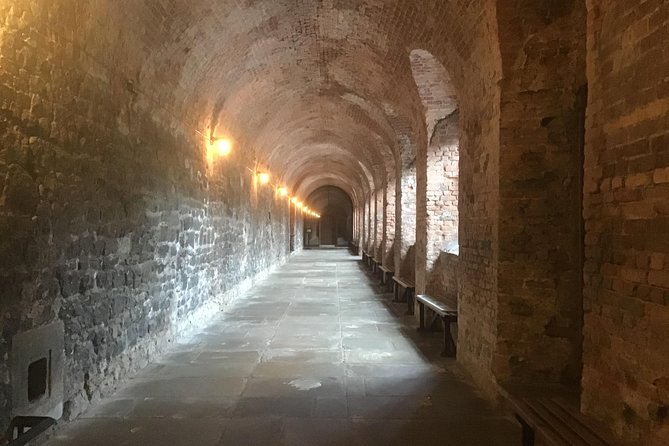
14) Crypt on the Green: This is described as well off the beaten track. It’s on your path toward St Paul’s area connections, and it helps you understand how some of London’s oldest sites survive in small pockets.
Legal London meets film streets
15) Middle Temple Lane: You’ll walk through an area often used in television and films, including Downton Abbey and Charles Dickens. The value here is not the filming trivia by itself, it’s the way the lane frames the broader story of Middle Temple and the legal quarter.
16) Temple Church: Admission is included here. The church is inspired by what the Templars saw in the Holy Land. It became popular due to Da Vinci Code films, but today it’s described as a peaceful sanctuary. If you want a clearer view of the Templar angle without only hearing it, this is one of your best stops.
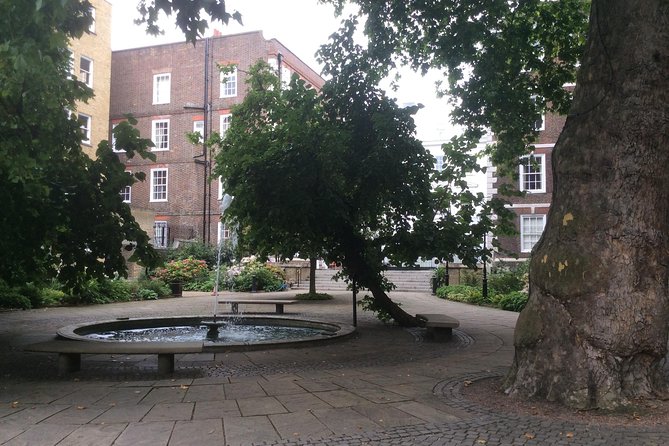
17) Inner Temple: Another included admission stop. The emphasis is on Inner Temple as a tranquil refuge in London. Even if you only spend a bit inside, it’s a moment of calm that balances the intensity of plague and crusader stories.
18) Fleet Street: You’ll walk along the street once tied to the newspaper trade. The tour also points out a long-lost ruin from a monastic order. This one helps you feel how the city’s center of gravity moved over time.
19) The Old Curiosity Shop: You’ll pass by the oldest shop in London, immortalised in Charles Dickens writing. Expect it to be a quick cultural way marker, not a long stop.
Freemasons and the final approach to Freemasons’ Hall
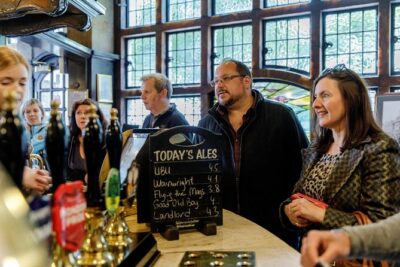
20) The Seven Stars: This tiny old pub was once an early meeting place of the Freemasons. It’s one of the emotional payoffs because it connects your theme to a real everyday space, a place where people sat and talked, not just grand buildings.
21) Lincoln’s Inn: You’ll pass through the largest square in London that tourists often rarely visit. You’ll also learn the story of the Great Fire of London here. For me, this is where the tour’s “symbols and institutions” approach becomes very practical, because you see how formal power responded to catastrophe.
22) Freemasons’ Hall: The final stop is the headquarters of the United Grand Lodge of England and also tied to the Supreme Grand Chapter of Royal Arch Masons of England. The tour notes it’s a meeting place for many lodges in London. One key closure note: the Freemasons Museum is closed on Mondays. Even if you do not go in, you end at the place that ties the story together.
The Best Parts, Based on What Sticks With You
The strongest praise in the feedback you provided centers on the guide experience. One name that comes up is Kevin, described as a long-term Londoner with passion for local history and a talent for answering questions. That matters on this tour, because so many stops are short. A great guide turns quick sightings into connections you remember.
The route also gets credit for being secret-in-feel. Many locations are tucked away, and the pacing helps you discover them without needing to plan every turn yourself.
The one downside that deserves your attention is that one visitor felt it skewed more toward trivia than history, and they corrected a detail about Temple Church’s model. If you care about precision, treat this as a guided walk where you can and should ask follow-up questions. You’ll get more value when you engage.
Who This Tour Fits Best
This is a great match if you like:
- London’s City of London churches, gates, and stone details
- stories about religious and military orders, including Knights of St John and the Templars
- Freemasons links that feel grounded in places, not just ideas
- a compact route that keeps moving but still pauses at meaningful points
It’s probably less ideal if you want one or two stops with long museum time, or if you dislike quick, exterior-focused sightseeing.
Should You Book the Freemasons Tour of London?
Book it if you want a focused, guided “connections tour” that ties together Clerkenwell, Templars, crusader echoes, plague-era reminders, and the Freemasons’ thread all the way to Freemasons’ Hall. I think it offers good value for the mix of hotel pickup, included admissions at major stops, and the compact, half-day format.
Consider another option if your visit day falls on Monday or Tuesday for the included museum moments, since at least one key museum is closed then, and the day’s rhythm could shift.
FAQ
How long is the Freemasons Tour of London?
It runs for about 3 hours.
What does the tour cost?
The price is listed as $253.66 per person.
Is hotel pickup included?
Yes. The tour includes complimentary hotel pickup for central London hotels. You meet in your hotel reception area.
Where does the tour start and end?
It starts at Farringdon Station area (Cowcross St, London EC1M 6BY) and ends at Freemasons’ Hall (60 Great Queen St, London WC2B 5AZ).
Is admission included anywhere?
Yes. Admission is included for the Museum of the Order of St John, Temple Church, and Inner Temple.
Which museums have day-of-week closures?
The Museum of the Order of St John is closed on Mondays and Tuesdays. The Charterhouse is noted as closed on Mondays. The Freemasons Museum is closed on Mondays.
Do I need tube tickets?
Tube tickets before and after the tour are not included.
Is this a private tour?
Yes. It is described as a private tour/activity, with only your group participating.
What language is the tour offered in?
The tour is offered in English.
What is the physical demand level?
It notes a moderate physical fitness level and includes a lot of walking through the City.
Fresh off the notebook in London
- Private Rock ‘n’ Roll Music Tour of Central London
★ 5.0 · 7 reviews - London Walking Tour: Camden Town Photography Walkabout
★ 5.0 · 7 reviews - Private Transfer from London accommodation to Cruise terminal
★ 5.0 · 7 reviews - Amazing Nightlife in London East Tour
★ 4.5 · 7 reviews - The British Museum: a highlights tour with a TV historian
★ 5.0 · 7 reviews - Heathrow Airport to Cambridge private taxi transfers
★ 5.0 · 7 reviews
Tours, compared.
 ★ 3.5London Big Bus Hop-On Hop-Off Tour with Optional River CruiseFrom $3910,803 reviews
 ★ 5.0London Small Group Tour of Historical PubsFrom $4010,422 reviews
 ★ 5.0Beatles Magical Mystery TourFrom $309,266 reviews
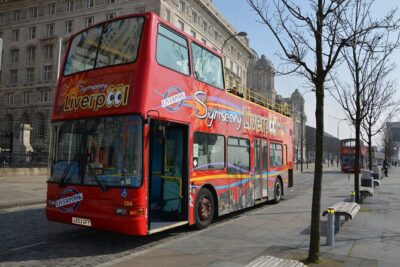 ★ 5.0Liverpool: “Blue Route” – City & Beatles TourFrom $278,562 reviews
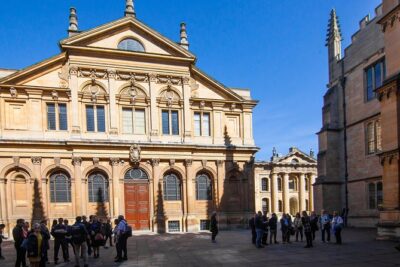 ★ 5.0Oxford University Walking Tour With University Alumni GuideFrom $416,905 reviews
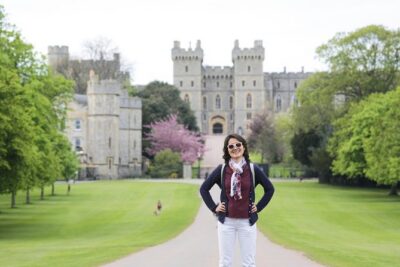 ★ 4.5Stonehenge, Windsor Castle and Bath Full Day Guided TourFrom $1235,346 reviews
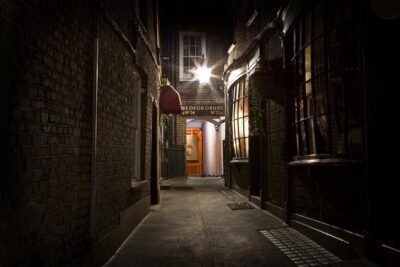 ★ 4.5London Jack the Ripper Guided Tour with Ripper-VisionFrom $274,840 reviews
 ★ 5.0Tour for Muggles The Ultimate Harry Potter Walking Tour in LondonFrom $234,684 reviews